The 2023 Recession will EXPOSE Bad Leadership
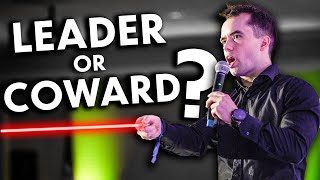
Mike Andes (conference keynote) argues that emotional stability and fast decision-making are the critical determinants of small-business survival and outperformance during an economic downturn. He ties personal/emotional preparedness (relationships, health, support network) to business outcomes, introduces the concepts of "higher lows" and "lower highs," and maps emotional cycles onto market cycles (mania → delusion → capitulation). He gives practical defensive planning prompts (pain threshold/tolerance, fixed expenses, CAC, recurring revenue) and urges leaders to act quickly, take many calculated swings, and prepare their teams for the coming recessionary stress.
Chapters
Let's talk about this. Man. My voice is getting better. This is fantastic. The off site meeting that changed everything. It's no, it's coincidence somewhat that I'm talking about leadership right after Dan just somewhat talked about it. But I want to talk about emotional stability of a servant leader and go through a few things that is meaningful to me. I'm going to tie it in with what we've talked about so far when it comes to the economy. Because for anyone that says money doesn't mean anything or it doesn't matter, just wait until you can't hit payroll. Just wait for one day when your bank balance goes negative. Just wait for one day when you realize that you're getting a piece of equipment repossessed cause you can't make the payments. All of a sudden money means something. And so when we have money issues and we have business issues, it's going to affect our emotions, it's going to affect our life in a lot of different ways. And so instead of trying to hide from that and saying, oh, money isn't everything, obviously it's not everything, but it's required in order to be able to do the things that we want in life. The goals that you have, the ambitions you have, many of them are actually tied to money. Say, oh no, I just want to be able to spend time with my kids. Probably a good idea to build a business that can run without you and build it on systems might take you a few years, but it's absolutely important to nail this part of life because it is the number one thing I see in families, relationships and even in people's physical health. When it comes to what is the root cause of it. It's a lot of times physical and all the mental and psychological and all that pain, a lot of times will some way shape or form tie back to financial pressure. And that's why Thursday night I so emphasize just the impact that relationships, your physical health as well as the capacity limits that you personally have, just how important those are to you in your business. Emotions will cloud the business decision making process. I talked about this a little bit last year and some would say that this is robotic or this is something that you should avoid and that is losing emotion. And maybe very clear, this isn't decision making processes for your business. All right, There are people that are extremely emotional and a lot of times those make very good salespeople. Ultimately, in order to grow a business from 0 to 500,000, typically the skill that I'm looking for the most is someone that can sell someone who's extremely ambitious, someone that's very extroverted, someone that is extremely emotional. They get riled up very fast, they talk really quickly, they're very excitable. But when it comes to the person that scales a business past 500,000, I consistently see that individual, potentially the alternative to this person, alternatively struggle from zero to 500,000. But after 500,000, especially after a million, the individual that might not be as charismatic or emotional, but is able to be a good leader and lead their team is the one that actually takes the business to the next level. If you're plateauing between 500,000 and a million dollars and you're feeling like you're hitting a brick wall, there's a very good chance that leadership and your ability to form a team around you that believes in what you're doing is likely the reason as to why you are hitting that plateau. It is not sales. And everything we talked about prior in this conference about the economy you can literally throw out because you've already accomplished market penetration by crossing 500,000. You've already got enough customer base, you should have enough contacts in your database to be able to fill the funnel regardless of whether or not we go into recession. If you're struggling at 2,300,000 sales is the most important thing you should be focused on your ability to communicate, your ability to close fast time to close. These other close ratio, these other KPIs we've talked about are the most important thing. But after that point, as you scale your business to a larger size, the only thing that matters is, is building a team around you because you cannot do it in and of your own, regardless of how powerful and great and awesome you think you might be. And that's something you all, including myself, have to face. And that is the morality of realizing that you can't do this by yourself. And you'll have to do things that are outside of your control and give things to other people that you see as valuable to the organization and let them run with it without your supervision. Higher lows and lower highs. We talked about this last year. This is something consistently we talk about all the time. High or lows. That means that when you're really, really down, when everything is against you, when the spring rush is hot, when employees walk off the job, when customers are hating your guts and leaving online reviews that you feel are not right or you do not feel are warranted, that's a low. That's a point you want to give up. You just made a damage Case. Potentially now that low in the business correlates now with a low. Physically. You go to a doctor, you realize that at a checkup, there's something that a mass or something that is inconsistent with what is supposed to be healthy. Potentially, this also correlates with a low. Cause many times these things all stack on top of each other with your personal relationships. And now you have a talk with your husband or with your wife, and they are saying, if these things don't change, I'm leaving. This has to be different. I'm going to divorce you. I'm taking the kids, I want the house. When these are conversations that start to come up, these are typically the things that happen during a low, low point in somebody's life. And this is the moment when some would give in. This is when they would close their business. This is when they would start to turn to alcohol. This is when they would throw in the towel in their physical ability to be able to be healthy and live a healthy life. This is a time when some people would not only quit and become bankrupt in their business, but also in their personal life. They would start these stupid things that scar them for the rest of their life because they're trying to get back to the people that they once loved. And during a low low, they make poor decisions. During the low lows, it's easy to find a lot of books and things about being motivated, finding love for the people that hate you, finding how to improve your business and make it more profitable, how to become more healthy. In six weeks, you'll get flat abs, all the rest of it. There's plenty of material out there to try to fix the low lows, and some of them may work. However, the thing that we don't talk enough about is having lower highs. Because in my opinion, that in your business, your personal life, and in your personal psyche, you cannot have the ability to say that I'm not gonna have low lows, and I'm going to try to make higher lows in my life by preparing for them, having a plan in place, guarding against going very, very low to where I do give up, to where I do commit suicide, where I do go into depression, where I do break my relationships. And in order to protect against that, that might be easy. But the thing that we.
So often fail to realize is it's very difficult to do those things. But also expect yourself to be able to have massive high highs. Lower highs is just as important as higher lows. And if you think that you're going to be able to Just party it up and get super excited and super motivated and jump up and down when something good happens. Don't believe that you're also not going to experience the low lows and the depths of depression that comes when not everything is going your way. This is the root of most religions, is to keep you more balanced. And you're like, balance, Mike, that's a new word for you. True. I don't have a lot of balance. I believe more in when you walk, when you run, you are consistently out of balance. You're walking from one foot to the other. There's a counteracting back and forth, oh wait, I'm a seesaw. If you were, that keeps things in check. However, if you allow yourself to get imbalanced, emotionally imbalanced, psychologically imbalanced, mentally imbalanced, physically imbalanced spiritually, it will ultimately lead to the demise of your business. And that's the tie in that all those things have in what we're talking about this weekend. Like that's a bunch of foo foo. It's the reason why small businesses fail or succeed. It's the reason why we have the support track to support your spouses and your managers. Because the only thing that really will keep you through the low lows is having that support group around you to ensure that you don't pull the trigger, to ensure that you don't go bankrupt, and to ensure that you don't put a knife in the backs of the people that love you. But ultimately emotions when it comes to business will cloud your decision making process and lead to poor outcomes in the future. When we look at emotions in general over the past couple years, the one in 2021 in my opinion was very much about of a greed. Obviously we know the quote from Warren Buffet that says be fearful when others are greedy and be greedy when others are fearful. Which ultimately is essentially buying the low low of the market, investing when it's low low, and then selling when it's high and everyone's in euphoria mode. So I'm tying right now the emotion aspect of you as a leader and how your business and the economy is going to operate over the next couple years. The unemotional person in both of these environments will win. Getting caught up in the emotion will cripple your ability to make clear, decisive decisions. Because in 2021 it was the cool thing to get more assets, buy stocks, buy real estate, start more businesses, go, go, go. Everything was going up in price. You could basically flip a coin and win on something. You could start a business doing lawn care and immediately be making $100,000 a month because there was so much. If you start in the spring rush. And now what I hope I'm trying to prepare you for is the low low that's about to come over the next couple years. If what we all believe is expected to happen as we go into a recession, 90% of us raised our hand on Thursday night when I asked, do you think we're in a recession or going into one? If that is true, we are heading into a period of great fear, uncertainty, and when the news cycle will become that of we are all dying. The exact same same fear that everyone bought into in March 2020 and suddenly shut down factories, put on masks, stayed in our house and literally shut down the economy. That same fear is what is about to happen when we enter recession. Because we have not seen it for the past 14 years. The majority of executives, CEOs and people in places of leadership have never seen a recession. And it's going to take many people off guard and they have not prepared themselves physically, emotionally, psychologically, mentally and spiritually for the fact that their low lows are going to be the next couple years that they give up and throw in the towel. This is what, in any market cycle, how it would look in terms of the stock market, real estate. And I want to parallel this with other things and that is more importantly your emotions, because as it ultimately dictates the direction your business will take. But if you look at this, this is if you look at almost every single trend on the S&P 500 real estate, the business cycles of even the US dollar and certain assets like gold, you can see this happen. You have a takeoff period, a first sell off point, and then you have a bear trap. A bear trap means everyone thinks everything's gonna be horrible and then immediately it takes back off and then we enter a period of mania. All right, Media starts to get attention, enthusiasm. Now we enter greed. In my opinion, this is what happened Covid 2020 in March, we had a first sell off in the market. Extreme amounts of fear. All of a sudden, though, the Fed came in, cut interest rates to zero, printed a lot of money, and the market entered into a massive rally like we've never seen before. You literally flip a coin, buy anything you wanted and it would go up in value. Because we were entering the mania phase. We got media attention, we started enthusiasm. We have greed, now we have delusion. This is where we're in October and November of 2021. Delusion is when the crypto started think things are starting going crazy. We had NFTs starting taking off, spending millions of dollars for NFTs that are now today worth literally pennies. There's a new paradigm. Cryptocurrency is going to take over the world. We literally do not need any US dollars. We're going to run off the gold standard. All this other stuff, this is a new paradigm. The world order is going to change. And then all of a sudden things start to shift. Last December, in January, the Fed says, hey, we're going to start raising interest rates. All of a sudden, March, we have a war break out in Ukraine, cascading in the event of having an energy crisis across the world. Denial. Oh no, this is fine. We're going to the moon. This is awesome. This is fantastic. We're gonna go on another 10 year bull run. Everyone wants to start a business. Every single TikTok is about forget being an employee, jump off, do your own thing. You can work from home, do this and make $1,000 a day. And that's somehow gaining traction. This is a bull trap. And that is everyone's like, hey, we're buy the dip. We're gonna make sure that we invest into this dip here in the bull trap. And this, in my opinion was February, March and April. Everything is fantastic. After we get to the war, things take a little bit better. Okay, we got it. This is the bottom of the market. And then we return to normal. Inflation starts to come back down. No longer are you paying a gazillion dollars for a sheet of plywood. No longer is fuel $6 a gallon, $7 a gallon for diesel. No longer the case. We're okay. But what I'm starting to see is the fact that there's actually a difference in where all the asset classes are on this chart. And I want to go over that in just a second because I personally feel that we are right here. And as we are starting to feel the elements of fear of what's currently happening inside the economy, you're starting to hear it in the media. You're starting to hear just little bits and traces. But just wait until capitulation. Just wait until everyone is saying you should sell every stock you own, you should sell your house. Because everything is crashing. In my opinion, that is March to June of this coming year because it will hit the news cycle when year over year sales of homes, the average equity is negative. We enter a period despair. And again, this is the low, low that 90% of people cannot withstand. And that is despair. And eventually you come back to that and you return to the mean or the average. Let's look at this a little bit in closer detail, though, after we look at the one simple fact. If you take asset classes and simply looked at when should I buy things, when should I invest into my business, when should I invest in the stock market, when should I invest into real estate? It's pretty simple. You buy low lows, you buy when everyone else is afraid. You sell when everyone else is in denial, delusion. And it's a new paradigm and everyone should be getting in. I would be worried silly if everyone was saying that this is the time to get in the lawn care business. I would be worried silly if people were saying that lawn care is an easy business to make a lot of money. It's super easy to hire people, super easy to charge high prices, super easy to have an office staff, super easy to be able to maintain your equipment, super easy to be able to deal with taxes, regulations, and the things coming down on us as employers, I'd be freaked out in my mind because that would mean that we are in the top of this market in the same way that any stock market or real estate investment might have low lows and high highs. In 2008, if you just bought anything in real estate, you're doing really well. Why? That was the low low, emotionally, that was the point of despair, where everyone said, everything's going to collapse, Lehman had collapsed, everything was going to hell in a hand basket. And ultimately, if you would have just purchased and made an investment financially into real estate, you would do well. The same is true for stocks. But what I want to include today is the fact that when you enter into capitulation and despair, that stage, it's going to happen in business as well. And we haven't seen this for a market cycle of more than 14 years where US as small business owners are impacted to this stage that we potentially could be if the Fed continues to raise interest rates. And remember, with the graph we saw on Thursday, it's likely that they will have to stay very hawkish and be raising interest rates in order to keep inflation down. The only period of time where CPI is so much higher than the average rate of interest. And so if you can actually make emotional investments in your business and actually commit to what you're doing during this period of despair and capitulation, that will lead to the greatest results. And so when we talked about on Thursday and said that someone who invests in their business and there's been a lot of Questions like, Mike, you talked about being defensive, and then you also talked about investing into this market, investing into despair. It simply comes down to if you are in profit mode or in growth mode, and we'll talk about that this afternoon. But ultimately, the person that emotionally invests, maybe you don't have the finances to grow and scale and get more trucks and hire a bunch of people this coming spring when fear is at its peak. But if you don't have the financial investment, perhaps this conference is simply here to make sure you have the emotional investment. Because when your friends and your family and your spouse start to doubt whether or not you should have a business and whether or not you should go back to the cushy job or go back to college, because that's what you were trained to do, that's when you'll have to make an emotional investment. And those are sometimes the hardest investments to make. And the greatest risk comes with the greatest returns. And making an investment in your business, in yourself, and the confidence that you have in your future during your low lows is where you'll see the greatest results. Every great hero story starts with a gun to someone's head, on the verge of having a divorce. It's a low, low moment. Just realize it's the start of coming out of despair. It's a low, low moment that you don't want to deal with, and we're trying to prepare you for it and say, we gotta have high or lows and have plans in place, a support network, people in place, people that are gonna support you so you don't go to that low place and you don't give up. But if you're there and you have no one to support you there, that's the moment to go all in. That's the moment to realize you've gotta leave it all on the field. And every single ounce of emotional investment you have left in your pocket needs to go into the business, needs to go into whatever dream of success and what that means to you, that is the moment to invest everything. It is not the moment to give up. If we look at asset classes over the course of how these markets move, stocks, in my opinion, move very quickly. The reason for that is it's liquid. I can tap a few buttons and seconds, transact, move money in and out of the market. Because something is liquid, it means it's easily transactable. So if you go to a bank and they ask, what are your liquid assets? They actually typically will include stocks with your cash. The reason for that is because stocks are so liquid, you can buy and sell them very quickly. And that's why you have massive gyrations of 10, 15% in the market every single day. Is because so liquid it's easy to make emotional investments in the stock market because it is so liquid and it is so easy to buy and is so easy to sell. That's why the stock market is people say it's rigged. The reason it's rigged is because most people can't deal with the emotional investment that is required when things go down and they get caught up in the euphoria, delusion, greed and new paradigm that is caused when everyone is doing it. And because it's liquid, because it's liquid and easy to transact, it makes it extremely simple to be able to buy into the fear and the low lows. Let me stop here and just say this. This morning I was thinking about this. There's an owner that I'm considering talking to this and saying this specifically. But back to what I said Thursday. I've already mentioned it several times and I mentioned it yesterday in relation to why we started the support track. But what I wanted to say this owner, because I know the specific situation he's going through, is Your success in 2023 in your business will have absolutely nothing to do with the economy, marketing, hiring, leadership or anything we talk about this entire weekend. It'll hinge on one thing, and it's whether or not you keep your marriage together. And for the people in this room that think that anything that's talked about at most of our conferences, mine included, has any impact greater than the things that are most important, as we talked about Thursday, relationships, physical health and your personal capacities. If those things are not in check, please don't listen to any of the garbage about economies, markets, what's happening in stocks, real estate. It's a bunch of nonsense. You need to keep priorities priority. Once those things are checked, you can move on to something as insignificant as making money. Real estate moves very slowly because it moves very slowly. It's usually a very good investment for people because it forces you to not be able to buy and sell based upon emotion. If you're really freaked out because all of a sudden there's an oil shock or an energy crisis or a war, you can't just sell real estate tomorrow. It's less emotional. It's less affected by the emotional tides of a human being. Whereas the stock market is so liquid and many times they say it's simply a chart of human emotions. The reason is because it's so liquid it's easy to transact. Real estate moves slowly, usually 12 to 18 months behind the stock market. So if you see a crash in the stock market, you usually won't see a crash in the real estate market for another 12 to 18 months. So what we've seen in 2022 will likely be a result of what happens in 2023 to the real estate market because stocks have massively collapsed over 2022. And it is very likely as we head into this high interest rate environment that typically only sees itself put up its head 12 to 18 months after interest rates have been affected. And we are literally 12 months almost to the day from when interest rates started to be hiked. That is why in my opinion, as we head in towards June of this year and we start to see it affect the real estate market, that is the thing that everyone has most of their equity and their asset values in their personal portfolio are wrapped up in their house. That's when you're going to see personal the max amount of fear and peak fear. Now businesses move even slower like we talked about yesterday or Thursday, the domino effect of high speculative all the way down to the point where the last thing that typically is affected before peak fear is what unemployment percent and that's still not being affected. But as that catches up to us over the next year, that's what's going to affect us as business owners. It moves very slowly. Usually it's two plus years behind stocks, inflation easing, that's our return to normal. Everyone's like, oh man, finally you don't have to pay so much for gas and oh, it's a little easier to hire people and we don't have to pay so much for materials and there's $100 surcharge for delivery because of the fuel prices. Everyone, we're back to normal. That's where we're at right now. Return to normal and in my opinion, potentially just falling off of this right now. All right, I expect 2023 bankruptcies to be massive in my opinion, more if not at that same level of 2007, 2008. Because we've dealt with inflation for so long, our margins have been compressed to the point and I believe that there's false hope that the labor market's going to so much easier and it's somehow going to save us in 2023. And then at the same time, those same owners that took out debt in 2020, 2021 and 2022, that is this greed delusion and new paradigm that if you Just took debt out for whatever reason because it was cheap. You could somehow grow and scale a business and they listen to some influencer that said you should get all the debt you possibly can because somehow a tax incentive from the government, those are the people that are going to be caught with their pants down in 2023 and more importantly, 2024, in my opinion, when it comes to businesses, because it moves so slowly, following the trend will at best lead to average returns and will most likely lead to capitulation. What that means is you say, well, let's just take stocks and real estate. It's easy for us to understand. I'm just going to stay the average all the time. I'm just going to buy and hold it forever. Great. You're going to average returns. And if that's what you want, that's fantastic. For a lot of people. That's actually what they should do when it comes to investing is buy and hold. Never touch it, never look at it. Don't get caught up in the emotional swing of what goes on. But if you want to actually get above average, and I don't believe anyone comes to a conference because like, I'm stoked to be average. If you want to be above average in your business, in your success of your marriage, in the success of your physical health, if you want to be above average, you will have to put ungodly amounts of effort, time and investment during low lows and you'll have to sell off energy, that is lower highs. During the moments of euphoria, when everyone's patting you on the back, when everyone thinks you hit the home run, when you get the award in your city that says you're the best small business of the year. When your employees think you're the best because you give them a profit sharing or some sort of bonus and everyone loves you and you just did your team meeting, you spent a bunch of money and everyone loves you and it's raw, raw, raw, go, go, go. That's the moment you dull it down. You don't get into the hype. Don't buy your own hype because if you do that and you get very emotional and you buy into the high high, you will inevitably sell out during the low lows, when all of those things flip, you'll give up. And the average, the average person will quit in 2023 because they will not be able to escape capitulation and despair. Remember, we are currently just returning back to the mean. This drop right here is going to seem extremely scary for us as Business owners, the stock market, real estate, etc. Just realize we're coming back to the mean. Like we talked about on Thursday, the stock market's still up 15% compared to before COVID Alright. The real estate market's still massively up since before COVID We're still way up here. So as we see, we're gonna have all this fear and capitulation, everyone giving up. We're literally just getting back to what is actually the normal. But over the past 14 years, we've gone out of control. But what's so important is pain tolerance. And I might have these definitions wrong. I don't look up stuff online. I want it to be as original as possible. This is not a quote. I make this stuff up, maybe it's wrong. Probably is the difference between your pain threshold, that's when you start to experience pain and your pain tolerance. That difference directly correlates, in my opinion, with one's ability to outpace the average, the market, other competition and outlast capitulation. And the low, low moments. The difference between your pain threshold, that's when you start feeling pain. And some of us might not start feeling that till the middle of this year. After you go through a spring rush that's muted. After you still can't find employees, after your marketing that you got so jazzed about on this weekend doesn't work out, that's when you start to have the pain threshold being hit. But the pain tolerance, the max level of pain you are able and willing to bear, is ultimately, in my opinion, the thing that separates entrepreneurs that outlast the market and multiples much better and are able to have returns far greater than the average. Here's how I want to correlate this. Chart your pain tolerance. How many of these are needed to cover your fixed expenses? This is how you chart your pain tolerance in your business. How many employees do you need to actually cover fixed expenses? Because this is. Pain tolerance is great. Your pain threshold, great. But you know what your pain tolerance is, right? That's when you literally are negative in the bank account. That's when you have to give up. And so at that moment, that is the question of how far can you go? What is the actual max amount of pain you can take? This is something that you should talk about, like, oh no, we're going to. It's a recession, but we're going to just like massively grow. Maybe you will, fantastic. But this is something, this is defense. No one likes to talk about this. Everyone likes the offense. No one wants to talk defense Employees. How many employees do you need to cover your fixed expenses? Marketing. What's the customer acquisition cost? Maximal that you can spend and still be profitable on that customer within the next several months? And how long does it take you to recoup that money of that customer acquisition cost, did it take you a year? Likely you will not make it because the cash flow will not work for you to be able to recoup the cash that is required to buy that customer. And if you have no idea what your customer acquisition cost is, I recommend you start testing something. Please. You need that number because when customers are no longer lining up to buy your services, you will have to buy them in the form of eyeballs and attention on Google, Facebook, your next door, whatever it is. How much revenue do you need to cover fixed expenses? The chart on Thursday should be very helpful in figuring that out. What is that minimum amount of revenue that you have to make in order to cover your fixed expenses? How many recurring customers do you need? Assuming that every single project doesn't show up tomorrow, no one wants to talk about this in the project space and every single one that is not willing to talk about this started their business after 2008. Because the companies that started their business before 2008 have realized they have to diversify or they have to make sure they have some sort of recurring maintenance program or even if they install a project, there's some sort of recurring revenue in the form of maintenance back on that site. You have to cover your fixed expenses. That is not your pain threshold, that is your pain tolerance. It's extremely hard to operate a business when there's negative cash flow. How many new leads do you need? If you're project based, how many new leads do you need to get projects? This is going to be a funnel effect. How many leads do you need? How many customers do you get? How much revenue does that create? How many employees does that allow you to have? If you're project based, and that will answer a lot of these questions in terms of revenue, et cetera, you need to know these numbers because when you start coming down on them, you'll need to be able to realize, okay, I'm still 10% above my pain tolerance. I can still take this. I'm still just barely screaming by, but I can get through the low lows. You are not a failure. You are not an idiot. It's not that you're dumb. It's not that maybe another service is something that you should replace in your business. It's that you're experiencing a low low that every entrepreneur, business owner, leader of any organization that has any meaning in this world has at one point been through and somehow figured out how to get through it emotionally, physically, psychologically, mentally and spiritually.
How to stay aggressive during this period of time. It's extremely important to make decisions fast. In my opinion, speed of execution is much more important than the plan of execution. Everyone here wants a plan. I always ask for people ask for systems. I want plans, I want procedures, I want a method, I want a template. Absolutely does not matter. Compared to the speed of the execution, the plan of execution is absolute garbage. The speed at which you make the execution will determine how far and how fast your business goes.
Business is very different than most things in life. And as it counts home runs, it does not count strikeouts. Alright? You can have people fail and fail and fail and fail and all of a sudden hit a home run in their business and we just know them for the home run. What that means is if you actually take a step back and say, I want to hit home runs, I want to do great things. I want to build a business that's incredible. It simply means you should make as many swings as possible in your business.
You should keep swinging.
If you have two strikes and you're about to go out, you have to ask yourself, am I at pain tolerance where I can't strike out and I need to take a bunt or a single just to make cash flow this weekend and be able to make payroll and be able to take my wife out on the dinner date this weekend if that's what you need, hit a single. But in general, if you're not backed up right up against a wall financially and you have only zero or one strike, you should be swinging as much as possible and as hard as possible. Decisions in your business are like swings. Realize that most decisions, even if you strike out, will not hurt you. They will not sink the ship, and in your mind, they become a massive ordeal. When striking out in business, rarely, that one time is going to be the, what's it called, the needle that broke the camel's back or whatever, the straw that broke the camel's back. It's very rare in business. You should keep taking swings and ultimately you should actually make sure you're making some mistakes. Because if you're not, you're not making enough swings. If you constantly are in the batter's box and constantly waiting for the perfect pitch and never take any swings, you'll never get any hits, runs, or home runs, you'll never Win a game. You'll have to make decisions quickly in your business and realize that some of them will be wrong. One of the executives and the head at Twitter that is accompanying Elon Musk in a podcast said that Elon expects that they have at least a 10% rollback of features. Anything less than that means they're not innovating fast enough. Which means if we are not swinging and trying enough things and we actually make mistakes, if we don't do that at least 10% of the time, we're not pushing the envelope enough. And yet so many of us sit back, admire people like that, and then wonder why we in our businesses can't make great strides, gain market share, get more employees, make more money for our family, send our kids to college, gain some respect in the community. The reason you can't do that is you stop swinging. And you're playing things so conservatively. When it comes to decision making processes, the decisions that you're making, two and three week decisions could literally be made in seconds. One of the things that's probably the hardest thing to work with me is I do not deliberate on anything. If it can be made, a decision to be made instantly, it should be made instantly. There's no reason to say, I'll circle back to you tomorrow. What's going to happen tonight? Are you going to have a dream about it? Are you going to be walking on the treadmill and all of a sudden something drops in your head? No, you know what you need to do? Make the swing. Speed is so much more important than the plan. You say, oh, no, that's reckless. All right, you're going to make some mistakes. Sometimes 10% of the time you're going to make a mistake. And guess what? You're going to have to apologize.
And guess what? People will forgive you and you'll move forward. And ultimately the reason you'll be admired is not because you sat in the batter's box and waited for the perfect pitch to hit the one home run in your entire career, but rather the person that swing 1,000 times and hit 100 home runs in one year would be the absolute talk of the town. And yet they struck out hundreds and hundreds of times. Mistake after failure after mistake after bankruptcy after failure. And I tried my treatment division and it failed. I tried my saw division and it failed. I tried. No, it didn't work out. I tried to do landscape and it didn't work out. And time and time and time and time again. And then finally something comes along in a low, low moment. You put all investment in and you just start taking swings. Just start taking swings, you start getting reps. And that practice eventually builds. The muscle required that when the perfect pitch comes not in the next pitch, it might be in five years. There was one time I remember driving. We used to play baseball all the time, and my brother's here and we'd just throw pitch all the time. And I played T ball. He was always a couple years ahead of me. But one day I was going to practice. My dad was driving me. I still remember exactly where I would drive. We were driving the.
West on 8th street, turning left onto Valley View. I would have been about five or six, probably.
And I still remember I had a stupid coach that would put me in right field. I had never played right field my whole life. I was always pitcher or shortstop. I was like, in my mind, the best thing on the team. And I still remember as my dad used to drive me to T ball. I only use T ball at this point. Maybe it was machine pitch. And he said, mike, if you're still in right field, be prepared, even if it's in a month from now for the one time you need to pitch the ball, but be ready. And I always remember thinking that I'd go out to right field. He's like, this is so stupid. I will never. Hey, in Little League, you never see balls in right field. If it's in the infield, it's considered like a home run walk in the park. So.
I still remember that. And ultimately, that's what you'll have to decide on when it comes to you and your business. It might be five years from now, but waiting for the perfect pitch is not the right decision. Get your practice reps in. Build the muscle of making decisions quickly. In your business, there's no reason to deliberate. A lot of you come up to me, you thank me for what we're doing. You say, admire what you're doing and. And how much you can accomplish. We were here five years ago. It was our first one. There was literally like these three tables. And that would have been it. It was really, really small. There was none of this or this or anyone at the back. It was really, really janky. Let's just call it that. Man, you've done so much. Here's the secret to it. Write on the board. Just make decisions. Realize it's not gonna kill you. Make decisions fast. Just do something. So often the times I get questions from people like, should I do X or Y? And a lot of times you'll see in Facebook or YouTube comments, don't really respond. Because what I want to say, and I don't want to appear like a jerk, is flip a coin and just decide it literally won't affect your business, it won't affect the direction of your business, and in five years, you won't remember the decision. So just make a swing. Just go for it. That's ultimately what you need to do, especially if you trust your decision making process. Because if you ultimately look at all the decisions you made, they're either yes or no. They're either good or they're bad. Was this a good decision? Yeah, that was a good decision to add mowing. Yes, this is a good decision to add this. Yes, it was a good decision to hire so and so. No, bad hire. All right, so if you take all the decisions you make, these are all the swings that you have, whether it be strikes, balls or hits, and you put them into, yes, this is a good decision. I got a home run or no, this is a bad decision. If you put all these into a bucket and if 50% or more of your decisions are good and growth is the goal, then speed should be the focus. Because ultimately, if you have more than 50% of your decisions being good, you should just consistently keep doing it over and over and over and over and over again. And so I'm not gonna say everyone in this room should do that, because some in here, your decision making process is not great. The decision you make with your health, not great. Decisions you make with your personal life, not great. Decisions you make in your spiritual life, not great. And because of that, you do need to take more time about your decisions and think things through a little bit more and get the opinions of someone else you might trust that has a good decision making framework and can think clearly because they're not in a low low or in a high high. It's called a batting coach. And the best of the best have them and there's no stain on their name. When the best of the best have a coach and no one knows the coach's name, no one needs to know the coach's name, all the fame goes to the player. But the best of the best realize they still need a coach because they need someone else to help them with this framework. Is this a good decision? Is this not a good decision? I need someone else to balance something off of. Because I might not see business like I see sports. I might not see my personal life like I do see sports. So because I'm a sports guy, I'm gonna Get someone else's opinion on these other things so I can remain balanced and my decision making focus, my decision making process can stay focused on remaining positive. But if 50% or more of your decisions are positive and good, and vast majority of you are because you literally just made a good decision to come to a conference, network, meet with other people, improve your business, probably a good decision, probably good things you're doing. And I would venture to believe that most of you, more than 50% of your decisions in your business are good ones. If that is true, you should just keep making as many decisions as possible. When I look at the opportunity for us to start copilot, is this a good decision? I don't know. Look at some of the comments I made this morning. It's like, give me a year and I'll prove it. But I don't know, maybe we strike out. But ultimately when I look back and say, okay, the things that we've done, I've made some strikeouts, I've made some terrible errors. But over the course of time, more than 50% of my decisions I feel have been positive, good ones. So guess what? We're do, we're going to swing. Go for it. Let's go. Let's pump a bunch of money, move development teams over, get everyone together, spend sleepless nights trying to figure this out. Because that is the decision making process I make. It's immediate. It literally was made in less than two hours. The entire framework of how our agreement was going to roll with Patrick, how it was going to, how everything was going to happen. I stayed up all that night to write a three page document exactly what was going to happen over the next year and the next 24 months. That's how you must make decisions in your business. This is not a six month decision. And I made some mistakes in 2022. And that's what's gonna happen when you move fast. I said something so stupid on one of our franchisee calls. To this day, one line keeps me up at night. I said something so I never share this anyone. No one's ever even brought it up to me. I said one thing so dumb on a call with all of our franchisees, it makes me sick to my stomach just thinking about it.
Everyone. Dude, the level of anticipation in the room just like.
Man, you guys want me to say that? Oh, dude.
Okay.
Okay. No.
Okay. Confession is good for the soul. Okay, So I said this stupid line. It might take me a couple extra minutes, guys. Sorry. Okay, so in spring, we made some mistakes and I promised last Conference to our franchise. We'd do whatever it took to make sure we got through Spring rush without missing any calls. And we were missing somewhere between 3 to 7, sometimes 8% of the calls in this peak of Spring rush. Like May, especially April and May.
But it was because we hired like 40 virtual people. And what happened is it required all of our top people to start training all of them. We made some mistakes. And ultimately what started to happen is we had. We were doing scheduling and invoicing for all our franchisees. It's very difficult to do invoicing and scheduling remotely because you don't know your crews, especially scheduling. Because if I said, hey, just give me how many budget hours you have and how many crew members you have, that's how we would operate. But we don't have a software that does that for us. We have to do it manually. Look at how many budget hours there are. Look how many team members there are. We don't have what we're going to build with Copilot, where it kind of predicts where you can put the job on the schedule. So it's manual. The problem with that is if someone doesn't put budget hours incorrectly, if they forget to put budget hours in the estimator, if we mess up something in this whole process, we can really mess up scheduling and invoicing. And we started making some pretty big mistakes. And people at Command center are awesome. Man, I'm sweating. My goodness.
And so we started making some mistakes and they're bad ones. And you can't mess up scheduling because then you gotta apologize and everything. So we decided at 11 o' clock at night on a Wednesday evening that we were gonna stop doing scheduling invoicing as a service at Command center. You're like, oh, it's not a big deal.
But I made this decision in a blink of an eye because the reason for it was because we were losing people at Command center left and right. Our best people were leaving. And it was because the stress levels were going through the roof. Because when they make mistakes, they take it very personal. There's a lot of emotion with it. We have yellow slip system. They are paid on pay for performance as well. So it gets. They take it pretty seriously. Sometimes more seriously than a franchisee, honestly, when there's like a complaint and stuff. But it was just super high levels of stress. We were having everyone working more hours, weekends. Like, we're just. It just kept compounding because when someone drops out, well, then everyone else has to pick up the slack. And then when that Happens, it creates more stress, and the phone keeps ringing and estimates still keep coming in. And, you know, we're 500 estimates behind and the day's ending, and I'm doing estimates, trying to help out. So anyways, I realized if we didn't pull the plug that day, by the end of the week, we would lose more of our top people. I mean, talking our trainers. And so when that happens, your trainers drop out, then all the people that they're training, the quality drops, and so then you have quality issues.
So I got on a call with all of our franchisees, and those who have been around, they remember this. They got a video at 2 or 3 in the morning. I was on the phone with Liz at like 11:30, and we were going through. Okay, what's the ramification of this? I know everyone's gonna hate my guts, but we will literally lose our best people here in the next three, four days. Emotions were extremely high at command center. Lots of. When you start making mistakes, like the past two or three weeks, I don't think there's been any yellow slips. I don't know where Brian's at, but we were making like eight or nine a week. And these are. If you mess up an invoice and it's $1,000 instead of $10,000, that's a big deal. But that's one keystroke. Anyways. Okay, so I got on this call with them, and I say, hey, we're cutting invoicing and scheduling, effective immediately. Right? Maybe a mad decision probably should have changed how I rolled that out. That's why we have a franchise advisor council now. Thank you all very much. But on that call, I said the stupidest thing ever. And the reason was because I was trying to justify why we made such a fast decision, which is stupid, because the reason why we did it made sense once we explained it. It made sense. But I said the stupidest thing. I don't even know if I can say it. Okay, here we go. Does anyone in the franchise even remember what I said? That you think I know what I'm going to say here? No. No one knows. Oh.
Who? You do. What?
That's such a cop out.
Give me that. Trying to make me feel bad.
So I said, you know, being a part of Augusta is kind of like being in an open relationship. You can come and go as you want because there's no penalty to leave. Stupidest thing I have ever said in my entire life in front of everybody when everyone was mad at me, like, just shut up.
But back to my slide.
Thank you. Maybe I'll sleep better. All right, so, ah, back to what we were talking about. When you make decisions fast, you'll make some mistakes. All right? That's what One of my. One of the many I made in 2022 only mercy goodness. All right. That slide was supposed to take about 30 seconds. Okay, so leadership historically looks like this. In my opinion. I made this up. I'm probably wrong when I make stuff up. Probably wrong on 90% of it. Organization on the left hand side over the course of time. You have tribes back in the day, you have nations. Dude. Now I just feel weird saying that. Okay, can everyone just like laugh or something? Clap it up. Alright. Dude, man.
Dude, that was rough. Just passed the microphone. Okay, what was the most embarrassing thing you said last year? Forest.
Goodness. All right. Organizations, tribes, nations. We get into these groups of people and the reason that we organize as humans, even if everyone's like, oh, we want decentralization. We want no control over us. Impossible. Regardless if you dropped humans that had no idea about society.









