The Burden of Leadership | Business Bootcamp Podcast
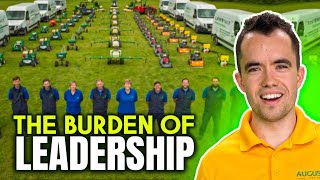
Mike Andes (host of Business Bootcamp Podcast) delivers a first-person monologue titled "The Burden of Leadership." He argues entrepreneurship has been glamorized by social media and good economic times, turning it into a lifestyle label for many who lack the temperament for the sustained uncertainty, financial strain, and personal sacrifice the role requires. Andes warns this mismatch can lead to severe mental-health consequences and urges true entrepreneurs to accept the burden of leadership—running toward crises, prioritizing the mission over personal comfort, and being remembered for obstacles overcome rather than surface-level successes.
Chapters
Hey, everyone, it's Mike Andes. And you're listening to the Business Bootcamp podcast. And today I'm going to be talking just from my heart. I'm going to be talking about the burden of leadership. We talk about what it really means to be an entrepreneur and really to speak from my heart. Before we get into the show, I want to say a big thank you to sponsor because Gusto, they really allow me to do a lot of what I do here on the podcast. You can email me at businessbootcamppodcastmail.com youm can go on the website Business Bootcamp Podcast. Ask your questions there. And a big, big thank you to Gusto because they allow me to do that. They sponsor this episode, sponsor this facility, and I appreciate that so much. So please go help them out to go gusto.com bootcamp and you can try out their software for 90 days. It's great for payroll, benefits. Test them out today. I promise you, you won't be disappointed. And I want to say a big thank you again to them for everybody, everything they really allow us to do here at the podcast. So thank you so much to them. Now, today, I want to talk about something that I like to talk about. I don't talk about enough. But Business Bootcamp Podcast is much more general, whereas landscape business course, the other podcast and course that I do is very specific to landscaping and the lawn care industry. So I kind of look at this podcast as my sort of outlet to be able to talk about entrepreneurship as a whole. And taking my perspective as being a young entrepreneur, someone that's 23 years old, someone that's kind of only done it for less than 10 years. And so I think it's not the most, to be perfectly honest, not the most experienced perspective, nor do I have the most years of experience or anything like that. But my perspective is not so much looking on young entrepreneurs, but actually being a young entrepreneur and having my colleagues and the individuals around me, my peers being the group in which is now being called entrepreneurs. And yet, in my opinion, we have not faced what it truly means, what is going to truly define what an entrepreneur is. Because for the past 10 years, it's been good. Economic times have been good. Money has been good. The housing economy has been good. Everything has been good. The labor market's been good, everything's been good. And I fear less. Entrepreneurship has become more of a label and a title than it has a way of life and a reason for living. And I truly believe the great entrepreneurs, they don't have options. I Don't think they have options to go get become an employee. They literally physically could not do it. They would turn down much greater salaries and they would make being self employed, they would turn down much more flexible schedules, they would turn down more sleep, they'd turn down nicer cars, they'd turn down a nicer house in order to scratch the itch of doing the thing that they are meant to do. And that's being entrepreneur. And so I don't think it's an option. I don't think being an entrepreneur is an option. I don't think it can be taught to some degree. There's certain levels of business and accounting and marketing and sales and website building that you can teach the mechanics. But I believe the dynamics of being an entrepreneur, 95% of that is inbred inside of an individual. And whether that's genetics or you're predisposed to it because your parents were entrepreneurial or whatever it was, or if you just have a chip on your shoulder that causes you to figure things out, whatever it is, I think a lot of it is going to show itself when the next recession hits. When times do get hard, we're going to find out that social media has allowed entrepreneurship to become so glamorized and put on a pedestal and thought of in such an ideological way that people and individuals who should never ever try to own their own business or lead an organization or take on the burden of leadership, they're gonna crumble under the burden and the weight of being a leader. In times when it's not easy.
That will lead to depression, that will lead to suicide. And that's what we're seeing right now, even in the entrepreneurial community when everything economic times are good.
I think what the problem is for many of us young entrepreneurs, we don't really know what it's like. We don't always like to work 48, 72 hours bleeding from our eyeballs trying to just get a loan to pay payroll for the following week. Because money is easy, the market's easy. If you're in a service based business like me, there's work everywhere, growth, expansion, you know, it's hard to find people in the labor market, but you know, unemployment's low and there's lots of disposable income. And all of these things are happening. Technology is increasing, becoming more efficient, blah, blah, blah, blah. All these things are happening.
And yet.
Entrepreneurship has become something that is now somehow resembling more the lifestyle of someone with a yacht and a Ferrari and a nice mansion and some hot guy or girl. And somehow that has been put on the pedestal instead of the true story of what an entrepreneur's life is like.
It's not easy. It's not easy having the options stripped away from you as an employee. You have options. You have options to move to another job, another corporation, another industry, go back to school and figure things out. You have the options of taking a sabbatical. You have the options of when you quit, you get some sort of leave or severance package. You have the option of retirement and benefits from your employer. You have the option of staying with a company and working your way up throughout that corporation. You got options as an entrepreneur. If it's, if you're really an entrepreneur, I truly believe you could not be an employee. Doesn't matter how much money you would make. Doesn't matter who was your employer, who your boss, who your leader manager was. If you're a true thoroughbred in your blood entrepreneur, it's something you cannot get away of, cannot get away from. And I, you know, even a few years ago I remember the pressure of not knowing how we were going to make payroll. This is not a long, long, long time ago. I still remember that all the money I was making was going into the business. I was living on like nothing. Like even to this day my living quarters are left less than 200, like 200 some odd square feet. And I drive a company vehicle and I could probably live on about a thousand, maybe eleven hundred dollars a month and be very happy. And having more money or success in business is not going to change that because I don't attribute entrepreneurship or my me being a business owner to somehow meaning to prove or show or social standing by having a nice car, a big house. Like I, there's nothing more that would stress me out than having a big house. You have to take care of it all the cost. Like I went to a really successful individual's house the other day and it would stress me out to have where they have a full time janitor and a full time gardener and a full time, what do you call a house manager would just take care of like different contractors and things that need fixed and security cameras. Like that would stress me out. I would much rather take that energy and time and money and channel it towards building something. And so I feel like we've lost the hunger and the drive and the passion and we've somehow allowed by our culture, by social media, it's done a big thing with Instagram in the past 10 years and all the influx of cash into the system. And somehow now we've made it to where it's an icon and a title that we can slap on someone. And somehow they're elevated in everyone's mind because they're an entrepreneur, they're the risk taker, they're the one that figures things out, they're the ones that solves problems.
And I truly believe that because that label and that title's been put on people who should never be owning a small business, that that is what is going to lead and has led to suicide and depression and people, people completely.
Unhappy in life when they'd be much better, rather becoming an employee, getting a job in a corporation, working under an entrepreneur. Being an entrepreneur, you are at the forefront, above the C level suite, above the COO and the cfo, C financial officer and the analytical and the office managers. Above all that, behind every great mission dream and there was an entrepreneur. I don't care if it was a movement, I don't care if it was social rights movement, you know, whatever it was, liberties, things that people have championed the cause. They were entrepreneurs. But as the leader, as the spearhead behind a movement, as the spear, as the spearhead that is keeping an organization together, that's building a business, there's a burden that comes with that. There's sacrifices that have to be made.
And I don't think we talk about it enough.
And for that reason, I think when everything does collapse in the economy or when people do hit hard times in their business, that's what leads to depression and people giving up and losing hope on life as a whole because they've wrapped up their identity in a label that they are not. And this can go for so many different areas of your life. Like, I'm just talking about business because this is a podcast about business. But it doesn't matter what label you're trying to identify yourself with, when that all falls apart, if it's not truly inside of you and you've just done it for social standing or some sort of label, your true colors will show. And the whole reason I'm talking about this burden of leadership is, you know, when times do get hard, when times get uneasy, when there's risk, when there's nerves that are on the scene, that's the burden of leadership. Because a leader runs to those moments in a time of crisis, on the battlefield. A great leader is one who runs to the hardest part of the battle. They're never the one that breaks rank as an employee. You can break rank as an employee. You have options. You can Leave. When times get difficult, you can leave as an entrepreneur and as a leader, you actually run to the hottest part of the battle. Because that's what a leader does. And that's a burden. That's a burden that an entrepreneur only knows what it's like to have that burden of having to make payroll and not knowing where it's coming from. That is a burden.
And I think the burden of leadership comes in the form, in so many different forms as a small business owner, one of them of which is when you know there's uncertainty, you don't know how payroll's gonna be made. You don't know if you're gonna be in business in the next year. You don't know how you're going to outmaneuver the competition that just moved into your marketplace. You do not know there is uncertainty. And yet in that moment, the burden of leadership that has been placed on your shoulders is one of.
Project confidence, to lead with authority and with passion and with pride and being able to blaze the course and blaze the trail for those coming behind you. That's the burden of leadership.
And it's okay to realize that you're not cut out for it. It's okay to realize that you're not going to be able to spend 48 hours bleeding out of your eyeballs trying to figure out how to make payroll. Like that's a real thing.
And if you're listening to this and you're like, you know what? That's exactly how I think. There's a really good chance you're an entrepreneur if you think that there's no plan B for you. And when times get tough, there is no, like, maybe I should quit.
There's no, I could go try something else. I could go get a job. That thought doesn't even cross your mind because it's not even an option. You'd rather beg on a corner street.
You'd rather go out and figure out some other industry and figure out some other business and make something of nothing, then go try plan B and become an employee. It's not just to discount or downplay employee. It's about being self aware to realize you're never going to be happy in that position. And there's people listening that are actually on the other side of the coin that are an employee right now. And until you actually make the jump and make the risk, you will never be satisfied in your current role until you take the pay cut and realize that you're gonna have to take, you're gonna have to. That 401k is gone. You know, the benefit package is gone. You're not gonna be able to have the dependability of a job tomorrow. That's all gone. And you're gonna have to go from 80 grand a year down to 40. But you're gonna be able to become an entrepreneur and start doing the thing you love and start being able to do the thing that, you know, you were born to do, the thing that, you know, turns you on. And yet, because of some sort of social issue we can't discount, we can't bring, like, living on small, living on nothing, living in a. You know, why. Why not sell the $40,000 car and get a. Get a $10,000 used vehicle? Why not downsize the house? Why do you need those two extra rooms? Why can't you rent instead of own the house for a few years until you get back on your feet as an entrepreneur?
And so today, I don't really know why I wanted to talk about this, but I think the burden of leadership equates to the burden of being an entrepreneur, because a real entrepreneur is a leader. The hardest part of my. What I do is not sales and marketing. I love sales and marketing. I wish my job was mostly more like, more involved in sales, marketing, Internet stuff, ads. Like, that's what I love. That's what I feel I'm good at. And yet 95% of my day is filled with figuring out how to train people, how to lead individuals, how to compensate them, hire, fire, find them. That's not my strong point. I'm not good at leading meetings. That's not what I love to do.
But it's what you do because you have the burden of leadership. You've been tasked with the burden of leadership, and I encourage you, if you are an entrepreneur, run to the heat of battle, because this is something I've been thinking about a lot recently. You will not be known or remembered for your successes.
Rather, you'll be known for the obstacles you overcame. You will not be remembered for the highlights of your career. You'll be remembered for the obstacles and the challenges and the missions that seem like they were a failure. And those things that you overcame. It was the sicknesses you overcame. It was the economic trials that you overcame. It was the recessions you got through. It was the market completely falling apart and you getting through that. That's what you're going to be remembered for. That's why we remember the athletes that were injured and yet they overcame. We remember those individuals whose businesses fell apart, they went bankrupt. And yet they rose like a phoenix out of the ashes, and they actually made something of themselves. The person that was cast aside, you know, all odds against them, whether it be their family, abused, sick, whatever, it was all odds against them. We remember them for the things they overcame, not for the successes they had. I encourage you, accept the burden of leadership. If you're a real entrepreneur, don't accept Plan B. Even listen to Mike Andy's Bootcamp podcast.
It.









