the day I realized my business was DOOMED!
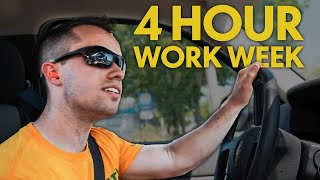
Mike Andes recounts a near-fatal workplace accident on August 4, 2016, when his hoodie was caught in a crew dump-truck PTO. At the time his lawn-care company was generating about $700,000 annual revenue. The incident convinced him that businesses cannot rely solely on the owner’s personality and skills; they must run on documented systems and procedures (sales intake, estimating, project execution, training). He explains the danger of either delegating too early (creating overhead without profit) or staying indispensable too long, and describes concrete steps he took (project-management videos, training crews) to move the company toward systemization and sustainability.
Questions this video answers
About $700,000
August 4, 2016
Chapters
We, as the business owners, the entrepreneurs, the Type A, are so good at what we do.
At the time, my lawn care business was making about $700,000 in annual revenue. I was really busy. I would do all the estimates throughout the day. I'd get all the crew started at the jobs. In the morning I had an office person I had recently hired full time, and that's the morning of August 4, 2016, when I was underneath the dump truck of one of the crews. I was showing them a job, I was gonna dump the material and then I was head back to the shop and get my day started, doing estimates. And I went underneath and the hoodie, my hoodie got caught in the PTO because I went underneath the dump truck to try to manually turn off the PTO because the lever inside of the cab had been broken. Went underneath, caught my hoodie and immediately sucked me up into the PTO and bunched all my shirt, my hoodie, everything around my neck. Thank the Lord it all ripped apart, dropped me out of the pto. I went to the hospital that day. They checked me out, went through X rays and all the rest of it. A few weeks later, I was able to get right back into the business after all the skin healed and bruises and wounds and cuts and all that good stuff. So thankfully there wasn't a concussion. I didn't break my neck, they thought I had. And so I'm very thankful. However, what it proved to me that day is that a business cannot be ran on the personality of the owner. It has to be run on systems and procedures and actual legitimate, hard, concrete ways of doing things, and not just the personality of the owner, which might be amazing. And honestly, I believe that you can build a million dollar business on the back of a great personality, someone that can sell really well, someone that can even lead other people really well. Those are great skills to have and we should all strive to improve our sales ability, improve our ability to lead other people. But ultimately, what I learned that day as I was in the literally FaceTiming my crew to finish the job and get them started in the next one, I realized that my business didn't really have the best of systems. And it ran on my personality of juggling all the balls and working really hard. And I was very fortunate at the time to have some incredible people working for me, as well as Liz in the office that was able to hold all of that together. But I asked myself, like, is this business really sustainable without people like myself working all day long, 50, 60, 70 hours a week and really being really skilled at certain things, skilled at landscaping, skilled at lawn care, skill at selling, a really good at persuading and leading or hiring whatever skills you're good at. It's not to take away from the fact that you're good at them. That's fantastic. But your greatest strength can become your Achilles heel as the same thing as in the body. Like when it comes to muscles, if you compensate too much, doing one side of your muscle too much, the other side can start to atrophy and it can start to break down because you're overcompensating in a different area. And so you might be really strong, the muscle might be really big in sales or in hiring or in leadership or in finance or whatever it is. And because it's so strong, you begin to lean on it even more. You start to, you know, if you have a really strong bicep and no tricep, what you start to do is you start to always ask yourself, how do I pick everything up using my bicep and what that causes? The tricep begins to fail and fail and fail. And what I find so often in businesses, we, as the business owners, the entrepreneurs, the type A, the founders, are so good at what we do, and we're. We juggle all different things in the business, and we're so good at multitasking, and we're actually really good at our jobs. But because of that, as the business, the organism begin to grow, it's constantly using you, and you're constantly asking how you can do everything in the business, how you can run everything, how you can become more efficient, how you can learn more. At the end of the day, if that bicep ever severs, if it ever breaks down the arm, the body is in great peril because the other muscles of the body have been broken down. There's no other muscle to compensate for that, the repair that is required from that bicep. And so here I am, I'm lying down in a hospital bed. Literally, my bicep was tore open. And I'm there knowing that the jobs aren't going to be sold today, that things are going to fall through the cracks. And I was very fortunate. Have great people. But what happens in your business when the things that you are so good at and that everything in the business hinges on your ability to do them? What happens when you can't do them? What happens when your personality has filled in the gaps and juggled all the balls in the business is no longer there? You say, well, no, that's not going to happen. I'm committed to this business. I'm not going anywhere. But what happens when you, dude, literally like I did, got hit by a bus? Like what happens? What happens when you have a family emergency? What happens when you have a relationship that breaks apart and now the business is vulnerable to literally falling apart? Because you've built it all on personality and you holding all the balls up and juggling them and working crazy hours. And there's no fundamental system that allows work to come in and be done in an efficient manner at a profitable rate without you being involved somehow. That is really the essence of what a system is. Something that allows the business to oper bringing business in, producing it efficiently and creating a profit on the other end without a person, a specific person, typically the owner being involved. Now, I know I'm talking to people that have larger businesses, multiple employees. You're not thinking about this when you're just getting started. You need to be focused on honing your sales ability, selling more jobs, getting more work. And you having a strong personality around sales is the thing that will get you past $500,000, will not even get you past a million. Your ability to hire and find people, again, great asset that might get you to multiple millions in revenue. But what's going to ultimately allow you to lead a life that most entrepreneurs aspire to, which is the business runs by itself and you work on it and you tweak and refine, but not an organism or a machine part inside of that machine. You're not a functional piece that's moving and has to be there all the time. If that's your aspiration, you must realize that systems and procedures must run the business. It cannot be you. And I find so often we do one of two things as business owners. Either a, we have the aspiration of having that lifestyle and we jump to it way too soon. We have people that do 2, 3, 4, $500,000 in revenue, even 6, 7, 800,000 in revenue, trying to find a general manager and having everything in the business outsourced. And all of a sudden they have so much overhead because they got two people in the office. They have an estimator, they have project managers, they have someone for sales, they have someone for marketing. They have all this overhead and they don't become profitable. That's not a very good system either because it might get work, it might produce it efficiently, but if it's not producing a profit because there's so much overhead, then that's not gonna be a long term Solution. So to create a system around getting you out of the business, you can't do it too prematurely. That's the first thing. People do this too prematurely. And the other half of entrepreneurs stick around in the business too long and allow themselves to hold all the hats and juggle all the balls for everybody in the business. And if anything would happen to them in their family, their health, their personal life, it would literally wipe the business out. And I truly believe that there's a balance. There's a balance to be able to get something off the ground and that thrust and the power and the energy that's required to get a rocket off the ground, the massive amounts of energy that is required and that's usually going to fall on you as the founder. That is the risk that you take. That's the crazy hours that you put in the first few years of business. But after three, five, six, 10 years of being in business, you should not be the one that is the driving force behind every single sale, every single job, every single happy customer should not know your name. It should run on a system. You have a system for bringing in sales, a system for getting the estimate out, a system for performing the work and making sure you don't show up to jobs like I did for every single project. So what did we do? We started to focus on systems. What did I do after August 4, 2016, once I came back from actually fixing all my scars and issues and wounds that I had, what did I do? I realized that hey, I, this is not sustainable. I can't show up to every single project. I make a video. When we caught, when we started project management videos where a video would be taken and given to the crew. Instead of me being there as the estimator showing them the job, it allowed me to be out of the machine. The machine of daily operations that I was so governed to would not have allowed me to scale the business. It would not have allowed me to continue growing because I was so locked into getting things done, getting estimates done, getting the jobs done. And that's fine. But there comes a point where you do have to step out of that and realize that focusing on building the systems is your job. Refining the systems is your job. And it doesn't mean that you work less or you take do a four hour work week or anything crazy like that. You spend all that time and energy instead of working in the business getting things done, you now step back and spend that time. That energy and that mental capability is now allocated towards working on the systems and procedures that allow that to function, that business to function without your involvement. That might mean training people, that might mean developing their skills, that might be having a software system, that might be outsourcing something to somebody else. But there's this perfect balance between doing this way too soon and way too quickly, and then also holding on way too long to things in the business and therefore becoming the weakest link in the business, because you're basically holding everything up. So there's really no point in this video other than the fact that all of us are somewhere in that range. And you've got to determine that there's going to be times where you've got to index towards you being in the business, and that's fine. When there's problems, you might actually need to jump in, get your hands dirty and get things done. But realize that the ultimate goal is to get on the other side of the equation, where you're working on the systems and how the machine works instead of making the machine works. I hope that was helpful. And if you're just getting started, and this is kind of seems a little bit too far up there for a larger business, check this video out here where I talk about the one thing you need just to get to 250,000 in annual revenue. Not millions, not growing a big team and leadership and Systems, just getting $250,000. This one thing is all you.










