the FUTURE of "Chuck in a Truck"
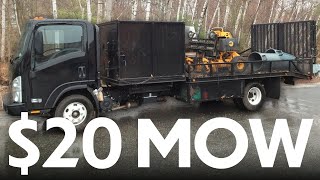
Mike Andes argues that unlicensed, uninsured home-improvement operators — "Chuck in a Truck" — surged during the 2020–21 pandemic because government benefits plus cash transactions made informal work attractive. He predicts a short-to-mid-term rise in such operators but forecasts that cashless payments, improved IRS tracking, and changing consumer preference for licensed/insured contractors will, over 5–15 years, drive consolidation and favor professional companies. He also gives tactical advice for legitimate firms on how to compete during the transition.
Chapters
There's this menace in the home improvement industry, the character we've labeled Chuck in a Truck.
Now, Chuck in a truck might come in a nice truck, but that truck is not insured. Potentially that business is not insured. Licensing, registration. No, none of it. However, Chuck in a truck because he's not licensed, because he doesn't pay his taxes, because he doesn't pay his employees above the table because of all of these things, he can do the work for so cheap, whether it's mowing lawns for $20 when every other company needs to be at 35 or 40, at least, or whether it be improving someone's fence and charging $100 or $200 when every other company needs to charge at least $500 just to break even. So this menacing character is something that landscapers, contractors, builders, all home improvement services. We've come to dread them. Today I'm going to be talking about their history. I'm going to be talking about what is in the future of truck and a truck, how you can compete against a truck in a truck, how you can whip a. A chuck in a truck and whether or not Chuck in a truck is going to be able to stay in business over the next few years. Now, in 2020, when the pandemic hit, I believe that it was the biggest boom to chuck in a truck ever. The reason was this. At the end of the day, the government was giving people $600 per week in an unemployment boost. Basically, if you were unemployed from your job. Now, I understand that there are millions of jobs are displaced because of COVID I own a gym and I know for a fact we were closed down. How? However, there were also people that took advantage of this after getting laid off from their job, and they flocked to industries like home improvement where they could get cash and money under the table while still getting their sweet $600 per week plus state benefits. Some people were literally making 40, 50, $60,000 a year just on unemployment benefits for 2020 and parts of 2021. However, over the past few months, that sweet, sweet money from the government has began to dry up. Inflation is going up, the cost of living is going up, and yet those benefits and that stimulus money beginning to go away. So the question is, are these Chuck in a trucks, these people that took advantage of the system, and we're getting paid with cash under the front mat, money under the table, paying their friends to help them on the side without reporting that to the labor department, are they going to be able to stay in business? Are they going to thrive or are they going to go out of business allowing legitimate companies to thrive and succeed by taking their customers? So here's my take on it. I believe that as we become more and more of a socialist society in the United States and that we are going to see more and more chuck in a truck simply because if we can just prove to the government that we are making less money, if we can get more and more and more benefits because of this distribution of wealth from rich to poor, well then why in the world where I want to go get a job when I can just do something on the side, make cash under the table, plus any benefits that I get from the government? And this is what people are concerned about in landscaping, lawn care, mowing, and many, many different contractors in the home improvement industry. It's like, well how are we going to compete with this person that doesn't pay? Registration isn't licensed and they literally just pay people under the table. Like you can't compete with that because the cost of labor is going up and taxes are going up and licensing and insurance is going up. How in the world are you going to actually be able to stay competitive? And so in the short term, I do believe that chuck in a truck is going to be thriving. People trying to make money on the side, money under the table is going to become more and more rampant. However, I do believe that this next 12 to 24 months is going to flush out a lot of chuck in a trucks that started in 2020 and 2021 and saw a boon in business making money under the table. However, they're going to quickly find out that once this stimulus money is gone, they don't get their unemployment check, they have to start paying mortgage forbearance is gone and they have to start paying their rent and now they have to start paying on their student debt again. When those things start happening all of a sudden, that really good paying job that in this labor market can pay $2025 an hour starts to look pretty appealing compared to them doing really, really low end cost services in home improvement. So I feel as the labor economy heats up, it's going to become less and less appealing to be a chuck in a truck. It's going to become less and less appealing as the cost of labor in the other industries becomes more and more. But what's actually going to catch up, I believe in the downfall of truck in a truck is going to be the fact that the consumer is going cashless. What you've seen over the past couple of years, if you look at the economics of creating currency in the form of cash and change, it's extremely inefficient for the. And they do not want to create cash. The reason they don't want to create cash is because they know what's happening. They know that people can transact and not have a ledger in the form of bank statements and credit card statements to be able to prove to the IRS how much money they made. So in my opinion, the government is wanting us to go cashless because it's easier for them to track that money from the IRS perspective. And that's why in 2020 and 2021, we've seen a massive shortage of cash and change. And you go to stores and they'd be like, we only accept credit card payments because we don't have enough change to give you back. And so I truly believe over the next few years, we're gonna see more and more of a trend towards cashless. We're gonna see more and more of a trend where, like, if you don't have cash and I don't have cash, the millennials don't have cash. And as we see now the technology adoption by the baby boomers and people that are 50, 60, 70 years old, what we're going to see is people that do not have the cash to pay Chuck in a Truck because at the end of the day, Chuck in a Truck cannot get a check written out to them. Why? Because that's going to be on a bank statement. That is going to be show how proof to the IRS they are making income. And as the IRS gets more sophisticated, and even as you see legislation that's currently in process of being passed that is going to give the IRS more and more insight into bank statements and transactions over certain volume and a certain amount of dollar transactions is going to be a very, very tough time for Chuck and a Truck to be able to do this without getting caught. Because the reason Chuck and a Truck has been able to survive is because as long as we're getting cash, as long as we're not getting credit card statements, we can prove to the IRS that we did not money last year, that we can get a bunch of money back in our tax returns, we can get stimulus money and tax credits and refunds and get handouts and food stamps and all the rest of it. But as long as the gravy train continues, Chuck a Truck is going to thrive. As long as there's more and more benefits given to people that don't have proof of income, we're going to see more and more Chuck and a Truck survive. Now the question is, how do you compete with Chuck and a Truck? And is there an actual opportunity that I feel is going to happen over the next five to 10 years? And I do believe this, I feel it's happened with this massive boom of people joining home improvement industries like lawn care and landscaping is what's going to happen is it's going to push a lot of good companies out of business. The ones that really, really thin margins and are struggling right now to hire laborers. They're going to have a very hard time competing at such thin, razor thin margins if they're competing against Chuck and a Truck. But what's going to happen? They're going to go to business. It's going to create more opportunity. There's going to be more customers, but these customers are not going to be willing to pay cash under their front mat. They're not going to be willing to do the cash app or send someone via Venmo that money. Obviously, the government has become privy to this and they're going to create legislation that tracks this money. And it's going to get the not only the business owner in trouble, it's also potentially going to get the customer in trouble if they're doing these things and not paying sales tax. Because when Chuck and a Truck takes payment, not only are they not claiming that and paying income taxes on it to the government, they're also getting around local and state taxes and sales tax. And that could become a potential problem also for the consumer. So the downfall of of Chuck in a Truck is going to be, first and foremost, that the transactions are going to become much more traceable by the irs. The government is going to get better records of cash and Zelle and Venmo payments that are being transacted across from one bank account to another. This is actually relatively easy to track, especially when there's large volumes of transactions or large amounts of transactions like would happen if you were mowing someone's lawn every single week and getting cash, or if you were getting Venmoed from dozens of people. You're obviously running a business. This is only a matter of time before the IRS catches up to what this technology is. The second thing that's going to be a big challenge for Truck in a Truck is the fact that consumer sentiment and the type of customers that are going to be the highest value are going to start expecting licensed, insured and a more professional image from contractors. And they're going to be willing to pay a premium Price because they're having their valuable asset, their real estate gone up so much in value they're willing to pay an extra 10, $15 or, or 10, 15, 20, 30% in order to get a licensed insured contractor on their most valuable asset. As we've seen real estate prices go up and the value of people's assets and what they've put in terms of nest egg their retirement, they're not going to want to jeopardize the most valuable asset they have as they go into the retirement. They have a million dollars in their house in the form of equity. They don't want to be trying to weasel their way by saving $10 a week by simply having someone that is insured. And if something does go wrong on the property, if something breaks, they ca fire if something crazy, if someone gets ran over by a truck on their property that they're going to be covered and they're going to be insured and they're not putting their assets in jeopardy. There will always be low bidders and Chuck in a trucks in every single home improvement industry. The way you set yourself apart from that is making sure you make it clear to the customer that you're different from them. Make it very clear by that. Your trucks, your equipment, your uniforms, the way that you're trained, how you answer the phone, all of these things are things that separate you from what Chuck and Truck is doing. Because guess what Chuck in a truck is doing. He's answering his phone and in the background you hear pounding hammers and the weed whacker going off and they're panting and they can't hear you because there's a dog barking or they're trying to talk to someone else, a customer while they're talking to the person on the phone. Or worse yet, you don't hear back from them for four or five days after you leave a voicemail, or you never hear back from them after you give them an estimate proposal. Like that's the type of thing that customers are not going to put up with as time goes on and as the wealth of our country is held in the hands of the baby boomers who also can't do the work themselves, but can afford to pay a premium price for a premium service that can speak English, communicates well, and does a really great job in a manner that makes them feel safe and their assets are also in safety. I feel like the rise and fall of Chuck in a Truck over the next 10 to 15 years is going to be the thing that allows this industry to Go from massively fragmented to actually relatively consolidated. Currently, right now in lawn care and landscaping Specifically, there's over 600,000 landscaping companies and lawn care green industry companies in the United States. I feel like in 10 to 15 years, that number will not go up. I feel it will go down. However, over the next five years, I feel it will go up. Chuck in a truck is going to go up in the next several years as legislation and our economy becomes much more socialist where we give money to people that do not have claimable income. However, technology is going to catch up. The ability for the IRS to track this money and the way that the consumer demands that we be more professional and that we have a higher level of service, I do believe is going to create a vacuum where the people that are left standing that get through the next several years of these Chuck in A trucks really ramping up. If you get through that time, you're going to be in a prime position to be able to take their customers when they go out of business and when they go get another job. Because now the cost of labor has gone up to the point where they'd rather make more money just being a W2 employee than trying to run around doing cash, trying to get around the government not claiming money on their taxes and doing things. Everything under the table, specifically states such as Florida, Texas and California, where they have landscaping, is done year round. And these are the places where chuck and a truck abounds. There's lots and lots of competition and I feel like this is going to be most pronounced in those states where there's currently a majority of companies that are in these home improvement industries are trucking a trucks. I think this is going to be most pronounced in those states where over the next few years it's going to be very difficult to compete on price. This is going to weed out a lot of the competitors that are larger, that cannot find labor and cannot compete on those razor thin margins. We're going to see a rise of truck in a truck and then in my opinion, over the next 10 to 15 years, as technology catches up and consumer demands and transparency changes. That's what's going to lead the demise of Chuck in a Truck. And that's going to allow the remaining core group of professional companies to actually take massive market share. And that will lead over the next 10 to 15 years to a consolidation in these home improvement industries, allowing companies that are big to take over and take market share from these truck and a truck operators. This is my opinion. I could be wrong. I could be completely off base. But that's what I think is going to happen. With trucking a truck. We've seen a massive rise and it's going to continue for the next several years. But eventually I do believe that running your business the right way, above board, doing it licensed, doing it insured, is going to win. So what should you be doing now? If you're in a market or an industry where there is a lot of truck in a truck, the question is, should we try to compete on price? And at the end of the day, you're going to have to to some extent, I believe over the next three to five years you're going to have to bring your prices down and you're gonna have to make sure that your efficiencies by using software and maybe really lean with your labor. If you can do that, you'll be able to compete and then you'll be able to stay in business for the time when those truck and a truck operators go and get jobs. When those truck and a truck operators have to go out of business because they no longer can do anything under the table, you'll be in a prime real estate, prime location to be able to take market share at that time, it's going to come to the person that's patient and the person that is willing to take systems, procedures and be ultra efficient to be able to compete with Chuck in a truck and beat them at their own game. At the time when consumers start to change their behavior and as the customer begins to expect and demand that you have a professional service, that you are licensed and you're doing things above board, Let me know in the comments below if you think that Chuck and truck operators are going to thrive over the next five to 10 years or are you starting to see cracks already in their business model that might potentially lead to them becoming extinct one day and a massive consolidation in our industry. Happening. Happening. Comment below and let me know what your thoughts are.









