The Therapist for Small Business Owners - Episode 104
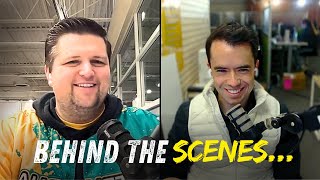
Episode 104 is a conversational interview where Lee and Mike Andes debrief an RV road trip used to film Turnaround show episodes and vlogs. Mike describes logistics (trip began in Raleigh, included ~nine turnarounds and meetings with Augusta owners in September), the exhaustion of back-to-back coaching plus driving, and media choices (short vlogs for hardcore fans, longer Turnaround episodes get substantially more views). Core thematic takeaways: identify and focus on the single constraint (often revealed as a leadership or personal-life issue), use the 4L business framework (liquidity, leads, labor, leadership), and preserve psychological safety when coaching owners. The episode also notes emotional toll on the coach and a concrete content-production recommendation (DJI Osmo Pocket 3 creator combo).
Chapters
We're going straight in. Welcome back. Another episode, these Sweet, Sweet Unfiltered with Mike Andes. We took a three week hiatus, but we are back. How are you doing, sir?
Good, man. I think it's been like four weeks because we had the, the, the big RV trip, which technically I'm on, I'm on right now.
Yeah, yeah. According to the YouTube verse, you are currently on your road trip, but you are, you are actually back the recordings, the vlogs are coming out and I actually, I did want to talk about that. Now I don't want any spoilers obviously, because you guys are doing the vlog, but let's be honest, the C suite unfilters for the hardcore fans. So to audience, these won't be spoilers. So I'd love to get some teasers out to the C suite audience. And I did prepare some questions to kind of ask you about your road trip. Don't have to go too deep, but just generally speaking we'll kind of ease into it. Was it kind of what you expected? Was it easier? Was it harder? Like you, you were on the move. So give us kind of the brief overview and then generally how you, how you felt about it.
So we started in Raleigh, North Carolina. Um, there was nine turnarounds and then nine Augusta owns we met along the way. Um, so was it harder than we thought? I don't know. There was definitely like ups and downs. It was, it was very exhausting, I think for the team.
There. Like, yeah. Then there's not really use of like four and five hours of sleep every single night for a week and a half. And so I think the challenging part was the driving in addition to the coaching. So like we would do coaching in the morning, wake up early, go do coaching, then drive for six hours and then like usually like, oh, it's relaxing. Like, nope, we're going to do another coaching or another turnaround or like gonna go do filming. So it was exhausting. It was really, really exhausting. It was, it was more a war of attrition. And so I think the, our consensus, we like the, the rv, but we would want to be in a more tight and centralized area. So that way it's like you do the turnaround and, and then you at least have a few hours in the evening to unwind instead of driving for five to six hours every day.
Yeah, gotcha. No, that sounds like that would be extremely taxing. So now I'm just going to take a hard shift into more specific questions, more thought provoking questions. So I was trying to think of, like, instead of like, was it fun? Did you like it? What was the hardest part? I want. I want to get to, like, core kind of thoughts that came out after or during this experience. So one of the questions I thought of was, like, if you had to say there was kind of one universal lesson lesson for all the businesses you visited, what would that be? So, like, first, how many businesses did you visit? Two or most of them, lawn care and landscaping, and then three. Is there kind of one universal lesson from all of them that you felt was kind of a consistent theme throughout?
So there. It was probably about a third or about 40% of them were not lawn care. So there was like a flooring removal company, demolition. There was a pool company there. Like, we. There was quite a bit of not lawn care. But given the timing, which is like, was September, it's. It's really a great time for lawn care because everyone's still in their peak season. That's really why we did the turnaround show like that, that trip. Then if we would have waited even to like another month or two, people start slowing down, mowing, and there's not much to do. So there's still quite a bit of lawn care landscaping in there. In terms of general theme, I think focusing on the constraint and identifying the constraint. So first off, identifying the constraint and then focusing on it, because there's always a hundred things that you can get done in the business. And so I think the one thing that you'll see later on in the vlog, especially as I get more tired and I just get more blunt with my feedback to the camera, is like, it's just like, this is the constraint. And like, I don't care about all this other stuff, these red herrings you're throwing me. Like, just fix this one thing. So, like, there was one. You'll see where, like, it was like, a lot of times personal stuff. So it's like, like you're trying to do all these things. Like, no, like, your, Your. Your marriage is messed up, or like, you have a really weird thing you're doing with, with your general manager. Like, you need to solve this problem. And so that's what I consistently saw is like, identification of. Of a constraint, then focusing on the constraint, and then realizing that there are outside forces that are creating that, preventing you from solving that constraint and going and attacking those. It's like a third order of effect. So, for example, you're like, okay, well, leadership is my constraint in the 4L framework. Okay, great. What's causing that, oh, like I have a huge amount of churn. Okay, why is that? No one's respecting me. Okay, why are they not respecting? Oh, like you, you literally don't get to work on time. And the reason for that is because you can't sleep. And the reason you can't sleep is because you're 100 pounds overweight and you need to go exercise and eat healthier. Like that's where the constraint is still leadership. It's just like, how do I actually figure out what the actual diagnosis and prescription is? And so, yeah, it was, I would say the common commonality is focus, then identification and then being prescriptive with like, what is the actual root cause of that. And unfortunately a lot of times it is personal stuff that I'm like, you should go see a therapist or like, see your pastor, like, talk to someone you love because, like, I'm not going to get involved.
Yeah, fair enough. So you would say like that kind of one universal issue or truth with these businesses is like the lack of focus or the need to focus on the actual high priority, high leverage tasks. That's kind of like the main takeaway.
You'd say, yeah, everyone's like, the problem that I have with the turnaround show in general is that when we go in, in order to make a cohesive video, I can't spend three minutes with them. I need to spend more time and I need to go through the 4, the full 4, 4, 4L framework. So I need to go through liquidity, I need to go through leads, I need to go through labor, I need to go through leadership. If I was talking to them one on one, I'd probably like, okay, so scrap everything and just focus on this one thing. And so we need to create a six week plan so that in six weeks we can actually follow up with them and have a checkpoint. Like five or six things. I usually would probably just give them one. And usually in my coaching I'm like, hey, by the way, just do this one thing. We don't put in the edit because we want them to do the five or six things because I try to make it manageable. But usually it's like, if you did this one, it'll have like a cascading effect across all these others. And so it's just funny because a lot of times it's the people that watch, they are on the turnaround show, they have watched all of my, all the videos and then I'm saying the exact same thing just to them now and they're like, oh, Man, I thought you were going to say this and this and this. Because they're putting. They already have in their mind what I'm going to say to them. And so they have this preconceived notion that I come in, I just say something the exact same as, like, I would say to five other people. And they've heard me say it five other times, but it's like, now it's just to them.
So, yeah, no, that's fair. And I think there's. There's that element of, like, you need to personally feel that feedback. You need to personally maybe, for lack of a better word, feel that. That sting of someone coming in and telling you what's wrong. Not, okay, I know what's wrong. Or I've seen Mike talk about this before. He posted a video last week about this constraint. But it's more personal. It almost creates more action, I guess, or creates more of a reaction from your perspective as the coach. Like, you know, and this has kind of been your strategy around Augusta, is that you're going to put out all this YouTube, all these YouTube videos, all this free content. And you know that less than 10% of people, probably less than 5 maybe now that your audience is growing, less than 1% will actually take your prescription, will actually do what you say. So then we create Augusta, which is, hey, here is the playbook, here is the prescription. And. And we're going to partner with you in that and take you to the next level. Right. And that's that 5%, that 1%, whatever that, like, buy into it and personally kind of own that prescription. So I think that's kind of where I'm seeing it from an outsider's perspective, is that people need to get the prescription to themselves, not to see someone else be given a prescription.
Yeah. The one thing about the vlogs, I already knew the vlogs weren't going to get any views. Like, they're going to get like maybe 2 to 5,000 views video. But I also know those are the people who actually really care about the turnaround show. They're future applicants. They will watch the vlog. They want to see what's going on behind the scenes. And we need applicants next year a lot. And then also owners of Augusta Lawn Care, as well as people that support home service, web design. They make the trip possible. That's why we did that, because we could have just done what we always do, which is we fly in, we stay at a hotel. It's not really vlog worthy. We don't show behind the scenes, we just show the episode. So that's kind of why we wanted to do the behind the scenes. It's for the very hardcore supporters. The people actually are paying, like, they make it possible for us to do this. But even, like, today on the vlog, I just wish the turnarounds were coming out with the vlogs, because the vlogs are showing behind the scenes, but you're not actually going to see the episode because we can't make it. We can't share so much of the actual turnaround on the vlog that you don't want to watch there. The. The actual turnaround episode. But, like, the one today is crazy because we came in, like, everything is good. And, like, he wanted to. He thought his constraint was, like, he wanted to learn how to franchise. And by the end of the show, which you won't see on the vlog, you. You will see this in, like, a couple months. It was like, it was like a. A deep dive into his child of how, like, his parents and, like, family, very religious, but, like, basically made money a bad thing. And so he was trying to put on the facade of, like, wanting to help his team when he realized, I'm like, dude, you just want to make more money? Just tell me, like, it's fine. And it's like, on the episode, he's like, yeah, I just want to make more money. I'm like, great, now we have something to work with.
And it was like, this is such.
A fun realization and, like, breakthrough. And then just like, to see, like, the burden off of his shoulders of, like, okay, I can just tell my team I want to make more money, and here's how they can make more money. And. And it helps them and it makes more clarity. And I'm not trying to put this facade on anymore. And that was like, 11:30 at night. We were finishing up that turnaround. But anyways, yeah, that one comes out today.
Yeah, I love that. Yeah, it's kind of like you need to. I'm going to make a bad cultural reference here, but the Marvel Cinematic Universe, so all the superhero movies come out in different orders. And so you and the media team need to tell everyone what order you need to watch the vlogs in. With the release of the turnarounds, it's like, hey, this is the chronological order of the story of the turnaround. So I'll tell you, it's really bad.
Because on the end screen of the turnarounds, when they come out, we should just say, hey, for behind the scenes, watch this. That's not a bad idea. That's not a bad idea, Lee.
All right, I'll take it. I'll take it. I'll take it.
But, you know, the Turnarounds get like 20 to 40 times as many views. But if people get to the end, they would want to watch the, the, the behind the scenes, and that would be 100%.
So, yeah, that's what I'm saying. It's like the actual, like, because there's the release order, right? Like, Marvel releases movies about different superheroes however they want, but the actual chronological story, completely different order. So there you go. You guys can. There you go. There's a free, There's a freebie for you. Would you say, yeah, that's. That's how we do it. Would you say that? And this is more of a personal question for you because you've spoken to, I don't know, at this point, thousands of business owners. When you think of all the group calls you've done, all the conferences you've done, you. You've shaken hands with, talked to thousands of business owners. Do you feel like you're kind of trial by fire and you always getting better and you having a coach has helped you kind of analyze more of those personal problems outside of the business to be able support them, or do you. Have you consumed any, like, therapist content, if you will? Like, have you looked into that? Like, in all honesty, like, is that something that you've even explored? Is that something that you've, like, taken courses on? Do you feel like is even necessary? Like, what are your thoughts on that? Because as soon as you bring up the word therapy, right? It's a very polarizing term nowadays, especially now. It's been politicized very heavily as, like, should you or should you not use therapy? And that's not the debate here. It's more. So have you looked into the tools or explored the tools of, like, what therapists do when they are trying to help people through more of the personal issues, less so the business issues?
Yes, I have tried to stay in my lane on this one. So, like, for example, we. There's. There was a, A couple, we met that the husband was. Suicide. I shouldn't say that on YouTube. He tried to take his own life. And the. Because of the pressure in the business and then pressure on their relationship, and they had split up and started living apart from each other. And so as much as I know that they were going to a therapist and trying to get help in their relationship, I said, look, the cause, the root Cause of this is stress in the business. Let's fix the business. And I actually like, you'll see this one again in like a couple months. This is one of my favorite turnarounds ever just because it went so deep into like the personal side. And I was like, I need six months. And so I had her shake my hand. I'm like, give me six months of what you're currently going through. But we need to get the business on track so that way we can afford to delegate because we can't right now and we have no systems. So like the tournament was essentially, here's a six month plan to be able to create systems, make the business more profitable and then delegate. So that way you guys don't have to be working 15 hour days together as a couple. And so.
You know, in terms of, I just try to say like, look, a healthy business allows for healthy relationship and a healthy relationship allows for a healthy business. And so if either of those things are off, neither of them can coexist. And so I've just been trying to focus on like, okay, let's just focus on the business. Because this other thing, I don't have all details and I'm never going to be able to figure out all the details in an hour or two of coaching. But I know I can look at the business, fix the business and then I know that less stress financially will help them, you know, in that area. But it almost always bubbles the surface. Like, like in hindsight as you said, like the personal thing is actually the thing I keep seeing over and over as to why the business owner's not succeeding. And their constraint in the business might be leads but like the real reason they're not going on doing follow up calls is because like something they're just going on behind the scenes. And so yeah, it's difficult because a lot of times in the training you'll hear, in the coaching you'll hear me like maybe that's something you should get a therapist. But then I will go and I will say stuff that I think might be helpful. Mostly because I know that if they fix things in the business, they'll give me a certain level of credibility and then hopefully they'll take action on a few of the other items I'm kind of somewhat shot shooting in the dark on. I just try not to be too prescriptive on the personal stuff because I don't have full context. Whereas the business is numbers, like it's, it's black and white.
Yeah, that's fair. So is there Are there any pieces of literature, books, content that you've like learned from to kind of help analyze that personal side that you would recommend? Like if someone was interested in like, you know, I do want to get better at understanding why I feel certain ways or why I react to certain things. Like not necessarily to self diagnose, but to just learn more and sharpen their skills. Especially you know, most of the listeners of this pod are going to be business owners. So helping the employees with their personal issues and what's going on in their personal lives, their customers, whatever it may be. Are there tools or resources that you've tapped into or looked into?
Yeah, like I think going to the the deepest part, like there's biblical principles that work regardless if you talk about business or personal life, et cetera. And so even if someone's not religious, I think a lot of those things can be used. And the nice thing about it is you have thousands of years and decades and centuries of that working. So it's like a really good track record versus like yeah, someone just came out from Harvard last year. It's like, well, it doesn't really have much of a track record. But yeah, I did do a ton of psychology in school. So like my minor in my was psychology. So I could do developmental psychology and then like, like four or five different high level classes of psychology because like when it came to electives I did not want to do like art. So I went to psychology and but I wasn't, because I was like super interested. It was just like I'd rather do something that I knew I would be talking with people and communicating with them about versus random stuff. But yeah, I wouldn't say I'm trained by no means. And then I think the other part of it is like being raised in a minister's home. They're doing consulting and like whatever all the time with people around their personal problems. So you kind of pick up on little things on like what works and what like just to break through to people. But I'm definitely not like that's not my strength. So I try to like, I navigate through that, realizing that's actually the main problem. Then I go to like the business which is like I know if the business makes better money and there's not financial stress and they're not worried about making payroll, that that will help the relationship or their health or the ability to delegate, et cetera.
Yeah, no, that makes sense. And that's where like I don't want to get too deep on it. It's not like you are going into these as. Like, I am a therapist. It's more so, like I know the frameworks to make a business successful and if there are personal issues that come into that framework, I'm going to talk about it because I care about you as a human and I know that about you. Like, you care about these people as humans. Like, you want to see them succeed, whether it be their business shuts down, but their marriage is like, you want them to succeed, right? Ideally both. Right. Their marriage, their marriage is successful and the businesses. But sometimes you have to kind of draw the lines. Right? So no, that makes sense.
I have my first video coming the main channel in a couple months. That's about, about this topic. So because of how many times on this, this trip it came up like, hey, like, I'm going to make a video I'm going to make. I'm going to preface by saying I do not know very much. I've been married for one year. But here's what I have learned and I'm going to stick just the business side. And it's basically, it's basically focus on the business and make more money so that then you can have the bandwidth and the time and the energy to be able to focus on the relationship. Because the clarifying function for a business owner, because the challenging part as a business owner if you go to a therapist is if that therapist doesn't understand business, they just, they diagnose all the problems as psychological, emotional, spiritual wins. Like, whoa, whoa, no, no. The fact is they can't make payroll this week and that is extremely stressful and therefore they're not sleeping. And so it's like, oh, we need to like fix their sleep. No, you need to fix the business. And so that's how I talk to the people when I am doing because I'm like, hey, we will fix the business. And then you might still have more problems that you need to go figure out with therapist. But let's figure out the actual root cause of the problem, which is the fact that you don't see her because you work 80 hours a week. And the reason you do work 80 hours a week is because your prices are 25% below what they should be and you can't afford to replace yourself.
So, yeah, I think, you know, to get ultra binary with it. And that's one thing that you've taught me is like, you know, outputs are limited by their inputs. And so from like a psychological perspective, it's like the inputs are your childhood, your trauma, your this, that the other, which. All fair, all fair points. But the input could also be the fact that like I have eight employees and I don't know how I'm gonna make payroll. Like, that isn't necessarily a sleep issue. That is the input. The input is I am stressed about paying my guys right. My team. And the output is now that I'm taking it out on my family, I'm absent, I'm not sleeping, whatever it may be. So you're able to get very binary with it, which I think a lot of people need that more so than they need like deep psychoanalysts, so. Or analysis. Well, we went, we went way off the rails there. I would also, and I'm just going to kind of zoom out now to, you know, we're going to, we're going to use a bundled term here. I think a lot of it too comes down to personal capacity. And I think that's kind of what you're talking about is like what is their personal capacity to run a business, to have a marriage, to have kids, kids to serve in their community. What whatever other, you know, opportunities this business owner may have. Do you feel like helping people identify their personal capacity is one of the biggest things that you see as the benefit of the Turnaround series?
Dude, the Turnaround show has helped me so much with my communication and just like ability to be able to. Because like I'm going in very cold. I've never talked to them before. I walk up and there's a stranger I'm shaking a hand with and within two hours we've got to create a framework for their business. I've got to like figure out if there are personal issues that we've got to dig through and it's not surface level, like, it's not like they're doing the call in show or in 10 minutes we give them some service level tips. It's like I'm trying to actually give them a framework to completely overhaul the business. And many times that includes overhauling their life. Like the L part, the leadership part of the 4L framework is where almost always the best content comes from. The Turnaround show. And the problem is that's always towards the end because the last of the 4L frameworks, if we actually are trying to optimize for views, we would put the L first for leadership because that's almost always the root problem that goes into their personal life. One thing that I think is really important though to what you're talking about like personal capacity is being very careful that because I am Very confident on the business stuff. And I am, I know it will work that I don't then let that bleed over into then somehow I am going to be able to help them in all these other areas of life. And the reason I say that is because, like, I get, there's nothing more annoying than having an entertainer that is really good at singing, has an incredible, incredible voice, but somehow because they're really good at that one thing, they think they need to give everyone advice on like parenting or politics or the economy. It's like you have no idea what you're talking about. And so I try to be very careful to stay in my lane of like, I am very 100% confident on the business stuff. And then I will occasionally from a personal perspective be like, I care about you genuinely. And I am seeing these constant themes and I think it relates to this other problem. And so I try to stay in my lane as much as possible. And sometimes we cut stuff out of the show that I'm like, I'll be like, hey, no cameras, let me just talk to you. I think there's actually this other problem and what is fun for me, like, the most challenging part for me is because I'm going in so cold to these and a lot of times there's actually not a problem in their numbers or we don't get numbers. So I'm going completely cold. And, and, and so I think for me that's so fun. The reason I think the turnaround show is helpful for me is being able to get to the root cause of the problem, identify and build a rapport with them fast enough to be able to actually address things that are very uncomfortable that we can't show on camera is like probably the most fulfilling part for me. And like I come out of those turnaround like the coaching part, like feeling very fulfilled.
Yeah. Would you say that the first impression impacts you heavily in that two hour meeting or do you let the relationship develop throughout two hours before you kind of make your, your judgments? Right. Because people talk a lot about like, oh, first impressions are so important and this, that or the other. Well, you're coming in to diagnose their business. So like, yes, you're looking for certain cues during that first impression. How do they approach you? How do they talk to you? Like, how are they communicating with their team when you show up on site? Like, all of that is important, but how do you balance that? Being like, okay, I don't want the first impression to be ultra good or ultra bad to sway my view of this person because I know I'm about to hopefully, if they're willing, go pretty deep with this person over the next two hours. How do you find that balance going into these situations? So cold?
Yeah, like, I think most time you probably get 20 to 40 minutes of coaching on the turnaround show. The part you're not seeing is usually the first 50 where I'm letting them talk a lot, mostly because they're nervous. And so like the reason I don't really put any weight on the first impression of the Turner show is they're all nervous. They've never seen me. We just literally met. So there's been no warm up. Like I don't talk to them before the show like the media team does. So I have some information. But like we've never met and then there's cameras and now everything they're saying is being recorded. So like they're not used to that. I'm used to that. So most the first hour is me just trying to break down the, the barriers. And like usually to do that I just let them talk. I let them show. Like you'll, you'll notice the media team just mocks me because like I have the same three or four lines. Like when I talk to them for the first couple minutes. Like the shop tour has nothing to do with the getting shop tour. It's about them in a comfortable environment, having me around them, walking me through there, like where they feel comfortable. So like there's a lot of just like me trying to get them psychologically just like, like just relax. So that way when we sit down and do coaching, I can get through faster. But a lot of times, like the one that will come out today, it literally was 11:30 at night. The last 20 minutes is the only thing we needed to talk about. But the first two hours, three hours was him just talking and like going on. And like I would let him like walk down this trail of franchising and then walk down this trail of like his past. Like it was all over the place. And so like, yeah, many times you just see the last part of the episode.
Yeah, that's key. And what you talked about there is like psychological safety, right? That's something that is very important with all avenues of therapy or teaching. I know that's something that, you know, my wife has talked about with being a grade school teacher is like, you have to make kids feel psychologically safe. And there are lots of different kind of tips and tricks and I don't use that word in a condescending way. But tips and tricks to make kids feel psychologically safe. And you can also do that with adults as well as, like, there are certain priming questions you can ask. There are certain guiding conversations and questions you can ask to make people start to feel safe. And I think very good at that. Making it conversational, making people feel comfortable around you. So that. That's a really good kind of, I guess, word of advice for all of us to think, like, okay, if you're first meeting someone and you want to get to know more about them, whether it's an employee, whether it's a potential partner, whatever it may be, it's like, can we make them feel psychologically safe to get to actually getting to know them more? Not necessarily diagnose them, but just, like, make them feel comfortable so I can get to know them at a deeper level?
Yeah. One thing that was interesting because Brianna is so fresh to, like, the whole. The whole, you know, videos as well as Augusta thing. Her feedback sometimes is really interesting. Fresh eyes, kind of like you were talking the other day about the sales department. But in terms of the show, one thing she identified is like, when she. When we go to a Augusta owner versus a turnaround, and I think it's to your point, the Augusta owners already know I'm on their side. They already know I want the what's best for them. And we get across the 90% of what is usually required to build that bridge, and we just go straight at it. And so, like, when we went met on. On, I think it was the Sunday, we met, like, five owners of Augusta, and within two hours, we did the coaching for five businesses versus two hours is usually one business for a turnaround show. And she was like, this is so crazy because you just immediately, like, within the first five minutes, I was addressing Thomas, our first owner, August Nation, and like, the personal development he's had in the past couple years, his relationship and his wife was there. And it's like, able to, like, just straight up address it versus being two hours of, like, all this stuff to get through a building rapport. Because I trust him and he trusts me, and, like, we have that connection and we're on the same team. And so, like, I think it was really impactful for her to just, like, to see that stark difference between, like, why Augusta exists is because to your point, the psychological safety is so intact that I'm able to say what I think and then be able to turn around, be like, hey, how can I help you grow your business? And, like, what support can I give you More of. And then they'll give me harsh criticism pretty straight back and like, how much progress we can make because that. That gap has already been crossed.
Yeah, 100%. Now, this is more of a personal question. Is there or what is the, like, emotional toll for you stepping into so many struggling businesses back to back? Like, how do you handle that.
Dude?
So, like, you know this part. So, like, way back in the day, way back in my. In my previous life, I preached a lot. Like, I would preach one to two times a week down, like just little surges. And then over in Africa, like, I did camps and stuff, like, all for young people. But, like, it's extremely emotionally taxing because when you think about preaching, you don't actually have any gaps. Like, if you stop talking for age of 5 or 10, 10 seconds, most people just have checked out, especially young people. You've got to be moving and grooving. You got to have your things nailed down. Right. And so you're. It's very emotionally, like, it's just taxing physically even for me to be talking that much for like an hour. The same thing happens on the turnaround show. I'm. After I'm done, I just want to, like, sit there and just, like, not talk. And I'm completely drained because mostly you're trying. Your. Your. Your senses are really acute. Like, you have to focus. You have to be very. You're trying to go on every single word you're saying. You're trying to figure out how they say certain phrases so you can dig into them. You know, the camera's on and like, we have to make a show. Like, if I do, don't do a good job. Like, we just wasted tens of thousands of dollars and so. And I'm wasting their time. Like, so, like, I'm really, like, locked in and that two, three hours. What you don't see and you might see some of on the vlog is like, after I'm just. I'm gassed. So I don't think it's like, tolling. It's just like, I am really, really focused. There's nothing I think about. There's. It's like my.
My, my Four of Zen is like being locked in on a turnaround show, trying to figure out a problem with someone and knowing I have, like, a time limit, I've got to be done in a certain amount of time, and I've got to figure out the problem and then, like, give them a solution. So it's very similar, like, the way I feel afterwards.
Yeah, fair Enough. All right. I know you have a hard cut off here, so I want to ask one kind of final fun question, if you will. And I don't want to steal from the vlog, but I would like to know who was the worst backseat driver on the trip. So not driver, not driving the rv, but backseat giving directions, telling everyone where to go, making comments. Who was the worst backseat driver?
Well, Zach, who drove like 98% of the time, and then I drove the other 2%. So no one did backseat driving because if they really had a problem with it, they could have just drove Zach. Zach was doing all the driving for us. I think Francis was worried the most. After 10 days, you have to just relax and like, you'd rather just sleep than be worried the entire time. But he, you know, he warms up to it. You know, Francis, after a day or two, warmed up to it. But I don't think there's any backseat driving. Everyone was just so exhausted. It was like, thank you, Zach, for driving so we can focus on other stuff.
Yeah, so Francis was the seatbelt check guy. All right, everyone make sure you got your seatbelts on.
No, there's not seatbelt belts being had. If you were in the driver's seat, you were not wearing a seat belt.
Oh, that's fantastic. All right, well, I know you got a hard cut off. Thank you for indulging us on a deep kind of behind the scenes dive of your road trip. And thank you for doing that. You and the media team. Brianna, for putting that content out. I'm very excited to watch it. I'll see it also. So genuinely thank you guys for. For doing all of that. Do you have any not financial advice for the people?
Take it away. I'm sure you've planned this.
You actually already teased mine. So it's the Fresh Eyes philosophy, if you will. It's not anything brand new, but I was listening to a podcast between Leila Hormozi and Sharon. I can't remember his last name, but he's the new partner@accentility.com and they do the operators podcast. So pro tip for anyone that is not necessarily specifically an entrepreneur, maybe you're a manager, maybe you're a spouse, or you're in a role like myself, or you are an operator under an entrepreneur. Very good podcast. But he talked about his Fresh Eyes philosophy, which is basically new employees only have fresh eyes to your business for the first two to four weeks. You should be taking advantage of that and getting feedback from them. And it's an unemotional Nothing's on the off the table. You can say whatever you want. Hey, you're new to this business. Tell me every flaw you see, every hole that you see, every issue that you see. How do you feel like these meetings are going, the sales process, whatever it may be, Just ask for their open ended feedback and don't take it emotional. Be open to that feedback because they're seeing your business with fresh eyes. Whether their advice is right or wrong, they are giving you a new perspective and so you should take advantage of that. So I gave some feedback to the team recently with some fresh eyes and you guys all received it really well and I appreciate that. I was, I was, I was a little worried to give that feedback, but I know I felt psychologically safe with all of you, so I gave the feedback about fresh eyes.
Let's go. That's good, that's good. Maybe next time we should go over what the feedback was. That'd be if I wanted to break down on the show.
Cool. Yeah, I'll make a note of it.
Okay. My non financial advice. Okay. If you're trying to make content.
Okay. I do recommend, I do recommend the DJI Osmo Pocket 3. I would get the creator combo. So go ahead and pony up. It's expensive, but this bad boy is great for shooting content. Yeah. If you're serious about vlogging, shooting on the go, it's very easy. I now have this wonderful pelican case. I pack it in, but this could literally fit in your pocket. This just pops right off like this. It's, it's this big. It's great. This thing shoots 4k. It has a gimbal. Highly recommend. So if you're, if you're serious about the content game, check it out.
All right. Sweet. Well, I appreciate your time, sir. Thank you everyone for listening like and subscribe as always and we'll see you on the next one.










