The TRUTH About Letting Trucks Go Home
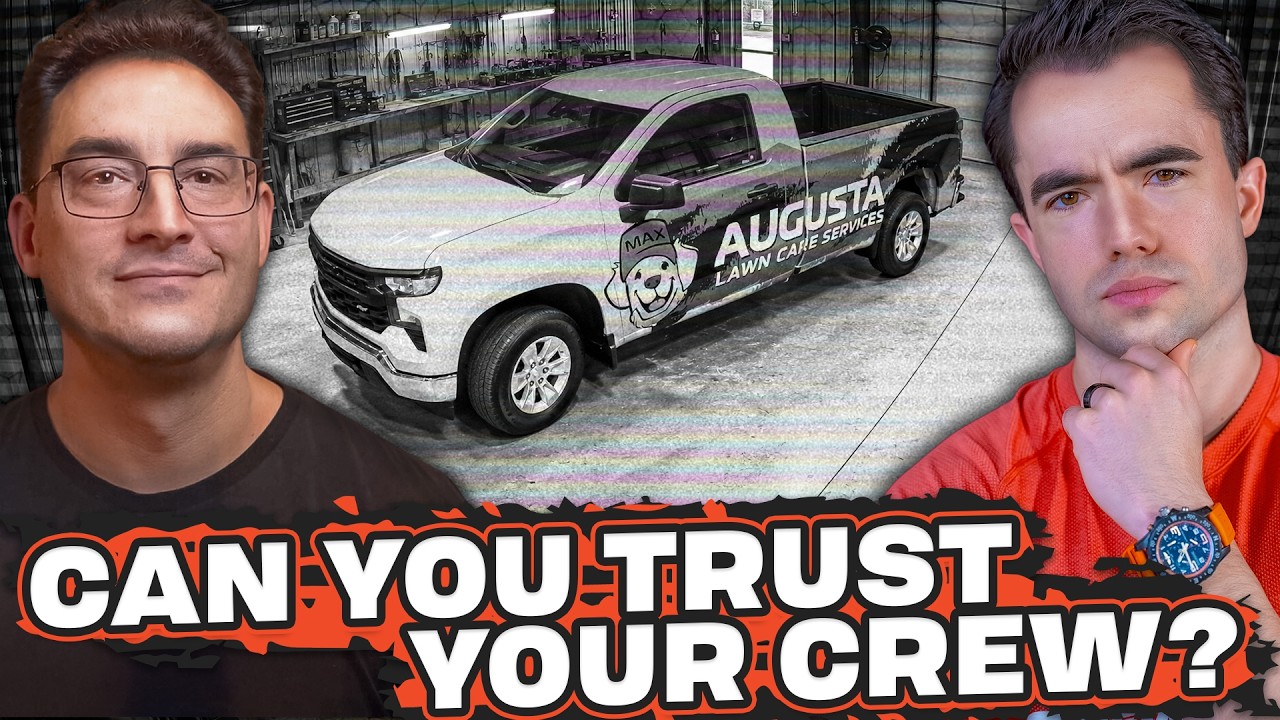
Mike Andes, a lawn-care entrepreneur, debates whether crews should take company trucks home, weighing employee trust against asset costs and efficiency. They discuss onboarding workflows, service expansion strategy, and three long-term business models: founder replacement, slow retirement with a strong team, or eventual sale.
Chapters
I do lawn care, I do landscaping. All of a sudden, I have never got this reaction. This guy is a kind of a high roller, big business owner. And he's like, oh wow, that's a fantastic industry. I have never gotten that response ever.
I generally don't think in the short term it's going to bring a flood of new great workers into the market.
Not a lot of crossover of like TikTok scrollers and people are going to be willing to work 10 hours out in the heat.
I don't necessarily look at it and think it's positive. I mean, adding more people to the industry as competitors. I don't see how that helps us. We're a massive industry.
The optimist inside of me says that if a whole bunch of newbies join the industry and then burn a bunch of homeowners, that the homeowners will actually start to value more brand reviews, online reputation, a great-looking website, professionalism. When you flood a market with anything, the cream rises to the top.
There's this whole other element of everything you start to say no to also becomes bad review risk. It becomes negativity in the market. Like, all this, all these decisions come with real cost.
And a lot of times, by having crews come in one place, it's a Band-Aid around management. And that is, I can see everyone. So like, the system is me seeing their trucks going out the day, at the beginning of the day, me making sure everything is safe, like tires, making sure that they show up on time. Like, there's a lot of things that just become a Band-Aid of bad management.
Hey everybody, welcome back. Good to see everyone and thanks for, thanks for showing up. Mike, what's been going on with you?
Not much. We are, like we were talking about before the show, having a heat wave. It is 87 degrees in Washington.
So probably your midnight temperature there in Dallas, but, uh, 87 is a nice mid-March temperature for us. This is totally random. I was thinking about this right before we hopped on today. So do your parents. Pay attention to what you're doing? Like, do they ever check out any of these videos? Are they very aware?
They watch everything. Yeah, my mom and dad will comment on stuff all the time. Why? Was this— was that going to dictate what you do in your cold open?
No, it has nothing to do with it. It's like, that's why I said this is totally random. I was just thinking about it because, uh, I was, you know, I see my parents quite a bit. And so my dad watches all these shows. Oh, let's go. Yeah. Yeah. So he watches everything I put out. So I was just curious if similar thing happened in your world, how aware your parents are of all the stuff you've been doing.
That's interesting. Okay. So on that topic, does Tiffany watch your stuff or not? No, really? I think it's so funny. I love talking to creators where it's like either they watch everything or like they have literally, they don't even know the channel name.
Yeah, no, Tiffany, there's zero, like less than zero chance she would watch any of this. So in the very early days of Service Autopilot with the Lawn Care Millionaire videos, Tiffany was doing something like transcribing them. She did something to help us out at Service Autopilot.
Okay.
And so that's the only time she ever watched anything. And then she would comment to me about things I would say in those videos. So, but that was, that was like 14 years ago.
Last night you said you went to bed at 11 PM. On the video, you said 3 AM. Exactly.
So yeah, it's been a long time. There's no way she doesn't, she doesn't really. We've been married a long time, so she doesn't really pay a lot of attention to what's going on in my business world. In fact, I think she's probably been shocked over the years when she'll show up at a conference or an Academy event or something. It's like, why does everybody listen to you? You know, like that kind of a thing. Like, I hear you talking all the time.
See, honey, you should be paying me.
Yeah, exactly. So anyway, I don't know why the parent thing popped in my mind. I was just curious.
Shout out, shout out John Patosnik.
Yeah.
Loyal subscriber. Let's go.
Yeah. All right. So I got a couple of things for you to open this one up. So I liked, I liked what you've done a couple of times where you kind of ask a question to get to know. I know your audience probably knows you pretty well, but actually I don't know how well they know you. So I came up with a few questions that I don't know if your audience will know this about you, but it'll definitely be interesting for me.
Okay.
All right. So this is. The way you're going to answer this is it's just an either or. Pretty easy. I've got one in here where you just have to give an answer, but otherwise they're just either or. All righty. So I got 6 of them for you. All right. So the first one, would you rather be the person everyone calls when they're in a crisis or everyone calls when they're celebrating?
I've thought about this a lot.
Have you? Okay. Yeah.
So I am usually the first one. I'll be honest. I would prefer to be the second one. I almost always only get called when there's a problem. Not even Not just in business. I feel like just even in life in general. Do you feel the same way?
No doubt. No doubt. I think I'm okay with it though. I think I'm okay with it. I think I've found my place in life.
I figure like, you know what? There's a place for the firemen. The guys who just sit around and wait for someone to call with bad news and then they come rushing over, but they're prepared. Yep.
I probably don't help all my friends anyway, 'cause I don't know, this is about you, not about me, but I probably don't help all my friends anyway 'Cause I'm not really great about just texting friends and like, hey, how's it going? And chit-chatting. I'm like, I'm kind of more of a focused to the point business kind of—
I can see you in 2 or 3 years. We won't skip a beat. We'll jump right in. I don't need to be touching base every day, but yeah.
Yeah. So I probably push them away in that sense. All right. Would you rather be remembered by 100 people who are deeply impacted by what you do and your conversations with them, or 100,000 people who watch your content?
100.
100,000.
Okay. No, no, no, no. 100. Like the first one.
Oh, the 100.
Oh, oh yeah.
100. Go. Okay, go. Good, good, good. Okay.
That's, that's what, that's the whole point of Augusta in my opinion. Like depth instead of width.
Love it. Love it. Would you rather Bri be your biggest cheerleader and encourager in your relationship or your biggest critic? Honest crit— let's say honest critic.
I have to be honest. Like I want her to be a cheerleader.
Okay. Yep.
I, I feel like there are other people in my life that Do a good job of being critics.
Yeah, you have plenty of critics. I don't want this.
I'm going home.
I hear you. All right, this is a question one. If you could have any hobby in life that takes a lot of your time, what would that hobby be?
That takes up a lot of my time?
Yeah, I just, I wanted to frame it. Okay, there's other ways to say this. It's more like I'm trying to get to what would be the thing that you would most love to be doing as a hobby that maybe you don't get to do because it would be pretty distracting from your business now. A lot of time could be overstating it.
Yeah.
I'm just trying to understand what you're into. I'd actually have the faintest idea how you answer this.
I would want to do more traveling with entrepreneurial couples and where the wife also loves fitness for Brianna.
Love it. Okay. Are you a beach house or a mountain house guy?
Oh man, that's hilarious. Uh, definitely beach house. Beach house. Okay.
Yep. All right. So along those lines, would you rather have a beach house that you go to 20 times a year or a private jet you use 10 times a year?
Oh man. Um, 10 times a year is not a lot. I feel wasteful.
Um, yeah, you got to travel at least a hundred. Well, I mean, you could have a jet card.
True.
That's, but I did phrase it as a, you own the private jet. So, and unless you're doing a few hundred hours a year, it does like 3, 200 plus. It makes no sense.
You're doing all the math in your head.
Well, I've already done the math on this.
Um, man, 10 times a year is not much, but that would be like—
all right, well, I'll make it easier. 20 times a year at a beach house or 20 times a year on a jet? Which would you rather own?
Probably the jet. Okay, that'd be enough to do all the turnarounds and then one other trip a month.
All right, cool. All right, love it. All right, thanks for doing that. All right, so we're gonna do— we're gonna try to revive this hot take thing.
Oh really, you're going to neck this face?
I didn't— wait, I—
okay, all right.
Are you right? Do you have two hot takes?
Oh no, I didn't have hot takes. You're opening up on this one.
So go for it, man. I was, I wanted your hot takes.
Oh, my hot takes.
You're going to give me both.
Okay, go for it. Your hot takes. I'll come up with some hot takes. I'm always, I got them loaded, you know, in the pockets, in the socks.
Okay. See, I do. I don't feel, I feel like I have to work on these things.
Getting a little more edgy.
Well, that, and I, I just don't think I walk around life being overly controversial. I probably have. I probably have hot take opinions and I just don't feel the need to say them, but—
Hey, if you start, it's a slippery slope. You'll get to know very well which ones are controversial. Yeah. All right.
So I actually put thought into these two hot takes and I don't even know if they'll be that hot. All right. So my two hot takes, the number one, a business-related one, and I've thought this for years. I think the E-Myth book is one of the most overrated business books ever written. I think it has one really great core idea, but otherwise I think it is a giant— it's taken a ton of business owners down a giant waste of time and money in their businesses. No idea if that'll be controversial. The reason why I think it could be, but maybe not with the audience, is I hear so many people saying it's one of their favorite books they've ever read.
Have you ever heard Michael Gerber talk elsewhere outside of that book? Not really.
Probably, but it's been a long time. Probably because I think it's overrated. I don't pay any attention. I'm sure, I'm sure it's, I mean, the concept of, you know, on these hot takes, we're not supposed to elaborate, but I'm, I love, I'm trying to get you back in that hole.
You just gotta keep digging and digging.
So the concept, the concept, work on your business, right? Instead of in your business.
Mm-hmm.
That's the whole book. Right. Don't need anything else.
Kind of like David.
That's it.
That's the core idea. Don't go into debt.
Period.
Exactly.
Don't spend too much money. Don't need anything else. Got it. I just think, anyway, I think it's wildly overrated. I don't understand why everybody thinks it's the greatest book. Okay.
Well, I got to follow up. I got to follow up on your hot take now. What do you think about Rich Dad Poor Dad then?
Uh, second book, the man, this goes back a way, a long time ago. The quad, the four quadrant book, whatever that was.
Yeah. Rich Dad Poor Dad.
Good book. The rest, I think he's a massive conspiracy theorist and a doomer and sells nothing but fear. And he's, Eternally wrong.
Such a scammer.
Not a fan.
Such a scammer. Not a fan.
Not a fan.
Yeah, agreed. Agreed.
But I do think, I think his concepts were like good. Like it's good to get you thinking. Um, but the, the Four Quadrant book, I thought that was a solid book. I hold to that as still, I mean, that was a long, long time ago. That's a solid book in my opinion.
What I find interesting about both of those books is even though we have both discounted the authors for what they have said or other things they put themselves around, which both of them have their, their, their fair share to say in that. The, um, the core principle, the one line that we both can kind of, and 90% of the audience knows, they built their whole career around a very simple concept. So for example, like Robert Kiyosaki, it's like, it's the quadrant. It is your investor, you're a business owner, like very simple.
Yeah.
And then for Michael Gerber, it's like work in on your business, not in it. And, and then they built an entire ecosystem around that. And that's when, whenever I beat my head up against the wall, like creating concepts or frameworks, I'm like, what am I doing? I just need one simple line. I just need to spend more or save more than you spend. We're good. There it is.
My career, man. That I actually hadn't really thought about that. That is a really, really good insight. It's, that's their USP in life. That's their USP in business.
Yep.
And they built massive speaking careers and yeah, that's a really great point.
One thing I think that's interesting, by the way, is both of those books also had like a bajillion subcategories of their books. So like the E-Myth, there's an E-Myth for landscape contractors, there's the E-Myth for accountants. They, they've made all these other books. They most of the time just got like a, another, like a sub-author to, from that industry to come in. But I actually found those more useful than like the E-Myth book itself. And same thing with even with, uh, the, the, uh, Rich Dad Poor Dad, they did some other ones that were like ancillary to the core concept that went deeper than like that core message. But, uh, I agree with you on the, uh, top line hot take.
Okay. All right. Yeah. Maybe it's not controversial. I don't know. I just hear so many people say it. All right. So my second one. Oh, did you have something else?
No, go ahead.
All right. Since we both like health and fitness and all that kind of stuff. So this is one I think about a lot. The concept is. This idea that living past 100, I think it's the new version of religion. And just like, and just like religion, most people don't even have the faintest idea what it means, much less what it's going to take.
Or challenge their own beliefs on it.
It's, I think it's fascinating, but wildly oversold is another way to put it.
That everyone is going to live past 100 or that you need to?
I think it's oversold. No, that you will. I think it's oversold. Okay. But I think it— I should have stopped with the, I think it's a new version of religion.
That was my belief. That was the hot take. Just leave it like that.
That's, that's my belief.
Living past 100 is the new version of Christianity.
Boom.
There's your hot take.
Whatever. There's the title.
The video is done. Yeah.
So, okay. All right. So those are my two.
I'll give you my hot take that came up on the fly. I actually had this as my non-financial advice, but I'm going to pull it forward. Okay. I think that you should lift weights 7 days a week.
Full body? You know, doesn't matter.
I would say either split or full body. If you do full body, you got to make sure you have programming to make sure you're not overstressing certain muscles. But you can do lower body.
That's what I was getting at.
Yeah. Yeah.
So you do believe— you still believe in rest?
Like, what do you mean by rest? Like, of a muscle? Of a muscle group?
Yeah. Of a muscle group.
Yeah. Yeah. Of a muscle group. Yes. But I think that so many people negotiate their rest days And then that's what leads to bad habits for a week or two or three where they fall out of their workout pattern. It's just like, make it a daily thing. If you start negotiating your one day rest day, you know, it's Sunday. Oh, not feeling that great. I'll do Monday too. And then, yeah. Yeah.
So you just work out every day, every single day. Do you, are you a, just a weights guy or do you do cardio?
I do cardio as well. So basically with 7, 7 workouts in the week, I can move. If I'm trying to cut with more cardio, I'll do higher intensity and, um, more of them, the workouts for cardio. And then if I am going to try to get put on muscle, I'll reduce the, the intensity. So I'll usually do like just incline walking treadmill, for example, for my cardio days, and I'll do less of them. So I might do 2 of those a week instead of 4.
Um, okay. So when you're trying to cut, what are you doing for cardio?
Uh, usually I will do at least 1 trail run and then running stairs. So there's 2 cardio, and then I'll usually do another cardio of pushing a sled or something intense, box jumps, very high intensity stuff where it's short bursts. How long? Usually 30 to 45 minutes.
So you're more interval training?
Yeah, yeah, unless I'm doing trail running, which I just love running trails.
You do? Yeah. Okay. But you don't necessarily run every week?
If I am in cardio or I'm trying to cut a little bit, then yes, and I try to stay there most of the time. But if I'm trying to put on weight, or mass, then going that hard on cardio is kind of detrimental.
It's muscle. Yeah, cool.
I only had the one hot take. That's all I got. That works.
That was an interesting one. All right, cool.
What have you been working on this week?
Uh, so I'll kind of stay with the theme of what we've— what I've— the last couple weeks I've been talking about. There's— I work on multiple things, but there's a theme. So I've talked about— I tried to knock out finish up this marketing calendar, try to finish up this master task list, which maybe the way to describe that better is it's just, it's the strategy of every single thing that has to get executed and become a system inside our organization. And then, so it's what has to get built, and then it's the systems that have to run and be monitored on a daily, weekly, monthly, quarterly basis. That's what I was calling this task list. And so kind of staying with that theme, because It's a, it's a miserable project. I would say I'm not enjoying it, but the problem with so much of what I— maybe this will be interesting to people. The problem with so— there's so many things I want to do inside the organization. And what I find the bottleneck to often be is that I might have a project such as I'll just put it, use this example. I want to do— I know, for example, that a sizable percentage of revenue in our organization comes from. 500 clients, even though we're not commercial. And it's just naturally some clients spend so much more, uh, money. And so if I just get a lot more of those clients, that's the fastest way to grow the revenue of the organization. So how do you get those clients? You go where those clients live, you go find that exact client type and you get more of them. You go to them. This is why I'm fond of offline marketing. It's not because I like offline marketing. Offline marketing is about the fastest way you could blow a crazy amount of money and get it wrong. It's that how else do you go get them? If I run Facebook ads, if I run Google ads, LSA, I can't get the perfect client. So how do you be aggressive?
Okay.
So that's just an example of a project. So it's really easy to have all these projects in your business that you want to accomplish, but they never go anywhere. And the reason they never go anywhere is because You understand what the project means, but nobody else understands what it means. Nobody thinks about— so the documentation project of this is what the project is, this is what the steps look like, this is what the outcome looks like, what done looks like, this is what the KPI looks like. So we can track this thing forever and have it run. This is who owns it. That's the worst part of getting— that's really hard. So I've got so many initiatives, and they all move too slow. And the only way that I can get them to move faster and know who we need is to do that whole other side, which is a massive amount of work that will take me a long time to get it done. And so this week is fairly consumed with that, building out that other part.
It was funny. I was talking to one of the owners in Augusta and they're just getting started. And he's like, the thing that I have learned most from your podcast with Jonathan is that you both just keep doing the same thing every single week and working on the same exact task. I'm like, hold on a minute. It's been 8 weeks of podcasts and I work in 6-week sprints. So there's basically 1 or 2 things I might have gotten done in that period of time. So I think it's interesting. Like, it's one thing I had to learn is like, as the organization has grown is I don't need to make 100 decisions a week or 100 improvements. It's like, what are the couple things if I make a big change on it, it could take a couple months or even years to, uh, it does.
And it's so, so frustrating. And that's a great point though, as we have to talk about this Every week, every week. Do I run hard? Am I getting anything done?
Just push play on the part. Jonathan has been working on the marketing calendar. All right. And we're done. Yeah.
So it's like, yeah, it's just, but that's what it takes to get this stuff done. And I often, I just, I'll end with this, but like, I find this whole project incredibly frustrating. And of course, like you have got all these other things going. It's not like every minute spent on that, but. That stuff is so critical, and that if you don't do it, well, that's why nothing ever moves forward, because everybody is constantly just jumping here and here, and then you're working on projects in the wrong order. Like, there's so— there's a lot of thought that goes into moving fast. And that's— and I'm guilty of this idea that if I'm doing lots of things or moving around or trying to run multiple projects in parallel, it feels like we're making more progress. We're not. I've learned that the hard way over the years. It's like, it's all about working all these projects in a specific order.
So yeah, 100%.
That's why it takes a while.
Yeah.
Well, what do you got?
I'm going to move. I'm going to change some of it because otherwise I'm gonna be the boring same thing. Like I'm going to do the same thing every single week because there's only like a few core things I'm working on. But, um, specifically I'm taking action on what you mentioned last week. So for those that didn't watch last week's podcast, shame on you. But, um, JP gave me a lot of good advice. Thank you. I have 1, 2, 3, 4, 5, 6, 7 things I'll be doing here next week. So, all right.
It's too much. It's a journey over time.
So I basically took all the pieces of advice and I broke it over the course of the next year where I think I can attack each of them and where I think it's— or I should better put where I think that information is relevant for me to actually take action on. So I couldn't— this week I bit off some of the lower-hanging fruit stuff. So I'm really looking at onboarding for HomeWorks, but I'm also looking at onboarding for Augusta. So I'm going through the exact process that a new location goes through when it comes to joining Augusta. Everything from like, we have so many different layers of like, you gotta set up your Google Business Profile, you get your website set up, okay, connect your Facebook account, okay, set up your HomeWorks account, set up Command Center, like set up your QuickBooks. Like there's like this huge laundry list. So I'm going through that. I haven't done that for 3 years. Myself, obviously I look at it from afar, but just doing it myself, it's like, hey, this one word in the email makes me feel like I'm gonna be getting this sooner than it actually takes. So we made a bunch of little improvements on the Augusta side and same thing with Homeworks. So we started the whole onboarding call thing like I mentioned last week, but I started listening to them. I started recording them. I started giving feedback to the support team members that were running that. And it was like really well received. I was very thankful. 'Cause I was very much nitpicky. I'm like, don't say this word, say more of this word. Don't have this pause, say it different. At the beginning of the call, show this slide. Like, I was very, I had this laundry list of things. And shout out Tommy. He's the main one leading on the onboarding calls. He took it like a champ. And so those are a couple things I took action from what we talked about last week. The other thing is I did add a couple engineering calls that I had taken off my calendar. I added them back on. I already was in like the product demo stuff, but a couple more engineering calls that as the refactor is happening on events and we are doing the whole MCP access for the Cloud Connector, I just need to be on those calls. So you reminded me of that, I appreciate it. And so that's, those are some of the stuff I did based on what we talked about last week.
That's cool. Those call recordings are amazingly valuable to listen to.
Yeah, call recordings can be very frustrating. Oh man.
I, uh, I recorded a Five for 50 video that was supposed to go out on Tuesday.
Oh yeah.
And I didn't post it because I felt like, I felt like I should hold it a little while.
Yeah.
And, uh, you know, it's not, it's not knocking anybody, but it's a reminder to— it's not knocking anybody at all. It's a reminder to me that you shouldn't listen to 3 call recordings here or there. You should listen like 70 in a row. And then, then you'll really see all the places where It's like, gee, that script could be a lot better. You know, it's like, I'm not putting it on a person. I'm putting it on the company. Like, oh wow, we could make this better and easier. So those call recordings, wow, they're important.
It'll, it'll like, it'll never be perfect, but man, listening to call recordings or doing calls yourself and then comparing it to what the call recordings are, whether I don't care if you're talking about onboarding, customer service, sales calls, it just like, uh, it's just a constant. And if you don't Go back and check it occasionally. It gets off pretty quickly.
Yeah. Yeah. Yeah.
You're like, oh, it's just in the script. Well, you know, things have changed. Right. And so one thing that even this week we, we worked a bunch on was like the sat, the support chat, just like what is prioritized when that pops up? Is it like help articles? Is it chat with someone? Is it most recent feature updates? Like a news, like just rechanging that and then seeing what happened to the user behavior was very interesting. Um, little stuff like that. I've been really like very much in the weeds on it.
It's been good. Yeah, man, to optimize a business, you could literally work 100 hours a week forever. It just never ends. Even with the team, it's great. There's so many things to do.
If I could do that all day long, honestly, I wouldn't mind.
I like the optimization.
I don't like— I don't mind the optimization part. It's the— I'll be honest, the stuff I did this past week, loved every minute of it because it's like, hey, change this. All right, next week Done.
I like the improvement.
I love the improvement. When stuff takes 6, 12, and 18 months, oh man, that hurts my head. And when there's constant pain, it's not, you can change it quickly.
Yeah. Yeah. Are you, are you a process person? How do you think about process?
Like, do you, I can get it, you live, I can get into process mode. Like I can very much, like I know some people are like, I only like big thinking. I like strategy, but I can also really get into ops because I love constant improve. Like, I just love making changes. I get stuck when I have the strategy and then implementing it is gonna take a very, very long time. And in the, in that period, I'm gonna have a bunch of pain usually.
Yeah.
In the way of bad customer service or letting people down.
Before we move on, how were you at running operations in the business? Oh, do you think you're pretty good?
Uh, I don't know. Pretty decent, I guess.
Um, okay. Do you like it?
Elements of it. Like, like you mean out in the field? Like, like my, my location going out in the field?
Or if you had to be the COO in the business and run all the ops? Just keep everything moving.
HR stuff gets to me.
HR's terrible. Nobody likes HR.
Yeah.
I'm convinced when you add HR, you just invite everybody to complain.
Yeah. Um, I don't like firing people. I usually give people too much grace, so I don't really enjoy that part, but I like making improvements to the system. That is like, I could do that all day long.
If you said, I love firing people, that would really be—
there's your hot take!
There's your hot take!
That'd be a fascinating new insight.
So I got, I got 4 things for us to talk about this week. All right. And the first one is this idea of should we, should, should any company owner be allowing their trucks to go home with their team members? And how do you think about this? What are the pros and cons for people not doing it? Should they? It's that type of thing. How do you think about this?
Yeah, this one's a tough one. I'll put the caveat that most of Augusta does not have their trucks go home with employees. However, the people that do, I have talked to all of them. And every single one likes it.
Yeah.
And, and so none of them have any regrets. I have yet to see any of them do it and then take it back, which I thought would be more often like, hey, try this out. Didn't work out, was really bad experience. And we went back to just everyone's starting out the depot. I also feel like there's some confirmation bias in there because once you let your employees do it, it's like taking away a benefit. Yeah. That they're probably not gonna be like, oh yeah, we'll just drive back to the office again. It's kinda like the cat's outta the bag. Uh, but they have said nothing but good things about it. And so to kind of outline like how I look at the downsides, obviously it's, it's what if they steal customers? What if they use my equipment and the vehicle for personal use? I think the biggest downside for me is loss of culture, bringing people together. Uh, all of a sudden they're essentially remote on this island. Even if you bring them together once a week, still it's like kind of on your own. And at that point it's like, why not just be a solo operator? Why not go start your own business? Oh, I have the equipment with me. I'll just go mo— mow the neighbor's yard for free, like, so there's certainly downsides of that. I also think the biggest downside is it becomes a very asset-heavy business, because it's more difficult to have multi-person crews when you have them taking the vehicle to their house, because either they've got to pick someone else up, or they've got to meet somewhere, and you create another bottleneck instead of the shop. And so usually, I see when people take their vehicles home, it works best with solo routes. Parlaying with that is like, if you have less equipment and less assets that are required per crew, taking the vehicle home starts to make a little more sense. But if I need $100,000 to get a decent setup for my crew, do I want to pay $200 grand to get 2 employees, or do I want to pay $100 grand, they double up? And so it's, it's less asset heavy, more op heavy when it comes to having them take the vehicle home. The thing I like about it a lot is it really makes— it forces you into good behavior. So for example, you, you, you have to have better quality employees if they're gonna take your vehicles home. If you're giving someone $50,000 and trust it, you're gonna probably do a better job of vetting them. You're probably gonna do a better job of training them. It's also gonna force you to like offer less services so that you don't have to have as much equipment on the truck. And so I think it's almost like a forcing function. And a lot of times by having crews come in one place, it's a bandaid around management. And that is, I can see everyone. So like the, the system is me seeing their trucks going out the day, at the beginning of the day, me making sure everything is safe, like tires, making sure that they show up on time. Like there's a lot of things that just become a bandaid of bad management becomes I want them to meet in one spot. And again, I, my location, they meet in one spot. I always wanna be very clear. However, I, um, as I'm starting another corporate location, we are going to be doing this model where the vehicles go home with the, the employees.
Oh really?
Yeah. And, and I think the biggest, like, The upside too is a lot less drive time. And it's not just the drive time for the crew. Like we all think of windshield time as time between stops. But if someone wakes up at 6:30, is out the door at 7:00, shows up at your office at 7:30, diddle-dallies, get some coffee, gets out, and then an hour later is at their first job, that's like an hour and a half of wasted time that they might, they might have literally passed their first job of the day. To get to your shop.
Yep.
And so I think a lot about the startup time and then same thing at the end of the day. Like they could very well, I, I remember seeing this like on my route and be like, oh, they should just take the truck home. Is they're 20 minutes away from the shop. They mowed their neighbor's house, came back to the shop, and then the next day we're going back to that neighborhood. I'm like, this is crazy. This 40-minute drive that was not needed. So I think it forces a lot of good behavior, but I do think it it becomes a lot easier if you have less equipment, if you have less material loading, if you have materials, it also gets a little more difficult. If you have debris, so if you're, if you're taking debris off, offsite, it gets very difficult. And if you have a solid training in place to where you can trust someone after a governed amount of time before they become where they can take the truck home, or you do empower them to do that, there has to be a solid training process in place. Otherwise, just asking for chaos.
A lot of good insights. From a mowing standpoint, how do you handle equipment maintenance and blades and all that type of stuff?
Yeah, so I'll speak for what we're planning to do, uh, like at my location, the corporate one. Um, there's a few different ways I've seen it work inside Augusta, and the one that I have observed and I think we're going to probably be doing is we still meet up once a week to be able to do the maintenance as well as just a cultural thing. And what some of the owners will actually do is they will just meet at like a Walmart or a Costco and they'll— everyone will just back up their trucks in a line. They're there for 20, 30 minutes. They do a team meeting, they do all the, you know, wins, hand out bonuses, check everyone's equipment. They do the checklist at the end of the day and just do the pictures in Field Force. And like, um, they just take pictures like the checklist of the equipment at the end of each day. But then once a week is where the manager is going to inspect everything and potentially replace parts and pieces. The thing that I have not seen anyone else do that I'm going to be testing out is the GM having a— again, when I talk about GM, I'm talking 6 to 8 technicians, so 6 to 8 trucks, and then a GM leading that team. That person having a van with backups for everything. So if something goes down in the field, they're going to go out, hey, swap out the mower, I'll take your mower, I'll take that, I'll take that off your plate, and just keep them on the road as much as possible. And same thing with things like blades. Uh, I don't want them to have to like sharpen the blades. I want, hey, hey, the blades come to you on the weekly. We'll get you the 3 or 4 sets that you might need and it's all in your van. And then the vans are just kind of like copy and paste this exact same, including the, the GM's truck, which is just a backup essentially. So that's kind of a direction I'm going with it.
What is Field Force?
Oh, sorry. It's just the mobile app for HomeWorks.
Oh, okay.
Yeah.
Okay. And so you mentioned they take pictures of the equipment. Is that something they have to do every day?
Yeah. Like, so it'd just be a checklist. So the form that they'd basically fill out is they— one of those after photos would be a photo of like certain types of equipment and then even like keeping the vehicle clean. So it's mostly just checklist for the daily. And then the weekly is where we're doing an inspection of the equipment from the manager's perspective.
Okay, that's interesting. So they're just looking at a picture to make sure The equipment looks good, it's all on the truck, the truck looks clean, the presentation, all that.
Correct.
Okay, interesting.
Now, you guys do it before?
Do what before?
Where the crews would take the vehicles home, or have you never done that?
Yeah, back in— way back.
Okay.
Yeah, we eliminated it, but we never— yeah, but I don't think that means anything. Back when we did it, we let the crew take, or the— let's call it the foreman take home the truck, but they brought it back each morning and picked up their team and loaded up their equipment. So you didn't get the efficiency of leaving from their home. And what you got was the— we were— it just, it was a massive recruiting tool. I think that's really what it came down to. You could recruit a lot of people that would have had a hard time getting there otherwise, but were great. Or also, we deal in H-2B visa. So how an H-2B visa individual doesn't have a car necessarily. So how do they get to work? So those were some of the reasons why we did that for years. And then we geofenced the trucks at their place and we've had a variety of different issues over the years. Like anybody would, would you let trucks go home? They end up going out on the weekends, the one around them mowing on the weekends using our truck, and people might think it was City Turf Mowing. That's happened. You know, we've had all those problems. And so those are real issues that we experienced, but we eventually ended it. I, but that doesn't really represent my opinion. I don't have a super strong opinion on this. I have, I think that where it becomes the most interesting, I think you pretty much articulated it frankly, but where it becomes most interesting is this idea of, does it allow you to run a little bit of a different business model inside the business? What would it allow you to? Maybe run a little different geographic market, but yet still keep the routes really tight.
Yep. Like higher and closer to where your customers are versus where your shop is at.
Exactly. You know, and, and if I was more of a— if we ran this at City Turf, I could probably serve more areas, more markets than we would. There's no way we'd serve those markets now. But if I built some crews that lived in those areas and left from those areas, changes the whole game. Then it becomes possible. Philip and I have talked about this over the years. Shout out Philip.
One day we're going to get Philip on the fires. One day.
You'll never see Philip.
We'll get there. We'll get there. It might take a while. Not going to happen.
Oh no, it's not going to happen.
Shout out Philip. Everyone in the comments, we got to convince Philip. He'll never watch this video.
Not going to work. It'll never happen.
It's okay. We'll keep chipping away. Sorry.
It would be amazing if it did, but it will never happen. All right. So, um, where I was going with that, we've talked about this over the years and, you know, there's a, and I agree with him, there's this amazing value of bringing everybody back to the shop and having everything right there and seeing everything every day and being able to coach in the moment. All, there are so many advantages. So I think it just comes down to a lot of what you said. You can run either model, either model work, just depends on how you manage it and how on top of you. You are. You know, I used to— I, you know, I kind of said it before, I used to be partners with these guys in their— in a cleaning business. And we had properties all over the United States. And one of the lessons I got out of that business was that the markets that get served the best are the markets nearest to your office, like so nearest our corporate office, which was in Texas. Simply because if you have to do a lot of— like, if we have to go to Austin from here, if I got to go to San Antonio, if I got to go south to these other markets, you're going to do it, but you're not going to go see your clients and your team nearly as frequent as the people right near you. And so I do think that is a big giant risk. How do you handle that? Which is like, how do you— so you have these crews set up in different markets. That allow you to spread out, but what's the customer— what hap— what are the negatives? Like in terms of how often are you physically seeing the client, doing inspections on the property? And that's where I think lower quality, lesser reviews, problems, uh, brand harm creep into the business. And so that, to your point, I think it just requires this really, really strong management. And if you look at the restaurant industry or so many other industries that run retail, they move to this hub and spoke concept or they move to the district manager, regional manager concept because you need somebody. So if you end up spinning up 10 crews removed from your corporate office, so you're, you know, let's just say you're not a franchise-based business, you really end up quickly in this place where you still need management in that general area that's going to see the client, that's going to sell, going to meet, inspect the crew, going to do training in the field. So it doesn't, it, it, it allows you to spread out, but it, it doesn't necessarily eliminate, uh, complexity is my theory. I, I think you said—
let me steal Manu. Let me steal Manu.
Yeah. Yeah.
Yeah.
Do it.
So when you first started saying that, I actually heard it opposite and that was okay. As if the employees are closer to the customers, almost like instead of them driving 45 minutes to get to work, if they're 15 minutes away from the customer, would that potentially increase the amount of times that they're passing that property, the proximity to them, more likely to make sure that their property is up to spec because they're physically closer, they're living—
are we talking about a manager or the, the crew doing the work?
The technician doing the work?
Yeah. So, and maybe you— I don't know how you guys operate, I don't know how your GMs operate, but what I'm saying is I think the tech being closer property All wins. That's fantastic. But then there's this other layer. I don't know how you guys operate, where we inspect our properties. We go out in the field and we work. So manager inspects, a manager works really closely with the crews, trains in the field. A manager goes and deals like a client. If a client of ours has a problem, they can text us and we are there. Like we're on the property. You've got a dead spot, brown spot, you've got a concern, we have expertise, we are there. We'll roll a truck and we'll come see you. It's a more of a manager level. Uh, if you, if there are sales opportunities, we'll roll a truck, manager will come see you. That's this part that I think, that's what I was referring to. The technician, all wins. But very quickly, as I build out a bunch of techs and crews in a market, then I need a manager that can do all those other things. That's what I was alluding to.
Got it. Yeah, I guess I don't think about that as much because we, we could constrict to 5-mile radiuses. So that part is usually less. Okay. That makes sense. Okay.
Yeah, yeah, yeah. I, I was, I always think in city turf land. So in city turf land, it's like we're trying to keep, we got a decent size market, but I'm trying to keep it tight. We're not me. We're trying to keep it tight. But if I, if we ran this kind of a model, I could go to a whole bunch of cities well outside of our area and build out little pockets where we're not really going to want to spin up offices. Unless we go to a 2-office business, which we, we are a long way from being interested in that. And so that's kind of where I took us in this conversation is like, man, the cool thing would be we could go serve all these other markets I would never go to otherwise. And then I went into, well, if we did that, I still need a manager there.
Right. Yeah. So, and I think that's where too, like adding complexity to the business makes this nearly impossible. Like if you're adding, if you have 10 services and you're doing like snow removal and you're doing bush trimming and you're doing fertilization, weed control, and you're doing mowing, and you're doing mulch install, and you're doing patios. Like, good luck trying to ever have your crew take their equipment home.
Well, that's another— well, we in our business, we run our crew, we run separate F&W, separate, separate mowing, separate paths, separate tree and shrub. Like, all of our crews are separated. Mowing guys never trim bushes, they never fertilize, they never— like, it's completely— everybody is their independent expert. You raise a great point. Like, to complicate this concept even further, if you're just a— if you're a simpler business model, you're predominantly mowing and maybe trimming, that this idea of spreading out might work a little better. But let's— now I thought of something else. Like, let's say that I want to spread out mowing and trimming. That's the easiest thing to move into other markets if I can find the team members to do it. So then you come to our website and you read about CityTurf and our whole US— our We're pushing this whole idea of one company to handle all these things for you. We're just a text away. And then when they contact you, like, oh yeah, yeah. Well, that's if you live in these 5 cities, but I'm sorry, you're over there. We only mow like that.
Which city, which city are you on? Yeah.
So I didn't even think of that. If, if in my world we were trying to do this concept, it, you couldn't even pull it off because of our overall company.
Silos.
US, we'll call it the USP. What we're promising, what we're offering. Yeah. Like it would be a broken promise for a lot of the market. Didn't even think of that one. So that's, this is the problem with all great ideas. It's like, oh, this is like, oh, this would be really cool. This would allow us to grow. But then when you think through the operational side of it or the marketing or sales execution of it, this is where the complexity usually just makes things really, really hard to implement.
Okay, side tangent. I made a whole video on this. I'm gonna see if I can now disqualify my video, and that is when should you actually add a service? Because I think this is probably one of the biggest reasons for every— most home services across the board, every industry, that they end up either having a hard time scale, having a hard time not working 80 hours a week, ever finding a manager, etc., or just beating their head up against the wall until finally they quit. And that is just adding more services. So I tried to consolidate it down to a couple reasons as to why you would add a new service. So I'll give you my few that I came up with, and then you see if there's any others that you can, cuz like, hey, I'm all for making more money, but when do I add more services is the key, or like the, uh, the question. So I came up with a few.
Okay.
First one was if you, if you need it to fill your off season, that is 4 to 5 months long, potentially a good reason to get to add another service. The other one I did was if you're in a very small populated area and you want to grow in size, you're going to have to— like, you're not going to be able to do one thing very well. Great. But if you— it's 5,000 people, you have to— you're not going to build a $10 million business. Okay, so that would be the other one. And then the third one was the only other reason outside of those two I could come up with was you want to recoup your customer acquisition cost faster.
TAC.
Yeah, be able to recoup that faster with a secondary service. Those are the only 3 I came up with. I, I came up with some other ones, but I couldn't really stand and defend them. Are there any others that you can think of?
Hmm, those 3 are really solid.
It was Saturday evening, I was frustrated. I was trying to work with a couple, uh, owners, and I was really frustrated because at the end of the day I could see the issue is you have One had 8, one had 10 services when I looked at their list. And I'm like, everything I'm about to tell you is falsified because you have too much complexity and it, this will not work.
But hey, it's not immediate. It's not immediately coming to me.
Okay. So those are, those are 3 are pretty comprehensive, you think? Yeah.
I think there's, so one that I would say is it's very similar to the very small area concept.
It's that.
Even in a bigger market, your CAC starts to— there comes a point where you enter a market, you're doing marketing, you're visual enough in the market where you, you can get clients, but then your CAC starts to go up. It's like diminishing returns. It gets harder and harder to go deeper in the market. It's back to, it's kind of talking about the same two points. One, CAC is going up. So it's like, okay, maybe we could. Add in the service and sell back into our base. And that would really help us grow revenue at a lower CAC.
But that usually doesn't happen in a larger market.
It can happen. It can.
Okay.
But it predominantly happens because people aren't spending enough money on marketing.
Got it.
So that's why I'm just trying to think about this out loud. It's like, I, that's why I feel like I've also thought of a couple other scenarios in my mind and they really all sort of go back to these. 3 ideas that you just mentioned. So it feels very solid to me offhand. I'm not sure what I'm missing. Okay.
All right. Well, that was my only thing, cause like, I know this has a little bit of tie into like the, the trucks going home. Yeah. Adding complexity to the business. And I, I genuinely believe this is act— I was trying to think the other day cause I was just so frustrated with a couple things and I was like, what is the problem? And it almost always comes back to complexity, but then the complexity is added because of services.
Yeah. Now my pushback, the thing that would invalidate any of those 3. Potentially would be two things. One, this maybe again, this is more city turf stuff in a bigger company, so I don't know if it'll resonate. I don't know if it's quite true.
You're going to make this statement and argue with me. That's the point of the show.
Yeah, yeah, yeah. So the two things that invalidate this is there's a lot. Yeah. So we can add, we like, hey, I need to add in our service so I can, so I can be able to spend more money to go deeper in the market so I can spend, have more client acquisition costs. So I could spend more than my competitors, therefore I win more business. Okay, well, the thing that I would push against on that is, okay, sounds awesome. Do you have the capacity and the money to even do the marketing? So it's one thing to add a service, but it's a completely different thing to actually sell the service. So if you've got 400, 400 clients and you're adding a service, you're probably not going to sell 400. In most cases, you're not frankly even going to sell 200. You're not easily going to sell 200. You're probably going to easily sell 10%. Frankly, I've come to believe it might be closer to 10% that you usually sell. And then after that, it takes real effort to sell. They came in, they bought you for mowing. In their mind space, you're a lawn mowing company. You're not a pest company. You're not a tree care company. You're not a pool company. You're not a whatever else. Like, it's really hard to get them to buy that thing. And then also they might be buying that thing from somebody else. They're not unhappy. They're, they're like, they're not unhappy. So it's like, yeah, I love you guys. I love them, but I don't want to make the call and fire them. And why should I fire them? You're an unknown on that service. And so it's hard. It's, it's really hard. The, one of the ways we move the needle pretty significantly, well, we were really doing well in fertilization weed control when that became more of our focus than mowing. Well, going back, but boy, when we said the only way we work with you is if you also buy fertilization weed control, suddenly tons of clients were like, okay, we'll use you for fertilization weed control. But before, they were using us for mowing and other services, but not weed control. It wasn't that they didn't like their other company. It's that there was no reason for them to bother moving. They got a million other things going on in life. And I tell that story to say it's way harder to get people to move. So when I think about adding a service in the business, I think about two things. Can we really even sell and market it? Like, someday we might be able to, but can we do it now? Otherwise, we just add lots of complexity for a really small bump in revenue. And then the second one is who's going to own this thing? So as the business gets bigger, like, let's say you have a GM and they've already got 8 crews. And they're just doing so much and they add another service. Well, who owns the thing? And it's back to my general belief that you've got these two engines in your business. You got to get clients, you got to get people to do the work, and then in the middle you got to manage the whole thing. Like, those are the two engines that have to constantly stay in balance so you don't grow. Like, you could— it's a similar concept. You can add this service and add this additional revenue potential. But if somebody doesn't think about it all the time and own it, from an ops standpoint, it's just not going to go very good. And so those are the two things where I would say your, your list of three. Yeah, totally agree. But I could invalidate any of those if nobody's ready to do the other two. It'll just be a giant mess. And you, you know, to your point, you one day you wake up and now you've got 8 to 10 services in your business and it's highly complex. Yeah.
Like in the video I talked about the impact adding more services has on operations and admin. But the one I forgot as you were saying it, I was like, ah, is dilution of marketing. Cause now you've got, you've gotta dilute your marketing message. You only have so many shots on goal. And so if you only have say 12 marketing messages to your existing customers in a year, if you have 10 services, you got one shot on goal. If I only do one thing, I just can keep pounding that same message and I get really good at it.
That, I'm glad you brought that up. Like several more rabbit trails we could go in here. So in my, in our openings, we're like, hey, Jonathan, what are you working on? And I'm like, I'm working on my marketing calendar. Yeah, this is why I'm working on my marketing calendar. If the only, if the only thing we did was mow lawns, yeah, pretty easy marketing calendar. Acquisition, expansion, really not much.
We make it short every single month.
And there's not much expansion, like not much selling more revenue because we're— you're a mowing client, we already got you. Yeah, that I sell, we sell a lot of stuff. And so how do you just not, to your point, dilute the messaging? How do you figure out timing. It's really, really complicated.
I want— I want to— sorry, I cut you off.
No, I think I've generally made the point. I mean, just to pile on to what you said, that is why when I've been saying I'm working on this marketing calendar, if you saw this thing, it's very complex because of the volume of segmentation that we have to do and the consideration of timing. And so many of the services that we sell are all should be sold at the exact same time period.
100%. It's like, which one do we want to— yeah, you only got so many shots on goal. Exactly.
And then there's other services where it's like, okay, that service will probably generate $400,000 in revenue in our business, which is like a rounding error, frankly, in our business. So, but you can't segment that one except for the people that are already buying it. So do I want to hit the whole list on this or do we just never talk about it? It's really really complicated. So great point.
I wanted to add one caveat or just like maybe just say this one part. I think what some people hear, one thing that you said and they're going to jump into it and I just want to be cautious of that. You had mentioned that you were— you said, hey, we require a second service. And a lot of people said yes. I think the caveat to that that I have seen from my experience at least is when you do that, expect your customer acquisition cost to go up higher because less people that don't know who you are are going to accept both services. And you put this huge filter on anyone that wants to come in and expect your LSA conversion. I didn't say it.
Going back to some previous messages. Yeah, 100%.
I just want to put that caveat because if someone has 20 customers and you're like, hey, I'm going to require—
it'll destroy conversion.
Yeah, it's the conversion. It takes a huge hit.
So it's a— yeah, yeah.
Just want to put that caveat in there. Although I got messages, I did what Jonathan said. No, it's a— but you—
so you have to decide Is it the right strategic decision for the business? Because all decisions come with a cost. And that example right there comes with a massive cost. When we went from, we'll take biweekly and weekly to just weekly, that was— that cost us money too. Immediately. It costs us not only in that conversion cost goes up, not only that, well, because you're not winning as much business, but also now you're, you're at risk of bad reviews. I mean, we get— we've gotten bad reviews for for not doing biweekly mowing. Like, somebody called us recently because we don't do clover. I don't even know what clover is.
Clover.
We said we don't do clover, so we got this 1-star review for, like, weed control of clover.
You mean—
no, no, no, no, no, mowing a clover lawn.
Oh my word, are you serious?
Can you explain to me what that is? So it's like, so there's this whole other element of everything you start to say no to also becomes a review request, a bad review risk. It becomes negativity in the market. Like all this, all these decisions come with real cost.
Good thing, good thing your phone agent knew what they were talking about when they said Clover Lawn. Otherwise, like, oh, would you like us to spray for broadleaf weeds? And then you would go there and knock out the whole lawn.
I think, I think they, I think they said we've only encountered this a couple times in the existence of the business or something like we just, it's not so anyway. My point is it's too, like, it's easy to rattle off ideas. It's easy to say, oh, stop doing biweekly mowing. Oh, stop doing mowing unless you pair it with this other service. All of those things, all these decisions come with the cost, which is back to then you got to think through how you script them, how you talk about them, how you serve the client, how you get people for, you help people not be upset at you. It's like, it's comp, it's really complicated. Back to why it's so much easier just to have a couple service. Business so much easier. Yeah.
Well, we went down the rabbit trail. We were talking about getting your trucks back to the technician's house, letting them take it home, and yeah, got on the rabbit trail services. But I do think it's an important conversation. Um, I think it is. If you tear apart, for most businesses under a million, this is actually the thing that causes them a lot of problems. Um, training the technicians, training your admin people, dilution of your marketing, dilution of your focus. Because you're just trying to do so many different things.
I agree. All right. So I'll throw another one at you. So you've, you've got 3 scenarios in life and I just think it might be interesting for the audience to talk through it. 3 different ways you could think about the long-term of your business. And I'll, I'll set this up by saying, I think in general, my messaging has very much put out this idea about building a business to a place where it's bigger and you can eventually to a large degree, replace yourself in the business. You have other people doing a lot of the heavy lifting and the running of the organization. So we'll, we'll put that out there as one of three concepts that you could build towards. One where I build an organization where eventually I'm, I'm involved to a degree, but I— or no, no, no, let's go with this one. You've completely replaced yourself. You do not have to run the business. You still own it, but you do not run it whatsoever. You're very uninvolved.
Okay.
So you become an investor. The other scenario is you build the business and we'll call this one. I got this 100% from Claude. Slow. We'll call this, we'll call this idea slow retirement. I didn't know what to call it. So Claude helped me name this. We'll call this slow retirement. All right. And this is this idea that you're still involved in the business, but you've got an incredible leadership team that's doing most of the heavy lifting. And you just get to do what you're best at. Like you would say, I love marketing, or I love selling the big deals, or I love something, but I hate these 15 other things. You don't do any of those. You only do a few things in the business and you're totally cool working 10, 20, 30 hours some week. You're just kind of doing the stuff you want and you feel no guilt about not working all the time. You're just kind of working on the stuff you love. We'll call that slow retirement. That's the name that we came up with.
Okay.
So replace yourself completely. You, you're an investor. Now you don't work on the business hardly ever. You do quarterly meetings, that kind of thing. You're, you're, you're monitoring your investment, slow retirement, as I explained. And then the third one would be you build the sucker and you sell it. You're completely out. So the first part of this question would be, what would be You can't say sell. You can't tell your— well, you can, but you don't want to tell all your audience like, hey guys, in about 2 years I'm out. So that— I know you can't say that, but I know you love the business anyways. But so like, what would be— what would you think would be the dream of the 3? And what do you think maybe most people would say? And then let's kind of talk through it, like, like for the audience.
Yeah, for me, like, I don't, I don't ever want to retire and I have no desire to sell. Like, I don't— I want to say ever, but like, you know what happens in life, right?
Sure.
You weren't expecting yourself. I don't think I ever will though, because I've seen too many times where people start to die faster after they get out of their daily operations of the business. And I enjoy solving the problems. I don't enjoy the problems, but I enjoy solving the problems.
And so, like, the outcome.
Yeah. Slower time is definitely where I think about for myself. And I think there's a big difference between like having the business run without you versus running because of you. And yes, and I actually thought a lot about, uh, you doing Service Autopilot, but then Phillip running City Turf. It didn't like grow and double and triple. You didn't take new markets, but it ran and like it was profitable and it, it went well.
Well, it grew tremendously during that time.
Oh, it did? Oh, it did. Yeah.
Okay.
Oh yeah. Yeah. Yeah.
If, if I've ever insinuated that, no, no, it grew tremendously from the time I left.
Okay.
But if Philip and I could have worked together, it would have been— and could significantly— it would have been vastly more than it is because we lost a big mark. He's like— Philip could sell, right? He may say he's not a good sales guy, but the guy could close. He knows what he's— because he knows the business so well, he can sell. But my point is, we didn't have the marketing engine and the— I'm the push, push, push guy. And Philip's the slow it down, get it right kind of guy. And if we had been working together this whole time, we would be a much better business. It's not any negative whatsoever on him. Just to be ultra clear, like, if you had just left the business just to me, we just have a different problem. I'd be all about grow, grow, grow. We do okay at operations, but it wouldn't be the operational business it is.
Got it.
So I just want to be fair.
Yeah.
So I, I just wasn't able to be there because I was consumed.
Yeah. So like, I, I, I think kind of like a lot of times when I've looked at businesses where the founder's involved, that the focus tends to be more like innovation and growth. And then if it's a CEO or an operations person leading, it becomes optimization, profitability. Yeah. And just making those tweaks. And then not only is right or wrong, it is, I would rather be in the organization as the founder, hands-on. But then I look at like Charlie Munger, Warren Buffett. Like probably legend, but supposedly like 3 days before Charlie passed away, he was—
I heard this too.
Okay. It could be legend. It could be legend.
Yeah.
But like he was making trades, reading, like that's how I want to go out. I want to go out.
Yeah.
Right till the end. And I don't think I would do well in an unstructured schedule, unstructured environment without people that I'm able to help every single day. And I think the slower time, like I, if I lost my purpose for what I'm trying to do every day, like I'd be done. Like, I think I would age faster, I'd get grumpy, I would not be on self-improvement as much. And I just figured out like, I did not really fall in love with the work. And some do, like some people love, let's just use the green industry, they love mowing grass, they love doing the work. And I just realized I can't fall in love with it. And I fell in love with the people that are currently living out previous versions of me. So like for me, it's like the 18-year-old version where it's like, I was leaving other stuff and moving into lawn care full-time and got a lot of people saying otherwise. And then at 21, having a business, $800,000, almost $1 million revenue, having no systems, getting in an accident and almost losing it all. And so I just always think about those people and I can get very worked up and care a lot for those two individuals. And what's nice is they just keep recycling. They, some people will be 45 years old and they look like the 21-year-old version of me. Some people could be 17 years old and look like the 18-year-old version of me. And so I just keep seeing those two people and that gets me motivated. And for me to step away or like to sell or even be passive, I would just not feel like I'm able to have that impact with them. That's me personally though.
Yeah. I actually am in the same camp. I like, my preference would be more the slow retirement cuz I, oh, for almost every reason you just said, uh, but I think you should build towards the re— replace yourself, which is how you end up with the slow retirement concept. But I have fully subscribed to this idea that you should get to a place where you've hired people around you to do all the stuff you don't love doing and you're not the best at. And not a new concept, like that's a concept that tons of people hold. And if anybody's ever paid attention to, or knows who Dan Sullivan is, that's a big thing that Strategic Coach, he talks about. There's lots of people talk about, it's not a new idea. And, but it just completely resonates with me. So I'm 100% in this slow retirement camp. Again, I feel like I'm just going to repeat you. I agree exactly with exactly what you were saying along those lines.
It was funny, some of this came up when— so after our conversation last week, I was like, you know what, I'm going to apply for Tie Your 21, just see what happens. I just wanted to see their process. So I was able to get on a call with them, talk about—
you did this?
Yeah, yeah. And some of this was actually came up. It was great. Like, they're like, where are you at in your career? That was much more conversation around like the net worth stuff. But it was more a matter of like, this is not really for the person actively trying to build. This is for the person in like the second phase. And it was a really good conversation I had with just like their facilitator person for like 20, 30 minutes. It was great.
Okay. How interesting. Did you call the main corporate office?
Oh, you fill out an application and then if you pass the first stage, and then they call you. Yeah.
Yeah. Yeah. I would say that my experience, there's a lot of people still in the game, but they're definitely in the They're definitely on the other side of the game to a large degree. Like it's more about investing and more about investing in other businesses and maybe advising those businesses. And then a lot of the guys that are still active, huh, interesting, are in real estate and private equity. Hmm. They're the, uh, uh, but a lot of the operators, huh, thinking about the Dallas chapter, a lot of the operators are not very active anymore and missing it. Hmm. If they're younger, they're missing it and trying to figure out— they're like getting back into it.
I can't imagine being like— I was telling this the other day when we were— I saw this on the docket and I was like, if someone offered me a bunch of money now, even like the number I want.
Yeah.
Like, I'm 30. What am I gonna do?
You'll be bored in no time flat.
Like, there's always like— I, I, I don't, I don't know.
Oh yeah, you'd be bored.
If I, if I did that, I'd have to like go get kids just to like Fill in time.
Even, I mean, even people in their 60s and older, uh, in the group, or get, they, they, they have to be doing stuff. They, they, you don't build things and then one day just completely turn it off and be completely satisfied is my, my belief.
All right. So we're both working till we're, I'm not going to say 100, 95, 95.
Well, I love the 100 idea and I think there are ways you can be like, maybe it'll happen. I don't know, but I've got a, yeah, that's a bigger topic, but I've got a lot of opinions on this one.
How old is your dad?
80.
Oh yeah, so you, you're gonna live a long time. You'll live to 100.
Yeah, we'll see. I hope so. I'm optimistic. I've got a— I'm gonna do a video on this, a teaser video on this. I spent, uh, I'll have to— I'll— the headline will include the number. I've spent $350,000+ on longevity stuff. Wow. So I've got a video. I have a lot. I've I've done a presentation.
You can do a presentation. It could be like you in a sauna instead of having the dog. We got you.
Yeah, I'm in it.
Nah, we're, we're at $400,000 on longevity. Just gonna be upping the ante.
Yeah. So I've kind of, and it's been over a period of time, but it's a little more around like performance and longevity. So I've learned a ton and I have a lot of opinions.
Okay.
So I love, I love the health side.
Okay. We gotta take, we gotta digress. So hot take was. Live into 100 thing is like a new religion. Okay, great.
Yeah, I do.
I think let's get specific. Let's get specific.
Okay.
Which one specific thing that you have done where you did it, you spent a bunch of money and you're like, this is overblown. This is, this is, uh, not worth it.
Oh, um, it's not that it's not worth it.
Okay.
I think if you have the money, you could spend it. Oh, the one thing I would tell you is, uh, there's a lot I could say here. If I could summarize it to one thing, here would be my one thing. Okay. There is a lot of technology coming and really cool things, interesting things that you can do, but they're not gonna be widely tested and they're not gonna be FDA approved. And there's, and you're hoping that the data doesn't reverse. So it's like there's really promising mice studies.
Mm-hmm.
And there's a really small study that was done on humans and they're still alive. We think this has got a lot of potential.
Yeah.
To extend your life, you should do this thing, but you won't know for a decade if you should have or shouldn't have been doing the thing. Yeah. That is the majority of the stuff. And so when we talk about all these things that are going to extend our longevity or extend our lifespans, like, sure. Like the heart stuff has been improving at 1% a year for a long period of time. So meaning the life, the number of people would have died from heart-related things. We're making a 1%. Improvement every year that compounds. That is a massive outcome today as compared to what the world looked like 40 years ago. If you had anything heart-related, we are making progress in cancer. We're making progress in the big things that kill you, but we're also, you know, but we're also like, no, young people are now dying from more colon cancer and things like, so we're also going backwards in other areas, but we're making progress in the big things that are going to kill you. But we need to make like vastly more process. Progress to actually impact lifespan. So that's one level. And then the other level is like, okay, what are all the things that you can do to extend your lifespan and how your cells age out and all this other stuff? It can get kind of in the weeds here. And so then that gets into what are the, the things you can be doing right now? What are the modalities that you can be doing? Like now we're not talking about exercise, sleep. And we're not talking about that stuff. Now we're talking about, is there something you can take? Is there, are there things you can do that are unusual and expensive? And when you get into that stuff, that's where the hope is that when people say you're going to live to 120, that's where they're expecting to move the needle, that, and then knocking out things like cancers and stuff that'll kill you. And so when you get into what are the things you could be taking? Rapamycin is a widely popular one. Mm-hmm. Metformin, like you can go, but then you could go even deeper than that. There's only so much data on this stuff. And so my point is, it sounds like a wonderful story and a wonderful narrative. I believe it will come together, but how fast will it really come together? And are you really the person that wants to be the guinea pig? That's the, that's the big theme.
Well, this has been interesting. Who dies first? They know who dies. And then do the Optimus robots dig the casket, you know, put you down under. That's which one's going to win first. Are you going to live to 100 or are we going to have the Optimus robot doing the dirty work?
I think by the time I'm 100, which is 50, you know, years.
You're at halftime, bro.
I'm at halftime. So I believe they will be digging. Well, in my case, they're going to be scattering my ashes.
Oh, that's awesome. Oh, that's so good. All right.
All right. I got one more for us today. Okay. Okay. Are you familiar with the book Die With Zero?
Yeah.
Okay. And then you probably know the book. Uh, you were probably like 2 years old, but the, this, cause it's the book, um, uh, The Millionaire Next Door. That was a long time ago. You know that book too?
Yep.
All right. So if you know the premise of this, maybe tell, and I can give it if you want me to, but maybe give the concept of each book and then which one Which one do you fall more towards? The Millionaire Next Door idea or the Die With Zero idea?
Yeah. Okay. So as a summary, the Millionaire Next Door basically was an old study, but it still holds true back to the—
which is why I said when you were like 2.
Yeah, exactly. Exactly. Um, I still remember reading it, uh, as a hard copy. I remember reading in the back of our van. Okay. Yeah. I would have been. 8, 9. Okay, that's kind of a weird kid.
Okay, so that's cool that you read it. Yeah, I probably read it when I was like 20, is my guess.
You know what's actually funny? I didn't think about this until afterwards. In that book, it talks about how like F-150s and Ford Accords— or sorry, not Ford Accords, Ford F-150s and Honda Accords are some of the most popular vehicles for millionaires. I bought a Honda Accord, and I've bought a Honda Accord like since— why, basically since I didn't have a work truck. I've been buying Honda Accords anyways.
Okay, well, real fast on that. So I read that book when I'm like 20 at my first job, which is a software company.
Yeah.
And I thought it was Jeep Cherokee and Toyota Camry, but it could have been a couple, like, I don't remember. We're talking— yeah, yeah, there could have been multiple. I don't remember whatever it was. I know Jeep Cherokee, I'm almost certain Jeep Cherokee was one of them.
Okay.
The owner of our company had the exact two cars in the book, and he was, he was, he was 100% He was 100% the millionaire next door.
I think it's so funny.
I'm like, I read the book, I'm like, this is 100% correct.
That's so funny.
It all resonated. Anyway, go ahead.
Um, okay, so, so the concept Millionaire Next Door is basically the people that are rich don't necessarily have all the crazy flashy things, but rather they pretty simple. They're living next door to you. They've owned a business for 20 years. They're doing simple, basic, boring things. Uh, and it's not the flashy stuff. The Die with Zero is essentially spending your money, whether it be to enjoy life or give it away by the time you get to death. Because ultimately, why accumulate all this stuff if you're not going to enjoy it or see other people improve their livelihood because of it? And so it's basically like if in a perfect world you could time your death to the point where when you die, everything was given away. So that's the premise of both books. Um, I kind of— this is how I think about it. So I kind of think of it like this, like this S-curve. And I kind of think of it like save— I might misspell this— sow and then spread. I kind of think of it like a farmer. It's like at this point I'm like stacking seed away and like preserving it, putting it into a silo, whatever they call it. I'm saving it a lot. This is probably where I identify much more with like the Millionaire Next Door. And then the sowing part is where you grow, you expand, you exponentially are starting to see it in a business or investments, et cetera. And then I, I'm a big fan of the spread part being like the last 25 years of my life. Like if I look at 25, 25, 25, that's kind of how in my brain I look at it. So like the first 25 years of my life, like I was living on nothing. And then now I'm like in this phase, which is like a lot of growth, but I'm not necessarily spending a lot of time giving the money away. It's much more like I am trying to get a huge exponential return on the seeds I've stacked away. Oh, you know, a little squirrel stacking my nuts away. Uh, and then eventually I'll get to the spread part. I don't think I ever will have the ability to make this number go down. I'll be honest, I don't think I'll ever be able to give away principal. I'll be able to make this level off, but I think with the right investments you can give quite a bit away. And if you have a large volume of, uh, you know, principal, you don't really you can't really give it all away. So yeah, that's the kind of my notion I've always thought is like, which of these phases am I in? And once I got married, I feel like I kind of moved into this one because I stopped saving every single penny. I wasn't the millionaire next door. There are certain things I would spend money on, but I also know it's the time in my career where I will see the most exponential growth. And then I, I do look forward to this other period of time. I think the part that I am cautious of, I've seen other people do, is they try to do all three at the same time. And they, they never really, they never get this inertia because they never save money. They, they were trying to get the, you know, the Aruba vacation 2 years into business, so they never saved enough. They never sowed enough and they never had anything to spread. And so they kind of like look more like this. Um, and I wanna avoid that. That's how I think about it. Yeah.
I, I feel like I should find somebody else to do this show with.
Oh no. Oh no.
Did you? No, no, no, no, no. Like, cuz Cause I don't have anything to argue with you on.
Like, I agree. Buy a private jet.
Yeah. Like I agree. And I'm kind of wired the same thing. Like this idea that you get to the later part of life and you see your number going down, it's like, not a chance. This is not progress.
I can't be happy with this.
This is not good.
I do not need to buy more stuff, but if that number goes down, I would get anxious.
Yeah.
Bye.
Yeah. So I was like, yeah. So that, that was, that's why I was joking. Like, okay. Again, another similar opinion here, which doesn't make the show fun, but I, uh, I agree with you. I was like, I got a couple of thoughts on this one. I like one of the great lessons of my life. So I started out very much save, save, save, invest, invest, invest. It was actually, again, you've said it many times on the show, got married at 21, ended 21. I was brutally hard on Tiffany. Like it was a, it was a, uh, a thing that we had to deal with in our marriage. Cause I was like, we're saving all your money. All your income. And so she and I came— I got married with like $100,000. And so back then, that's like hundreds of thousands of dollars today. And so I saved all my money from 14 on. I saved everything. And so she always— I always made her feel like we had no money and we were going broke and we were going to starve.
And so did you do that because you actually were afraid or because you needed her to think that? So you could get more money to invest in the business.
Because I was so focused on my goal. We can't spend this money. Yeah, it's more of that. I just had all these goals. So anyway, she— I'll just say that she helped me, uh, stop doing that. And so, but, but still I was very much like save, invest, and, and I don't know. So I was same concept. It's my belief in the Five for 50 thing. I think we're now, it's like my whole premise for Five for 50, all in. Whatever it takes, like do the time and this whole, so I think I like the die with zero concept, but I, I don't think it makes like the guy's worth, I think hundreds of millions of dollars. I forget his name. It's an easier thing to say when you have a lot of money, but when you're talking to the normal person that might accumulate a half a million dollars in their lifetime and save it, and then they're going to live on that and Social Security, it's a little bit of a scary message. Uh, that it's almost the opposite of the Dave Ramsey message in that it's like the popular message is, or it's at risk of being the popular message. People are very attracted to it because it gives them permission to maybe not do the saving and the investing earlier. So I, I actually like, there's part of the message I like, and there's a part of the message I'm like, I don't know, man. Uh, it's another example of a book that I think it could have been written in one page.
Yeah.
Again, I like the book. I'm being, sound like I'm being a jerk about it. I like the book. I like the idea. I think it's a, concept to think about. My biggest takeaway from the book is actually less about the money. I think there's two reasons why you don't change your attitude on money. You have no idea what's coming in the future, and saving and investing is real, and protecting your business is really smart if longevity works out, which I'm in the camp of, we're going to live longer if you do the right things. How long do you need the money to last? Like, like historically, you know, people were going to die in their sixties. Like, it's a very different world now. You need this. You don't know how long you're going to need the money. So if you're just like, hey, I'm going to blow— I'm just going to spend it through my 40s and 50s, you may find yourself in a really bad position when you don't really feel like you want to start a new business when you're in your 60s or 70s. So I'm a, you know, it's like, it's a little bit of a scary message, I think, for most people. Now, what I really like about the message— this is my favorite part of the message— is two things. One, um, if you're going to live a long time and you have a lot of money, Is there an idea around helping your kids in life earlier with money versus they essentially get the money when they're 65 or 70 and nothing's going to change?
100%. That was one of the best parts of the book, in my opinion.
That is, that is to me. And then the second part is how do you bring more— and this would be a Tim Ferriss message going back to The 4-Hour Workweek— how do you bring more fun and adventure into your life earlier? And I think that that would be arguably the, the other, for me, big ideas. I think entrepreneurs, and I'm just going to give you my non-financial advice right now. It's like, how do you— that it's that I really believe in that, which was not how I was wired in the early days, which was just all in, which I think is the right messaging when you're young, like especially in your 20s, or if you're starting your business late, you have to do a season of all in, whatever it takes, you have to do it. Or you will not get there. If you're following the Instagram message of have all the stuff and build the thing, you will not get there. Nobody does. And so, um, I, but the other part of the message that I think is really good that he has is this idea that you could just save forever and you never know what is going to happen in life. And if you haven't brought in some of the fun stuff, like going on the trips and doing some of those things, you've really missed out. And I agree with that. Those are my two big takeaways from the book.
Yeah, like, I don't know if it's directly said in that book. But like, what the one— one of the biggest takeaways, to your point, is like doing things earlier. But what I thought, I don't know if it's in the book directly, or if I just came up with this, but like, I think of it now, whenever I'm thinking, like, I have this, and I have this, this is my money. This is like my youth, I don't know, call it youth enjoyment, being able to enjoy things. And I can keep saving and saving and saving, but when I do the fun thing, I am going to have less energy and excitement around it because I'm now 85 years old. I can't necessarily—
Oh yeah.
Go and jump off a ski, you know, hill. Yep. And so that, that really helped me because I was so on the other side and just to be occasionally feel a breakaway from it and be like, okay, I am willingly and knowingly, yes, I am spending more than I might feel comfortable with, but I'm doing it a period of my life Well, I'm going to, I'm going to enjoy it to its fullest with the person I love the most, specifically Bri. But like, that has helped me a little bit kind of break that frame because I was just like, yeah, even vacations. Like, I would never go on vacation. Like, goodness, it was just all heads down. You save every penny. My budget was under $3,000 a month and that was for years. And to be able to break out that occasionally has been helpful. And this has helped. That helped me a lot. And even like budgeting. For example, specifically things for Bri that like, okay, I need to create a space for her to spend money and not feel like every dollar needs to be squeezed or be ran through me.
Right.
And that was really helpful for me.
I, I do think, you know, the way you played it where like, I think you have to, to build something really amazing, you do have to go into all in, whatever it takes mode and be hardcore. What happens to a lot of people that. I don't think most, most business owners actually do that. And it's some of the explanation for why they don't get what they want. A lot do, but some, many don't. But then the hard thing is after you go through a decade of that or whatever that period of time is, it's really hard to change that behavior. And that's the, that's the, the trick. And that's, if you can pull that off, then you're engineering a really amazing life where it's like, yes, I did that. And then I reinvented myself and I became this person that was a little more free. We brought more fun and hobbies and adventure into our life. But I was still very much in build the business mode. And then one day I reinvented again, and now we were more into a spend mode, a give mode, or whatever the thing is. I think that's a cool way to live life, but it's a really hard way because you've got to completely unwire the habits and beliefs and things that got you to where you're at in life. Back to the Tiger 21 thing, you know, one of the big observations that, um, is had in that group is Everything you do to build a really fantastic company and be a great operator and a great leader and a great investor in that business is very, very different than becoming a great investor in life. So you've got to learn a whole new way of thinking and skills. And I've often heard it said it takes about 5 years to pull that off. Whether or not that's true, I don't know.
Do you think your sabbatical is really where you felt you unwound that 100%? Or had you already done that work on yourself? Prior to the sale?
Uh, I would say that I had done a lot before the sale, but the sabbatical was like— it was, it was fantastic. We should talk about it someday on the show. It's, uh, it was— it kind of got me over the hump on the rest of the stuff and made me look at things differently. Sabbatical is really, really valuable. Okay, but I, you know, but I've got, you know, I've got a bunch of years on you here, and maybe a bunch of years unfortunately on most people listening. But, uh, I had already gotten to a place where I totally believed in people are the key to business, building a leadership team, working on the things you were best at. I was living that. And so when you get to that place in the business, your, your mind has a lot more free time to think about the strategy and the business itself. And so, um, I had already, we had already been doing traveling. Like we traveled with the boys. My joke is the boys already think they've seen the whole world and they haven't, because we were already doing that before I sold the company, not to the degree after I sold, but we were already doing it. Maybe that'd be another thought is, you know, I, I was interested in traveling, but I was very much build, success, grow. Like if you kind of think to as I was younger and then it was a long time ago, but for one of our wedding anniversaries. I wanted to travel and I'd been talking about it, but Tiffany's like, hey, I want to go to Italy or something like that. And I'm like, well, I do too. But she also wanted a bedroom set. This goes back quite a ways. I'm like, we could get the bedroom set with the money and we'd have it forever. Or we could go on this trip that'll be over in 10 days. Like, so my brain was very much into like thing we own. It was like kind of like we own this thing forever. And Tiffany's like, nah, I kind of want the experience. Like, and we did that thing. And this was a long, long time ago. And, um, that was a bit of a switch for me. I was like, oh wow, this is really one of the best things I've done. And so the reason I tell that story is this is another thing is after you get to a place in your business where you're like, you could come up for air, you're like, okay, I think we're going to be okay. Still really hard. Still need to be all in. Can you start bringing a few, we'll just use the trip example or other things into your life, just experiment and see like, What really grabs you and sort of gives you new energy? And I think that's a, a really valuable concept is when you get away from the business or you do other things that are fun where your brain can't think about the business, that's really good for you as a leader and as a business owner. That's another reason I'd advocate for how can you pull some of these things forward in life? Because I think it'll help you like this. There comes a point where there's diminishing returns. Working more hours and thinking about your business more and not disconnecting from it. You're just too stuck in the weeds, as they'd say.
Bri, Bri, like, loves when we have our podcast because, like, she feels like I get, I get to vent and talk to someone that I feel, uh, very close to and, like, our experiences, et cetera, the way we see the world. And, uh, what I think is so interesting is when you're talking, I feel like you're 30 years old. And then, but you, you have the, I wish I was, you have the, the 20-year experience gap on me where I can learn so much. So it's like the best of best worlds. Cuz most of the time I talk to someone 20 years old, they don't— they're not going to be able to know the exact stuff I'm going through.
Sure.
And so, yeah, yeah, I very much appreciate—
you've done a lot of stuff earlier. Yeah, good. I feel like I get talking. So I hope it's— I hope it's of value to everybody that's listening.
You're good.
But I love this stuff.
Did you want to do the last on the docket about trades?
Oh, yes. Yeah, yeah, yeah. I was gonna— I was gonna skip right over that one. Glad you brought that up.
Yeah. So I think the basic premise is like, I think right now, all of a sudden, it is now sexy again to have a home service business. Trades, blue collar, it's popping off on TikTok. You know, now if you get coins from a, from a laundromat, you bet you must be a millionaire. And, you know, if you can turn a wrench, you're basically the equivalent of Mark Zuckerberg. And so all of this attention, is this boom actually good for us that are in the trades, for our industry? Or is this going to bring a whole bunch of, you know, flood the market with low-price competitors? And ultimately, when it comes to our labor source, which is— we've identified is always a constraint for home services— will this bring in better workers or just a whole bunch of more people that are like, "Oh yeah, I saw on TikTok mowing grass. I love the cathartic back-and-forth nature of mowing lawns." Like, not really like that.
Uh, yep.
But is it going to bring a better workforce and If we're going to have Americans do the job and it gets harder and harder, like immigration, for example, are Americans going to want to do this work in the trades if we were to pay more, if we were to increase the wages? And so from your perspective, I know you're just scrolling on TikTok left and right.
So all the time, you know, as soon as I get off here, I'll be back on it.
That's why you brought up the Cody Sanchez thing. You've been watching all those, those boring business reels.
Goodness gracious. Oh yeah, I'm definitely familiar with it. Yeah.
So, so where, where are you on this? 'Cause I know last, I could, so I was, I was visiting. Was 2, 3 weeks ago down in Dallas, and we went to a cooking night, Bree and I, right?
Yeah, yeah, yeah.
And it's so funny because I have 3 different ways I can go when someone asks me what you do for work, right? I can say I'm a franchisor, I can say I do software, or I can say I own a lawn care business. And usually you can kind of tell what I'm like. I can kind of like— I can move things around, right? I was like not really wanting to go deep on this conversation. I do lawn care and I do landscaping. All of a sudden, I have never got this reaction. This guy is a kind of a high roller, does importing of spirits and big business owner. And he's like, oh wow, that's a fantastic industry. I'm like, I have never gotten that response ever. So I do think it's interesting how like just that is the notion around our industry has changed.
That is interesting. I've probably said this before. I know I've said this before. I don't know where, but that used to be my joke. It's like I could either say lawn care or software. If I wanted to kill the conversation, you say lawn care. So it's a fascinating take to hear you say that. Wow, man. Um, I could argue both sides on this one.
Okay.
I don't— I generally don't think in the short term it's gonna bring a flood of new great workers into the market. Uh, I don't—
there's gonna be missing a lot of crossover of like TikTok scrollers and people are gonna be willing to work 10 hours out in the heat.
Yeah, they're suddenly gonna be like, I knew for the first 25 years of my life I only played video games, but today finally now Now that I've seen this, I'm ready to work in 100-degree heat, you know, 9 hours. No, it's a little bit of my arguments, like where a lot of the jobs that our team members do, like, are they really stealing most of the American— I, even the stealing American jobs, like some of these things, I just don't think you can make that argument. I think even if the wages got doubled, it's still not on some of these jobs. It's not stealing American jobs. Back to the real question. What I— so I would say I have no belief that in the short term it's bringing more workers into our space. In the long term, this is where I could make a little bit of a different argument, where it might be impacting parents as the narrative starts to change. And I'm noticing it to a degree that, uh, parents are becoming more okay with their kids maybe not getting the college degree not becoming the programmer or the whatever. And that, so in the longer term, I do think that is a positive. That's where I stand on that one.
Yeah. I've seen interesting, like when even out in like the Bellingham shop here, one of the biggest reasons for churn when I was starting out, which is like, no, so long ago, goodness, 12 years ago, was they would go to go back to college. And that doesn't happen very much now. Now it's like they've chose this lane and they, I, I don't know if it's societal pressure or like their parents not requiring them to go back, or now the costs are so much higher, but like we're not losing them to going back to school as much. It's like, I'm 19, I'm 20, I'm in this industry, or I'm, I'm, I know I'm doing blue collar. I'm not gonna like go back to school and take political science. And so that has been an interesting thing in terms of tenor. Like I think what will be interesting is where will that best talent go? And I think that kind of ties in what we talked about earlier about the vehicles going home, what can you do creatively in your culture around the culture and compensation? Like, would it be P4P, profit sharing, taking trucks home? Like, the best talent— if we're gonna get rushed, if we're gonna get rushed with all this new talent, the best talent, the good ones, they're gonna have options. And the ability to have a creative comp plan or creative culture, I think, is where they will end up falling.
Yeah, I agree with that. And then you got me thinking, the other one is, okay, as they come into the trades, which trades naturally win more of the people? I don't know the answer to that exactly, but not all trades will win in the same way. Yeah, will they? Yeah, well, they go more towards plumbing and electrical and HVAC. I don't know, then, then pool and power washing and lawn care. I don't know.
Yeah, the one thing like last year when we saw a lot of this stuff happening, and because I saw— seen this trend, and it's like, how do we tap into this a little bit? And that's almost creating a place for the technicians to move up inside the organization. And this is where we really focus on like 21 stages of success. And they, like, they get, they get a certificate, you move up. Some people will tie comp to it or bonuses, but it's really like, okay, how do I take a stage 1 entry-level person? But then there is things that they unlock or stages of like, ultimately you get a degree, you say, it's just so you can say I have a bachelor's degree. Like it's just a status thing. And so can we create that inside of the organization? To be able to attract and then retain them so they don't go leave thinking they need to go to someplace else or even go to another industry. And I think that's where like HVAC, plumbing, etc. have a really good system in their industry around like apprenticeships, certificates, diplomas, and they formalize that. And I'm trying to create that kind of in Augusta is like you come in and you get these stages unlocked and you either spend more time, you gain more skills,— it's not like a universal language in this industry yet, but how can we take elements of what is revered in those type of trades and try to install it in our business?
I like that. And going back to what you said earlier, the— what can you do that when somebody comes and interviews at your company and ultimately hopefully works there, that makes this feel— I'll use the example of more like a technology company and less like a lawn mowing company. Like, people want to work where it feels like they're in a professional environment. They want to work at a place that feels like a growing company. They want to feel cared for. I— it's what feels more fun and new and exciting. I've been to a lot of green industry companies over the years, and generally they're not that exciting. Uh, some are, but no. And so I think the presentation is quite important as well in terms of what's the environment that they're going to be working in.
I thought a lot about it too, even back to the topic of like taking vehicles home, like making sure they're new, nice equipment. Because like the other extreme is, for example, like the owner-operator put, hey, I'll meet you at the gas station, I'll pick you up in the morning. It's not a great experience. Like culturally, you're not going to keep great people. And so getting them together is an excellent way to have a culture. But then are there other things I can do, like giving you a company truck or saying, hey, you can start from your house and not drive through rush hour. To the shop every morning, are there things I can do to be able to keep that good talent? Because they're going to go to other industries, even if they aren't going to go back to school, they're going to move on to an industry where they can make more money or gain certificates and education of some sort. And so I would love to professionalize it somehow, like specifically in the green industry, because I just see so many people, to your point, moving to stuff like HVAC or plumbing because it's like, hey, I'm not going to school, but my parents still want me to have like a track that I'm on. And, uh, so I think a lot about that.
I think the trend overall is generally— I'm definitely happy about the trend. I think it's a positive trend. I just don't think it's going to have a massive impact immediately, but that's how all things work. It's got to build and compound over time. And then to the question, I think you are— why? I know what it was because I wrote the docket. The question around the idea of is it positive or negative for us as business owners? I don't know. I don't necessarily look at it and think it's positive. I think it's— I mean, it's— it doesn't— it doesn't help us in any way. I mean, adding more people to the industry as competitors, I don't— I don't see how that helps us. I don't feel like the industry needs more attention. We're a massive industry. Most of the trades are already massive. So I couldn't come up with any reasons why it's necessarily positive, but I'm also not really worried about it. Where did you stand on that one?
I don't know. The optimist inside of me says that if a whole bunch of newbies join an industry and then burn a bunch of homeowners, that the homeowners will actually start to value more brand reviews, online reputation, a great-looking website, professionalism. And that's where my optimist brains goes.
Yeah. Yeah.
And so I think sometimes when you flood a market with anything, the cream rises to the top and it's just easier to identify good versus bad and I think that especially the next 10 to 20 years, as the baby boomers get older, they have money. They are not going to go to the cheapest person, but the masses, like 80% of your customers, yeah, they, they, price is important, but there's the 20% that they do not care. They want you to show up and they want you to be professional. And I think they will be the customer I want to go after. Um, in terms of profitability, upsells, all the rest of it. And I think that. That bottom 80%, the bottom 60%, 70% of consumers, as they add competition, it will get more price competitive. There'll be more chucking of trucks, more people going 1099 or doing cash under the table or whatever it is, trying to get benefits. And I think that will never go away. But just focusing on how do I go after the most premium, they're— the premium customer is not choosing those people.
No.
And I think that'll just be a bifurcation of like what's obviously good versus bad.
You know, I suppose there is actually an argument now that I think a little bit more about it, that we might attract more really intelligent people into the market that might have gone to something completely different, that raise investment capital to build something big. And I generally feel that I can outcompete the, the person trying to build as fast as they can and get as many clients as they can as fast as they can from a customer service and quality standpoint. But it is hard to outcompete them from a spend standpoint. That's where what happens is they, they come in with so much capital and they don't care about making a profit that it just really pumps up the CAC and you have to fight so much harder to win the business. That is a potential negative. That seems pretty realistic to me. People like the argument would be some individual that was going to go start a tech company or start something else now decides they're going to do a roll-up. Or a massive build inside the trades. And it does, it does. It's like, you know, you get enough of those in a market, it does make it more expensive to build.
Jonathan, that's what all my haters say about me.
There you go.
This young guy doing software, trying to roll up all these people, take us all over. Goodness.
Yep. Did I ever— I don't know if I— you probably don't know about this. So I, uh, in Service Autopilot If I say Rockstar Launce, I know, did I ever tell you about this thing called Rockstar Launce?
No, but is this, is this, this the, uh, the conspiracy theory that Jonathan was going to take everyone's data?
Yes. Yeah. Yeah. Uh, oh, I don't know if it was the data one or take all your customers, a customer one. So, so I had this, it worked really well. I had this brainchild. This is where I could just work on marketing and I'd be very happy and not do anything else. So at Service Autopilot, I had this idea. It's like, what if we made up a fictitious company and we direct mailed all the green industry companies? We— and we basically were announcing this new company that's coming in. So it looked like it was going to homeowners, but they accidentally got the— they happened at their lawn care company or at the owner's house.
Oh yeah.
Got this marketing piece for this new come into the market rock star lawn care. Oh wow. And every— everything about it was like basically all the things we can do for you. That all related back to software. That's like, it's around technology.
Yeah.
And it actually worked really well, but it also created a different problem. And so I killed it after one mailing where we got all this rise up of people that thought we were starting to start a lawn care company in their market, compete against them. And so we were never going to do that. I was just using it as an angle to get people thinking about the stuff they can't do in their business and maybe they need technology to run their business. It, it really got an incredible response, but it caused a different problem.
So anyway, that is great. Awesome. All right. Well, non-financial advice.
Yeah. So I gave mine, go experiment with different things as soon as you can in life, like going on some trips, taking some breaks, doing more date nights with your spouse, like going on long weekends with your spouse. Just try different things and see if, if they grab you in such a way, it's like, man, I need much more of this in my life and it would make my life much better. And it wouldn't actually hurt the business. That's like, test that idea.
Very cool. All right. My non-financial advice is not so, so colorful and romantic. Mine is make sure you freeze your credit on TransUnion, Equifax, and Experian. Very simple.
Good advice.
And it's really easy to unfreeze it for a day or two if you need to do a credit card application. But if you're worried about someone opening up accounts and ruining your credit and all the rest of it. Just go lock all your credit. It takes you 10 minutes per to set up your account, and then down the road, maybe a minute per to freeze or unfreeze your, your, uh, credit.
Does this advice come from pain or just good advice?
I, I recently needed to open up a credit card, so I unlocked all of mine. And I try to recycle this information at least once a year to remind everyone until— so hopefully they don't have to go through the pain of like an actual issue.
Uh, but it is good advice. Yeah, cool. All right, any last words or are we good?
We're good. We'll see everyone next week. Thank you all for joining us.
Later. See you next week.









