the truth about small business TAXATION: Confronting Strong Man Personal Finance!
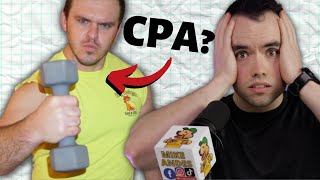
YouTube interview (May 23, 2022) in which Mike Andes interviews CPA Christopher Bell (Strongman Personal Finance) about small-business taxation, basic accounting/bookkeeping practices, entity choice (LLC vs S Corp), tax-advantaged retirement accounts for the self-employed, and investing surplus profits (index funds vs stock picking). The conversation emphasizes hiring a bookkeeper/CPA, legal protection of an LLC, S‑corp payroll/reasonable wage implications, 1099‑K reporting, and preferring low-cost, broadly diversified index funds for long-term wealth.
Chapters
Hey everyone, it's Mike Andes. And on today's episode, we're going to be interviewing Chris Bell from Strongman Personal Finance about taxes, accounting, all things to do with small business owners, when you should be investing your money, where you should be investing your money. And I think it's gonna be a great episode. Now Kris typically spends most of his time tearing down a lot of YouTubers that shill stocks that are unprofitable and diluting their shares and encourages people to invest in tax efficient ways through index funds. But today I'm going to change the topic on him a little bit because he's the CPA and he can really add a lot of value about how to invest your money, how to keep track of your accounting, when you should be starting to get a cpa. These are a lot of important things like when should I go from an LLC to an S Corp and save money on taxes? What's the implications of that? We're going to talk about all of that today. And if you want more information, check out his book on Amazon. As he always says, it's called Stop being a Broke Loser and you'll definitely get some entertainment if you check out his channel. Strongman Personal Finance. Without any further delay, Christopher Bell from Strongman Personal Finance. Here we go. I know typically a lot of your analysis is for larger companies, stock companies and companies on the stock market and analyzing their financials. But when it comes to like small businesses, what are some of the common things you see them making mistakes on smaller businesses in terms of 2, 3, 5, 10 employees or what's some of the common things you see all the time making mistakes on whether it be accounting or taxes. And there's some common denominators there.
Well, the biggest mistake is not having a bookkeeper. So I mean like where I work we have clients walk in all the time. Their, their books are a disaster. They're totally wrong. Their files are disorganized. It's a complete wreck. So even if it's going to cost you more money, I think it's worth it to hire a full time bookkeeper or even go with your CPA firm and use them to assist you. Because what happens is if you don't do this planning and you know, you don't do bookkeeping throughout the year, what's going to happen is you're going to show up, you're going to give your all your documents to your tax preparer and you're going to get charged out the wazoo because it takes so much time to Go through your stuff and figure out what you're doing. So if you're starting, if you have a small business and you have no idea what you're doing, I would immediately go right now, if you don't have a CPA and go talk to one. You don't need a CPA necessarily if you're individual, you know, you got a regular W2. But if you have a business and you have multiple employees because there's all sorts of taxes you have to pay, you know, unemployment tax, you know, employers taxes, stuff like that, you need to go to a CPA immediately. So that's, that's my number one recommendation. And once you do that, I mean they basically, they'll give you all the advice you need and set you up.
When it comes from an accounting and tax perspective, what do you kind of look at? Obviously when I watch your videos and you talk about how in debt a company is or they are diluting shares, et cetera. And for everyone watching, you gotta watch the channel Strongman personal finance. But when you look at those companies versus a small business, is there certain ratios you're using in terms of what is like a healthy debt versus a healthy debt ratio and whether or not someone's liquid, do you see any correlation between those large companies that have access to a lot more capital potentially versus small businesses and kind of the correlation between the two? Yeah.
So I mean larger businesses have more options for capital, they can issue more shares, which dilutes the shareholders. But I mean if they need cash, they can do it A small business, I mean, it's just you. So in order to raise cash, you either have to put in more cash yourself, you have to bring in another partner with cash, which you're diluting yourself if you're doing that, or you have to go into debt. So I mean, there's some correlations between, you know, looking at the financial statements of Apple and looking at a small business. I mean the financial statements are financial statements and there's a lot of, you know, ratios you can look at. At the end of the day, you're a little bit more limited in funding if you're not, you know, a publicly traded C corporation.
And in terms of, obviously you can't, you see every single person's type of, you know, tax set up and, and what they're looking at in their business. But what's sort of the delineation for you when you would say someone should be taxed as AN S Corp vs Just hey, keep it simple, do an LLC, don't worry about the extra, you know, filing extra tax return all to it. Is there a certain like threshold and maybe just kind of briefly explain the, why someone would want to do an escort versus an LLC for their small business. Sure.
So I mean I, I would, I would immediately. Once you go to your cpa, they, they'll help you determine exactly what your structure should be. But at the end of the day, if you're an llc, the whole point of the LLC is you have a legal protection. If you're just a sole proprietor, you don't have any legal protection. So if you get sued, you know, as long as you don't pierce the veil they call it, you know, people can come after your personal assets. So if you're, if you're not even an LLC, which by the way my YouTube channel is not. So I probably should do that.
Don't tell anybody that, you know, but you should immediately become an llc. And then if you want to make an election to become an S corp, you can go to your CPA and they'll do that for you all. An S corp is, is, it's just a slightly different way of taxation. You have to pay yourself a salary, a certain, you know, reasonable wage and it helps you reduce your self employment tax, that's Medicare and Social Security. So there's some advantages to the S Corp. But I'm not going to make a blanket statement and just say, oh yeah, just become an S corp. You definitely want to sit down with a CPA that can give you their full attention and really advise you on that course.
Or not that typically align with just amount of profitability that makes sense to do that or is it just really a case by case basis in terms of liability, taxes, whether or not you're paying yourself, things like that?
I would say when it comes to becoming an llc, you know, just getting that legal protection even if you're not profitable, if you're out there on the public and you're doing things, you know, you definitely want some kind of, you want to shield between your personal assets and your business assets. And if you sit down with a cpa, they can help you make sure you set up your own business account. You know, they'll give you all the tips to make sure you don't. They call it piercing the veil. It's where you blend in your personal and business assets together. And if that happens and you get sued or you know, some kind of, you know, you know, lawsuit against you, you could potentially be giving up some of your personal assets. So immediately, even if you're not profitable. I would look into becoming an llc, which like I said I should be doing, but I've been bad about that. And then, you know, when it comes to becoming an S Corp, case by case, you sit down with your cpa, they can sit down and do all show you, you know, well, if you're an S Corp, this is what your tax liability would be and et cetera, et cetera.
There's a lot in like Orange Street Landscaping, lawn care, for example, that they really don't do a lot of bookkeeping. And most of the reason is because they try to keep it Venmo, the cash app, cash under the mat, pay the invoice, you know, that sort of way. Why should someone not do that? And then when potentially might that actually be acceptable, whether it be someone's really young or they're not making very much. Like, when's that line? When someone's like, hey, I need to actually set up an entity, I need to set up a bank account. I need to actually transact everything and keep track of it through QuickBooks or whatever. Is there a certain in line where that like, needs to happen? Or, you know, what are the downfalls of just, hey, take cash because you don't have to pay credit card fees and you don't have to pay taxes and all the rest of it.
Well, number one, you're. You're taxed on all your income, the vast majority of income. So you. Just because you're accepting cash payment for services doesn't mean you owe tax on it. And they actually have a new form that came out, it's called the 1099K. If you have over a certain amount of transactions on PayPal, Venmo, you actually get a tax form and that gets reported to the irs. So even if you think you're slick and you're getting money through, you know, PayPal or whatever you're gonna get, you know, if you get audited, the IRS is going to know exactly how much you made.
So my favorite part on the recent this year was on the tax return was you had to report how much stolen property from last year that you had to report that on your tax return. I thought it was great.
Yeah, man, they want to tax everything they want. They don't care if you break in the law, if it's illegal. They want their, they want their cut. So I would definitely start doing everything you can now. But like I said, if you need to go to a cpa, it isn't one of those scams where oh, I'm gonna have to pay a lot of money and there's really not that much difference. No, a CPA will protect you from a lot of things, especially if you have employees because like I said, you have to pay, you know, you have to pay employer matching taxes for Social Security, Medicare, federal unemployment, you have to pay state unemployment taxes, you have to pay quarterly taxes. If you're profitable, you want to make sure you're paying those too. There's a lot that, that goes on that if you don't know anything about tax. And it's, it's very complicated. I mean I'm still learning a bunch of stuff too. You definitely want to sit down with the cpa, I'll say that a thousand times on this.
Actually this morning one of our franchises, we had like a morning Mastermind video I do with all of them. And one of the questions was about really what you talk about a lot and that is Tax Advantage accounts. So for someone that is starting to become profitable in their small business, thinking about, hey, how can I shelter some of this from taxation, be real estate or other investing mechanisms. But when it comes to like the SEP IRA, a 401k, can you explain the few kind of most popular ones that you would recommend for a self employed individual and maybe even explain a little bit about that, the SEP ira, exactly what that is and what the ramifications of that are?
Yeah, so a Tax Advantage account is just a tax shelter. So for example, you know, let's say you, let's say you make $100,000 in profit from your business. Well, you can actually, you know, based on, it's kind of a complicated formula, you can actually take some of that money and put it away and that comes off of your taxable income. If you contribute, you know, like a traditional sep ira or you know, 401k or something like that. So what you're doing is if you contribute to a traditional account, you're saving taxes now, you're not paying federal state taxes now, but when you withdraw it at retirement, that's when you get, that's when it gets taxed ordinary income where you also have the Roth variant where you pay your taxes up front, you contribute to the account and then in retirement, which you meet all the qualifications, 59 and a half, you know, it's been in there for five years, you can pull it out without paying any taxes. So you definitely want to invest in Tax Advantage accounts, especially as a business owner because you can contribute yourself and then you can actually match yourself as an Employer. It's, it's pretty, you know, crazy what you can do. You actually have more advantages being self employed, contributing to those accounts than you do as a, you know, somebody working for a business.
Now for a step though, don't you have to offer it to your employees at the same rate like the, the, the percent that are the amount that you offer yourself or your, your max that you have to give to your employees? And there's some sort of law about that?
Yeah, I can't recall the exact law, but I know there is some kind of like you can't just, you can't be discriminatory in your place plan.
Got it. So it's like. Yeah, I forget. Exactly. I remember looking at last year and just basically like my goodness, the headache this is going to cause us. Explaining this to everybody is going to be, is going to be miserable but cool. And then beyond that, like beyond just, you know, a 401k and an IRA, one basically paying taxes now versus later, the other paying it down the road instead of today. When, when would it be a good move from a financial standpoint, taxation standpoint, specifically to start thinking about other assets or other ways of sheltering that money beyond just like say $6,000 a year or whatever those limits are. What kind of investments do you see small business owners taking from their profitable small business and then moving it? Something that's going to hopefully shelter them from taxes somewhat.
So I mean there's not infinite ways to shelter yourself from taxes. I mean you can invest in real estate, but I mean eventually if you become profitable real estate, you have to pay taxes on that too. There's, there's really no, you know, trick to getting away from taxes. What I recommend and this is just like as a, from a personal level because you have your business and then you know, you either take distributions, draws and once you have that money to live on, then you can find very tax efficient investments outside of tax advantage accounts. Like for example, you can consider looking into an index fund which if you've already maxed your tax advantage accounts, index funds are good in taxable accounts because there's not a lot of turnover, which means you don't pay a lot of capital gains taxes and they have very low expense ratio. So I, and this is just me personally, I prefer investing in broadly diversified index funds. I know you like, you have some real estate, which is great. There's nothing against that. I'm more of a stock investor. So if somebody was to come to me and say hey Chris, what should I do? If I've already maxed my IRA and my 401k and I got excess money I want to pull out of my business to invest, I would say best bet, probably just plop it into an index fund and just let it run for 20, 30, 40 years.
And obviously your YouTube channel is a great proponent of VT Vanguard Total Index Fund.
Why should someone do an index fund specifically over just stock picking? Obviously with the advent of Robinhood and other companies like that, I think a lot of small business owners, in my opinion, were distracted from their small business and taking profits of, say, five or $10,000 that should have gone into their business and making that more profitable and trying to go after this, you know, 100% return this year. Like, I think it's more of a mentality mindset issue that really derailed a lot of small business owners at a time when they actually needed their capital to restructure their business. But what's the mindset behind investing in more of diversification in index fund specifically instead of trying to chase the next gamestop or whatever it might be when it comes to investing someone's profits?
Well, so the reality of what happens, I guess with a lot of small, Because I, I don't know a lot of small business owners, but if people are pulling out a lot of money from their, especially their profitable business that they could grow by reinvesting the money to buy stocks like that, think about your business itself. Do you have a profit? Are you making money? And then apply that same logic when you sit down and look at your own financial statements, okay, what's my net income? What's my profit margin? What's, you know, looking at the statement of cash flows, all that stuff, apply that same thing to the stocks you're buying. And if you're not doing the same thing that you're doing with your business, you're probably, you know, buying a bunch of stupid stocks that are going to lose you money. And the whole, the truth of the matter is the vast majority of people are horrible at picking stocks. A lot of people started trading stocks, you know, right after the pandemic started and they had their Robinhood account and they made quick gains, you know, in the first year or two. But eventually what happens is if you're buying a bunch of stocks that are, you know, not good, fundamentally, you're going to lose your money. And we've, we've been seeing that happen pretty significantly. A lot of stocks, you know, for example, Ark, you know, that was the, the crown jewel of the pandemic. It's been decimated. So if you're going to buy individual stocks, you need to first understand what you're looking at. You need to understand how to read financial statements which as a small business owner, you know, you're doing your own books, you're reviewing, you know, your tax return, you should have some idea what to look for. And then once you go from there, I would say if you want to dabble in stocks, maybe just do a small part of your portfolio and then park the rest of your money in an asset that will actually build you long term wealth. Because as a business owner, if you have a very profitable business, you're making tons of money and you don't really want to grow the business, you don't want to reinvest it. A great way to put your money aside for long term wealth is just to buy a broadly diversified, in my opinion, total world index fund and just let your wealth grow as the world becomes wealthier.
Got it. And one thing I think that's really cool for everyone listening should check out that you do is that kind of the way you look at the valuation of, you know, obviously these are mega cap large stocks. But looking at from a perspective like I want 15% for example, return on my money, therefore I'm going to roll back what today's value, you know, the net present value today is worth based upon that cash flow expectation. And I feel like a lot of times small business owners, we get wrapped up in the stock market and it's like, look, your small business, if it's profitable, is probably one of the best engines for wealth creation that's available to us. And instead of getting, you know, just completely distracted in my opinion on so much of this other nonsense, like your favorite ttcf.
Oh boy, you want to get into Tattooed Chef. But no, I mean, you have a great point. So like most of your money you're gonna get from working your job or having a small business. I mean that's where your, that's your true wealth engine. And if you focus on your, your business, which, I mean, I'm building a multiple businesses too. I have a tutoring business, I have. You can classify YouTube as a business. I mean it is a business. And my goal is to just maximize my income because if I focus on my business and make smart investments in my business at some point in the future, I can generate so much cash flow from my businesses that I can, let's say my business peaks out at a certain point. Well, okay, I can just invest that in index funds. And if you're making a ton of money, you'd be shocked how much you can, how much wealth you can accumulate just by consistently investing into low cost index funds. Like, it's shocking. You don't have to make a lot of money as long as you're consistent about it.
Cool. Well, I appreciate you coming on. We'll have to have you one on one of these days, maybe around tax time when everyone's thinking about where they should be trying to spend money in December. But I really appreciate you coming on, brother.
Not a problem, man.









