The Ultimate DUMP TRAILER for Landscaping! (Watch This Before Buying)
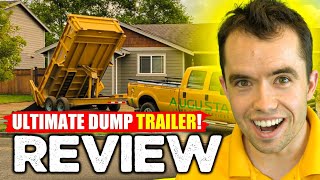
Video walkthrough by Mike Andes (Landscape Business Course) demonstrating dump trailers used in landscaping: features, practical pros/cons, capacity and sizing guidance, and optional upgrades. Covers real-world usage (hauling mulch, gravel, debris, equipment), operational tips (hydraulics, gravity-down option, battery charging, tarp systems, ramps, tie-downs, support legs), and purchase/maintenance recommendations.
Chapters
Hey, everyone, it's Mike Andes here with landscape business course. Today we're at the Augusta of Whatcom county location, and I want to talk about dump trailers, pros, cons, and walk you through the ones that we use. So maybe you're considering buying a dump trailer or switching from an open trailer to actually one that does dump. So dump trailers are great because they're so versatile. You can use them for so many different things. And if you're in landscaping or leaf cleanup or do any sort of projects outside of mowing, dump trailers are a must. So we have four of them. And. And everyone's like, oh, I thought you were going trailerless. We are in terms of the mowing, but for hardscaping and landscaping and cleanups, like cleanups, these are huge because we can throw debris in the back, back up here and dump in a matter of seconds. It saves a lot of time. So I want to walk you through kind of each part of the trailer setup or not the trailer setup, the dump trailer kind of show you some of the different features that you might look for when you're buying a dump trailer so that you can make a good buying decision. And so, yeah, we use these a lot for hauling material, too. So, like mulch, gravel, we have the materials all here at the shop. And so we're able to use the dump trailers to haul a lot of material. So this specifically, these trailers will take £10,000 to dump, which means we can get like four yards of gravel. We can get like, basically 10 yards of mulch soil. We can get like five or six yards in terms of weight. And honestly, these things will do more than 10,000 pounds in terms of being able to still dump it. But they can max out, like, if you go 12, £13,000. We've tried this before with wet soil, like mud, and we've put in like, 8, 9 yards, and it does not dump. So that's something to definitely be careful of. And the biggest thing when it comes to what size of trailer to use is a couple things. If you're going to be taking an excavator, if you're going to be taking a skid steer, you do need it to be a little bit bigger because those pieces of equipment can get large. But if you're just going to be using it for cleanups and some, you know, two or three yards of mulch or material, you don't need this big of a trailer. So let me walk over here just so you can kind of get a side view. This is a 7 by 16 trailer. This dump trailer that's behind me now, this has been in operation with us for several years. So it's not new by any means. And we have got newer ones. These videos. We don't necessarily plan or like clean the equipment specifically for these videos. So we're midweek right now when I'm recording this. So it's definitely been in use. And we've had a lot of rain the past few days. And so there's definitely mud. You can see there's mud on top. Like we use these things a lot. We use and abuse these dump trailers. They are very versatile. We use them every single day. And so right now, like this is the only trailer that's not out on the routes and out with the crews. And that is because we use them so much. And so it is dirty. We didn't clean it specifically for the video. It's a couple years old. But I want to walk through each element of the construction of these kind of some of the things you might consider when you're buying one. But the biggest thing is going to be the size. If you're going to be hauling equipment, definitely going to need it bigger. Like so, for example, this is 16ft, but you're going to need at least 14ft if you're going to haul an excavator. If you're going to haul a full size skid steer, even a dingo gets very long, like a good 12ft. So something to keep in mind, if you're going to try to go 10ft, you're not going to fit a big piece of equipment, let alone the weight restrictions of that piece of equipment. So this can carry 10,000 pounds. It's a 14,000 pound trailer. But then the trailer itself weighs about 4,200 pounds. So in terms of dump weight, 10,000 pounds is safe on this one. So let me take you to the front, kind of show you a little bit around. In addition to whether or not you take equipment, the size of the trailer is also going to depend on how much material you want to haul. And so we do take, you know, 8, 10 yards of mulch sometimes in these trailers. And so having the capacity and really nice on our 7 by 14, which is. Yeah, 7 by 14, which is three out of the four. The only reason this is 7 by 16 is because we got this back in the day when we did artificial turf and we wanted to be able to fit a 15 foot roll of turf in the back of these. So again, poor decision. Watch my last video about simplification. Of services. And this is just another example of why you don't want to keep adding a whole bunch of random services. You start changing the standardization of your equipment to, you know, personalize to certain services and tailor your equipment so. But in general, our 7x14s, if you filled everything to the brim, you'd be able to fit nine yards of material because the. The depth of the trailer. But again, we'll go through how you can actually add more volume to your dump capacity for leaf cleanup, debris removal, stuff like that. Let's start at the front. So we do have here. This is a regular 2, 2, and 5, 16 ball hitch. And you can change this out to a pintle hitch if that's something you really want to do. We did that back in the day when we had dump trucks. Now we just have pickup trucks. And so we just change it all to where everyone has the same ball and hitch. It is adjustable here on this side. You're able to take, with an impact wrench, Take out the side and adjust the height of the ball hitch. And that's important if you have a bigger truck. If your truck is lifted, you, want to be able to move this. So a lot of things I'm going to point out today Are things you want to consider when you. When you're going to buy a trailer in terms of looking for these features. So, for example, an older trailer model might not have it where you can adjust this. And so if your truck is really, really tall, Whether it be suspension or just a bigger truck, your trailer hitch now is gonna be very high and everything's gonna be leaning down in the back. Whereas if you have a really low trailer, for example, or if you put material in the back of your truck and it's sagging a bit, if this cannot be adjusted now, the tongue of your trailer might be really low. So the. So some things to consider there. So this is a load trail. That's the name of the brand. I'm not super, as you know, super brand loyal, like super specific on what type of brand of trailer you should buy. I'm talking more about today about some of the features and the overall build. A lot of these are very, very similar. Most of them are built like tanks. That's the biggest thing is, like, these things can go through war. They're just like super, super thick metal and really, really sturdy. But let's look at a couple features that are kind of new to load trail specifically that aren't necessarily a must have, but kind of a nice feature. They've recently added. So for example, on the bottom here, the foot of the trailer here up front, they now have this spring release where once you have this hooked up, you can pull this out. And instead of having to move the foot up using this massive, you know, whatever this is called, bar thing to move up the foot, now you can just spring release it and it immediately just comes right back up. So that's kind of a nice feature in terms of just speed, not having to move this thing all the time. What they did change recently on the load trail specifically is putting this beefier handle on it. It used to be a lot smaller and it would break in terms of just. It was a plastic handle, it was thin, tubular metal. Whereas now this big heavy duty thing is pretty legit. This is how you would lower it. It's a little bit of a workout honestly now because it's such a big turning circumference. But it's much better in terms of just longevity for the handle. And then when it's. When you're done using it, it just stores up like that and is out of the way.
Alright. So the big thing about the dump trailers is obviously that it can dump. So usually up front you're gonna have the box where you're gonna access all the components of the mechanism for the hydraulics. So in here you got a battery which is going to be needed and the hydraulic system to actually move the dump part up. Now what you're going to see if you get a dump trailer is there's usually going to be a couple different options. If there's just two buttons, it means that you have an up and a down. We pay a little extra for a feature called gravity, which basically means you don't need to use the system of the hydraulics and the battery to make the trailer go down. What I mean by that is let's go up. You'll hear it, you'll hear the compressor and everything work, the hydraulics.
So there it's going up. And so if you don't have the gravity feed, you would need to push the down. You can hear that it's using the motor to actually bring it down. But if you have the gravity and you usually it's a feature cost a little bit more. Basically it's just going to use the weight of the trailer and allow it to come down. And it's going to usually give you an extra one to two dumps per charge on the battery instead of having to use battery just to bring it down. You don't need that but usually it's an extra, you know, a little extra feature. It's going to cost you a little bit more. And I'll go through, as I go through the trailer, I want to walk through some of the things we paid a little extra for. So this was one of them. I think we paid a couple hundred dollars for it. But this is going to be the difference between getting like four and maybe three to five dumps, depending on how much weight is in the trailer, versus maybe five or six dumps by having just less charge capability or less charge needed to be able to bring the trailer down. So when I push the gravity one, for example, you'll see it side silent and it'll still go down.
And so it just takes, it just takes the weight of the trailer to move it down instead of the actual power of the motor. Inside of here you also see the charging station that you can plug the trailer into. So every night our guys plug these in via just the cord here. And then inside of here you can have a test meter that shows how much battery is currently charged inside of the battery. So we have a push to test and you can see kind of like if it's poor, fair, good in terms of the alternator being charged on the battery. And usually this is a trickle charge. Usually it takes a couple hours to actually fill up your whole battery. And that can be really, really annoying if you're on a job site and you run out of charge on your battery and you need to dump it. So we paid an extra hundred dollars or so to get this little trickle charge solar panel put on here. So they put this little solar panel, connect it to the battery, and this is not going to get you like, you know, it's not gonna fill your battery up. It's a tiny solar cell. However, it might get you that extra half or one more dump that you need on a big job site. And the only time we really have ever had an issue with running out of charge is when we're doing a, you know, going back and forth to a property with a lot of mulch, like time and time again, like six, seven, eight, nine in a day. And that's the only time we've ever had to run into like running out of battery charge. And this is when this comes into handy, you know, comes in handy. If it's a sunn day, you'll get an extra hold charge, extra dump, I should say, out of just having this as a trickle charge. One thing the crew has found really useful is being able to have a generator with them if they're going back and forth to a job site. So if they know they're going to be doing like 10 dumps in a day, you can throw a really cheap generator, small generator in the truck and literally as you're driving, have it charging or even while you're just like dumping material, have it charging directly to here via the cord. And there's generators from hardware hardware, Freight harbor freight, they're like $150, $130 that are just really small. They only generate like 1500 watts, but that's plenty to charge this thing up. Or even like a small Honda generator that has, you know, 2,000 watts definitely will charge this battery, no problem. You can throw it in the back of the trailer, super light. You can even throw in the back of your truck and then have it charging while you're at the job site. So that's definitely an option. It does take a little bit of time. It's not like it's an instant dump, but if you're at zero or empty on the charge, you can definitely have it running to the generator and make sure you get those extra dumps or two just so you're not stranded on a job site. All right, we'll come around the side here. This is the new feature from Load Trail and that's the I beam. They used to have just a tubular steel, now they've changed to an I beam. Little heavier duty construction in terms of just weight capacity and things like that. Honestly, with that I beam, I feel like their weight capacity for these trailers went up substantially. However, because of the weight restrictions, we don't put any more weight because in our state, anything over £26,000 you need a CDL for. And so by that time you add the weight of your truck, your trailer, and then any sort of material put in here, we're actually hitting that almost up against that 24, 25,000 pound range. And so it's usually weight is our restriction in terms of our gross vehicle weight, not necessarily how much weight is inside of the trailer. We label all of our trailers DT is dump trailer. And this is just number three out of the four that we have. Alright, so on the side here, a couple things. First of all, this tarp system that you can use to basically weigh down and pull down any debris. So what's cool about this, you can get like a massive mound of branches or leaves or anything like that by simply taking the tarp, it unwinds and then you can hook it out on the back and then lock it in place using this here so it's tight. And as you're driving down the highway, you don't have branches or debris or leaves flying out the back because of the wind. So definitely a great feature. Are definitely a must. If you are going to have debris in the back of your trailer, you need to have it secured and tied down. And you don't want to have to be using a whole bunch of tarps. And there are tarp hooks here along the side here. If you did want to use tarps with some sort of strap to hold everything down. However, this is a great system to be able to pull it over, lock it in place and quickly tie it down. And we use this a lot for mulch, honestly, in addition to debris. So debris is obviously gonna. With a wind going down 70 miles an hour down a highway is gonna go flying out the back. Mulch is the same thing, especially if it's dry. So we wanna make sure that tarp is covered, locked in place. Definitely. This is a worthwhile investment. It's gonna cost you a few hundred dollars extra if you're getting a dump trailer. But you definitely want this. I would actually recommend getting that even if you have a dump truck. Having a tarp for the back is definitely something that you want to invest in if you're going to be hauling material and debris down the highway. All right. Another thing, on the side of the trailer here, you got the pockets where you can put in two by fours. So again, you know, just forgive us on the all the dirt and debris in here. This has been used extensively this week already and we haven't washed it. We wash them once a week. Inside of these pockets goes two by fours. And you can build up the size if you want. So some people will add an extra two or three feet of using, you know, two by four sock into the side and then doing like two by sixes or two by eights to build up the sides. That way you can get more leaf debris and just increase the volume of the trailer. So tires are a big deal actually, when it comes to dump trailers, because so much weight's gonna be on them. Definitely invest in having better tires. We usually spend an extra $100 per tire on when we buy these things just to upgrade them to the bigger ply. And that's gonna be because we do put a lot of weight on these. If you're just using them for like leaves or light debris or mulch, maybe get away with the cheaper. So this is actually the cheaper tire, right Here, cheaper tire versus the heavier duty tire. In terms of tread. These take a little more weight. And that's because we do use them for gravel and for hauling 8,000, 9,000 pound equipment sometimes. And so we want to have the bigger ply on the tires. We have had one of these blow out before. And that was again, just a warning sign that, look, you got to invest in the bigger tires when we are hauling heavy, heavy loads. And when we did that, we had a good eight to nine thousand pounds in the trailer on top of probably more equipment. So, like, it was right up against its max going down the highway and a tire blew out. So definitely, we invest in these a little bit more when we buy these to get the higher ply, Invest in that higher kind of quality of tire. All right, so on the back here, this is kind of an important feature that's new to the load trail, specifically their trailers, and that is having this hook for. For the door. So you can see here, on the back of the door, they've installed this aftermarket. Once it's come from the manufacturer, where there is a cabinet. I don't even know what these are called, A hook of some sort. Cabin carabiner. There we go. So that's gonna hook right on the back here. And that's very, very important because we have had at least 10 times over the past four or five years that we've used these where basically people will just open these up like this. They go to the front of the trailer, they start lifting it up with the remote. And they're not watching the back. They can't see the back as soon as this starts dumping. And therefore what happens is, as this trailer dumps, this swings back just like this. And then as they dump, this goes tilting down until this corner hits the ground. And because the power of them, of the motor so much, it just basically breaks these hinges right off, or at least bends them dramatically. And then you gotta get them re welded. It's an absolute pain in the neck. So this is something that is an absolute must make sure you have some sort of locking mechanism for the door that you can just click in place so that as it dumps, it catches something that's physical. And so they've improved this from. It used to be a locking mechanism where, like, once you got to a certain spot here, it would lock in place. But even that wasn't good because sometimes the guys would, you know, open up to here and forget about it. Walk up to the front, push the button, start dumping. They can't See the back of the trailer? This would swing back. And again, we went through this at least 10 times where we had to re weld these hinges. And they have to cut them off, do the whole welding process. It's a pain in the neck and then they don't close correctly. It's an absolute nightmare. So definitely make sure you have some sort of a locking mechanism on there. Let me see what else we got here. On the back here we got the supports that are drop downs. So basically you just pull out this pin just like this.
And then these can drop down. And they're adjustable. And this is only really necessary if you're going to be putting heavy equipment in and out of the trailer. And so if you're going to be putting an excavator in, you're going to put a skid steer in the back of these. You do want to invest in these. The reason for that is if you're taking £10,000 up the back of this on a ramp and you are going to try to get your piece of equipment in the back, what's gonna happen is that most of your weight is now behind the trailer axles. And what that's gonna do is cause an upward pressure on the tongue weight and the front of the trailer. And if you're on a hill like this is the hill and this is lower than your truck, there's a good chance that if you have a light truck that you can actually pick up the back tires. Now, you do have to have a pretty light truck, but it is possible. I've seen this happen before. We were parked on gravel. We had a piece of equipment going into the back here. And it literally picked up the back, started picking up the back axle of the truck. And then we started skidding on the gravel. Like the whole trailer and truck started moving. So by having these supports, you can put these in place and then when you drive up, it's going to take that weight and disperse it to here instead of lifting the front of the trailer up. So definitely, if you're going to be using equipment in terms of excavators, skid steers, track loaders, anything like even a dingo, I would get these supports. I think we pay an extra $200 for one on both sides. Definitely worth it. Definitely something you need to have if you're doing equipment into the back of these. And that's what's so nice about these. Again, they're so versatile. You can put equipment in here. You can see there's tie downs for the chains. Inside, they're on all four corners of the trailer. Inside again, it's muddy. I know. We use these. We make money. This is not for show. So those are the tie downs for your trailer chains or sorry for your chains for your equipment. And those come standard with all of the trailers. You can see here on the back. This is the hook where the tarp system gets locked into place. You just slide it into here and then it locks in place. Now what's cool with this, the trailer doors, is if you don't want to open them up like barn door style, where they open up like this, you can have it where once you lock this in place, this pin here up top can be the kind of the lever and then you unlock this and then it actually dumps like this. And that's only really useful if you're dumping gravel and you're wanting to spread it. So we've only used it a few times when we're trying to do a whole bunch of gravel and spreading it really thin. You can basically unlock this pin here, unlock this here, and then use the chain right here to set how far back the door is going to open. And therefore you can have a bunch of gravel dump it and then slowly drive forward and it'll slowly trickle out. So really good if you're trying to spread gravel. We haven't found a whole lot of use for topsoil because topsoil is going to get caught in here anyways and it's not going to come out smoothly. So if you're doing like some sort of crushed limestone or 5, 8 minus or something like that, you might find use if you're trying to do a driveway or a large area with gravel where you would actually use this as the pin, unlock this and then the doors open up from the bottom. So kind of a cool feature though if you are ever doing gravel installations for a driveway or some sort of large area. All right, on the back here, underneath is where the, the ramps are stored. So these ramps are super heavy duty. I'll show you how this works. The pins just pop out.
And then this opens up and then you can see this is the ramps. These are super heavy duty. Do not think that you're just gonna go to like the local hardware store and pick up some ramps that you're gonna be able to put a 10,000 pound piece of equipment on. If you're taking an excavator, if you're taking a skid steer, a track loader, they gotta be like heavy duty. Like these are like super Heavy duty ramps. And you've gotta invest in these. I would highly recommend them, making them, getting them from the manufacturer. And usually that's gonna cost a little bit more to have these ramps. What's cool is they're stored below so they don't take any extra space. It's got to make sure they're in all the way. So you can just close this up and then it doesn't take any extra space to hold the ramps. If you get a trailer that is usually smaller than 12ft long, you're usually. The ramps won't usually fit underneath because if you look underneath here, the ramp has to fit behind the axle. And so if you have a too short of a trailer, usually the ramps will be stored on the side of the trailer right here. They'll have a place where you can lock them in place. So if you look back several months ago, I showed our 5 by 10 trailer that we have down at the Mount Vernon location. And that's what they have down there. They have a 5 by 10 trailer. It's exact same brand model, all the rest of it. But the thing is, the ramps can't fit underneath. There's not enough space. So they have to put them on the side of the trailer because you got the hydraulic motor that's underneath the trailer as well. And the ramps have to fit behind that. So if you get a smaller trailer, you're going to have to put the ramps probably on the side, depending on the manufacturer and how they build it. So when those ramps come out, they basically can just hook right into these slots right here. And that's how you can get your ramps for your equipment to go in the back. All right, Anything else on the back here? Let me hop up. You can kind of see some sort of perspective again when you buy a new trailer. This is gonna look beautiful with powder coated yellow or whatever color you get. But again, we use this every single day. This is one several years old. It makes a lot of money, which is great. I'd rather have that than it being perfectly clean for my video. But yeah, we use this all the time. And it is gonna eventually, you know, not look perfect. And if you're looking at colors, just count on the fact that if you're actually going to use it eventually this is going to get scraped like this. You can tell just from gravel and cobbles, lots of material being dumped off the back of this. You can also use the dump trailer a lot of times for hauling blocks and all the rest of it. Because as long as you have more like. This is seven feet wide. Sorry, this is seven feet wide. As long as you have five feet or more, you can get a pallet in the back of these. So instead of having to worry about your tailgate or, or going to a supply yard and the forklift going in the back of your truck, you can just open this up and immediately. They have great access to the back of the trailer with a forklift. And they should be able to put it in the back of your trailer, no problem. All right, work our way around the side here.
So on this specific trailer, this is the locking mechanism kind of just swings around and locks in place with this thing. Again, if you bend the. So this goes around here and then just locks in place. So if you wanted to, you could put a lock here. We don't put a lock here just because we don't ever store anything inside of here that's like, valuable. But if you needed to, you could lock this in place for whatever reason that you might need on this side here. The only thing that's really different is going to be the fact that you can have a spare tire. Because we have. All our trailers are exactly the same in terms of make and model. We do have already two spare tires on the other trailers. And so we did not pay the extra 250 or $270 to have a spare tire on this trailer. But this is where you can put a spare tire. It just mounts right on here. You bolt it on and. Not a bad idea. Honestly, if you have a blowout on this thing, you got pretty big problems. And having a spare tire is probably not the biggest issue because usually you're have a load and you're stranded. So we had a blowout one time, and there was no way that we were going to have a big enough jack and operation on the side of the highway. So we had to get, you know, Les Schwab to come help us and get back to the shop to actually get all the. The material out and all the rest of it before we actually fixed the trailer or fixed the tire. But we do have two of these brand new tires that stay on the side. We've only ever had to use it one time, like I said, and we have four of these. Used them for years and years, and we've only had that one blowout. But again, invest in better quality tires, so that doesn't happen as often. So that's basically it. I wanted to just kind of show you around the dump trailer, kind of give you some perspective on some of the features that are additions, right? So you got the trickle charge. That's an extra feature, cost a little bit more. If you're going to get an extra tire on the side, going to be paying, obviously for the tire. You got the rear mounts, the rear support mounts for equipment, and for that weight on the back of the trailer, that's going to be extra little bit of money. So all those little things do add up the tarp system. So sometimes you'll go to a trailer place like, oh yeah, it's like $6,000 for the dump trailer. But then once you actually start adding the features you need and want, you're going to be looking more like 8 or 9,000. So definitely don't go cheap on these. I really do feel if you're going to use them every day, I know a lot of people are like, well, you say I go cheap on everything and get everything secondhand. I'm a big fan of being able to get these new, have a dealer that's close to you where you can go. And they already have the pieces and parts of the hydraulic motor. They already have the trickle charge. They already have pieces underneath that might break or wear out over time. These things are tanks. As long as you take good care of them. Grease the one, you know, grease point underneath. These things last really, really good. You know, you can grease these at the bottom, the tires, you can grease these. And then underneath is just where the hydraulics are. There's one grease point there. You could take good care of it. These things are basically bulletproof. If you get in a wreck with these, this will win over a truck or any sort of trailer, other trailer, like, you know, an enclosed trailer or something like that. So we have, this is the Agusta yellow. We come standard with this model. And this is the yellow of our truck. So it kind of works out really nice. But hopefully that was helpful. If you're trying to buy a trailer again, the size of the trailer is going to be the biggest factor in price. And so make sure you match that to what your needs are. Don't get a massive one just because you think you might need it one day. Because if you get a big trailer, you need a bigger truck and that's going to cost substantially more. You know, if you're going to pay a couple thousand dollars more for a bigger trailer, you're going to spend an extra 5 or 10,000 to get a bigger truck. So if you use like a 5 by 10 trailer, 5 by 10 dump trailer, you're going to be able to use a half ton pickup and pull that thing around all day long. You don't even need four wheel drive because it's not going to get super big. The tires are smaller, it's less weight, it doesn't haul as much weight. Whereas if you start getting this 7 by 16 or 7 by 14 like this, you need to have a 3 quarter ton pickup. Four wheel drive is definitely useful, especially if you're dumping all those sort of things. Definitely a time saver though for debris, a time saver for loading materials, and a time saver for moving around equipment. If you want more information on this check, check out the channel and make sure you check out landscapebusinesscourse.com we'll see you next time.









