Their Jobs are DONE - Episode 079
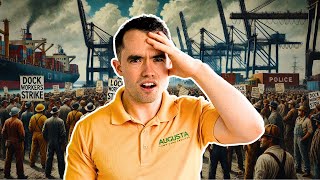
Podcast episode (C Suite Unfiltered) featuring Lee and Mike Andes discussing the recent east coast/Gulf longshoremen (dock worker) strike, its causes (wage demands and automation fears), the tentative six‑year deal (61.5% wage increase; top wage ~$63/hr; temporary through Jan 15), and the broader implications of automation for blue‑collar labor. The hosts also discuss Steve Jobs’ advice about asking for help, strategies for accessing influential people, media appearances and promotion, career advice for young workers, and personal non‑financial advice (avoid dependencies).
Chapters
Alrighty. Welcome back. Another episode C Suite unfiltered podcast with Mike Andes.
Wednesday morning.
Wednesday morning, bright and early. Alrighty. So we're gonna jump in. This is, this is a listener request.
Okay.
All right. This is from Brian R. Okay, over at the command center. He is an employee of Augusta, but he said, Lee, I. I have a bone to pick with you.
Okay.
I don't know if these were his exact words.
Okay.
He's very polite about it.
Wait, comment or in the description or.
No, in person. In person. He said, I have a bone to pick with you. Not quoting him directly that I didn't ask you about the dock worker strike. Oh, now this is a little bit old news at this point because I believe it's at time of recording. They started their strike about 10 days ago. It got resolved I think four days ago now. But it was still main headlines for about a week. So I did not ask about it. And I thought, you know, maybe this is a good topic to ask you about. So thank you, Brian, for bringing that forward. So I wanted to ask you about it.
Now.
I did do some digging. I watched a couple YouTube videos on it, read a couple brief articles. Basically, the main reason that these dock workers were on strike was because the lack of increase in wages consistently over time. And the way these dock workers operate is they do contracts. So this contract was a six year contract, expired September 30th, and they didn't come to terms on the new contract. And this was for the longshoremen of the east coast and the Gulf coast. And that contract expired and they felt that the folks that they were working with were not going to meet their demands in terms of wage increases and protections against job loss due to automation. So that was their two big sticking points. Wage increases, job loss to automation over the last couple of years is an interesting piece of data. I found over a thousand jobs on the east coast and Gulf Shores has been lost to automation. Now, if you look at the total number of longshoremen, it's about 2% of their jobs over the last couple years. So not excessive. It's not like 50% of their jobs have already been automated.
They're smart enough to know it's coming.
Yes. And then wages were not increased. So this is what the tentative deal is. So they signed a temporary deal till January 15th. So they're not. We're not out of the clear yet. This is probably going to come right back around after the holiday season, after the election. After the election, after the holiday season, which a lot of economists Are saying hey, this isn't going to massively impact the holiday season because that is when consumers are buying typically the most. And we need the longshoremen and offshore cargo to be moved quickly for that increase spending. So through January 15th they have a temporary deal. The wage increases over the next six years. It's another six year deal temporarily. 61.5% over six years. They were demanding 77% but they settled in 61.5. And the top wage would be $63 an hour at the end of the contract. That is what they are demanding and expecting. So that is the short of it. What are your thoughts?
This will be their last contract to negotiate on.
So you think they need to.
In six years more than 50 of their jobs will be automated. And you look at Shanghai's. Have you seen Shanghai's?
Yes.
Stuff and like even parts of LA's. Even LA's.
Oh yeah.
Is like mostly automated.
Yes.
So these people, if this is what's funny, they all come across like these underdogs. They're all like the average wage of that union is over a hundred thousand dollars. And did you see the, the, the, the head of their union, his gold chains like 15,000 A6, 5 or 6 million dollars.
Yes.
Is it 5? 6.
Quoting that? No. I do know, I don't know if you're misquoting the property value but I did hear from multiple sources that his salary over the last couple of years is around 800 to 900,000 a year.
And it sounds like four or five million dollars. And he's coming across like this blue collar like everyone's against us and we like, it's like dude, you all are making fantastic money and if you have a high wage and you offer low value and technology increasingly in power and decreasing in cost, you're going to get commod. Right. Like why would you not be trying to, to. If I was negotiating I would be figuring out how do we actually retrain these longshoremen using automation to become twice as productive and twice as efficient. But because they're going after simply their paycheck in six years there will not be a contract to negotiate because they're going to think about this. Over the next six years the cost of doing that business from those ports will increase by 60%. During that time automation will probably half or reduce by 60 to 70% in cost and will probably double or triple in efficiency in six years. There will not be a negotiate a contract to negotiate. Yeah, because they will all, they completely be commoditized and they'll be completely on their knees just begging for something. And so this is where it's like, again, the unions are very short term minded in this and like they will take this as a big win if they get the 60% or whatever. And it's extremely short, short term focus because they're not retraining their workforce for what is evidently going to happen, which is automation.
Yeah. And that's where, you know, some of these economists that I were reading and seeing in these interviews on YouTube were saying that if you look at Asia, they have been the first, the continent of Asia, their ports have really been the first to really push for automation and reduce the amount of physical labor needed at their ports. So we realize that, you know, are these longshoremen realize that the US is going to follow suit because they see that the Asian ports are more efficient and it's going to be more cost effective for those ports and for those countries in terms of importing and exporting these goods. Now Western European countries are embracing this. So it just makes sense that hey, we're coming next, but we have these big union kind of overlords that are going to fight against it. There's over 46,000 members of this longshoremen's union on the east coast and the Gulf port. So you just have to fight that big monster, if you will, to get anything through, anything changed.
I hope they're all going to night school.
Yeah. For just any sort of technical anything.
Because they won't have a job in six years. Yeah. Like I'm sorry. Automation's gonna wipe them out. So you become an engineer to manage the robots so that when there's an autonomous truck doing your job, you manage the trucks and you manage five of them, not one of them. Yeah, yeah.
And you know how to look at potentially the software, the hardware, the code, whatever it is to then manage that.
And fix it or understand logistics and how like what would be most efficient for the stacking of the boxes and the unloading and come up with ideas of how that could happen instead of like how can we make this take the longest amount of time possible and get paid the most? Like it doesn't make sense.
So anyways, yeah, so that's really all I had on that. I just wanted to get your thoughts on it. You know, I'm always pro employees trying to get higher wages, but a 61% increase over six years for this is what I always look at. Are you going to bring 61% more value to your job to deserve that wage and I understand there should be wage increases due to inflation and cost of living. I agree with that. As an employee, I hope that I can receive those benefits. But 61% over six years, like, what are you going to do to make it more efficient by 61% to deserve that? Like, if you're just keeping up with cost of living and, and inflation, you're talking 3 to 4% per year.
It is, it's typical politics because like this, the leader of these unions will not be around in six years, so they won't have to negotiate the next one when they have absolutely no leg to stand on and when the cost of automation is now extremely obvious and there's not as long term of an investment required to replace them.
Yeah. So that is the dock worker strike that is now temporarily over.
Yeah.
And shouldn't be an issue.
Is there a matter of like, we all need to be retrained, we all need to rethink how we do work, how we do labor, how we do, like how we make a living. And it is going to become less and less about doing work with our hands. And it's like, how do we make the robot and use our brain to make the robot that does the physical labor and then we man manage, maintain and operate the machinery. And so whether it be from a customer service perspective and answering phones, whether it be mowing lawns, et cetera, like everyone needs to be retrained. And so the fact that they basically pushed the can, you know, kick the can down the field for another six years and you know, he's going to hold everyone hostage to making sure that they get paid six figures plus to do a job that a robot can do for far less. Like there's no way they can negotiate in six years. They just like, if I was them, I would be like, hey, we want 40% increase. And then we went 20% to go towards retraining the workforce on automation technology, software, robotics, et cetera, then we'd have like, I, I would be more in favor of that, but I feel like.
They wouldn't go for that for obviously the obvious reasons. But I think a more nuanced reason would be they don't even trust the union to prepare them and train them correctly.
Yeah, again like the union stinks at most things besides negotiation. So like, yeah, it should be the union should go hire a contract companies to come in and retrain everybody.
Yeah.
And so, and it's not sending them to a four year university because that stinks too. So you need, you would need like, you Would literally probably create divisions inside the union. Or you would hire contractors to come in and retrain everyone. Like hire some of the best minds in robotics and come and retrain your union and do it in groups. And like you could make that happen, especially with if you're going to take out 20% of wages and put it towards that. But it's just very short minded. Every. It's a government. As soon as you start getting unions and you start getting governments and you start getting people that have like little stints, like four or five year terms, that's when you start getting short minded. Like short term focused things.
Yeah.
Because they're all like, we won and like you lost this game. I'm sorry.
Yeah, yeah, it looks good in the short. It's like, it's like winning the. It's like just putting all your. It'd be like a major league baseball team because we're in the playoffs now, throwing all of their best pitchers in the first two to three innings of every game. Like, yeah, you're gonna dominate the first two to three innings, but there's still six to seven more. You, you need to save your pitchers, you need to reserve your pitchers, you need to be conservative with your approach to winning all nine innings, not just a couple. Does that make sense?
Yeah. And like on the back end of every single one of these negotiations, you have a chief revenue officer and a CFO, chief financial officer that are running the metrics of how long does it take for us to reimburse or get back the cost of buying robots? And that usually takes three, four, five years. Well, if you increase wages by 60%, you know what you just did to that model, you just reduced the amount of time it takes to recoup your cost by 60%. So you just like, you just stacked yourself again like you're. It's.
Yeah. Anyways, yeah, it's short sighted.
Very.
Yeah.
Technology will win. I'm sorry. And whether or not I like it or not, it's just going to win. So figure out a way to win within the confines of that rule.
Now, do you feel that mass technological advancements like this like a port. And I'm not going to pretend that it's simple by any means, but it is basic logistics in the sense of you are moving a cargo box to a designated space to then put it on a designated truck to then get it to its designated destination. Destination.
Very complicated.
I understand that is a very complicated process, but I feel like because it is such large scale. All right, I guess my question Is, is it easier to automate large scale operations like that than it is smaller, more niche operations like should, should the average plumber be worried about their job becoming automated?
It all trickles down, right? So typically you start with the military because they have all the money and they are trying to do mass things like with hundreds of thousands of people, like in terms of the army. So like typically like that's where technology will start and then it will trickle down to places like the port where they have millions of dollars. And again, the reason now they have a bigger budget is because wages are going up so much like, okay, now we can allocate more money towards actually figuring out the solve this problem. And so like that there's, there's billions of dollars we made there. There's not that much money in smaller industries. So it trickles down typically. And so yes, the plumber will eventually be affected. But also like a robot isn't going to go into a house, be able to find the pipe that's leaking, be able to diagnose which one to, you know, how to fix it and then go out to the, get the right tools, get the right whatever and then fix it. Like there are certain, you know, industries that robots won't do much but it's a matter of like there'll be so many other facets that will be robotized. It's like will there be a 3D printer that he goes out and prints off the correct type of hose or nozzle or gasket or whatever? Like that will probably happen. And so it's a matter of just adapting to like it's like tech enabled. Then the harder part with like something like the ports is you have hardware. And so when you have hardware and software it takes longer because the hardware takes a lot. Like it is just so many safety precautions. There's risks like if you drop a box on a port, like it's a huge deal, right? And people can lose their lives. So like yes, there's so much more regulation and there should be in terms of making sure that safe and then it can take over. But you know, there's stuff like a plumber, you're just not going to replace it entirely. But you got to figure out how you get tech enabled so that instead of taking an hour figuring out which part you're going to get from Home Depot or Lowe's, you go out to your truck and you print it off.
Totally random. But we're going to tangent off of that. Do you and say 30, 40, 50 years, whenever it is Will you have a live in AI robot, like servant made? Whatever.
I think most of us will, yeah. Yeah.
Because that's what a lot of like the, there's, there's so many different like kind of thriller, scary movies out there about it. There's one that came out this Halloween season just called like, it wasn't AI but it had like AI in the name that it was like bold, you know, that I was taking over the house. But there's all these different ones like her and, and different ex machina was like a really big one of like these live in robot maids. I think that, I think that'll be cool. I'm going to embrace it. But I feel like most people are like scared of it. You know what I'm saying?
Whether or not you like it or not, it's going to happen. So.
Yeah, but I think what it's going to happen. Do you think it's going to be tested on the mass scale? Like they will start, they'll realize that, okay, we can't fully automate everything on the docks. We still need human laborers. But can we create a robot that can tap into that? We can build software that through the network can tap into hardware that can now start to do the human element of those jobs.
Yeah, it gets way down the road. Right. I think we're a long ways away from that. Like, I think moving, moving things, like doing things that are repetitive is like the perfect job for a robot. Being able to get 50 different tracks and then say, hey, one of these tracks based on these inputs, figure out which one, whether it be voice, whether it be video, see where things are at. For example, in a port like those is really, really good at that. But the human mind can do billions of scenarios and we're just not there yet. And it will get there, but we'll have in 50 years. We don't need any humans. I don't believe that. Yeah, I just generally believe we'll continue evolving. We'll continue like working on the robots, making them better and I think it'll be safe. A port that is automated is safer. It just is, it is less risks of injury and fatalities. And you know, I would just rather trust, you know, a piece of software that has been tested, done ran through 100,000 times and will just continue to operate the same way compared to someone that might have had a bad night, not slept and is hovering, you know, five tons over, over a cargo ship. Like, I would just rather trust the software.
Yeah, good point. Fair enough. I know you don't Watch a lot of tv. You've seen the Wire, HBO show. Yeah. Whole second season is about dock workers.
Okay.
So I'm sure someone out there will appreciate that reference. Yeah, that's, that's all I'm thinking about. When this dock worker strike was happening, these like sleazy guys who, yeah, they come to work hungover like, you know the dock workers, they're the longshoremen, baby.
I feel like, I feel like that's what they were trying to come across as in like their little rallies and stuff and like, dude, these guys, the average worker is making over 100k. Yeah, they're all in New York and living like it's a very middle, upper middle class lifestyle.
Anyways, that is your dock worker strike update. Now we're going to switch it up here. I do have another clip to show you. It's kind of been the thing recently, but this is an old interview from Steve Jobs and I wanted to share it with you to get your thoughts.
Maneuver on our very large table here.
Alright, so we'll play this.
Never found anybody that didn't want to help me if I asked him for help. I called up Bill Hewlett when I was 12 years old and he lived in Palo Alto. His number was still in the phone book. And he answered the phone himself. Yes. He said, hi, I'm Steve Jobs, I'm 12 years old, I'm a student in high school and I want to build a frequency counter. And I was wondering if you had any spare parts I could have. And he laughed and he gave me the spare parts to build his frequency counter. And he gave me a job that summer in Hewlett Packard working on the assembly line, putting nuts and bolts together on frequency counters. He got me a job in the place that built them. And I've never found anyone who said no or hung up the phone when I called. I just asked. Most people never pick up the phone and call. Most people never ask. And that's what separates sometimes the people that do things from the people that just dream about them. You got to act and you've got to be willing to.
Fail.
So that was Steve Jobs, probably, if we had to guess, what late 90s, early 2000s, based on the attire, his beard and this, that and the other. What are your initial reactions to that story as well as kind of the message that Steve is conveying there?
Yeah, just do.
Yeah, yeah.
Like everyone thinks and ponders and makes plans, but just like just do it. Do something you might mess up. You might be literally, he's on assembly line. He wasn't like anything. He was getting an internship to help the CEO. I also think that most people that hear that story will then think that they're going to go call someone and then they're going to become the assistant to the CEO. He went, he went and was. It was on the assembly line putting together nuts and bolts. So I think most people aren't willing to do that. I think most people think they're gonna get the call and they hear that story and they think they're gonna get some like, opportunity. It's like, no, he got a job.
Yeah.
Doing like probably the most menial task in hp.
Yeah.
Sounds like, where are you willing to start? And he did the exact thing which is like, he went and did that and then, you know, learned obviously from there.
Yeah, I agree with really the last like two sentences where he says you just have to go out and do things and you can't be afraid to fail. Basically is the sentiment there at the end. I think the thinking of, well, I just call and I just ask is extremely outdated because I, and I agree with you. There's a nuance to it in the sense that you're not. He didn't get to go shadow the CEO. He didn't get some cool high level white collar internship. He went straight to the factory floor and started doing the basic labor of nuts and bolts installation. Agreed. However, I have heard Alex Hormozi say, I have maybe heard you say, I've heard all these people that are successful but public facing, like you can comment, you can message them, you can reach out to them, you can go to their conferences, basically say like, well, if you ask me for anything, I'm not going to give you anything because you're not offering any value upfront. Not saying like you've said that directly or Alex has said that, but that seems to be the general mentality of like a lot of successful business people is like, well, if you ask me for anything, I need something in return. I need value in return. So I think what he's advising here is actually really outdated and if not, maybe, I don't know, unprofessional. Because if I, if someone came up to you and asked you, hey Mike, do you have any old software or code lines from Copilot you could send me? I don't know enough about software, but let's pretend that something like that could happen. Hey, can you copy? Send me some old code Copy. Because I'm trying to build my own CRM. What would your reaction to that be.
Well, I think, I think, I think you got to be creative. So like he was creative in the fact that he took what was common white pages back then and like, oh, like I'll just call the person. And nowadays that doesn't exist. And it's not a matter of even like finding them on social media now because everyone does that. Not everyone was calling the CEO of hp. And the reason I know that is because he picked up his phone.
Right.
So no one else was doing that. Right. So it's more a matter of find something that if you're really trying to do this, you try to find an avenue that no one else is using. And he figured out a way that like was, was he was able to access directly to the top and they would, you get the message. And a 12 year old just kind of gets a pass on everything. And so you know, he used his asset of being, of being young. And if you're like, well I'm not 12 years old, great, well then what are you bringing to the table? Because he did bring his age and the fact that he was going to allow this other person to feel like a mentor to him, that was the asset he was bringing in this case. And then he used a creative way to be able to pitch or get in front of this person. So it doesn't matter, like get creative. So for example, we talked about Alex. So Sam Ovens got in front of Alex by going to an event and schmoozing a bunch to be able to talk to Alex and you know, making sure he was, he paid to get in the room. You know, you got, you had talked to the speakers, then you put the idea out there and it's a year of follow up and back and forth and eventually they close the deal with school. And so it's just a matter of what are you willing to sacrifice to get creative with how do you approach the person? Like if someone sends me an email, like I got one this morning, someone that like I like a lot, they're awesome, but like I can't respond to you. I'm sorry. I have a gazillion other emails asking for like, hey, here's my P L. Can you help me? I just can't. It's not because I don't want to, I can't do it. And so I will focus on the people that are at Augusta Nation. Like if someone from Augusta contacts me, I am going to respond to that.
Right?
And the difference is because one of them is like, I will join Augusta Nation and I will become part and I will add value to what you're trying to accomplish here. And that's the person I'm going to focus on. And so the exact same email would have been responded to within 24 hours if it was from Augusta. So that person, like, if they joined Augusta would have got an email back. They're not going to get a response because they haven't came up with a creative way or added value to like, what I am trying to accomplish. It's not about being selfish. It's a matter you have to, you have to calm through everything.
And I want to give you a little, I guess, latitude here when you say you can't, why explain that to us?
Because I don't have the time. Like, if I did, if I responded to all those, I wouldn't have a workshop in January. Right.
And that's where, like, I want to make sure it's clear that you aren't saying I can't because you're not worth it or you're not someone that I respect or this out of the other. It is strictly because you need to focus on what's going to bring value to your existing companies and customers.
You only have so much time in a day and you have to draw a line eventually in terms of who is allowed to be able to take that, you know, a minute out of your 24 hours. And like, if you allow it to say yes to one person, then you guys it everyone. If you're not your plane, you're being partial. So it's just not just say, okay, you join Augusta and I'll respond to your emails. Yeah, right. So it's like, yeah, that sounds like harsh but like now there's 150 of them. Like, I get plenty of emails and text messages I need to respond to. I can't respond to the other 10x that is coming in all the time. Right. And so it's like, hey, I. My goal and mission is to change the level of professionalism, landscape, industry. If you want to join me on that, your email is going to be responded to. If not, like, I just have to have a line and eventually that line will probably be increased. Like, hey, if someone has multiple locations, I'll respond. Or like, if someone, if they have a really big problem or respond, I'm not going to respond to something that they might be able to answer in a mike minutes mastermind, like, they'll be. That line will keep going up and it just has to. I have a finite amount of time in my day.
Do you think that individual owners, like, this is for kind of the audience, small business owners, managers, people that are listening, that they also need to figure out where that line is for themselves and keep moving that up as their personal capacity increases, their business size increases. Is that something we should all be trying to do is like figuring out where that line is and then adjusting accordingly based on phase of life?
Well, you can either adjust your personal capacity or make your. Or make your calendar more efficient. Right. So you can increase how much more you can take on or you can become more efficient. So, like, yes, I could have an assistant, for example, that goes through my email, and I've done that before, and so that's helpful. Or I can make a filter where I don't even have to manage the assistant and the filtering does a lot of it. And that's how I operate now. 90% of my email never gets to me. And I can put certain filters in place where, like, I don't even see it. And so.
Yeah, you either increase your personal capacity of how much you can get done, or you increase your efficiency of how much you can get done per unit time. And so, you know, eventually I think that the problem is the more as you grow business, more and more is going to be put on your plate. And so usually that outpaces how efficient you are trying to make your schedule. And now you're cutting things out and you have a finite amount of time. You can only do so much. Yeah. And you only do so many things well. And so the more you spread yourself out, you're just going to. You're not. You might not drop the balls. Because like a busy person, you give. If you want something done, you give it to a busy person. They will get it done. It's whether it is exceptional. It's like, I can't expect myself to be able to launch, like, the three or four main objectives for Augusto next 12 months. If I'm also answering emails from people that listen to the podcast or videos like, I just can't do it. It's not because I don't want to. It's because I need to focus on these three things. And if it's not aligned with those three things or the people that are supporting those three things, I have to decline.
Which is why I believe Steve Jobs Vice is outdated. So you made the case for me. I just think. And obviously it is. It is an older clip and he's referencing when he said he was 12. So that would be what, in the 80s, 70s, 70s, 80s, when he made that call. So, yeah, maybe in the 70s and 80s, a phone call would have worked. Maybe in the 90s, early 2000s, an email would have worked. Social media message would have worked. Nowadays, you're saying it is. You have to be creative. You have to come from a different angle in order to get that access. What does that look like? Like, what would. I'm not trying to give anyone anything to grasp onto. What would that look like for you? What would get your attention for someone who's not in Augusta, not inside a copilot, whatever it is, look at the.
Problems that I haven't solved them and give them to me for free. And you'll probably do exactly what this guy. You'll get a job.
Yeah.
And it probably won't be the best job in the world, but like, it'll be. You have proven yourself, proven to me that you understand my problem and you have a, have a solution to it. And so, for example, like right now, like problems that we have.
I don't want to say stuff because there's certain things that we're planning.
Yeah.
So like, there's certain problems I am working on right now. And if you figured out how what I was working on and what I was really having a struggle with and then didn't say anything to me and just solved it, you'd have a lot of credibility. I'd probably take your email, I would probably take your phone call. And it's not a matter like everyone thinks. Well, everyone wants something. Yeah, you do. Like, that's why you're contacting me. The reason you're contacting is cause you want something. So why is it wrong that I also want to see my mission get a little further? And my mission is to change level professionals in the industry. If your email is not gonna help me do that, I just can't respond. And it's not. Yeah, anyways, go ahead.
Yeah, no, it's. It's good. I didn't really have like a specific point to make there. But there is an element of status, if you will someone like yourself and Alex or Mosey, whoever it is, that you can't always help the individual, but you can help the whole. And that seems negative in a way because when you're the individual, you're like, man, but why can't you just respond to my one thing? I never ask for anything. I just wish you would help me. But your goal is to help the whole. And if all you do is help the individual, then you will never achieve your goals of helping the whole. Does that make sense.
Yeah. And there'll be times like the easiest way to exchange value is money. So for example, someone can buy my time. It's abhorrently expensive, but like. Yeah, I think it's like, what, $20aminute now? $30. $30aminute. Like it's a lot. It's crazy. Yeah, yeah. But like, if you really need to, like, there's a very easy way to exchange value with me, and that is give me money and I will take that money and go do what I want with it, probably towards these initiatives I'm currently working on. And so, you know, if he, if he was, if he was, if he didn't, if he couldn't, if he wasn't 12 years old and that wasn't the asset that he had, he could have had a hundred thousand dollars and say, can I take you out for coffee? That's what. That would be the equivalent today. And you know, it's like, well, I gotta give a million now. Great. Like the price has gone up. Or it's a matter of like. Usually it's solving a problem. If you can solve a problem for a really like, you know, successful person and then just give it to them, you got their attention immediately. And it has to be well thought out. Like, hey, I come with this idea. Like you should rename this. Like, okay, it's like, where's the data? Like, you will just go in the wayside. Like, yeah. Like every single day you have to realize that someone, someone. Especially if you have media stuff like, like with the YouTube and all that, like every single day there's at least 10 people pitching me on trying to like do sponsorships on the channel. Ten, like eight at least. I'll say eight at least. Every day I wake up, there's at least three or four my mucks just from overnight. Yeah. People like, hey, can we pitch this, like the product? We send you our boots. Can we send you this like all the time? And so like, if you want to break through that, just sending me a pair of boots isn't going to do anything. Yeah. And to you that means a lot. Right. And so for you to go to a customer, like, I'm gonna give you a free mowing service. To you, that's a lot. To them they have 10 houses and they don't even know your name. Right. And they have five property managers and they have three housemaids. Like they don't even know you are. You're gonna have to do something more. If you're trying to get their attention and so it just levels, right. Like if you're trying to solve a problem from Elon Musk, good luck. Like, you have to find out some very incredible information or you're gonna have to expose him, give him exposure. So, for example, if you have like a million plus subscriber YouTube channel, you have a shot and like, hey, can I have a tour of SpaceX?
Yeah.
And then you get your foot in the door.
Yeah, Right.
But here's the problem. You gotta have a million subscriber YouTube channels. Very hard.
It's like that one guy who's doing the interview, that's Face X. And he was like, but that's just for the booster, right?
Dude, that was an amazing, amazing clip. Yeah.
In real time, you saw Elon's mind just go, 0 to 100 million.
That's a great idea. And because of that, if you look at that interview, the rest that interview, Elon changed and then he gave him a second interview a year later which was super cool.
And he was like, hey, remember that thing you said? Here it is.
Yeah.
And showed him the rocket with the.
Adjustments, 100% like his. You saw the interview change after that because he, like, Elon looked him as a peer. Yeah, after that. After that comment.
Yeah, that was pretty cool. All right, well, that, that was Steve Jobs, Elon Musk, asking for things, providing value, solving problems. Now you had the opportunity that not a lot of people are going to have. You got a TV interview. You had a TV interview.
I guess overhyped. It's pretty small.
No, no, no, no, no. You got a TV interview. Television, baby. The, the golden age.
Put it on the bio. TV personality.
TV personality. So you were invited to go on NBC, dc. Tell us about. I don't even know.
It's a very small channel. Like, like, same thing I got. I think tomorrow I'm on Fox. It's because Fox is like, it's all of Ohio. I think it's small, but yeah, just like a four to six minute clip. Usually some of them are recorded, some of them are live. I have like five or six scheduled. So I've always said no to these.
What are, what are they? I don't even know.
There's like little segments. So for example, the one that like, they like a lot for me is like.
Why starting a longer business is better than starting Facebook.
Right.
Like, basically it's like odds of success.
Yeah.
Likelihood of failure, like the amount of money you need to get started. Like all that sort of thing. Anyways, that's the one they like. They like, the fact, like, the story of, like, dropping out of medical school and going into lawn care, like, it's right now it's very trendy to go blue collar. Like, everyone's like, getting laid off and everyone's getting cut from white collar jobs. So everyone's like, blue collar is good.
Yeah.
It's like the new trending thing.
Respect it.
Yeah. Gen Z is all into it. So that's kind of like the thing. So I've always said no to interviews, so I'm gonna say yes for the next month or two, try to promote Blue Collar Summit a little bit and then just see kind of like what happens. So we'll see. I'll probably do like 10, 15 interviews on smaller, like, news channels. And then there's a few. Like, I'm going on Tommy Mellow's podcast in person down in Scottsdale. So, yeah, we'll see what happens.
That's exciting. Well, you're. You're doing what I would say. I say this respectfully. Business fluff pieces. You know how, like, the news does their fluff pieces. These are business fluff. So there's some value. How did this come about, though? Did you reach out to them? They reach out to you? Like, how?
I just started saying yes. Like, so you get conductivity a little bit more. Like, once the book comes out. Like, the book. The book. You don't make a ton of money on it. The book is like a business card. It's like, oh, I'm official now.
Yeah.
So after the book, I got some more and I was like, okay, let's start saying yes to some of these and just see what happens. And it's mostly. It's also like, it's really hones your skill in because you're live and they're asking you questions. I actually really like that format in general. I'm decent at Q A and so I think, like, honing it in when there's a live audience is pretty cool.
Yeah.
So, yeah, I just want to see and then I want to get. I want to kind of tour a few of these facilities and see what it feels like. So that down the road, I know it. Know what we would probably build or do. So, like, Tommy's. I know he built a whole studio down in Arizona for his home service expert. So I want to go and like, see in person. So they invited me a few weeks ago, so I'm like, sure, yes. So, yeah, basically since then, the last two weeks, I've been saying yes. Okay, so I'll say yes. Probably through the end of January. And then I'll probably have to go back. Like, no. Yes. But these are easy because. These are easy because most of the time it's like a 5 to 10 minute Zoom call and I'm just hopping on live. And then I have like two studios. So I can either the office, like yesterday just bopped over here. And if it's late at night or early in the morning, I'm at home. I can just be pop on the screen. So that's easy. And then I want to do like, like I. I don't like spending the time on traveling, but if I can do like every single day. Not kind of like a media tour, ish. Like, so I'll do Scottsdale, probably a few other cities that week of Thanksgiving because, like Thanksgiving week no one does anything. So I figure like Monday, Tuesday, Wednesday, I can just knock out a bunch of media stuff and then, you know, go into Thanksgiving.
So the goal is what reps for you and promotion of Blue collar Summit.
Yeah, Blue collar Summit's like kind of like a side quest in terms of like, just like, why I' I don't think I'll like, sell tickets from it. It's more a matter of just like learning how this works.
Okay.
Why this is antiquated is actually really important. And comparing it to like, even like, like podcasting, like just seeing how everyone else is doing it. I've just said no for so long. You don't get a lot of interviews from me because I don't like, they'll even get to my inbox. So, like, I'm going to say yes to them. So I have someone now actually like weeding through them. We have ways now and like on mikeannies.com people can request it. So we opened up the gates a little bit, cracked it open, Just see what happens. It's mostly education, though. Cool.
I like it. Anything you want to add to that or should we just go to straight.
Not financial advice, do you?
Go ahead. All right, so you released a video about a week ago, your dude, I.
Got the most comments about that video personally ever.
The 46 minutes of advice. Oh, which video are you referring to?
Advice for men in their 20s.
That's the one.
All right. 46 minutes, 20 minutes.
Oh, that's the marketing one. I'm blending the two. Yeah, so I'm referring to the advice.
Had more people talking to me on this in person text, but if you looked at the view count, it'd be like, oh, this is such a failure of a video. It only has like 7 or 8,9000 views. But, dude, I have gotten texts by so many people about that video, so.
Really? Yeah, dude, I kind of want to know what's the sentiment? What's the sentiment?
Local competitors texting me about it.
What's the sentiment?
Good. Like, well, they wouldn't usually text me or email me personally if they.
But I'm just interested. Is it just like, hey, this is great, or good refresher or like, so many good nuggets.
It was just different than what I've always had put out. Like, I have. I have 15 talking points that I basically recycle. Right. And I think any, you know, business influencers, they basically have 10 to 15 points and they're, You're. They're trying to demonstrate in different ways. And I think that's important because people need to be reminded more than they be taught. However, you know, this was very left field for my content, which is like personal advice. Yeah. And so, yeah, I think it was just like out of left field. So people have followed me for a long time, like, oh, this is new. And they responded to it.
Yeah.
Yeah.
So it was a cool video, but my not financial advice is stemming off of that. I'm gonna go. I'm gonna go a step further. Okay. So I would say if you're in your early 20s, so let's. You're 18 to 25.
Okay. Okay.
If you're 18 to 25 and you aren't married and you're not committed to any sort of major financial decision, I think that you should take the opportunity to not only move across the country or to a different country, but pursue and work for someone or some company that you deem as high value, that your experience there would be high value. I think our society as a whole is very transient now. And you don't have to just stay where your family's from or where you grew up or this, that or the other. Like, if you are obsessed with Tesla and Elon, just like if you're 21, just move to Texas and get an entry level job at a gigafactory. Yeah. Like, in all honesty, I think if I were putting myself in like 20 year old because I graduated community college at 20, like, I didn't. I had no direction. At 20 years old, I was like, okay, well, I got an associate's degree. What am I going to do next? I would have. There are times where I wish I would have done something like that, which I did. I moved to Chicago and went to a Bible school, but I Didn't do something for business or for I guess like personal gain or financial gain. Does that make sense? Yeah, I think more people should do that.
So if your goal was to become an executive or work closely with each Elon at Tesla, SpaceX, whatever, what would your strategy be?
I think the first thing would be kind of like going back to that Steve Jobs is just get an entry level job at that company, then potentially do like night school, some sort of executive training, MBA program and then see if there were any opportunities to move up. That's what I would go after. I know that's, that's like the traditional like you know, just put in the time. But I think a lot of people nowadays aren't willing to put in the time. Time, right?
Yeah.
What do you think that's bad advice?
No, I think it's fine.
What do you, what do you think? What would you do? But that's where we're different.
Right?
You're more entrepreneurial, I'm more operational.
I would, I would at in my one on ones with my manager, I'd ask what their, what problems they, they're currently facing and if there's anything I can solve for them. They all say no. And then, but then, and then I would say like what are you currently working on? Like what is your. Because usually in a one on one you're like so any questions for me? Yeah, like what are you currently like trying to figure out? And then I would just take note of that. And then I would observe and do everything possible after hours to solve those problems.
Yeah.
And then I would hand it to them on a silver platter and if they smash it, that's fine. I would have no ego. Gotta go back to the drawing board. But then if they ever take it, I know that I'm in. I have that little foot in the door. And then I keep doing it. I just keep executing and I keep solving all of my manager's problems. If you solve your manager's problems, you will take their job.
Yeah.
Because when they move up they will know that you can do their job.
Oh, this guy. Yeah, exactly. No, that makes sense. I think that people just don't realize if you are genuinely willing to bet on yourself, this is my advice, really what it boils down to. If you're willing to bet on yourself. Bet on yourself. Yeah, because there are so many people out there that put in, you know, very, very low effort that just kind of skate by in life. And if you're willing to bet on yourself, like opportunities will arise, you think.
Getting an MBA in SpaceX would help you?
I don't know. Well, not necessarily SpaceX, but I'm just saying, just like in general. Yeah. I mean, that would be probably more engineering. Aeronautics. Aeronautics. Things of that nature. Yes. I'm just saying in general, what I would do would be like, just get the entry level job, get your foot in the door. That's what you have to do first. Anything that's optional. Any overtime, any. I need someone to show up early. You say yes to. Just bet on yourself and show up. Because this is something that Liz and I do. And we did this when we were touring the venue for Blue Collar Summit. If you remember the gentleman who was giving us the tour of the venue. Liz and I looked at each other, we were like, can we just hire him? Because like, he was just so great and he was so professional, but there just aren't that many people out there.
Yeah.
So if you want to achieve something and you're passionate about it, just do it. Yeah. I think more people need to do that. So if you want to come work for Augusta, same thing.
Yeah.
Oh, non financial advice. Dude, I'm blanking. I. Right now I'm really trying to get away from caffeine. So I have my jocko goes and I still have jocko goes. Like today I will probably have one. Cheers. But I've been like, I got in the hat. The habit of having one a day. And not because I needed them, just because I enjoyed them.
Yeah.
But when you have something as addictive as caffeine, I got you, I like to break it. So I'll just. I'm gonna take a week off. I took a week off and I took a week off like a month ago.
Nice.
So just to make sure I don't have a dependency. Yeah, I hate dependencies, but it literally didn't affect me at all, dude. I didn't have any withdrawals. I didn't even miss it after like three days. It didn't like really register once. It like wasn't in my fridge anymore. So my non financial advice, don't have dependencies. Regardless of what it is. Food, relationships, habits, caffeine, whatever. Any sort of addictive substance. Be careful. Good. Just be careful. I'm not saying don't have it. I still have my Jacko Ghost. Yeah, I enjoy them.
Yeah.
Just don't be addicted to it, you know, you don't have dependency. You don't want to be that easy to kill.
Yeah. Be hard to kill.
Be hard to care.
All right. That's the pod.
Yeah.









