TURNING AROUND a $800,000 Lawn Care Business
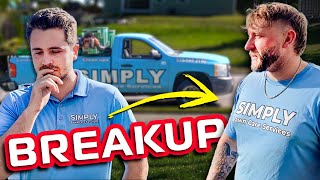
Mike Andes visits Simply Lawn Care (Peabody, MA) — a company grown from zero to about $800,000 annual revenue — to diagnose growth bottlenecks. The primary issues identified: unclear owner roles (sales, operations, administration) causing Scott to become a single-person bottleneck; inadequate training/definition for an office assistant (Lily); and inefficient marketing spend. Mike recommends delineating admin/ops/sales responsibilities, improving training and systems, increasing close rate before simply buying more leads, and testing higher-ROI tactics (yard signs, outbound calling to warm database).
Questions this video answers
Approximately $800,000 per year.
About $30,000 (reported as "$30,000 this year on marketing alone").
$2,300 (total for the space).
They were running about an 18% profit margin (as stated).
October 16–17 in Louisville, Kentucky (Omni Hotel).
Chapters
He's gonna start feeling like you're not doing enough.
He was more of the bookworm. You like sitting inside. You like reading and learning stuff.
Is that a frustration for you?
This is getting too much for me. Like I have to be here all night. He's a talkative office boy.
You're doing a lot. Like, just from what I've seen, you're doing a lot.
He is just generally not hands on.
If it involves turning a wrench, I get like, I have no clue.
You see your boss kind of like sitting in the AC on Facebook.
This is the kind of person I am.
Eventually you guys are gonna start colliding.
Screw him. I'm mad at him.
When people don't treat you like.
And.
I gotta like work in here and get the work done and fix stuff.
It's a joke. Is that something you don't want to do? Can't do. Can you just way better at.
There's a lot of differences.
I'm scared to go into the GM role right now.
The challenge is like, that's not a full time job.
Do you need to know how to be mechanical?
You can leave.
We both lost our jobs.
I'm very concerned that Scott is the bottleneck for any growth.
It's a never ending battle.
It is more of a shot in the dark.
You know, this is one of those weeks where everything just tends to go wrong.
The difference between this year and this year is whether or not that can get nailed down.
Today we are in Peabody, Massachusetts. Peabody. And we're meeting with Brandon and Scott from Simply Lawn Care.
What's really cool is a few years.
Ago, they were just getting started. I did a consulting call with them and they've done a fantastic job over the past few years to go from zero to $800,000 in annual revenue. Now growing that fast growth sucks cash. There are certain cash problems, but the bigger issues, I believe lies in just the fact they haven't def clear roles between them as owners. And that's causing them to potentially step on each other's toes as the business has grown.
Let's go meet up with them and see what we can do to help. Oh, I love the blue.
Morning.
How you doing? What's your name?
Scott.
Scott. Okay, great. I don't think we've met before. Right? Yeah, you've been at conference. Okay. I remember Brandon more, I think because he would be the one stand up and ask questions.
Yeah, he's a. He's a talkative office boy. Team general manager.
Cool.
Thanks, brother.
Good to see you.
Pleasure.
Dude, I love the blue.
Thanks so much.
I love it.
We like the blue because it sticks out.
Yeah, man.
We went to Mako, and we just opened the book, and we just found whichever one was the brightest, closest.
Yeah. There you go, man. It's awesome, man. Good for you.
I mean, Scott and I have been taking his advice since we. So we started this company because we saw his YouTube videos and said, hey, this guy knows what he's doing. Let's just do everything he says. And the reason we've been able to grow to 800,000 in three years is because we just did everything he said.
How long have you been in this office?
We've been in here since the start of this year.
That used to be my office. Got it.
We just gave that to the office.
Cool. And then when did you get the office assistant in here?
We got them in here about a month ago. So we had one in April.
Yep.
Through June.
Yeah.
And then I let him go, honestly. Was a mistake.
Yeah.
Should have kept him.
Your first one, though, right? Yeah, yeah, yeah.
So.
Oh, you made a mistake. You let him go, and you think you should have kept him?
Yeah, I should have kept him.
Why did. Why that?
I was scared of the growth, and I didn't realize how much help I needed.
Got it. So. So I was like, oh, you thought you could do without him? Then he left.
He needed to do 30 hours of work a week. At his pace, I could do it in 20.
Got it.
And I was like, oh, I'll just do his 20 and all my other work, and we'll be fine. We got to, like, 30, and I'm getting, like, nothing done but basic office work. And, like, we still have a bunch of stuff that needs to be fixed.
How's the new assistant doing? Pretty good.
She's doing great.
Like, 20 hours a week that she comes in. Okay, cool.
How much you have to pay for this space? This is really nice.
So in total, it's 2,300.
I know. In this market. I get it.
Yeah.
It's similar to ours.
I know.
All right, welcome, guys. So just so everyone knows, this is Mike Andes. I just want to let you guys know, he's actually the guy who invented P4P. So he's the reason you guys make so much money.
Or don't. Or don't. Just don't blame me if you get yellow sled.
Yeah.
Yeah.
When I first pulled in the shop, I could already sense a little bit of tension between Brandon and Scott.
He's a talkative office boy. Team General manager.
They're equal owners, but I need to find out if their responsibilities are also balanced. So after the team meeting, I want to pull one of them aside and find out more.
So right now, what's your role versus Scott? I know he's doing the field work, equipment. Is he doing estimates too? He sounds like. Or is that kind of like a hybrid or what does that look like?
So the roles, Scott's role's been more consistent. My role's kind of changed. So Scott has always been the gm.
You can call him.
So in the beginning of the year, he was actually helping a lot more in the field. Now he's just like fighting fires, obviously.
So if I'm doing estimates all day, I'm doing 20 and so estimates, whatever it may be. And I come in here sometimes by the next day, there's a machine that has to get fixed. Any damages go on the maintenance board in the top. Right. Like someone already put M2 30 blades. Looks like occasionally slow down. This is what we're working for. To make millions of our business. I feel like they always look a little all over the place, but it's what we work on and it's just a never ending wrong battle. So that night, sometimes I have to come in. I had to fix the machine. So that way in the morning we can stay to schedule.
Yeah, Scott's any. He's always working till 12:30 at night fixing all the stuff we break during the day. Always make sure we're set up for the day.
I think the only way I can handle that is I just basically think forward. And every little thing I do, I just know it's helping in the long run. We're actually two years ago on a call with Mike basically saying how problematic a partnership can be to me. If I'm working extra hours, I'm just making it happen. So the faster I keep doing all this extra work, the sooner I'll be able to actually sit back and manage and see the growth instead of work in the growth. And that's where I'm at now. I'm working through the growth, fixing tires, fixing machines, trying to make sure the guys are doing the orderly strategic procedures and such.
But we're finally. Actually it's been a month and this is the first time I haven't been doing the estimates and stuff. So Scott took those over two a month ago. So we're finally at a point where I'm getting back to only having to work 40 hours.
That's really the only way I can manage it. I Just think forward. Don't let myself get caught up in the 90 hour work weeks or even more than that sometimes.
So really what we're trying to figure out right now is like what I should be doing.
So Lily, what she do versus you? Because it sounds like you're doing the estimates virtually you're putting together the estimates. He's obviously like taking phone calls, emails, et cetera.
Now what she's doing is she's still taking all the calls, she's handling all the emails. Anything to do with like customer facing, she's handling. And I'm just kind of.
And so from Scott's perspective, does he feel overwhelmed like this? Because you're probably trying to find out what you're now going to do. What do you think that's going to be? Because if she's doing all the office stuff, he's doing field equipment maintenance, what do you think your role is going to be?
And it's like one of those things you just gotta like kind of toughen up, you know, like just deal with, you know, this is one of those weeks where everything just tends to go wrong.
I'd say our two biggest issues we're facing is like, what should I be doing? And how can we alleviate Scott's schedule?
I'm basically a fireman for the job.
There is clearly an imbalance of roles and responsibilities here. Brandon hired an office assistant to help him with the admin side of the business. Meanwhile, Scott is completely overwhelmed with all the work in the operations and the sales side. We need to figure out a way for Brandon to be able to help Scott alleviate some of the stress stress and take some of that burden that he's currently falling under.
What's your strengths? Because right now I feel like you're the most doing admin. Is that what you want to do? Because that's not a bad thing. And down the road that probably becomes head of quote, unquote command center. Right. And if that's what you love and you think you're really good at it, it's not a bad thing. Like, hey, I am the admin person. The question is, then why do we have an office person?
Yeah.
So then it's a matter of like, do we need to go get someone else to do? Because he's doing sales and ops. Right. And then the question needs to be, is he a better ops person or is he a better salesperson? If he's a better salesperson, we should get him out doing sales. And you should probably get that guy that you think is gonna be a GM one day to be ops.
We're running, like, an 18% profit margin, but after the balance sheet, we're not.
Gonna, like, 100% agree. And that's the thing. Cause, like, even if you take that, what I just said there, it's too top heavy for this size of business. And even having, like, right now, him, you, and a third person on, and then six people, seven people out in the field, that's already top heavy. Right. And right now, it's just a matter he's juggling it and it's working because he's kind of in the field. He's kind of doing everything. And that's what's required, honestly, to get to 800,000.
Yeah.
One thing is, like, we always call Scott whenever we have an issue and everything. I think just making it more. Call your employees, work with each other and stuff like that. Just making that more of a. Like, an option. I don't think people really realize that. Like, Frank, I just trained a guy, Frank. I told him, if you ever have.
Any issues, call me.
He's text me, call me like, four different times, like, the last couple days. Like, but, like, instead of. You would have probably called Scott.
The.
Brandon said, it's like, I just think that sort of stuff is we can start doing because, like, we know we mow the lawns every day. We know it. If the MO crews get switched up and you just go call the other MO team, hey, what do you guys normally do for this one? So I think that's something more we can incorporate in the company is just like, balancing off each other. Because I feel like that we have the most knowledge in the field doing.
That type of stuff.
So it's. Yeah. And if you were camping down at 800,000, you're gonna stop there. I'd probably say you should be admin and he should be sales and ops. Yeah, you can make it really profitable. Right. But you obviously know you need the office person in order to keep growing.
What I like is I do like the office. I don't like having to talk to customers. I don't like answering the phone all day. Like, the 20 hours of just, like, talking to customers and doing the same repetitive thing all day was just, like. It was just demoralizing. Like, I have never been, like, sit here for eight hours and do the same thing every day.
Brandon is struggling to find his role in the business, and I'm getting the feeling that Scott is doing most of the work, but really, honestly, that's just too much for one person. To do 800,000amillion dollars in annual revenue. They need to figure out how to separate their roles and conquer these three categories of sales, operations and administration.
Yeah, I just feel like right now it's almost like he's stronger at the sales side based on what you guys said, but then from, from like operations, like this sort of thing, he's also stronger in that regard. So like my thought is like, where's your strength and what can you do really, really well? And am I hearing you correctly when it's like strategy, systems, like more of that side of things?
Yeah, basically.
And then like right now the challenge is like, that's not a full time job. And so you're basically doing admin stuff to film in the, in the meantime. Because like how I see is like you got admin, you have operations and then you have sales. Right. He's handling sales. He's also handing like handling like the admin a bunch and so the off and like there's a big piece of operation still. And so what I'm seeing is a business that is like, if Scott's not here, it all will fall apart. That's essentially like my concern, you know, the delineation between the three of you, like with the office person could be pretty simple. And it's like she's office, your sales, your ops or whatever it is. Like whatever the the three are, you know, I struggle because right now it sounds to me like you are really good at sales, but you're also the ops person. And that's the part that I think is going to be the bottleneck. Because as you keep growing, the team ops becomes like its own thing. Just managing the guys, making sure they're at. There's always a flat tire.
That's that. Yeah, that constant like once I have like one bounce off track, it's not like it just takes that 20 minutes somehow. It tends to take like the 40 minutes. It's always added time somehow where it's like, gotta come back here, grab this, grab that, go to them, fix that for them. Or even like bring another machine so they can keep going to stay on schedule.
Yeah, so let's do like we got great equipment. Like anything breaks, call Scott. He'll come out with a new weed whacker.
It's that simple.
Is that something you don't want to do? Can't do. He's just way better at like, why can't you take the daily stuff?
I can do it. He's definitely better than me at it.
Like either you have a really strong admin first. Like, like, for example, for me, Liz was really good at the office. Eventually she did admin and ops for me, right? Because she was great at the office. And okay, she's really good at stuff. I'm going to give her all the. All the ad or the op stuff. So throughout the day, people are contacting her. So either you have a really, really strong office person or you have an incredible gm. And right now, it's the incredible GM that's carrying the load. And that will be your bottleneck at a million because you'll just have so many guys throughout the day. All you'll be able to do is ops. You will not be able to do sales. You've got to split ops sales. Like you guys have just done really good off the back of you guys working crazy hours, right? And so now it's a matter of like delineating those three roles. Admin, ops, sales. The guys they look at to you as the manager. When someone's calling out for the day, did they contact you?
Yeah, yeah. I'm the first contact.
The number one thing like that makes me feel comfortable on the job sites is anytime I have a question, call Scott, FaceTime him, tell me exactly, do it. Like that's what I did earlier the hill. Like it's my first day on the stander. I felt a little nervous with the hill called Scott, just push moment. You're gonna be good, man. So that's it. Don't worry when you got their phone call away to help you out with everything.
Now, no pun intended, but simply, lawn care would simply not exist without Scott. He's doing all the operations, he's fixing equipment, he's doing the scheduling, he's doing the routing, he's working with the crew, and he's doing most of the sales as well. Scott is really the bottleneck to the business. And I'm afraid that if anything were to happen to Scott, the business would be massively handicapped.
I still remember being at this point too, like I was doing ex. Same thing. I was the guy in the field doing estimates, managing the crew. Liz was doing all the admin. And then there's this weird transition to get past like 8 to 900,000 that has to take place. Otherwise just burn out. If you went off for two weeks, no estimates or like, it would slow down dramatically. The crew would probably be unhappy. They'd be confused who to contact in the morning. It'd just be tough.
I have a question for you. So this is. This might just be a limiting belief for me. But I feel like the biggest issue, I'm scared to go into the GM role, which Scott and I have talked about is like if it involves turning a wrench, I get like I have no clue. And like I just feel like I have no. I gotta call Scott.
Yeah.
So do you need to know how to be mechanical?
So he was never the handy kid. He played sports but he was never like the hands on. Like I'm gonna fix a machine. Where I grew up I was fixing like dirt bikes, fixing like tools, working with my dad outside, all the hands on experience where he was more of the bookworm. He liked sitting inside. You like reading and learning stuff. So I think we just never learned. So trying to teach him early on it came down to the fact that we separated and goes, alright, I'm gonna stop trying to teach you. Because what it was causing was causing a lot of issues because he is just genuinely not hands on. It comes down to that. So he's obviously afraid to take on the role of having to do that. So it's kind of the struggles we're having.
I wouldn't recommend the GM being a.
Role at a million, right? GM in my mind is someone that can get you at 800,000 and manage everything. They're the general manager and that's what you've been so far. And I think that's been a role that's served you well. But like getting past that, a general manager can't do ops and sales. And so I wouldn't call it a limiting belief as much as just like a delineation of roles. I just look at operations manager. You have your salesperson and you have your admin person, right? And ideally the admin is covered by your office person, right? Because then you guys can cut that out and be like, okay, now we're just going to focus on selling because 20 estimates a week plus all the ones that you're doing virtually that's like a part time job. Just that, right? You know, now it's a part time job. But if you guys are going to go to 1.5, that becomes a full time job. Estimate is a full time job. If you're going to go past a million, you got to separate operations and sales.
Having him give the advice that he went through helps us kind of point ourselves in the right direction. Because what happens is when you're listening to everyone, it gets mumbled around, which is what's happened to us where we hear a lot of things, we try it trial and error and then we try something Else we trial and error. So a couple pointed in the right direction kind of things like today helps.
Once a business starts to get close to a million dollars in annual revenue, a lot of times will spin their wheels there and get stuck in terms of growth. In order to cross that seven figure threshold, you need to have clear roles and responsibilities of the management and the owners. Operations and sales is obviously something Scott.
Is really, really good at.
And I'm struggling to see exactly what Brandon is going to do and what his role is going to be in the future of the business.
At 1.5, you almost have someone who's governed for mechanic stuff, right?
Office manager and a general manager, right?
Exactly. Uh oh, we got a problem.
No way. What happens on a great day? Flat tire.
Oh no.
The longer I'm here, the more I can see just how much this business relies on Scott. He clearly has too much on his plate and I'm worried that this could eventually lead to a failed business partnership.
Very concerned that Scott is the bottleneck for any growth because he's doing so much on operations, he's doing so much on sales. Eventually you guys are gonna start colliding. He's gonna start feeling like you're not doing enough. When in reality there's a bunch of admin. You feel like you're basically having to kind of double check everything that's being done on the admin side. But he's gonna start feeling like, okay, I'm doing all the sales, I'm doing all, all the fulfillment, which is like the actual getting ops done. And so I feel like to go to 1.5, you have to, to delineate those two rules. Like there's a full time estimator, they do everything to a sales and then you have this ops person that is like fully with the crew. They're managing them, they're optimizing the route, they're doing all of that. And then the question just becomes, can you afford to go to that three person model, Right. And split that? Because it costs money. And that's where I know the struggles right now and I know exactly what that feels like because that's why I did sales and ops for so long. Because you still have the money to like okay, admin person, estimator and ops. Right. Either that or you just take over admin and you don't have an office person. Like that's the profitable $800,000 thing to do.
That's going to be the biggest challenge. It's just creating that office position, helping create the systems, helping Creating the accountability mainly and delineating what those roles need to be for an office person. I feel like I'm dealing with a lot of analysis by paralysis where I'm like, do I just. Instead of writing out all the training manuals for her and then teaching it, is it better to just sit down with her and just show her it and like, basically bank on it's gonna work out with her and not write anything down?
The problem is right now, you don't know what the training manual should say.
Yeah.
Because you haven't done it enough times.
Brandon and Scott hired an office person to try and relieve some of the admin side of the business and take.
That off their plate.
Awesome. The problem is they're having a hard time training her, and Brandon's spending a whole bunch of time creating a training manual for her position when reality, they haven't really even nailed down exactly what system she's going to follow in that role.
Like, you guys would probably really get, like, the training manuals, for example, for your guys in the field, because you've done it like, you probably had 50 guys work here when you only done two people in the office. It's like, it is more of a shot in the dark. Right. So I would just not jump to that two steps. Because I know just based on talking to you guys, you're the analytical to put everything together, put everything in a checklist, which is great. And that'll keep things organized. But if you jump to it too soon, it'll slow everything down. Right. And so is that a frustration for you?
Sorta. I do have, like, I text him to, like, make sure things are done sometimes because it's hard for me to just, like, not look at other stuff on, like, the office side.
Right.
Because then it's like, back. Back in my head. I know something has to be changed, but I didn't do it. Like, you know, hey, make sure you do this. Or I sent an email to the office lady, and in the back of my head, I'm always like, did you do it right? Did Brandon get a chance to do that? He had a phase where, like, he was getting really overworked and it seemed like nothing was moving forward, which causes, obviously, a lot of stress. And he actually had times where he was like, you know, it's either we fix this issue, and a lot of it came down to, like, my patients. That's why we kind of ended up splitting up where I was doing all the maintenance work because I'd be getting aggravated because he wasn't figuring out things or every time he went to try to fix something or a guy had a problem in the field, a lot of it was, like, going back to me, and I tried to describe it or explain how to do it, and then there was no, like, good reception from it, which caused, you know, in house issues between me and him.
Like most people, we've all had heart. For me, I didn't have, like, if you ask Scott, I met him in seventh grade. I didn't have any friends. Like, no one like me had a list. Like, I used to talk like this all the time. And, like, I vividly remember the nerdy kids would bully me. And I remember that because I was like. It was like, literally math nerds were, like, pulling me from my list. I had no friends. Like, Scott was my only friend. He was the only one who wouldn't make fun of me. I'm not nice to me.
Gotta go back.
I haven't talked about that in a.
While.
But I'm very grateful for Scott.
Sorry.
Wow.
It's okay, dude.
I haven't talked about this in, like, two years.
This is real.
When people don't treat you like a human.
Good brother.
When people don't treat you like a human and one person does.
It makes all the difference.
And Scott was after me, really was.
When we started. We started off the sole purpose of, hey, we're both during COVID We're both. We both lost our jobs. I worked at like, a diner full time, so I didn't even do this.
Like, we lost our jobs. Let's just get a company going. Not even company, a side gig. You know, we did the little cutout door hangers, put them all around. Said, like, mowing for $30. I think of Mo so obviously underpaid, but we just banked on the fact that we were a couple college kids that lost our jobs and we're just trying to work.
It's funny because when I would talk about this when I was younger, these emotions were the sadness. And what I talk about now, it's happiness.
I was wrong. Scott and Brandon seem like they have a really great partnership. They understand each other well, and they make a conscious effort to make the relationship work. They've had the hard conversations over the past couple of years so that this could happen. And honestly, I've just seen too many times where drama and tensions between founders.
Tear the business apart again.
I'm just going to get to the point where I'm like, I don't even want to do this anymore. If I get Stuck back in the admin chair.
Yeah.
So.
So if that's taking off your plate, though, and that's all done.
Yep.
Let's assume she stays here for six months and is a rock star. Yep. Then what's your role? Because right now I feel like you're really double just checking all admin. Yes. Right. What's your role after that?
Brandon is spending so much time double checking the current office person's work. However, Brandon's made it very clear that he doesn't want to do admin work. You know, direct communication with customers isn't something he's passionate about.
Well, Scott and I will obviously discuss it, but I think the best thing would be me to go back into the estimator seat. I mean, again, I'm not terrible. I've been doing it for three years.
Yeah.
I'm the one who drives.
This is my personal car.
Yeah, this is it.
So let me know if you think this is accurate. Like, with the 4L framework, I feel like our biggest issue right now is just leads. Like, we have. I feel like we have the people who want to move up into leadership roles. Like, we have people come to the voluntary meeting every Wednesday. Liquidity isn't terrible.
Right.
Like, we don't have tons of cash, but we're profitable.
Yeah.
Labor, we're fine, too. Like, the hiring, we know exactly the number numbers. We know exactly how many people we need. Like, I just feel like we need more leads. Like, if we just got more customers calling in, it's like more cash coming in. I'll just hire more people and we can start really breaking up these roles.
Better. I think it's accurate and we can go over because, like, I know I saw like 33,000 spent on marketing advertising that includes, like, uniforms and stuff. But, like, that's a fair bit of change. But you've also grown a bunch.
Yes.
Right. So, like, you know, when you look at that, it's not so bad. The thing I'm not. I'm thinking about too, though, is, like, if you expanded leads, it is going to put more pressure on labor. You're going to need more people. And then that what that in turn is going to do is put more pressure on leadership. And that's where the delineation of roles is so important. And so one thing I'm going to talk about, conferences, like, the best way to actually do the 4L framework is work backwards, figure out leadership. Because if you figure out leadership, you'll find better people and we'll retain them better. And if you Figure out labor. Then you'll have the leads because they'll be going out like good labor, trained correctly, will go out and get upsells. They're going to go out.
By leadership, do you mean the actual leadership qualities are delineating the leadership which?
All of the above. And that is like, okay, we have great leadership, but then we also have very clear roles of those leaders. So we're not stepping on each other's toes. We're not second guessing each other. There's clear lines of communication. Because if that's happening, you'll be able to manage twice as many laborers. Right. And that's the part that like, as you get past 8, 9, I'm employees, it'll start to really show the effects. Is like, is leadership not just good, but are they. Are there clear roles where everyone's like, has their thing that they're doing? And I know right now you're kind of like, okay, let's get more leads that I'll need more labors and then I'll be able to fix the leadership problem. And that is definitely a way to think about it. I'm just concerned about doing it that way. When you don't have as much cash as you have, right? Because if you had a lot of cash, we just figure out leads and then we'd figure out labor. And then you go hire a really solid someone for leadership. Right? To like divide the roles. When you have less cash, you usually work backwards. And I was like, okay, here's the clear rules for leadership. By doing so, the ops person will be able to spend more time with our laborers. By spending more time with our laborers, we're going to be able to focus more on close ratio upselling customers. And the leads part usually takes care of itself. I'm happy to look at what you're doing with marketing because I know I've seen some of your face posts and stuff like that. It's like, hey, how do we get more leads? Like, where's the marketing? Where's this? How do we go from 800,000 to 1.5? You're gonna have to get more leads or you're gonna have to keep all of your customers and upsell them more.
These are the type of frameworks that you can absolutely use to grow and scale up your business and identify the bottlenecks for why your company isn't as profitable and as efficient as it should be. If you want to learn more about these, I highly recommend coming to Landscape Summit. It's coming up in just a couple weeks. And there's only a limited number of tickets that we can sell. It's in Louisville, Kentucky on October 16th and 17th. It's going to be two completely jam packed days of information keynote speakers like myself and other landscape business owners that you can learn from. And you can also network with people like Scott and Brandon that have built their business very quickly over the past few years. It's going to be an invaluable experience. And if you want to have the best year of Your business in 2024, come to Landscape Summit and go to Mike and here.comSummit to book your tickets today.
I think though, by fixing some of the system side and like refining the estimate process, for example, you can go from say 30 to 40% close ratio.
I honestly think Brandon's sort of asphyxiated on getting more leads and getting more advertising and marketing, but he spent $30,000 over $30,000 this year on marketing alone. One way to increase your leads and get more customers without deploying any capital and spending a bunch of money on ads is just increasing your close ratio, which is just the percentage of estimates of that you give out, what percentage of them actually get accepted. And you can do this without spending money on marketing. You can do this by refining your follow up process. You can do this by getting your estimates out faster, sending videos to your customers. There's so many ways to get more customers without spending more marketing dollars on new leads.
Like if you did that, if you went from 30% close ratio to 60%, you double the business. Yes, the exact same as if you doubled the leads. Because if I gave you the magic pill today and you double the your leads but you had the same close ratio, the exact same thing is effectively done. If we can just double your close ratio.
Yes.
Do you want to look at the what you're doing for marketing and stuff? I know that's kind of a big part of things. So we do have Google Ads, like the vast majority. Just, just in terms of Google Ads, if you're spending more than like 15 bucks a day, it's typically waste.
Really?
Yeah. Even in your market, like in your market there's probably what like 500,000 people, 800,000, maybe 20 bucks a day. But like in general because like there's.
Only so many people are searching in.
This area every day for lawn care, landscaping and your keywords. And so if you inflate the number, like a hundred dollars a day, for example, like I'm seeing some of these are huge.
Yeah.
$100, even 50. And if you have multiple these on. You're spending a couple hundred bucks a day, it's likely. And it's like Your cost is 144.
Well I do. That's the thing though. So the reason these are so high was these were at like 50, but they were the lowest cost to convert. So it's like, oh, let's bump it to 100.
Well that's the thing too is like your impressions are really low because there's just only so many people actually searching those keywords. What I would recommend doing is making a more a wider audience. Like when you're doing your filtering, what are you going after? You go after their searches or are you going after their demographics? Like what are you targeting?
I've tried mixing it up. Okay, this one's mainly keywords.
Looks like. Yeah.
So we do 35 and up.
Yep.
Gender doesn't matter. And then we do. I believe it's top 50% income wise.
Yeah. The thing is like honestly these algorithms are so good at like filtering people out. They're like, I'm a big fan of like target your area and don't go too much more than that. A lot of times like the courses that are out there, they are targeting like the whole country. If I'm selling for example, course. Right. I can target basically anywhere. And because of that I can target really, really niche. Like if they've been to my website for example. And so some people, like I should do that because I'm going to like target people have been do simply lawn care services. The problem is there's probably one person a week that has been to your site and is also looking for lawn care landscaping this week. Whereas if I would just go very much more broad and let the algorithm figure out who wants what is that?
Because if they don't have their info and I set it to like 35 and up and they don't know what their age is, it's going to filter it out.
Well, if they're using Safari and they have their on the Apple device, we don't know what their ages. We don't know what their. Their demographic in terms of ages. That's like the other. The unknown is becoming more and more and more. I would honestly leave it open. I would probably put an age like the 35 and up. But like other than that, I'd leave it as open as possible and let the algorithm do it. Same thing with Facebook. Right.
Like if you're targeting a smaller area.
It should just be as big open as possible.
Yard signs though, something I Was the bottleneck for with marketing was I thought the old marketing was like dead. I was like, yard signs don't work, door hangers don't work. I'm not super warmed up to door hangers. Still haven't gotten great results. But yard signs have been phenomenal.
If you've been trying Facebook and trying Google and then you find something, just go all in on, right? And the thing is it's unsexy to do that. There's no course about like how to put up the yard sign but. But it's like look, if that's your best customer acquisition cost, just go all in on it, right? Because like I did yard signs for example when I started up in North Carolina, they all got taken the next within 24 hours. And so it was door hangers. And it was like once we found that over the course of a few weeks it was like just go all in, 100% on it. And so like if that's your thing is yard signs, like okay, great. Instead of spending $1,000 a month on Facebook and Google, I'm going to spend $1,000 on having someone go part time and just put a gazillion of these things across our market. And people know us as the guys who have yard signs all over the place. That could potentially lead to a better outcome than trying to figure out Facebook or Google or these other mechanisms that also move very fast. What was working three years ago does not work on Facebook. Same thing with Google. It's always changing. Whereas if you can figure out a more old fashioned way like yard signs, that potentially could could lead to a much better customer acquisition cost and more sustainable long term because you're not at the mercy of an algorithm or them. Changing privacy security stuff is why people you'll see on Facebook groups always will be like we're seeing ads across the country. It's like, well that person likely has all their blockers on and Google doesn't know where they're coming from. Facebook doesn't know where they're coming from anymore. And so now you are like there is less and less targeting that we're allowed to do. Whereas like you put a yard sign there, it's going to stay there and it's probably going to be for everyone in that neighborhood. So I'm a big believer in like testing bunch of stuff, figuring out and they just go all in on it.
Right now they're spending $30,000 a year on Facebook and Google trying to get cold leads to call them. My question is, would it be Better to spend that $30,000 on getting your admin or office worker to fill in.
The gaps of their day by just.
Calling customers that are in your database that are warm. They've already reached out to you in the past to do work.
You stay top of mind, right? It's even better than text and email. And furthermore, it's like this. How many people can you call versus how many people can you knock on their door? You got to walk to every single house. And furthermore, everyone in your database is warm. You've done work for them, or at least they've asked for an estimate. So if you have 1700 people, let's say you do 100 people a week, that means every three months they're getting a call, just kind of check in. Yeah, right. They've all done. They all know who simply lawn care is where someone knocking on the door, doing door hair or even a yard sign. They're completely cold. Right? And a lot of times that's what we fall into as business owners. We're always going to the new cold lead. When you have 1700 people that if 1% of them every week were like, yeah, I need something done, that's 17 new estimates. And so I think a lot of times we're always going for the new shiny, like customer. When it's like we got 7,000 people that have done service with you, and if you just convert more of those Instead of spending 30, $40,000 a year on marketing, that money goes in your pocket. And someone like calling can get 100 of those an hour, no problem. This thing, let's say that someone like that isn't a great admin person. Let's say you start running this though, and I sick. If we do this enough. This is actually we make more money from an outbound caller of our existing database, right. And all they're doing is if someone called 100 people, if someone people called 100 in a day, that'd be like every three weeks. If you called your entire database, you'd be touching base with them once a month. But you can make sense of that. Financially, I'd rather spend $750 on that. Well, and furthermore, you can fill the gift gaps of admin, right? So you have calls coming throughout the day. It's okay. Well, maybe she can't do routing or management, but she can take inbound calls, she can do emails, and then she fill all her other gaps with this. Well, think about this. If you take $30,000, let's call it 40 for the year, that pays for someone's wages. So that question is all that money we're spending on marketing, advertising on Facebook, Google, etc. And we just deploy that against wages. There could be potentially more return for that, right? And then you're like, well, what if we run out of 7,800 people? Okay, call property managers, call real estate agents, have things on the market that just came up. You can have an alert. Every single new house that comes on the market and you give them a property cleanup.
What you can say is like, okay, what are the responsibilities of the three? So for example, you got virtual estimates, walkthroughs, and then you have in person ops, for example, is probably going to be things like, okay, who's doing the routing? You know, who is doing, you know, equipment maintenance, who's doing crew management? And this, this list gets long. Like you could literally have 10 things of each of these things, right? Admins, like, okay, calls, you know, outbound, inbound, and you just list them all. Email, who's responsible for what, and then just put initials next to people's names. Eventually it's going to be one person is responsible for this, second person, third person. But for now it's like, okay, we got Brandon. He's going to do, for example, the virtuals, he's gonna do these ones. And then Scott is able to just handle this so that he can do all of these other things. The goal is eventually for this all to be Scott. Well, in order for that to happen, we've got to get more impersonous. We're gonna have to grow. But also either he's gonna have to let go of some of these things, like whether it be someone out in the field, that's just crushing it, you're like, hey, I think they're our future gm. Great, let's let them take some op stuff off her plate. Like, okay, well maybe Scott is just dominating this. He's really, really good at it. Well then now we just need to get rid of this to either Brandon or somebody else, right? Someone else comes along here, they're more good at talking to people. They don't mind mowing. But it's like, I'd rather talk to people. Well, maybe they take that over. So as long as it's just a matter of like, this is the direction we're going, which is more delineated. But until then we might have some crossover. But then when it's like, hey, I'm stressed out on my mind, I'm working too many hours, okay, great, where's your name on this list. And what can I take away from you? Or can we delegate to someone else? And if you have someone like Lily in here, it's the same thing. It's like, okay, what is she responsible for? And then just moving down that list potentially. Okay, can she do virtual? Brandon's maxed out. He needs to start helping Scott. Okay, let's move her over. And to be able to do those. And then it's just a matter of juggling what are the roles and responsibilities, instead of it just being like a one big hodgepodge, like, let's all help each other. Which works great until you're like 7, 800,000. And then after that, it's just like, you just feel like you're fighting fires all day long. You never have a clear direction. You get up in the morning and you're like, I just know there's gonna be a bunch of bad stuff happening.
I have to fix.
But I don't know. I don't know what is gonna. What it's gonna look like.
This is what it is. Sometimes I just go, I got a lot of stuff to do today because.
You'Re just having death by a thousand cuts. And that is, oh, I need two hours on maintenance. I've gotta go do a yellow slip or damage case. And really what happens there is like, okay, how do we fix that? Well, probably Brandon taking these off, probably getting one of your best guys, like, hey, I want you to be responsible. A lot of them don't even want extra pay. They just want the responsibility. Which means if I write something down here that's broken, I expect to be fixed every single week or let me know why not? And then it's a matter of, okay, now you have more time to go focus on those things. But it requires him to do this. Well, then what's gonna break down this. These sort of things. Right now, we're not leaning on the admin person because they need training, whatever it is required system required to get them trained up so that this can actually happen. Right now, I think this is breaking because this is not happening. And this is not happening because we don't have any confidence over here.
A lot of that's my fault for not preparing enough and not putting the training in place to make sure the person knows what they're doing and having a good way for them to, you know, be held accountable and checking in and letting them know if they're doing well or if they're not doing well. So these are things that we are going to, you know, the first step is that and then we'll just work our way down.
So it's really going this direction in my opinion. It's like, okay, this has to be done. That then frees Brandon up to be able to take this off your plate. You focus both now on a much more individualized roles of selling will probably increase your close ratio. Like a lot of really positive things. But then in order for this to happen you've got to like this is probably 20 things by the way.
You don't realize how many tasks you do a day until you write it down. I probably have 22 or more. And that just, that just things I don't even notice until the day to day happens.
Right? Like so when I, when I first we had this off site meeting we had, we did our first time we ever did peer reviews and every single person was telling me, you're doing too much, you're gonna burn yourself out, all this other stuff. And I was like, my hands were in everything in the business. So I literally with Liz, we took three hours. I wrote every single thing I did down for a day, 22 things. And I was like, okay, who could do this? Things like who can open up the shop in the morning, who can do the equipment maintenance. Like every little thing until finally one day is like there's nothing here. And that's when you can go do more locations. You can do a lot more stuff because you don't need to be an OPS anymore.
There is definitely a lot more to take in. But we are going to try to break it down in the most important things first. And as Mike said, we're going to first work on the admin side sales and then ops. And if anything, OPS is going the best right now because we have Scott. He's crushing it off. So I mean like can't ask for a better GM. Like you gotta pay like 100 grand a year for a guy like this.
But also what's really important I feel between the two of you as owners is right now these are all like every single one looks like this.
It's both of you. I don't really care who does it. It's more a matter of is there one person that is the other person is interviewing or is it like, I'm busy today. Hey you. Interviews, like the back and forth is the key part that kills you because no one knows what they're responsible for. Right. And the guys will get confused too. Well, he interviewed me but like this is the guy training me. But then I'm supposed to Call the office. Like, what's that?
Yeah, I just like the thought of growth. I don't know. In short, I like to see us growing. And if we keep growing, whether it be in this location or we're expanding, that's my motivation to keep going. If I was at a plateau, which we were in the past, where we were arguing and we didn't settle it, if we didn't settle that, it probably would have been a different story. But I'm happy we did because now it's just every day I come in and I know we're growing, we have a new hire.
Repetition and just having everyone on the same page. Like, everyone knows who's doing what. And it's like, okay, I'm training you to do this in three weeks. This needs to go from, you know, Brandon. And if that doesn't happen, there's a problem. Right. And, you know, being really clear that these are the tasks that we expect you to get done, to be responsible exclusively. Right. Because right now I feel like you're locked up here because you don't have any confidence in this.
Right. And so we have this. This is why it is literally like 1, 2, 3. It is. This has to be fixed at all costs. By doing so, that gives you freeze up. You did this, which is the virtuals and the walkthroughs, which is gonna give him the time to focus on his in person ethics and really do this well.
Right. But this, this is, you have to fix that. So I think, you know, having the clear communication what those timelines look like, and then making hard decisions, like the time to do it is the next four to six months because you can't be that next spring rush.
What I love about doing this is we have the, we have the luxury and the opportunity to take people who like, want that. They want just a consistent place where they can come in, they can work hard, they can learn skills, they can move up and they can make good money. And like I, I have the responsibility to create that for these people.
I love it. I think just the flexibility they have with the schedule about, yeah, just being able to talk comfortably talk with your boss. And like, they don't like to.
It's.
It's nice. Like, they don't talk down to you. There's no condescending behavior. Nothing at all.
Like, for someone who just wants to have a good life, I can give them a great job, I can give them a road to move up, and I can just create that for more people. I mean, I worked hourly wage jobs before this, and I hated it. But then it sucked when the guy who, like, was smoking, like, weed in the back room gets paid the same paycheck as you at the end of the week, and you're like, dude, like, I was doing his job.
And they make it seem, with the P3P, like, we're all in this together. Like, you know what I mean? Like, they're. They make money, we make money.
We make money.
Like, it's kind of that simple.
Like, if you work hard, you will be paid more. If you learn the skills, you will be paid more. And that's something that, like, genuinely makes me happy to see, because they're happy.
They never make it seem like we need them. They definitely make it feel like they need us here. It's a team. It's really just a team effort here.
Growing a great company. That's good pay. It's a fun environment. The customer relations is really strong. In reality, it's not getting boring. Like, nothing's gonna get boring. It's always gonna be growing. Everyone's gonna be getting a new position.
My biggest issue was, like, my last company is, like, you see your boss.
Kind of, like, sitting in the AC.
On Facebook when you get back from work, and all he does is, like, hand out your check and, like, they're grinding. Both of them are up all night. Like, that's where Noah's like, I know my boss is out working me, so it's like, I'm gonna try to work.
As hard as it.
They're here. They're here working with us. They're not. They didn't hire a bunch of people and just throw us out there so that they can sit back and chill. Like you said in the ac, I.
Don'T want to see, like, the per se numbers. I want to have that, like, that big company team feeling. Thank you, Scott.
Thank you, Brandon.
Yeah, I really appreciate you guys. I'm definitely happy that even as a woman, you guys gave me a chance inside of this industry. And I really. I really appreciate how attentive you guys are and how much you guys help. You don't see that nowhere else.
The happiness of these people is what makes me emotional now.
Because they've always been there.
When you're trying to, like, grow a company with a partner, you're never going to be on the same path. It's like a marriage. And, like, you gotta understand that not every day it's like a 50 50.
You need to be talking to each other, you need to be communicating, and you need to be honest, you need to have really hard conversations.
That's where the girl comes from. It's not, it's not like, oh, Brandon, you know, he's slacking today. Screw him. I'm mad at him. It shouldn't be like that ever.
You know, if, if you haven't shed tears with your partner, you're not doing a good job. Like you really aren't because the conversations aren't hard enough.
I'm looking forward to, to what the.
Future holds for Simply Lawn Care.
I really believe that Scott and Brian have a very special and unique relationship that's actually very difficult to be found when it comes to partners in business. I also think they have a great team. They have systems in place like pay for performance that is really going to set them up for success down the road. The link to them going from 800,000 in annual revenue to 2 million is going to be whether or not they can figure out these departments and their roles and their responsibilities. And I truly believe they're going to be able to do that. If you want to come meet Scott, meet Brandon and talk to other like minded business owners, I recommend you go to mikeandys.com summit landscape summit is coming up in just a couple weeks and if you want to get in the Same room as 400 plus other like minded business owners in this industry, you do not want to miss this event. It's in Louisville October 16th and 17th at the Omni Hotel and I'm speaking eight times, but there's a whole bunch of other really great stuff, speakers and people that you can network with. And that's going to be the bridge that gets you from where you're at today to where you want the business to become. So book a ticket for yourself, your managers, your spouse, and get on the same page to make 2024 your best year yet.
That was better.
Okay, cool. Is that it?
Let's go.









