Uncut Reaction to Bad Job Interview by Our Staff!
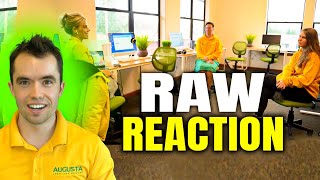
Mike Andes and the Command Center team review Cynthia's interview. Lonnie, who conducted it, notes she had good energy and attendance but struggled with multitasking, didn't know the required software, and made unprofessional comments about a past employer. The team decides not to move her forward.
Chapters
Hey everyone, It's Mike with landscapebusinesscourse.com and today I'm going to show you kind of behind the scenes. Well, Josh is going to show you from a recording of some of the behind the scenes at Command Center. They are in the process of hiring several people for Command center. And today you're going to see them kind of recon and talk about some of the things that they liked and did not like about a potential hire that came in for an interview. So we have a pretty open format in terms of layout at the office. They all can kind of hear what's going on. It's really good for the communication, the office. But when someone does come and get interviewed, everyone kind of hears. And so they were. There's just a few of them there at the time and they were able to kind of just talk about what they liked, what they didn't like. And so there's kind of two different things I want you to get out of. This one is obviously some of the tactical things that they were looking at and picked up on throughout the interview process and that were pros or cons. The second thing to pick up on is the fact that I was not involved in the process at all. I did not do the interview. Lonnie was the one who performed the interview. And then I wasn't even involved in the decision making process. I'm not involved in the calling of references or anything like that. And I know that's definitely down the road for some of you as you begin to grow your business, but it's a mindset and that is that you don't need to be involved in every element of your company as you begin to grow. You can trust other people to make the right call if the culture is strong and if they know what that cultural standard is. And so even for some of the ones that are talking today, they've only worked there for a couple months, but they know what the standards are. They are able to make a decision basically based on who should be part of the team. And so as your company grows, whether it be hiring or whether it be just trusting them to be out in the field by themselves with a truck, whether it be trusting them to learn a new skill. I always try to err on the side of giving someone trust and then letting them mess that up instead of doing everything myself. And I'm the only one. I'm the bottleneck for everything in the company and I micromanage everything because I don't trust anyone. They have to earn my ear My trust, like I'm more like give people trust. I'll give them a company credit card from day one. I'll give them keys from day one. And if they want to mess that up, that's fine. That's up to them. And so you kind of see that these are. They're kind of group thinking this. And it's kind of the culture we've created and the fact that rarely do I step in and say we are changing this. And like I don't listen to anybody. I do it sometimes. I had to do it on P4P. I've done on a couple things before. However, usually the decision process is more group. Think, think what's everyone's input. And then I feel like I have negated or like avoided some really costly errors by getting the opinions of managers or other people in the organization and listening to frontline employees. Even today you'll hear Michelle, who has not worked very long. They're giving her input and her thoughts that sometimes very, very valuable even as your experience. And you think you know everything about hiring or whatever it might be. Marketing. Some of your best marketing tactics come from your youngest employees if you just listen and they are comfortable enough to share their opinions. So hopefully this is helpful to you. I know it's a little bit of back end. You don't get to see the interviewee or anything like that. But hopefully it's helpful and you kind of learn both of those elements.
So.
I thought her last job had the potential to have like lead her into this job. Always want to give someone a chance, right? She seemed nervous. She definitely seemed nervous, but that she had a general good positive outlook and energy. But my main concern was the multitasking and the technology and the software that we used. And it is a lot to juggle while you're on the phone. And she didn't quite answer that for me.
She did answer some questions that I thought were good in terms of how her reference, like how her references would talk about her, seemed like her co workers did like her and her clients. Her customer service is great. She's a hard worker, she's always there. But at the same time, why are you always there? It's because you can't get your work done. Normal set hours. I don't like. That would also be a concern of mine. Right. You have to get something done immediately and then move on to the next thing.
I wanted to give her a chance, honestly, until she started talking about her employer at the end.
And then it spiraled into some negative stuff. That.
Just wasn't. Wasn't good. Right. I mean, blamed it on this guy and that it was all his fault and it might be true. Right. I don't know. It doesn't matter. But, like, bringing that up in the interview seems unprofessional, to tell you the truth. Right. Yeah. And while we're on the phone with clients and juggling our franchisees that are, in my mind, like, they're our bosses and our clients at the same time.
You can't take those things personally. And you have to move on and make sure that you are professional at all times, even if you're upset. Right. It doesn't necessarily matter in the. In the moment. So that's my main concern. I still will call the references to see what they say, but I don't necessarily think it's a great fit. What do you think? Did. Do you have other insights or.
I thought she talked a lot.
And long answers, too, but I don't know, maybe she was just nervous. I. I kind of. After the first, like, maybe two minutes, I turned on YouTube and kind of toned her out because, I don't know, some of her answers to your questions, I was like, these don't really fit. The, like the. That. That one that Josh had mentioned about multitasking. She's long winded. Yeah. And then she had mentioned. I caught too. I don't know, maybe it's nothing. But she was like, oh, yeah, we used to. I like working as a team because then we can all talk and, like, hype each other up for the day. And I was thinking that doesn't really fit in with us here. Like, we do talk, you know, here and there and we laugh, but we're also very focused. And I don't think we have to hype ourselves up. Like, we have a good, good work core.
But maybe she generators, Right.
She hasn't experienced that. You know, maybe she doesn't have a job like that. But I don't know that part. I was like, so I don't know if she'd be good working. And it's a lot of things you have to do. Like you were saying. So.
Yeah, I don't know. And I was like, okay, so how do you stay positive? And then she was just like, I stay positive. I was like, oh, yeah. But I'm, like, looking for, like, what do you like to do that keeps your, you know, your mental ability to stay positive, you know, there, Right. Oh, I just stay positive. Well, okay, can you elaborate? Right. Like, whatever that means to you. She did Say that she took some deep breaths, you know, after tough phone calls. But, you know, there's more than just like releasing a bad phone call. Right. That keeps you. I have something productive. Yeah, go for it.
When Lee's to have interviews, we would bring three or four people or have an evening where as many people wanted to work with us as possible. We're welcome to come. And Mike would go through all the pros and cons of working for our company so that you would know right up front what is difficult about it and what is awesome about it. And one thing he always brought up is if you have a hard time having a younger person lead you, then this is not the place for you. If you can't take direction, you and that young man that was in that business was probably coming into Clean House because they needed a new culture, they needed to change their software, they needed to upgrade things, and they needed people fast on the draw and pivot fast. And so I understand why he would likely be making changes. Not because her verbiage was he didn't like competition. So.
Right.
Yeah.
And we are very fast driven. And if Mike walked in her in here and it was like, nope, nope, nope. He's young, but he has way more experience with her than her. You know, age is not a factor. So I think that might be a bit challenging for her working with so many younger people that are an authority over you and you have to recognize they likely know more. And no ego here.
I didn't hear that part of.
I mean, that was really what, to me made it definitive, like, she's not a candidate. When she started talking about that, I was just like, okay, that's a perspective. But why would you be sharing that with your potential new employer and talking about how someone doesn't like competition and. Yeah.
Okay. So I interviewed Cynthia earlier today, and after we kind of talked about how she answered the questions and held herself in her demeanor, in our.
Evaluation of her skills as well as her weaknesses, we decided that she wasn't going to necessarily be a good fit for us here at the command center. So we are not going to waste our time calling her references to kind of further that. We are just going to reply very nicely thanking her for the time that she took to come in and interview and that just letting her know that she's not going to move forward in the interview process and best wishes in the future.









