What is the BEST Truck and Trailer to Buy for Landscape Business?
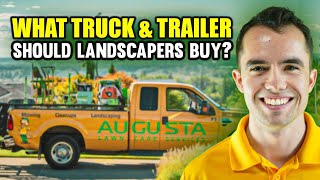
Transcript of a YouTube podcast episode by Mike Andes offering practical, market-aware guidance on choosing trucks and trailers for a landscaping business. Covers pickup trucks (mowing vs. landscaping use), dump trucks, box trucks, and the start of a discussion on trailers—especially enclosed trailers—emphasizing that the right choice depends on market, job types, and business scale.
Chapters
Hey, everyone, it's Mike Andes and you're listening to the landscape business course podcast you might be watching on YouTube or Facebook. But thanks again for joining in. Today we're going to have a very kind of tactical, basic sort of discussion on this episode about trucks and trailers. So last few episodes we've gone a little bit deeper into marketing and more the business side. I'm going to kind of step back for a moment. A lot of you have been asking questions about trucks, trailers and equipment. So I'm doing one on trucks and trailers, and I'm going to do a couple on different types of mowing equipment and then also landscaping equipment and larger machinery and things like that. And so if you ever have a question, as always, you can email me@mikelandscapebusinesscourse.com or you can just go ahead and leave a comment below if you're watching on YouTube or on Facebook. So today I'm going to talk about trucks and trailers, the different types of trucks and trailers. And then I'll talk about my experience in my market and with my company, what we've done, which trucks and trailers we have used. And so everyone's market is different. That's the bottom line of this whole discussion. And that's what I try to explain to everyone when they ask this question. There's really no black and white answer. Or like you have to get this type of equipment or this type of truck or this type of trailer. You in the course know that I give a very specific type of truck and type of trailer that I recommend when you're starting out. And the reason for that is because that's exactly what I did. And the course is very much a sequential step by step. So in one regard, take that. But then also know that every single market is completely different. And.
Determining what type of landscape you're going to do, what type of mowing routes and mowing contract you're going to have, really is what determines what type of truck and trailer you have. But let's go ahead and dig into it. First of all, the most important truck really is going to be a pickup truck. So this is gonna be your classic. When you think of a truck like a 150, 250, 350, if it was a Ford or if it's like a Chevy or a Ram, you're looking at 1500s, 2000, 500s, 3000, 500s. So these pickup trucks are gonna be used a lot of times for mowing routes, the larger of the pickup trucks. So I kind of break the pickups down into two different levels. One is for mowing, so it's kind of a subsection here, mowing and then you got landscaping. So we have in our company pickups and the smaller ones, the 1500s and the 2500s, they are going to be under mowing. So that's the F150s, the F250s or the 1500s and 2500s. So that's basically a half ton and three quarter ton pickups. Those are usually used for mowing and so that's going to be used for mowing. Smaller truck that doesn't need to have a lot of towing power, doesn't need to be hauling equipment, doesn't need to be hauling lots of material, isn't going to be attached to a heavy trailer that's going to be used for mowing. Now what type of pickup should you get? I have absolutely no.
Brand loyalty when it comes to pickup trucks. We have Fords, we have gmc, we have Chevy, we have a Ram and I think that's it. But yeah, we have all sorts of type of trucks. I'm never ever looking at types of brands really. There is a certain level of efficiency that comes out of economies of scale too when it comes to having the same type of truck for all of your fleet. So you know, as we get 20, 30 trucks, that might be something that we would look into is switching all of our trucks over the same make, model, brand new year, etc. And there's advantages to that. However, usually when I'm looking for a new truck for the company, it's which one is going to meet our needs best and what can I get the best price on that usually. So anyways, pickups. So when you're just starting out for mowing, if you're just starting out, as you know in the course, I have a very specific type of truck that I recommend. Eight foot bed, et cetera for lots of clippings. And you don't need a big one, you don't need to have a diesel even when just starting out. But when it comes to landscaping trucks, the pickups are going to be like a full ton size pickup. A lot of times they're going to be four wheel drive, they're going to sometimes be diesel. And with these type of pickups you're going to be hauling a trailer that is going to have skid steers and excavators on it. It's going to be able to haul 10,000, 15,000 plus pounds. And so you want to be able to have a pickup that can pull that weight. So a different type of truck that also comes into play in landscaping Is the dump truck. This is really important as you grow and you start having more landscaping jobs, Specifically dump trucks, when I refer to dump trucks, really, you can break that down, too, because really, a pickup truck can be converted to a dump truck Just by throwing a bed that dumps on it. So some people will put dump beds on their pickups, Even for mowing routes. So it's easy to unload the clippings at the end of the day. That's all fine and good, but when I say dump truck, I'm really referring to, like, anything that's a large, like a dually, and is going to be able to have 10,000 plus pounds in the bed of the truck. Not hauling that much actually in the bed. So we're talking like f7 hundreds, f750s for Fords. You're talking about international 430s or 4000, three hundreds. So, like, different types of trucks that basically you can haul, like, 26,000 pounds gross vehicle weight with. And so in my opinion, that's when I'm talking about dump truck. And so those dump trucks are gonna be used for larger, bigger landscaping jobs. Because what's great about a dump truck that's that large Is you can have a heavy trailer that's hauling equipment and have material in the bed of the truck. So, for instance, if we are going and doing an excavating job and tearing out a bunch of material, like a lawn, even for instance, with a track loader and putting in a new lawn, we can put a skid steer on a trailer. That trailer can be hooked up to the dump truck, and then in the back, in the bed of the dump truck, we can actually have the new topsoil that we'll install. So when we get to the job, we unload that trailer with the equipment, and we dump out the material out of the back of the bed of the truck, and then we tear out all of that, the old lawn, and put that into the dump truck bed where that topsoil was, and then we're able to install the topsoil. So it's just efficiency, right? Because the larger truck, instead of making two trips with a smaller pickup and a dump trailer, and going out, going, taking equipment, coming back to the shop, getting material, taking that and bringing back material to the shop, the old material, the old lawn back, and then going back and picking up the equipment again, we're able to do all of that in one trip. So that's really valuable. As you get into larger installation jobs, then the dump truck becomes more valuable. However, if you are still doing leaf cleanups and things like that, even for bark mulch, you can use a pickup with a dump bed on it. Another truck that we actually do not use, so we use dump trucks. At our company, we have F450s that are smaller dump trucks as well as F7 hundreds. These that are used for larger projects as well as for us. We can haul five yards of gravel in the larger trucks. Whereas in the smaller dump trucks, like the F450 diesels, we can haul like three, four yards of gravel. Just adds more by weight. And then we also make sure that one of the trucks can take like 12 yards by volume of light material like wood chips and bark mulch. So the last type of truck I want to talk about is box trucks. We do not use these at our company. The reason for that is because in our market, like I said, the truck you buy is determined by the market that you're in. And so box trucks in our market don't work usually. And the reason I say usually is because we might be trying to implement this. But box trucks generally don't work for us very well for mowing because we have to bag all of our clippings. So we're trying to do workarounds with that. I know that there's ways we can have a dump stuff side discharge for the clippings and then have the box truck in the back. So a box truck is basically, oh, my, here we go. Drawing. You got your regular truck and here, but then you got a box. And this is an enclosed box. And so usually you got a ramp in the back that comes off the back. And you're able to get mowers into the back of the truck and stuff. The advantage of having that box truck is you can keep the equipment inside. And that's what we're really looking at right now is like, if we don't have to unload and load that trailer with equipment with hand tools, it's so much more valuable. Even for landscaping jobs. We're actually looking about looking into box trucks because of landscaping jobs, not mowing as much. Like I said, with the mowing, we bag clippings on all of our jobs. So it's a pain to have to take equipment out and move. It's just hard to move the clippings in a box truck without spending a ton of money on getting it customized. And so what we're looking at, box trucks, though, is like, we can keep irrigation stuff in there, like a bunch of random pieces and get it set up for that. We can have all sorts of shovels and rakes and blowers and like all the equipment that we usually use on landscaping jobs. And if we get a large enough box truck, it can haul a dump trailer. So it can take a bigger equipment like track loaders and excavators, and it can also bring material with all the equipment necessary already in the truck. We could park that truck at a job site, knowing that we have all the tools inside and we don't need to be making trips back. We don't need to be worrying about if we forgot stuff. And most importantly, if we're doing jobs that are one, two, three weeks long, we could park this truck at the job site and the tools will be safe inside. So that's an advantage. And even if you don't have, if you don't park it at a job site, you bring this back to your shop and park it outside. And regardless of whether or not it rains, everything is safe and dry inside the truck. So those are the trucks. If you're just starting out, a pickup is all you need. If you're just starting out and you're just starting mowing, you don't even need a big pickup. You don't need it to be diesel. You can be a smaller truck that just needs to pull a trailer for mowing equipment. It doesn't need to be anything fancy. Now, when it comes to trailers, we're also going to talk about three different types of trailers. The number one type of trailer is the enclosed trailer. So this is a trailer that is going to have. Basically it's enclosed. Obviously, you can close it up, lock it up. It has a ramp out the back to get mowing equipment in and out of the enclosed trailer is what I recommend a lot of times for people starting out, because not so much because of the integrity of it, or I'm attached to enclosed trailers because they're actually more maintenance in a lot of terms, there's leaks that happen and a lot of the wood in the bottom, and there's electrical stuff going on. And a lot of times enclosures actually take a lot more maintenance. And however, the value is that an enclosed trailer has a massive branding opportunity as you're driving down the road. So if this is.
The side of an enclosed trailer here, and this thing is going down the road, and this is the front, maybe this is the trailer going down the road. Your brand name could be on the side and you can have Your phone number. It's just a massive billboard you can do along the back of the trailer. On the front you can name the different types of services you're offering. But this is basically a moving billboard everywhere where you are doing work and if you're doing good work, this is something that you can be proud of. And so I actually look at this as a marketing expense because it really is more expensive than getting the next type of trailer, which is the open air trailer. So this is an open air trailer or just utility trailer a lot of people will call it, but this is an open air trailer that you can. There is no, it's not enclosed. There's still a ramp in the back. But it's the advantage really of open air too for mowing route is you can lift stuff over the side and not always have to go in and out of the back, which is kind of annoying with enclosed trailers. So there's pros and cons of all these different types of trailers open air. The negative is you don't get that massive branding opportunity with your logo and all of that. You also have to move either house that equipment. So if you have an open air trailer and you have mowers and trimmers and blowers for security as well as the longevity of the equipment, you need to have it inside of an enclosed garage or a shop. And a lot of times if you're just starting out, you don't have the money to build a shop or you might not have a big enough garage to have all open air trailers and keep that equipment safe at night by making sure it's locked up. So, so and two, you don't want to just have it sitting outside and it's raining on it and it's like the cold in the winter. Your equipment just isn't going to last very long. So the reason I suggest enclosed is because it's safe, safer from the environment as far as weather and things like that. It's faster to unload and load because you know you can just lock up the trailer and they're safe at the end of the day. And so the biggest reason though is the company name, your brand image that you can put on there, your contact information. It's a moving billboard that if this is a 7 by 14 foot trailer, it's very, it's just a massive billboard, like I said going down the street. And as far as the size of these trailers, if you're just starting out, you only need like a 6 by 12 trailer. You don't need to get fancy you don't even need to have a double, like a tandem axle. You can just start with a single axle. 6 by 12 enclosed or open air trailers, start mowing. Make it simple, and as you get bigger. For instance, we use enclosed trailers still for mowing, and we use 7 by 14. So we are trying to standardize the equipment size as well as the size of the trailer and our setup for the equipment inside those trailers. We want standardized across the board. And so to do that, we stick with 7 by 14 enclosed trailers. We have the exact same graphics on the front, back, and side, all the exact same. And then as far as open air trailers, we don't have any for mowing. However, we do use the third type that we're gonna talk about is dump trailers. So dump trailers are super, super important. When you start getting a design and install landscaping jobs, they are really the backbone of your equipment setup. Because they can haul materials, they can haul debris, they can haul equipment. And they are so versatile because they can be hooked up to pickups, your dump trucks, or your box trucks. So they can be used for so many different things. We haul debris from leaf jobs, we haul wood chips from tree chipping jobs. We haul material like gravel, mulch, and soil. For our landscaping jobs. We haul excavators, we haul skid steers, we haul tractors, all with a dump trailer. So with a dump trailer, they have ramps on the back a lot of times that you can get equipment into the back. And so it's very, very useful, as well as the fact that using the dump trailer allows you to save a lot of time when you're doing massive cleanups. Instead of doing a bunch of pickup loads and taking 30 minutes to unload, every single time you do a pickup load, you. You can do it all in one massive dump trailer. And in five seconds, you dump that trailer, and it's good to go. So our dump trailers have a little bit of a solar panel in the front, just a small one that does a trickle charge for the remote. And then the remote has up, down, and gravity. So usually for us, our dump trailers are, well, they're all seven by 14. They're exact, same color, exact same model, exact same brand. And. And we make sure we try to standardize as much as possible. So when people learn how to haul equipment and things, it's easier for them. So we have trailers that can basically hold like 10 to 12,000 pounds inside of them. And then they have our seven by 14. They're all the same color yellow. We use that. It's the same color as our brand. So it worked out really good with our local. We do get our dump trailers brand new as well as our other trailers. My very first enclosed trailer was a used 6 by 12 enclosed. But now, since, you know, now we grow the company, we do get new trailers because they can have leaks and they can have issues, and you don't know if axles are bent, like all sorts of other things that can go wrong if you want to abuse their trailers. So we get brand new 7x14. They haul about 10, 12,000 pounds inside of them. So, like, they net out like 14 to 16,000 pounds. And then we have, in the back of the dump trailers, we have these little stands that come out. So when we are hauling heavy or we are unloading heavy equipment, that it doesn't pick up the back of the truck because so much weight is in the back of the trailer. And so we use dump trailers a ton. We don't use open air very much, and we use enclosed for mowing. So dump trailers, like I said, very versatile. If you're doing leaf cleanups and things, it can even hook up onto a small pickup, because the size, the weight of just the dump trailer itself for us, is about £4,000. So even a smaller pickup can haul that as long as you don't put a whole bunch of material in it. So leaf cleanups, it works well. Bark, mulch, wood chips that can still haul those. And it can also be hooked up to our dump trucks for big, heavy jobs. And your box truck, if you're using that. So these are the different types of trucks and trailers that are most common in our industry. What we use, like I said, enclose and dump and pick up. And the dump truck. As you get more and more into landscaping, the ability to dump material is a time saver and absolutely saves you so much time loading and unloading. So if you're just starting out with mowing, though, you don't need anything more than a pickup and a small trailer to get started. So I hope that helps somebody. I want to give some perspective as far as what we use. And most of all, the most important thing is that you know your market and what type of equipment is going to be best for you. It's going to depend on whether if you go on for enclosed versus open air, for instance, it's going to depend on. On whether or not you bag clippings. If you have box trucks for your mowing crew, it's going to depend how if you're more mowing versus landscaping for dump trucks. So for instance, our company, you know, 25% of our business is mowing, but all the rest of it is landscaping and material delivery. So dump trucks, bigger dump trailers, they're going to be important for us. Whereas just a mowing crew, just a mowing company that isn't doing a lot of installation but mostly maintenance. They're gonna choose different equipment. So I hope that helps. I'm gonna hopefully do one on mowing equipment as well as landscaping equipment, heavy machinery, things like that. That's coming up. But thank you all for your Support. The new LandscapeBusinessCourse.com is almost ready to launch. We're in the final stages of testing everything. The current course members are going to be transferred over and you'll get your new login credentials here pretty soon. So I'm looking forward to that and I'm looking forward to showing you guys what we've been working on so hard working for the past few months on. And it's a completely new design, same material, same content, but just completely redesigned. New content has been added. Lots of blog style posts for people that like to read in addition to the videos. So looking forward to that. If you haven't checked it out, check out landscapebusinesscourse.com it's still at the same247 before it goes up when we get the new course set up to go. Thanks again for listening. Mike Annings with landscapebinniscourse.com.









