when to buy land/shop for your service business (HALF ACRE!)
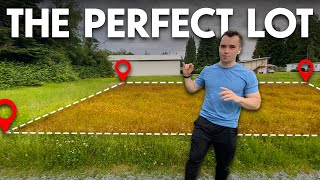
Mike Andes presents an on-site walkthrough about buying residential (edge-of-city) land to use as a shop/dump/storage for a service business (landscaping/lawn care). He compares renting (currently paying about $800–$1,500/month including dump fees) versus buying half-acre residential parcels, discusses timing (buying in a recession with cash), site-prep costs (~$15k bulldozing, ~$15k fence), and downside protection by ensuring the lot can be converted to rental use (build two units) if zoning enforcement forces a change. He supplies concrete example numbers and an ROI-style calculation (roughly 10–14% return on cash purchase plus site improvements) and rental-conversion cashflow estimates.
Questions this video answers
$189,000 per half acre
About $800/month (and he estimates total burn around $1,200–$1,500/month including extra costs)
$100,000 cash
About $15,000 to bring a bulldozer/grade and about $15,000 for a 6–7 ft wooden fence (≈$30,000 total)
~$130,000 invested (land + site prep/fence) producing ≈$14,000/year savings (from avoided rent), implying roughly a 10% return
Chapters
Hey, everyone, Mike Yandes. And today we're actually going to be. I'm going to show you this property here. A lot of people ask when you're doing any sort of home improvement business, where do I put my shop? Where do I put a place to store all my equipment, my trucks? Maybe you have to have dumping, like the debris for a landscape or lawn care business. So it's difficult to find space because theoretically you're supposed to have commercial land. Now if you're under like six or seven trucks, this is kind of a hack I want to show you today. And that is how can you use residential land and kind of an outside of the city limits area where it is technically residential, but how do you make it where it actually will work for your business? Right? So I'm actually show you a real property right now. This is actually what happened is the owner of this property is subdividing into a couple different lots and trying to sell it off. So up front there, next to the main road is half an acre, and then back here we have another half acre. And the big thing that I'm looking for is can I dump debris? If I'm a lawn care landscaping company, I got a dump debris. And we've been renting in this location. Locally, this city that we're in today, we've been renting. We pay like $800 a month, and it's fine, but the landlord doesn't want us to dump any branches or anything besides grass clippings, which means we got to go to the dump like every couple days. And it's annoying as I'll get out, you gotta pay for dump fees and you gotta drive there. It's inefficient. For the guys on P4P, not good. Probably cost us about 1,200 to $1,500 per month in rent and extra time that's wasted. So when I'm looking at a property like this, it's gotta make sense financially. And it's gotta make sense case that the city comes along because a neighbor complains and says, hey, you cannot have your commercial. You cannot run a business out of this residentially zoned area. So a little bit of a tip and a trick if you're trying to look for land, first off, let's make sense of it financially. Okay? So I'm gonna walk around a little bit, show you a little bit of property. It's not super exciting. It's blank land. Now, as we head into a recession, land like this is gonna get very, very cheap. And so I'm really, really trying to hold off on buying this because I don't want to buy it right now. I want to buy it when it is half this price. So they're $189,000 per half acre. Guess what? They're not gonna get it. So I offered half of that. They probably won't accept, but that's what it's gonna become over the next six to 12 months. In my opinion, land like this is the thing that drops the fastest in value, because no bank will want to touch blank land. You can't get a loan for blank land almost never, almost all the time. If you want a loan from blank land, you need a construction loan, because the bank only wants to lend against the land if you're going to build an actual structure on it, because that's what actually has some value for them to be able to foreclose and actually get some value out of it. So no one wants to just get blank land. You can't get a loan for it. So if you can come in with cash when everyone else is dropping their prices on land, you can get a good deal. So first step when it comes to financials, wait until a good recession. You can get land for dirt cheap because no one wants to lend against it. If you have cash set aside for that, that's a good opportunity. Now, the alternative to buying land like this is that you go get a shop space. You get, you know, you rent some land. That's ideal, that's cool. But then you can't, like, invest into the land itself. You can't put the gravel where you want. You can't, you know, make it your own. You can't put up fences because you don't want to put a bunch of money and sink into a property that you're not going to be at for very long. Or you could potentially do like a storage facility or like a storage unit, you know, even if it's a nice big one, like, say, 12ft by 40ft. That's great. But now you're looking at 1000, 1500. Rent's gonna keep going up and up. And again, that money every single month is kind of getting flushed down the toilet. I'd rather put it into something that I can keep for the long run. So from a financial standpoint, this is the math that I'm running. Let me show you this. I'll walk back over here. I can tell they've been doing some inspections on the wetlands here because they've got these dig sites kind of throughout the whole property. When I'm looking for land as a landscaper, what I'm really looking for is can I dump debris and not bother the neighbors because the last thing I want to do is get reported. And so I'm looking for is could I build some fences and could I dump back there, Right? So there's a really good supply. Also, look, they're already dumping up front here. They're already dumping all the stuff from when they clear the site. So a good indication is, okay, I could dump there. It's not visible from the road, it's not visible from the neighbors. And so I could potentially get away with it as long as I manage it well. I make sure there's not invasive speed sees. I turn the debris, I make sure it doesn't smell all that good stuff. I want to be the neighbor and I don't want people to complain. I try to be, make very good friends with my neighbors so they don't report me because that's usually what happens when you get in trouble. But also I'm looking around. Okay, over there we got a shop. Big, nice, big shop. Okay. Over on this side, these neighbors, they got an excavator and they got a tractor. These other neighbors don't have like a super high, high flute and tootin neighbor backyard thing. They got planting and gardening and a tractor and a bunch of farm animals. Behind this thing there's another house. But guess what? They're already using this for dumping. There's a whole bunch of debris on the other side they're using for the grass clippings and all the rest of it. So this could work. All right. We're not in a really, really nice part of town. It's residential, but it's a half acre. Plenty of space. We're going to have like, we only have like seven trucks, so we can easily have that as our dump site. Have our storage containers. We don't need an office. Command center takes all the phone calls, does all the emails, takes all care of the admin stuff. And you know, we don't have a GM that goes into the estimates all day. We do them all over the phone. So all I really need is a place to park my trucks and a place to dump my debris and a place to put these storage containers, which are the shipping containers, and I can put them on both sides here. Have me security. I'll put a fence around the half acre. I'll level this out and put gravel so all in. I'm looking at this, right? Looking at probably $15,000 to bring a bulldozer in here, strip this off and put gravel down. Probably looking another $15,000 to put a nice wooden fence six or seven feet tall around this whole thing. And then I can park my trucks, I can have a dump site and have plenty of storage space. And now this is the part that's really cool. So from a financial standpoint, this is how I make sense of it when I look at the, let's say it's twelve hundred dollars per month that I'm burning right now in rent and the cost of having to go to the dump for all this other debris that our landlord is being a bit of a pain. So $1,200 per month. If I multiply that by 12, that is about, let's just say $14,000 over the course of the year that I'm paying in rent and the cost of being at another facility. Now if I can buy this land for $100,000 cash, because cash is the only way I'm gonna be able to buy this. I'm not gonna finance it because I'm not wanting to build anything. I don't need an office space. I don't want to go get a $300,000 loan to build an office. I'll have command center take the calls and I'll deal with that as a variable expense instead of fixed expense. I don't want to get in the real estate game with my place to park my trucks. So how I can make sense of this is $14,000 per year. Let's check this out real quick though.
I can tell you digging, we've been digging here to check on the, the wetlands. So you can see this big hole. There's like 10 of them throughout the property. So this, this property is already ready for a septic tank because it's not on city water, which is a good thing when you're looking for land for your commercial space. So $14,000 a year. Now if I put $100,000 in cash on this property, am I able to get it for $100,000? Can negotiate somehow with them? If I can do that, that would imply a 14% ROI on that hundred thousand dollars. $100,000 down. I see $14,000 per year. That's a 14% return. Now I'm gonna need to put about 30 grand getting this place ready. If I get site prep and a fence, that means about 130 in. Okay, so let's just say about a 10% return on my money. If I spend $130,000 on this and I get about $14,000 per year in savings. So 10% on your money. Not bad. Not bad. Better than inflation right now so far. So now that's the financial side. That's how I make sense of the financial side. The next side of it is what happens. Don't tell anyone, right. What happens if the neighbors do report me and they say, hey, he's running out of business out of a residentially zoned area? That's so bad. Now I'm gonna be a good neighbor. I'm gonna make this place look pristine and beautiful. It's gonna look 10 times better than this, can promise you that. But it can happen. People will report you for running your business out of a residentially zoned area. So I've done all my investigative work of hopefully mitigating that and not making it happen. I'm going to take cookies to them. I'm going to be a nice neighbor. I'm going to mow their lawn for free. I'm going to do something nice, maybe pressure wash that building anyways, I'm going to do that first. But then I'm also going to make sure that in the case of the, the city coming shutting me down because I'm using this for commercial purposes, that it can still work financially. And so what I'm going to do is let's say I put a hundred grand, $100,000 on this property in cash. They come along and say, hey, can't do that. So what I'm making sure to protect my downside is I'm making sure this property without the build, without having this as a commercial space would still work as a rental property. Well, there's nothing to rent, you're right. But If I put $100,000 into this land and then I go get construction loan and I say, look, I'm going to build a $400,000 building. And guess what? This is already has electric in the road. I do have to do a separate tank, but it's, it's rated and zoned for a residential dwelling and an adu, an accessory dwelling unit, which means I get two units here and I can rent out both of them. And I could probably produce about 3,500 to $4,000 per month in rental income, which would easily cover the mortgage on a $500,000 construction loan. And so this is a cool thing if you know that, if you already know that this land is ready be built on, has electric, everything is good to go. Here's the deal. If they come along and say, hey, look, you can't do your commercial stuff anymore. I know that it is ready to have two rental units. And I know I could go get construction loans, let's say $500,000. I already put $100,000 into the deal. That's my 20% down. I could literally go to a bank and be like, hey, I want a $500,000 construction loan. They're great. You're going to have to put 20% down. Like, boom, I have $100,000 in equity, the land's paid for, and I could literally get a building project started the next day. Getting that construction loan on the $400,000 that I need because I have 100,000, 20% in equity on the deal already. So worst case scenario is they report me. Hopefully I can get a few years out of it. Worst case scenario, they report me and I do that, get a rental, Prop 2 rental units out of this. Again, 3500 to 4000 is easily what I could get out of this property in terms of rental income. My mortgage on that would be about 2,500. So I'd be be just fine. So make sure if you buy the land, you protect your downside risk. And the downside risk of using this as commercial is that someone comes along and says, you can't use it anymore. That's fine. That's totally fine. Now, best case scenario is I don't need half an acre. So theoretically, if everything goes smoothly for a year and a half, I'd probably build a property with an accessory dwelling unit, get the rental income and still be able to operate out of this just fine. Because I don't need the whole half acre if I'm just parking trucks. I don't have an office. I don't have any interior computers. I don't have any. I don't even need to bring electricity in here. I'm going to use an outhouse to be able to go to the toilet. And that's how we operate. Very, very lean. It's a good return on my investment if I'm able to stay here and not pay rent. And it's also protecting my downside. So if I do get reported because I'm in a residential area, I can still make good money on this property by turning it into a rental income. Rental income, rental property. So hope that was helpful. If you're looking for land, don't think that you need to go get land. If you have one or two trucks, you don't focus on building the business. When you start buying land you're getting a completely different business and that is real estate. It's a completely different business. It's a completely different metric. And if I'm looking at 10% return, guess what, if you have $10,000, much better if you go spend that on your business and scale that up because you got a whole lot more than 10% return on your investment investing in your business. But when you start getting the point when you need land and you, you have more than one or two trucks and you're like I can't find shop space for less than a few thousand dollars a month because the rental cra. It's craziness right now with everything going on this might be an option. Make sure you're on the city limits. Right behind here is a bunch of farms. I got tractors and trailers. I got big shop. I got people already dumping behind me. This could work. Just a thought. Hope it helps. See you tomorrow.










