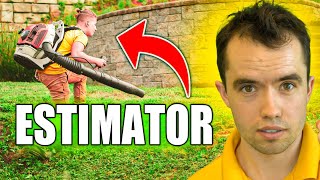
Mike Andes explains that a simple, standard pricing calculator lets any field employee become an estimator by entering a few basic numbers (hours, yards of mulch, number of trees) rather than mentally computing production rates or classifying plant sizes. He argues against relying on production rates and in favor of sharing budgeted hours and material usage (important when using pay-for-performance). Andes says most field employees with the right personality can be trained to estimate comfortably within about two to three weeks, and gives an example of putting a new estimator into the role within roughly two weeks.
Questions this video answers
December 15, 2020
Two to three weeks
Chapters
Standard pricing calculator. You got a very easy calculator where not a single number is in your head, where an estimator can hop in and throw in a few digits of like, how many trees, how many yards of mulch, how many hours. And that's all they need. You do not want them calculating things in their mind. I'm not a huge fan of production rates for that one reason. Because they gotta start calculating numbers based upon number of trees. And then they count times by 420. Is it small, is it high? I want them to look and say, how long is that gonna take? And then how much materials am I gonna have? Fill out an estimate, calculate form an Excel document and it's done. I don't want them to have to start measuring or thinking or like, is this a tall tree, is this a medium tree, is it a small bush, is it a medium shrub? Like, that's why production rates I'm a little bit against. Especially when we jump into P4P, where it's all based upon budgeted hours. All right. Because if you're off on budgeted hours, it's not affecting your guys and trust me, you will hear about it. And it's also easier to train an estimator when you say if they've been in the field for a few years, it's very easy. Like, how long is that gonna take? Two hours. Alright, great. You're an estimator, that's all you need. You need two hours. How many yards a mulch? Ah, like four yards a mulch. Okay, great. That's all you need. That's all they need to be an estimator. Like literally, I could probably get most of our guys within two to three weeks. Pretty comfortable on estimates. If they had the personality to be an estimator, they could very quickly be able to be an estimator. Going from field to estimator. We dropped him in the bucket probably within two weeks. I was leaving, I was like, I gotta get an estimator. Let's throw him in. He was great personality for it. And he just took on the grind with it. Because as if you're sharing all your numbers, they know how many hours are on that job, know how many yards of mulch are going into that job. And if they've done it a thousand times, they start doing it for you. We don't have to go to a mowing customer's house and be like, oh, so and so, put a note that you need a weeding job. No, when they're mowing the lawn. They can be like, oh, so and so needs. A weeding job can take four hours. The office can then immediately send an estimate and we're good to go. Because it's like, you share the numbers. They start to see comparative, like, budget hours versus how long it actually takes them, how many yards of material, how budgeted versus how much you actually use, and they get very good at estimating themselves.