Why I Want to Be “Rich”
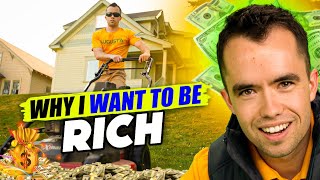
Transcript of a short midweek motivation meeting led by Mike Andes for a landscaping business course. Andes discusses why he wants to become wealthy — not for lavish consumption but to help others, influence team culture, and enable giving — and addresses common objections (religious/moral concerns, selfishness, impatience). Colleagues (Ben and others) add views about desire, education, and money amplifying character. The talk includes personal anecdotes (mission trip to Africa) to justify simpler needs and philanthropic motivation.
Chapters
Good morning, everyone. It's Mike Andes here with landscape business course. Today we are going to be having.
Another Wednesday midweek motivation meeting.
These meetings, we have usually five to.
10 people at them, and they're just.
Optional meetings at the local Bellingham shop. We do them Monday mornings about 20, 30 minutes before everyone else shows up for work. And this meeting, we talk about money and we talk about specifically about, you know, having wealth, having becoming rich, and why that can actually use for a positive thing. And a lot of times it's looked at as a negative thing and people with money are looked down on. But using your money to be able to help others and really just trying to get them to start thinking about creating surplus, not just because it's like.
To go buy a nice car or.
A nice house, but using their surplus to help others is the most rewarding thing ever. So I just try to wanna point them in that direction and just trying to get them to think not just.
In terms of how much money do.
I need to become comfortable or be happ, but like, what about making more than that and so I can go give to other people who are in need. And so we talked a little bit about that. I hope you enjoy and I hope it kind of motivates you to maybe have some sort of a meeting like this with your own team. It changes the culture. Not everyone's gonna buy in. Not everyone's gonna want to even be at a type of meeting like this that's optional. But it changes the dynamic of your team culture when you start talking about their personal finances and their future and their careers, instead of just always about the business and how they're gonna make you more money, they need work better for you, and, like, how to improve the customer service for you. Like, start thinking about them, their careers, and I promise, down the road, long.
Term, it'll pay big dividends.
So hope you enjoy it.
Here we go.
All right, welcome. Let's have lots of money.
So I didn't really know what I was going to talk about until, like, two minutes ago. Some reason when I drive by those soccer fields, man, just, like, I get inspiration.
So.
We'Ll talk about some health stuff in a second. But before that, I want to talk about something that I don't ever talk about. It might just make a podcast about it. We'll see. And that is, like, if I made a podcast, the title for the sake of clickbait would be does God want you to get rich?
But basically, it's just the premise, like, the idea of, like, why do you make money? And like, the idea for me why I want to make money, right? And so the reason I would title that is, like, obviously the Bible says, like, the love of money is the root of all evil, right?
And so for me, like, I don't know, like, me personally, I don't really care about money. Like, I don't spend a lot of money, so I don't really need it. I live really, really simply. But I really enjoy having money to be able to do things, whether it be businesses, give it to people. Like, when you see a need, you want to help someone, it's not like, oh, if I want to do something, I can do it. And that's what my money means so much to me.
I remember being younger and I wanted to help somebody or I saw someone in need, I want to do something for them. And just not having the means, you just can't do it. And the nice thing about having money and not having to spend it on yourself is you can give it away and you can do good with it. And you see, hey, I can do that. And never having that feeling of like, oh, there's a need, I can't fill it. And I guess we're just. Just gonna have to live with it, you know? And so, I don't know.
Interesting concept. Something. I don't know, it's not really popular, but I think it's. It's a mindset that gets you into thinking, like, how can I make more money so that I can do those other things? And I think it's what makes it so easy for me even, like on the podcast, to ask people, like, buy stuff. Because, like, I'm not trying to, like, take your money and go buy a yacht here. I'm trying to go do good stuff. And when you really believe that you're okay, like, yeah, I'm trying to. That's why when it comes to even, like, selling a lawn care job, if you actually believe it's the best thing for the customer to buy your product or service, you're not selling at that point. You're actually acting out of, like, a belief and like, you feel like you've done them, you have a moral obligation and duty. There you go, two words. You have obligation and duty to sell them the job and get them to choose your product or service because you really do believe it's the best, right? And so when you start selling out of conviction and like, action, obligation to make sure they make a decision to get your product or service, that's when you begin to sell like crazy because you actually believe in what you're doing, you know. And so, yeah, and that's the difference, I think, between like a salesy person, they're selling because like, hey, I'm gonna make the money and I'm outta here. There's no like long term belief in what they're doing in the product service. Someone who like just exudes, they love real estate and they just know real estate and they know it's going to be the best thing for the investor. Like they can sell, there's no problem selling, right?
And so when you know that what you're doing with your money is really a good thing, I think there's no, there's no weirdness about like going and getting a bunch of it because I know the money I'm making is gonna go towards good things. And so.
Yeah, I know the bad thing. I know some people don't use money for good things, you know, and that's where I tie it in with, hey, the selfish part. You're using your money on your.
Someone with too much money and being.
Selfish never ends good with money, it just never ends good usually for them financially in the long term, you look at like Kanye west and all the rest of it who has like lots of money but spend like lavishly and now they're financially in ruins. But also just like anyone who had made so much money and then like is selfish with it in general. I just feel like that person decays in their head, you know, because they have such a surplus. They see other people with such little and yet they keep it to themselves. Like, I don't know, I think it's like messing up your brain. But anyways, that was my deep thought for the day. Any comments on that? I just have something to say.
Can you tell?
No, a couple things. So all the poor people had the kind of influence that we do here. If they had someone telling them like, hey, like, there's more you can do. And they're like, there's. You can actually go do it if you want to.
And so like it comes down to desire. Like, I know someone like my mom, we have these conversations all the time. She just doesn't want to. She doesn't. It's not like she feels like she can't, she just doesn't want to. And it's hard. It's a hard concept to understand from the outside. She has no motivation to like fix her situation. But just imagine like the incredible amount of poor people across the entire world, not just in America, but that don't have resources or access to. Well, maybe they have access to it, but they just don't know. Like, they get their minimum wage paycheck and after all their bills, maybe they have a hundred bucks left and then they're so unhappy they just spend that $100 on like, short term gains, like, stuff that's gonna make them happy in the moment instead of investing that in a book that's gonna change your life. And it's like, if we had the ability to just like reach those people and tell them, like, hey, you have just as much ability as everyone else, I think that would go a long ways.
Yeah, two things. Like, first of all, that's the reason why we do the podcast and the course and all that, right? That is the reason, right? Try to do a small, tiny, infinitesimal ding on like, that education around this concept, right? The secondary thing is like, I know it's your mom, but make this point for someone to say, like, oh, I don't have a lot of money, but, like, I'm happy. There's this weird thing, like, man, they're content. Like, maybe that's just fine, but it's like, okay, let's say that same person pushes themselves now, like, they don't need it. They don't even want to go get more money, but they do it for somebody else. How unselfish is that? You know? Like, how selfish is someone like, hey, I'm happy, like, I'm good, I don't need more money, so I'm just gonna stop here. When they have so much untapped potential that could then therefore help other people, you know, that's where I'm like, that's selfish. You're like, hey, I'm good, I'm fine.
Well, just stemming off that, essentially what you're saying, it's like, I really do feel like humans, like, good or bad, whatever kind of person you are, everyone has this like, innate desire to do good by other people because it makes you feel good.
Even if people don't acknowledge that. Like, I really feel like that's something that we all have in common and like, that's the greatest purpose of all. You know, it's like that feeling that you get from doing something for someone else. Like, if you buy yourself something, you're like, cool, now I feel bad for spending this money on myself. But if you buy something for someone else and see the reactions, like, it's priceless.
Yeah. So, yeah, like in the adult, like, there's 7 billion, almost 8 billion. I think people Living in the world. Like, what am I gonna do differently than any of these other people, right? Like, I being here again, like, everyone gets so wrapped up in their world. But, like, let's just step back. You're one of the billions and billions of people. Like, how are you gonna actually, like, impact, right? Like, living for yourself is gonna be like, you're gonna die. And, like, the people closest to you will remember for, like, 24 seconds, and then you're done. Like, that's it. And even if you're the most famous person, you're only probably gonna feel like a day or two. Like, let's just be honest. No one really cares. Not cares. It's just like, you're just.
You're just another person.
Like, people get wrapped up in, like, what their thoughts are and their emotions. Like, look, just take this. This is a lot of here. Like, we're just humans. But the impact you can put on all these other people, that they continue to live on and their lives are improved, not just from a money standpoint, but from, like, what you do in life is. That's impactful. You know.
I think, if I may add, because they say, like, a whole, like, adage is that money doesn't change people. It amplifies.
Right.
What they already are. And I don't know if you guys have heard that before, but I think it's cool that we're here because, I mean, I'm speaking for myself. I don't have, per se, a lot of money, but it's cool that we're in an environment where we get to kind of change ourselves and work on ourselves to get better. Like Nick said, like, listen to the audiobooks and, like, come to work to get better. So that way, one day, if I do have money, I've made a lot of the appropriate processes to make sure that I'm using it for good, right? And not just using it selfishly. So that was kind of cool. And then, like. Cause my dad. We've talked about this before. My dad says, like, very jokingly, he's like, I'm so glad I didn't have money when I was young. Cause he's like, I would have screwed it up. Cause he made a lot of life changes in, like, his 30s and 40s that really set him on a path to success. But in his 20s and 30s, he was very, like, reckless with just a lot of his lifestyle choices. And so he's very thankful he didn't have money because he knows that his character traits at that point would have been amplified into something way worse. So just kind of cool to hear from your perspective and to know that like we have a step ahead of everyone else because we're young and having these conversations. Not 30, you know, 40, broke and lost all our money because we were selfish and stupid. Right?
Yeah. Like, I think, I think the thing to keep in mind, like you can literally turn generational poverty in five years. Like someone's been poor, their family's been poor, like their grandparents, you can turn that in five years. It does not take a long time. But making good decisions, working hard is not, it's not impossible. And so some people get really.
What'S the word?
Unpatient? Impatient. Like, oh, I need, like, I want to do this now. I want this now. It's like, no, no, that's going to lead to short term behavior. That's going to lead to like going and buying a penny stock. That's what it's going to do, right? Like, I got money. No make long term decisions and it only takes like five years. Like people in their 50s, they can go from nothing to making good money and being financially set for retirement in five years. You just gotta have a good idea, work hard towards it. And like you can. And so for us to be. And you're thinking, and when I say young, if someone's under 50 years old, like, they have a lot of time, a lot of time. And it does not take a long time to really hit. Like, you can work your whole life getting skills, experience, just like working for free. And then five years where you hit something out of the park and you're set and you can give and you're set up for life, you know. And so I think people forget that. They get really impatient, like, oh, I gotta get a house now. I gotta make investments, like, you know, get skilled and experience. Like that will set up itself, you know. But yeah. Ben, did you have anything to say about that?
No, I like the dollars.
It's a tough thing to talk about, like, in terms of like the. What people, you know, have gone through. Because a lot of people do look at money as like, hey, I either given it or I don't have it. Or like some people feel like people are just given money, right? Some people, like, you know, the trust fund, baby, like just giving money. Right. But I really do believe that, like, man, if you work hard for money and you have the ability to then give it out to people and be unselfish with it, like, man, it makes you feel good. So. And that's why we know before, like Living on little is so empowering because you don't have to make a lot to be able to give, you know? And.
When you have that desire to give to other people and that's the motivation for your money, and you go, now try to make more money, you act on a completely different level. Cause now you're not selling and you're not trying to make more money for yourself. And it comes across so much different, right? And literally, like I said, it comes even long here. Lansky. When you're selling a landscape, if you really believe that they're gonna make a poor decision by using somebody else. And it is now your obligation to make sure they make a decision. And a choice to buy your product becomes a cost. So different than like, hey, I need to sell this person so I can make more money. Totally different, right? If I really believe that someone joined the franchi is gonna be like the best thing for them, there's no way that they're gonna be able to do it independently as good as being a franchisee. There's just no way. It comes across salesy because I so believe in what we're doing, right? You don't have to sell, you don't have to push no product. I know what the value is and I know that all I need to do by selling them, even if come across salesy is I have a moral obligation to make sure they make correct decision right now in their life. And that is to use the product or service that I'm offering, right? And so when it comes to money, I have a moral obligation to make more.
I'm trying to help more people, right? I'm just saying if you have that mindset, like, I need to make more on people, I need to go get a race, I got to do a better job, I gotta go start a business. Because I have a moral obligation to help my family, to help my friends, to help those in need. And you know, and when you have that, like, man.
I had the privilege of going to Africa when I was 18, 17 and then 18 and seeing real poverty. You know, we talk about poverty here like over there, and.
Orphanages and clinics over there where like no running water, no electricity. You got 72 kids inside of a three bedroom house ranging from newborn to 18 years old with one woman schooling, feeding and clothing all of them. Like we haven't got a shadow of what that is over here.
And so when you take that and.
You go, okay, well what do I need to survive? That's basically what I got out of it. I don't need very much. And that's why you're able to be like, okay, I can live in a six by six little room. I'm fine, we're good. I'd be really happy. And whatever I can make, I can give to them, I can give to other people who I feel like are in need. And you can operate on a completely different level than anyone else around here is operating in. When you see, when you just. When you take your baseline of like what I need to be happy and you're just like, oh, there's people down here and they're just thrilled out of their mind. Got orphans that are like, that were abused, that were not wanted by their parents, thrown into fires, burnt all over their face, completely deformed. And they're just thrilled because you gave them bubbles.
You take that and then you look at the standard person around here. It's like, oh, well, if I'm not getting Social Security and I don't have this given to me and I don't have this bigger house and I'll have this nicer car. And it's like, whoa, whoa, whoa, whoa, whoa, whoa. If I can stay happy down here and I can reduce all the needs of my life and cost expectations down. You feel a lot of freedom, man. And just realizing that there's not any, there's no happiness in having more stuff. It's just not, you know. And so seeing that when I was 18, like that was probably what kind of rewired a lot of my expectations of what we're trying to train in North America because I'd gone through the whole education system. It's like consumption, consumption, consumption. It's like go into debt. It's like learn and just go into debt. We'll figure it out later, right? That's the conception. And then like, hey, and by the way, if you're really poor, we'll give you money to go to school. We'll give you like, hey, just consume. Either go into debt or we're gonna give you money to go. Just go. And that's the mindset. And then going to Africa is like, rew everything. No, no, no. You do not need stuff to be happy. And so that's my 2 cents for the day. We'll talk about health next week.
So he can diss my slime.
Cool. Any questions about that? You really burning in your mind? No. Awesome.
Thanks guys.
Have a good one.









