Why Mike Andes Launched a Book and Rebranded His Company - Episode 107
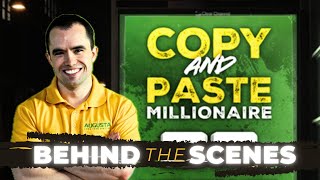
This is a short podcast-style interview (Episode 107) between Mike Andes and a host about Mike’s Black Friday launch of his book Copy and Paste Millionaire and the simultaneous strategic rollout around rebranding his company from Copilot to Homeworks. Mike describes the launch as steady growth rather than a single ‘‘hockey stick’’ event, notes operational lessons (landing pages, payments, paid ads), and estimates donated/sold book units between roughly 15,000–20,000 (he had hoped for 30,000). He explains why the Homeworks rebrand was announced ahead of full rollout (to capture the sales season) and emphasizes internal product/stability improvements, a new slogan “Grow Without Breaking,” and strategic choices (e.g., not conflating byproducts like revenue with mission). He also mentions a high-ticket franchise advisory tier that didn’t sell out (priced at $20,000) and follow-up resources (Facebook ads training for donors/referrers).
Questions this video answers
Launched on Black Friday (launch day referenced in the episode).
Estimated roughly 15,000–20,000 units donated/sold (conservative estimate ~15,000).
He hoped for 30,000 donated/sold books if every tier sold out.
He referred to it as his sixth book (counting earlier ‘warm up’ books).
$20,000 per franchise advisory ticket.
Chapters
All right, we are back. We're jumping straight in. Mike has a hard cut off. Good morning, sir. Sea suit unfiltered with Mike Andes. How are we doing?
Good, man. How you doing? I. I kind of like hear you across the entire office. It's great.
Apologies. I can, I can. I can do more of like an NPR voice if you want. Really? We're gonna talk. All right, very cool. Well, we're gonna dive straight into it. We have a short pod today because we got a hard cut off. But I want to talk book launch. And a lot of people pro know about the book launch, so let's just get straight into it. Black Friday, you did a book launch. You launched Copy and Paste Millionaire, your sixth book, if I'm not mistaken. If you count all the books you've written.
If you count all the first couple were, you know, they were warm up.
Yeah, yeah, they were minor leagues. Now you're. These are big league at bats for different stat lines. Okay, cool. So Copy and Paste Millionaire dropped on Black Friday. Just in a word, in a sentence. How did the launch go?
I think overall, well, like, I think everyone is always looking for, you know, a huge, massive jump in their career or in their business, and it just doesn't happen that way. Every time I've expected that I've been let down. And then every time I, like, think that something is not a big deal, it becomes like a much bigger deal. So I realized that, like, all the little things that you kind of like put all your effort into, it's just little steps. And so, like, you know, whether it be conferences or whether it be promotions or book launches, like, it's not going to be this massive hockey stick. It's going to be a nice, steady growth. And so that's what we saw across the board, whether it be the book donations to the, you know, people joining homeworks and all that. So we kind of combine a bunch of stuff into one. And that was really like the. I would say the risk was like we were combining, like rebranding homeworks. We launched the wait list and then schedule work from that perspective. But then I also launched a book. Then I had donation tiers. Like, there was a lot of things going on. And so I think overall it went good, though it was also a forcing function for us to figure out, like, first time, like doing landing pages and then doing limited time offers and like all the processing, making sure that was all set up correctly so, like, that hundreds of thousands of dollars can be processed on a new account without getting, like locked and so there's a lot of little stuff that we had to like, figure out that I think in the future would be useful. We also like really figured out how to do paid ads. Going into a live event like that and scaling up, like to like the highest amounts I've ever spent per day on ads. So that's good.
Yeah. So I guess to just jump straight into like the, the critical analysis, if you will. You said kind of like you bundled a bunch of stuff, right? It was like a book launch. It was tier donations, it was rebranding Copilot works, which is very exciting. We can talk about that now on the pod. Do you feel like that was obviously the way you wanted it to be done, but do you feel like that was the, the best way to communicate all of those changes, like book launch plus donation tiers plus access plus the rebrand, or do you feel like looking back, should it have been more parceled out?
Well, technically, the rebrand was not completed. It was the fact that we were mentioning it was going to happen. And so from a business strategy perspective, we didn't want to lose this sales season, which is December, January, February, that's when everyone switches software. So we didn't want to lose that knowing that we were not going to get the full rebrand completed until the end of February. And so that's really why I was like, hey, we need to announce this. We need to build hype for it. We need to share the story of what all the changes have been going on. We need to have like a very definitive leading up to it in terms of all these launches. And so from a business perspective, as much as like the overarching book launch was like, donate as many books as possible. And it's a little bit hairy on from how much, how many people got on Amazon. Like, I didn't realize how hard that was going to be to track because I see orders and I see dollars. It's, it's not as easy to see units and like how many people books or people purchased. So I anticipate us to have hit somewhere in the realm of 15 to $20,000 or 15, 20,000 books donated. But it's a little bit hard to measure exactly. On Amazon. So I'm trying to drill in with kdp, which is, you know, their distribution network, to see exactly how many. But that was like the main headline, like the book is getting launched. I knew if I can throw, if I could throw in the homeworks rebrand, I'd get way more attention on it and be able to make sense financially of doing the whole investment in the books.
Okay, got it. That makes sense. So pivoting a little bit more towards the books, I do want to come back to the rebrand and that it's more of a strategic rollout, not more of an announcement versus a rollout out, if you will, but shifting towards the books. Do you have, like, a number? I'm sure people are curious. Do you have a rough estimate of how many books were sold and. Or donated?
I guess right now I'm guessing it's 20,000. Like, like. But the more conservative number, like, in case some people didn't buy 10 and they only bought, say, two for some reason, then it's probably like 15,000. So somewhere between there is what my guess is. I think on my next month's report for kdp, I'll see all of November. And then, like, I got to see December too, because, like, the first, second, and third, just as big as the launch day, which is kind of surprising. So I got to see. I got, I got. Get the more detailed report.
Yeah. And you were hoping for at least what you said on the webinar was 30,000 books donated, sold, if you will.
If we sold out every single tier. The part that didn't sell out was the franchise advisory. There's just not a lot of people that are interested in it, honestly. And in. In part, it was my way of being able to put a very high price tag on something that people always ask me about and no one takes action on. So, like, now, in the future, when someone's like, hey, I want to. Can you teach me how to do franchise? I'm like, yeah, go get financial Advisor ticket for 20 grand. Like, it just sets this bar. It's really nice and high that I don't have to, like, spend my time on what I know most people should not franchise their business, and I could list off 10 reasons why, but, like, it's a nice bar, but if you're serious, you can now go get a ticket. And so I was able to take all the. People have always asked me for that and just be like, hey, go get it if you want it. So that one did not sell it. And that's also where I. The extra 10,000 books should have came from.
Yeah, fair. And as a side note to that, just as someone who has been in the franchise world for a while, I've talked to a lot of different consultants and people in this industry. You know, we get pitched all the time to, like, sign up for this service, get this consultant Use this product to grow your franchise. And I've had multiple calls with different consultants across the industry, from legal consultants to branding consultants to brokers, you name it. And like, $20,000 for what you're offering is pennies compared to what these people charge, quite literally.
Yeah. But it's a nice BE benchmark. It's a nice high benchmark for me not to have to, like, say the same stuff to 20 people when maybe one of them's serious enough to actually do that. Right. And so that's what we saw. Like, I have probably been asked 50 times very specifically from people like, I want to learn more about franchising. And we saw just a couple people sign up for it. So.
Right.
It's good. Now I don't. Now that I have no excuse, I don't have to feel bad when someone's like, hey, can you sit down with me for a few hours and go over franchising my business? I'm like, another thing, you know?
Yeah, yeah, no, that makes sense. Is that kind of. I guess now that you think about it as like, okay, people say that they want support for. For starting a franchise. Is that kind of. Do you. Do you think you feel the same about that? Like, your reaction, you just had there to the way you felt as you were launching the Augusta franchise, when it was like, people just kept coming at you for information. Consult my business, help me with my lawn care business. And you were like, you know what? I'm starting a franchise. And if you can effectively, not in a negative way, afford it and you're serious about it, you'll pay the fee, you'll join the franchi, you'll get coaching directly from me and my team, and then we'll help you scale. And you saw, like, that. That conversion of, like, the audience of people begging for attention and not using begging in a negative way, but, like, begging for your attention, begging for your advice, aren't serious enough, I guess, to make that financial commitment. Does that make sense?
Not definitely. Not as much. Because for Gus, that's much more mission driven. And, like, I wanted to see the change in the industry, and in order to see the change in the shoe, I need them to wear the same brand as me. So when I say things, they. They believe me, and they know I want them to win. And so it was much less like, oh, I have a limited amount of time, and I don't want to spend time training every person. It was much more a matter of, like, people will listen if I wear the same brand as them. And Me winning is them winning and me winning them winning is me winning. Like, if, if we can make sure that happens and then people that compete with them then have to raise the bar in the industry. So it was very different. Yeah, the franchising one. The reason is because so few people implement and actually go forward with franchising because it's so hard once they actually start. Well, I joked with this prior to this is like, if anyone comes to the franchise advisory and buys it, I'm basically going to probably convince them to not do it. Like, that's the essence of it. Because when you start actually figuring out all the registration stuff and the legal stuff and all the things you have to do and then realizing that if you're going to use the model that I talk about, like, you're not going to make money for quite a while because you're going to be more focused on investing back in the owners. And so most people would probably leave the franchise advisors, like, yeah, I don't think I should do that. But in my opinion, I still think that's a huge service to them because the alternative is you get 10 or 15 franchises and realize you don't want to do it in five years and now you hurt 10 owners like very badly and put a bad name on franchising in general. So I think, like I warned with myself of whether or not I should do it, but for the people that are coming, I will do everything I possibly can to set them up for success. And I think that a lot of them will just come to the conclusion that I should not franchise. And that's, in my opinion, most people should not. There needs to be other reasons as to why you'd do it.
Yeah, no, that's, that's fair. And you know, I wanted to. While you were saying that, what I wanted to look at too is like, just from a data perspective. Now, this is just a quick Google search, but a 2020 report shows that 46.2% of franchise markets consist of single unit owners, while franchises with two to nine locations make up another 30%. Only 5.3% of franchisees had over a units ever. So only 5% of businesses that franchise ever have more than 100 units.
I think that based on what you just said, I think that's referring to number of locations for a franchisee to have. I don't know if that's franchisor level. You'd have to drill into that. I think, I think you're talking.
You're right, you're right. You're Right, you're right, you're right. Yep, yep. I apologize.
I think those numbers are much more correlated with that.
It was, it was a quick Google search. You're right, I misread.
But the numbers aren't too far off that. The numbers are way off of that. In terms of franchisors, the vast majority of franchise or do not get to 100, there's a huge failure rate of even getting to 10. Like I think it's something like 50% don't even get to 10 locations. And you sustain the franchisor at 10 locations. You can't sustain even at 50. And so if you can't get to 100, it's basically like this huge gamble. And if you don't make it, you just threw everyone on the bus that you sold. So you have to put huge amounts of money upfront to get the infrastructure required to support them so they're successful and not make money for several years. So anyways, all that say, yeah, um, that's the franchise that, that was the one thing that didn't sell out. That's why we didn't get to the 30,000 books. But a lot of the other things went really good and the donations that I'm able to make throughout 2026 will be because of everything else I sold. So like homework subscriptions went really, really good. We were able to like really spur growth there. And just like people seeing the team and realizing it's a legitimate company, we have really, really solid engineering team behind it now. Like having some months of track record was important.
Yeah, no fair. That, that's good. So coming back to that and I appreciate you bringing up the homeworks team, the rebrand. So I did like a brief Google here before our, before preparing for this episode. And yes, I used AI but I was, I was kind of looking at like what, what do business leaders, business books, business strategy say about rebrands? And kind of a culmination of what I saw about rebranding was that, and this is a note that I made, is ESS realigning the brand with updated or current goals. So do you feel like that applies to the rebrand from copilot to homeworks, that you're realigning the brand with updated goals or current goals?
Yeah, I think so. Also, like the, the co pilot word has other implications than it had when I first started the company. So I want to take off that alignment with other brand associations and also just resetting the brand after everything that happened when now the company isn't even doesn't even look like it used to two years ago. And so it's almost like in honor of the team and all their effort and the level of skill that they have, like, I should not be having the brand associations of things like Bug hell put on them. And so especially we head into next year, like, we were sprinting a lot during August, September, October, in November to get all this stuff across the finish line in terms like, Fuel Force video wait list, unscheduled work, like, Spanish version of the mobile app. Like, all this stuff was, like, sprinting to try to get done by Black Friday. Now, like, even December and January, there's gonna be, like, a lot of stabilization stuff and, like, all the little fires that we had to kind of let burn as we got ready for Black Friday. And so as we head into 2026 and, like, the rebrand happening in the end of February, it's strategically done that way because now we'll be able to catch up. There'll be a lot of things on, like, the Field Force even this week, like, forms now being on the Field Force mobile app, things like that. Save dispatch routes. All that stuff is, like, it doesn't look like the same company. It needs a new rebrand. And what's funny is, like, as you're doing the rebrand, the whole thing with Cracker Barrel happened. And so, like, yeah, you've got to be very careful with a rebrand, too. It's like, that was like, a big deal when we were doing, like, the little logo and the brand's like, what's the story? Why are we changing? Are we just, like, doing what they did? We were just like, oh, we will just, like, whitewash all of the, you know, the. The. The brand that you've always loved. And. And, like, there's so many things you got to focus on. Like, when you rebrand, you can't pair it with other negative associations. So, for example, we know that we get. We looked at. We are looked at as a discount software because we don't bundle member like a user subscriptions. Like a user. Like, if you bundle 10 subscriptions, that's $150. I could just say, hey, we are now have a comparable product and we will bundle things together. We know that we need to do that because we get so many people thinking that, oh, because you're half price. It's like, no, because they're bundling in 10 or 15 years. Like, we're essentially the same. But it's hard to explain that in sales. And people just look at the dollar amount, they don't look at, like, the actual cost. And so, like, I know we will need to do that just to be able to be comfortable in the market and people don't look as a discount, but I'm not going to do that at the same time as I'm launching the new brand. Right. So, like, you got to be careful with your associations with the branding and a lot of other things we had to be focused on. I wanted to be like, that's why we had to get all the releases in order. That's why our NPS score went from one in 2024 to like, 50 or 60 something in last week was because, like, it was like, the timing of everything leading up to the rebrand. So when we rebranded is like, okay, this is something new. There's new stuff coming. The whole site looks different. The customer portal is redone. And so it was just a matter of, like, timing and, like, strategically thinking about how to do the rebrand and not cause a lot of negative kickback, which you can have happen very easily.
Yeah. And I think for you guys, outsider looking in, like a little birdie told me here on the local team that, like, even rolling out the wait list, like, no, there was no downtime, no immediately reported bugs, and, like, that rolled out went smooth. So it's almost like the brand has changed. Not necessarily the outward image, but, like, internally it's changed. It's like, okay, when we used to do rollouts, there were issues. There were things like bug out, whatever it may be. And like, like, now that's changed. Like, we have built in so many, you know, what is it called? Like, safe fire safes or whatever. Whatever the term is I'm using.
Right.
To protect from, like, those issues happening. And it seems like not only the team has changed, but the brand has also changed. So to your point, as you said, and in my research of, like, why do businesses rebrand, One of the things that I said is, like, it signals strategic shifts. And it sounds like that's a big one for you guys. Internally, it's like, strategically, we are changing how we operate, how we take care of our customers, how we roll out new features, new apps, whatever it may be. So internally, it also give your team something to rally around. It sounds like, yeah, like, the.
The. The slogan is actually just as meaningful, if not more meaningful to me than the name, and that is grow without breaking. Because as much as, like, the. The logo is the. The chain link, there's three links, sales, operations, admin. Those have to be strong links inside the business, if anything, of those things, of those three departments, is not sturdy or, or, or solid. The whole chain, the business breaks apart. And so the same way the chain and the slogan for the owners that are using the software, we also internally think of it as like, hey, we need to grow the platform and our team and the software without breaking. Because that's what happened two and a half years ago. And so I think the biggest testament, the thing that's not being talked about is the fact that we grew our user base just as much as we did two years ago over this past week and nothing broke. Like no one, no, the system gets slow texters talking about email. So Grow Without Breaking has already been sued because of the changes made in the company. And does that mean that every rollout will be perfect? Like wait list and no, like there'll be problems. It's software. That being said, it's like a completely different business, a completely different team, and there's like such a high caliber of skill. And so the slogan of grow without breaking is, is, although is mostly for the members using the software, it is for us internally, we will grow this business. We will have 10, 20 times more members down the road and then we're not going to break along the way. And so it's kind of a double mission, if you will.
How important do you think it is to align that like outward mission with internal mission?
Not, I don't think it's important. So for us to like, for example, the changing level of professionalism in the industry is not something that externally we talk about because the customer doesn't care. And so I don't think it needs to be like, we focus much more time and attention, like the premium service, the saving of time to the customer, and we keep that somewhat vague because depending on where you're at in your business, you actually want that to be different. So being a premium service might not be the thing you actually want to message when you're first getting started. And you're actually discounting to get your foot in the door trying to do door hangers, being very scrappy. So changing level professionalism, no one cares about that as customers. And so it is, it is not important in my mind for the mission statement of the business externally for your customers to be the same as internal. Whereas it just so happens that inside of homeworks, that slogan works for both the business and for the members that are using the software.
Do you think that having that clear kind of mission statement, vision, if you will, then the results are effectively a byproduct like if you can, I clearly identify the North Star for your organization, the mission, the vision, the results then are just a byproduct. So to use the example of the Augusta franchise, you said, okay, our North Star, if you will, is change the level of professionalism in the industry. The byproduct of, of relentlessly pursuing that mission is higher paying customers. It just is, right? No, there's a million steps in there, but it is a byproduct. Would you agree or disagree with that?
Like to say that like the mission.
The mission statement ultimately gives you the byproduct of success. Like the clearer, the better, the more well defined the mission statement. Is success or achieving your goals a byproduct of that?
That? Well, I think achieving the mission is the goal. So I think that there are byproducts of like a, you know, lower churn and higher paying customers and higher lifetime value and a higher close rate if you accomplish the mission. Yeah, I do believe there are byproducts. But like those byproducts are not the mission. And so it's very easy to get wrapped up in the byproducts when you're building a business. And that is, this is why people burn out, is because like, well, I'm trying to do this for the freedom of my family and be able to provide for my family, okay? Then all of a sudden you're working 60 hour weeks, you're 10 years into this and you're making a bunch of money, but you're not free. Like the whole objective, the mission was to do this thing and you've got caught up in the byproduct which is making money. And so this is why it's so important. This is why like the decisions I make at a leadership level will sometimes be questioned is because like the byproduct that is making a successful business, making a bunch of money is not the goal. The goal is to make home service business owners rich. And in time of Augusta, it is to change the level of professionals in the industry. And instead of homeworks, it is to allow home service business to grow without breaking. That is the mission. And so will we make money and will we grow members? And when we get to a thousand locations? Yes, but like that is the byproduct. And so when you start conflating the byproduct, then you just start making the mission statement an absolute mockery to your internal team because they start realizing the byproduct is the goal, not the mission. And so it's very important to make decisions based on that. And I've made several decisions in the past couple years that from other internal stakeholders are looked as like, I don't know, but they're looking because it affects the byproduct negatively. But the mission is the goal. That is the goal that must be sacrosanct. And if not, then the mission becomes worthless because the byproduct now becomes the main mission.
I like that. Yeah, I'm kind of, I'm kind of just sitting with it. I'm digesting it a real podcast style.
Just a moment.
No. And I had this quote lined up. So kind of, kind of what you just said there is really interesting because I had this quote lined up for. From Rory Sutherland. He's a marketing branding guru from the uk. So if anybody just likes to. If anybody just likes to geek out accident.
If you like the accent in the uk.
Yeah, yeah. I'm not gonna, I'm not gonna do it here.
When I read the book, I thought you're gonna do a impression, dude.
No, it'd be horrible. But if you're, if you'd like to geek out on like marketing branding, like brand loyalty strategy, check out Roy Sutherland. But he has this quote that I really like that I was going to bring up specifically to discuss the transition of co pilot to homeworks. I think you just hit the nail on the head. He said, I think if you're set out to build a great business, you'll stand a fair chance of building a great brand. I am not equally confident that someone aspiring to build a great brand will build a great business.
Yeah. And I think that's kind of, I.
Do think, sentiment that you're sharing.
Yeah, yeah. Like you can't say it's your mission if the actual goal is making money and the mission happens on the side. Like, the mission can't be a byproduct. It has to be the, the end all goal. Which means there'll be times you put aside the byproduct of making more money in order to achieve the goal. And there's like so many different times I've done that. And every single time you're betting the farm and you have to do that in order to actually convince yourself it's not about other people. It's like, well, if I can put a front in front of my team that like this, this is the actual mission. But I actually just trying to make a bunch of money, like that's one thing you can, you can, you can potentially convince other people that your mission is something More lofty and heady than making money. You can, but you can't convince yourself. And that's in my opinion, the actual reason why there is so much people. People do not chase the goal. There is no discretionary effort because they know that the byproduct is the goal. And it comes down to like usually very key decisions that people realize. Customers and internal stakeholders realize, like, oh, like this is actually the mission because the byproduct is being put on the side because it is a byproduct. But as soon as we make money, the only goal and it is the whole reason the business exists entirely, people know and it's okay to have that. It's just like be consistent. So like, if your whole goal is to make more money, great, put that at the top and everyone knows that you give a piece of the pie and do profit sharing, great. But like there's a reason why I don't do profit sharing until we're very consistently profitable. And the reason is because I have to make decisions all along that road where we don't make profits as a sacrifice to the overall mission. And so I can't give anyone a piece of the pie when we're not profitable yet because I'm making sacrifices to get there. And so like if I believe it, I'll look back like Augusta and copilot and stuff like. And like I'll just be super lucky that I skated by financially and then got to the point where we could start making money like in so many ways. Because you have to. You don't get past the chasm if you don't fully commit to the mission. And so to do that sometimes is hard.
Fair. We'll just end it right there. I can't say anything else more profound than that. We will go straight into non financial advice. Do you have any lined up for the people?
Okay, so my non financial advice is yesterday I recorded the Facebook ads training. So if you're investa, I've probably already put out an email or something. But in terms of donors for the books referees, we do a big referral program which is also a really good test that happened on the book launch, figuring out how that all worked, tracking and stuff. So make sure you watch that. It's like an hour and 15 minutes long. I think hour, 10 minutes long. It's really good. I thought it was really good. I just showed you like everything I've learned as we scaled up ad campaigns and that is going to be available to anyone that donated books or did referrals. Or if you're inside of Augusta Nation.
Perfect. That's what I was going to clarify because someone's going to comment, how do I get access to that? So can they still get access if they have?
Yeah, you can join Augusta. You can join Augusta. At this point, it's a one and done because it will not be, it will not be relevant in even 6 to 12 months. Facebook is just changing so much stuff. So I made it like very specifically. It'll work for the next few months, in my opinion, going into spring, but with the amount of stuff that's changing with AI, it's. It'll probably be irrelevant in 12 months.
Fantastic. All right. My non financial advice, I'm just going to keep it simple. And I bet everyone already here, if you're listening to this episode, you're already a big fan of Mike Andy's you got to buy copy and paste Millionaire. It's a great book. Genuinely. I got it.
The afterward you got to read the afterword. The real fans know. The real fans know that they made it to the afterward. Leave it wrote the afterward.
This is not self promotion, genuinely. When you gave me the final draft to read, I like your, your. This is me giving you some flowers. Your writing has drastically increased the clarity and the, the way that the book flows was just so clear. Like it was just so obvious. So it's a great book. Definitely. Everyone pick it up. Give it to your high, high, high qualified team members, your managers, whatever. It's a solid book.
So cool thing. I appreciate it, man.
All right. Yeah. All right, man. Well, thank you everyone. Like and subscribe.









