The man taking over High Stakes Poker - Who is Alan Keating?
Alan Keating, a high-stakes poker player and streamer, talks about his rise in cash games, his bets on crypto prediction markets like Polymarket, and his plans to expand poker through live-betting and private games. He also discusses his side interests in acting, macro-economics, and building a venture fund focused on under-represented founders.
Chapters
On a warm summer's evening On a
train bound for nowhere?
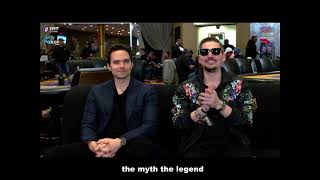
I met up with a gambler? We were both too tired to sleep? You got to know when to hold up, know when to fold up? Know when to walk away and know when to run. You never count your money when you're sitting at the table. There'll be time enough counting when the dealing's gone. Here we are for another episode of on the Button, and I'm joined by the one and only Mr. Keating. Welcome, man.
Howdy.
So happy to talk with you. I feel like I can't have. I feel like I have not had any conversations about high stakes poker in the last, I don't know, year plus without your name coming up.
Oh, wow.
You're like a big deal, man. I know you're not gonna, like.
No, yeah. When you say that, it makes me uncomfortable. Like, yeah, you know.
Yeah, no, I, I, I, I, I get that. And I'm obviously teasing a little bit, but in all seriousness, you know, I, I just think you're super fascinating because it's not like you're new to poker. It would be one thing if, like, you know, you're one of these guys that just like, dropped out of the sky and like, all of a sudden playing the biggest games in the world. But like, I remember I had dinner with you and Brian Rast for, I don't know, I think it was before the summer sometime, and you guys were talking about playing at the Bellagio like 20 years ago or something like that. Right? Yeah. And I, And I also spoke with someone else that's like. Yeah, I used to play with keating, you know, 10, 20, way back in the day, etc. So you've been around poker for quite a while.
Yeah.
So I guess my first question for you is why the decision to start playing on Streams and like, kind of starting to make a name for yourself.
Oh, that's an awkward one. That's an awkward one. I guess the decision is a big one because you can't put the genie back in the bottle. Yeah, right. If you're out there on TV gambling for tens or hundreds of thousands of dollars or millions of dollars. Right. Like, it's, People are going to know that about you and it can influence relationships. And so I didn't want to for the longest time, kind of resisted it because I was concerned, you know, maybe family member might treat me differently or like, relationships might change because the dollar amounts are pretty insane. And then. I guess I got to a spot where I was more comfortable in myself and it's like, okay, this is the real me, you know, this is what I do on that table. And I got to a point where things within my relationships with my family, like my mom and dad leaving town and coming back on holidays, you know, it felt like they didn't really know me. And I realized that was actually my fault because I'm not a very open person. Like, pretty private. Like, I asked them questions, but I don't, like, give a lot of information away easily, I guess. But I realized that that was something that I should do more of, and I couldn't quite figure out how to. How to do it. And instead I was like, you know what? I'll just show you me in my natural habitat. Like, when I'm at the poker table. That is, like, when I'm in a flow state, you know, when I'm, like, really firing, I'm having fun. Like, I'm in my element. And, like, it felt like it would be a way to break the ice and. And, like, take an initiative to reveal more things about myself to my family so I could get kind of closer to them.
Okay.
It's a weird. It's a weird. Yeah, I went on. I went on poker show in order to get closer to my family. Yeah, yeah, yeah. But it's true. Yeah, yeah.
That sounds kind of like a little bit counterintuitive. Right? Like, because when I talk to you away from cameras, away from the table, you know, you're. You're like a very thoughtful, introspective, reserved.
Yeah.
Kind of person. But obviously, you know, I think the Persona that people are seeing is like, here's this, like, total maniac playing for obscene sums of money, comfortably. You're always smiling. You're never, like, tilted, you know, like, you're just. It's just like, hey, whatever, man. You know, And. And I think that's, like, fascinating to the average viewer. And I think the average viewer, like, really wants to understand, you know, more about you.
Who are you?
Like, where did you come from? Maybe, you know, in your. In your own words, in your own pace or whatever. Like, what would you like viewers to know about you?
That's an interesting question. I don't know that I need them to know anything. I. Okay, I. I enjoy. This is a fair trade. If you like watching me play poker, you know, and you're getting something out of it. I'm getting something out of it, too. I'm enjoying entertaining people and opening up this side, maybe growing poker a little bit in whatever ways. I do. Like, it's A fair trade. I don't think I'm looking at the world expecting or wanting them to view me a certain way or understand me necessarily. I don't think that that's like my goal. So I don't, I don't know what they need. Need to know about me. Okay. I guess, like, the things that I do feel like sharing are, you know, things that I might have learned in my experience in life that maybe could help someone else.
Fair enough.
Fair enough. I guess I'm interested in talking about, you know, life, relationships, experiences, things that matter. I mean, we've been friends for a while. Like, you can. When you're with me, you don't hear me really talking about too many things that don't.
Yeah, I mean, yeah, for sure. Like you, you know, this. I, I'm not scripted. Like, I'm not here with an agenda, you know, Like, I. We've been getting to know each other. You know, we've hung out and. Yeah, like, I, I like you as a person and, and I think you're very intelligent and, and I like being around intelligent people that are trying to make the world around them better. We also see eye to eye in a lot of things. And, you know, in terms of like the on the button viewership, you know, you're, you're a perfect person to, to chat with, just unscripted. Because, like, I think people are fascinated by you, clearly. People, like when you go play on a stream, I feel like people are tuning in to see you, man.
Yeah.
You know, so whatever you're comfortable sharing, though, like, I'm not gonna, I'm not gonna try to.
Like, I sense that I, I'm, I'm having fun with it. I, I was thinking about this a little bit today, is that, you know, it's, it's really special thing that we kind of have going, me and the viewers, where we're building characters and storylines and there's events that we all watch together and experience together. You know, it's, it's really cool. I, I love when people come up to me or like, you know, they say, oh, what about that nine, seven hand? What were you thinking? You know? Yeah, I love just. You're always with everyone. Yeah.
New hands to talk about.
Yeah. Maybe for good or for worse, but.
Cool. So you, so you just, you obviously just got in from la, I think. I think today.
Yeah.
And you know, you played, you played in the, the Million Dollar Marathon.
I don't want to say half marathon.
Half marathon.
We finished in 12 hours, not 24. Yeah.
Gotcha. So I. Yeah, there was, like, a little bit of controversy there towards the end when you. When you left. Can you talk a little bit about, like, what happened there?
Yeah, I feel weird talking about controversy because it feels like gossip, and I really, really don't like. Yeah, but. But I would. I would just say, like, some things came to a head where there was some intensity and some negativity around the table that carried forward for hours and hours, and. I was a little uncomfortable with that, and I didn't really know what the right thing is to jump in. I'm not really combative. I'll give some clues that, hey, this a bit too much or something.
Yeah.
But it came to a head over a button game. I. They have a rule that I hadn't heard of where you. If the hand is motioned forward, it's dead. You know, I. I motioned the hand forward, and then either someone said it or I remembered or something. Then I flipped my hand over. But, okay, it was a big argument, like, oh, don't pay him the button. You know, doesn't get the bonus.
Like, so they got to see your hand, but they didn't want to give you credit for showing your hand.
Right, right.
And.
Well, I mean, it's. It's. Come on, it's. Whatever. But it turned into, like, call the floor. And I'm like, oh, man. Like, more confrontation. I like confrontation, but let it be about something cool. You know, let's argue about whatever, but let's not argue about, like, money here or there. Yeah. I just felt like we could have talked it through and been like, hey, what was your intent? You know, what's the right thing to do in this situation? And just agree, whatever that is.
Yeah, I mean, I. I wasn't there, and. And. And I don't have all the details, but I feel like. Yeah. Correct me if I'm wrong, but you were, like, big winner at the time, right? Yes. Yeah. So, like, if you're, like, big winner and then, like, you're also new to that game, new to their rules, and you try to do the right thing, but they, like, say, no, no, no, no. Like, I feel like that's just like poker players being sour and kind of not, Not. Not in good sport. Or. Or maybe I'm reading that wrong. Yeah, it.
It felt. It felt kind of petty, but I. I would stop. I would, like, like to highlight the situation felt petty. I'm not saying the people are petty, and I'm not holding it against anyone, in any way. So.
Okay.
You know, it's a learning experience for all of us, you know?
Gotcha.
No big deal.
So would you say that, that your on camera Persona, like how you are on the table reflects who you are away from the table? Or is that like kind of for tv man?
Geez. I mean, who is, who is a man?
Right?
Of course. We're like at least different when you, you call and you're talking to your mom or you're talking to your best friend from college. Like in every like social context there's gonna be like some adjustments, but there's characteristics that I admire in other people and I try to emulate them for myself. And I don't know if there's a straight line where it's like, oh, that's not who you are, or you're like, I think what you're witnessing is just me trying to be the best I can be.
Okay.
And choosing versus kind of like letting how I was naturally or how I am in some situations be who I am forever.
What about your style of play is that I'm actually.
This is a hard one to communicate to people, but I play tighter on the shows than away. Like the people that know me know this like so not even close.
So like you. And is that, is that like a recent development or you've just always been like an adv pit poker player?
Yeah, I just, I love, I find it charming to get into awkward spots and fight your way out, you know? Yeah. I think it's fun to make a hero call. I think it's fun to like make the big bluff. I'm going to get as many good hands as anyone else. And it's not like I'm folding those, but I don't want to miss the opportunities to do those things.
Yeah, I mean, listen, it's it, it is. It used to be before all this like GTO solver, everyone's like kind of going towards, you know, this like trying to play this perfect style. Like back in the day it was like at least on TV it was a very character driven and there was like all types of personalities and people in poker like that would play all types of different ways, including there always like these like 70, 80 VPIP guys, whether they were on camera or not, like these people existed. So like this is like not a new phenomenon. But you know, I gotta say, like, since we have started moving into this new poker era where like, you know, these Triton guys tend to dominate a lot of the streams and viewership and stuff like that, you know, it is, people talk about it, people Talk about it like, like there's not. Feels like in recent years there is not a lot of guys that will go and just like bang it out with an adv pit for like millions of dollars.
I don't know anyone.
Yeah.
I don't know anyone that's playing the amount of hands that I play in any of the games that I'm in on camera or not.
Yeah.
So yeah, I think I'm the farthest on that curve.
So do you play like a back in the day, a 1020 game the same way you play the monster games today? Is it still the same style of play or has something changed?
Well actually if you depends on how far back you want to go. The first times I played at a casino or you know, online when I was really young, I was incredibly tight. You know, it's like we're talking like no set, no bet situation. Like see the flop as cheap as possible, like lock it up and then like slow play.
But this is Keating V1.
Oh my gosh. Yeah, it was Keating V1. And I would play this poker game in Canada when I was like 19 and 21. One dollar, two dollar work up to like 25 and I got to 510 when I was like 19 or 20. And of course this is a, you know, thousand, two thousand dollar buy in or something like that. And when I say I got to 510 that means I had like 5 buy ins. This is how we operate.
You were not like properly bankrupt to play that game and, and I, I'd
be trappy and you know, all like this what I now consider like a really boring player.
You were at the time?
Oh yeah, definitely. And there was this one guy, Sleepy Mike, whom, whom was a truck driver by vacation, but he was played the card game like all the time, right. And he had this really laggy style. And my impression of it was like how could this work out? Like, you know, I always have the better hand so I'm going to win in the end. But he figured out basically like when I'm putting these big raises in or it's just I've got, you know, the aces, the kings, the ace king, this kind of stuff. And man, he would just never fold in my re raises. And then the board comes like 5, 6, 7, a flush comes or whatever. This guy just put me all in. Like every time like I'm thinking to myself like how does he have it? Like it's just crazy. These run outs, you know, he's pushing me around. It is really probably only the exposure to him that I realized, like, that side of it looks like a lot more fun. So I, I started turning into, like, a little terror, you know?
Yeah. Just wait, wait for the textures and just like, make them squirm kind of. That's like.
Yeah, yeah. It got into a thing, the Keating. There was this, like, I, I didn't understand what I was doing at the time, but I, like, I conceptualized a capped range, you know, and said, okay, these cards are bad for them. I'm just gonna scare these people, you know? So it was over betting and being a ruthlessly kind of like loose aggressive in an era where, you know, a lot of people weren't okay. Got. I had a little bit of a head start being a maniac, I guess.
Gotcha. You know, someone, someone put it to me really well back in the day when I was still, like, really fiercely committed to, like, being a better poker player. I was, like, relentless about, like, studying and learning and, like, absorbing knowledge from, like, good players. And, you know, you go through these lulls. This, this is true of really any, anything you take on. Like, I, I, you go through these lulls where it's hard to, like, hit the next level. And someone put it to me really well and something clicked. And, like, this was a moment for me that, like, I understood I was not a very good poker player because I was so, I was so focused on hands and ranges and this.
Yeah.
And not playing poker. And what they said to me was, poker is so simple. All you have to do is make your opponent's decisions harder than your own. That's all you have to do. And I, and I thought about that. I really thought about that. And they were so freaking right. Because poker is really hard when your decisions are hard. And poker is a lot of fun when you're just watching people, they have the hard decisions. Right. And when they have the hard decisions, the propensity, you know, to, to make mistakes increases, and you're giving them opportunities to make mistakes. Right. And that's when I understood that, that there was just so many different levels.
The more pressure that's on you, the more that, like, adrenaline or whatever, that it's going to disrupt your ability to think.
Right.
It's gonna, yeah. Get you panicked, heart rate up.
Whatever brings emotions into the decision, which is obviously not a good thing usually.
So if you're inducing that, you're, you're placing them your opponen a spot that is, is going to, you know, create big mistakes. Right.
And it seems like you thrive in that. You putting.
I Think it's hilarious putting your, putting
your opponent in the proverbial blender.
I love just finding out, you know, we find out who you are, where your sensitivities are. Like, maybe I'll pay attention. This, this, this, this guy, he's, he's comfortable calling a 20k bet, you know, with a top pair or. But a hundred different. Yeah, everyone has these, like, thresholds and points of resistance that are unique to them. And I'm interested. Find out.
So, obviously to the average person watching you, you're playing for, like, obscene amounts of money at this point. Million dollar game. Million dollar game. Super high stakes. I don't want to die. Like, I'm not trying to, like, dive into your personal finances or anything like that, but is, is the amount of money you're playing for meaningful to you?
Yeah.
Okay. And I think a lot of people are curious, do you sell any action? So this is all Keating playing for huge money. That means something to you?
Yeah.
Okay.
Yeah.
That's awesome. I know. You know, you have the opportunity to play with some very successful, smart people. I'm jealous. Personally, I really love. Maybe that came out wrong. Like, I sounded funny. I also play with, like, you know, smart, successful people, but, you know, rumor has it that you play in some, you know, private games with some, like, very successful people. And, you know, I love picking the brains of so many times, particularly, like, smart entrepreneurs, you know, they're just wired differently.
Well, I would say, like, initially I had, like, big time imposter syndrome. Like, I need people to know I deserve to be here or like, do I deserve to be here? How could that be right? Like, those different things and I'm, I've calmed down on that and. But it doesn't stop me. Sometimes when I'm, like, out with the. This group or that group, I'm like, wow, just the, the minds in this room. And I just get so, so energized by it. You know, I love talking about ideas, and. In, in certain groups that I'm in, people are able to put so many resources behind ideas. And that's what makes it so exciting. I have friends that are, like, part of this administration just because they, you know, want to work on AI and help America win a battle versus China and, like, energy, you know, different things that are just on such a crazy scale. And I'm just like, wow, really?
So there's a pretty big leap between, you know, you're Talking about playing 1, 2, 5, you know, taking shots at 5, 10, to winning a $2 million pot this week on the Million Dollar Marathon, maybe like you can help connect the dots a little bit. Like, like obviously you've got a lot going on away from the poker table. You know, can, can you help, can you help viewers understand, like your journey a little bit? Like, how did, how did you get here? How did you, how did you go from, you know, being a, a lower mid stakes poker player to coming. Alan Keating.
My approach, my interest in poker, you know, I was 14, 15, looking at what am I going to do with my life? Like, how am I going to get where I want to be? These sorts of things. I looked at my options, you know, and the way I understood it is I can go down this road. I can, you know, go to college and then go to the career fair and work for this company and try to work my way up and get to these. And I looked at it, I was like, you know, what if I get a raise, I'm probably just going to spend more money, like lifestyle inflation of sorts. But I feel like I'll be in this sort of situation that'll be hard to get out of and I want to take risks and get exposure to opportunities that could catapult me into, you know, different wealth classes and create different experiences. And I really wanted to go for it. So like poker, I was already like familiar with it. Our family, we get together, we played poker. I was interested in it, but I saw, okay, it could scale, I could get capital and I can meet interesting people. And if I just take my capital that I get and fire it into the projects of the people that I meet, I'll. I'll be buying these little lottery tickets basically. And so that's what I did.
So you invested your poker winnings into like startups?
Yeah, yeah. And you know, it takes a long time for, as you know, for a project to go from like inception to exit.
Yeah, I mean average is 10 years. Yeah.
And I've been lucky. I ran hot in that and got to a spot where, You know, is allocating pretty serious amount of money into these projects and had some good outcomes. And so it's, that's been able to put me in a spot where I can go play for millions of dollars.
Okay, cool. Well, I know one of those plays is, you've talked about it recently, Poly market. Yeah, they just, they just raised at like, what was it, 9, 9 billion?
12.
12 billion.
And there might be a bigger one coming.
They just. Wow, 12 billion. And you got in pretty early on that.
Yeah.
Well, cool to switch gears a little bit. One of the most interesting conversations that I've had with you has been around the topic of poker content. And I think we see eye to eye on, on a lot of, a lot of things related to this topic, but there's like a lot going on right now. There was like this controversy which I'll ask you about just ever so briefly of like, you know, there was this, this no limit show that people that came out and people had a lot to say about it. Maybe it didn't, it didn't, didn't get the traction that maybe they were hoping for whatever it is. I, I heard some kind of differing opinions on it. But then, you know, there was this controversy where they had used AI to like, change a couple of the things that were said without, without your permission and I think another person's permission. But there's, it feels like we've been in this lull. Like there's some people that are trying to solve it. Other, most people are just kind of following the same formula. I, I personally think that poker content has gotten to a place where there's just not, there's not people, people taking chances. There's, there's not enough people that are trying to do something different and we're not like pulling enough new people into the game.
This has been a challenge for a long time.
Yeah.
And everyone has an idea of what needs to be done and they're different. But it's a real challenge. And I think that's also the opportunity.
Absolutely.
When you sell for that, it's going to be worth a lot. But I also think we got to give respect to the content creators that are out there making stuff now, like the, like Brad Owen and these, these kind of like trailblazers of just taking your phone and putting it on the
table and showing hand 100%.
That really opened a lot up for what I would. You're this generation of poker players.
Yeah, I, I'm definitely not trying to beat up on anybody. Of course not.
But I'm giving them their respect and I think that was creative and opened some stuff up and there's more things that we could do and open it up further. Absolutely. And anyone who's like pushing it forward, I'm like deeply rooting for. I tried to contribute what I can.
Well, you made some videos. Like you had a, you had like essentially a brand new YouTube account. You made like four or five videos.
Yeah.
And those videos got like crazy traction.
Crazy. I mean, I think the second video had 4,400,000 views.
I think people want to See more of you. So, like, that's one reason I brought it up is you obviously have a formula or at least have tried a formula that. That people want to see.
So
what. What's next? How do we see more of Keating?
So, like, what is the formula? I like the. The formula, to me, is communicating more about the emotions on the table. You know, a lot of the content's been like, this card comes, and it hits his range better than mine, so I'm gonna bet a smaller amount. And then he did this, and he's. I want to put that in the background, and I want to highlight, like, oh, man, this. This outcome hurt. Or I'm gonna trap him, because I really want to get him because of the last time I played with him. He got me, you know, it. I think I'm really interested in storytelling. So, like, with the YouTube channel, it's kind of like a experiment for my different ideas of how we could show poker. And I'm hoping other people will look at it and say, I like how he did that. I'm going to copy that.
Or, yeah, I. You know, you know something, I have an opinion on this, and I think. I think it does not get focused on enough. It does not get shown enough. I look at poker as being, like, the great connector, because poker is one of these.
It.
I don't know, call it a sport, call it a strategy game, but it's. It's a game or a sport that can be played by, like, anybody, anywhere, anytime.
That stuff's amazing.
And so, like, poker has. Is this, like, this. This game that can be like a connective tissue to so many different people around the world. And, you know, I think. I think, yeah, sure, the hands and the pots and the winning and losing is fascinating to some degree, but, like, you can get your dose of that anywhere. There's. There's tons of streams you can watch if you just want to watch people play cards. Well, there's like, tons of that, and there has been tons of that, and it's all pretty much the same formula, right? Like, here's the hands on the graphic. Here's the board.
I. I think we're forcing poker to be at the forefront of the content. And I think poker and how I envision content that escapes into the mainstream is poker is the setting. You know, it's. If it's. If the show's a dinner party, poker's like the utensils.
Yeah.
It's more the conversation around the relationships, the drama between them, the. All these things to follow the Details of the poker game to me are something we should de. Emphasize akin to selling Sunset TV show.
Yeah.
You know, those shows have nothing to do with the house. Like, I'm not even sure they're realtors. Maybe they are. Maybe for sure. I'm not saying you fake the poker stuff. Definitely don't. But in the same sense, the selling the houses is just like the setting to tell the stories of the characters. And I like that.
Well, again, like, just tying my own personal experience to this because I. I've played a lot of poker. I started playing poker when I was 19 years old and I played live, I played online, I've played low stakes, I've played high stakes. I've played with famous poker players. I played with. With entrepreneurs and investors in all types of settings. And if someone were to ask me, like, why do you. Why do you like poker? What makes poker interesting to you? And it's not. It's a complex and fascinating and interesting answer. Because it's not. It's not just like, oh, I just like to peel cards and win pots, right? No, dude. I've made lifelong friendships at the poker table. I've met investors at the poker table. I've learned social skills at the, like, believe it or not, like, I'm a naturally introverted person. I was a kid that was reading books every day. You know what I mean? Like, I was a kid that, like, that, like, nerd, dude, I was a total nerd. I was in the Magic the Gathering. I was reading. I was reading books. I used to read a book a day. I had insomnia since I was, like a young kid, and I would just read all night long and, you know, and like, I was moving ahead fast in math because I was doing math at night in my room for fun. Like, yeah, nerd. Nerd is like, apt, right? Social skills. Picked him up at the poker table. And I. And. And it was, it was. It was almost inadvertent because I had to learn because I loved. I loved playing online, and I played a lot of volume online, but I also like going and playing live from time to time and then eventually a lot more. But I had to learn that, like, if you weren't social and you weren't making an effort to, like, have conversations and laugh at the jokes and do this, you weren't getting invited to any of the good games, right? So I had to learn these skills. And these skills later translated to skills that I needed to be a leader, to be a CEO, to start businesses, to invest in businesses that's also. You also have to be a salesperson, develop relationships, you know, otherwise why would the investor or why would the founder want to take your money if you're like this super awkward person that doesn't view them as a person or whatever. So, you know, in the fabric of all of this, you know, poker is like this connective tissue that could mean a lot of different things to a lot of different people. And if somebody can get the storytelling right around this, then it could become like a selling sunset. It could become something bigger than just like, hey, let's just watch people play cards.
So let's, let's go deeper on that because we've bounced around a lot. Let's figure out the right show. Yeah, Tournaments problem here is that you can't pick who's at the table at the final table. Right, right. So.
But there's a journey there, I think that, you know.
Yes, absolutely, absolutely. But if you're gonna do a selling sunset, you gotta like control the cast of characters, right? They, you have to have a situation where they interact with each other. Like even, even getting knocked out is a problem for storytelling because that person gets knocked out of the tournament, they go that way and you have your core characters interacting without them. Tournaments are really difficult to tell that kind of story around. And I think cash games, you can control who is invited. Right. When someone loses, it's dramatic. They can rebuy in and get their money back. And the game could go all night. Right. The cash games could be at any day. You don't have to be during the World Series of Poker or a particular event. They could be any location. When we play poker, I've played in Aspen, played in New York, in Houston and la, San Francisco, like different trips, London, you could set the scene and really build events that reveal characters and have them interact with each other over time. Okay, so I guess I'm making the argument that, okay, if, if there's a show, I want it to be cash games, I want it to be private games and I want it to be high stakes.
All roads too much to ask for. All roads lead right back to Ella Keating. I love it.
And you need someone running it that knows the scene, who would be good characters for it. Like, you know, who is it who has staying power, who's like kind of just on the scene, people from the outside. If you're going to make a poker show, you don't know who to go to because you're like, you know, I like that guy for xyz, you know, Eric person is a very interesting character. Right. He'd be interesting to have. Hellmuth is a very interesting character. All these different people, but you don't know what else is going on in their life. And they go to that person, you know, they might be out of poker six months from now.
Yeah.
So you need someone on the inside to help you figure out what actually is happening here.
And I feel. I feel that whether it's cash games or tournaments, you know, I think if, like, if the. If the core of the content is just like, at the poker table, then sure, like, cash games are going to be easier environments to control and to, like, control who's playing. But I don't know if the core of the content should be poker.
I agree. It should not be.
I feel like it shouldn't be. And which is why, like, which is why I think tournaments or cash game, you could. You could do either one. And the reason why is because, like, poker is. Is somewhere in there. Right. It's that connective tissue. But, like, if I'm. If I want to learn, if I want to consume content about a. Let's just say a tournament player, I don't want to just, like, see every time he flips for his tournament life and wins or loses, and it's like, oh, he advances or, oh, he's. He lost the flip. I want to see, like, how that affected him away from. Away from the table. Right. Like, how does. How does this person deal with, like, not winning the tournament? Like, almost always.
Here's a huge.
What brings him back in.
We need stories being told leading up to events.
Yeah.
We need to make people aware of the events, and we need to make content following the event.
Right.
This is why I'm like, we just gotta put shots on goal. Whether it's a tournament idea, a cash game, a private thing, which characters people want to assemble. I've got. I've kind of storyboarded out how I do it.
I want to do this with you.
Yeah.
Because you get it. You get it that it has to be more than just poker, right?
Yeah.
And. And you also get that people need.
Need.
People need more than the standard formula, you know, like the. The formula that's been used in poker content, poker media for so long. Like, dude, people. People find you fascinating. They want to. They want to see you, they want to understand you. They want to relate to you. They want to play with you. Dude, if you did, like, meetup games, there would be, like, lines of people just for the chance to just, like, play with Mr. Keating you know, whatever it is, you know, that, that would
be super fun for me. So we'll have to do that.
We have to do it. Yeah, we have to do it.
That'd be super fun for me. But. And like, I just throw my hat in there and I say, if anyone's gonna make it, like, you don't have to pay me. I'll come there. I'll give everything you. I got. You know, if you want someone to consult on writing it or, you know, someone to come to the set and be like, does this look right? You know, whatever it was, you know, at. My friend financed Dead Money, which I, I actually enjoyed. And I was like an extra in that.
That was the one with Emile Hirsch. Was. Yeah, Emil Hirsch.
I enjoyed that.
The girl Next Door guy, right?
Yes, absolutely.
I have not seen it yet.
It was a violent movie. Oh, really?
I have been grossly disappointed by like any poker gambling related movies in the last. I don't know, I would say since Rounders, I don't think there's been like a really good one.
Well, like, it's got a quality to it. Like Shooter. You remember the movie Shooter, Mark Wahlberg?
Yeah, sure.
Where it's like, if it's on, like, oh, you know, I enjoyed watching it. But is it a good movie? No.
Right? Like, yeah, absurd.
And I'm not saying Dead Money's a bad. In fact, some of the performance is really good. But it has that like, rewatchable quality that Shooter has. And I think there's cool things about it. But I was an extra in it. My friend financed it and I didn't really have much to do with it other than like my one little scene. And, you know, I was looking around the table. There was a, A guy that looked like he'd be pretty tight and I like lined up his chips where they all make a line, you know, because the tight guy, you know, his chips are all going to be like organized and all this. And I was like, oh, he looks loose. Let's make his stacks like, discombobulated because he's firing them in and out. Continuity, different things, like, anyways, I think a movie could really add a lot. The second thing that I think could add a lot and really supercharge the viewing experience with poker is having options like poly market to bet on the outcome.
Okay.
I can't watch a football game unless I bet on it. And I know I, oh, boy. As a kid I was like, oh, what a, what an ass. Enjoy the sport, you know, But I'm at that Point where I want to bet on it. It's, you know, first half, first quarter, whatever. And the same thing.
I feel like this is like an advertisement for hcl.
It's not. I'm saying I would watch so much more poker if there's a, like a liquid market where I can make a bet on who I think is going to be the winner.
And then I'm just giving you shit because I'm actually working on something like this.
And then.
Did you know that already or are you just like, sneaking that in here?
I'm a little sneaky.
Okay.
And then I want to live bet it. Like.
Yeah.
You know, so if I see, oh, hey, he looks like he's about to go off or something like that, you know, I want to sell that stock or buy that stock. They're about to win, like. And, you know, with my experience in poker, I feel like I got a grasp on it. I want to put my money where my mouth is. Like, I'd be glued to it. So, like, that's gotta happen.
So what I'm hearing is like, store, like, good story arc, character building, balancing off the table, human relationships, personality, like, what's going on away from the table with like, good, genuine, authentic on table content and live betting. Is that my hearing that you're hearing?
Movie, reality show and live betting. And the streaming house has got to do their part now. Everyone who plays, we got to sacrifice more. You can't go look at your phone. The people working there, it's all got to be protected. You're going to. Any sort of issue is going to ruin what could be. We all have. We all have changes to make to move poker forward. And I'm interested in every, every one of them and anyone doing anything to do it. Any way I can help, I'll do it. I guess that's.
Well, I think, I think we should definitely expand on this conversation. We could probably make an entire podcast just around this. But yeah, I mean, I, I really like your ideas and I think, I think you're good for poker. I don't. I don't say that lightly. There's like a lot of characters in poker and there's, you know, like, I. But I genuinely think that you're good for poker. I think that you pull in viewers, you pull in interest. I don't watch a lot of poker on tv. I never have. I used to, way back in the day when I first started playing poker and there was like, Poker After Dark and like, I used to watch those when they were like, on tv. But, but there was a huge gap where I watched very little poker on tv. And in fact once the World Series like left espn, I watched almost no poker on tv. You are one of the only reasons I will tune in and watch some streams, clips, stuff like because you make the games interesting. Like you generally don't know, you genuinely do not know what is going to happen.
You don't know what I'm going to do.
You don't know what you're going to do, man.
Like the check, raise, air ball with nothing.
Like, like you get into so many like non standard poker spots. Yeah. And it's just like, dude, I like bust out the popcorn. Like I just, I'm going to just look, I want to see what Keating does. Yeah. Is he going to just like fire some like absurd bluff? Is he gonna hero call with like fifth pair and like for like a six hundred thousand dollar pot? Is he gonna like, is he just gonna start knitting it up and just throw everyone off? And everyone's like, what does that.
People come up to me, they're like, I got a million dollar idea for one year. Play tight. They'll never see it coming. Like they'll always call. And I'm like, you're absolutely right. I just don't have it in my bones, you know, like, yeah, every time I've tried to play tight or go in with a plan, it falls apart right away, you know.
And for the viewers, if you're wondering, hey, where did that like cup come from? We took a very short break and we decided to get some apple juice. It turns out Mr. Keating is also an apple juice drinker, so we're just also enjoying some apple juice, in case you're wondering where the cup came from. Cheers.
Cheers. Yeah, so. Excuse me. Yeah. I love the, the private scene just because you get so many unique characters running into each other and none of those stories have been told. And I get why it's really delicate to uncork these dynamics.
It's hard to do a reality show in like private game scene because so many people just don't want to.
Right. Well, they have to have someone they trust. Yeah. That has enough control over it that they are willing to put themselves in a situation where the cameras will be around and they know that that net outcome won't hurt their business. Right. Is it something they do or say that, you know, maybe they'll be motivated, they want a little bit of fame. You know, a lot of people are interested in that. For example, there's people that will jump towards it and there's people that will never do it. But I think the project needs someone leading it that like has the trust and like the lay of the land to get it done. And that person isn't going to know anything about production or anything like that. And they've got to be really open to just following what, you know, video and branding, all these professionals tell you. And I'm trying to make myself that person.
I am interested in making this happen. I mean, are you. If you are like actually interested, Like, I'm incredibly interested. I, I would, I would be down to figure this out, find the right script writer, find the right production crew, figure out like what it's going to cost, you know, like start putting it together. Like, and it might just be like crazy rabbit hole to go down time suck, but it also might turn into something. And yeah, like you, I'm a risk taker. I'm interested in, in pushing the game of poker forward. I'm, you know, I get asked a lot because I spent so long, you know, as a poker player and now I'm have getting some experience on like the op operating side and the content side or whatever you want to call it. And so like I start, I, I'm, I have people asking me now, like, why are you doing this? Like, what is, like what's, what's. And my answer is pretty simple. Like poker. Poker for me was an instrumental part of my life and will always be a part of my life that helped me develop relationships, social skills, money management. I would say the most important thing about poker that, that really resonates with me is poker helped me understand that everything good in this world lives on the other side of risk. And it really fundamentally helped me understand that you have to take risks in life. If you want something good to happen, you have to, you got to step up to the plate and like take some swings, right? You're not gonna, you're not gonna, you know, be first money into poly market if you're not willing to make a bet that most other people think is absurd. Like, why the besting some kid with some idea like, are you crazy?
Like you have. That was a fun one.
Dude. You have to do it.
I've had an 18 year old and gave him a bunch of money the next day.
Dude. And what, and how did that work out for you?
It's, it's cool.
I, it's like the most muted response ever. Like.
Yeah, see why I say it's muted is I don't want any credit for it because yeah, I didn't build it.
No. Right, no.
Like, like, you know what I'm saying?
Taking credit for Poly Market would be absurd, Right? Absurd.
But there's people I don't want to be.
You're living a life that most people can only dream of and you have to take credit for that because you took the chance, you took the risk. Yes. Like, don't take anything away from the founder. He built. He built a company that could change the world. Right.
The team, everyone there.
Right.
Like, everyone working on it did more to make it what it is than I did.
Of course.
Of course.
But you made a decision that impacted your life and all the lives around you for sure. And also impacted Shane's life. You know, like, am I saying, like, you're responsible for Polymarket? No.
Yeah. I was there for him in a spot where he needed it, for sure. I mean, and that makes me happy. I. I love it. I. I'm excited. I don't, I don't need anything.
It goes back to connective tissue, dude. Like, all things are connected. All people are connected. Know ideologies, even when they seem, you know, contradictive or, or unrelated, are also connected to some degree. And when you start to understand that, and you start to understand, like, what are the things that can, like, shake the fabric of reality, that can, that can fundamentally change someone's life, that can fundamentally change the outcome, it all goes down back to risk. So what, what drives you? Like, you clear, you've clearly have made some decisions in your life that have taken you to a place that most people would consider you to be wildly successful. Now you're one of the most well known people in poker.
Yeah, you're.
I mean, you're famous. I don't know, like, you know, maybe not like Tom Cruise famous, but like, you're in the poker community. You're like kind of like the Tom Cruise of poker right now, I think. Like, so you're wealthy, you're well known, you're young. Still, what's driving you to. And you can answer this however you want. Like, it depends on what?
Like, I.
What's driving you to.
Like, I like to.
I like
there's a. I hadn't really heard it put quite this way until I was actually with Bill Perkins like 10 years ago watching Hamilton in New York. I like, I like plays. And there's like Aaron Burr, one of the main characters, sings a song where it's like, I just want to be in the room when it happens, where it happens. And I really encapsulated how I feel about life is I want to be involved and be on a journey with people that I care for, and I want to share the experience, the highs, the lows, everything. I want to feel alive that way. And I. I do that on the poker game table. I do that with different investments. I do that with. I guess those are the main things to exercise that muscle, and they're complementary. But, you know, I exited an investment at a very, very nice return. 375x, and when it was over, I was, like, sad, as weird as that sound.
Doesn't sound weird to me at all.
We talked different people involved. We talked every week about what's going on, and we enjoyed the different stages of growth and rejection and fear and all these things as, you know, jumping over stuff, dodging stuff, picking stuff up and running with it, metaphorically. And then when it's over, I was sad because I just want to be in the room. I want to be doing fun stuff. And I love that.
I love that answer.
Your stuff with you. That's why I'm invested in Phenom Poker. Is. Is because.
Is this.
I believe in you?
Is this the announcement? Are we making an announcement here? I've. I've kept this under wraps at your request. Yeah, but. Which has been really hard to do because, as you know, I'm super passionate about the Phenom project, and so keeping anything quiet there is. Is tough because. Because I. I mean, I love this team, I love this idea. I love all the people we're working with. And, you know, when you decided to get involved, I felt that was a really pivotal moment in Phenom's journey, because. And I. I'll say it again. I've said it, I've said it numerous times. I think that you're one of the most compelling people in poker. I think you will be one of the biggest, if not the biggest, content creator in poker. And I think that, you know, whatever you decide to set your mind to in poker, you have the ability to really move the needle, whether it's like
creating a movie, investment's about you. So I appreciate the nice words, but it's. It's a vote on you. And, you know, you. You don't realize this, but as an investor, I'm more there when things aren't going well because versus when things are going well, because when things go really, really well for you and Phenom, like, everyone's gonna be around you, just like what Shane's going. I. I talk to Shane less now, almost incrementally. Every year, he's just graduated into different situations.
Yeah.
But if he's down, I'm gonna be right there. Right. Like, if it didn't work out, I was gonna invest in the next one, the rest of his life. And so it's gonna be interesting, the Phenom journey, because you've already built something special. It's.
Well, I. Thank you. I, I, I don't want to take anything away from the team because we have an incredible team working really hard to realize this vision and, and take it to where it can potentially go. I personally think that we're incredibly early. I think that, Yeah, I think, I think, I think we're still in the first inning, but I am, I'm very, very excited. Ever since we started talking and you in, you put in that vote of confidence. You know, it's, it's, it meant a lot to me personally. It really, really did, because I knew five seconds into talking to you, this guy's sharp. This guy's really sharp, and he gets it. And, and we clicked on, like, it's
gonna be a fun journey. It's gonna be a fun journey, dude. It's gonna be.
It's gonna be so much fun, man. So much fun. And I'm really glad that, that you pick Phenom.
The mon. The model works for me in a way that I'm passionate about, is for a lot of people, poker is a tough thing to get out of once you're in. It could be like many other jobs that are tough to get out of. But the model where if you play and the more you play, you get the opportunity to get these tokens that represent ownership. People ask me, like, how do I get out? Usually it's like, can I work for you? Can I do this or that? This is the easiest thing. All you have to do is play on Phenom and save these tokens. And if Phenom works out, you're gonna be on that other side where the money's working for you. You're not working for the money.
Exactly.
And that was a big feature for me because I want everyone to grow and actualize, like, whatever their goals and dreams are. And a lot of the time, poker can keep you in this washing machine. Yeah. Date, for sure. It's.
I mean, that's the word grind in poker. It's. It's almost, like, synonymous with poker.
Grind.
Grind.
Yeah.
And. And if you think about why that is, it's because it is a grind. You're battling the rake, you're battling yourself. You're battling bad luck. You're battling like you're just in this constant battle that sometimes it feels you can't ever truly break free of. Yeah, and I thought about this a lot because as we discussed a little bit earlier, you know, poker has done a lot for me in my life, mostly from. Not from a financial perspective, but mostly from teaching me life skills and teaching me how to be a man. Like, I, I grew up.
Yeah, no doubt.
You know, without, without like a close father figure, you know, so, so, you know, a lot of those lessons I had to draw from other places. But the thing, the thing that I, That I wanted to do with Phenom is I wanted to build something that was not extractive. The community. I wanted to build something that created value for the community. And I, and I. And I really don't think, I really don't think that someone has done this in poker in a really long time. I don't want. And I don't want to, like, I'm not on everybody, right? Like, like, I think there's. There are people in the industry that have. Help push the industry forward. You know, I think of like, Carrie Katz, you know, like, building, building Poker Go and, and other people making investments that have, like, been good for poker. But from like a, A site operator perspective, I feel like they've generally been highly extractive. And how do you fix that? Well,
a. It's a good question. It's a. You either got a community or you don't. Right? Like, the more people that are involved, word of mouth tell each other, like, there's the potential to create some sort of movement around Phenom. And I, I think you pull it off, I think it'll work out. So I've positioned. I put my money on my beliefs also at a time where I'm changing my, like, investment philosophies. You know, I used to make investments almost to, like, to get into social circles, right. Like, you know, to be able to ping the people involved, you know, for advice or like, oh, I haven't done this late of a investment like that part of the journey. I can learn about that. And I ended up kind of spreading myself out and realizing, like, okay, well, I don't really know what's going on with that thing or I haven't helped that thing or this project. And so I've changed my philosophy more to concentrated bets with bigger numbers. So we found each other at a time where I'm not making a lot of new investments, actually I'm trying to get out of some and just add to a core. You didn't know that?
No, I didn't know that. But also, to be fair, I, I, I never pitched you to be an investor. I, I wanted to spend time with you because I loved what you were doing in content. And I thought since the very beginning, since I had the idea for Phenom, I wanted to involve the people that I felt were net positive to poker.
Yeah, that's the brand.
Right. Like, so, so I, so, you know, whether it was like Brian Rast or whether it was Jungle man or Huckleberry Seed or like, you know, like Eric Baldwin, just great, great guy. Great for poker. You know, True, true advocate for the community. You know, a lot of these guys and gals, I just wanted to work with, with the people who cared about poker and who wanted to really build something good and who cared about the vision and weren't just looking for a paycheck. And, you know, I saw your videos, I saw, I've seen you playing on the streams, and I said, I want to, I want to meet this guy. And so, like, I never came to you and said, hey, will you, will you invest? I said, I, I just, I want to work with you, man. Yeah. You know, and, and it was, I'm thankful for that. Yeah, it was. If, Correct me if I'm wrong, but it was your idea to invest. You said, like, hey, when I, when I get involved in something.
Oh, don't worry, I'm used to begging to invest. Usually it's like, please, please let me in.
Yeah.
I know the rounds closed, but can you just give me a little sliver?
Yeah.
As an investor. Sure. Like, in these projects, a lot of times you turn into like a beggar.
Yeah, for sure. I mean, I've actually been on that side of it too, you know, like, like, is there, hey, is there any, like, allocation in it for me? You know?
Like,
yeah, I've, I've actually, I've been, that was like, that happened to me super recently, actually. It was like, hey, I, like, I can add value, I can make intros, I can do this. Like, surely there's something, surely one of your people that, like, would take a little bit less. Right? Like, but yeah, like, the point being is, like, I just, whatever the capacity was, whether it was an investment or whether it was an ambassadorship or, like, I just wanted to work with you, you know, and, and, and yeah, like, honestly, you could have, you could have probably just called whatever terms you wanted, you know, so, like, listen, Alan Keating is a guy who's good for poker. He's, he's one of the few people that has it. Ability to move the needle as much as you. Right. There's, I think the. I can count on one hand for
viewership, I think right now, of course,
but not just right now because like, it's a leverage game, right? Like, whatever it is you want to do, you have the ability to, to become that. Right. And like, those are the people I want to work with. Because you're the kind of guy that if I have an idea, you have an idea, we can figure this thing out and turn it into something bigger.
Yeah, that's the fun part.
Absolute out. That's the, that's, that's the journey. Right? And like, that's what, that's, that's what building is all about. Yeah, dude. I mean, in any case, I'm super grateful that you saw potential and me and Envenom and the team, like, we're, we're just happy to work with you, man. But changing gears a little bit before we wrap up, like, I. Dude, I feel like, I feel like we could sit here and just chat about pretty much anything.
Have you ever felt like you spent a bunch of energy one direction and you kind of like lift your head up and realize you're not interested in the direction you're going?
Absolutely.
I hate that feeling. And I've had that many different times. And I, that the time that I had my head down swim in one direction, I feel like regretful or ashamed or feel dumb that like I did that. And so I, I set these triggers in my head of like, hey, when's the last time I like took inventory on am I doing what I actually want to be doing or am I going the right direction? And so I like, stimulate that. I try to like once a month or so, because I could have gone years going this way or that way, but I kind of got obsessive about understanding the world I'm in and how it works. I think people are doing that now more than ever. I think a lot of the conversation maybe stems from crypto. People are like, what is money? Where does it come from? Like, you know, what is the Federal Reserve? You know, these different things, right?
Yeah.
And that's, that's like kind of a blessing and is also a little scary thing too. Right? Like, we operate under a lot of these like, systems that are more fragile than, than we realize and are completely confidence based.
Right.
So I was really interested in understanding how these things work. So I got really into macro and there's, I Think it's actually maybe like 90s and recycling that started this idea. Like, basically think globally, act locally. And so I heard someone say, I don't know who, but they said, with my family, I'm a communist. With my friends, I'm a socialist. And like, with the world, I'm a capitalist.
Okay.
I think we've like, kind of as a society, society become like, less cohesive and more fractured. And I think families used to be tighter and there used to be like a safety net within that and also a bit of pressure, like, you better treat your mom good because, you know, you're living under the roof. Right, right. I have now it's like this individuality that we've emphasized. There's pluses and minuses. Everyone's becoming, like, sadder, you know, more on, you know, depressed antidepressants or like, living their lives online when these.
These are related concepts like birth, all connected. Birth rates are declining rapidly. Absol. Family values are declining rapidly, and American happiness is declining rapidly all at the same time and almost at the same rate. I think America, in the last poll, happiness index poll, barely cracked the top 25. I think they were 24th in the UK was 25. Finland has been number one for, like the last eight years. You look at the happiest countries in the world. Family values, economically secure, financially stable. These are all, like, very related concepts. It's interesting you bring this up because this. These are topics that actually interest me a lot as well. We might have different approaches to how we think about the solutions. When I look at, like, the wealth class, particularly in this country, I see people that fundamentally understand how risk works, especially how to price it and how to manage it. And when I look at the. The lower classes, economically lower classes, not any debates there, I see people who fundamentally do not understand how to price or manage it, and so they just avoid it. Safety. And safety is like kind of guaranteed loss. So two things that I would like to see happen is I would. I would like to educate people on this concept of risk and why the Mr. Kiddings of the world are doing so much better than the average person. And then the other thing I would like to do is I would like to utilize technology to open up asset classes that have previously been unavailable to those people. Phenom Poker is much more than just a poker site. And this is not to shill phenom. This is not to draw back to phenom. This is just to, you know, make a point of. It's not just a poker site. It is a Poker site. But it's not just a poker site. It's also the token model of phenom, is a demonstration on what's possible when blockchain is used for more than just a speculation machine. Right. It's transparency, it's access, it's ways to take an asset class that's previously unavailable to most people and to use it as a, as a mechanism to distribute equity to a community, just as one example. Those are my personal views, but I would love to hear, like, I actually agree with a lot of what you're saying and it's fascinating when I see people take an interest in these topics. I would love to hear like, what are your solutions? Like what. How do you, how do you fix. Because these are like big, big ticket issues, right?
Yeah. So I've always made the case that. And is that economics drive behavior. When people are doing well, they treat other people well.
Yeah.
Lord of the flies. When things are going and. And we got to have an economic system where everyone participates and knows the rules and forces that manipulate different parts of our economic system currently, in my opinion, are. Moving us towards economic conditions that are going to create consequences for a lot of people that I'm uncomfortable with. So is the solution like sound money? Because, you know, you could say, you know, Austrian economics and basically like, you can't influence the money supply and raising rates and all these different things.
Like,
I'd like to get to something simpler, I guess, is do you have
anything that's like digestible from this format, like you, like just an example of some ideas you have?
Well, unfortunately, we're so far along that experiment that any sort of medicine we take is going to be painful and politically difficult.
Am I sensing a future in politics here for Mr. Keating?
I mean, I love caring for people and I love taking the brunt of difficulty in order for other people to have better lives. I don't want everyone to have to figure out an allocation strategy in order to be able to retire. I want a system where people can go to work and perform their jobs and go home to their families, shut their brains off.
That's what it used to be like, right?
Yeah, I can't do that. Like, I'm always.
There's always, there's always going to be those that are wired differently. Right. But for the average American, and I'm
not saying I'm better, I, I think they're better. I think it's so charming and I think we have to protect that lifestyle of you go to work and you can shut your brain off and not worry about all these things. And maybe this is like an American luxury perspective, because there's places all over the world that are, have never not lived, you know, the type of world I'm worried about us going towards. But I am interested in, like, sacrificing myself and energy for other people. Politics is politics, and poker is already hard enough, you know, it's like party politics. It just seems like such an ugly game, you know?
Well, I, I, I think the world can use more people that take an interest. I think the world could use more people that want to use their platform, their intellectual capacity on more things than just selfish endeavors. So I think I'd be very curious if you decided, like, personally, I'm curious at what you decide to point your energy at, because I think you're one of those people that can make a difference and now you have a platform.
Yeah, I don't think anyone really does anything on their own. Right. So I guess I've been kind of team building for the last 10, 15 years, building my group of people that I trust and work on stuff together. And I do care about the output of my investments on society. Right. Like, I've had some ideas where I'm like, that is a brilliant idea, but if it works out, like, are we better off or worse off? You asked for things I'm interested in besides poker. It's macro. Like, obviously investing. Right. But macroeconomics, relationships, you know, I think they're how we interact with.
Well, that's an interesting area.
Yeah, I just, I'm so into the dance of life that I think comes from interacting with people and developing, you know, like, the first conversation, you might have some, like, excitement around, you know, meeting someone or having something. But there's so much more that comes from the development of your relationship with, you know, people. So, yeah, I'm interested in relationships. I'm interested in macro. I just recently started getting interested in acting. You know, I was on a, a small little speaking role in a, in a movie the other day. Tiny little role.
What kind of movie?
It's like a crime thriller. It's Emil's next movie. He's taping it.
How did you get into that?
I got an invitation. There was a role that someone thought I'd be okay for. So I've been watching videos, like how to act and stuff. Like, this is new to me. And I'm like, oh, man, I might run away with this a little bit. And it's kind of, kind of fun.
Man of many talents.
So acting's Cool. I really respect people that are in the arts. You know, people that play instruments, sing, different modes of expression. I think it's just so cool when people can tap into how they're feeling and communicate that or live in it. I'm always really impressed by. I. I'm really encouraged. Everyone, everyone seems to be getting healthy right now. And now we know much better.
Like, except for this guy.
Well, now we know much better, like, what foods are good, what foods are bad. It's up to us to. To do with. We know, like, the impact of alcohol. We, like, understand sleep and its importance. We, you know, talking about microbiome or microplastics and. I don't know, when I was a kid, there was like, the food pyramid and you're supposed to eat all these grains and stuff. Like, what are grains?
I don't.
Yeah, yeah, you know, just load up on carbs and, you know, you got your little sugar triangle on the top. Like, what, what is that?
Yeah, I just focus on those, like, that triangle mostly.
We have, like, an understanding of, like, power of meditation or all these different things.
And
I think that's like, a really groovy trend that the world is on where we at least have the information to move through the world and improve ourselves. I think that's really cool.
I like that. So, final question. Like, I. I don't know if you're like, me. Me personally, I'll always be a poker player. I might. I might bounce between playing like, once a month and, you know, every day. Like, like the different phases of my life. Like, I play more than others. Like, I'll always be a poker player, but, like, I think I really grew as a person once I made poker, like, not the center of my universe, but, like, just something that I really enjoy doing, like, when I have time to do. Seems like you're probably like me in that regard.
Yeah, to me it's number two.
Okay, where does kidding go from here? Like, where. Where do you see yourself five, ten years? Like, what? Like, what are you doing? How are you using this mind of yours to influence and change the world? Like, what? Like, what do you see?
Well, I want to make myself available to those, like, three projects that can move poker forward. I flirted with the idea of starting a fond of my own venture fund.
Okay, and you've decided against or you're still flirting?
When I really like a thesis and a reason, you know, like when I check my motivations for things and I think you don't always have to have the best motivation to do Something good or do something that adds value. Right. Like, but if it blinds you from other factors, that's a problem. And so I'll use this as an example. Is like, I wanted to start a fund in 2020, 2019. Well, it's like kind of at the end of a cycle. If we didn't inject so much, like, money into the system, like, where would we be? But all the capital I would have allocated in that period would have been at really high valuations. And if I want to start a fund to be in the action, be in the room, have fun, like, that can't be the priority. The priority's got to be, okay, here's a thesis, and I've ran it as far as I freaking can, and I'm prioritizing that capital and I'm seeing it all the way through. That's got to be the journey.
Well, then I think you should start a phone with me, because I would not have been investing at high valuations.
Yeah, well, that was the environment.
Well, yeah, so. So I, I've also flirted with the idea of starting a fund. My fund would. The. The thesis would not be. It would be pretty sector agnostic, emphasis on technology and, and spaces that I understand, but, like, sector agnostic. I like, I like investing in underrepresented founders because I think there's a whole group of people out there that are not your. Like, these are the people getting rejected at YC and don't have the networks or maybe not even. Maybe not even in this country, but are just like these, These breed of people that on paper may not look obvious. By the way, I'm one of these people. I'm a high school dropout. No connections, Silicon Valley, no network, no. Nobody wanted to bet on me when I had an idea sort of company. Nobody wanted to even give me an audience. I did it anyway.
Yeah.
And, and yeah, when I, When I eventually did start raising a little bit of money, I probably raised at a really dumb valuation. I. I raised an angel Rand angel round at a $3 million valuation. There's a lot of founders like that out there that even when valuations might be going crazy in the, in the.
I don't.
In the FOMO rounds.
I. I'm just saying I thought about it. There's other things. Like, I realized I focused maybe too much on, you know, trying to get myself somewhere financially that I neglected where I'm at spiritually or, like, where I'm at emotionally.
Okay.
Physically, too. All these different elements. And I'm like, okay, I'M seeing reasons to make shifts around that and find some balance. Right. So I'm interested in. I'm interested in it. I'd like to learn an instrument. I'd like to learn a different language. I'd like to establish a circadian rhythm at some point, just to see what it's like, you know, I've heard about it. Yeah. The rumors are it's really important, really valuable. I don't know, but. So where are we at in five years? Like, either I'm going to be working on one of these projects, moving things forward, or I'm going to, like, run away with a thesis and start a fund, or in the meantime, you know, finding balance and prioritizing those other parts of life so that I can be like a better version of myself to the people that care about me.
Me.
And I think that's really important for me right now.
Awesome. Well, no matter what you choose to do with your time and your energy, I am personally grateful that I can count you as a friend. Grateful that you've chosen phenom, you know, to. To support and. And back and appreciate you taking time talking with me today, man.
It's fun.
More from Alan


Breaking: Alan Keating Crushes Day 1 Line-Up in Hustler Casino's Million Dollar Game!