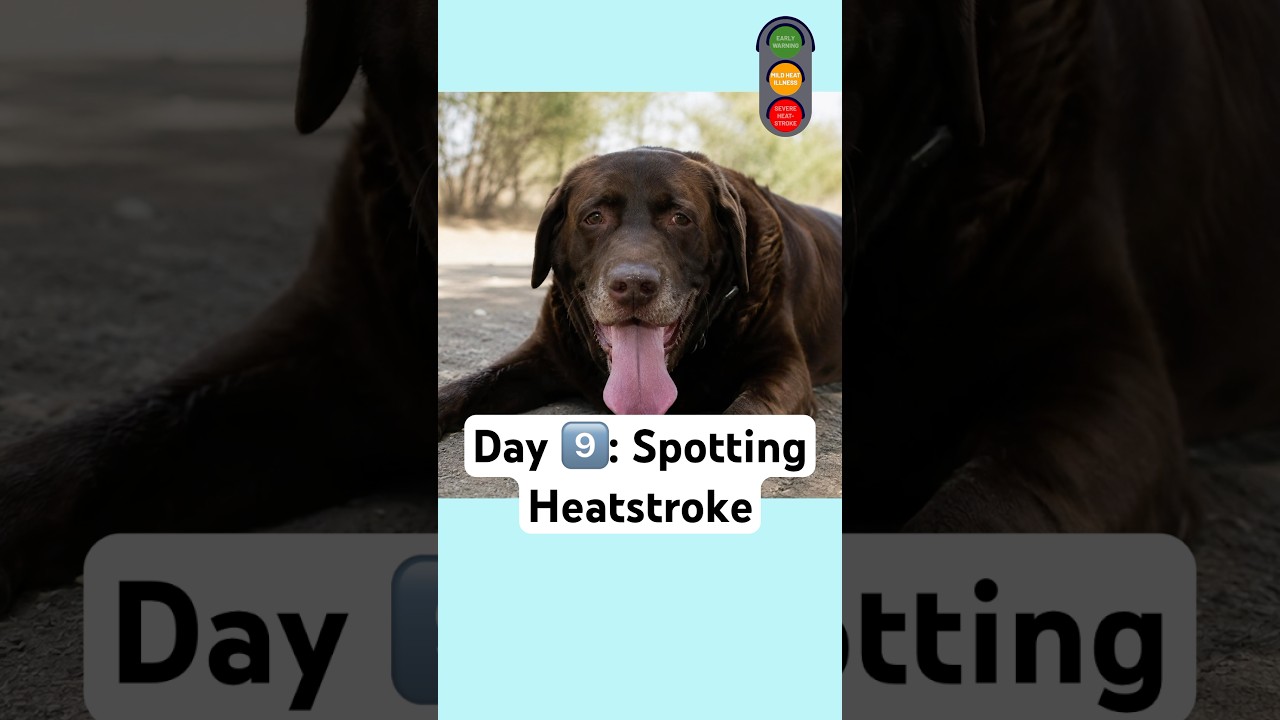
Max Randall breaks down heatstroke in dogs using a traffic-light system: green for early signs like heavy panting and seeking shade, amber for persistent panting and bright red gums, severe for pale or blue gums indicating shock. Survival rates drop from 97% in mild cases to 47% in severe ones, making early spotting critical.
Chapters
By the time most dog owners realize their dog has heatstroke, they've already had it for 20 minutes. 97% of dogs survive mild heatstroke, but only 47% of dogs survive severe heatstroke. So here is a traffic light system of how to spot the different grades of heatstroke. Hello, I'm Max Randall, and welcome to day 9 of the summer series, collecting a nugget of value each day until you can confidently lead your dog through summer., and here is everything you need to know about spotting heatstroke. And by the way, this traffic light system you can find in the Summer Series folder in the link in my bio, along with all the other materials that will be coming out in this series. So first we have green, which is just the early signs, basically the signs of quite a hot dog. You're going to have some heavy panting or that tongue curling back inwards, which is something we spoke about yesterday. You get a lot more drooling than usual. Your dog might start slowing down, seeking shade, lying flat on cool surfaces., and your dog can seem quite restless as well. And all you've got to do is just remove the dog, pop them in the shade, stop exercising the dog, and yeah, think about ways of cooling the dog down. If you don't know the proven best ways of cooling a dog down, tomorrow and the day after, that's exactly what we're going to be looking at. So don't worry, I've got you. Then we have amber. These are the mild signs of heat stroke. So what we're going to start looking at now is the panting just won't settle even after resting. If you look at your dog's gums and tongue and they're bright red, this is not a very good sign. We're going to start seeing excessive drooling as well. But then we have the more obvious ones: vomiting, diarrhea, glassy eyes, distant-looking eyes. And also, if you check in your dog's pits, you can feel for their heart rate. And if the heart rate is still racing after resting, this is when we definitely find the best and most effective way of cooling a dog down. Which is what we're talking about tomorrow, and you call your vet. But then we have the severe signs of heatstroke. Really obvious ones to look for are lifting up their gums again and seeing if they are pale or white or blue or gray. These are signs of shock. For those of you that don't know, heatstroke causes organ failure. It's quite shocking to the body when that happens. If your dog's gums go that color, you just take them to the vet no matter the situation anyway. But we have to cool the dog down first. And that is the official protocol: cool first, transport second. So how would we cool a dog down? I'll see you tomorrow morning.