My 'Training' Calmness in Dogs Talk at Dogfest

Max Randall argues you can't train calmness directly. Instead, address arousal and frustration through management, breed-specific enrichment, and 18-20 hours of daily sleep. A structured wind-down sequence from high-arousal activities like fetch to quiet environments with lavender and soft music helps dogs settle.
Chapters
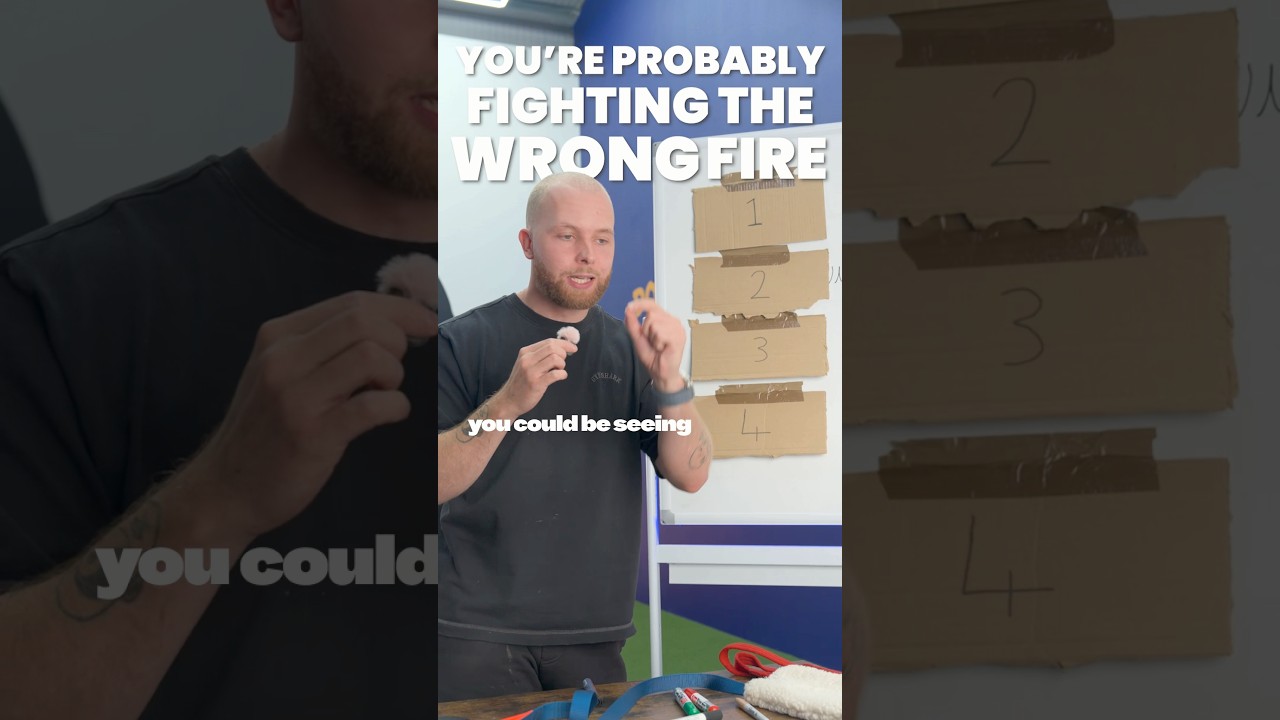
Anyone's got a bit of a hyperactive dog, a bit of a restless dog, maybe a bit of an impulsive dog, um, one that's maybe a little bit hard to train, get any focus, whatever it is, uh, we're going to be talking about it right now. I see a hyperactive poodle thing. Hello! We're talking about training calmness, so you might want to listen to this. Yes, amazing! I just saw this little fluffy thing bouncing around. So, um, training calmness. You can't do it. That was clickbait. Um, I said training calmness, so then they're like, what do you want to call this? I was like, call it training calmness because that will get people in the door. But you can't train calmness, and I'll explain why. We are going to be talking about how we achieve it, so don't worry. So, um, training is teaching a dog do this and don't do that. It can also help change the association with things. So we can train a calmer association with stuff. So you can train a dog to be calmer in certain situations. But, and it's a big but, if your dog is not hyperactive. So a lot of dogs are very aroused, or maybe they're very frustrated. That's kind of like 90% of dogs. Some dogs are just a bit stressed or anxious. Either way, the dog's in this state, you can try and do all the training you want. As you can see, it's not going to be a long-term solution. So really, if we want a dog to be calmer in certain situations, for the rest of their life, and if we want the dog to be calmer in general for the rest of their life, we can't just rely on training. And this is the same for everything. Like, if you're trying to train recall, for example, you can't just train recall. What if your dog is nuts? What if your dog is frustrated? Well, they're going to be obsessed with dogs, squirrels, smells. Same with loose lead walking. You can't just train a dog to walk next to you and then you live happily ever after with a dog next to you. What if your dog is frustrated, hyperactive, anxious, stressed? So when it comes to getting a calmer dog, actually what we're trying to achieve is a dog that's just okay. Now, I'm not saying your dogs are not okay, but a dog that's okay is a dog that is not hyperactive, frustrated, anxious, or stressed. So when we look at the behaviors that we're trying to get rid of, we're trying to train out of the dog, just remember that behaviors are the top of the iceberg. They're the bits that you see with your eyes. What we have to work on is the bit underneath. That make sense? Yes. So it's tackling the root cause of the issue. Training is putting a bandage over something that doesn't actually stop it. Okay, we actually need to heal the wound. So when we've got these dogs that are very hyperactive, I kind of mentioned it, 90% of the time dogs are either quite highly aroused or they are frustrated. Now this is what we're going to be talking mostly about in this talk. The other part, when we've got dogs that are quite stressed or anxious, it's a little bit more complicated, but I'll touch upon it. But I'm not going to be able to just transform your dog here in this talk. I really wish it was that easy. Uh, dog trainers on TikTok do make it look that way, but it doesn't work. Okay, so arousal and frustration. Arousal is what we're going to talk about right now because arousal is something that is going to affect you and your dog for the rest of their life. So it doesn't matter if your dog is 5 months old or 5 years old, it doesn't matter if they're well trained or not, it doesn't actually matter how much you walk them and stimulate them. Anything can spike your dog's arousal, and then their behavior has changed. So arousal is in us as well. It's called neural energy. It's got very different names, uh, but it's the same thing, and we've all experienced it. If we all went right now and we went and jumped into the, the cold water— where, I don't know where it's down there— if we all had like a cold shower, for example, or an ice bath, it wouldn't calm you down, would it? You jump in that cold water and you go, big breath, and then you're all hyped up. It hasn't given you fuel, it's increased your arousal. So it's like this short-term stress response. So a lot of the time the issue is, is that our dogs, their day-to-day life is just filled with loads of cold showers again and again and again. They are having things trigger them again and again and again. And the things that spike arousal are things that are either scary or very exciting. Noticeably anyway, everything increases arousal. When your dog wakes up, their arousal increases and so on. But when we're talking about things that start to affect their behaviour, it's the really exciting stuff and the really scary stuff. So let's say we've got a dog that is scared of traffic, and every single day we keep leaving the house and walking along the pavement and there's traffic. There's nothing we can do training-wise. As long as that dog is living that life, you're going to constantly be spiking their arousal, and you're going to have this constantly stressed dog. But it's the same for if, you know, we've got this really, really playful dog, which is great, but if we keep trying to keep this dog awake, we keep playing fetch— fetch is the most arousing thing. I'm not saying never play fetch again, but fetch is a game of chase, okay? You might be tiring the dog out physically, but you are spiking that arousal through the bloody roof. So we can't just play fetch and fetch and fetch and fetch and fetch. So as long as this dog is constantly having these cold showers every single day on walks at home, can we see how this just trigger stacks the dog and they get these really high level of arousal? Now can we see how we can't just train that dog to be calm? So training to be calm is impossible. Lifestyle is how we do it. So when it comes to arousal, yes, in the short term we've got to do management. Management is just basically avoiding these situations. If there are things that continuously trigger your dog and you can predict where they're going to be, well then we are going to try our best. I know it's not completely possible to completely avoid. We're going to try our best to limit that. Okay. If on the way to our walks the dog is scared of traffic, well, we just drive to our walks. Okay. Or we go at different times. We do enrichment at home instead. It's fine to skip a walk. This is the bit that a lot of people don't like to hear at first, but I'm going to explain why it's the best thing to do. If going out on a walk drives your dog absolutely nuts, well then, if our dog is already nuts, why do we then go on a walk? Because it doesn't matter if the walk is going to tire out your dog and stimulate them. If it's also driving them twice as crazy, can you see how as long as you keep going out on that walk, you're going to keep trigger stacking your dog even more? They're going to get more and more aroused. And for those of you that don't know, arousal is adrenaline, norepinephrine, and dopamine. You don't want these things surging through your dog's body. They're not trainable, they're impulsive, and they become very emotionally reactive dogs. So it's fine to skip a walk if your dog is already in this state of arousal, but this is why enrichment is so important. Because if we don't have proper work for our dog to do at home, well, then you become reliant on the walk. You can't really afford to skip a walk because you haven't got anything else to give the dog. So learning about breed-specific enrichment, proper mental enrichment, is really key. That's why my talk later on— I don't know where the board is, there's a board somewhere where there are the times— I'm doing a talk later on about breed-specific enrichment. I'll talk about the sausage dogs, the terriers especially. Name that dog. I can't name that dog. What's the name of that dog? Tibetan Terrier. Tibetan Terrier. Because I was, I was going to go like Sheepdog, but then I was like, wait, too small. Yeah, Tibetan Terrier. No matter your breeds, we're going to be talking about breed-specific enrichment because then you can afford to skip walks. But if you can't afford to skip walks and the walks are going to make your dog crazy, can you see how you're stuck in this loop now of just, well, we need to take the dog out, keeps making the dog crazy, oh well then we need to keep taking them out, but it keeps making them crazy, and then you're never going to get that dog that walks nice on a lead, has good recall, or can settle, or can be trained. So management, very, very important. Avoid the things that keep triggering your dog. If there are things that you're doing that are triggering your dog, like playing with them too much, keeping them awake, well then we minimize that. We replace that with some little searching games, okay? We can give the dog a little bit of rest. The more your dog sleeps, the more arousal drops. Our dog should be sleeping on average about 18 hours a day. Yes, it's a lot easier to achieve than you will think. When it comes to puppies, it's 20 hours a day. If we can't tire out a puppy, you're going to have a really hard time when they start hitting 1, 1.5 years old because they are going to be in their prime and they're going to be really hard to tire out. So this is yet again where enrichment is so important. The more your dog sleeps, the more arousal drops. So what ends up happening is it doesn't actually matter if your dog becomes quite highly aroused because your dog's going to sleep it off. My dogs, for 4 hours a day, we're out on walks. They are chasing squirrels, digging holes, screaming while they dig holes. They get so aroused, they have a fantastic time, but they are the chillest dogs you'll meet because they sleep for 20 hours a day. So sleep is how you get that dog of your dreams. There is no other way around it. That's why enrichment is the most important thing. And that's why I mentioned earlier, a big mistake people make is keeping their dog awake all the time with play. We can't do that. We have to have them resting. So management Amazing. Achieving as much sleep as we can. Amazing. That's a skill in itself, which I'm going to spend 5 minutes talking about. So there's 2 things that we need for our dog to fall asleep. Number 1 is very obvious: they need to actually be tired. So we, we need to have actually met their needs, physically tired them out, mentally tired them out, and relieve their frustration. So enrichment. And the dog needs to be not highly aroused. 'Cause even if your dog is exhausted, we've all seen this, they can still be bouncing off the walls because they're over-aroused. So if we can achieve a dog, so let's say we want the dog to be asleep at 11 o'clock, 'cause that's when I'm gonna start work. So if at 11 o'clock in the morning we get this dog that is tired and their arousal is relatively low, they're gonna fall asleep. If we've missed any of those, like they're calm but they're not tired, or they are tired but they're really hyperactive, they're not gonna sleep at 11 o'clock, and now you've just got this really annoying dog pestering you. So the, the journey before then is the really nice little skill to learn. So we're going to start with the most arousing thing in our dog's life. I'm going to use this terrier as an example. If I had this little Border Terrier, every single day I would be getting bite sleeves, I'm getting bite toys, I'd be letting this dog use that mouth how he wants to use it, just destroy— boy, girl, girl— I'll be letting her just destroy stuff, bite stuff, being a little terrier. I do that stuff first. I maybe I'll do it on my walks. So it's start arousing, but making the dog feel fantastic. And you can incorporate your training with it. It's a really nice little thing to do. So we've aroused the dog, but we've made them feel good. Then what you do is you go to step number 2. I'll do some searching games with this dog, whether that's just scattering the dog's breakfast in the morning or whether we actually do some proper searching games around the house. So this is still exhausting. The dog is using their nose. Mentally exhausting the dog, but it's not as arousing. So can you see how we're still tiring the dog out, but we're slowly doing something less and less arousing? And then what we can do is we can give the dog something that's not that stimulating, but it is calming. So some sort of licking activity, a Kong, a bone. And then what we can do, it gets to about 11 o'clock, and then we can simply just shut the curtains, maybe spray some lavender water, You know, we can give the dog a nice little bit of bed, maybe some music, and this is our little sleep protocol. So that's how we should always plan out our enrichment or anything that we're doing, whether it's walks or whatever. Start with the crazy thing, and we slowly, slowly get calmer and calmer, and then we get to the time when the dog falls asleep and we've tired them out and we've dropped the arousal. And that's just how you structure your days for the rest of their life, really, because you need to do the really fun stuff That's the stuff that makes your dog feel great. You know, the, the— all the poodles around here, I'd be doing searching games all the time. I'd be doing retrieving stuff all the time. It would absolutely blow their socks off. They'd love it. You know, I'd work that dog's ass off. So we just do that, gets that time ready for sleep. More the dog sleeps, the calmer they'll be. That's, to be honest, top priority is sleep, sleep, sleep. So when it comes to dogs that are frustrated This is what my talk later on is going to be all about, because the way you alleviate frustration is by doing breed-specific enrichment. If your dog is not doing the stuff they're bred for, you have a very frustrated dog. So you have these retrieving dogs that are stealing socks around the house. You've got terriers that are chewing things and destroying things. You've got herding dogs that are chasing cars. You've got sausage dogs that bark all the time. I've got a sausage dog at home. I mean, she's 13, she still barks, but who, you know, Um, and when you give the dog the thing they're made for, that's how you relieve frustration. Until your dog does the thing they're made for, you just have a frustrated dog. That is just life, unfortunately. When it comes to a walk, when we look at our walks, this is a nice little reality check. Let's say you're going to your field, okay, and you've got a retrieving dog, some sort of Spaniel, Labrador, Poodle, or any sort of crosses in between. Can we see how there's not really anything for the dog to do? Where's the searching? Where's the retrieving? Can we see how some dogs, when they're put in that environment and let off the lead, they'll see a dog as like the best thing on this planet, or they'll see a deer as the best thing on this planet, and your dog is obsessed and gone? So we need to make the walks benefit the dog. Otherwise we're letting them off the lead and going, just find the best thing that you can find, and you get these obsessive crazy dogs. So terriers, it's a little bit easier, I suppose, because you can go to a woodlands, they can dig some holes, they can follow some smells. But I'd still recommend taking stuff out on that walk as well, really make that walk benefit the dog. And also, you will all end up loving your dogs 10 times more because all of a sudden you don't go out and just do a lap around a field scrolling on TikTok. You go out and you are just doing adventures with your dog. You're working your dog, you're playing with your dog, and it is absolutely fantastic. You'll start to look forward to the walks. And doing it in the rain is absolutely fantastic. So we've got management, avoiding all these cold showers. As long as there's cold showers throughout your dog's day, there's nothing we can do with enrichment or training that will calm the dog down. So showers, we need to avoid them and then work on them from a distance. Let's say your dog is scared of dogs, that is a separate issue, but we would work on watching dogs from a distance and getting used to these dogs, used to the environments, going outside, having a nice time, getting the dog feeling comfortable. Then there is skipping a walk when you need to skip a walk. Also skipping bits of enrichment when you need to skip enrichment. If your dog is already eyes like flying saucers bouncing off the walls, maybe we don't do half an hour of tug toys and searching games. We'd swap it for something else. Very simple. Then there is actual enrichment. We need to make the dogs feel good, relieve all the frustration. That's what the talk later is going to be about. We're going to go really into breed-specific enrichment. But if you're not going to be here for it, look it up on the internet. Give your dog what they need to be bred for. If you want, like, if you're not going to be here and you want a whole course on your breed, I have a website called mtnineplus.com. It's on my t-shirt. 240 lessons, 80 hours of content, community page, live streams, everything. There's whole breed-specific stuff. There's a give your dog a job lesson. There's even stuff with my sausage dog. Um, loads of stuff on there, but we'll be talking about it later if you want to come and join. Um, management. Yes. And then this was the sleep protocol. Learning how to just structure your days, tire them out, gradually get them calmer, and then get them sleeping. If you can, if you can manage to avoid triggers and learn to get used to them as well, know when to skip walks, give your dog breed-specific outlets, and— oh my God, what was here? Sleep and get your dog sleeping. This is how you get that calmer dog. Now we're not looking for a calm dog because calm dogs are boring. No one likes a calm dog. I know you all really want a calm dog, but trust me, they're really boring. We want a dog that's fun, so we don't want a dog that is adrenaline through the roof. That dog's stressed, that dog's dealing with some stuff. That dog's untrainable. We want a quote-unquote normal dog. Sleep, making them feel good, is how you do it. It's very simple. That is literally the end of the talk. That's all you need to do. I'm not overcomplicating it. Now, I'm really happy to do 10 more minutes of Q&A if anyone's got any questions. It can be on topic, but it doesn't have to be on topic if you have any other questions. But when it comes to just getting a dog that's okay, lifestyle is how you do it. More sleep, breed-specific enrichment, just knowing what to do and when. Bottom line. Now, does anybody have any questions? Yes. So we've got a dog that sleeps quite well, but when you get up, they have to follow you. But they are barking at things that go past the window. They do bark at noises in the garden, and they do bark at stuff sometimes out on walks. So we could have a dog that's a bit anxious, um, Can have a dog's a bit stressed. Uh, so yet again, what we've just learned about will help. So when we've got these dogs that are barking at things that go past the window, that's a cold shower. We've got dogs that are barking things in the garden, that's another cold shower. That when we've got dogs that go outside and bark at things, that's another cold shower. You might find even when there's no dogs around, just going to those same environments where the dog knows they keep seeing dogs, just entering that field, cold shower. Dog's already aroused. So we already can implement some management. So I'd get like a semi-see-through thing on your window. I would maybe think about changing your walks, going out there doing enrichment rather than just letting the dog off lead. Just having the— let the dog— okay, that's fine. Yeah, so keep the dog on a long line so the dog runs away. Okay. Yeah, so, so we could have quite a frustrated dog. So enrichment I think would be key, uh, because also the following you around stuff, sometimes it can be like an anxious attachment, but a lot of the time it's not. A lot of time it's like separation distress. You've got a dog that's actually lying down and resting, but they're not really fast asleep, and when there's something going on, they just get FOMO, they're interested. And that's actually where a lot of the reactivity at home comes from. There's a lot of time people think they're scared, but it's just a behavior that they've developed over time from frustration. They just sit there, they're awake, they just wait and watch stuff. Bark, this feels good. Bark, this feels good. Go outside. Bark, this feels good. And it all becomes a routine. So we could have a frustrated dog that's quite highly aroused, and for that, this type of stuff would help. Obviously, a lot of stuff on how to do that, you can check out the website. But if you've got a bit of an anxious dog, same thing. So anxiety is solved through lifestyle. Anxiety is left— is stress that got left. So when your dogs are really highly aroused, when they are quite stressed and frustrated, if we give it 12 months, you'll have an anxious dog that barks at everything. So solving it is still lifestyle. There are studies done on dogs in shelters, pet dogs as well, and they find when you limit the stimulation these dogs get, they all become reactive. There's increased amounts of fearfulness, anxiety, and aggression because the dogs aren't walked enough, they aren't enriched enough. So enrichment for sure. Make the dog feel good at home with enrichment. Make the dog feel good outside with enrichment. But work on your management. If there are certain environments that start stressing the dog out Find some new environments for the short term, and then what you do is you trial the dog at the end of the walk. Right, we're going to go to that place we used to go to. We're going to go there, we're going to have a nice time for 5 minutes, then we're going to get back in the car and go home. And then with— as the weeks go on, you build up and up and up, and now this dog turns up and goes, oh, I like this place. We have, we have a nice time here, and then we go home. So it gets them used to that environment. But management is key. I wouldn't worry about the following you around the house bit. I mean Don't worry about that. If she was exhausted, uh, and not frustrated, she'll stop following around. Yeah, so definitely, um, definitely work on, uh, the enrichment, the management, and don't worry too much about the rest then if she's sleeping fine. Yeah. Questions? No? Everyone else? Everyone's dog is perfect? You've literally got no problems ever? Nothing? Yes. Yeah. Okay. Okay. Yeah. So you let the dog off the lead in the park, they're all right for a bit, and then they kind of just start going. Yeah. So that park you go to, is that the only place you walk the dog? Uh, the main one. Yeah, so a lot of time when dogs grow up going on walks around parks, a lot of those dogs become dog obsessed because, especially for a terrier, where's the holes, where's the squirrels, where's the smells? Like, if there's not like stuff to do, dogs is like this gold mine. So the more this dog practices this, we'll just create a dog obsessed dog. They'll enter that field and go, where are the dogs? Because the dog knows this is actually the only bit of enrichment here. Yeah, so, so if, if all you have access to are fields and parks, take stuff out for your dog to do. Otherwise they become obsessed with any tiny little change. And also, if you don't have the possibility to have 5, 6 different walks that you kind of just randomize, then even more, take enrichment out. Because even if you're going to the woodlands every day, a lot of time dogs are like, well, I've been here, I was here 6 hours ago, I was here twice yesterday and the day before and the day before the day before. And for months I've done this exact same route, they are not gonna be sniffing around and mooching and staying close. They are gonna be exploring and they wanna find something new. And when a deer pops up, they're like, "Yes, please." So if the environment isn't changing, we need to take stuff out and make it better. But also they are a puppy, so don't worry too much. That's fine. Yeah, but yeah, tug toy, brilliant. But like when you wanna get a dog interested in toys, play with them like they're a cat. So don't just like present this toy and start doing this. I want you to do something called the baby bird technique. So you can get like a rag, tie a knot in it, and this is for any breed of dog this will work on. And you hold it like a baby bird and you kind of tease the dog. You go, oh, this isn't for you. And the dog will be like, what's he got in his hands? And you're like, no, no, no, no, no. And then just as time— I want this to last like 5 minutes of teasing the dog. And you, as the 5 minutes goes, you're just kind of like showing them more. And then you kind of like put it on the floor and they're like, no, no, this isn't for you. And it will frustrate that dog. And they want to know what's in your hand. And then you basically, you flick it out and they go for it, and then you go, oh yeah, you know, that's good. Yeah, you know, maybe you can do that, maybe you can do that. You just talk to this dog and this dog wants that toy, and that's how you build that drive for that toy. But you'll, you, you'll be able to do that for a tennis ball, and then what you'll be able to use, start like bouncing it and the dog wants it, and then you can reward them, you know, for bringing it back with a tug toy, and you can turn into a nice little training session. But then that can be your recall. Imagine at the end of your recall is a tug toy rather than a piece of food. And the thing with recall is don't make— don't have your dog over there and call them and then call them and then call them. A terrier doesn't want to do a job for you. They're not bred for it. So when you're training recall, remove the distance. Just say the word, tug toy comes out. Say the word, ball comes out. If that word means this instant release of free, instant predatory behaviors, that word is going to be an absolute gold mine for the dog. And then that one time on a walk, they're over there, you say it and they go and then they come running. Yeah, but yeah, um, yeah, but how, how many, how much are you out with the dog? How many hours a day? If we want our dog sleeping like 18 to 20 hours a day, we need a good like 3-ish to 4-ish hours of stuff for the dog to do. So that's why enrichment at home is just fantastic. No, not spread out. Yeah, in one period, just like how I structured it there. So if our walks are maybe the most arousing thing We'll do our walks, we'll have some fun time there, we'll come home, and then we'll do some more stuff maybe with the dog. But then you can do some searching stuff, and then maybe if you've got some work to start doing, well then maybe we'll get some food and we'll set up some enrichment. So we can get some food on the floor, put a towel on it, food on the floor, towel on it, food on the floor, towel on it. You got 4 layers of food, 4 towels, and that will take your dog 20 to 25 minutes to sniff through and everything, because as they move it, it folds on each other. And it's— and you can use tiny amounts of food. And it's a really long searching activity. Um, but that website there, whole enrichment series. There's a scent detection course. There's also stuff with bike toys if you want to just know how to use all that stuff. Um, but yeah, we can't just— yeah, we— because— sorry, I will get to you in a minute, don't worry. The, the reason why I asked about the walks, which is important for everyone, is because even if your walks are the most enriching things for the dog, if we're doing 2 hours of it in a day Can you see how if there's nothing else, we're training that dog to just empty the tank in that 2 hours? We're training the dog and showing them you've got a 2-hour window to get everything in life. So we're showing the dog, mate, when you're out on this walk, send it. So, so like giving them a bigger window of opportunity by giving stuff at home, it allows the dog— they don't feel pressured to try and get everything on the walk. And that's a dog that will walk a little bit slower, stay a bit closer, listen better. So stuff at home is just a cheat code. Hello. You got a jumper? Yes. Puppy? 9 months. That's it. Just 9 months. That's it. Oh, what, stealing things or jumping up at people? Same thing we've spoken about. A lot of that when it comes to dogs that have like a jumping up problem, 99.9% of those dogs are also, they tend to be quite excitable dogs. So when it comes to things like mouthing, jumping, any sort of, uh, behavior where a dog is trying to achieve something, it's all communication. So the problem is never the behavior. Remember what I said about the iceberg? It's the root cause of it. So why does the dog have this desperation for attention? Why are they so excited for people? Why do they need to see stuff out the window? Is the dog maybe a bit frustrated? Is the dog maybe a bit restless? Is the dog maybe a bit aroused? And these are things that are going to be fueling it because every dog wants to say hi. But when your dog is wanting to say hi and hyperactive, they're going to jump for it. They're less patient, you know. So like my dog Enzo, he's like, he's about this tall, big gangly sighthound thing. When I come home, I have to hype him up to get him to— I love it when my dog jumps up, so I encourage it. But if he's not hyperactive, he don't want to jump up. Whereas when I have some hyperactive, no matter the age of the dog, when they're over, they'll jump any day. They're like, yeah, I'll jump for you, I'll do it. So number one, they're a puppy, so don't expect anything to be going perfect for another year and a half. Um, 2 years old, 2 years old, things will start going smoothly. Um, but also, yeah, hyperactivity. Maybe the hour leading up to this has been a bit overwhelming, so they've become quite aroused. Or maybe today they haven't quite had their needs met. They're a bit frustrated, so they want to see what's out the window. They want to go out into the garden. They're going to be pulling, they're going to be excited when they see someone. So lifestyle is, is always everything because that's what makes the dog, and the way the dog feels is what decides how they behave. One other thing I would suggest, which is training-based, is just a little bit of desensitisation to people. So make people part of the dog's life on a regular basis without triggering them. So on your walks, find a place where there's some traffic of people and just sit down with your dog. Scatter some food on the floor, chill there for 5 minutes. They can look up and see the people in the distance, go back to sniffing. And as the weeks go on, we just move closer and closer, which raises the criteria. We go to busier places and you can start building to going downtown every day, start going around clothes shops. Just make people these things now, which are just background. But right now, if the only people they're really seeing are like visitors or people on walks occasionally, it's paired with this association of like, oh my God, there's a person and they probably have a dog and they're probably going to be approaching me. Oh my God, this is brilliant. Whereas if we can just make people this thing all the time, they're going to see a person and go, it's just another person. So associations is always everything. But even then, it's hard to achieve that if the dog is still like bonkers. So it's— they're both just as important as each other. That makes sense. Amazing. So thank you very much, everyone. And you don't have to clap, it's alright. People, people, people do normally clap. Oh, thanks. I hate the attention. So yes, I'll see you guys.
More from Max




Both were trainers. Both knew more than I did at the time. I did everything they told me

Nobody applies for this job. Thousands of you are already working it. Day 3 of Below the Surface.
Everything my career taught me, handed over in the next 60 days.Day 1 of Below the Surface.
