$100M Entrepreneur Reveals How to Make Anyone Buy Effortlessly
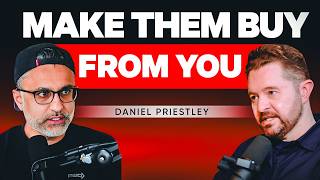
Daniel Priestley explains how creators can build wealth by moving through a predictable path: concept, audience, offer, sales. He breaks down concrete sales triggers like emotion and urgency, and argues that AI is splitting people into hyper-consumers and hyper-creators.
People, in order to buy something, they need three big triggers. There's the emotional trigger, the logical trigger, and the urgency trigger.
When you think about becoming a millionaire, why do people feel like it's so far fetched for them?
People think that the way that you become a millionaire is that you become super disciplined. You earn a million dollars a year, but then you only spend 25,000 a year and you become this super disciplined person. And that's not true either.
What is the truth like? It's not by saving, it's by creating things.
The economy exists to keep money moving. So the truth is that the economy is not fixed. It's a pie that can expand.
I'm really worried about all this AI stuff because I know there's two camps. What do we say to these people who are scared?
There's one thing that you can do about it that is almost a foolproof. Works every time.
Guys, I'm so excited to have the money making expert. My friend Daniel Priestley on the podcast today, he just flew into Vegas and we're doing this on the fly. Thanks for being here by the way.
It's funny, that money making expert thing. Yes. So I'll tell you where that comes from. I was on Diary of a CEO and I said, they said, what are you. And I said, I'm an entrepreneur. And they always look at like, how do you explain something to like a mass market?
Yeah.
And they're like, well, what, what would, what would a 10 year old call an entrepreneur? And they put it into chat, gbt. And they said a money making expert.
Yeah. I, I think of you that way. I didn't even know that they called you that. I just think of you that way because you've built businesses.
Yeah.
And they make millions of dollars. You also have mentored hundreds of other business. Probably I think it was 3,500 plus.
I'll take it. I don't mind. I'll take it.
So they all do the same thing, which is start at one spot and then they're making way more money.
Yeah. I've had seven startups that went zero to a million in their first 12 months. And I've had three that went north of 10 million.
And then you're currently operating these business. Some of these right now.
Yeah. Those are separate. Yes. So I like. Right now the two main businesses is ScoreApp. So squareup.com is a software business. It's a marketing software for creating online quizzes, assessments, surveys. And that is, that's a, that's one of the fastest Growing companies in the UK.
Y.
We have customers in 150 countries and yeah, it's, it's getting, getting up there.
So we were just talking about this in the car right over here. We're talking about this bifurcation right now in the. Where there's a group of people who are making a lot of money.
Yeah. Society.
They're spending money. We were talking about tariffs and they're like, they don't even care about the tariffs.
They're just.
They'll buy it.
They'll buy luxury goods. They'll buy them.
Yes. And then there's other group of people who are feeling overwhelmed, lost. They have lack. I would say the biggest group of people I talk to in entrepreneurship or even in my industry, they have a lack of clarity. They just don't know what to do next. They feel a bit lost. And I feel like it's either you're going to be in one category or the other. There's not going to be an average.
Middle society is going to split into in a really big way. Even people who are feeling a bit lost tells me that at least they're searching. Yeah. The vast majority of people don't even know what's happening. Yeah. So if you take AI has two superpowers. Superpower number one is the power to distract, to turn you into a hyper consumer. So if you think about the ultimate example is TikTok, once that is on your phone, you have got an algorithm that absolutely knows how to capture your attention and hold it way longer than you intended. So it's AI defeating your ability to say no to the next video. So that essentially if your time has a value that's eating up your value every single day and it's eroding your mind and it's eroding your value. And AI is doing that to you. And you shouldn't blame yourself because there's not a single chess master who can beat an AI at chess. So why would you think that any human being could beat an AI at having self control when that. When the AI is built to beat your self control. And then the second group of people are people who are using AI to hyper create and the hyper creators. So a typical example today, and I see this all the time, we're only two or three years into this AI revolution for most people. But I'm seeing people who are writing a book or organizing a festival. They've got a mastermind, they've got two or three businesses on the go. They've got a property portfolio.
Yeah.
And it's like, how are you doing all that stuff? It's like, oh, well, I just outsource it to AI and like I use AI to do the contracts and I use AI to write the emails and AI is helping me with this and I've got a team of 10 people and they're all using AI. So there's the hyper creators and the hyper consumers and society is just going to divide. We are going to have kings and serfs.
Yeah, it's pretty, I mean it's, it's a great time and it's also a scary time if you're not in that category. And so the goal with our conversation today and with the people who watch our show is like, how do we become millionaires? How do we use this technology and become a creator and build a personal brand so that we can be in that category? You call it kings, right?
Yeah.
Kings are serfs. We don't want to be serfs.
We do not want to be surfs.
Yeah. So when you think about this, why do people, like, when you think about becoming a millionaire, why do people feel like it's so far fetched for them, like the average person? Because once you've done it and you've done it many times over and you've advised so many people, it's almost like second nature. Like we're like, it's no big deal, but when I'm talking to somebody who's not there, they're like, oh my gosh, you know.
Yeah. Well, it's because the whole of society is set up for you to not keep any money. Like, of course it's hard. Yeah. The economy exists to keep money moving. If the money stops, they tax it. If the money stops, they penalize you. So what, what happens is that you. Let's imagine that the economy is like a circle and it's a whirlpool and it's spinning around and spinning around and spinning around. And you can either earn money or take out debt. And essentially you earn money, you take out debt, but then it goes towards stuff and you just kind of find yourself in this whirlpool and, and you got to remember like, everything in society is built so that you don't retain anything. Yeah. You got to get rid of it, spend it all. Yeah. It's like this game of musical chairs. You know, you just, this is what.
People tell me all the time. Like the money comes in and it goes out comes and we've all been, we've all been at a point in our life where that was the case.
And then people think that the way that you become a millionaire is that you become super disciplined and that you just, you know, you, you, you earn a million dollars a year, but then you only spend 25, 000 a year and you become this super disciplined person. And that's not true either. And, and people look around and they can see that's not what's happening either. But then they don't know what's actually really going on.
So what is the truth? Like, it's not by saving, it's by, it's be. It's by creating things.
Yeah, it's by creating things. So the truth is that the economy is not fixed. It's a pie that can expand. So what is really going on is that some people invent things and create things and they bring those new things into the economy and it's the act of creation, being a creator, that actually makes you a millionaire. So it's being a creative force. So in very practical terms, you might start a company and let's say you start a drinks business, right? And you invent a new drink and you invent a new can and a brand and all this sort of stuff, as you're inventing it, as you're creating it, that business starts to look like it's going to have a big future. And as it looks like it has a big future, some investors come along and they say, hey, we'll give you a million dollars for 10%. Yeah. Okay, great. So now that business has a million dollars, people are putting money into this thing and then it's valued at 10 million. So the original founders, they've got 9 million of net worth, and then they use that million to introduce their, their, their ideas into the real economy and to create something new and to bring something new to existence, and then it starts working. So then some more people say, oh, actually we'll give you 3 million for another 10%. Yeah. Now it's worth 30 million, right?
Yeah. And it keeps scaling from there.
Right. So then it, then it goes up. Now you've brought something into the economy, and then one day a big company comes along and says, hey, we'll buy the whole company for 50 million. And then everyone gets cashed out and you get a liquidity event. So as long as you're creating new things, that, and bringing new things into the economy, that's actually the easiest and fastest and most fun way to make a lot of money. Yeah.
And so for the average person who's thinking, overwhelmed of like, hey, I can't create a drinks brand, I can't create a new clothing wear brand. But I don't think it's that far fetched. Like what would be the blueprint? I guess the path that someone would take whether they're in a current business model and they just want to make more money or whether they're just starting from scratch. Because that's where I think the people get confused and they get stuck in that consumer model.
So the entrepreneurial path is actually really predictable. We get used to seeing airplanes flying around and we forget that for a long time airplanes were the most dangerous things in the world. And then we figured out exactly how they fly and we figured out exactly the checklist to make sure a plane takes off and lands safely. It's the same with entrepreneurship. Entrepreneurship is a straight and narrow path. There is like a very, very narrow path that works and everything that's off that path probably won't work. But if you stick to that narrow path, it definitely works. In the same way. Airplanes, if they stick to their pre flight checklists, then they'll probably be safe. And if they just start making it up, then they'll probably crash. So you have to stick to this narrow path. So there's these stages that you go through and if you go through those stages, then you, you can do, do well. So the first phase we call the chaos phase, chaos is concept audience, offer sales. So coming up with an idea as a concept, right? Figuring out whether it's going to be a great concept or not, running experiments and doing tests, doing surveys, collecting data audiences, figuring out which type of audience sees the most value in what you do and which is the most lucrative, most valuable audience, who's got the biggest unmet need. Offer is constructing different types of offers, different ways of charging for it, different revenue models, and figuring out which one is going to be the best offer. And then sales is how are you actually going to make sales and have a repeatable sales process. So if you can do the first four things, concept audience, offer sales, that is essentially your first four steps into entrepreneurship. And that should get you into the six figures of revenue. And realistically, that's the only four things you have to worry about in the early days.
And then how do you get from the six figures to the seven figures or multiple seven figures.
So there's a couple of things that have to happen. You got to scale your technology, you've got to scale your team, but ultimately the fastest way to go from six to seven figures is to establish a front person for the business who is going to be known as the key person of influence. And that person is going to be the driving force. And they're also going to be the, the person who opens up opportunities, who communicates the brand message, who enrolls new people onto the team, who enrolls talented people to come in and build the technology. So you got to establish the founder as a key person of influence. So that founder has to play their role. A lot of people like, oh, I want to be, I want to be out of the business or I don't want the business reliant on me. That's a recipe for disaster. Yeah. Right. Many years from now it may not be reliant on you, but in the, as you're growing, of course it's reliant on you. Of course you're the founder of the business.
Yeah. And we'll come back to, you know, how do you come up with that offer and, and start those beginning steps? But just really quick on that last point, I was at a business workshop recently with Alex Hormozi and he was teaching people his model, which was the same thing. He was that key person of influence for, for the, for the company. And him and his wife, they built it, they attracted a bunch of people and then they went to go sell it and they found out it was worthless because it all relied on him.
Yeah.
And so he had to transition past that. But when he transitioned past that, that was after was already very successful. They were doing a lot of sales, I think, you know, tens of millions of dollars.
Yes.
And it then at that point he moved himself out of that role.
It's kind of like, you know, if you want to drive a car down the highway, you have to get the car started in first gear and then second gear and then third gear.
Yeah.
By the time you get into the highway, you're on fourth gear or fifth gear. That's, you know, you can't compare. When you're trying to get a car going and you're in first and second gear, you can't look at what someone who's in fifth gear is doing. Yeah.
And that's a common mistake I see people make. They'll look at people where they are today and they want to replicate that, but you have to look at what they were doing in the beginning.
Yes.
And that's the key with, with personal brand and also with business.
Exactly. Take a look at all the big brands. They were very founder driven at the beginning. Like Ferrari. The best brand in the world was Mr. Ferrari. Fender guitars. Was, was Mr. Fender. So all of these, you know, Walt Disney was, was like a huge driving force. Disney's now a big faceless brand, but it was Walt Disney who got it there. So all of these brands that take off, there's this period of time where the founder is the one pushing it into existence. Bringing. It's like, it's also like raising kids. You know, there's a time in the kid's life where you are shaping and steering their lives and you're having a huge influence, and then there's a time where they have a life of their own.
So quick question for you. Are you going to make the same amount of income this year as you made last year? If so, cool. But if you're not okay with that, I want to personally invite you to the number one event where people want to grow their business with modern marketing. It's the fifth annual Forward event, happening live in Las Vegas this July. The one thing that separates Forward from every other event is the energy in this room. This year, I'm bringing in top speakers, speakers from all around the country, people like Dan Martell, who has the fastest growing personal brand in business right now, Chris Doe, who's the number one teacher on this topic, and a host of other experts. So if you are serious about growing your business in 2025, I would love to see you there. We are down to the last group of tickets. This event sells out every year, and this year it's happening faster than ever before. So there's a special offer. You can click the link in the description or scan this QR code and I will see you in Las Vegas.
Yeah.
And so I think, yeah, starting back to that part, which is where I'm at and so many other people are at in this group, is like, okay, we're starting off as that, trying to be that key personal influence, building our brands. Some people are further along than others, but you, you want to increase your sales. Like, you want to bring in more business. So if you have a current offer, it's improving that. But then if you don't have one, what are the steps you go through in this beginning formation phase to come up with, like, what do I sell? Because I know you talk a lot about, like, surveying people and not guessing, just asking people. Right. And then you can find out the data and then make a decision.
Yeah. Also it's a very specific way that you need to ask. So when you're coming up with a really good offer, really good idea, you can't ask people, would you do this? Because there's a chance they'll just be polite and say yes. And people can't respond to something if they can't see it. Right. So they may have a very different picture in their head to what you have in your head. So what you want to do is you want to set up a landing page that is a waiting list. You want to set up a landing page that is an online survey or you want to do an introduction event and you want to sell it as if you're selling it. Okay.
So this is what like you call like an MVP sometimes.
Yeah. Minimum viable product. And you're trying to get a reaction that would be a real reaction from someone. So you want, you're trying to like. It's great. With AI these days, you can create a landing page, images and all this sort of stuff. Yeah. We really encourage people to set up waiting lists. You know, it's good to have 10 ideas and to set up three waiting lists and to see which one works to. Also, sometimes you can really surprise yourself with a gold, silver, bronze offer, you know?
Yeah. Could you break that down? Like, what would that be?
Well, let's say you're thinking about being a cyber security expert and you think, oh, yeah, I know a lot of small businesses. I'm just going to see if I can pick, pitch this to small businesses and I'll make it three grand a year. And then you think to yourself, well, why don't I do a. Like, why don't I make that bronze? We do bigger businesses, silver and then like much bigger businesses, gold and like corporates, platinum, and make sure that we just make sure that that's all available, that people can see we can do all of that. And sometimes you'd be really surprised. You go to market with something for three grand and people are choosing the six or the nine grand offer. Yeah.
And there's something, there's a strategy about showing people the three options. Right. And then picking the one in the middle.
Yeah. Especially in the early days, you, you really have no idea what people are going to, what, what people are going to respond to. The other thing that is interesting is that different markets will see your value differently. So if we take a couple's therapist, a single person sees no value in a couple's therapist. A person who is in a honeymoon phase of their wedding, of their marriage, sees little value. And someone who's like facing a divorce and they've got all these assets and it's all breaking down, sees a massive value. And, you know, so one person would might pay $100 a session. Other person might pay 50 grand a year if it works.
Yeah. That's crazy. And then you think about.
And it doesn't. The same stuff. It's exactly the same.
Yeah. And so I think a lot of people, um, when they think about charging more, doing more, serving different audiences, they think that, you know, that it's more complicated than it actually is. And so if people. Something like I've heard you talk about with certain businesses, one thing that they would just need to do is just charge more. Or like, you want to work, you want to make more money. Work with wealthier clients.
Yeah. Work, change the client.
Yeah.
There's two ways to charge more. The first way is to create demand and supply imbalance. So demand and supply imbalance basically means that there are 500 people who want this and there's only 50 who can have it. Yeah. Right. So. And the real trick to this is transparency of demand and supply. So transparency of demand and supplies, the market can see that there's more buyers than sellers.
Yeah.
Right. So if ever you've gone to a restaurant and there's people queuing up out the front, you go, oh, that must be a really good restaurant.
So when does this, like, you think about the scarcity. That's the reason that people buy the product and pay more for the product or service. Yeah, but. And I noticed that you can dis. If you can show them the scarcity.
That's great transparency.
Yeah, but sometimes your people are showing it and the. The consumer is now, in 2025, getting a bit, like, skeptical. Is this real? Like, because you've all been to the one where they did have the queue outside, but then inside it was half empty, you know, and so I believe, like, the scarcity needs to be real. Like, you have to back it up.
Yeah. So you have to manufacture genuine demand and supply imbalance. It has to get to the point where you genuinely can turn people away if they're not happy, if they're not. If they don't want to, go ahead. So if someone says, hey, look, you know, I'm really disappointed that I have to wait for three months to become a client. You say, hey, look, I understand that, and I can recommend someone to you who can work with you straight away. I protect the experience for my clients. And at the moment I've got 12 clients, and 12 clients is all I can have at any given time. It'll be about three months before I can take on as a client. And if I have to miss out, I have to miss Out. The other thing that happens here is that when you build an audience, there's three categories within an audience. Imagine audience is a bit of a pyramid. So at the very top, you've got the top 1%, which is called the luxury market. And the luxury market have 15% of the available budget to spend of the total audience. So 1% have 15% of the money, then you've got the next 9% and they've got 45% of the budget. And we call this the niche market. And then there's the 90%, and collectively they have 40% of the budget. Now, if you actually kind of crunch it out, if you were to take, say, a business coach and the business coach is in front of 100 people, one person would say, I'd spend 15 grand for that business coach. Nine people would say, I'd spend five grand each for that business coach. And the rest of the 90 people would say, I spend 445 for the same coach for that coach. Yeah, that's the price mindset. So when you get a large audience, what actually starts to happen is that you end up with a critical mass of people who are in the luxury or the niche market. So the mass market tends to shop on price, and the market, the top 10%, tend to shop on value. So they'll pay more if it represents value. Yeah, right. Whereas the bottom percent, they shop based on their budget, which is fine. But if you're a business and you want to go up to that niche market or luxury market, that's. That's where 60% of the total available spend is.
So this is like the new model in terms of when you're building your offer in your business. The reason why you and I both talk about being a key person of influence and doing this is because that's how you develop this whole triangle like this, this audience, which becomes so viable or becomes so valuable. Because now it's like the cream rise to the crop to the top.
That's it. And you do need to have some sort of filtering mechanism that allows you to see which category people are in. So there's this thing called segmenting your list or segmenting your audience. You have to have a way of doing segmenting. So one of the best ways that we do this is we get people to fill in online questionnaires. And an online assessment or an online questionnaire will have a qualifying question built into the questionnaire. And I'll give you an example. One of our clients offers a service to parents, and it's like an education related service. And she does this online questionnaire and one of the questions is, does your family have a nanny? Yes. Full time? Yes. Part time, and no, we don't have a nanny. And what she discovered pretty quickly is that all of her best clients have a nanny. Right. So they spend, they spend 50 grand a year or full time, full time nanny or whatever it is. So for that family spending, I think her product is about nine grand. Spending nine grand on what she does is totally affordable because they're in that category that can, can afford to spend it. Yeah.
This is interesting because you talk about surveying the audience and so we're, you know, we're talking from the beginning of like, okay, you have a service that you want to offer. Maybe you've done some testing, some wait lists and things like this and you have, you've gauged like, what do people want? And sometimes you do a wait list and nobody signs up. And then you're like, well, maybe they don't want that. You drive a bunch of traffic to it from your organic. Maybe do paid ads however you want to do that. But you can, you can know relatively quickly whether or not. Yeah. And that's before you invest a lot of time and money and resources into the thing.
Yeah.
But once you know and you've got the signal to go forward, you're moving forward and, and you're maybe getting leads now for this business. Right. And so you've been a big advocate for this with Score app and I recently tested this and the data that you collect from people when they're doing a self assessment is so valuable to the sales process.
Yeah.
I'll give you an example. So somebody in the group who is getting on a wait list to learn about our Mastermind programs and things like this. I've noticed that the people who have been in a program before or have you ever bought into coaching or masterminds before? If yes, that's a totally different type of buyer. It's a, it's much, it's, it's a different sales process. They understand the value and they understand the value. Maybe they had a bad experience in the past, which we can talk about. But those are like the best clients. The people who have never done anything like this before. It's a bigger mountain to climb now because I'm having to bring you into the whole idea of coaching and mastermind and you don't even understand it yet.
Yeah.
And so it's not, I'm saying like, I don't want to work with those people, but it makes it harder.
But the person who, like, an interesting question would be, yeah, have. Have you ever invested in personal growth and personal development in the past? And it's like, yes, I've done this, this and this. Here's some of the things I've done. Yeah. If someone says no, it just could be that your business understands that they're going to need a lot more warming up. Correct. And rather than giving them an offer, just give them content. So give them seven hours worth of videos, you know, give them, give them experiences of what it's, what it's like. Invite them to an event rather than getting them to sign up for a full mastermind. Have an experience of it so that you understand the product.
Yeah. And, and, and it's also like, you know, I deal with people in the real estate industry and they'll talk about people who have owned homes before. They love those clients because they've been through the process before. They, like, a lot of people, search for buyers who have never bought a home before. Well, those are more difficult clients. And so, you know, I think a lot of people try and serve everybody and end up serving very few. And so I love the idea of segmenting through questions. Now, when you're trying to get people to take a questionnaire, an assessment, I've noticed also that people are very selective with their time, meaning they'll spend hours scrolling, tick tock. And then you'll ask them to take five minutes to take a assessment and they say, I don't have time for that, you know, but then you're literally wasting your time. So how do you get people to take your assessment? What are you offering?
It has to be a total. What's in it for me? Me. So the best assessments are the. Are you ready to blank assessments. Okay. So are you ready to run a marathon? Answer these questions to find out, are you ready to buy a home? Are you ready to invest in a property?
Or so you're going to get your readiness score.
You get a readiness score. Yeah. So the thing is that I want to get that straight away. No one wants to fill in a survey to help a business. Yeah. Understand segmentation because people aren't silly. What they do want to do is fill in something if it gives them something straight away. So for example, you might say, how, how big can you invest? Right. What size property can you afford to invest in? Take this assessment and we'll actually tell you what kind of, you know, investment opportunities would be best suited for you. Yeah. So those kind of things. The other thing too is you need a bit of a brand behind it. An assessment is normally not a top of funnel thing. So it's very normal that an assessment sits mid to bottom of funnel. So I might see your content on social media and watch some videos and say, this guy knows what he's talking about. And then at the end of a 30 minute video I go, actually, I want to take that assessment. One of the things that some big podcasters are doing at the moment is that every episode finishes with take an assessment. That's their call to action as the call to action. So let's say you've done a health related podcast and it's all about like nutrition. It's like great. So if you've enjoyed that, take the nutrition assessment to find out where your, where you're at with your nutrition. You know, are you ready to get a breakthrough in your health through nutrition? Yeah.
So at the end of this episode, guys, you're going to be taking that personal brand assessment to see how strong.
Your personal brand is. You can take the key person of influence scorecard, that's it, which is there. Or we get, get you an assessment.
Yeah, I think it's so powerful because you, you're getting them some information because a lot of times by me taking the assessment, I'll identify things I need to work on. It's, it's almost like a conversation. And then for the provider of the business, of the service, you're also getting some data that can help these people.
Have you ever taken my 24 assets assessment? No. So this was, I wrote a book called 24 assets and this is like people, people have a mind blowing experience when they have this because it maps out their whole business and it says These are the 24 digital assets that will change the game. And they're in seven different categories. You need to answer 48 questions. And when you answer those 48 questions will be able to tell which ones are red, amber or green. And you will get a blueprint of which digital asset you need to develop in order to get your business to be more powerful and profitable. Yeah. And I mean every month now, I don't know, 500 to 1,000 people just fill in the 24 assets assessment because they just hear about it from a friend or they've read the book or.
It'S in a link somewhere.
Some people take it every three months. Like really, like they just, every three months they take it again to see which assets.
So the strategy would be for this person is to create content and then after people are familiar with you, so they become aware of you.
Yeah.
This wouldn't be like a cold ad you would run to take an assessment because that doesn't convert very well.
Yeah, Top of funnel is, it's not great for top of funnel.
Top of funnel be like a lead magnet or something else quickly.
Magnet. What tends to like top of funnel to me is content now. Yeah. So I, I kind of think of, do you know, I, I sort of think of social media following as top of funnel.
And this is a great thing you just brought up. I think that things have changed. Just right now we're seeing less people care about lead magnets. They don't want to download a PDF.
I can just go and chat GPT.
And yeah, it's almost like those things you make in Canva and these little graphics, I think they're becoming useless. Yeah, they want the thing in the content.
Yeah.
So the Things like your YouTube video can be a lead that's totally top of funnel. Yeah. So that content is, is basically replacing all of this stuff.
So if I. Here's, here's what we do with our businesses if we want to get into some tactical stuff. So what we'll do is we'll create a really good piece of long form content. Maybe 15 minutes to 60 minutes is a piece of long form and that's going to be a signature piece of content. So we think of that as signature content. And signature content should really communicate the value proposition. This is really clear what it is that you do and you're talking about it. So we'll have that signature content and then what we'll do is we'll have lots and lots and lots of shorts and the shorts link back to the signature content. So if people are discovering those shorts, they then end up on the YouTube channel and they go signature content. The other little tricky thing that I've been doing lately, which works is, and it actually is really good for the algorithm is I'll have a long form piece of content that's performing on YouTube and I'll take out a set of ads on X and we will run ads on X to just go and watch this YouTube video. So we're just putting, putting people across.
Yeah.
Now YouTube loves people coming in from other platforms. Anything that's actually coming in from another platform, it's like, oh, this must be good. Yeah. So it gives organic. So like I've had some old pieces of content that were, had stopped performing and I ran a thousand dollars worth of ads from x over to YouTube and suddenly they go back into growth. And it's not just, it's not just the people clicking across. It's then the organic that kicks in as well.
So that's the top Funnel.
That's top of Funnel.
And so which platform do you prefer for this awareness? Like when you're talking about short form that leads to long form.
Yeah, I just like, for me, my best top of funnel is YouTube.
Okay.
So any. And also top of Funnel. It's. Things have changed. Top of Funnel is also being on other people's platforms. So I'm top of funnel right now on my podcast. On your. I'm on your podcast. Like plenty of people who have, who are watching this. They've never heard of who I am. And then they go, oh, this is because. What is top of Funnel? Top of funnel is awareness of something new. So it's like I'm newly aware.
And so they've become aware. They watch the long. The video on YouTube. And you talked about this recently. So right now, and I think about this a lot, there's a lot of noise in the marketplace, a lot of content. It's like a fire hose coming out.
And it's getting worse.
It's getting worse. And with AI, it's going to be even worse.
It's going to be a lot worse.
Because now you can use AI to create written content, video content. So content is just coming everywhere.
AI can take one decent piece of long form content, chop it up into 18 pieces of short form content. It can then turn that into text. It can go from text back to video. Yes.
Like right now, with this podcast, we will drop it into a tool and it will, it'll do the exact thing. And then what's, what's crazy is it'll even rank the videos based on what it thinks will perform well. Yes. And it will give you all the, all the data you need, essentially.
So this is bad news for a lot of people. Very bad news. Because this is almost like a huge fog is coming in and all the airplanes that are on the ground will not be able to take off because the fog is too, too, too big. If your airplane is already in the air, you're already above the noise, you're above the fog. So if you've got a personal brand today, you're safe. You're going to be able to have even more reach on your personal brand.
But you'll need. Because you're going to multiply the amount of content you put out.
Yeah. And people already know who you are and you get a little bit of Organic. And there's a bit of brand recognition. If you're trying to build a personal brand from scratch today, month by month, as we go forward in the next year or two, it will get harder and harder and harder and harder.
So there's some urgency with doing.
There's definitely some urgency. You need to build a personal brand as soon as possible.
So when you think about this, how do you get into people's brain? Because you talk about like, okay, personal brand means I have some feeling about you as an individual and your content and then now I can do business with you eventually. But how do you get in their brain and then stay in the brain? Because people are becoming forgettable. You know, you might watch a couple things on social. And this is also why engagement is down across the platforms as well. Because content has become so disposable.
People.
If you watch someone scroll short form.
Yeah.
It's shocking how many videos they'll go through.
It's the height of the Eiffel Tower. Yes. In two weeks.
That's insane.
Every two weeks a tick tock user, their thumb will go up the height of the, the screen size will go up the height of the Eiffel Tower.
Yeah. And so cutting through that noise is more difficult today than it was a year or two ago. But then let's just say you do cut through. You made a good video with a good hook and they watch it. Now you're in their brain. How do you stay in the brain? How do you get remembered?
So in medicine there's something called the minimal effective dose. It's the amount of medicine that I have to give to you in order for you to have an effect. Right. So like for example, if you said I've got a headache and I said, oh here have this tiny little crumb of paracetamol or what do you call it here? Advil. Ibuprofen. Right. So Advil. So if I said, okay, I'm going to crush this down into one eighth of a like one tablet, that's not going to have any effect on you. It's just not enough medicine to, to actually have a minimal effective dose. So they say on the packet you've got to take two Advil. That's the minimal effective dose for a grown adult in order to experience the effect. It's the same with content. People have to have a minimum effective dose for them to remember you. And like one tiny little short is not going to be enough. So here's what the minimal effective dose is. It's 11 interactions. It's 7 hours worth of content and it's 4 different platforms. 1174, 7, 11, 4, 7 hours, 11 interactions, 4 platforms. So this is really confronting. But 7.11.4 is the, is the research. The research says we remember people that we've spent seven hours, 11 interactions and four platforms with.
Why does it need to be different platforms?
It's just more memorable if it is. So for example, if you remember back to the days of the office, if you saw someone only in the office, you kind of had this kind of feeling towards them. If you went out to them, if you went out to lunch with them, then you feel, oh, they great. And then there's the like, oh, we're all going out bowling. Oh, let's go bowling. And if you're bowling with them. So it's now we've met in the office, we've gone out to lunch, we've gone bowling together. Suddenly you've done three or four things together in different places. You go for a walk. Steve Jobs was very famous for taking people out for walks because you get them out of the office and go and go for a walk and the level of rapport goes through the roof.
Yeah, I think I actually didn't know this, but I did it by accident as my brand really took off in a better way, more meaningful to my business. When I started writing more, so I would do, I would all video. All short form video.
Yep.
Then I started writing on X, then I started writing on threads, then I started taking the written content and putting it on Instagram and then I started doing YouTube. So like eventually I got to four.
And if people see you on YouTube and they follow you on Instagram and again on LinkedIn, they feel very differently if they. Than if they just saw you on one platform.
Yeah. And then the cool thing with AI is it's allowing these things to happen. So you can give a short, you can give a long form to AI that can chop it into short form. You can also have it look for the written content that could be posted on X and threads and LinkedIn. And so you can use these tools because a lot of people get overwhelmed when you say 7, 11, 4.
But it's a big, it's a big moat. Yeah, it's really weird. One of the new assets in the economy because there's all these new assets and we got to think about assets differently. We used to think about assets as infrastructure and housing and, you know, those kind of things. But a weird asset. If you ask this, ask yourself the question. If I surveyed 8 billion people on planet Earth. And I asked them the question, have you spent seven hours, 11 interactions and four locations with Neil? Can you answer who he is, what he does, what problem he solves and who he solves that for? Right now the question then becomes, how many people on planet Earth would answer yes to all of that? And whatever that number is, that's an asset. Yeah. Now for someone like you, it's probably in the hundreds of thousands. For a lot of people, it might be in the hundreds. That's it. There's maybe 100 people who know who you are, what you do, what problem you solve, who you solve it for. And they've spent seven hours, 11 interactions, four locations. You take someone like Barack Obama, it's like half the planet. Yeah. You know, Tony Robbins, he has this asset that so many of Us have spent seven hours, 11 interactions, four locations. We know who he is, what he does, problems he solves.
That's a really great way of breaking it down. It's like the number of people. That's your stock price on a chart.
Yeah. Your goal is to have a lot more people, a lot more people who can answer yes to all of that.
And then also it's. It's a stock price on a chart. But it's not without pullbacks because people forget you. People forget if you stop posting and.
It feels like you got to maintain the property.
Yeah. You got to keep doing it. So once you've done it, by the.
Way, let's say there were a million people who knew who you were. Yeah. You only just need to remind them that you exist through short form content and all of that sort of stuff. Yeah. And then they'll clock you.
And this is what you talk about as far as not getting deleted.
Yeah. And not falling out of people's heads.
Because once one overthink, one kind of roadblock to overcome is getting into the brain and then staying in the brain.
Is the next one. Yeah. And it's really important. A lot of people worry about, like, why are you even talking about this? This is how sales get made. This is, this is how. This is.
Well, this is the whole fee. However you become a millionaire or multi millionaire, it's like the number of people. And I think about this a lot where people in our group are like, I want. Why do I need to do this? They haven't fully bought into a personal brand. Maybe they see somebody talk about, I.
Want to have a business brand.
Yeah.
So I just want a business brand. Well, LinkedIn has done research on this and the business brand is 1/20 as salient as the personal brand.
Wow.
So if you start a business account and a personal account and you post the same thing at the same time every day, by the time the business brand gets to a thousand followers, the personal brand will be 20,000 followers. Yeah. So personal brands have 20 times the cut through. So.
And then. But that's the ability now to drive sales.
Yeah.
And so that's where. Because right now, these people who aren't there, not enough people know these things about you.
Yeah.
Once more people know this, then you become more wealthy.
And everyone always gives me these examples with like, oh, but, you know, Porsche doesn't have a personal brand. I'm like, ferdinand Porsche. How did it start? Yeah. All right. Oh, Hugo Boss. Hugo Boss. Aston Martin. Aston and Martin. Huh?
But like, yeah, started there.
It's all personal brands, like all of these companies that we admire, so many of them, like, they started with a personal brand as the driving force. They eventually end up as faceless brands.
Yes. It could be like Tesla. But, you know, now the personal brand of Elon actually works against him sometimes.
Right? Yeah, he's. He's pretty radical in the way he uses these personal brand.
But you'll see people. But now the brand is on its own, you know, and I think that's where people get messed up is they look at again where something's at now, not how it was created.
Yeah.
And it's the individual. So what are the ways to be remembered? Is it just simply posting more content or is a certain type of content.
The minimal effective dose is 7, 11, 4. There's a. There's a one hack that is super powerful and hardly anyone does this. I feel. I feel even just giving that away cheapens it. But it's. It's so powerful. And that is just do something live. Live. Live events. Live events. And it sounds so obvious and people like, oh, yeah, I've heard that. No, no live events. If you want to speed up this whole thing. Live workshops, live zoom calls.
Should you host your own event?
Yeah, hosting your own events. Yeah, you host your own events and you go through the roof. You know, when I arrived In London in 2006, I was 25 years old. I had a suitcase and a credit card. I was launching in London. In the first two weeks, I organized dinner party with 26 top influencers. And hey, I've arrived in London. I picked all of the people who were the who's who. I said, we're having a dinner. It's on me. I've arrived in London. I'm launching a new business. I'd love to bring you out to dinner, by the way. Some of the best people in the industry are coming along. And I put together a dinner party off the back of the 26 people who were there. I did joint ventures and partnerships with 24 of them. When on the day that I launched my tickets to my launch live event, they all supported and we got, I think 800 bookings on the first day, 4,000 bookings in the first week. We then ran our big launch events and I did four million pounds, which is six, seven million dollars worth of sales in the first six months. Wow. So from zero to like only five percent of UK businesses hit a million pounds and I did four million in the first six months.
Because of the event.
Yeah, because I just got all the people in a room together. So suddenly I was on their radar. Yeah. You know, here's this guy who's hosting an event regularly. One of the things I'll do to blow up anything is just put on a dinner party and then. What about like, just quickly.
Yeah, go ahead.
A guy I sat next to on the plane flying in, he's telling me how frustrated he is with dating apps. It's like, I hate the dating apps. And he was saying, you know, I'm. He said, I'm 5 foot 9, 10, and all the girls have got their settings of 6 foot plus. And I said, forget the dating apps because they already filtered you out, so you need to run dinner parties. Said every month you host a dinner party, get everyone to bring some cool people, and you're the host and if you host the dinner party, you'll be noticed.
Yeah, it's. It works. Like I. I can tell this personally, I wanted to speak more at events because I talked about. You talked about events Again, I did this by accident, not knowing this formula, and I wanted to speak more events. And they were telling me, well, you're not. You're not a known speaker yet. You know, you need a bigger brand, you need a bigger audience. I was like, okay, I'll go back to the. Go work on that. So while I'm working on that, I'm like, why don't I just make my own event? As I just did it with like a small group.
Totally.
Maybe 50 people, 75 people. So I started hosting 10 person, 25 person. You work your way up. Now we have a thousand people, but in the beginning it was just something small. But what I found is people give you so much more credibility as the host. Of the party or the host of.
The host of the event.
Yes.
And now if you're really clever, you don't even have to do it in a physical location, you do it on Zoom.
On zoom, yeah. So we're going to ask you about virtual events.
Take the money that you would have otherwise spent on a venue and put it on to a big speaker and get a big speaker. And now you're side by side with someone they already know.
And I'll give you guys a huge hack and I would love your opinion on this. So I don't know why I haven't been doing this all along, Daniel, but like, I remember, you know, I have all these network of people I've met from events and some of them have speaker feeds, some of them, we've become friends and I'll speak for them and they'll speak for me and it's cool. But I'm like, in the beginning of the year, I'm like, okay, I have a relationship with Gary Vee and I can ask Gary. Last time he was speaking at my event, I said, hey, you know, I know you're doing the event. I paid him for his fee and all that. And I said, well, could we do a, an online thing later in the year, like a webinar? And I put it in the same deal. And, you know, he's like, yeah, Neil, I'd love to. So then I was just going to do that for my group, but I'm like, you know what, why don't I market this as a virtual event? Yeah, and why don't we do it? And I had an open calendar, so I'm like, when can you do it, Gary? And he's like, in the beginning of the year. Because he was tied up in 2024, he's like, hit me up in January. So we picked a date in January and I was like, okay, why don't we call this like new year, new strategy. And I marketed it as its own individual virtual event. We had 9, 000 opt ins. 9,000 people opted in to come to the more, more than I've ever had for anything in my entire career. And so we. I was going to do this for 100 people, mind you. I'm like, now I got 9,000. Of the 9,000, I think, you know, 40% show up. So it was like that, but it was fairly normal. But it was such a huge, like, thing for my brand. And what was it? It was just like free on Zoom. Yeah, I didn't have to get a venue or Any of this stuff, you know, and if you didn't have a friend like Gary, you could just pay somebody.
Yeah, like. Yeah. And it doesn't have to be as big as that.
No, that was a big example.
But gary will pull 9,000 people in. But there are plenty of other people who come. You know, they'll help you pull in 300 people. So you leverage something called trust transference. Trust transference is if I trust this person and this person is in the same stage, then I guess I trust them both. So there's this trust transference. So you build your brand through this concept of trust transference. The one thing I don't know whether you did it or not, but something like that to. To really improve that is that you can't just register. You have to answer several questions to get the ticket.
Yeah.
So like, rather than just name an email, like you want name email, which best describes your current business, which best describes what you're trying to achieve this year ahead, which best describes your greatest frustration.
So registration is free, but just answer these five questions.
You got to have. Yeah, so you got to get in the habit that if you're going to do registrations for anything free. It's not free, it's data. I need data. You're paying.
Yeah. I think the higher quality of the guest and the event, the more, you know, leverage you have. Sometimes I'll do one and these are quick questions.
And just to help us to craft the content, please answer these five questions.
It also gives me data on how to structure the work, the presentation.
It helps you to structure that and it will also give you the segmented list because one of those questions will be a qualifier.
Yeah, right now I wish you would have done that. So I should have called you before, but on the call I had no idea. So, yeah, I was asking people let me know in the chat and then we can see from emails. But I wish I had the segments because there was people from my industry who I have a very targeted offer for. Yeah, there was people, you know, for potential recruiting opportunities. There was people for customers to do business with in the real estate business. And then there was also just general entrepreneurs. There was like people who run a hair salon and somebody does this, you know.
So something quite crazy is that people think that you also have to deliver massive amounts of value and then right at the very end, ask people if they want to do business with you. One thing that's been really helpful for my businesses is to actually ask that question right up front, which is kind of Weird. Yeah. But like registering for a free event with Gary Vaynerchuk, you could say name, email. What's your. What best describes your current business? What best describes what you're trying to achieve? What's your biggest frustration? Are you interested in having a conversation with us about joining our mastermind? Yeah. Now here's the thing. 90% of people might say no, but 10% are just like, yeah, I'm totally interested in that. Yeah.
We could have jumped on a call right away.
Boom. Like you could, you could talk to them before the actual main event.
Yeah. And, and you know, like I remember just telling people I have something coming up. So you know, this is a strategy. I think people I was that need to employ with anytime you're doing this, it's not just as simple as hire somebody to do it. A you need to build your a little bit of brand yourself and do these things and you could use the other person to help your brand as well. But I've been doing this for a while and I remember telling the audience, hey, I have something really important coming up guys. Get on like if you're on, you're not on my email list. You might miss this. Make sure. So I'm leveraging everything to like build anticipation.
Yeah.
And then I'm telling you on Thursday I'm going to let you know who I'm doing this with and trust me, you guys are going around tuning. So by the time I actually dropped it on day one, we're getting thousands of opt ins.
Yeah.
And then it slows down. But you want to just a massive influx and that just gives it, you just need to hype it up more.
One of the things that I just want to make super clear for anyone watching this is that everything is downstream from lead generation. Lead generation is the primary first mover with most businesses. Yeah. If you can't generate leads, I mean, yeah, okay, you generate leads. Now you've got a sales conversion problem, you got sales commission. Now you've got a happy customer problem. Right. All the other problems come downstream from lead generation. Most businesses I talk to, the biggest issues that they have is they do not understand a couple of basics. Basic number one, demand and supply sets the price. Demand and supply is everything. If you ever do an economics degree on day one of economics, they talk about bananas, talk a lot about bananas. They basically say if you have 100 bananas and 10 people who want bananas, you're going to lose money on bananas. You'll sell them cheap. If you've got 100 bananas and there's a thousand people who want bananas. The price of the bananas is going to go up. So it's demand and supply that creates tension and demand and supply that sets the price. One thing about most digital businesses and digital products and services is there's unlimited supply. Google has struggled with this. That's why they give away Google Maps and they give away Google search and they give away Google everything, and then they monetize the very few things that are scarce. The top three search results. Yeah, right. The thing on the map. So they can only monetize things that are in scarce supply, that have a huge demand. But ultimately all the money, the profit, is in demand and supply tension. Airlines should be wildly profitable, and they're not because you can always get a seat on a plane if you want one. So there's never any demand and supply tension. So there's never any profit. Yeah. So when I take most businesses that are out there, I'm like, guys, you just don't have enough leads. Right. There's not enough demand and supply tension. So I might ask a question like this. I might say, how many customers do you want in the year ahead for you to have a really good year? I say, oh, 300. Say, great, you need something like 50 to 1 on leads. You need something like 15,000 leads or 1500 leads to come in. You know, you need something like, depending on your business. In one of my businesses, it's 65 to 1. 65 leads generates one sale. So if we want to make a thousand sales in a year, we got to have 65,000 leads. Yeah.
And people complain to me. They're like, neil, what's the value in having thousands of people watch this video? Or, you know, 3,000 people on this call, and you can only do business with a few hundred. But I keep explaining, and I know you would agree with this statement, nothing attracts a crowd like.
A crowd. Yeah. Nothing. Yep.
And so you have all these people watching your video, even though, you know, 90 of them, maybe 95 of them, maybe 97 of them can't do business with you or won't do, or they're just there.
It doesn't matter what size of audience. Here's the craziest thing. It doesn't matter what size of audience, 100 people, a thousand people, a million people. 1% have 15 of the budget, 9% have 45% of the budget. 90% have 40% of the budget. So when you just purely and simply think, what's the value of a big audience? The value of big audience is that, that 1% is lots of people. So if you said, I only want to sell to the top one in 100 clients, who are the best clients? Okay, how many clients you have? 300. Great. You're going to need, you know, thousands of leads in order to get.
Yeah. I think people underestimate the. The number of people you need in the room, essentially.
Yeah. Hugely.
And virtual. It's a lot easier with your content, with your audience. And mostly people can't transact with you. They're in that bottom tier. But there's value to just having them on the call in the room.
Yeah. It creates pressure, upward pressure, and it's that missing out. There's a group who miss.
And then you mentioned one other thing, which I did and I learned from you as well, which was showing transparency. So let me tell you how I did this on the call. You know, if we have an offer, and we just had kind of a soft offer on that GaryVee call, but I've done other calls where I have a really, you know, a really good offer to give people. Instead of waiting to the very end, I started letting people know up front that we have something for you and then maybe even pitching it soft in the beginning before I get to my full pitch at the end. And this could be whether you're trying to get clients for your business or whether you have a new offer you're launching. It works either way. But the second thing I did was as I'm hyping this up, showing people, I asked people to let me know in the chat how many of you would be interested in this. And I already know the answer is yes, because I've done my work before.
Right.
I'm not just coming out like, cold. So I've done the work and the chat goes crazy. Yes, yes, yes, yes. Well, I only have this many spots, so you just. I'm not a mathematician, but I just saw, you know, a lot more than that in the chat.
Exactly.
And then. So they do. They're seeing with their own eyes.
Yeah.
Like if I'm doing it, the 100 person event. And yet a few hundred people say yes in the chat. That's the signal.
People, in order to buy something, they need three big triggers. There's the emotional trigger, the logical trigger, and the urgency trigger. So emotion is that I feel good about buying from you. I feel like where there's good chemistry, I feel like I trust you, I like you, I know you. So that's the emotional trigger. The logical trigger is that I could explain to you on a spreadsheet. What I intend to get out of this. So let's say I want to join a mastermind. I might say, okay, my business does 20 million and I'd like it to get to 30 million. So if I join a mastermind and I help get my business from 20 to 30 million, or I might even say it was going to get to 24 million, it's worth 6 million of additional upside. So I could, I can spreadsheet it out and say, okay, these are the parameters that would make this a good decision. So there's logic, there's emotion, and then the third one is urgency. And urgency, unfortunately, is based on fear of missing out. Fear of missing out is there's a limited availability and I can do it or not. And it has to be a genuine fear of missing out. Yeah. So it's one of those things.
The reason why you need to do it now.
Yeah. It's like I, I can, you know, this is going to happen with or without me. Yeah. I either get on the moving train or I miss the train.
I love this. Somebody told me this. I can't remember who. It might have been. Christo, he says the, the best people, you know, have a personal brand, they have an offer. The ones that have the best sales and that are doing well have this energy. And it's called with or without you energy.
That was me.
Oh, he learned it from you.
Okay.
So he translated over to me. It's like, okay, this is happening. Like it's going, it's happening with it, with that people are seeing it. And so you can come with us. I would love to, but if not, we're doing it, you know. And so that's the energy I've been striving to come from. Because it's true.
And with or without you, energy is something that happens naturally when it's true.
Yes. It already happen. You don't even have to do anything. It happens. But the other part is like, what if you don't have that? I noticed another, like, for the guy who's coming on early and he doesn't have it fully sold out and maybe he didn't get enough signal in the chat and there was only 17 people who said, yes, I'd be interested. I think another capacity, reduced capacity. But then what would you say about giving them a bonus for acting now versus later? Is that effective?
I'm not a big fan of price reductions. You either see the value like a.
Bonus, adding something like for those who you could buy later, but if you Buy today, you'll get xyz.
Well, that's fear of. Fear of missing out. Yeah. Yeah. So you could do something that's available. You could. It's good to explain it, too. You say, but what we found is that when we can bring clients on in a batch, it's so much more effective for the way that we do things. And for anyone who comes and says, yep, let's do it today, that means that we don't have to do two separate onboarding processes. So we're going to actually load up all these bonuses for you as a reason to come and do this today. So you want to give people a logical reason. This is why this is happening today only. And if you ask me tomorrow, it's not available. And for integrity, I'm saying this publicly. If you ask me tomorrow, it's not available.
Okay.
And then people are, oh, okay, I've got to. Got to take action.
Yeah.
Yeah.
So that makes it like your fear of missing out on the deal.
Yeah.
Essentially is real.
You also want to. Before you drop an offer, you want to have a gauge of signaled interest. So, you know, like, I always love to have signaled interest of at least five to one. So it's kind of like. Like when people are right there signaling, you know, that would be. That would be the minimum. So if someone said if I. If I expected. So, for example, if 50 people had said, yeah, I want to do something there, then it's immediately. It's. Well, the capacity that we can work with is 10. That's. That's what our businesses earned the right to do business with.
So you want to be one fifth.
Of the signaled interest. I want to see some signaled interest first.
Okay, yeah, that makes sense. And then it also allows you to not flop with the offer. The other thing is just coming back a little bit. How would you price your offers, you know, because I know you advise a lot of businesses on this and people coming up with something that they want to do, either they have a current service that they offer and maybe they want to price in the middle of the range or the high end of the range. How do you come up with that? Because to me, it's been kind of a guess or moving target.
So, yeah, there's. There's several angles to this with pricing, and pricing is hard because if you overprice, but even a little bit, there's something called a Laffer curve. A Laffer curve was, you know, something they did with taxation, but it applies to business as well, which is essentially, you can hit A price point where it drops off a cliff. Right. So there's this concept called price elasticity.
That's scary. It might go a little bit too high, and then all of a sudden it drops.
Yeah. So I've seen this with a SaaS business where the price moving from 39amonth to 49amonth had a significant impact on who would go from free to paid. And, you know, it's just one of these psychological points that had been crossed. And then you got to figure out, okay, how do we.
You only find it through testing.
You want to test prices really carefully, because sometimes just being off on pricing, that's. That is the problem. So customers need to understand value. They need to understand their return on investment. Then there's also just comparison. So, you know, for example, I might. I might want to launch a new car that's a million dollars, but that immediately is going to be compared to Ferrari, and it's going to be compared to Rolls Royce, and it's going to be compared to Bentley and Aston Martin, and people are going to go, well, why would I buy a million dollars from that when I can't? I know I can get these other, you know, cars here. So I've got to have very good reasons as to why this is why what you'd buy versus that. Now people do it like, there's Bugatti and there's Coen Seg. And, you know, there are cars that actually are more expensive than Ferrari and they're more exclusive, and there are watches that are more expensive than Rolex, but they've had to come up with a good reason why. And also, they don't do the same volumes.
Yeah, that's huge. And so, guys, if you. If you ever watch Daniel's content a lot or you see him on podcasts, I've noticed you're a repeat guest many times.
Yeah.
Because what happens is when you're in a conversation with Daniel, you immediately think of 10 other things you want to talk about. And so we're going to have to. We'll have to have you back on something. But I would love to know from the audience. Let me know in the comments. Like a. Should we have Daniel back on. I know the answer pretty much, but I want to hear from you. But then the second part is, what do. What do you want him to go deeper on? Like, what are the things? Because I'd love to know from the audience themselves. And I did this recently on episode, and the comments were, like, rich with what to do next. It was really cool. Just asking people. So just leaving people with this for this episode. What would you say to people who are in this category of just feeling a little detached and lost and even they listen to this episode and they're like, man, you guys are talking about my pay grade. You know, I don't want to be a serf. I want to be a king. And I'm really worried about all this AI stuff, and I'm worried about technology because I know there's two camps. Like, one camp is really excited about the future, and a lot of people are really scared about the future. What do we say to these people who are scared?
The truth is, a lot of people are both. Yeah, excited and scared. If you're worried, it's a very good thing. You should be worried. Every now and then there's new technologies that come across that. That change everything. If you were a farmer in the late 1700s or early 1800s, and there were 200 people who had farm jobs, and then a tractor came and plowed the field with two guys, and they did the same job in two days that took two months for a hundred people, you should be worried about your farming job. If you don't look at some of the stuff that's happening with AI and, and, and wet your pants, then you're not paying attention. So the first thing is the correct response is to be wetting your pants right now. That's totally normal. That means you're paying attention. That means that you're. You've. Your mind has extrapolated. This is big, it's powerful. It's a big trend. This is unpredictable. This is going to throw a cat in the pigeons, right? So be scared, be worried.
It's a good thing.
That's good. Yeah. Human emotions were built for a reason. Human emotions mean, like, if you hear. If you hear something, you know, rattling around, you want to check that out. So don't. The worst thing you can do is try and just ignore your awareness, right? And then the next principle is, what do you want to do about it? There's one thing that you can do about it that is almost a foolproof. Works every time. Best thing you can do, and that is the principle called environment dictates performance. Environment dictates performance means getting into the right environment changes your life, changes the game. If you want to learn dancing, you go to dance classes. If you want to go learn martial arts, martial arts classes. If you want to get fit, you hang around with fit people and you join a fitness group and you are surrounded by people who are going through fitness challenge. If you want to learn a language, you go move to that city and you immerse yourself in the language, you'll learn the language. Environment dictates performance. You can't do it from the edges, and you certainly can't do it from a different, different environment. So you need to find an environment that's up to. Up to this challenge that's facing this challenge. You got to get around business owners who are figuring this out, because it's through that nattering, that tribal nattering that we have where we go, what are you doing? What are you doing? How's this working when you're in that environment? I, by the way, I'm noticing this because I live in the UK and it's a very negative environment right now, and there's a lot of negativity being talked about about the economy and the government, all this sort of stuff, and it's really sort of saps your energy. And like, every week you feel it that. That there's this negativity. And then here I am in Vegas, and everyone loves winning, and there's. There's vibes, there's energy, and it's uplifting, and everyone's got nice cars and people are proud of what they've achieved and all that sort of stuff. And I feel my energy go, oh, that's right. That's how it should feel. I feel the same when I go to Dubai or, you know, Louisiana, or those sorts of places, or it's. It's not just physical places, it's people like being around certain people. So let this be the number one thing that if you. If you surround yourself with people who've got their head in the sand, you're going to put your head in the sand. Surround yourself with losers, you're going to be a loser. Surround yourself with winners. You'll be a winner. Find someone who has winner as their license plate.
That's it.
That's true, man.
It's so true. And it sounds cliche, but it is. Like, being around these people just makes you think bigger. One conversation can literally change how you feel about your business, get you excited about the future. It is a lot of worry right now because of all this AI stuff, but I think it's also a good time to be excited. There's never been bigger opportunities. There's never been an opportunity where you can do things so quickly. You can launch. You could literally leave this podcast, launch a webinar, get it going, get a landing page up, start driving traffic, and you can make some mistakes along the way and still win. That's the cool part.
That's it. Yeah. Fail forward. You can move forward.
Yes, sir. Thanks so much for being here, man.
Thanks for having me back on the show. That's great.
Thank you.
More from Neel




Don’t let people tell you what you can and can’t do. #personalbranding #podcast #entrepreneur

How to use Ai the right way for scripting. #personalbranding #entrepreneur #ai




Your audience already has a story about why it won’t work. #personalbranding #entrepreneur

The new YouTube strategy to hook viewers. #personalbranding #entrepreneur #podcast
Why you shouldn’t discount your prices. #personalbranding #podcast #entrepreneur