Chris Do of The Futur : Good Marketing is The Great Equalizer (Full Interview) | NeelHome Podcast
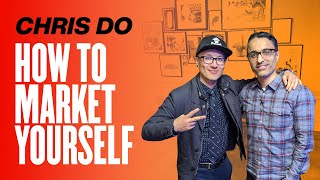
This is a YouTube video titled "Chris Do of The Futur : Good Marketing is The Great Equalizer (Full Interview) | NeelHome Podcast" featuring an in-depth English interview recorded in January 2020. The podcast is hosted by Neel Dhingra, who interviews Chris Do, an Emmy award-winning designer and entrepreneur. They discuss topics including personal growth, marketing strategies, content creation, overcoming challenges like public speaking anxiety, and the importance of building a personal brand in competitive industries. The conversation also touches on cultural influences, emotional decision-making in business, and the evolving landscape of referrals and social media marketing.
On today's episode, I interview Chris Do. Chris is an Emmy award winning designer, strategist, speaker, and entrepreneur. He's a CEO and founder of TheFuture.com an online content and education platform. I've learned a lot from Chris's content, and I think you guys will find a ton of value in our discussion today. So let's get into it, guys. Welcome to the Neil Holm podcast. Today I am with Chris do, founder of the Future. And thanks so much for doing this, Chris.
It's my pleasure. I'm glad to have you here.
Yeah. Thank you. And thank you. I just wanted to say, first of all, your content. I'm in a totally different industry, but your content really inspired me to level up and change my whole approach to business. So I really want to thank you for that.
I'm glad to hear that too.
Yeah, I know your main audience is creative, and I think you're inspiring people across all industries. Now that warms my heart. That's good. It really does, because we need it because the people in our industry aren't giving us that information. So I've gained a ton of knowledge just from the content that you guys put out daily. One of the things that really stuck with me that you mentioned recently was I think your dad said this. He said, life is really long, but your time to make it is short. And I get a lot of people get conflicting advice of, like, don't worry, like, take it easy. You know, you have time. You have plenty of time. Don't you know this is a long game? And I think it is. But then can you expand on? Like, we need to be, like, patient but also impatient. What do you mean by that?
Yeah, maybe we're gonna have an Asian dad moment here. Do I imagine that your dad may or may not have said similar things to you?
Or.
Okay, so I heard something interesting, and I think it was Dr. Jordan Peterson who talked about this on stage on the valuetainment show. And he said something about immigrants, that we're talking about immigrants and the immigrant mentality, this hunger, the emphasis on education, keeping family together, and sacrifice. And he says that through three generations in it's gone that you just become completely Americanized. And there are similar stats in terms of wealth, how, like one generation will lose it, and by the third generation is almost all gone. And I think about that a lot. So the immigrant mentality, whether you're from Asia or anywhere else, is you come to a country to make it. You have dreams, you have hopes, ambition, you take on a lot of risk. Because you're leaving a lot behind. So there's that kind of pioneering attitude. Whether you were here on the Mayflower or not, you have that same desire and that hope. And my dad is saying to me, essentially, I'm going to sacrifice whatever it is that I have so that my children can have a shot at doing something that may make this trip in the wrist worthwhile. So he was just trying to tell me that if you focus in while you're young, while you have energy, while the appetite for risk is great, and you have less things holding you back, burdens and obligations, that is your time to make it happen. And he was telling this to me all throughout junior high and high school, which I wasn't ready to listen to, because at this point, I've already lived most of my life in America. I'm completely Americanized in that sense. And I see my American friends, my non Asian American friends, and they're having fun. They're going out, they're dating, they're doing all kinds of crazy stuff. And I look at this kind of repressed lifestyle, and I was thinking, this is not it for me. But those words eventually penetrate my thick skull, and I start to learn, like, yeah, you know what? I need to focus up now. So during my time at Art center in college, I really sacrificed everything. I lived like a monk. I was, like, celibate for about three years. I went to the library and the computer lab, and that's where I spent my time. And I noticed that every time I invested in myself, the dividends that I got paid back in financial terms was really much greater than what everybody else is doing. So my good friends, still good friends today, would tease me, like, doe, what are you doing? Let's go. Let's have fun. And why are you trying to learn that 3D program? Nobody's going to use 3D.
Yeah.
And I see the results. So it affirms something that my dad taught me, which is, you have a long time to enjoy your life, or you could suffer throughout the rest of your life and be wondering what it is that you should be doing at age 50. So I'm in a very fortunate position in my life right now. I have almost absolute freedom, financial freedom, creative freedom, professional freedom. And in a way, my dad was right.
Yes. So it's. It's basically like you're putting in the work to set up the rest of your life for success.
Yeah.
And I think people, there's this pressure, especially from the millennial generation. Like, everyone's like, you work too much. You know, you, you're too, yes. Nerdy, you're too focused on this. Why don't you have fun and, and, and get some R and R and balance, life, work, life balance and things like that. And so that's something I struggle with, is like, how do you society. And everyone's telling you that this is, you're not, you're not having fun.
Right.
You're just, you know, you stuck to the office, something must be wrong with you. But I don't think they see the, the returns, you know, or maybe it's an, do you think that's an excuse for them not wanting to do it or on their part.
I think we have to have some short term planning and long term, long range planning. And I think the mixture of the two is the right way to go. Because also like, say from my father's point of view, it was always about saving for that tomorrow. And now he's an old man, when does he get to cash in his chips? And he's been used to this delayed gratification for so long, he doesn't know how to enjoy himself. And so I think that's also not a way to live. But on the opposite side of the spectrum, if all you have is carnal pleasure and fun and, and instant gratification, we also can see how destructive that behavior can be. And I think it's up to each person around their ambitions, their goals in life, and their own self awareness as to when that happens. People like Gary Vaynerchuk often talk about, like, if you're 30, like, shut up and stop complaining that you don't know what you're doing yet. You're only 30 years young, you haven't even lived half your life yet, and you're telling me you're supposed to know everything. But I, I was on a podcast interview this morning. I was talking to Kelly Hoppen, who became an interior designer when she was 16 years old. And I just admired that she had that clarity, that focus, that confidence to do that and the support for her to be able to do that. Yeah. And she's now like written nine books, has been on the Dragon's Den as an investor, as an entrepreneur. She's a well known, like name brand.
Yeah.
That kind of focus, that kind of energy around what it is you want to do, I think has its reward.
Yeah. And I think the other thing that people kind of overlook is the fact that like they, they, they also think like, if you've wasted time, is it too late? You know, because there's People that kind of start this journey later in life because they may be messed up. So, like, that's something I did get from Gary's content was the fact that even if you're 30. Yes, you are 40, you still have 20, 30 years of work left in you. There's plenty of time to start this all over. But I just want to use as an excuse to take it easy and miss out on this period, you know?
Yeah.
Because it's amazing. Time to build whatever you're going to do.
Yeah. I love this quote and the sentiment, the idea behind it. It's never too late to become the person you were meant to be. There's a story I'm going to probably mess up some of the details here, but Grandma Moses, a celebrated American painter, she started a career at 86 and she worked until she was 101 or 102 before she passed away. So, you know, how many years do you have to work? I don't know, but I just look at it like opportunity and choice that the longer you wait to figure it out, the fewer choices you have. If it wasn't for her passion or talent for painting, it's not like she can go and win the gold medal for long distance running. I mean, she could. It can happen, but it's not likely. And so those are things that each one of us have to weigh. You make this decision, there's a consequence, a positive result or a negative result to every decision you make.
Yeah. And shifting gears to like the business aspect of what, what we do. I'm in an industry, real estate and, and finance, where the entire industry is built on referrals. Okay. So it's a kind of a good old boys club where the people, you know, the connections you have, they refer you business and it's based on, you know, sometimes based on just whoever's in front of you. Or it could be based on the connections that those people have. So I found that that is a decaying business model going forward because now the big players are putting out content and they're building these big machines to replace all of these individual sales professionals that are in markets. So what I found, the biggest way to combat that is to build your own brand and build your own audience. But I think the problem is people are so reliant on referrals. What is like in the design community? Is that the same concept of like, is it based on just who you know, who you, who you connect with? Or what do you say to people who have all the business coming from.
Referrals Yeah, I think most businesses share this common DNA, unless you work with government. And even then it's still around who you know. And I don't think that much has changed fundamentally. Technology and platforms have changed how we do it, but we still only buy things and use services and let people who stay in our homes that we know, that we like and that we trust. Technology has made this a lot easier. So there's middleware and software that is the conduit between us two strangers and that's displacing a lot of people from lawyers to real estate people and everybody. Software is going to replace all of us and it's just how do we go around that? Okay, so we're going to use software now, social platforms, so that strangers from all over the Internet in this country and outside this country can get to know who you are and who get to know who I am based on our ideas and our values and the content that we put out there. So we're just making it a little bit easier to get known. It requires different skill sets. So the whole word of mouth advertising, the referrals, that's a really powerful tool to get work. But if your network is small, it's one of those self fulfilling cycles where it's small, small group, small network, fewer referrals, and then the big dogs just get bigger and bigger because their network's much more powerful. Yeah, I think this is a fantastic time to be living because the platforms allow all of us, relatively speaking, equal access to the ability to get known. Before I'm talking about like even just 20 years ago, because I don't even know how old Facebook is 20 years ago there were definite gatekeepers who would say you're worthy of being paid attention to. They, they took the form of studio executives, magazine editors, photo editors, everybody that curated and controlled your life and your career and they held a lot of power. Now their power is kind of eroded to a degree where you can make your own fame and you can invent your own celebrity dom. And that's a powerful thing because I'm gonna hire you, work with you, invest in you, because I know you and I feel like I connect with your ideas and who you are and your values and your mission.
So in this respect it's like the great equalizer. It just evens the playing field. Because when we look at stats in our industry, there's a top majority of people that are doing all the business and, and then the rest of the businesses spread throughout the rest and a lot of people complain. Well, I didn't know the right people and I. So I feel like anybody can take this and even the playing field and you can, you can become better known than those people that have the better connections than you.
Yeah.
So, like, do you think that having a lack of social media, because we have a lot of pushback in our industry of, like, that this is not the best use of your time? This is a waste of time. There's a lot of garbage there. You need to get back to the traditional stuff because this is a distraction. So do you think that a lack of social media presence is going to. Is going to be detrimental to your business going forward?
100%? Unequivocally, yes. It's going to hurt you. And the game is being played. Whether you agree with it or not doesn't matter because progress is being made. Right. So you have to decide whether or not you want to change or not. I think it's a pretty legitimate complaint to say that some people have an advantage, whether they were born in the right neighborhood, had the right education, connected with powerful families, inherited business, and that could all be true. And they do have an advantage. But you have to ask yourself this one question. And acknowledging that they have an advantage doesn't change your life circumstance. It doesn't change anything. Right. So you have to make this decision that despite being disadvantaged or advantaged one way or the other, depending on who you are, what are you going to do to level the playing field? So people like you and me say there's the playing field here, the great equalizer. You can get in it or you don't. And I think the problem here is until this person recognizes that this, they are going to be in charge of their life, their destiny and their success. Until they accept that, that it's on them, they. They like to stay in this place in between. I'm comfortable complaining. I'm also comfortable not doing. So I'm just going to be here. And truth be told, that if everybody were as motivated, as driven, as clear about what it is they want in their life, everybody would be successful. But that's not the case. And so there's going to be this pocket of people who are going to complain, who don't want to do what they say they want to do, but their actions tell you otherwise. That I would say, let's just ignore them for now and come into the pool when you're ready. You and I are saying the water's fine, and for some, they'll dip their toes in, some will jump head first and it's all good. So if you are not doing content marketing, and there's difference between advertising and content marketing, so those lines are a little easier for you and I to see, but from the outside, they look the same. So to me, advertising is talking about yourself, about, I think, pestering people until they pay attention. And it's very annoying. It's a very old way of getting attention. The new ways to create massive value without any level of expectation and give it to other people. And the people who connect, who receive value in some form will reciprocate it back to you. And I think that's a powerful thing that you can use to your advantage.
Yeah. The. The. That is the biggest thing we see is people can't understand the difference between the sales mode and the marketing mode.
Yeah.
And I think as you get, when you get started, you feel like you have to lead with your credentials. Like you have to show people that you're the best and this and that. But what I found is the audience doesn't care.
Yeah.
And I kind of. This was kind of a realization I've discovered over the last years as well, putting out content that the consumer doesn't make decisions based on merit. Many times it's based on a connection or whether they like working with you. Is that what you're seeing as well?
Yeah. I was reading, I think in Chris Voss's book on never split the difference, or it was maybe a Socratic selling. I can't remember how they say every decision you make is based from emotion. It's from the gut part of your brain. And we think we're more logical than we really are. So we have a feeling about somebody, about an idea, and we go for it. And then we use our logic to justify it. And so they may not understand everything that you're doing. They might not understand that there's a certain tone of vibe, even the lighting. All these kinds of very intangible traits or things that you put into your work that they recognize and it resonates with them. The same reason why we buy luxury goods. Is there something about it that makes us feel different? The amount of care and craft that connects them. And they then say, maybe I like this person. You ever notice that, like, when you meet somebody for the first time, like, I have a good feeling about this place. I have a good feeling about this person. They have. They're good people. Like, you don't know them from Czech.
Yes.
But this gut. And a lot of people have learned to. To listen to their gut and tune into it, it's actually a very powerful thing if you pay attention.
Yeah, I talk about this all the time where people are their first impression of you. It's called the primacy effect. It will color all subsequent interactions. So even if you're going to provide a similar service to all your competitors, if you led with something of value or something that made them feel this intangible feeling, everything else will be fine. You know, you'll have, you have an, you'll have an unfair advantage over your competition.
Yeah.
Another thing I found is as I put out more content, people will reach out and say, I love what you're doing, or you're just, you know, I'm just sharing a journey of like how I tried this, how it worked, how someone else could do it, you know, and encouraging people to do the same thing. And more and more people will reach out. And I feel like the space of like education and online education and mentorship is, is very crowded with fraudulent people.
Yeah.
There's a lot of people who aren't doing the work, they're just selling you on something. So I kind of feel like a bit of a, like an imposter or a fraud when people are asking for advice, because I'm not, I don't want to be a coach or a mentor. Right. But at the same time I want to help them. So like, how do you, like if you're, if you're, if you're getting all this inbound, how do you make that transition or how do you deal with that?
How do you deal with the request from people to, to coach and mentor them?
Yeah, like, you know, my business is my regular day to day business. I'm not in the business of, you know, of, of providing education or mentorship and things like that.
Yeah.
So I always struggle with that. Like how, what's the best way to handle that?
Right. I think there's ideas that have emotional triggers. These labels that we put on other people and ourselves. It's a short hand, a way or for us to feel about people and ideas. So when you call yourself a teacher, you may have a very distinct idea. Like if everybody that were listening to this or watching this. I said visualize in your mind right now what a teacher looks like to you. It may be some professor you had in college or in high school. It could be your mom or dad or somebody influential in your life. And then you describe them that way and it becomes very clear and vivid in your mind. And then you look at yourself. And most of us have pretty low self awareness. We would never describe ourselves like that. Many of us look at ourselves. Our inner self is like this child who's bumbling around, who's insecure and scared. So those two things don't match. There's some cognitive dissonance that's going on there. And if that's the case, then we don't allow ourselves the label of teacher or mentor. Whereas the person from the outside actually has a truer sense of who you are, because they're free from your bias and your experience. They can see Neil, and it's like, you know what? You're the guy. You're the guy I see. You're this. You're doing the things I want to do and will you teach me? So the way I think you get over that is you surrender your own ego and your self perception of who you are and you accept that this person sees something and you acknowledge that and then you go for it. So here's what I would say if somebody came to me and I didn't feel comfortable with this, to say, like, I don't label myself or call myself a coach or mentor or guru or anything. If we strip away the label, if you want me to share with you what it is I know, or if you have a bunch of questions, I'd be more than happy to do that with you. And if you're comfortable moving forward, this is what I'm gonna charge you. And we're okay. So that's about self awareness and transparency. The other person gets to make that decision, so you've done your ethical duty and then they get to pick.
Okay, yeah, that makes sense. And I think it's like, I didn't even think about this, that it's probably, probably something 10, 20, 30 years ago, your definition, that's clouding what you think of today.
Yeah.
So, and that was another thing I wanted to ask you about, was pricing and your value. Like, you talk a lot about people being able to build, to have more value in the marketplace and to be able to adequately compensate themselves for their work, you know, if they do a good job. And how did they do that? In a world where more and more and more people do what you do, almost the exact same thing you do, and the price for those services, the consumer's demanding, the margins are going like this. So how do we, like how do we combat that or stop that train?
Yeah, it's a function of supply and demand. Right. Where if you have a very limited supply and demand is great, the value for what you do is really high and over time, we can expect almost everything. The exoticness, the newness of what it is that you're doing is going to be emulated by other people. People are paying attention. So does this mean you always have to be on the bleeding edge of newness? I don't think so. Now we know this. The game of basketball. If you're a very good basketball player, you earn a lot of money, endorsement deals, and you'll do well, you'll be celebrated.
Yes.
That doesn't mean. Mean it's any easier to be a good basketball player. And if I can make that analogy, like, you and I know the rules of basketball. You and I. Yeah. I don't know. Your game would get smoked by LeBron James or Kobe Bryant or Michael Jordan or somebody like that. Right. We're gonna get smoked. There's no doubt about it. So the fact that you do something like content marketing or designing carousels for Instagram or something like that, and the fact that there are clones everywhere does not mean that it's the same. So the thing is, you can still stay in your category, in your lane. Just make sure your content is really good. There still has to be value there. What people often mistake is they copy the structure, the form, without understanding the process, the thinking behind it. What inspired this? What is this person trying to do? Not what does it look like? So I recently started producing carousels for Instagram and then I noticed a lot of people emulating something. It very, very similar to the. To the degree in which if I put a number here, they put a number there. If I use this type face, they use the exact same type face. And I don't really care one way or the other. I'm not wholly bothered by it, even though some other people are, mostly because I say look at their carousel. What are they teaching you? What did you learn? What did you get from this? And look at mine. And if mine is same or similar, that means I haven't grown and the world is catching up. So I just have to stay ahead. Now, luckily, there's a pretty big gap between what I feel, what they're doing, what I'm doing, and if somebody can't tell the difference, that's still bad on me.
Yeah.
So I'm not too worried. If we look into the marketplace, from cell phones to cars, there seems to be a pretty broad spectrum of similarly function things, price and designed for very different types of people. So again, that's where you get to say, if I want to stay on the premium side of things, to command a Premium, where people pay more for fairly similar things. It's because I position myself well, getting back to this whole people buy an emotion versus logic. So I logically should buy the cheapest car because it gets from A to B, the one with the longest warranty. But I don't. I covet those other cars, like an Aston Martin or for some people, it's a Lamborghini or. Or a Porsche.
Why?
Because they have an emotional connection with the story that they tell themselves about who they are when they buy that. Marty Numer talks about this often. He says companies don't own brands, customers own brands, and people don't want to buy things. They want to join tribes, and that's what we're doing.
They want to be part of this club, right?
Yes.
And I think, like, the. You talk a lot about the niches, like, you know, and getting down to that niche audience. I think people are trying to copy everybody because they want to appeal to everybody.
Yes.
And you would encourage people to do the opposite, which is go deep with a smaller group of people, Correct?
Yes. It's because of our fear that if I narrow my audience down to something very small, then I will have fewer opportunities. But in fact, it's actually quite the opposite. When you try to appeal to everybody, you compete with everybody and you disappear. And you cannot claim any kind of special, distinctive advantage over anybody. Yeah, but if you are like an ear surgeon or something, or a person who does ACL surgery, when the person who's really important needs that part fixed, they go to you. They don't go to the general practitioner. It doesn't. Or general physician. It doesn't make sense. Yeah, that's what's happening there.
I think the. The other thing is, like, the. The people are scared that they're missing out on something else and they're trying to appeal to all these different groups of people. What do you feel about, like, everyone copying each other's work? Like, about. You see these carousels? They've gone completely. They've gone crazy, right?
They have.
So what is your personal. Like, do you. Do you like this trend that you've inspired all these people, or are you kind of annoyed by it or.
I'm. I'm amused and sometimes am annoyed because even people that are my friends literally copy the same thing. I'm like, why? Why did you do that and not give any attribution? But then I just move on. It's like, I don't have time for that. I have to focus on what I need to do. For me My own personal growth and how I'm challenged by these things and move forward because otherwise we spend all our lives looking at what other people are doing and trying to claim ownership over things that are unownable. I was inspired by people. I use flowers designed by people, not me. So why can't they? They have access. And I, I know that in the long run and even in the short term, copying somebody's layout or even their idea without understanding how it works, what's happening beneath the surface is a very short term fix.
Yeah.
And for some people, it's totally okay because they copy three or four things, they get a little boost in attention, it gives them enough drive, motivation, and then they start to learn. There is one person, I'm not gonna name who he is from Australia. Somebody tagged me. He's like, dude, this guy's ripping off your content. And he was doing two things. He's ripping off the content, not giving attribution. And I forgot there's a third thing. He was copying it poorly. So he used the exact same ideas, just used like really crappy images and design. And that hurt me a little bit as a person who's kind of like, is concerned about aesthetics and design. And I looked at it. So I commented on his thing like really fast, like, dude, this is uncool. Why would you do this and pretend like it's yours? Then he DM me right away, apologized and he started saying all these things. And ultimately that was the trigger for him to start writing his own content. And now he's pretty successful doing this and he's getting work opportunities. So I turned a potential like, negative thing into something that, hey, just needed a little guidance, direction. Yeah. And I'm one of those believers, like all of us, and I'm not religious anymore, but all of us have sin. Right. I've stolen things as a kid. I'm like, that's pretty cool. Let me do something very similar to that because I'm inspired by it. So who am I now to sit back in my high chair and it's like, dude, that's not allowed because it affects me. Now that's, that's hypocritical, I think.
Yeah.
Yeah.
I think of it like on any issue, like you were on one side of it or the other.
Yeah.
And there's just no, like, there's no upside in even getting into it. A lot of times I've noticed with these people, like, do you get a lot of haters and do you get negative feedback?
Yeah, I get a lot of Negative feedback, and I revel in it. I'm like a hog and dirt and mud.
Do you engage with it, though?
I do sometimes. And my wife's like, can you just let it go? I'm like, no, I like a fight. Let's do this. I actually really enjoy it. Okay. For. For most of my life, I've actually dealt with one form or another of bullying. And when I was smaller, younger, and not as physically capable, that was a physical fight. Now it's an intellectual fight or it's an integrity fight, and I'm ready to throw in there. But what you do realize, if you can take the higher road, I encourage everybody, take the higher road. Don't listen to me. If you can't take the higher road, I encourage you to do that. Stay out of the mud, because it will disappear. But the thing that I realized is most of the arguments, most of the criticisms are done by people that are not even in the same universe as you in terms of their accomplishments, professionally, personally. And they're angry about something. And when you challenge their worldview, their best way of coping with that, to say, like, it's not me, it's you, is they attack you. I've invited countless trolls onto the show. All of them have refused. Yeah, all of them. Every single one of them. Why? Because you're going to get exposed and they're not going to do it. So that, to me, is the sign of a coward. It's a coward. And I have openly said this on podcasts, on YouTube, live streams, on recorded content, and now on your show. If you got a piece of beef with me, let's talk. And I have a theory as to why people don't show up. They don't show up because they know their credentials don't match. And it's a cheap shot. It really is a cheap shot. And two to come on the show means now you have to risk sharing your point of view versus versus attacking other people. And the last little bit is they think, oh, it's going to be an unfair fight. Yeah, because you're an idiot. That's why. And if you were smart and you were working on yourself and your personal growth and development, you would have your own success. You don't have time to sit there hating on other people. So that's why I don't think anybody will ever show up.
Yeah, I agree with you. It's crazy how they just go away sometimes. I'll give a really well thought out response, and they didn't even respond. And then they delete Their comment, you.
Know, oh, that's the best possible outcome. I've not seen that too often. It's usually some other, like some crazy other insult that has no logical thread to the first comment. That's usually what happens until it gets.
Even worse from there. Okay.
Yeah, pretty much. I still have fun with it and I would just try to, like, appeal to my better side and like, my better nature. Like, yeah, just ignore them.
So you brought up something growing up, you know, you. I'm. We're both Asian growing up, and you get bullied, you get picked on, and you're at it, you feel you're at a disadvantage. And I felt like that led to me becoming an introvert or maybe I was born that way, I'm not sure. But I've noticed, like, when I go to networking and when we do a lot of things where I don't want to necessarily talk to these people, doing so is, like, required in certain cases. And I do make connections that way, but for the most part, it really makes me tired.
Yeah. Right.
And. But I would find energy at 12 or 1 in the morning on a. Making a new piece of content for the next day.
Yeah.
You know, and be energized for the next two, three hours because of that. Right.
So spoken, by the way, like a true introvert. I'm just saying when I see one, I know one. You know, it's that kind of thing.
Yeah. So I've just struggle with this now because now I'm doing more of my own personal branding. And then people ask you to come speak to their group and what happens to me? Like today I'm drinking this water every few minutes because my mouth goes dry because I'm nervous. Right.
Yeah.
How did you. I know you said something recently where, like, you were very introverted and then you forced yourself to do this. Does it get better because I'm having a hard time.
What answer do you want to hear? No, I'm just kidding. It does get better.
Okay.
It does get better. Like every single thing. I think the nature of who you. You are is not truly going to change, but how you process the signals in your body and your mind can change. Right. So it's not like you don't feel that the knot in your stomach or the butterflies. You'll still feel that, but instead of living in that space, you'll say, okay, that's my body saying what? I'm excited. And you just need to reinterpret the signals. So it turns out excitement and nervousness are kind of the Same in terms of the signals that are being sent out. So the receiver of the signal needs to say, like, I get it, I want to read this story differently. And that's all it is. There's a series of poems I was introduced to by my 13 year old son where they write the poem a certain way and if you read it in reverse order, it says the exact opposite, same words. And it's really cool. And I'm going to share some with my audience soon. Like, literally, like when you read it this way, like, you're terrible, you suck, and everything in your life is horrible. You read the other way, it's like, I will never listen to negativity. I'm super. I'm worth living for it. It's really weird. So it's just you reinterpreting those signals now For a very long time, I just stressed out of my mind doing public speaking. My heart is pounding in my chest. I'm swallowing too much and burping. My mouth gets dry too. Yeah, all those kinds of things because you're freaking out. Two things, exposure and repetition. Teach your body that this is the new normal and you get used to it. Do you fast at all?
No.
Okay, so if you were to skip a meal or to skip two meals, or not eat all day, the first time you do, it's gonna be horrible. You think the world's over and it's like your stomach is like devouring itself. Maybe it is to a degree, but over time you're like, I could do this and you can adapt. And you're a really resilient creation, a design that you can survive just about anything. So the, the thing is to stay in the pocket, to reinterpret the signals and not to wait too long to do it again because your body will forget. Okay, so if you do that, the last little trick I share with people that I coach is to think about being of service to other people and not thinking about, I want to look good. Like, you know, for you, is my hair okay? You know, not visa? I don't have that problem. Yeah. Am I, am I sounding really smart? Am I impressing people? How do I compare against the other speakers? When you get rid of all of that and you just focus on, can I be of service? Can I help you? And can I share something that I know I was going to use the word teach, but since you don't want to use that word, can I share something that I know that could possibly help you? Can I save you from some unnecessary pain? Can I turn you on to a resource that I have that may. May make your life a little bit less painful. If I can do that, then I think I have a purpose to be on the stage. The rest of it I don't think about anymore. And that has been the single biggest mental flip that's happened in my mind that has allowed me to get onto stage and not want to run.
Okay. So when you're speaking to these thousands of people, you're still feeling those things initially, but it's just more manageable now. Now.
Yeah, it's a lot more manageable now. I remember, I think it was two and a half years ago that was speaking in Seattle, that right after I got off stage, I called my wife like a. Like a proud. Like a little boy calling his mom or something, like, honey, you just won't believe it. She's like, well, was everything okay? I'm like, yeah, everything's great. I wasn't nervous. And I'm trying to revisit in my mind all the things that have happened that day leading up to that day so I can recreate that same feeling. Yeah. I have to say, the next talk, I was a little bit nervous, and I was just like, let's get back there. And I think it's ritual, and I think that's really important. Somebody on the outside will call it being superstitious, but it's just game day. Do your game day thing.
Okay.
Do you have your game day thing?
So my game day thing is I basically just try to get. I just practice the whole thing, so, you know, try and run through preparation. Yeah. But I've noticed this. It becomes. I took your advice on a piece of content where you said something about the fight is won and the gym.
Yes.
You know what I mean? And. And I've noticed, though, that then I feel too stuck to the script.
Yeah. Stiff.
And it messes me up.
Yeah.
So sometimes I've had the best outcomes or the best content created or the best exchanges with people when it was just natural because I know the information.
Yeah.
But trying to put it into a script was making it more difficult.
Right. So there's a couple of things that you can do. This is going to be blend of things that I've read that I haven't done and things that I've done. So we'll see how this goes. Okay. When you have to do a big talk, the. The thing you're supposed to do is you're supposed to sit down and write your whole talk out. You need to plan. You need to Figure out the stories. You need to figure out the sequence and the words and the. The transitions that happen between moment to moment. And then what they say is, you should then record that to some audio device and play it in the car everywhere you go, everything you do. So it becomes part of this thing. And then there's a process of unlearning the script. So the confidence comes from having prepared to find the research and to structure the story so it's really well edited and written. And then to slowly unlearn it and let it just become a part of your story. The next thing that I would encourage you to do is to try to say less and go deeper. That removes the urgency or the desire to remember all the parts and pieces of the story. It's a less complex puzzle to present. And if you can do that. My friend Joel Pilger, who speaks, he pretty much just talks about one thing for 40 minutes. And I'm amazed that he could do that. And I'm also amazed that the audience is wrapped in attention. And I'm like, what? I already learned it the first time you said it, which was 39 minutes ago. But he's still in that pocket. And so the most of the time, he's on stage feeling very comfortable, which also puts the audience at ease, because you've seen those talks when somebody comes on stage and they're super nervous and they're uptight and they're, like, literally reading their slides.
I've done that.
That's no fun for anybody. It's not fun for you, and it's torture for us. Don't do that. Don't go in with those expectations.
Well, what I changed. My thing was to just have one line to remind me of the basic bullet point.
Yeah.
And then it's just placeholders.
Yeah.
So this slide comes up. That's. I know what to say when I see the. The placeholder.
Yeah.
So that's. But you would encourage me to basically record the whole thing and just play it back.
I've never done it.
Okay.
But the. The other guys at the office, Matthew and Ben, they're also preppers. Not Doomsday, but they prepare a lot. Right. So, yeah, they'll write, they'll rehearse, they'll go over and over. But the rate in which I have to write and give new talks and adjust to what's going on, I can't do that.
Okay.
Not that I've ever done it, but I'm just saying. So here's what I would suggest you do. You've done the right thing. You've written out the whole presentation, and then you would now put sentences, and then you'll go to words, and then you just go to images.
Okay.
That's the, that's the progression. So the image is a cue for you to remember what the heck you're supposed to be talking about. It keeps you on the plan. Right. There's a Stanford guy who spoke about this, how to give a talk. He says if you were to just write questions that you need to answer. So it's your own Q and A and you put up on screen.
Okay.
That's all. So the screen is a question for you to tell a story and just tell the story, and there's no wrong way to tell the story, and it works out pretty good.
Yeah.
I saw a talk given by Andrew Yang at South by Southwest. He says, hey, guys, there's supposed to be a moderator, but I guess there isn't one. So I'm just going to ask my, myself the questions that I think you're going to ask me. And so he does, and it's hilarious. And he's not like, like a comedian. He's not the smoothest guy on delivery. But when I watched that, I thought that's probably what that Stanford professor was talking about. He literally just said, so what does it mean to have universal basic income? That's what everybody asked me. Ubi, Universal basic income. So it's not this, it's not that. And here's what I think. And you can see the audience, like, really leaning into this candidate. Back then, nobody knew who he was.
Yeah. And do you. What do you feel about doing Q and A live at your, at your speeches? Like, I noticed you do your thing and then you're done. Have you ever thought about opening it up to Q and A, or do you do that separately?
How do you feel about doing Q and A?
First of all, I love it because unless the questions, it's unpredictable. So you get. It's very difficult to manage. But I feel like the best stuff has come from, from the Q and A as far as, like, somebody elicited something that I didn't think of or I present something specifically to address their need, you know, so I, I enjoy it, but I wanted to get your take on it.
Sure. I'm not in control of my time on stage. Okay. So people say, you have 15 minutes, you have 20, you have 45. You, you have this amount of time. Sometimes they say, well, we'd like to do Q and A with you afterwards or Put you on a panel. And then I do that. I have a little speaking like template that I give to people. My number one request to do, which very people take me up on, is to do a fireside chat. No talk. Bring me your biggest problems and I'll work with you. And I don't even need to know what they are ahead of time. I think we are living in this age where so much of our lives are curated and edited so it no longer resembles reality from our. From physically our body to, like, the things that we say and editing out little ums and ands. And so we're all, like, living this fake life online. I think we've lost a little bit the art of conversation to be present to the person, to really just talk to them. So I abhor coming up on stage, having a prepared talk and just going through it with that interaction from the audience. What's the point? You guys can watch this on YouTube later if you wish. But there's a moment here, and the moment, I think, and I've asked a lot of people, why do you show up? If this were a giant screen, would you feel okay? And some of them will say, we show up because there's an element of it being live and we're on the edge of our seat that something could go wrong. So you're here for the car crash. So why don't we build in car crashes? Why don't we try to include things that are unpredictable, that are spontaneous. That sounds a lot like Q and A, doesn't it?
It does, yeah.
So the problem with Q and A is two parts. One, you're only as good as the question. So if you're a guy who is prepared and asks deeper, more profound questions, the dialogue that you get is going to be really good. It's going to be really meaty. But two, there's a perception of value that I feel from the audience that, oh, you know, you didn't prepare. You're just answering questions off the top of your head. Yeah. And they don't realize that you just gave them a bespoke answer to their specific problem.
This is more valuable than the talk.
And it was completely tailored for them spontaneously, versus a prepared talk for all people. What more could you want? Yeah, I don't. But that's the. That's the problem. So if they had eight speakers, do Q and A. First of all, they're not all created equal. Not everybody can do this. Q and A for some people will stress them out. For me, I love it. I prefer it But I'm only as good as the question. So how do we solve that? Have people submit questions, have people vote on them, and then just knock them out and then bring people on stage and just talk to you?
That would be cool. I think it would be awesome if, if maybe you could encourage the people that hire you to speak.
I'm trying to get them to do.
This because I think that's what the audience would love.
And I love it, too. I have taught for 15 years at art Center. The best, most memorable, unscripted, hilariously challenging moments happened in class and through no planning, through reaction and action, and that's it. And frameworks get invented, tools get developed, and real learning and experience is such a unique thing. And I'm still to this day trying to recreate that.
That's cool, man. The last kind of topic I wanted to talk to you about was there's a lot of advice from the mentors and things like that about to do what makes you happy.
Right.
You just need to find something, your passion and go for it. But, like, what I like about your content and your message is that. Yes. But it also needs to be practical. So when someone's lost, like, say they're in the wrong career.
Yeah.
Or they're trying to figure out what they should be doing, they've kind of wasted some years and they're trying to figure it out, like, what's your advice on how to find that and have it still be practical? Like, how do you pick that?
So somebody's lost in their career, and if somebody says they're not passionate about it. Okay.
They hate their job, they hate what they're doing.
Okay. So this is going to go back to long life, short life, and the delayed gratification, all that kind of stuff. Yeah. I think you have to realize, and I grew up Catholic, I'm. No, I'm no longer practicing, and I don't believe in reincarnation. So you. This one life, it's a. A tiny speck in the span the, The. The lifespan of the universe and just realize you got this one shot. Why. Why waste it? You're. You're a miracle of biology, chemistry and science and the fact that you were even born and that you survived. Why waste it? I think it's really important, especially now, because we live in a time. I'm not saying there's not suffering and unnecessary death and violence, but we live in a time where we're more prosperous, healthier than. And longer lived than we ever have been. You know, let's use this opportunity to do something that makes us happy, that fills us with joy, as long as it doesn't hurt other people and breaks laws, I think we should do that. And somewhere in there is going to be a different kind of wealth, a self awareness, a happiness. And, and I think you're gonna ultimately, if you keep at it, you're going to find something that is, that can turn into a career. Maybe not like a superstar career, but a career and a way of paying for the things that you have.
So is that what you went through when you switched from the blind to the Future?
When you say went through, what do you mean?
Like you went from doing client business, working with clients, and then now to a new platform and you told me that you no longer do the client work anymore.
Right.
So did you struggle with making that transition or did you just jump in?
I did not struggle with the decision to stop doing one and move to the other. And for clarification for our audience, the Future was founded, I think in 2014, previously called the School. So we've been doing this for a little over five years and we hardly made any money the first year. So there's overlap between the creation of one company and the, the death of another. When I say death, it's still here. It's just I'm not actively working on it. And so the moment that we decided to switch over, it's going to always look abrupt to somebody. But I've, I've learned now after doing this for over two decades that there, you're not doing anybody any real service by keeping half a foot on this thing. And like the, the islands are splitting apart. Pick one. And there was enough time to try. So I'm making very calculated risks here from, from somebody else that might seem risky, but I've, I've figured it out like, so it was during one of our very typical pro like manager meetings that we have here. And Matthew had said to me, why don't we just stop doing this? We work too hard for the clients to make this amount of money. At the end of the day, I believe we would put the same effort and use the same discipline and work for ourselves. And we will have the exact same amount of money, but we'll have built up our catalog of products, our ip, and we're moving closer to what it is we want and moving farther away from what we don't want anymore. So when he said that, it caught me off guard. I think 45 seconds later I said, let's do it. And that was it. And then that was December 2018. We stopped taking on client work. We fulfilled all of our obligations and. And we don't do client work anymore.
Wow, that's amazing. So it's something that the seeds had been planted and then it was just like it hit you at that moment.
Yeah. Like we were beta. What is it called? Beta prototyping. Beta testing the idea to see if it can be real. And once the model was validated, it was a question of scale and patience. Right. So 2019 was. Was the year where we could be a self sustaining company without the financial help of Blind, the service company. So it was a little tricky and there were months that we went into the red, but we wound up exactly where we needed to be. So I can say now we've run the future 100% financially independent and solvent. It's not like I'm tripping over piles of cash today. Yeah. But it's. It's all that I need.
That's awesome, man. That's really cool. So, guys, I hope you got a lot out of this information from Chris. If you want to learn more, please check out the future dot com. They have tons of free content. You educate people across all industries. I would encourage anybody in my industry or any, anybody that's watching this to check it out because you'll find something that would help your business or your life. And then follow Chris on Instagram as well, because he has some pretty cool, cool carousels. Just don't steal them. Right.
Or you can steal them, but just keep growing.
Cool. Thanks so much for doing this, Chris.
Thank you.
I appreciate it.
More from Neel





Don’t let people tell you what you can and can’t do. #personalbranding #podcast #entrepreneur

How to use Ai the right way for scripting. #personalbranding #entrepreneur #ai




Your audience already has a story about why it won’t work. #personalbranding #entrepreneur

The new YouTube strategy to hook viewers. #personalbranding #entrepreneur #podcast