How Dan Martell Gained 1M Followers in 12 Months (Genius Strategy)
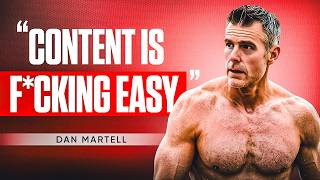
Dan Martell hit 1 million followers in a year by treating personal brand as his core business. He documents raw, unpolished content instead of producing it, outsources editing to remove friction, and trains his team with recorded principles rather than constant direction. His bet: reach and reputation unlock everything else.
It occurred to me that everything I wanted to accomplish in my life is on the other side of your reach and your reputation. And I just made the decision to essentially reorganize my whole life to become a media person.
For the average content creator guy trying to build their brand, I don't have a million dollars or $100,000 to invest. Well, here's the thing. You just have to know that this is the most valuable investment you can make today.
Everybody's got a podcast, but who's willing to invest in it? Who's willing to go and recruit the speakers? Who's willing to show up and do the work? Turning pro is easier than being an amateur because it's so less crowded at the top.
I see people giving advice on social media, but I feel like they're lecturing. Or is it that they just they're not successful enough to be able to give the advice?
What if everything in the world that frustrated you became a beautiful piece of content for you to give to other people to help them? Check this out. Even better. What if every crazy challenge frustration set setback, you could reprogram your mind to remember that at some point in the future when you get through this, it will be the most powerful thing you could ever teach another person.
So I always say this, building a powerful personal brand is your ticket out of the rat race. This is what happened with me personally, and I've seen it happen with so many people. And so today I wanted to bring on someone who's going to be teaching us, hey, how do you have the time? How do you make the time as a busy entrepreneur, as a busy guy in whatever business you're in? Like, how do you find the time to be able to build your brand and create all the content that you need to do, do this right and also scale it up? And he's built a team around this whole concept, so we're going to dive deep on it. Today my guest is Dan Martell. He is a author of this. Dan is the author of the bestselling book buy back your time. This thing is a bestseller for how long now, Dan?
He's number four in the world right now. Isn't that crazy?
Number four book in the world. He's also a serial entrepreneur investor. He's also crushing it in the gym, making all of us feel bad about our workouts. He just told me today I'm not going anywhere near as hard as I need to be going. So anyways, thanks, Dan, for taking the time to be here, bro.
Gains. I appreciate It. Neil, it's an honor, man.
Thank you, man. And so, you know, first things first. I think everybody tells me this, they're like, yo, I want to do what you're doing. I want to create content. I want to build a personal brand. I see the benefits. You know, it's pretty evident by now, but I just don't have the time.
Yeah. You know, so what's funny about my story is people see me today. I think we had 36 million impressions on our content last month alone. Right. Our YouTube's almost. I don't know when this will come out. Be quarter million for sure. We'll probably be a million within the next year. Instagram's like quadrupled in the last 11 months. And, and people see that, but what they don't see is like the eight years. I mean, I did my first post thing was 18. I was. It was 2004. That's 18 years ago. My first blog post was. You talk about Neil Patel earlier. Yeah, I've known Neil since he was, he looked like this guy, right. He was like 13. So I think first off, just get in the game.
Yeah.
Right. Step one, if you haven't gone direct to camera on your stories, on Facebook, on Instagram, you don't need to buy back your time. You gotta stop being a chicken.
Yeah, that's just using the phone.
That's just straight talk. Like you just gotta pull out the phone and just talk to the camera. I cut my teeth on Periscope. So even though I had a YouTube channel for eight years.
Yeah.
It took me eight years to get to a hundred thousand subscribers. Eight months later, I get 200,000. So it's like interesting how it will compound.
Yeah.
And I wasn't, I was, I wasn't, I was acting like an amateur. Yeah. But to like, you don't need to spend a dollar to buy back your time if you just start doing it. Because what I've discovered is like, you just have to practice to get good at it. And then once you're good at it, it'll take less time. So most people, I, I see them all the time, they go shoot content and you know, it might take them an hour to shoot one 12 minute video. Yeah, it takes me 12 minutes to shoot a 12 minute video.
Yeah. That's the truth.
But because I've done the reps. I mean, dude, you're a pro. I just watch you like, you know how to like start the pod, get into it, do the interview. Like, it's because you've done the Reps. So I think a lot of people, it's like, you don't have to spend any money to create content. Buy back your time if you just start. Because that, that practice is actually where you're going to save time. That. That being said, the way I think about anything is I always look at what part of the process is taking my time that I hate doing that would cost the least to pay somebody else to do.
Okay, so that's the first hire.
Is that basically not even the first hire. I call it out tasking.
Okay.
Like, we don't even need to hire somebody. We could just say, okay, those two parts, editing for most people and publishing. So it's like, I don't want to. I want to shoot. I want to pull up my phone, talk to the phone, hang up the phone. I want to get the camera, hit the button, talk to the camera, stop the button, automate that, go to Dropbox, go to a folder, pay an editor, wherever you want. You can hire people in different parts of the world. They edit it, produce it. You give them a little like, overview video of what you want. And then you can even have your assistant or somebody else again part time. Put it in the queue, put it in the schedule. You have your publishing calendar set up, and it just changes your relationship with content. Because I know, like, I want to be creative. I want to talk, I want to share ideas. I don't want to then have to go like, oh, man, I got six hours of editing. Or I got to like, sit there and think about, like, how am I going to post this? Or publisher, I'm on vacation and I forgot to publish at 7am yeah. So I just think, look at the process. Pay the stuff. That's low effort and you don't want to do any.
That's huge. Because I notice the more friction there is, the less you're going to do it. Right. And so, like, it's. If it takes you too long, you're like, it takes me too long. And then when you're done with it, I don't quite know how to add the captions and the editing, and I don't know how to. So then you. These are just old roadblocks to you actually hitting posts.
Not only that. Like, I even think about, like, when I used to run my own Facebook ads. Going onto Facebook took more time because I'm getting distracted.
Yeah.
As soon as I go onto Facebook, I'm getting my notification. Hey, where did somebody post? What did they post? So it's, It's. It's not even the editing, the caption. It's like some people, they go on Instagram to post the reel, and then four hours later, they get scroll frigging blindness. And they're like, what just happened in my life? Where was I?
Yeah. I've gone on and forgot what I was supposed to be doing. Know. I'm supposed to check something out. Like, hey, Dan, did you, you're like, dan, check out this post that I made. I'm like, okay, go on there. But then something caught my eye.
And now PHT PhD doctors specialize in figuring out how to do that to you.
Wow.
Oh, they know what color of red they use on the notification jewels. They know how to set up the, the, the white space. They know how the flows of the apps work. They, they do that on purpose because it's all about time and retention.
Yeah.
So I think it just, if you remove the friction. Like, for example, all my, if you look at my reels, most of them is a camera on the corner of my desk. Anytime I have any meeting where I'm answering questions or coaching somebody or doing anything, I have an app on my computer. Okay. It's part of my checklist. Before the call starts and I hit the recording, it takes the feed. And when I'm done, sometimes I forget. Don't matter. I hit stop. It automatically synchronizes Dropbox. It notifies our timestamper to start processing.
That's b. Yeah.
I just don't want to think about. I even. We even turn it sideways so that way it's like just the right angle.
Yeah.
Looks good. Side shot camera.
You just have to sit down and hit record.
Dude, it's, it's what Gary V's been saying for years. Just document, don't create. I told my team. I was like, I'm not going to go sit down and create content anymore. I used to go look at my old YouTube videos. Not impressive. I sit there, talk in front of thing, blah, blah, blah. I don't want to do that. I, I, I want to just help people and if somebody found that useful, cool. If not, give me some feedback. I can see if I can tweak it a little bit.
Yeah.
But then I just want to publish. I just want to keep it easy and for me is I want to keep it fun.
Yeah.
As long as it's fun, I'll do it for the rest of my life. If it feels like work, I'll probably stop doing it because I got other things I got to do.
Hey, quick question for you. How Much. Have you been loving these podcast episodes? I've been getting so much great feedback from you guys. And right here is where I would typically put in the ad read for these episodes. But you know what? I was thinking about it. The only thing I really want to promote right now, the only thing I want you to do is just hit that subscribe button. I'm trying to grow this thing out. And so many of you are watching and listening and sharing, but you're not subscribed to the channel. So whether you're watching, listening, hit the follow button, hit subscribe. And that's going to allow me to grow this thing. Let's get back to the episode big time. And so you talk about, you know, all these different things in your content. I've noticed. But it, you can tell me if I'm wrong, but it feels like in the last couple of years, you've really doubled down. You've taken this the last 11 months. 11 months you've taken it. So 11 months, you've taken it super serious. Now, we talked earlier today, and you, you're not someone who needs to be doing this. You have achieved financial freedom. You have an amazing, you know, you built an amazing life for you and your family. Talk about this all the time. And so you don't need to be out here hustling in Vegas, doing podcasts, going to interviews, doing events, shooting content. Why are you so big on building this brand for yourself and scaling up your communication?
Well, there's a lot of different people that inspired me a year ago. So what happens? I wrote the book. I would have been happy if, like, a few thousand people read the book. Like, that would have been really cool because I wrote it, really, for 30 people in my life, that my whole philosophy is be the lighthouse, not the tugboat. So I'm not going to tell anybody what they should be doing with their life. I'll go be the example and when they're ready to lean in. So there was a whole swath of people that I just watched them waste their time, waste their energy, get frustrated, shut companies out and start them again. So I wrote a book on teaching them how to build a company that don't grow to hate. And when it came out, it just kind of caught fire. I think we, we sold 20,000 copies in the first two weeks. Second number two Wall Street Journal bestseller, Behind Atomic Habits. And ever since, it's sold more copies each week than the previous week. And right now, that's why I said it's number four in small business on Amazon. And it just like that happened the last six weeks where it now is in the top 10. It kind of keeps going. And I asked myself, is this a sign, you know, I'm a person of faith?
Yeah.
By my creator telling me, hey, you know that thing you've been asking for to have impact? I just gave it to you. Do you want to waste that? And I was like, holy smokes. That this is literally. This could be the thing. You know, I could go make more money. That's easy. But am I willing to promote and support the book if it can have that kind of impact? Shouldn't I. Shouldn't I honor that gift? And 11 months ago, I decided if anybody's ever read the book Turning Pro by Steven Pressfield, okay, I love it because I'm the kind of guy, like, you see, you know, my stories and stuff, like, if I decide to do something, we just do it. There's no if, ands or buts.
If I'm very intentional. Yeah.
I don't make a commitment unless I can deliver. But once it's a yes, once I decide I'm going to go build and exit a company or, you know, whatever, we do it. And I just made the decision to essentially reorganize my whole life to become a media person. And I'll tell you why. I. It occurred to me that everything I wanted to accomplish in my life while I'm here, while I'm still breathing, exists on the other side. Anybody listening? You have a vision board. You have goals, you have dreams, you have big things you want to accomplish. All of that is on the other side of your reach and your reputation, period. Full stop. I don't care what you tell me. I want to own a thousand rental properties. Cool. It's going to come on the other side of people knowing your name and trusting that reputation and reach. Who knows that? How are you going to raise the money? How are you going to find the deals? How are you going to build the team? And I looked at this and I said, I just really can't think of a better investment than this. Now. It wasn't my original idea. I've been friends with Gary Vee for 16 years. I had dinner with Layla and Alex Hermosi at Super Freako. We were talking. That's how I first discovered that restaurant. Amazing restaurant. And I remember sitting down with Alex, and I looked him in the eyes, okay. He'd been probably doing it for about a year at that point. And I said, sell me on the idea. And he shares a few Numbers with me. One of them was the amount of leads he was getting per month of people that wanted to essentially partner with him@acquisite.com. now I buy companies. I have a company called Big Band Software. We buy a company a month, it's $100 million, HoldCo. And I know what I invest in my acquisition team. Yeah, dude, with those numbers, that thing is a $25 billion company.
Wow.
And I was just thinking to myself.
And these are inbound, dude.
These are people that are filling out an application willing to give up equity in their business, and there's thousands of them.
That's wild.
Yeah. And I. And I just said, I know. I know how to do it. I'm friends with the people. The only difference is I didn't make the commitment. There was two things I looked at, and I think everybody should consider this. I don't know if you've ever kind of asked yourself, like, am I really serious about this? I looked at the two things, which was my bank account, where was my money going? And my calendar. What was I spending my time on? And my content prior. I would brag about how little I put in to my YouTube channel two days, a quarter, and I shoot 16 videos. Like, I was, like, proud of how little I did. Yeah, right. That's like. I call and I. It's funny because I make fun of these people in business, which are entrepreneurs who brag about how little they work to make money. Because I always made fun of them because I'm the kind of guy where I'm like, no, no, no. You show up and you put in the hours.
Yeah.
And I was doing that with my content. And then. And then my. My money. I think we were spending, like 3 or 4,000 at the time a month to produce the videos. We were right. Editors, publishers, whatever. And I was like, that's not. That was, like, the least expensive thing on my P and L. Like, it was nothing. And I remember I just made a decision. I said, okay, unlimited budget and decide to be top, top in the world. Now, that required me to have to renegotiate all the agreements I had with my business partners because it meant to retool my calendar, which I teach in my book.
So you're creating time to be able to do more content.
Before I could commit to it, I had to renegotiate the agreements because the calendar was already committed to those people and partners. For example, Kevin, my partner at Big Band, like, you know, we were talking every day. We had strategy meetings. We're looking at Pipeline all Of a sudden, now I gotta say, hey, man, I gotta cancel some of these meetings. You know, how can we still get that done without me? Maybe get to hire somebody. My other company owns Saskamy, largest coaching organization for software CEOs in the world. And I, like, had to restructure the company and essentially put Johnny, who was the CRO at the time, into a CEO position and then backfill all these executive roles, and now they run the company. But I couldn't even do that before I got everybody's blessing. Like, that's just one of my rules. Like, I don't make big decisions without people are going to be impacted. And you know what's crazy about that, Neil? When I told them what I wanted to do, because the book had been out for probably two months at that point, and the kind of groundswell started and they were really proud of the success, and all their businesses started doing better, that's huge. When I asked them, I said, is it okay if I go and, like, recommit to go do this thing? I don't know how I'm going to do it, but I'm going to, like, I'm going to make it a thing. Like, 80% of my calendar is going to be dedicated to this. They were like, would you please?
Really, dude.
They knew on the back end of my intensity, to create and to invest, that all their worlds were gonna get better. They knew it. It was just obvious, like, dude, if you got a thousand times bigger audience, it's gonna pour into our stuff. And I'm like, that's the math. That's what I'm thinking. Just like you came that same realization. It's like, if I have a platform, then I can reach out to people that otherwise wouldn't necessarily lean in because I didn't really have a lot of value to add. And all of a sudden, you invest and build a platform and be serious. See, what you said earlier, before we started recording was so good. Was like, everybody's got a podcast, but who's willing to invest in it? Who's willing to produce this? Who's willing to go and recruit the speakers? Who's willing to show up and do the work? That part. The tip of the spear. It's funny, most people don't know this unless you actually go for it. Turning pro is easier than being an amateur because it's so less crowded at the top.
Yeah. And that's why when I said, hey, it's saturated, you're like, it doesn't matter.
Saturated down here.
Yeah. Not at the top. No, it's lonely.
No, dude, when you see a Chris Williams in Williamson at Modern Wisdom.
Yeah.
And he announces his new stage. Have you seen his new stage?
No, dude.
Like, I don't know Chris, but I'm proud of him.
Yeah.
He decides go all in. What does that look like? He created a set. It is. I don't even know what the heck it is. It's got a full digital wall. It's got the whole thing. It's like. It is the most beautifully interesting podcast that I've ever seen. Like, he pretty much dropped a mic on everybody. I'm talking everybody. Rogan who? Whoever you think is big. Now, he may not be as big as them, but what he did with that investment, I mean, he probably. I gotta assume he put a million bucks in this thing.
Yeah.
He pretty much told the whole world, I am going pro. Like. Like, he was already pro. I'm going to the top. I have no interest to be top 10. I want to be top. And I'm willing to drop the mic, make the move, make the decision. I'm impressed with that.
That's huge. And so this is the takeaway. It's like, hey, for the average content creator guy trying to. Or gal trying to build their brand, you're like, well, I don't have a million dollars or a hundred thousand dollars to invest. Well, here's the thing. You just have to know that this is. Dan's telling us right now this is the most valuable investment he can make today.
So, like, it is the most.
So it. That's the level of investment. It's like, hey, Alex, you brought up her mosi. He just made a post recently on Social. He said, hey, you know, I have added up all the money I've spent on building my brand, mentorships, coaching, media, all these things. And if I took that same money and put it in the s and P500, where would it be today? And it's a decent return. You know, S and P has done pretty well, but it. It's like a spec. It pales in comparison to what he got from actually investing that in himself and his brand. And so, you know, I was. Think about the money I put into my own brand, and I'm not, you know, anywhere where I want to be yet, but just the return I've seen in the last four years. There's no. There's no investment I could have bought unless I got into angel investing, of course. But, like, there's no, like, public investment I could have made no house I could have bought nothing that. That got me that type of return. So I just think people should take it more seriously. So when we're getting into that, there's a couple of things you said which I want to go back to. So one thing you said was, be the lighthouse, not the tugboat. I see this so often, and maybe you could shed light on this. I see people giving advice on social media, and. And they tell me the content doesn't work. And I think it's revolving that around that concept. Like, I feel them telling people, but I feel like they're lecturing me. You know what I mean? Like, it's a. It's a vibe in the content, or is it that they just don't have the experience? Like, they're not successful enough to be able to give the advice?
You know, here's what I think about it. I think it's the energy behind the content. So, for example, I was speaking at an event once, and I like to. I'm a student. I show up, I got my journal out, and I'm listening, and there was two speakers before me, and they had this language pattern that was very screamy. Talk down to the people.
Yeah.
And I don't even know if they knew they were doing it, and they didn't ask me. That's fine. What I learned a long time ago is that when you speak to your audience, and instead of making about, I'm the smart person and you're dumb and all that stuff, which. And I think sometimes it just comes off as nerves. Right. Instead you go, look, I don't know if this will work for you, Neil, but here's what worked for me. Like, you saw my fitness, my transformation. Perfect. So, like, I could say, yo, you gotta. You gotta eat your macros, right? And you gotta do progressive overload. That's one way.
That's normally how they do it. Yeah, yeah.
Instead, I'd say, hey, guys, I know a lot of people think I'm on testosterone replacement therapy, and I don't know if this will work for you, but essentially what I did is I ate whole foods, and I maxed out every set for 90 days. And it turned out years of working out and other stuff. I had muscle under the. The chubbiness that was covering it. And again, I don't know if it'll work for you, man, but here's exactly how I did it. And I did this, this, and this. And here's a few hacks. Like, when I travel, I have meal prep, and when I go to a restaurant, I order the protein add ons, like my new favorite thing. So it's like seven bucks for, like, the chicken or the salmon or the tuna or whatever. I actually don't order the main. I just do the add ons.
So technically, carte, dude.
It's sometimes cheaper than the meal.
Bang.
Okay, see, that's good content, but it's just real. Because it's me, what you brought up, though, that I want to talk about. Because this is the energy part. I think you'll love this. I think that when people experience something out in their world, it's, again, I'm a person of faith. I think it's our creator telling us this is a point of view you have on the world that could be better. Okay, so, like, if you see something, 100 people could see that same thing, but you go, oh, that's weird. The other 99 don't. And I think what some people do is they'll engage with that. If they see somebody doing something wrong, they'll be like, hey, that's wrong. And they'll say something to them. I'm not saying don't stop it if somebody's getting in a fight or something. You know what I mean? Like, if there's, like, something you got to stop, stop it. But, like, let's say your friend, you see him being lazy, don't tell he's being lazy. What I do is I take that energy, and that's where I call it being a lighthouse, not a tugboat. I don't tugboat my friend. I then write it down. Or I might go on social media and I'll say, you know, I don't. Do you have friends like this and you might share some stuff, right? Where they have big dreams and goals and aspirations, but sometimes when you hang out with them, their efforts don't match their ambition. You know, sometimes I have friends like this, and it kind of gets to me because I'm trying to grow and I'm trying to push and, you know, just even be around them kind of makes me feel like I'm. I'm pulling down my ambition because I'm, like, trying to match their energy just out of courtesy. It's like, I guess sometimes I don't know if you. You know what I mean?
Yeah.
So I do this all the time. If you watch my content 100 of the time, if you see me talk about something, it's because of something I experience. That's the energy part. And I think that's where people miss it because they think I got to teach something. I think you should. What I used to do is write down, I got to teach you this, I got to teach this. No energy behind it. That makes sense because it's just content. Dude, content don't work. People want to feel moved, they want to feel energy. They want to feel like, you can go up, you can come down. Yeah, right. I have a friend. All she does, she screams at her audience. And the other day I was talking to her. It was beautiful. She was telling me a. A fairly sensitive moment about a weight loss experience she had with Oic. And for like four minutes I felt her heart. And it was beautiful because I've known her for a while, but every time she talks, she's just very like, ah.
But that's what the content needed.
Yeah, man. Had to be. You had to connect. You had to connect to the feelings. I think sometimes when we're communicating, we're just so excited to get the information out, we realize we forget that the only way it's going to stick is if the person feels it. Right. There's that quote that says we don't remember what people said, but we'll remember how they made us feel.
Yep.
That to me is when I look at the information that goes viral, you know, it's strong points of view, backed by emotion, backed by story. The story is the glue. And the only way to do that for me anyways, maybe other people are different and they've got skills and they're. Maybe they're actors or. I just can't do it. I have to be emotionally connected to it. So it's always better for me to be close to the moment. Now, Neil, has this gotten me in trouble?
Yeah.
The time my in laws were over and they're complaining about how they couldn't do CrossFit because they were old. And I went to Facebook Live and I said, you know, sometimes you have friends that say they're too old to work out and da, da, da. And all of a sudden my, my father in law watches that and he starts screaming at me at dinner. That happened.
Dang. So I've tried to anonymous, anonymously anonymize.
A little bit now. So I've gotten good at it. I'd be like a friend of mine last year.
Yeah.
You know, a guy said this. It was a girl. Like I have to not. Dude, my book is full of stories, Crazy stories. I literally had to say at the beginning. I've changed names now. What? I. I'm not going to tell you how I, I created a little Structure, so I could remember who it was about.
There's like a coding.
There was a code. I have a coding. But if I tell you the, you know, the decipher, you decipher it all. But, yeah, that's the way I do it. I just, I. They're always real stories, they're real moments. I try to bring the emotions to it, and I think it's a beautiful idea for content creators. I don't care where you're at, think about this idea. What if everything in the world that frustrated you became a beautiful piece of content for you to give to other people to help them? Check this out. Even better. What if every crazy challenge, frustration, setback, you could reprogram your mind to remember that at some point in the future, when you get through this, it will be the most powerful thing you could ever teach another person. Dude, I love that idea.
That's big.
When I'm in the thick of it, I literally have to go, man. I don't know if it'll be six months or a year from now, but this is going to be a banger, dude. I went through something two years ago that when I was going through it, I was thinking to myself, when I resolve it, and I will, this will be the opening of my next book. That's how I was like, this is crazy.
So this is like keeping track of those moments. Yeah.
Keep writing down.
Use the notes app.
I use my phone notes file for all the. So the other thing, this is a. Probably because you got a lot of content creators. I'll give you guys some pretty good stuff. Yeah, I believe one of my. My manifestos, you know, I have this dan martel.com forward slash manifesto. I have all these kind of like, rules about life. That's what I think. What we're all here to do is kind of figure out what our principles are. One of them is become a belief collector. So what I do is as I'm reading and anybody follows me on Instagram, you'll see my post every morning, what I'm reading. If something moves me, I actually take it and I rewrite it into my own words.
Okay.
I've been doing this for a long time. So I have a notes file of. So if you see that I post something with a quote, that's because I read something that inspired me one day and I took it and I rewrote it in my own words, right? Yeah. One of my favorite ones is, you know, exhaust the body to tame the mind. The original quote, I couldn't tell you what it is, but it's Marcus Aurelius and it's like, blah, blah, blah, blah, blah, blah, blah, blah, blah, blah, blah. Like, it's just long. And I was like, so what you're really trying to say is exhaust the body to tame the mind. Now it's like a thing, right? Or sweat every day or whatever. Like, I just. So I have a notes file for all my quotes that I like to share that are rewrites of things that are passages I've read that I wanted to rewrite. I have a list of stories and I try to put them into categories. So I have leadership stories, communication stories, marketing stories, et cetera. And I just write them down because I just want to remember them if I'm going to give a keynote. Like, I've been working on a new keynote.
Yeah.
And I just need stories about these and things. I just go through the frigging scroll file. I write down other things that are like, ideas I want to teach because I do a Monday morning mindset video in Facebook every Monday. I just. It's like kind of my, like, dojo. So I write down stuff I always say, and I just keep it simple. What's the opening story? What are the three lessons? What's the call to action? What's the big idea? And then I use that as just a general outline when I'm doing them. But over the years, I've just practiced doing them freestyle. So all my content, it's one take. I don't.
Yeah. And so it's interesting you said that I keep a notes app and when something cool happens, I'll share it. Like, oh, you know, somebody told me this in the car the other day. Or this thing happened with my daughter. And so for just real.
Real life application, man. Because you said this happened with my daughter. Yeah, I was interested.
Yeah. So today, the end of my talk at the. At the Wealth Con was like, hey, I bought my tick. I bought my daughter tickets to Taylor Swift. You know how much these are? They're very expensive.
Dude. I got four in Toronto in November. Yeah.
So my daughter. My wife went to Taylor Swift and we bought the tickets and she'd been asking forever. And so I shared. Instead of just like, here's the picture of them going. Or like, here's a selfie from her. Whatever. I was like, I shared it on social. I wrote down, hey, here's. My daughter wanted to go. She's been asking. And so, you know, these are expensive. But we finally looked, finally got it done. And today's the Day she went, check out the next story. And while this is playing, it's written on this, on the Instagram stories with Taylor Swift song. Right. The next story is her facetiming me from the event. And I recorded when she called me. I've never seen her that happy. You know, they like, I got it got emotional.
You pulled down the screen recording, hit record. People don't even know that that's a thing.
Yeah. So she's FaceTime. I hit record, and I just want to grab the moment because she's so happy. And then I have. That's a file, you know, in my phone now. So in today's talk, I said, hey, like, when these things happen, you should share them. So I made a note, whatever that was eight months ago, that I'm going to share this in a future thing. I don't know when, but it's on the list, so that's cool. So I love that. And then today I did it, and it was the best part of the talk. People remember that. And so it's about content creation, but it's like, hey, these are the things you could be doing. There's probably moments that people forget.
There's prep. Yeah, I do the same to that same strategy because I think it's brilliant. What you're doing is like, it's. I was watching the Mr. Beast editor, Dan Mace.
Yeah.
Like, he literally does beast philanthropy. He used to work with all the top guys. And he has an edit log. I never thought of that. But it's essentially my notes file. When he goes and he shoots on. When he's creating these micro docs every day, he has a list, and he writes down all the things he remembers of that day that he wants to remember. He might only edit in six weeks, two months. And then he pulls out. It's literally called the edit log. And it's kind of like a lifelong. Like, you should write down all these magical moments because people take them for granted, and then they forget them. Is that a cool idea that you did that?
I think it's just keep the notes. And so, okay, well, this is like, something people should do. But basically what we're talking about here, everyone is like, being intentional. Like, you can just do content and then blame the algorithm that it's not working.
No, but you could actually motion.
Yeah, but you can actually talk about, like, how. How did I deliver this? You know, like, what are the stories I'm telling? Am I being intentional? And so when you talk about creating the time to be able to do this, I'VE noticed this. The people we hire to do this work for us, to help us on the content side, doesn't always fit, like, what you thought it was gonna be. And so I have this problem where. And I'm sure many of the listeners and viewers have this problem. You hire someone and then it was like, it comes back to you because you have to redo it. You know what I mean? Like, so you're just creating this circle. It's like a boomerang.
Yeah.
I throw it out there, and then it comes right back to me. The task comes. Keeps coming back to. Yeah.
Unfinished or.
Yeah. Or it's like, dude, I have to redo this because it's not right. So.
Yeah.
What's that flow look like when you're building your team? Because I know you have a pretty. I saw you guys post on your video the other day, like, Martel Media, and there was like, eight dudes there.
Oh, no. I think the team's like 15.
Yeah. So you've hired a lot of people there, and I'm sure they're doing a good job because otherwise it wouldn't be on the team.
Yeah.
So a lot of us are struggling with just hiring that one person, you know?
You know what's cool about that photo? You would have saw. It would have been the. The Monday leadership training.
Yeah.
So here's my philosophy is I have this philosophy called train, don't tell. So what that means is I think a lot of people, as entrepreneurs, we're working with somebody and they do something and something goes wrong or it doesn't get done right, and we tell the person what to do to fix it.
Yeah.
What I do is I stop myself and ask myself, what principle do I believe in that they violated? Okay. Now, I don't tell them this. I just think that I sell. It's like, okay, well, let's say you sent me back. Let's say you posted an Instagram reel. And I'm like, dude, you didn't even use any B roll. Like, I have B roll of me doing that. Use a bunch of stock things.
Yeah.
So the violation was real stock or real B roll. That's the principle. So I write it down. So I have a list, like a training list. No different than have a content editing list. And every Monday, I go through my list and I figure out what I want to teach the team, and we record it, and then that becomes part of onboarding for training.
Okay.
Now I do it that way so I never have to repeat myself. I call it dry. Do not repeat yourself. It's a programming term. When you write code, you never want to write the same code that does a thing. Like you have a function, it's like variable A and B equals C. You do it once and then you call it all the time. So that, that way if you have to fix it, it's in one spot. So I think about training my team because I don't want to tell you today and then tell the next hire. See what I'm saying? So what I tell my clients that I coach is very simple. I say, whatever frustrates you in your business. Let's say your media person, you have somebody's helping your social media write down all the things that they do that frustrates you and sit down and record yourself teaching the principle, not the action. Because you could never create it. This is what people don't get about standard operating procedures. You could never create enough. Do this, then this and this, but don't do this, but make sure this. You can never do it because that's not how the human brain works. What we do is we learn principles. Right? Do on others. One done onto you. Okay, well if that's the concept, then how does that show up in a bazillion different scenarios? So that's the way I think about it is always principle based teaching.
So in this example, it's like, okay, when we're making short form videos and we have this, I want things to change every two to three seconds.
And so that would, I would be that. So the principle would be jump cuts.
Okay.
Right. Or I would actually go even high level and say, you know, pacing. I'd call it pacing. And what is pacing? Pacing is jump cuts. Pacing is musical vocal tonality. And I would just write down three to four or five things. That's what I do. If you actually look at the leadership training, I think we even live stream every Monday.
Yeah.
What I do is I say, here's the thing I want to teach. What are the three to five things that I believe about that concept? And then what are the stories that taught me it? I actually teach it in the book, the coaching framework. And then I'll. And then I get an hour I like to teach, which in within 30 and then do open Q and A. So then I solicit feedback to really add some color around it. Then the cool part is then that pacing video that I did goes into the onboarding training for the media team. And in the future, any person we hire that joins the video team has to watch the video. And then all of a sudden, they. They all learn how to do pacing. Could it have gotten better? Yeah. And then you add that into the standard operating procedure with the link to a better video. I actually just grabbed Dan Mace, just did a master class. I think it's three and a half hours, four hours video unpacking, how he edits Mr. Beast's videos.
Wow.
So I'm watching this, I download it. Okay. And I'm watching it on my plane. And then I was like, oh, going to add this to the training doc for the employee onboarding for the media team. So I just send it to my guy, Sam, and I said, hey, man, add this to it if you think it's good. But I think it's great for training. And that's my whole philosophy, is I train, I don't tell, because when I tell, I have to keep telling. When I train, I never have to tell again.
So it's a video.
Yeah, it's always. I call it the camcorder method. I always record. That's just me because I like to talk.
So I like using loom videos.
Same thing. Anything that records. That's why most people don't know. I sometimes do those trainings on my phone where I'll just pull down the screen. So, like my. I have a revenue team and a lot of the stuff they do is over chat. Right. Email, text message, Instagram. I'll open up my phone. I'm like, on Instagram. Let's say hold down, record I got my M again. People don't know you can do this. You can do it on their iPad, too. I do it a lot on my iPad where I'll draw in, like a note app.
Yep.
And then I'm going through the chats and I'm teaching the principle. So let's say, I'm saying, you know, qualify harder. Right. Or yeah. It's like right off the bat, qualify harder. Like you're doing too much rapport and then you're losing the frame. So I'll go through a bunch of chats and I'll just talk about qualifying. See what you said there? You should have said this, here's why. See what you did there? You should have said this, here's why. Save that one. Let's say I want to do objection. Handling Cool new recording. Okay. I'm going to talk about Objection handling Big eye. There's three objections you're always going to deal with. I go through them. I say, see where they said this? Should have said this, here's why.
Okay.
Save it. Then I send it to whoever owns the team and I say, can you add it to the playbook? I don't, I don't want to repeat myself. I don't know if it's my software background, but it just always made sense.
Well, it just saves you time. Yeah.
And it's just crazy idea. And, and I think at the end of the day, people want to be coached. I think if you hire people that have a growth mindset and, and, and FYI, the easiest way to test is just ask them what their favorite book they've read recently to help their career. If they can't name you one, run, just telling you, just let it go. You don't have to hire somebody. If somebody literally can't tell you the book they read to help progress their life or their career, you're not going to change that.
Yeah.
They're not going to join your team.
We should all have that. Yeah.
You're either that or not. Once you're like 27, your brain's kind of set. If you're hiring people like you either know they're like a go getter or they're not. And you don't. And guess the Good news, there's 8 billion people in the world there. You can find somebody else that has that.
Yeah.
So to me, I just want to, I want to create an environment where I can develop people. And the way to do that is to train them. Don't tell them. And it just creates a better energetic. Like think about the energy difference between we were just talking about it, screaming at people from stage versus just sharing a personal story about how it worked. That's the same energy difference on a team where it's like, I'm not going to criticize the activity or the thing you did wrong. I'm going to chunk up to the principle that was violated. So I'm not attacking you. I'm talking about the concept. And from there I'm going to talk about where I learned it and how I think about it. And these are the three things that I consider when I'm trying to do it at a world class level. Then the person's like, man, I appreciate Dan pouring into me. Do you know my Monday leadership trainings? We started livestreaming them. There was a guy that literally came to our studio the other day and asked us to pay to come to. He's not even on our team.
That's how valuable they are.
Dude. It is. But that's. We build the people. The people build the business. I say it again, everybody, we build the people. The people build the business. If my job isn't to develop the talent in my company, what is my job?
Well, you, this is, this is going to shock you for some of the people out there. You know, Dan was just talking with his lead media guy here. Sam, right?
Yeah.
And he's talking about the car he bought him, the Porsche bottom Porsche GT4. And I'm like, dude, I have friends in business. We bought the people like in my organization, my right hand guy bought him a Rolex.
Yeah.
So I'm like, bro, you skipped the Rolex. You went straight to the Porsche.
Yeah.
And so this is the type of thing like you know, eight like what type of position do you have where you're gifting someone a vehicle and that's the one thing. But then also like, do you ever worry about, you talk about growth minded people in the, in, in the team. I've noticed that a lot of people then see your success. They see and then they, they're like, well, dude, I want to do that. You know, I don't want to be on the editing team. I want to be the dude on the stage now, bro. I don't want to be, you know, behind the scenes.
It's a beautiful question, man. And I'm like really happy you brought it up because I think it's one of the most important things that I do that I used to mess up. And I'll tell you, it's very simple. And I call it know their dreams. I used to have the fear that if I poured into a person, especially if they're really talented, they would leave to go do their own thing. I was worried that if I sent them on training, invested in them, onboarded them, they would leave and compete against me. When I was in my 20s, that's the kind of mentality I had. I wasn't very elevated or mature. And even not too long ago, I forgot this concept because I, I've been telling people you have to have a dreams big enough for your team's dreams and goals to fit inside of. Even that concept's really important. But you can have that and still miss this step and totally botch it. The idea is know your team's dreams. So what I've gotten really good is understanding for at least my direct reports. And I only have seven. That's my max I'll ever have. So I got seven people to report to me and everybody else has to report to somebody else because then my life's really happy for each one of Those people, I need to know what their five year goals are. And most people don't know. Like Neil, you literally, if you have somebody on your team and you ask them, they'll probably say I don't know. Guess what? A leader's job is to help them discover what their goals are. Because if you don't know and they don't know, then how are you supposed to create an environment where they're intrinsically in, internally motivated to drive towards their goals, but in, in alignment with yours? So for example, when I sit down my leaders and they say, well I don't know, I said, well do you want to buy a house? If they don't have a house, they're like yeah, hey, what neighborhood? I never thought about it. Why don't you go look on the weekend? Well, how do I do that? Well, do you have a real estate agent? No. Make an intro. Do you want, how much money do you want me making? Well, I don't want to be greedy. Well just tell me, is it, you know, is it 50 grand or is it 5 million a year? And they're like hahaha. And I'm like well no, and I know you make more than that but like what do you want? And they're like I don't know, in five years probably like 180. It's like cool. We should talk about what would need to be true for you to make 180 because somebody doing that has to create a certain amount of value. So. Well, now I know that I'm going to, we're going to talk about it.
Yeah.
Do you want to travel? Do you want to have your own business? And like, and you can't hurt my feelings. I'm just curious what's on your vision? They said well you know what, Someday maybe I would like to be the guy on stage. Perfect. What kind of stages? What would you want to be teaching people? I need to know this so that I can, if I'm meeting people out in the world, I might be able to help you. Do you want to, do you want a car? What's on your vision board? So what happened is because I do that and, and this is a part I miss is I stopped requiring my leaders to do that for their teams and I thought they were doing it through osmosis. So now I inspect what I expect. So now it's mandatory. I test them all the time. Hey, Jane, on your team, what's her five year goals? Good stuff. Good. Here's why. I know that if I wake up every Day. And they know that I'm driving, not for me, but for them. And I can map what we're doing at our company to how that unlocks that thing. I don't have to worry about that. Does that make sense?
Yeah. That's huge.
So that. That's what happened. And the cool story is this guy that you were talking about, Sam, I mean, he's like, I've been working with him for six years. He's incredible. I met him when he was in high school. He's just one of those guys that's just so talented. Ride or die. Just stuck through everything. Every challenge I gave to him, he rose to the occasion. And, you know, my whole thing is I want to make people rich. I think it's actually a really important concept that people don't understand. If you wake up every day trying to make everybody in your life rich, you know what's going to happen?
You're gonna get rich.
What a crazy concept.
Yeah.
Just like if I woke up every day trying to give everybody visible abs, guess what? I'm gonna have visible abs. Yeah. Because it's like, what you get push out comes back to you. So he's been with me, and every time I try to give him money, he goes, give it to the team. I said, hey, man, I need you to be rich. He says, I'm here to learn, not earn. And on his phone, because I teach this, when I help somebody create a vision for their life, I encourage them to create a vision board and put it as a wallpaper on their phone. That makes my job easy because I just tap their phone and I look at what's. Is there any updates? It's like, okay, so for this guy, he had a white Porsche GT4. And the last year has been a really special year in this new business. We've grown like crazy. You've seen some of the numbers and the growth, and I wanted to bless him, and it was one of the coolest things. I've bought a lot of supercars for myself, and I will tell you, it's 10 times cooler. Buy one for something, the bar. And in that moment, man, it's live on. You can go on my Instagram, you know, Dan Martell on Instagram, you'll see it's. It's pegged at the top. And I would have done it even if there's no cameras. But I knew he would want to be recording.
He wanted to capture the moment.
I knew it. And it was just fun to kind of work with the team to surprise him. We called it Project White Monster. And he's sitting there looking at it confused. Like, why is my dream car sitting here in the showroom?
And.
Yeah, yeah, dude. And I just think if you do that, the concerns we think we have just magically disappear. And even if people on your team eventually want to go do something else, that's fine, man.
It's inevitable.
Yeah. And if you do your job right, they're gonna work with you to transition, and you help them build a great team because they knew their person. Like, you know what I mean? Like, it's actually. Every problem is a leadership problem, and I'm just out, you know, that one was to help people create the space in their calendar, become better. I'll probably write some more books around, like, how to work better as a. As a person on a team. Like, I just. That's that those are the step function upgrades. I think even if you're just starting as a media person because it's tough. Like, dude, you want to hear something crazy? Every video that goes live on the Internet, I don't see until it's live. Do you do that?
No, I look at it.
Everyone. Everyone. I do not look at any video until it goes live.
Because of the structure you've created.
Because I've. I've created a system and a process. I've already given my feedback on what I like. And worst case, if they accidentally put something up that's not good, and I see it, I archive it or I delete it and we have a conversation. And the amount of speed that allows the team to have right where we're putting out content. And the fun part for me is I get to be a viewer. Like, my audience. I literally, like. The YouTube video went live today, and I'm sitting in the restaurant watching it. It's live. And I'm just like, oh, so good. Whoa, that edit, dude, where'd you get that footage? Like, you know what I mean? So I actually get to respond to the content, like, in its native format, not on a zoom. Zoom is the worst frigging platform in the world for video stream. Holy moly. Zoom. Get your crap together. But, like, I get to experience it in the place where everybody else does, and I don't know, there's just something fun about it.
Yeah, that's huge. And so it's for everybody that's in this mode of building. It's that one hire, it's the content creator, it's the video editor, it's the shredder, whatever that one person is that you Start with. Yeah, it's the Sam that you start with.
It's whoever.
It's that person.
But I think it's somebody that should be like, you want to hang out with them. It's a creative process, you know what I mean?
It may not be the dude off fiber in the Philippines. It's probably not. I mean that's, that's okay to fill.
You can start there to do like some tasks, some out tasking stuff. But I really think people are better off saying, hey, I'm going to call the local college, okay. Because there's a lot of colleges that teach film editing, whatever and say, hey teacher, is there any young cats that just like you feel are very promising? Like my son right now, he's 11 and he's world class at cap cut. Like he could be making 100 grand a year editing the stuff he does. Right now. He's recording himself play this game Gorilla Tag, okay. On the VR. I don't know if you know what that is. And it's a game. And then he puts like other clips and music and he, cap cuts it. His face isn't on there. I don't even know his YouTube channel because he keeps changing his name all the time. But like his skill as an 11 year old when he's. Honestly, when he's of age to work, which is 12, he could literally make 100 grand a year doing the stuff that he's doing. I know there's kids in college that are looking for job experience and if you're the kind of person that's willing to pour in the way I've been talking about, yep, they would be, it would be the greatest gift you could ever give. Right? So yeah, give them a little bit better minimum wage to have no experience to come into your world to give them experience, to let them express their creative freedom to collaborate with you. Like, there's just something fun about. I feel like steel needs to sharpen steel. Like my first video guy, man, it was, we were both learning at the same time and it was cool. Every time we'd hang out, he'd be like, hey, I learned this. And I was like, oh cool. I heard this. Let's try that. Yeah, we just play around, dude. I remember one time we were, he was like, hey, I want to shoot from the back of my car. I was like, you want me to get on my road bike? Shoot from the back of the car. You're going to get your buddy driving. You're going to be sitting in the trunk. We're going to go on this, this. This road and you want me to talk. And we tried it, and I can't tell you how stupid it was. It was. I wish we could find that footage. It was the dumbest thing ever because I couldn't go fast enough to make it look cool. So I was going super slow on a road bike.
You could speed it up maybe, but.
Well, maybe then the voice goes out of whack and I'm. I'm talking, but then there's wind and then he's trying not to hit other cars.
Who came up with this idea, bro?
He did. And I said, hey, man, I'm going to let you. Yeah, no, I think that's what I'm saying. It's like you have.
You have to try.
Yeah, dude, I. I think creative projects, that's the other thing. Like, when I look at media and I. And I study, you know, all the artists and honestly, Oprah talks about this. Oliver Anthony, if you know that song. Richmond, north of Richmond, everywhere. Billie Eilish.
Yeah.
I honestly believe every human being is one creative project away from being a superstar.
That's huge.
I will hold that belief forever. I've seen too much proof of it. I'm not saying everybody gets that blessing. Everybody gets that opportunity or gift. I just think it's true. All of us. This. It could be a podcast for you. It could be a real. It could be a talk you give at your event when you're opening up and you have a chance. That that video is the thing that goes viral, that sets you on a completely different path, that changes your life. I've just seen it happen too many times to say that that couldn't happen. But I'll tell you why it won't. If you don't publish anything.
Yeah. And so everybody out there, you can get paid and you can get this wild reward for imperfect, but you'll never get anything from incomplete. Right? So you can hit record. You gotta. You gotta push record and you gotta push post. And so you said earlier, something I want to end with. You said, everything you want is on the other side of reach and reputation. Reputation. So reach and reputation, I think, also is your personal brand.
That's what I mean. It's 100 that people are like, should I go on LinkedIn or should I do Facebook or Instagram? I'm going, dude, who cares? Just. Yeah, wherever. Wherever there's an audience, it doesn't matter because it's. At the end of the day, is, are you doing something that gives you a positive reputation? Because look, you could be famous for being a Ding dong.
Yeah. Okay?
Not a positive reputation. Or you could say, hey, what do I want to be known for? And what are my passions? How about I talk about that stuff and then if I do a good job at it and I'm willing to take feedback from my friends, maybe I can make it better and better and better. And yeah, Mr. Beast did videos for a long time before anything ever took off. But what he did and he'll talk about is him and his 10 friends got on Skype every day for hours talking about, how do we make our videos better, how to make our videos better, how to make obsess about it. They were obsessive and they were open to feedback. Most people cannot. They're. They're frigging too sensitive. Their heart would break if anybody said anything negative about their video. And I'm the opposite. I'm like, yo, look at this video. Would you do me the Honor? Watch this 15 minute video and give me some cues, give me some thoughts. Especially if you're somebody that has a bigger audience than me.
Yeah.
I couldn't pay Mr. Beast enough money to sit down, watch my video, and give me. Give me feedback.
Yeah.
So, like, if anybody's willing to do that, people need to listen. But I just really think that your vision board, think about it. Your dreams, your goals, you write them down. The most hairiest, biggest, craziest ideas sit on the other side of you deciding to get past your fears, build, get some courage, and publish some things that could help other people. I think that's a big idea.
Yeah. And I would also argue that so many people feel burnt out, especially in my industry. I feel like the best way out of burnout is just to help other people. Incidentally, that helps you too, dude.
It's crazy right now.
Yeah.
When you start out is real.
And so while you're posting, posting videos, you know you're going to be able to help other people. The easiest way I found to help others is to teach online. And so I would encourage you guys to check out Dan's content, because if you go to his YouTube, he's got just hit after hit coming out. Just bangers, bro. It's all killer. It's all killer. No filler at this point. Maybe two years ago it was bad, but now it's good.
A year ago.
Yeah.
But here, here's the big thing, Neil, people are always asking about, because a lot of the folks that are creating content, they need to buy back their time.
Yes.
If people follow me on Instagram. This is my deal. Follow me on Instagram. Message me. Neil. N E E L I know you came from here. EA Executive assistant. EA Neil. I will send them my internal Google Doc playbook. We talked about principles, right? I have five core principles that my executive assistant and she's lethal. You've talked to animacy. That's why I'm here.
Yeah, yeah.
So she follows. That's the first thing I teach. So if you guys want to see an example of how I've distilled having a world class executive assistant into five core principles and then it's a 42 page document of how to do it. Yeah, just find me on Instagram. Follow me. Or I won't send it because I mean that's a little. Yeah, yeah, little value exchange. And ea Neil and I will send that over to people.
All right, so guys find. Yeah, find Dan on Instagram. DM him the word. Just write EA and Neil. N E E L. Dan will share this document with you. Thanks so much for doing this, Dan.
It's an honor. Super fun. Appreciate the combo.
More from Neel





Don’t let people tell you what you can and can’t do. #personalbranding #podcast #entrepreneur

How to use Ai the right way for scripting. #personalbranding #entrepreneur #ai




Your audience already has a story about why it won’t work. #personalbranding #entrepreneur

The new YouTube strategy to hook viewers. #personalbranding #entrepreneur #podcast