How I Built My Personal Brand from Scratch (and got Rich)
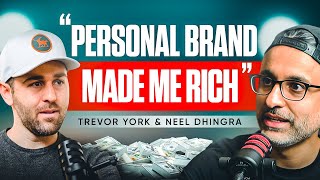
A podcast-style conversation (April 2024) between Neel Dhingra and Trevor York about building a personal brand and translating it into business. They cover video and writing skills, concise communication, authenticity, risk-taking, deliberate practice (copy→adapt→original), networking/follow-up tactics, monetization strategies (events, speaking, customer leverage), and the importance of intentionality and persistence.
The hard work you put in, you're wondering if you're ever going to be paid for it. Is it ever going to be worth it? I was doing it all wrong. I was losing money. I was taking my eye off my business to build my brand, and my income started to go down. And it's a risk, it's a gamble. I know it works because it works for others. If you do the things that we're talking about today and what we're going to continue talking about, you'll be heavily paid for that.
What is the most valuable resource we all have when we're down on Earth? It's our time. We all know that and we all hear that. Like, I'm excited. Extracting the most valuable thing that they can possibly give me, which is their time. So if I'm going to do that, I need to respect it. And the way I do that is by getting to the point very quickly, being concise, either adding value or making sure that I'm getting the value that I need.
In this conversation, the people who are having trouble with this, like, they're always focused on the wrong thing, but for the most part, especially in the beginning, not that many people see this stuff. Nobody cares.
How come it doesn't work for some people and how come it worked for you?
For anybody watching or listening, like, when we think about the components that have really helped me the most in terms of building my brand and then how it translated to business, it was, you know, building my personal brand took me from making mid six figures to multiple seven figures. But more importantly, it got me excited about my work again. It got me out of, like, honestly, like, a mild depression. It got me into having fulfillment from what I'm doing, and it's just led to so many things that are exciting for me. And so what I wanted to get into today was like, hey, this has worked incredibly well for me, but I've noticed it doesn't always work for people. What is that difference? Like, what are the different strategies? But more importantly, like, what's the mind shift you have to go through to get there? So, for today's episode, I brought on my business partner, Trevor York. A lot of you guys in the Ford family know Trevor, but thanks for being on the episode, man.
Appreciate it. Yeah, sure, man. I think it's gonna be fun.
Yes. We've been waiting to do a podcast for a long time. So for those that don't know Trev, like, we've worked together side by side, building the stuff that you see with forward and Trev's been played a big role in all the stuff I'm doing with my brand today. And so he's seen a lot of this stuff behind the scenes and helps with all this, Stu. And so I was like, man, we need to get on an episode together to just talk this through, because we talk to people in the industry every day. We coach people, we do content, we put on these events, and we do all this great stuff, but, like, it only works for certain people.
Yeah.
And we were having a conversation last night, like, why is that? You know? Like, where is it that we tell someone, dude, you're on the right path.
Yeah.
This is where I was at. I was just like, you.
Yeah.
But then I can't say that for everyone, because what if that's not going. It's a path to nowhere or it's a path down because you're. You're running in circles. You're doing it wrong.
Yeah, dude, I think a few. One thing is, I'm really excited to do this because I feel like a lot of the conversations me and you have after hours, behind closed doors, that's where so much of the value comes from. So conversations like we're having last night of, like, why doesn't this work for everybody? To be able to have you on a podcast and do this and go deeper. I'm really excited to see this stuff unpack over the next however many episodes because I think there's so much value in just open conversations that aren't scripted and aren't as refined as some of the stuff that you present from stage. And so one of the things last night that was so neat when we were talking about it is it's like, how come it doesn't work? And then you'll come with, like, oh, this is the answer. Like, well, no, because X, Y, and Z.
Or even, like, I remember telling you a story, and I was like, you know what? This guy, I think he's doing it wrong or this person's doing it wrong. And then I realized, like, I was that person.
Yeah.
I was doing it all wrong. I was losing money. I was taking my eye off my business to build my brand, and my income started to go down. And it's a risk, it's a gamble, and it's a bet on yourself. And how do you know when you're making a good bet versus throwing good money after bad? And it's not going to go anywhere?
I think part of that was chapters is what you kind of told me last night. Because at first, you're like, oh, I think they're doing the wrong thing. But it's the same thing you were doing three years ago. So it's not what you would be doing now. But that person's not where you are right now. And I think that's like, most people in the branding game or social media, when you're in that process of building, you're looking at where people are now versus where they were at when they were in the chapter that you are. Like, what were they doing at that time? And it was kind of funny because it came full circle for you of almost forgetting of, like, oh, you know what? That's like, three years ago, I was doing the same thing they're doing.
Yeah.
And they're in that chapter right now. So I guess they're doing the right thing.
Yeah, a hundred percent. And it's. And, like, I don't want people to think, like, oh, well, I'm saying I'm at the, you know, these final chapters. Like, no, I'm still in the middle of the fricking book. You know what I mean? Probably even in the third. The middle third. Like, I got a lot of more things I want to do, and I'm nowhere near where I want to be. Same with you. Like, you're in that same book in an earlier chapter, and you're on your way. And so I think it's cool to have both of our perspectives. I've been doing it longer, obviously, but Trev's doing the same things. And you can kind of see it from maybe a lot of the listeners and a lot of the viewers views from their standpoint of their. They're in that earlier stage of building and trying to get there. So, like, when we think about the components that have really helped me the most in terms of building my brand and then how it translated to business.
Yeah.
It was obviously content to begin with, so putting out videos. And I kind of. I kind of go back to this a lot. Like, getting good on video with video. Just being able to speak confidently on video changed everything for me because it also got me into being able to speak better. It also, I don't know, like, if this is the direct correlation, but for some reason, I just became a more confident person.
Yeah.
And then I spoke better on calls with clients, and I spoke better when I'm on stage and even just walking in the room or doing a podcast. Like, there's people who you listen to and there's other people who just kind of like, blend. And so you want to be that confident person in your things without having too much ego or like too much, you know, whatever that line is that you're walking. You know what I mean?
Yeah. I think that's a weird byproduct from doing content because to do it successfully, to try and build your brand and separate, you need to be different, you need to be concise. There's frameworks to make it work. And what's interesting is those same frameworks apply to when me and you talk to each other, when we go to a networking event where you're around a bunch of other people that are in the same industry. So for us doing mortgages, after doing content and really refining and focusing on it and getting good, you go to these networking events and all of a sudden your elevator pitch is more dialed, your value props more dialed. You're speaking with more authority because you had to practice how to speak with authority to make your videos do better. So all of these skill sets that make you a better content creator and help build Your brand are 100% applicable to conversations with clients, conversations with referral partners, conversations with your spouse and your friends. Like, being able to refine that skill set is one of the most transferable skill sets you can have.
Yeah. And it's also what I noticed people struggle with the most is we'll be on a call with somebody or we'll ask some, somebody will on the mic at a live event ask a question and they, they can't say the thing concisely. They just continue to ramble on. And so it's not their fault. They just haven't practiced it yet because we all do this. So I think, you know, with YouTube, it's a different format. Like you said. It doesn't mean that you can just now you have free time to go talk for 10 hours or 10 minutes or 30 minutes or an hour. It's no, you took something three hours and you condensed it to one hour. The most impactful and you said it in the best way or you took an hour and, and you condensed it into the eight minutes that would be most impactful. So that is a skill that people, I think are. Is highly valued today is being able to communicate clearly in a short window. So we did this on starting off on short form video on Instagram and we took videos like, you can even say, like, remember how we had to take our 3 minute Facebook videos and dumb them down. Cause this is when Instagram reels first came out.
Yeah. I think this is like what made me and you both really, really good at Getting concise was we had. It was practice and it was reps and we tried. And I think the other part is we had to collaborate a lot on it, but the format was make videos for to get more deals in the mortgage space.
Yeah.
So I was like, okay, I'm going to make mortgage related content. First video. Three minute video we put on Facebook. That's awesome. 500 people watched it, which is crazy. 18 people engaged with it. We're doing good Instagram. You could do one minute. So what we were doing was an edit. Usually we weren't reshooting the video, we're just taking an editing. Like this three minute version. Let's make it a one minute version. And then even I'm like, man, I like the 1 minute version A lot more. Like, I can't watch the 3 minute. And then Instagram reels comes out. I remember going into it like, dude, what is this? That? I thought it was just the editing on the app and it was like, oh no, you could post it and it just goes into the ether. 15 seconds tops. So like, all right, well let's re edit that one minute video into 15 seconds. The message stayed the same. Like the lesson that I wanted someone to leave with on a three minute video, you know, like it stayed the same. And then that became the new muscle of like, how do we condense all these into 15 seconds? And then when they gave us more, when we could go to a minute, we're still packing in so much stuff because that framework and idea of condensing just kept happening. So like, I love the way that you break this down of if it's a one minute talk, it's a five minute talk that you packed into one. If it's a five minute talk, it's a 20 minute that you packed into five. If you're doing an hour talk on stage, that should be like a 10 hour talk that you got into one. So it's all value, all killer, no filler.
You took out all this extra stuff, all the extra stuff that didn't matter. You got the most important, most important parts for the audience that could make the most impact and you put it in there. So, you know, for anybody watching or listening, like the number one skill that you can have as a communicator on all platforms is going to be to simplify and say something clearly in a short window of time. Like Trev just said elevator pitch. What's your elevator pitch? Like if somebody just runs up on you and says, hey, dude, what do you do? Like what do you say that sticks out? That's memorable? How do you be memorable in a 10 second window? Because they're not. You don't have two minutes to just ramble on. And honestly when someone does that, it's, it's the exact opposite of memorable that you just blend in. You've forgotten, unfortunately. And I think people are going through their day to day speaking too long and not giving clear, concise answers. And as a result they're just blending in. So that's the first kind of mistake I was making that I hope people understand because I want them to clarify that so, you know, just being clear. Like people love clarity and confusion. They hate, I mean they love clarity and confidence. So people love clarity and confidence, but they hate confusion and so they just like repelled by it. And I think most people are speaking in a confusing way.
I agree.
Even people trying to build their brand, like, I almost want to stop them and be like, dude, right now is like. And we tell people, our students and members because they're open to feedback. But like when you meet a stranger, you can't just like tell them feedback straight away. Like, hey dude, you lost me like two minutes ago. Can you start over please?
Yeah, that, I think that, that we like, what is the most valuable resource we all have when we're down on earth? It's our time chat GPT. Yeah. And we all know that and we all hear that like time is the most valuable. More than money, more than anything else. So we like, oh, I'm making free videos for someone to watch. Like they're, they're giving us their time so they're paying for our videos. So when you try to put the value of like when I want someone to watch this, I'm extracting the most valuable thing that they can possibly give me, which is their time. So if I'm going to do that, I need to respect it. And that's why I think that's a transferable skill is because when we meet in person, I need to value your time. And the way I do that is by getting to the point very quickly, being concise, either adding value or making sure that I'm getting the value that I need in this conversation.
Yes. And I said this yesterday. There was a guy we were coaching up on content and he was a high level executive. He's not been doing a lot of video, but he's been in the business. He's very smart and very successful and he speaks in sound bites sometimes, you know, so when, when he knows, when he's in his lane. And a lot of us have those lanes where, like, you really. You know something really well. If you can get that down to where you speak in sound bites, those are memorable. So those are like little clips, like just one liners. And you can have these in your. In your brain and just practice them. So the way I got better at that. Another way of thinking about this is with writing. So obviously we're talking about video content and condensing that down. We'll get into another type of content right now, writing. But then. And then we'll get into the other components of, like, what has led to a strong personal brand. And then how do you translate that into business? But writing has really helped me because on Twitter, for example, you only have that small window. And so I learned, like, you have this paragraph. You want to say.
Yeah.
How could you take that down to three lines and make it hit? You know, and the cool thing about or the bad thing or good thing about Twitter is, like, you don't get any love. Like, you could post something, get zero likes. Like, they don't even throw you a bone. Even if you have, like, some followers and friends on there, you get zero. Like, it's just the hardest algorithm I've seen to crack for me anyway. So I would write something and it would just get zero. I'm like, that probably sucked. Like, nobody would engage with it. It's also like, it takes more for people to like it. They just don't just hard it up for no reason. So I started to get better at it, and then if I got a few likes, I'm like, oh, that's actually something I could, you know, lean into. So even if you have very little audience there, it's a good place to just test your written thoughts.
So I think that brings up one of the most valuable things that any person building a brand can do, and that's being a student of the. Of your own stuff. Can you touch on that? Because what you just said of, like, you try it, you try it. That worked. Why try that again? That didn't. So maybe that wasn't the thing.
And you keep.
You keep trying different things. And a lot of times, like, we talk about this, when you look back at the stuff you've done, sometimes it takes a minute. What you think it was wasn't actually the thing. And you're like, oh, it's because I started with this word. Then you do another video, start with the same word, and it doesn't work. Like, okay, maybe it wasn't the Word. Maybe it was the shot, the movement, the. Oh, it was this part in the middle.
The people who are having trouble with this, like, they're always focused on the wrong thing. So they're like, dude, what camera, what mic, what set, like, or the lighting. I really love that. And the. Almost like the people who are ultra, ultra into, unless that's your niche, which is gear, or like filming the people who are in business, but they're ultra into all the things that are not about the message, not about the speaking. It's almost like you're putting off the thing that's most important. Maybe subconsciously something's going on where like, dude, you're not good at the actual video. Like, I mean, speaking on what is.
The most important thing then?
So the most important thing is going to be your message on the video, right? And making sure then that people can clearly hear you and see you. And we get into all those quality things, but without the message, it doesn't matter. You know what I mean? So that's the first thing is like, can you clearly make your points? Can you speak properly with confidence? And then people will listen to you. And so I've noticed with the strategy people are using with their videos and stuff, the reason why a lot of them don't get anywhere with it is maybe they're not connecting the dots afterwards to like, turn it into opportunity for themselves. But more often it's like they're just doing the same thing without doing what you just said, which is look back at your video like, bro, if you can't even watch it all the way through, if you're like, honestly, this is bad, and ask other people for feedback, like, ask your spouse, your friends and be like, dude, please give me something I can improve on. Don't just tell me it was good. Like, I'm trying to get better. Tell me where I lost you, honestly. Yeah, and they'll tell you like, dude, you lost me here. Or we did a video with this guy and he's talking about leverage. And then everyone in the room is like, dude, I understand leverage, but I don't think anybody else does. So maybe we need to say that different. It could be just changing one word. And so being a student, watching back, looking at what's working, not to just copy people, but just to be like, dude, the way this person did this worked. I can put my own spin on it too. I can do it in my own way or I can change the way I'm doing it.
So when you're looking at what other People do that work. One of the things I think from our student base and just from watching other people's content, the thing I think people do wrong is instead of looking for inspiration and something to get creativity from, they end up copying. And they're not just copying the words. They're not just copying the look, they're not just copying the strategy, but they're copying the way that the person does the video. Yeah. And I think that's when it will never work. So one of the things that I think is the most important part of making powerful content that connects with people is delivery. And it's one of the hardest things. I really enjoy coaching people one to one. It's one of the hardest things to coach as like a general baseline of here's how you get good at delivery.
Yeah.
But I think one of the best ways to get there is speaking in the way that you actually talk. So this CEO that we were coaching the other day, when we're sitting there talking to him, I'm like, man, this guy's super personable, super likable. Really good energy when we're talking. Speaks with absolute authority and conviction in what he's saying. And then we turn the camera on, light goes red. And all of a sudden it's like. Like an infomercial. Yeah. I'm like, what happened? So then that's not going to connect with people. And the infomercial version of him was what he saw or thought, like, oh, this is how you talk on video. Yeah. And I'm watching somebody.
You watch somebody else.
Yeah. But that's not you. So you talk. So even if that works like, oh, man, that over animated, loud like the ShamWow guy, it worked for him. It's not going to work for me. I'm not going to be the ShamWow guy. And so if you can find the way that you deliver in the way that makes you you. Like when you connect with a client, you're in that zone of like, I'm just talking like me. We're connecting. I'm not worried about my inflection because you naturally have inflection when you talk. I'm not worried about my tempo and canes because we naturally have tempo and canes when we talk. So if we get to that point of like, I could just communicate the way I communicate now. All of a sudden, the messaging, the hook, the light, the video, all that actually starts to matter and starts to work. Because now you're delivering to that one person on the other side of that phone and we could connect with them.
You're speaking of one person. That was another thing you brought up, which is really important. When we're talking on, on camera, you're like, dude, I need to announce something to this room of 10,000 people. Like, no, you don't. You're talking to one viewer who's literally scrolling Instagram at 11 o' clock at night. Are you talking to one person who just had your video pop up on. On YouTube? It's just one individual. And so you speak to that one person in the most authentic way to connect. So we talk a lot about in content. The reason why things aren't working is they're not being themselves, being authentic, so they're copying somebody else. I will say this, I was copying people for a year. So this is another thing where I'm like, hey, I actually did that. You know, like, I can't talk on it because I did it. So I think it's important. Everybody does in the beginning. You don't know your own thing. Like, you haven't been doing it and so you're not comfortable. So, yeah, I was like, copy Gary Vee, or I was copying this other person and it's not me, but I'm like, I'm doing it what I thought I. What I was supposed to do. You're just kind of. So that's, I think, a phase everyone goes through. But along the way, you find your own voice and then you start to be yourself. And I don't know where it is. It's different for every creator. Like with you, it seemed to be because you were in video before you got into business, or video was your business, and then you got into business, it was like you were already comfortable being yourself. So you have a different scenario. Most people is the opposite. They're in business, they never done video or they never done content, or they haven't done it enough. So they're. They don't know themselves. Like, they're not confident in their Persona, like on video.
But I think there's some. Like, even for me, if you look at the very first videos I did versus the later videos, there is that level of unraveling and getting more comfortable being the way that I would want to talk. Because for me, like, I was influenced by, like, vloggers back in the day, 10 years ago, when I used to watch YouTube videos or watching Fantasy Factory growing up and Rob Dyrdek.
Yeah.
And so then I see this, like, high energy, this, like Rob Dyrdek style, or these vloggers that are just Kind of like, like spastic and loud. And so for me, that's what I'm like. Oh, to be a content creator, I gotta be that and do that.
Yeah.
And it was actually a really cool transition because when I got into mortgages, I'm like, I'm not vlogging, not a YouTuber, I'm talking about loans. So I'm just gonna talk. And then the more I talked, like me, the first videos, I'm wearing like a collared shirt. Like, I don't wear those ever. I hated it. You know, Then all of a sudden that strips away and then I'm starting to feel more comfortable and I'm starting to get more casual. And then I'm realizing like, man, if I'm getting a mortgage, I don't want to be talked to in a super stiff, rigid, uncomfortable way. I want to be talked to the way that if I'm at my friend's house and he's like, dude, I want to buy a house. I'm not going to like go put my collared shirt on, get stiff, get very rigid and make him uncomfortable. I'm going to make him as comfortable as possible. That's our viewer. Yeah, that's all of our viewers. So for, for me, it was the same process, I think, as everybody else is. Like at the start you don't know what works or what doesn't. Christo was talking about this Japanese martial art process called like shuhari. It's a three step phase to become a master and it transfers into kind of anything if you want to be a master of art, master of photography, in this case, content. Step one is you copy what's being done and you just get really good at the basics. Step two is you start to put your own flare on it. And then step three is when you actually become a master and everything becomes original. So everybody does have to go through that process of like, where do I start? Just starting. So if you are copying something great, if you're doing a script word for word, someone else, great. But get to step two and then get to step three. And a lot of people just stay at step one and they're paralyzed to ever start to add their own flair because they're scared people aren't going to like it. Yeah, myself included, that's all of us. Right. Like, I don't want to add that part. What if, what if people don't respect me in the industry because I'm wearing a hat? Like, I think every mortgage banker wears a suit. So I can't wear A hat. And then you do it, and it connects.
Yeah. I think, like, there was something that goes on in your head where you think it's a spotlight effect, where you think there's. And you walk in a room or you show up on video, there's a spotlight on you, and everyone's looking at you and judging you. And the truth is that everybody's more focused on themselves. Like, they're more focused on what they have going on. So we're not. Like, the first thing was like, hey, we're not that important. Yes, you're gonna post a video. You hope people see it. There's going to be a few people who judge you, but for the most part, especially in the beginning, not that many people see this stuff. And nobody cares. Like, you know, I have this thing on my wall for years. Like, nobody cares. Work harder. Like, nobody really cares about what you're going through. What? I mean, it sounds sad to say, but they just don't give a. Like, they're just into what they're doing, and so you just got to get out of your own way on that stuff. And I think it's just reps. I noticed it's different for everybody, but it clicks at some point, and you could just be yourself, and you're like, you know what? I don't. I just don't care. Like, before, like, a couple years ago, somebody left a nasty comment. I was, like, wanting to debate them and make sure it sought, right? And then I'm thinking at night when I'm going to bed, like, dude, what if my other clients see that person's nasty comment? Should I delete it? Should I leave it? Then I'm messaging a friend who's more experienced than me, hey, Neil, I just got this thing. Do you think I should delete? You know, And I'm like, now I'm like, dude, why did I even bother people with this request? Just freaking forget about it. And now if that same thing happens to me, I. It. I literally don't even care. I probably won't even see it. It doesn't matter. It's meaningless. So this. I think it's a numbing process. So first you're, like, worried about the way you look and sound. Then you get numb to that. Then you're worried about what are people saying? Then you get numb to that. Then you're worried about nasty comments. Then you get numb to that. And so over time, all this stuff goes away. And we'll get into speaking in a minute. It's the same thing. Like, The. All those bugs I used to get this dry mouth and this nervousness and, you know, all this weird shit that would happen to me from speaking, it all just goes away with the more you do it. And so as long as you're doing that phase, like, there's one caveat is as long as you're getting better, so you're looking at it.
So what. What about the people who. And we've seen a bunch who are getting better, objectively getting better at doing the thing, and it's still not working? Like, what's the difference between you and someone else who's like, yeah, man, I want to be Neil. I want to. I'm gonna leverage myself. I'm gonna go do an event like you. I'm gonna pay to do a podcast with Gary Vee. How come it doesn't work for some people and how come it worked for you?
Yeah, that's the part of, like, okay, now you maybe are in a position where you really want to put some gas on the fire. You want to take some risks. And so I. I was talking about this last night. Like, I have an inverse relationship with risk because I've messed up in life along the way and. And have been at a point where, like, I didn't have much a couple times, and then just rebuilt. So, like, to me, going to zero isn't that bad. I'm like, okay, I'll just redo it.
Yeah.
Like, I feel like I'm relatively intelligent and I've acquired some skills throughout my life that even if this business failed or if this thing failed, like, I'll figure it out. And so that is not a healthy thing, I think, like, for people to feel like, oh, you're just gonna risk all. Go all in with all the chips. No, I'm not saying that because they could also backfire, but there's been times when I've actually done that. So it's more of, like, a gambler's mentality of like, I'm just gonna do this, man, and see if it works. Until you were saying like, hey, do you have a master plan for everything to connect? Because I was saying like, oh, you should only do that if you know it's going to work out to business.
You got to know how to squeeze it.
And then I was like, wait a second, I'm being. I'm being a hypocrite, because I did not have the plan. I just knew what I was going to do. And I was. I was trying to build it better. So I knew, like, hey, if I do more content. It's going to get me more of an audience. It'll build me a powerful brand that will lead to more opportunity. I didn't know all the opportunities.
Yeah.
So it's like, you don't need to know all the steps. You just need to know, like, this is my. My North Star. Here's where I'm going. I know it works because it works for others.
Yeah.
And those people are similar to me. So it does work. I know that. And some of these people, you could say, are dumber than you, but they just have more courage, more confidence, more skill in terms of media. So it does work. How can I do it? And then, you know, so that. That takes that risk off the table. Then the next risk is your personal, like, can you be a good enough executor and operator of this for it to work for you? So I think, like, with anything, any strategy, you're like, you're judging two things. Does it work and will it work for me? So if it works for others, like, okay, we got that one off the table now. Is it going to work for you? It depends. That's the hard part. Like, are you actually being intentional? Are you trying to get better? You said people get stuck. I would argue that those same people who are telling us that it's not working for them, they're not being themselves. They're also not putting out enough other types of content, personal connection. They're also not doing the call stack. There's something else there. There's pieces missing. Like, they're saying that they're doing it and they're checking the box.
Yeah.
It's like, dude, why do we want to check the box? Like, don't just make the calls and say you made the calls. Don't just post the video to say you posted the video. Like, really try. Like, even this morning, I was shooting an Instagram story about why I'm hyped for today and what we're doing, and you're like, dude, reshoot that, man. You weren't yourself. I'm like, why not reshoot it?
Well, it didn't align with what you're saying.
Yeah.
Like, I'm so excited for this. I'm like, you didn't sound excited.
Yeah, because I was a little tired, like, last night. Didn't sleep as good. So then, dude, wake up. Let's go. Let's reshoot that.
Yeah.
How many people just hit send? Like, I've done that before. And then, you know, so why not retry it? If you're going to do it. Do it good. Yeah.
Like intentional.
Exactly. Being intentional. So I think they're missing that piece. But once you're doing that, you should start to see traction. And then now you want to pour gas on it. So that gas is like, I want to spend money on ads to run to my brand so I can blow up even bigger. I want to pay this influencer to shout me out. I want to do a collab with somebody where they're going to introduce me to their audience. But in order to do that, I have to pay them. And see, these are, like, hacks. I've used someone's like, dude, how'd you get on that stage? Like, and do you get paid for speaking? I'm like, not only do you not get paid for speaking, I paid to speak. Like, I literally wrote a check for someone to put me on an event. So I'm like, hey, I'll smile. Not now, but back then.
So that's the other thing is, like, well, now you're getting paid.
Correct.
So, like, I want to do that. Well, like, we'll go do what I did first.
Yeah.
And then you can get there.
I was saying this conversation I had with somebody, where it was somebody on our team, where I left an event, and it was really fun, spoke, and it was one that I did a good job. A lot of good feedback after, like, we're taking pictures, having, like, taken. It was a fun experience because when you. You know, when you crush it, like, it's fun.
Yeah.
Because you're like, damn, I did a good job. That feels good. Gives you confidence. So we left and it's like, dude, we were there an hour and a half. How much did they pay for that? I was like, 20 grand. He's like, dude, that was the easiest 20 grand ever. I'm like, not really, man. Because it took me years to get to the point where I could actually get that. So it's not about the money. Yeah, it's cool that people value your expertise enough to pay you money now, but it's all the money. Like, what about all the years where you did it for free? And then for me, what about all the years where I had to pay people to put me on and buy someone's product? Like, I will say this. If you're trying to create a relationship with someone who's ahead of the game and you can't just reach out to them and can't get their attention, just buy their stuff. It's not like you're buying friends. It's Just like for me in business now, I have a little bit of perspective on this, and you do, too. Who are the people we give our most attention to besides family? Our customers, like, they've, they're, they're paying customers. So you feel obligated to respond, you feel obligated to talk. And, and then some of those people end up building a relationship with you. But how did it start? They were a customer. So I take that same thing and apply it towards anybody. I want to meet this influencer and somehow get a relationship. Well, buy his thing. Does he have a coaching product? Does he have an event? If he has an event, buy the most expensive ticket. Right. Then you're going to get to meet him. And by the way, if you DM him and you let him know, hey, dude, I bought the VIP platinum ticket. I'm so pumped to be there. He's going to respond because they. Everybody who, at least the good people, they really appreciate their customers. Like, I'm like, dude, I'm so, like, honored that you spent your money to come to my thing.
There was a guy that put on an event. I don't know how much the guy's worth. Probably hundreds of millions of dollars. And he put on an event, small one, that you were supporting, and you bought, like, the first ticket the day he put it on sale. And he's not a marketer. He's a. He's a money guy.
Yeah.
And so when he did that, the money didn't matter to him. He's got a lot of money. You bought the very first. I remember you telling me, like, dude, it is significantly overpriced.
Yes.
Probably not worth it, but I'm going to buy it. And it was the first full price. The dude ended up discounting those because he couldn't move them because again, he wasn't really a marketer. So you got hosed on that in one sense of the purchase price, you got the return. Because a guy in front of our entire mastermind group, he spoke, was saying, like, Neil was the first one to do this. How far that went with the guy.
Yes.
I don't remember what the ticket cost was.5 grand or something.
It was over 5 grand. Yeah.
But if you went and gave him 5 grand would do nothing for him because he doesn't care about money. There's nothing you could have done supporting something that he was doing. Yes. You're on that dude's radar. One, he likes you. Two. And now he feels this obligation to reciprocate that with you because you did.
That and it even works with lower ticket. Like, it doesn't necessarily have to be that. I mean, even some of our people who are customers who bought the lowest ticket price at an event or the lowest coaching product or whatever it is that they offer, like, even those people are customers and they have a higher priority over people who are just, you know, just regular people. It doesn't mean like, hey, we don't talk to people unless you pay. No, no, that's not it. It's just like, we talk to people every. I talk to people on social every day who I'll never do business with. I'm just. I create relationships. I love that. What I'm saying is it just moves you up the totem pole when somebody's extremely busy.
Yeah.
And it just makes it a priority to get on their radar. So.
And it's not this like, oh, well, if you pay me, I will be friends with. That's like the exact analogy I'm giving. Or example. Wasn't it wasn't the money. Like, that's not even. So it's. You value what I'm doing. That feels really good. So no matter what product it is, if it's the cheapest thing, but it meant something, that person. If it's a $20 thing that you release and sell, if someone buys it, it's like, oh, you see the value in what I'm doing. That means a lot to me.
Yeah.
And then that opens the door for that.
And then. And then we talked about people who have spent a ton of money and it did nothing for them. So I think in those cases, they weren't being intentional again. So it's like, okay, you've paid money to put yourself in a position to be in front of a large group of people. What are you saying? In front of that group, people. Hey, what are you saying? Did you plan that out to be the most impactful? Are you filming this? Something as simple as, like, did you bring someone to film it? How about the BTS of that moment going into it? Like, are you documenting this? Because you're going to need that in the future. How about like, because you're telling your story, which could inspire other people in the future. We've done that. Like, we've been to events where I literally beg to be a part of it. Figured out a way to get in there and we're filming this. All time filming this. And then what's an asset I can take from this? Well, the footage from the stage I could use to promote my next thing. It Makes me look like I'm further ahead than I am. Like, that's an asset that you can't buy. Like, you can't just be like, yo, put me on stage, introduce me, and let me speak in front of the full crowd so I could film it. No, you can only get that if you're a speaker.
Yeah.
So, like, can you imagine going through all this and then you're on that stage and you didn't get the footage? So, like, oh, well, then it wasn't worthwhile. Like, it was a moment that was high for you, and then you went home. And unfortunately, with everything we do, it's just another day and you're back to the grind. So, like, what do you squeeze? Like, I was talking about this. Like, everything I'm doing, even to this day, I'm squeezing all of it.
Dude, I think this is the most underrated thing that you do that, like, you. You probably don't talk about enough or get enough credit for. So there's we. We talk about the risk relationship, and that's a really common thread amongst entrepreneurs, is they have a really high risk tolerance. They're willing to make a bet, they're willing to bet on themselves. They're willing to make the investment to get the result that they want. One of the things that you've done extremely well, and this is something that I've, one, admired and two, learned a lot from you, because it's not good for me is this the feeling of, like, rejection or the feeling of failure. You do not care. And so one of the examples that you're talking about was speaking at Thrive event, really big event. A lot of keynote speakers. You fly me down, you fly another dude from our office down. We're all in the crowd. You're working on a side deck. No one's told you you can speak.
Yeah.
You flew to the event. No one said you can speak. They in fact, told you that you're not going to speak. Sorry. Appreciate it. We fly down anyway. You're doing a side deck. Why you can't speak, like. And you're working on the side deck. You're going the hallway. You refine it. No one's told you you can speak yet still. And that resilience. And I think that the thing that a lot of people. And I'm speaking for myself when I say this, because when I say a lot of people, I'm speaking about me. I don't want to do those steps. Like, it doesn't feel good. Like, man, they said, no, I'm not going to push. Like, I want to be one of the keynote speakers. I don't want to just beg. And like, I want to be at that.
Well, you feel like it deme. It's demeaning.
Yeah.
To ask again. And so I. When I say beg, I'm saying I just kept trying, but I'm consistent. But it's not. You don't want to have that needy vibe. It's the energy that you have too. And so you can be like, this is something I really want. It's important to me. But at the same time, don't put yourself to where, like, you're a fanboy.
And you're like, there's an art to asking that you have for sure. That's a whole podcast in itself.
You could just be like, literally, here's my follow up strategy. Here's how I word the emails. Here's why I kept asking. And you know, it's like, hey, on that situation, it was like, I wasn't at a position where they would invite me to speak at that point in my business, like, maybe now I could do it. But a couple, three years ago, no way. So I was like, hey, I want to speak at the event. No, no, no. Even with mutual connections, dude, it's full. We can't get you in. Next time, maybe, you know, just get out of here, bro. Like, stop asking.
And then just like, take one. No.
Yeah.
Let alone two, let alone three, let alone ten.
Like, but what is that?
That makes you just freaking combat. Put your head down. No matter how many times they say no, you're like, that's fine. It's a maybe.
Well, because I noticed with most people who are really busy and most things you want, you know, the doors aren't closed. You have to push harder. What I found is they actually say no or don't respond on purpose to see if you're real. So what happens is I go to, like, I will meet. Let's just say we meet Tom Influencer tomorrow and he's a big speaker that we've been trying to connect with. We want to get him on the podcast.
He.
If you can get him and if you can run up on him in person at some place and be like, yo, love your stuff, love your book. Can you sign this? Let's take a photo, dude. By the way, I have an amazing podcast. You're our dream guest. We really love to have you on. He's not going to say no. He's going to do this to you. Most likely he's going to Say, yeah, man, would love to make that work.
It's just.
Schedule's a little crazy, but, like, send an email to mariaz.com, she handles everything, and she'll get it dialed in. So what do you do? You write that down. I will tell you what most people do with that. So you have 10 people. Sadly, seven of the 10 won't even send the email. Why? I mean, he crushed the request with one thing. He gave you one step. He didn't even send the email. And then one more person is going to send a shitty email, and then two people are going to send a good email. Okay? The good email. There's no response. And you're like, wait, I tried. I emailed the girl. She told me to try, and then they never got back to me. That's normal. That's what's supposed to happen. Like, that's what I found is, like, they're using this as a barrier so they don't have to do all these things. So then you ask again, hey, I just want to follow up on this. And then what I would do was I realized, like, even when they said, no, schedule's tough. It's mostly just like, dude, if you could do it, it's just like, maybe it's not the most convenient thing to do, but you could do it. And so if I really believe in the value I'm doing with the podcast, if I really believe that if I got on that stage I could provide value, and I really believe in that, then I just have to keep asking and do it in a way where it's, dude, I don't mean to bug you, but I just wanted to be persistent and keep following up. And I remember with that one situation you brought up, what worked in the end was seven requests, all kinds of different activities. There's a video on YouTube. You could watch it where, like, I go through this whole thing of everything I did, and none of it worked until the end. And the last request, I was like, you know what? I'm going to try just one more time, and then I'll stick a nail on this. Like, this is enough. At some point, enough's enough. But, like, I'll do one more time. And I wrote to the dude, I said, hey, man, I know you're really busy, and this is the last thing you want to deal with today, but I'm just being persistent. I really want to make this work, or, I really want to make this work. And I'm just being persistent. And his wife had just given a talk about being Persistent. And he felt like, you know what, dude, I got to give it to this guy. And the reply was like, dude, meet me backstage. I'll get you on. And so that's just one example, but that's happened in many different ways over the years of, like, just ask again, follow up. Keep following up. I think some. At some point with some of the people I've connected with, they realize, like, this is going to happen or Neil's going to die. Like, yeah, it's either. It's going to happen.
Well, dude, and I think you hit a really important point that people will miss, is that when you're trying to get something, like, I don't want to say. The reach I have now with the following I have now, there's a lot of inbound that comes in, and it's just hard to do it all.
Yeah.
And you don't want to be mean. I don't think anybody's, like, intrinsically mean and wants to say no. Like, hey, will you come on my podcast? Like you said, most of them won't say no. They'll give you a barrier. Yeah. Because I don't think anybody wants to be rude. I don't think anybody's just going to be like, no, man, I'm not there for it. But there's like, I get 50 of those a day.
There's got to be criteria.
Yeah.
Do you even have a podcast? Do you, like, some people, like, they're just lying.
Yeah. And then, so one of the barriers, like, yeah, podcast. Cool. Can you send me your first episode? Well, I don't have a first. Okay, so you don't even have a podcast. How many episodes have you done? So there's like, the streaming questions.
Yeah, yeah.
And some of those guys will tell you, like, how many podcasts have you done? Well, I've done 10 episodes. Cool. I'll be your. Your 40th.
Yeah. Sometimes he's like, oh. He'd be like, I just launched it. Will you be my first guest? He's like, no, but it'll be your hundredth.
Yes. So that's awesome. And then you gotta. Yes. Because one. He knows most podcasts won't make it that far. If you do, then, yeah, man, I will humor you, and I'll do that because, like, I don't think anybody at the core is a bad person. But those. Those are bigger barriers. Right. Like, hey, you need to do 20 more episodes, and I'll get there. That's good for you. It's good for me. We all went. But even Small ones like you said send, the email fall off, goes down. Email response is, hey, looks like we can't make that work. Sorry. Say, well, can I come to you or can I make this. I see you're in Vegas next week speaking. Can I come do it? Like, that's the art that I've watched you do too, is in that follow up.
Strategic.
But it's insane how many people give up with that first little barrier. So even on a small scale, because I'm by no means a person, that's important is for me when they get those requests, a small barrier. Can you review this video for me? And I get those all the time. And it's like I don't have time to watch the amount of videos that I'm asked to watch. Yeah, shoot it to my email for me. I'm like, does it matter if it's in my email or my. Like, I'll watch. I could watch it either way. But it's just one more step of friction. If they do that, I know they're serious, then I'll actually do it.
Yeah.
Because if they value my time enough to go, I'm going to do that one more step because I really want you to actually review this, then I'll do it.
Yeah.
Just one little piece of friction. But it's insane how often I do that. And it's to your point, probably way less than 1 out of 10. It's like 1 out of 50 will actually do that.
Yeah. And it's other parts of like, there's other steps along the way. I call it being pleasantly persistent. But then it's also strategic. Like, okay, we wanted to speak at the event. He's already told me no. Does that mean we don't go? No, that means that I buy three of the most expensive tickets. Like I'm there in the front freaking row, you know, like, hey, I just wanted to follow up again. Is this going to happen? And. And it was like, dude, they reluctant to give me a clear no.
Yeah.
So there was kind of like, I was like, there's a, there's a.
You're telling me there chance exactly that.
So a lot of times they won't shut the door. They just are testing you. Like, yeah, man, let's do it. Vague, vague, vague, you know, and you just keep trying. And then like you said, you brought up a great point. Like, dude, I'll be in the same place. So, like, for example, you want to, you want to get somebody or create a relationship, like, meet up with somebody. Dude, I'm going to be. I'm going to be at another event. I'm going to be speaking at another event in your town on this day. It's kind of a white lie, right? You're not speaking that you're just flying there to meet this one person. But like the fact that you're there and it makes it easy. Like, make it easy for someone to say yes. For example, there's another part people like, all right, dude, I would do it. Well, what, like now did you give them a link to schedule it like you ask people? Make it easy. Make the yes easy so that way there's no friction.
Yeah.
All right, so I would love to do this with you. Just pick a time or I've already picked the time or this day, this day or these weeks. You literally tell me the time and I'll be there. Like any time that works for you. I got a 15 minute window or a 20 minute window. You tell me and I'll show up.
That is so huge. If you're. If your onboard process for a podcast is you send them a calendar link and it asks 15 questions. No might be great for some of your guests. Send them a different calendar link for that one. No questions. And then an optional follow up of like, I really like to do some due diligence. If you have time, can you fill it? I already got the yes. Now I could send the 15 questions. I've been told that whole podcast.
Yeah, I've been told. I'm like, it makes you not want to do it.
Yeah. If there's any levels so that like changing your strategy for that specific outcome, that's something that you don't have. This one size fits all of. Do you want to join my be on my podcast? Here's my intake form. Maybe that's super valuable for like I structure my entire podcast around this intake form. It gives me context, helps me with the wireframe. It's why I ask really good questions. It's important that you answer this. I'm not going to send that to you. Right. Like I'm going to just get the yes and then maybe email your assistant and be like, hey, this really helps me with the structure of the podcast. If you can answer these or if Neil has a second, can you.
And then you talk about like earlier and this is all comes to get. Like all the things just mesh into like this strategy of working. Like we talked about communicating in a quick way. Like how many times you get this Bible sent to you. Nobody's going to read that. Or how Many times someone sends you a video message and it's like they see the bottom. It's 3 minutes and 47 seconds. That's an eternity to someone who's busy. So what about if you made that video 33 seconds or 22 seconds, like get that shit down. Dialed to the clearest message. I know you're busy, but I want to send you this, by the way, like just get it really tight and just not like rapid speed, but just, just respect people's time because you know that's the number one asset. So that's the thing of connecting with people that are ahead of the game. And then now like, how do you leverage this into the next thing?
So one of the things I want to, to tie this back together because talking about why does this work for some people and why is it not? And this was a really roundabout way of getting to it, but it is this like hyper intentional with every single thing. So it's not, here's the formula, it's, here's like a loose wireframe and you gotta connect all these dots and every time you're doing a step, be absolutely intentional in it. So if you're telling somebody of like, create content. Okay, how many pieces? I don't know, do three a week. Okay, I'm doing three a week. Well, what topics? And then you give them some topics. They do that. It's not working right, but it's like, hey, be intentional within the scope I'm giving you. What are you doing for those three videos? Are you copying me Exactly. Are you copying my delivery? Exactly. Like, cool. Now you got to a point, go to step two of that three step process. Like add your own flair into it and then, oh, we need a way to capture leads. Cool. Did you really optimize that link in your bio? Did you create a proper funnel? Have you thought about your funnel? Have you thought about your follow up emails? Were you intentional with the subject line? Is your subject line the same as mine? Because our crowds might be different. So like what am I doing? That's the part that I think with you again is missed because people don't see the back end of. Like it's all really hyper intentional. This isn't a one size fits all strategy. Like the amount of adapting you have done for every sale, every launch, every communication, every outreach. If I was like, dude, send me the email to get a guest on my podcast. Like, there's not an, yeah, there's not an email. I look at the person and figure out like, so then that becomes this Loose framework of like, what are their pain points and how do I alleviate it, what's the most important thing to them and blah, blah. But everybody wants to like, send me the template email, get Cardone on my podcast. Well, there's not one man. It's kind of a 10 year strategy too, to go into that.
Yeah, it's like, make it easy for people to say yes, get on their radar, get some social proof, like, connect with the people in their network. There's so many different things along the way. And then like you said, when you make offers, like, okay, you're doing all these speaking things, what's your offer? Like, are you connecting the dots back to your business so that you can be profitable with this? Like, is there a path to making money? And so some events, there's no way you can do that. Other events, like, yeah, there's ways to get people to do business with you and say it's an event where you can't pitch. Are you at least having a QR code on there that goes to your email capture and letting people know. Well then, now, is there a way that in the middle of your talk that you can do something intentionally that would get them to want to join the email list? So it's not like, here's the thing, join my email list. Well, no, no, no, that's not a clear offer. How about like, guys, I'm really short on time. Burn through like six slides if you want me to send you everything that I'm going through today and everything, like, here's this thing, join the list and I'll send it out tonight. All right, that's like a clear offer. You see everyone's phones go up. Now you connect with more people. Then do you actually follow through and send the emails? Then are you following up? Is there a drip after that where they're gonna get notified of things coming up and you make that connection? Are you connecting with them on social? There's so many, like, other steps that you could squeeze all of this stuff. And so I think that's the part that people are missing is like, you can do it, but like, what are you, are you really squeezing it? And so it's, it's leverage, it's being intentional. It's all of that. And then that's the, I think that's the missing link where someone's like, I did what you did, Neil, and I lost.
Yeah. And that is, I think that the answer to like, why does it work for some people? And why does it work for. Why does it not work for others is like, how intentional are you being with it? Yeah, the more intentional you become with it, the better the result is. So are you checking the box? Are you trying really hard? Are you being a student of your own game, or are you just doing the motions? Are you still in step one? Are you trying to get to step two and step three?
Yeah.
And so hopefully that does answer that question of, like, why does it work for some people?
100%. And then, like, even with this podcast, this is another step. But it's like, hey, I was doing so many other things. Now I think, like, there is a flood of podcasts. It's probably, you know, there's no shortage of people talking on the mic. But I figured, you know what, dude? Why don't I do some stuff in business first? Execute when, fail a bunch. Why don't I fail a ton so I could tell you guys all the failures and all these things? So this is kind of like the. The first episode of this relaunch that is going to bring a ton of value because I've actually done enough things where I feel like I have enough things to talk about.
Yeah.
You know, it's like, hey, people want to get a better. Become a better communicator and have better stories? Well, go do some shit. Then you'll have good stories to tell. You know, like, I was just talking with you last night. There's stories that I've told you that I've told no one else.
Yeah.
Like, these are cool, and they are learning moments. They're not just stories for the purpose of, like, hype. Some of them are funny, whatever. But there's a lesson. There's always some. Like, there's a takeaway that you could apply to your business. And there's a lot of people who I've connected with over the years who now I think I can really get the most out of them to bring to the audience. So, like, it's not just a random interview. It's no, dude, this guy, I feel like I could get this out of him. That would really help the audience. And so that took me years to get to that point. And now I feel like I'm ready to. To share that with the audience. And that's why I wanted to restart the podcast.
I. I think, like I said earlier, the conversations me and you have had behind closed doors, I've had the luxury of being able to learn from you for four years, and I feel like you've shared one tenth if that of the value that people can extract from the way that you've done business. And there's so many things I want to keep probing deeper into because I want to share it with the world, too. Like, I got this benefit, and when we. When we talk about the. The chapters that people go through, what I love is that me and you are in different chapters, and I get to talk to you every single day. And I got to skip a lot of steps because I'm working with you. Right. Like, you paid these dues for however many years doing the job that I was doing in mortgages, and then you got to this stage. Yeah, I got to get significantly further because I got to learn from the things that you already learned. And so this is a little bit of a tangent, but I think the reason that a podcast like this is so valuable is. Is to be able to extract the same things that I got to extract from you that have literally shaved years, like, year, several years off of what I would have had to do to get to the same place, to get to the same network, to learn the same skills, to learn the. The. The failures that I don't have to go through because you did them for me, and then you shared those with me, and then I got to avoid mistakes. Mistake avoidance is one of the most, like, valuable things you could pay for. Right. And so that's what I think this podcast is going to be something that I'm excited for the world to see, because I've seen what you've done for me, like, one to one, and being able to share that with everybody else. Like, I think this is just the beginning of really being able to impact people's lives in a way that is hard to articulate, because when you talk about 10 years of trial and error that I would have had to gone through, that's avoided by being able to sit and listen to you talk. That's a really cool thing, man.
Yeah, thank you for saying that. But it's like, that's the. That's the cheat code. So we say there's no shortcuts. Well, there are a little bit. Like, no shortcuts is a mindset. Like, dude, don't try and skip the work. Like, you got to put in the work. But there are shortcuts by learning people who are from. From people who are ahead of you. Yeah, there are. Like, I've done that, and that's what's helped me even, like you said, those 10 years. But it's also like, it could have been failed. It could not have worked. It only isn't it Worked because I was learning from people who are ahead of me. Like I've had people just drop 10 minutes of knowledge on me that's like, oh, I was about to make a major mistake. Thank you so much for telling me that. I'm gonna go this way instead or I'm gonna try this on stage. I'm gonna try this on a zoom and it works. So those little hacks, it's not like those are, it's the, it's the compounding nature of all this. It's like one hack followed by another hack. One thing, one email, one follow up strategy. It's not one thing on its own, but it's the combination of all of them. And then you do that for years and then you start to see the compounding. That's the coolest part about personal brand is you see years into it is really you see the payoff after a while.
Dude. And there's one other thing that I think that is unique about you is when you say learning from people that are ahead of you, something that I see you do that is a rare quality is it's not just ahead of you in one. It's not like, oh, they're more successful. It's like they know something I don't. So a lot of people will discredit and like I only learned from this person. Well, that person's not really good at email marketing. Like you're really good at discerning that. Like they're super successful. They did well. I'm not going to copy their email marketing strategy. This person has made 1/40 the amount of money, but they're really, really effective in that and they're really good at that. I'm going to go learn from them. Yes. That's something I think is unique and really cool and something that you don't.
Have to learn from the billionaire. Like you can learn from a dude is just a couple steps ahead.
You could lear from someone who's behind you in 10 other categories. But they're really good at one.
Yes, that's true. Like I've learned from you and like, oh well, Trevor's 10 years younger than you. He has, he's whatever. Less net worth, it doesn't matter. Like you have a skill that I don't have.
Yeah.
So then that's how you can learn from somebody. So it doesn't, it's not necessarily just like, oh, look at their net worth and then decide who you should work with. No, it's, there's so many different levels to it. And then the other part is that you kind of, you know, leave out, which is from your perspective, is like, dude, you've been able to accelerate. Well, that's also because of the skills you have. That's also because of. You do things with intention. So it's like, yeah, I got someone to put me on. Cool. Neil's putting me on. Well, then you don't show up and bomb. Like, you show up prepared. You took some time. You stayed up all freaking night for a week and figured out what to do. And so, like, there's a lot of times you get presented with an opportunity and your ability to really capture that opportunity and then keep going is like, what happens in that moment.
Yeah.
And I feel like even if you're not ready, we've been both in this situation. We'll. We'll get ready very quickly, you know what I mean? Like, oh, this is happening. When is it happening? Now? Oh, cool. You know. Well, at least I have my slides ready. At least I have some thoughts that I've been working on. So you've kind of, like, you've got stuff that you've been working on. Some of it seen light of day. A lot of it is just like, for the time when it's going to be there.
Yeah.
And that's a skill. Like, I think that's the thing of just learning. Like, oh, I got some free time now. I'm learning this new thing. What is it for? How does it pay you? I don't know, but one day it is. And so it's just think about. This is like this stuff that you and I do for free and we've done for free for years. One day you'll be heavily compensated for that. Yeah, that's what we need to all think. Everybody watching, listening to this, like, the stuff, the hard work you put in, you're wondering if you're ever going to be paid for it. Is it ever going to be worth it? If you do the things that we're talking about today and what we're going to continue talking about, it will be you'll be heavily paid for that and wait, you'll have opportunities that you never thought were possible. If you just freaking continue to get better and don't quit, it's two. Two things. Like, don't just do it, but, like, do it with intention and get better and don't quit. Because at some point it's just like, you see people just fall off. Yeah, they just fall. How many people we started content with that? They just don't exist anymore because they just quit. So stick with it. Don't quit. If you're watching this on YouTube, do me a favor. I do all this content for free and I want to put out a ton of value. Hit that subscribe button because it means a lot to me to grow this channel, and I really want to be intentional about putting out the best content. Not just checking the box, but putting out the most valuable stuff. So hit that subscribe button. If you're listening to the podcast, give us a review and we will see you on the next episode.
More from Neel




Don’t let people tell you what you can and can’t do. #personalbranding #podcast #entrepreneur

How to use Ai the right way for scripting. #personalbranding #entrepreneur #ai




Your audience already has a story about why it won’t work. #personalbranding #entrepreneur

The new YouTube strategy to hook viewers. #personalbranding #entrepreneur #podcast
Why you shouldn’t discount your prices. #personalbranding #podcast #entrepreneur