How to 10x Your Personal Brand While You Sleep
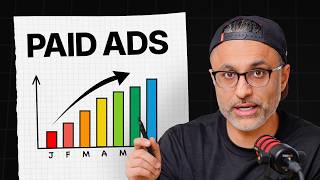
Neel Dhingra and ad strategist Dylan Ben explain how to use Meta's AI-driven ads to scale revenue. A $25k ad spend generated $290k in revenue for one client. They stress rapid creative testing, hyper-specific audience targeting, and letting Meta's algorithm handle spend allocation instead of over-optimizing.
Chapters
So if you ever wanted to get clients while you sleep, the key is going to be to start running ads. But you probably think that ads are complicated, expensive, or maybe not for creators like you. This is exactly what I thought. But then I started running ads to people who had been watching my organic content. The result was millions of dollars in additional sales. So for today, I want to bring on the guy that worked with me on these ads, my friend Dylan. Ben. Thanks for being here, bro. So, man, Dylan has worked behind the scenes with some of the top creators in the space to generate millions of dollars. And we're going to give you this simple playbook right now.
Met his goal right now is to destroy every advertising platform. Here's how they're doing it. They've created the most powerful advertising engine that exists, period, where you can put up an ad and it'll make money.
Why do you think that most people avoid ads?
I think overcomplication, honestly, like, people think that there's all these aspects of it, but if you're already creating content, you could run ads.
And so that's like, we talked about this before, there's a lot of new changes that have happened with Facebook and ads. I think it's a lot easier to get started there than people think. They used to overcomplicate the process. Now, I know you guys get into a lot of the messaging and all the depth of everything, but for the average person who's just getting started with ads, do you still believe there's a big opportunity for them, even with ad costs going up?
Oh, I mean, a million percent. The reality is, is that there's depth of how far you want to go. Like, for us, for your campaign, we're getting so granular. As the person who already saw this ad that already did this, that already did this, that was already on your list, we're hitting them with a different ad. But for the average person, what they should be doing is you can. I mean, it's as simple as you can go to Instagram and boost a post, which, like, I wouldn't. I wouldn't recommend that. But you can, right? The simplest way, but with meta, the way that their algorithm is, is like they've combined now they're doing like, they have their. A lot of people don't know this. They have their own LLM model. So.
Yeah, so like Llama.
Yeah, yeah, like Llama. Yeah. But what they've done is they've trained, and it's actually bigger. If you take Claude, you take GPT, like anthropic you take open AI and you combine them. Their model's more powerful, but they only use it to serve ads to people. So what you can do is, if you're posting content already, you just hit. You could take that same piece of content that's done relatively well organically. You throw a different call to action on. On the end of it. So you edit the last 10 seconds, and then you just go to Meta, you go to their ads manager, you put it up, and you put, you know, whatever amount of money you want into it. And if it's done well organically, it almost certainly will do well through paid.
That's awesome, man. And so I think most people don't realize the amount of money they're leaving on the table. Like, that's the part I realized was like, man, I was busting my butt trying to get people to come to my webinars and come to my launches, and, you know, I was just, like, posting and emailing and doing all the things. And this was the part that really changed my whole perspective on everything, was I thought you weren't coming to my thing. Like, if I posted about my webinar and sent out the emails and posted like, 10 times about it, everybody who came came. And sometimes I'd be disappointed. Like, hey, only this many people came out of all those emails and all those posts. And I thought everybody else was saying no, but the reality was they didn't even know it existed. They didn't even see it. So I'd be like, hey, dude, did you ever see that thing? And they're like, no, what do you mean? I'd be like, what do you mean, bro? I posted 10 times. But they didn't see it. Because we assume that people see our videos. We assume that people see our stories. I mean, you might even look at your story views on Instagram and think that somebody saw it. That doesn't mean anything. They could have just been tapping through while they're giving their kids something or multitasking, so they're not even really paying attention. So I just realized with all the noise in people's brain, you have to cut through and really force yourself. So I felt like, you tell me if this is correct. I feel like there's a gate, and, like, there's a big gate, and Zuck's got the keys to the gate. Okay? And the gate behind the gate are all your followers and all the people that have watched your videos. Especially if you're someone who has organic following. And, like, you post something organic, like, it shows it to some of them. And if you make a viral video, maybe it shows it to all, like a big portion of them, but for the most part, like, they're stuck behind this gate. But then when you pay the toll at the gate, it like opens up the gate. Now he's showing my stuff to the people. I want to see it. Is that true?
Yeah, of course. You could just target it's. And it's really easy. You just select like, I want this to go to people that already follow me.
Yeah. That watch my videos. So, like, if you're someone who's been posting content, maybe have a small audience, nothing crazy, but like you could look at over the last several months, the people who've been watching your videos and you could just run an ad to those people.
Yeah. And so for you, question for you.
Yeah.
Last event launch you did was the first time you really went hard on ads. Is that.
Yeah, and I don't even think we, I mean, went hard. We only spent maybe $25,000, which is a lot to some people. But like, for me, like, I should have probably spent more, but I was just like starting learning the whole process.
So do you feel like there was more awareness of your stuff?
Oh, big time.
People, like, so people like, hey, I saw your events coming up. Like, that was happening way more.
Yeah. And then this was the big shift for me was, dude, I saw your. I've seen your stuff, but then I saw your ad. That's the key. Like, I think, and this is the part that I hope someone leaves with is like, we're going to get into strategy. And even if you're not great at content, you don't have big followers, like, you can still do this. But if you are someone who has been posting videos, even if you just have a small amount of views and it's like, people have seen your stuff and now you just need to hit them up again with. With an offer or with an ad.
Yeah, with an offer. Because like that, that old Gary Vee thing. Jab, jab, jab, hook. What if you just like you never hook through your organic content.
Yeah.
And you just hook on ads, and then now people in your organic feed, they never actually are. It's just jab, jab, jab. Oh, wow. This guy just is always serving me with value. Yeah.
And then another misconception. I actually asked Alex Hermosi this. I was in his office for one of those workshops. And I remember at the time, this was a couple years ago. I think it's different now. So you can't do this anymore. But, like, you could buy the workshop and then you could pay extra and you could join some other thing and you could go talk to Alex and Layla at the time. And I was like, I really want to go ask him because actually I was trying to get some Q and A and then also learn more about how I could work with their team. And so I remember going into that Q and A with him and being like, hey, dude. And we had met like a year before at something else. And so he was like, hey, what's up, Neil? Like, what are you doing here? And I was telling him, hey, I'm trying to scale. We're trying to do ads. But I have a question. And I've always stayed away from ads because I thought it would reduce my organic reach. Like, somebody told me that, like, hey, if you're organic creator and you start running ads now, you're going to be viewed as a customer and they're going to like, suppress your videos. And he was like, absolutely not. Like, that's all just a myth. Five years from now, everyone's going to look back and say, man, I wish I locked in in 2026. It would be like not buying prime real estate 10 years ago. This is exactly why I'm hosting a live virtual event called Escape the Middle. So there's no cost for any of my subscribers. And I'm going to walk you through the 2026 power curve, how to stand out in the sea of sameness, and how to build a personal brand that brings you business while you sleep. There's no fluff, no theory, just a solid game plan. I'm also bringing some special guests, and we're going to be doing a crazy announcement for the 2026 Forward event. There's a link in the description where you can quickly register or scan the QR code that's on this screen. Hope to see you there. And now let's get back to the video.
Yeah, and do you know, do you follow the Instagram CEO Mosseri?
Yeah.
Yeah. So, like, every Friday he does an ama. It's actually super valuable. Like, I watched, you know, I'm talking. Yeah, watch all of them. And so in them and one of them recently, he further validated this. He said, like, the question was, will spending ads reduce my organic reach? And he flat out said, no. Right. And they've confirmed this and I've had conversations. We know this, but TikTok, on the other hand, does. And I've spoken to TikTok's team and they are very Clear behind the scenes, not publicly, that they will suppress your organic reach. The moment you spend a dollar on an ad on a post that's on that post, that post is dead forever.
Yeah.
So you can use it. And this is a strategy we'll do a lot of times with a post. If a post is doing well organically, we'll just go into meta and we'll just, you know, just boost it. But put a link, because you can attach a link to it. And that post will now have crazy reach. And people be like, I see you everywhere. Right. Like, what's the impact of someone when it's like you go from just being like, oh, yeah, like, I love your content, to like, dude, I see you everywhere. You are everywhere. That's what happened with your event.
Yeah. People said this afterwards, and this is one thing you really helped me with was like, okay, we did the ads for the launch. So I spent $25,000 approximately and ended up grossing $290,000. And it was doing well. I think I sold like half the event out. And then I remember afterwards, you're like, I started running ads with the leftover budget to people because they didn't come, the people who didn't convert. And we were getting ticket sales for like a $800 ticket or a thousand dollar ticket for like. I think you were getting them for like $50.
Yeah, like a 30. Like the first. The first day after the event, it was like $26. And there was like nine of them.
Yeah.
And I was like, dude, I think we need to scale this.
Yeah. And so we just hit the ground with that. And then that was the part where without that little insight that you saw, I would have missed out on like hundreds of sales. Because now the people who were already aware of me then they came to my launch, they were aware of my offer of my event, but they were just distracted at the time or didn't convert for whatever reason. Now we're hitting them up a fifth of a fourth, a fifth, a sixth time. And they were converting eventually. And so if, like, the question for everybody is like, would you spend 40 to make $1,000? Yes. Would you spend $20 to make $500? Yes. It's like, if it's profitable, you should be doing more of this. I also referred you, one of the people in my group, and he just wanted to get started base level. And so this was Nick, who I've also had on the show. And I think he spent how much on his first webinar?
3,500 bucks.
$3,500. That's it. So. And how much was his return on the $35 he made?
17k. That's great. But since then we've now ran that back every month and he's done like well into the hundred thousands from the same thing with the same kind of multiples.
Yeah. And so that's the question, like would you trade this amount of money for this? And I think that that's an easy question for people to answer. The problem is they just get lost in the sauce with all the complexity.
We did an AI video. You were like the first person to run. It was the first time, I think I ran a video as nat. Right. And you, you made the video. Right. And. But you use different tools and you put it together and it was the first time people had seen an ad like that. Like it was you coming in and you were like opening up in Vegas. Right. And the light shines on your face and people were commenting on that. And that was for the first two weeks of the campaign, I think the highest performing ad in the set for sure. Because it was your launch video. But I think the key point here is that whatever the, not just to do AI videos, but whatever the current present time thing that people haven't seen before because most people, they'll just try to launch something and it's like, okay, cool. But like for this campaign, it was something that no one. People hadn't seen AI videos yet running as ads. And so by doing that same thing with images, it's like you need to, in order to stand out, just find something that's trend worthy, even if it's something to do with the news, like Bitcoin's crashing right now, you can find ways to subtly tie that in. And if you can capture on current events, that's what social's made on is pushing current events. Right. So you can make a huge, really interesting push just with that strategy.
Yeah. So this is cool. So I think the reason why Dylan is letting you guys know all this is because the variable of success with ads is going to be the creative, it's going to be the ad that you create. Like maybe you have organic audience, maybe you don't, maybe you're good at content, maybe you're not, but you can get creative with this stuff. And so just to reference what the example you're giving is, I, I wanted at the time AI videos were just going crazy. People were making wild AI videos and I couldn't get mind like the, the thing that people wanted to do was make them more realistic. So I ended up getting a guy who I saw making these ultra realistic baby AI videos and you've probably seen him on social media but like he was like making rappers as babies, rapping the song and it was like going viral and I was like bro, could you, could you take whatever you're using whatever tool and make me this cool video? And I have this concept, I'm going through a war torn Vegas. It's like post apocalyptic. And then I turn on the thing and we, we blast off and he's like yeah, let me give me a shot, I'll give it a shot. And then he, he did it and it was like so realistic compared to the slop that was out at the time. Now you could probably make that video with any tool. But like a year ago that was like very innovative. And so that video took off another one that did really well for the ad campaign that I did which wasn't me in it was using B roll and we used the AI voice over it. So I went to 11 labs and we'll put all the links to these tools in the description but I used 11 labs voice. So it's like one of those standard ads voices. I can't remember the dude's name. I think it's Rick or I don't remember. There's, there's like all these known voices. If you've ever been on on if you ever seen a AI voice ad,
you like the deep like yeah, you've
seen this, you've heard this voice before. But I used one of those guys voices for the ad and it did way better than that was like the next top performing ad other than the, the videos. And so I think people over complicate like what am I going to say in the ad? What am I going to do? You could do a talking head ad but say you're not good on camera. When would the recommendation be to make an AI one or just do images.
So whatever, whatever. Right here's, here's the thing is Meta's current algorithm, their meta's goal right now is to destroy every advertising platform. Meta wants to stop people from advertising everywhere. Old traditional media like billboards, tv, all radio, all that stuff they want dead, which they've already done but now they want to kill every other platform. And here's how they're doing it. They've taken these AI models and they've created the most powerful advertising engine that exists period where you can put up an ad and it'll make money. Okay now with that being said, whether it's a static, it's a static image. There's tools. Now you go to Canva, like you go to canva.com and you can take templates. In fact, we have on my website, if you go to Roas Co Inspo. Inspo, we have a ad wall of 250 high performing creatives you can get. And it's just like they're all there. You can capture them for free, see exactly what we've done. And some of them have this. I think it's like an upsell. You can get the Canva template, but let's just say you go to Canva, you get these templates, you just create them, you drop your picture on there, you put whatever the offer is and you try running it. But what you need to do right now is the reason why we're mentioning this is because last year the strategy was just do something different. This year the strategy is to do volume. So what you can do is you can take them and you can take the creatives and you can basically change the background out four times, change the text out four times and put different pictures of yourself. Now you've got 20 different images and you can run those. And now Meta has enough to play with.
Yeah, this is. This seems so like kind of nitpicky, but I remember you made one image of my face against the background. Now the background we had blue, white, red. The red one somehow took off, destroyed.
The red one was getting some of the best cost, best results I've seen. Like period.
Yeah, but who would have known, you know? So that's why you have to make different variations, different colors, test different looks, different pictures, different expressions. It's almost like YouTube thumbnails. Why does one thumbnail go viral versus one that didn't?
I don't know.
It's. Something takes off and then it just. So this is the, the game that I think people don't talk about is like, what are the different things you can do? But just backing up a little bit. Like, let's say the average person watching or listening is like, okay, I'm in a client service business, B2C. I want to get customers. Cool. You can get leads on social media. It's easy. But then now you get to follow up. And I've noticed people are really entrepreneurs in particular, and teams are really bad at following up. Right?
Yeah.
That's why I love webinars. I know you preach this too. Like just get them on a webinar and then on the webinar you get to present, teach you build trust with people because now they're seeing your expertise. It's a preview of what it's like to work with you. And at the end you can make an offer to take the next step with you. So B2C and B2B. I love running ads to a webinar. What do you think about this? Does it still work in 2026? It's.
Yeah, yeah, we do. I do 10 to 15 webinars a week. I mean I did. I've done already three today before coming here. My team, we've ran three webinars and we. I think we have two more today. So we got five webinars today. Tuesdays are great for webinars.
Yeah, they're great.
We got five webinars today. Right. Um, we probably between like all those clients doing the webinars today, we probably spent maybe between 30 and $50,000 for across those webinars. Right. And we'll run that for like let's say four or five days before. A lot of people think you need to run ads for webinars like for weeks and weeks and weeks. We'll do that like two week campaign to test different things. But the most important time is the four days before.
Yeah.
So if I have a webinar on Tuesday, I start scaling the budget and we'll spend 80% of the budget Saturday, Sunday, Monday, Tuesday. Right before. Yeah, right before. Because show rate. Because if you signed up for something two weeks ago, like I know you, you're not showing up. Yeah, but if you sign up for.
That's the, that's today's Internet consumer. There's so much noise, there's so much stuff going on in their head. You want to be recent, you don't want to be weeks ahead. Now if it's like something like my launch or like Carmozi's thing, like he promotes it for a month. But that's different. Standard webinar where you're just going to be teaching the seven secrets behind this or mistakes or whatever. Like that could be literally just a week before the thing and then the biggest ad spend is going to be
right before and every. I think every business owner should be doing webinars. It should be something you do at a minimum once a month in your business. Because here's the thing, you do all your marketing all month long, you make all this content. But these people, where are they? They're on social, they're on your Instagram. There may be some came to your email list. Webinars are the best conversion mechanism to get people to give you all their details, their name, their phone number, their email. Right. And then from there you then get them. You'll get 30% of people that give you their info to end up showing up. And they sit with you for an hour and a half.
Yeah.
When's the last time you got to sit in front of a prospect for an hour and a half? So whether you're selling loans, you're selling houses, you're selling cars, we got car dealerships. You run this for just last week we had a car dealership that ran ads for a webinar. I think they spent like 400 bucks and they had seven cars. People go after the webinar, drive down to the dealership and buy that day from, you know, from 400 bucks. Now spend. So the point is, is like webinars are one of the best conversion mechanisms. You're building trust. People talk about trust recession, right? There definitely is a trust recession. Have you heard of this? This thing, this seven touch points to.
Yeah. Google had a study that came out that said this is years ago. And it's still valid is people need to see you 7, 7 hours of content total across multiple touch points. You know, and what's crazy about this is you can accelerate that process with a webinar because it's hard to get seven hours of content, especially if you're posting short form, like people only seeing little tidbits. But I have another guy that I work with here, Omar, in our studio, he launched his entire business through a webinar strategy. Now he uses challenges. So he does a webinar that leads to a five day challenge and then he sells something at the end. So this works for getting B2C customers like I just talked about, but you can also use this B2B. He sells consulting and an offer to business owners, entrepreneurs who want to use content to grow their business or personal brand to grow their business. And so he did this five day challenge format and he's made millions of dollars. Like this dude is on, like his chart is going up all through webinars. It's just a different type of webinar. He does it over five days and there's a whole format to that. Building trust and then making an offer at the end of it. But again, he, he's trying to compress that trust building process, which is hours of time. So there is a trust recession. But the more time you spend with people, if you're actually good at what you do, they're gonna See that it's gonna come through as long as you. And you get better at presenting. I know in the first time you do one of these maybe you're a little shaky, but it's so much easier than teaching on a stage. Cause you can have your notes right here. You can read the slides. I mean you can get through a webinar even if you suck. Honestly.
Yeah. And you can record it if like it's horrible. You could prerecord it.
Yeah.
It's never the same because a live one, you see the chat and you can engage with people and yeah. Real time feedback. But the challenge is interesting because it's a different format. It's the extended version. But like we. That's the evolution. So you do webinars. You get good at webinars. You do them every month at a minimum. And then for the businesses that want to scale, then you shift to challenges. So three day events, to five day events. We just did one, a recent event. The. It was a two day event, virtual event. And we had. Russell Brunson came and spoke on it. We had. And it was for Andy Elliott, a sales trainer guy. But the goal was to do $10 million on this two day event. The crazy thing is we spend ads, you know, we spent a couple hundred grand on ad spend for it and it becomes our biggest, the biggest launch here ever done. Right.
Virtual.
But you don't have to start there. You just. Because it, it takes a. The point I'm. I'm getting at here is it takes a lot of time and energy to do a multi day event. Whereas a webinar you can do in an hour.
Yeah.
And you can spend.
I've never done a multi day thing and I haven't needed to yet because I've already been building trust. And then I just get them onto a one, you know, one hour thing. And I did these organic to start. But then I did. I switched over to. To doing to. To doing more people on these in terms of. With ads and things like that. And I was getting way more traffic getting myself introduced to people, reminding people that I exist. So I think there's just something to just reminding people about what you do and how you can help them. And you could just run an ad to say book a call with me or. And that works like. But show up rates and all those kinds of things. You haven't. I just think you don't have enough trust yet. That's why I would prefer people do an ad to, to an offer like a webinar. And I've noticed some people are also doing like lead magnets, guides. You could sell something and by selling something low ticket, you can offset your ad costs. So there's all kinds of different ways to do this. But I would just tell people if you're like new to it, the easiest way would be to do a webinar. And if you need like, we'll get into a frame format for how you do that. But the other thing I wanted to ask you too was it's. It's something about running ads to new traffic versus running ads to people who know you if you have a customer list, like audiences and all these kinds of things. So you said something earlier, which is that the average person can now run ads a lot easier because a lot of the complexity in there is going to be like picking who the ads go to. If you ever got logged into ads manager. If you're new, like, you're like, man, this is like amazing here. So for the average person now, is it getting easier? Can they just go in there and just say, here's my goal, run it?
Yeah. So there's the simplest way to set up a ads campaign to get crazy results is you have two campaigns. You have one for testing and one for proven. And this is based on all the stuff that's right now. Like if you hear about Andromeda, you hear about this or that. Like this is based on this principle. And one is, is you spend 80%, 70, 80% of your budget on the proven campaign and you spend 20 to 30% on the test campaign.
Okay, what if you don't have a proven campaign? Use your first time running ads.
So you spend 100% on the test one. But you could spend what I would say is whatever your budget is. Like let's say your budget for the month is three grand, $3,000. Go spend a thousand bucks testing and you find which one creative, which image or video got you the most results for the lowest cost.
Okay?
And then you take that and you move that to the proven campaign. And what you do is every single week, you pick a day where you're going to film and or make new creatives. And you're going to pull up Claude over here, you're going to put in your little ideas. You're going to have it give you three scripts. Ideally, what you'll do is you create a framework where you can have hook body call to action. So you shoot three hooks, you shoot three bodies, and three call to actions, and you mix and match them. And then you end up with nine videos.
Okay, that's correct. So they're just variations of the same thing.
Yeah, variation of the same thing. But it's important to test that. You drop that into meta, and then meta will serve that. But you do it every single week you run. If it's an. If it's B2B, like a local business or someone who sells services and their marketing budget is three grand a month, I'll say if you pick a date to shoot content every single week, you move at the end of the week, the same day, you move the winners into the winning campaign with 80% of your budget. You do this for the next 90 days, I guarantee your business will change. It'll never be the same again because. But everyone gives up. They shoot five videos, they launch it. Ah, it didn't work. No, one of them worked. But you didn't move it and you turned it off.
So you need to pick, find the
winner, and you have to keep testing. And an ad, you don't really know until you spend a hundred bucks through, like, through one ad effectively before you know if it's working or not.
Yeah. And it doesn't sound like you have to spend a ton of money. So if someone's like, hey, I want to piss a bunch of money away. Well, you're going to. Like, you're already spending the time. Yeah. Like, and so the first time you do this, maybe you have to spend a little bit of just testing, like, okay, a hundred bucks on this, hundred bucks on this, and see which ones are working. But I think it's a lot better with the goal of, like, when this works for you, it creates a system in your business. And so what happened for me was I started doing these, and then I started getting results. And then I remember talking to my friend Daniel Priestley, who's, like, really big with his online business. He. He's a. A consultant who helps businesses scale, and he owns a bunch of these. And he. His sweet spot is getting people who make, like, low high six figures and. Or low seven figures in getting them to make $10 million or more. That's his. That's where he can add the most value. And he was like, neil, how many times do you do your webinars? And I was like, whenever I feel like it. He's like, are you dumb? He's like, why don't you do them every other week? Why don't you do them like you just said monthly? And I was like, well, I get kind of tired of doing the same thing. He's like, do you think Coldplay is tired of playing their set tonight at, you know, Allegiance Stadium? I'm like, yeah, probably. You know, maybe they don't like every song, playing it the same song every night for the last decade, but they're freaking rich, you know, I mean, like, it works like they give the people what they want. Play your greatest hits. Like, it's not that bad. I could be outside digging a ditch right now, or I get to go on a webinar and teach something that I've taught a hundred times. Like, you can fire yourself up is the point I'm trying to make is like a lot of times we think we have to come up with something new, groundbreaking, earth shattering. When really you just need to run your greatest hits. Like get a good presentation that helps people move forward with whatever it is that you offer. Whether you're selling a house, a coaching offer, a marketing service, whatever that is. There's a format to putting together a presentation that converts. Make that presentation, practice it a bunch of times, and then just keep running the same thing, right?
Yeah. I've done over over 500 webinars myself. Like me teaching, training.
And you actually produce them for people, right?
Yeah, yeah, we will, like for our top level clients, will do. Done for you. Everything. We literally write the slides. Like I would write the script. I even set up the zoom. Like my team sets the funnel, everything.
The guy just has to show up. Yeah, you show up, run the ads for them, everything, right?
Yeah, yeah. But you know, I've done over eight figures in sales of my own personal webinars, like producing it. And I've learned the things to say and I've studied all the people out there. Right. There's all these guys that teach us. But you learn what to say, when to say it, how to say it.
Yes.
For an average person, it's actually really simple. You start by telling them. Like, it's. It's the speaking script. You tell them what you're going to tell them and you tell them, you tell them what you told them and then you give them an offer at the end. That's it.
Yeah. And I think like, like you said for web, it's easy to just te. Like, it's just, it's just talking from a script. You don't have to like memorize everything. You could literally look down at your words. You can have them on the screen, you can look at the camera. Like, it's so much more. It's so much less pressure than presenting live, you know, like selling live from A stage is a little nerve wracking if you haven't done it before, because you have one shot to get it right and you got to make sure everything's dialed, you know?
Do you remember your first talk?
Oh, yeah. Like, it was tough. Like, and I, I look back and cringe at it. Which, by the way, if you look back at your stuff and you're cringing, then you're doing it right. Cause you should be getting better. You should. Every year you should be looking at the stuff. How can you make the tweaks? I love that. Because once you start getting to bigger numbers, I've noticed small tweaks equal big leaps. Like, oh, I put this thing before this and I noticed I got like a dozen more sales. Well, that's hundreds of thousands of dollars for some people. Like, that's a big leap from just shifting. Say this before this. That's a big thing. Like, that's why I love digital marketing is like, you can find that winning ad, color format and picture and expression, and it makes you money. Like, that didn't take you much time. Like, you can literally change the order of the way you say things in an ad and boom, you make an extra, a hundred grand. You can change this and you can make an extra million dollars depending on your scale. And so that is just a mind shift for people of, like, it's not always working harder that makes you more money. It's working smarter. And I think people like, oh, that's B.S. that's what the gurus say online. But it's actually true with digital marketing. Like, you see it all the time. You give people, hire you to consult them, and you're like, oh, just change this on the funnel. 100K.
Yeah.
Like, it took what, it took you like 30 seconds to come up with that idea. Yeah.
And I found that you talk about your friend. He takes people who make six figures and take them to seven, eight.
Yeah.
For me, I found the best success taking people who are in that like 30 to 40k range and taking them to do hundreds of thousands a month. Because for me, we just build more, more systems. Like most people in that 30k a month, 40k a month range, they have like one channel of acquisition that's somewhat consistent. It's. It's a lot harder to go from 0 to 1, to go from, you know, $0 a month to 20k a month than it is to go from 20 to 250k a month. Because the 20k a month person already has something that they're selling they're proven, people trust them, they have testimonials. So all you have to do is just like do more of it or add an additional channel. Right. And so there's, there's five channels that we run as campaigns. One is webinars and challenges we talked about. So funnels webinar challenges. The second one is, is, is actually how you get meta to pay you to run ads. Have you heard of this?
No.
You run. It's a, it's a self liquidating offer. Maybe you've heard of it in this terms where you, you sell something for a low ticket dollar amount that covers the cost of ad spend.
Oh yeah, yeah. Okay. Like a lead magnet.
A lead magnet, yeah. So like here I, I've got a. But a lead magnet typically give away for free in exchange for an email. A self liquidating offer. You sell and you get the people to buy it. So I'll give you an example. I got a, a friend of mine who's a client named Christian Osgood. He runs I think a company called Multifamily Strategy. He teaches people how to buy apartment buildings. I was working with him, I started working with him. He was doing like 40, 50k a month. Last month he had his best month ever. I think like over a quarter million
dollars in one month gross.
Yeah. In a month. Yeah. From. In a year and a half of working together. But what we did is, the first thing we did is he had, he made all his money through DM closing. Right. Someone messages him and he had his sales replace him. We added webinars that added I think an extra, let's call it 60k a month. Then we added self liquidating offers and this was like a huge thing that took them now where like six months, six figures is a baseline where it's a $7.99 E book that we drive people to or mini course and it's called like get your first property or something. And then as soon as people go to buy, there's a couple of order upsells, order bumps, you one click ad or this mini course. This mini course. Our $8 mini course. Our average order value is over 100 bucks. So now the game is can meta find buyers for under 100 bucks? Because if they do, we're profitable in marketing.
Yeah. And then you can just keep running the ad spend.
It's free.
Yeah.
Everyone finds out about you. So we get you know, a handful of sales. We sell a course after they buy the, after they get the order bumps. There's a $2,000 course that we sell for discounted price, 700 bucks. And after that they can book a call with the sales team.
Yeah. And, and then somebody's watching or listening. They're like, well, I'm not a coach. Well, I'll tell you this, there's a guy in our community who is in mortgage, for example, and he's actually in Canada and he started selling a guide that's like the secrets to saving money on this or the things you need to know that are going to save. And I, he's like, man, trust me, just this document, this PDF will make you money or save you money. And he sells it for like $49. And then now it might be a little bit cheaper. It started off like in 99, they went to 49. But essentially that one low ticket product covers the ad spend. But then now it still has opportunity to get the client as a buyer or as a mortgage client. So like you can sell things and still get the client business as well. Like, you don't have to stop. That's just the first step to get them into your world. And somebody might say, well, that would turn me into an info marketer. But it doesn't. Like, you can sell information, plus you can get clients. Like, it doesn't, it doesn't have to be like one path or the other.
Plus the. So I have a cpa. We exactly that for. Yeah, he's a cpa, offers great services, but it's only through referrals. So we have a product. The thing is, is different people transact in different ways. So some people come in and they'll jump on a webinar. How many webinars, like, genuine question. Do you jump on that?
I actually go to.
You watch.
Oh, me personally, maybe not that many.
Yeah, you won't buy from a webinar.
Not at this point in my career.
What's your preferred way of buying?
Referral.
Referral. Okay. If you, if it wasn't a referral, how are you most likely to buy a product? Through a sales call. Through buying something directly on a landing page.
Straight from a page. If I trust the person. Yeah. But it's like quick because I don't want to spend time. Yeah, you want, you want sales calls is painful.
Yeah. Because then you got to like compare your schedule. Yeah, you got like sales calls is a dying thing. Like, I, I don't want to have to, I don't want to book a call because now I have to like check my schedule. I have to check your schedule. You know your website, show up Rates are bad, show up. I, you know, your text, probably the guy's text, probably don't even remind me. So then I got the call and I'm double booked. So people transact in different ways. And so the point is, is in order for the evolution of a successful marketing campaign, it's you're using all five campaigns because you're able to hit different buyers in different ways. You're going to buy direct to. If you see an ad you like for a product you like, you're just going to buy Apple pay is connected, boom, boom, boom, it's done. It shows up in seven days, you forgot you bought it, right? But other people, they want more time, they need all the details. They want a webinar or they want a three day event. So I think step one for anyone who's looking to scale their business is identify like what is the, the scalable offer you have? You need to offer that scalable, right? So for, let's say service professionals, the cpa, he came to me, it's like dude, what do you sell? Oh well, it's customized. I sell this, I sell that. Like no. Step one in every business, even a mortgage professional, you need like what do you actually sell? Because if I don't know what you sell, I can't refer you business. The CPA guy, he's like, he's been doing all my, he's like, he's my CPA now. We, we both work, you know, he used me, I use him. But the thing is like dude, you're like the guy I use. I don't know how to make group chats or connect you with people because I don't know what you sell. So.
And you don't know how to describe the person because it's just this guy's
the best, he's the man. Use him, you know?
Yeah, it's just a generalist. People need to be specific. Like I help people do this.
So for him, we package up, it's a, it's a 2k a month. Now he helps Internet marketers and high income professionals package all their taxes, handle all the books, all their payrolls, 2k a month. And it's, it's crushing, right? And, or like 15k for the year. So step one is you need to define your offer, what you sell. Mortgage lenders, like what's the common thing?
Like they're, well, it could be like pulling money out of your house, refinancing. It could also be getting the process started to buy a home. It could also be recruiting Like a lot of people in real estate mortgage, they make money from bringing people into the organization. That's a whole nother offer, I think. Yeah, but like you from just the service for a client, it would be like, I can help you find below market deals. I can help you get below market financing. I can help you like in some thing. There's a guy in my group, all he does is help people buy a home when they have a home to
sell, and this is it. So, like, and who's the most. Who are the most three successful people that you coach?
The. In my group.
Yeah. Like, think about them.
These are the people who have a specific offer.
Who have the most specific offer. Yeah.
And it would be like the, it's the, it's the anti. It's counterintuitive because the common person in my group is like, wait a second, they just cut off half the market or 2/3 of the market. And I'm like, no, no, no, this guy's rich, bro, because he only serves one people. But it's very clear who he helps. And so I just think everyone should get a little more specific.
What about you with your business?
We want to serve people in our industry blow the. Like. So, like, we were just having a conversation the other day with somebody and they were like, hey, why don't you just market to everybody? Well, because then it becomes a general variety show event. We've seen what happens with those events in town. Like, you've seen the events where it's just for everybody. Come on in. Yeah, it's dead. Like, people aren't embarrassing.
It's just a bunch of scraps.
Yeah. So it's not like you just don't attract the right person. When you're for everybody, you're for no one.
You attract the people who don't know who they are.
Yes.
And if someone doesn't know who they are, how can they buy from you?
Correct. There's no trust. It's just a. It's just a harder process. You're swimming upstream. So I would just tell people to get specific who you want to serve. And then what's cool about the ads, it seems like, is it's going to find those people for you. So, like, if I specifically say this in my videos and in the creative, like, I help people who want to buy a home and they have a home to sell. I help people take the money out of their house and get rid of all their debt. Like, yes, now you're talking to a specific person who's been searching for like debt consolidation. Who's been. Who's a homeowner who's looking for home equity. Like, there's just all these things you can get into from consumers. But then the same thing applies to business owners, which is the people you help as well.
What's the biggest transaction or the most recent large transaction you made that I purchased?
The biggest thing was Range Rover, I think.
Okay, Range Rover. Yeah. And did you go to the Jeep dealership to get it? No.
So I call. So this is funny. You said this. So I called. I found one online. I called the place, and I said, hey, I'm busy. I want to buy this one thing. I need you to bring it here. I'm not coming to the place. I'm very busy. If you guys are willing to. First of all, I need the windows tinted, because they weren't tinted. Blocked the way I wanted it. I need this done. And here's the price I'm willing to pay. And if you guys could bring it here, I'll sign the paperwork and buy it. If not, no worries. And then, like, four hours later, they drove the car over with the windows tinted.
And you're the perfect avatar because you're low frills. You know, you just want it done. Like. So most business owners, you're a dream client, but how do. How does someone attract you? They need to be so specific that when you're searching for them.
Yes, that. So I'll give you an example. I saw a CPA the other day, and I thought, this is so narrow. He goes, hey, if you're a business owner who makes this million to this million, like, somewhere he had a couple different versions. 1 million to 3, 2 million or 2 million and plus whatever. And you want to reduce or eliminate your taxes. We do this. We do this. We do this. And it was like, wow, that's me. That's like, I. I want to. How many people who make seven figures want to reduce their taxes? You know, that's a lot of people. But it's also very specific because it's an entrepreneur. It's a business owner. So we have a guy in our group, again, one of the people who's making a lot of money. He helps business owners buy homes because they have messy paperwork. They're very busy. He takes care of those crap for them. So, like, that's very specific. He knows who he wants to help.
Yeah. So you then go down kind of like, to the actual delivery of the product. And it's like, you're actually better at serving your customers. It's this whole, like, loop, because if you're specific, you attract that person. But. But more, even more importantly, you can serve that person better. Yes. You get a better testimonial that then fuels the whole thing.
Yeah. And, like, even with our just going back to events, I know we're jumping around a little bit, but I want to make sure I cover people depending on no matter what you do. And the same principle applies to every business when you talk about getting specific. But at our events, I started off by saying I want to serve people in mortgage and real estate industry. But then I got more. Even more narrow, and my buddy Chris do made me do this. He's like, I need you to identify the person you want to serve. I'm like, the person. There's a thousand people here, Chris. He's like, no, no, no. I want you to think of one person. What's his name or her name? Where did they live? What did they do in the morning? What did they. What did they struggle with? And then what's cool about this is it actually opens your eyes to, like, other things you can do to help that person. So we found, like, we have a guy. His name's Johnny. He lives in San Diego. He's an imaginary character, and he is. Doesn't fit in the standard industry box. He's a little more creative than the standard people. He doesn't like being so salesy. He doesn't want to make cold calls and knock on doors. And he thinks there's a better way to grow his business. That's the guy I want to serve or the gal, whatever. It doesn't matter. But by knowing that, the messaging becomes clear. Like, you. When you speak to the phone, you're actually talking to somebody. It's not just like, hey, all, what's up? You know, come to my thing. Like, I'm talking to Johnny.
Good credit, bad credit, no credit.
Yeah, yeah, that doesn't work. So I just think, like, I went to my barber the other day, and my barber, you know, he's a cool guy. He's my friend, so I'll tell him. But like, he put his. He got his real estate license because he came to forward. He's like, bro, I want to be in real estate too. I'm getting my license. Like, go for it, dude. Go for it. It's awesome. But I saw his ad on his door of the barbershop, and it says I serve. And he just listed every possible thing. It's like investors, luxury first timers, you know, like, all the things I'm like, bro, is this jack of all trades, master of none? So it just makes it. It's not specific enough, you know? And I think a lot of people do that because they're just wanting to not exclude anybody.
Yeah. And the crazy thing is, is what happened for you when you got more specific, more business. More business. But the side effect of it is the people that aren't in that are, like, peeking around the corner saying, that looks fun. Like, do you also let insurance agents come?
Exactly.
And then, like, you attract those people, too, which is the weirdest thing.
Yeah. Like, if you ever start a video excluding people, the people excluded want to watch the video. So I'll give you example. Hey, this video is for the guys only. If you're not a dude. Keep scrolling. Why is most of the audience women? Because everybody wants to be in the know. When you tell people want what they can't have. If you tell people they can't be there, they want to be there even more, you know, so just be like, next time you guys exclude the people, be like, hey, man, this one's for the ladies only. Every guy is going to be saving, sharing that video behind the scenes. Like, you know, So I think there's power in. Hey, here's who I can help. Maybe this isn't for you if it's like this. I remember getting more sales when I talked about who I don't want to work with because it's not a good fit. I know I'm not going to be able to help you the way you need help, and you don't have to be disrespectful. But you can just say, like, I've noticed I get these people the best results. If you're this person, I probably can't help you.
People who know they need to grow their business, but. And they know that this is the solution to grow their business. They don't go specific because they're scared, though. They're scared it's gonna. They're gonna do worse. So what do you. How do you. Like, how would you talk to that person and tell them, like, hey, this guy. Like, I'm the. I'm that barber. Like, what do you tell? Like, you're like, hey.
Yeah, so I would just tell them, hey. I think it's just the. In today's noisy world, I think of people's heads as a snow globe. Shake up a snow globe really aggressively, and there's just, like, all these things. That's people's brain right now. It's very noisy they're distracted with their phones. There's so much political noise, news. I think everyone's getting a little numb to everything because there's just so much coming at us. I don't think the brain was meant to, like, accept this much input. And it's gonna. It's gonna evolve, but, like, we're in the middle zone where it's, like, adapting right now. So in that world, the people who win are the ones who are clear. If it's when you confuse, you lose. And so when I see your thing and I see 17 different things of how you could help, I'm confused. And I don't know if it's for me versus if I see it. And it's like, hey, I help this group. I actually respect the person more. And like you said, I might. If I'm outside of that category, I might ask, hey, do you also do this? So, for example, like, I had a group in. I had a lady in my group. She helps luxury buyers. But then she'll get people like, hey, I'm not a luxury buyer, but would you have time to meet with me? I'm thinking about buying an $800,000 house in Las Vegas. Well, holy crap. Like, that's a great deal for that agent. But, like, that person's, like, almost applying to work with that agent because they felt like it was like, oh, she only works with the million dollar buyers. And I'm not quite at a million. So, like, people aspire to your price point. This happens, like, at the highest level with, like, guys like Ryan Sirhand. Like, people actually ask to work with him at the highest level, you know, because he's, you know, million dollar agent, million dollar listing dude, you know? So I just think, yeah, being a little more confident with who you want to serve, you'll get more people. Don't worry about the people you exclude. So that's how I would. I would tell anybody. And then now that you've done that work, that should be on your bio of your profile, that should be in your messaging, that should be in your videos. And then you can, like, now run ads. You know, run ads to that thing. It's also gonna make the thing that you're running ads to more effective. Because this is the last thing I wanted to make sure we talked about is like, let's just say you have a lead magnet, you have something you wanna sell. Or it's a webinar. General is just getting again, lost. Average is getting punished. You need something, like, specific, something excellent, like something that kind of Moves people out of that average curve. So I would think about like, okay, here's how to do this one specific thing. Because I think when you come to a webinar and it's like, oh, I can teach you this whole playbook, it's almost unrealistic. And people get confused and overwhelmed versus like, I'm coming to this webinar to learn how to find this type of deal. Like you said, that guy, I'm buying this product to buy my first apartment building. It's very like clear and specific what he's selling. So then I know what I'm buying.
Whereas the generalist real estate coaches struggling. Right?
Yeah.
And, and that's the thing is like, if you want to think through how do you niche down, right? And go more specific, just think about who can you actually serve to the highest value. And this for me is actually when my business really understood itself. Because I'm like, okay, I can really help people. I know the pains of that person in this range. So I'm going to help them get to that next range. And then as a byproduct, like these people at this next range, now they're there, I got to figure out how to get them to the next range because they're working with me already. So I think you're. What I'm hearing from you is that the key to your success with marketing is like, you're very specific with it. Like you're doing this one thing. What's the reason people go to Ford? I think for the community. Right? Correct. And I know that because you and girl, you instill that in my mind. Right. So now I'm thinking the reason people come isn't because of this speaker, that speaker, or you. It's because you have the most badass community of people in the industry, period.
Yeah, people just want to be around the energy and it gets them more benefits in their business, you know.
So I think in order to be successful with ads, it's that get specific with who you serve and what you're serving them with. The next thing is people always ask like, okay, well I want to. Can I hit six figure? Like how do I set the targeting up? I want to reach six figure earners or seven figure earners or people here or there. And they think that you have to go into meta and create this audience into Facebook's thing and create an audience like, you know how to reach those people. If not, if I told you there was Facebook had no targeting, would you know how to reach those people?
Yeah, we just make the ad reach those people. So what I say in the video or what you say in the creative would target those people.
Okay, and how would you do that?
So if you want to go, it's called the dog whistle. You could literally call out the person you want to help. Like, hey, if you are someone who makes this much money, I can help you save this money on taxes. Like, that was me. So I'm like, very specifically, he's calling out the person he wants to help. So that's like the basic version. I think you could get more advanced with the types of things you ask people. I've noticed this with funnels. So I had this guy, Daniel, the same guy, Daniel Priestly, who helps people scale. He was like, hey, I was helping a education, a company scale that sells tutoring services to adolescents, like teenagers. And so he was targeting affluent families because obviously, the only person who buys, like, $4,000 a month tutoring for their kids is, like, someone who wants their kids to go to, like, Ivy League schools. All.
You can't say, hey, if you're rich, yeah, you can't.
So you can't call that out. But. So he's like, well, how could we do this? So what he found out was he would make the ad, he would say what it's for and all these people, and then they would click on the ad. And then before they got into the next step, which was either a webinar or a lead magnet, he asked a few quick questions. One of those questions was, do you have a nanny? Do you guys have in home help? They found. And this is before they had this question, the team was complaining that leads suck. They're like, hey, we got all these leads from the ad, but we're converting, like, very few of these. This is trash. We're going to turn it all off. He's like, hold on a second. We just need better leads. We don't want more leads. We want better leads. So they asked this question and said, do you have in home help? Along with three or four other questions. Well, they found that for people that said yes, that they have an annual. They have had one in the past. 80% of those leads closed on the tutoring offer.
Why?
Because this person is the type of person who pays for this type of service. So it's like, so, like, are you the type of person that buys coaching? Well, what would indicate that? Maybe you have a cpa? Maybe you go to the gym? Where do you work out? Lifetime fitness. Quick question. Totally side note, or, like, totally off topic. Where do you work out? Do you have a trainer? I guarantee you if you have the type of person who pays a personal trainer, you're probably the type of person who wants a coach. You know what I mean? Like in business, because you already value, you've already made that decision. You're the type of person who values mentorship, coaching. So like he, he asked me and Neil, what's your nanny question? And I was just thinking, like, for any business there's probably a nanny question. What is that question? Where that would identify your ideal client. So you could either insert that into your video or insert that in the questions you ask before they take the next step with you. Does that make sense?
And you're doing that to pre frame
them, correct, or just to filter your leads? Because like in my case, I don't want, I know a lot of people I work with, they don't want more leads, they want better leads. They want more qualified leads. They don't want to chase people down and start blowing them up. Because like you said, cold calling isn't working as much anymore. People aren't even answering the phone. When I pick up my phone, like if I see the, if I don't recognize the number, I don't answer the call anymore. You know, we're busy. And I think, and Apple's even getting so good that it's going to come in. It doesn't even come in. It just says recognize spam. Same thing with text. SMS texts are getting harder to.
It's a whole separate place now.
Correct. So like warm, lukewarm and warm is the where you need to be.
Yeah.
And so I just think of like, how do I talk to those people who want to talk to me rather than the people who are like dead cold.
And there's a technical thing you can do with meta that a lot of people overlook. That actually will increase your quality of leads over time. Which what you're describing is basically like people that answer the survey in the way that you qualify in the leads. Hey, are you a good lead or a bad lead? And the bad leads get disqualified. But what we do is we don't put the pixel. So the Facebook's tracking pixel. We don't put on the disqualified page. So Facebook, every time someone fills it out, Facebook is only told, hey, someone filled this form out when they're qualified. So someone sees nad, they go to the page and there's like five questions. The people that answer them in a way that I don't want, like it's a low quality lead. They Go somewhere that says, hey, we're reviewing your application. Thanks so much. No Facebook setup on that page. Facebook never. Even by their accounts tracking, they don't associate with.
That would not be a conversion.
Yeah, no conversion.
Okay. But you answer the questions the way you want it to. Like, in this example, you said yes to the nanny question. You go to a different landing page, that page has a success pixel on it. Meaning. And just for the technical people who are lost here, the pixel basically tells Facebook, this was a good lead. This converted.
Yeah.
This is the person you wanted on the webinar. This is the person you wanted in your funnel. So there's a thing that gets tracked when they go through that path. So now what's going to happen is, because they took that path, the. The algorithm is going to go search for more people like that.
Yeah. And so here's the craziest part about this whole thing is that I've gone and worked with clients who are like, our leads suck. We're getting trash leads. I think we got to create a whole new ad account. It's like, no, you can actually retrain a Facebook ad account by doing this. Because people. What they do wrong is most people, they'll put two. They'll put the Facebook tracking on both pages. So they'll have like, hey, this was a good lead. And they'll tell Facebook, we still got a lead, but we didn't like them. Get the better ones.
But don't even do that.
Yeah, no, don't do that. Like, we. We've gone in. Take the pixel off the. The leads you don't want. We just run it through, and we'll see in 45 days. The sales team is like, holy crap. Like this. Like, the leads are good now. Like, what do you. What sorcery? And it could be the same ads. It could be the same exact thing,
but we can change. Facebook is saying when to go find people like this.
Yeah.
And the crazy part about the AI that Facebook is using and it's on Instagram as well, is, like, it's finding people based on what they scroll. Their habits, their purchase, past purchasing behavior, things they click on. When they go to the Explore page, what do they click on? So there's so much data that these guys have on their users, and we're leveraging all of that data to get you the best customer. And so this is literally the new cheat code for 2026. I think people need to get more on board with this. I did a podcast with Cody Sanchez at Forward Event, and she said, the amount of money that's pouring into ads from VCs is at an all time high. All these companies are trying to scale e commerce and brands and all this stuff and it's driving ad costs up. It's like David versus Goliath. You're just small time John or Susan in Las Vegas, Nevada and you're trying to compete with like VC money ads and that's pushing the cost up. But she said it's David versus Goliath. But in this case, David can win because the one thing that we have that they don't have is we can remark like we can market to somebody who's seen your face before. And she said, and I know this because like you guys were like, hey, get ready for a 10 to $12 ad cost. And then I end up paying $2.60 because we were marketing to people who had seen my face before. So there's a purpose to you guys creating organic content because now you can react, target those people. Even if you're not making more posts right now, at least it would give you like some. This would actually encourage you to make more content on social media because now you can be eventually retargeting these people with your ad for whatever is that you offer.
Yeah. And there's something, have you heard of Andromeda?
Yeah.
Right. And so a lot of people are talking about this concept of Andromeda, which is really, it's Facebook's algorithm of they now know, like, okay, this ad's going to resonate with this person, this one's going to go with this person. But there's two components that most people aren't talking about that for anyone who's maybe a little more technical, I just want to share this because no one's really sharing how the algorithm's actually working. So Andromeda is one part of Meta's new algorithm. But in November, literally this past November, they like quietly but like publicly said, okay, there's actually two other components. One of them is called gem, which is what you just described. But they actually officially released how it works, unofficially released how it works, which GEM tracks you across every single meta app that exists, including WhatsApp, including if you have the goggles, the meta goggles, like they'll track your behavior across everything and they know exactly what your organic behavior is and they'll serve you stuff based on that.
So even more data on you.
Yeah, more data, exactly. It's, it's, they have the, the, what they put out is it's 10,000x which you know 10,000 times the amount of accuracy as it did two years ago.
Yeah. So think about your best customers, your, the best leads that you worked with, the ones that were, they saw the value working with you, they respected you. Like, you're like, hey, go find me more people like this.
Yes.
And it knows the attribute, the attributes of those people so it can go find them for you. So it's like increasing your sales team by like 100, not just like 10x, like 100x. Because now you've got all these people, all these bots on the Internet trying to find your people, them for you. Yes.
And then the third part of the new algorithm they just unofficially released is called Lattice. And so what this is, it's basically how they serve different ads to you at different parts in your buying cycle. So what I mean by that is if someone, a business owner who's turned an ad off that was allegedly low performing and it ruined all their performance across everything failed. This is why meta has now learned how. What. Instead of retargeting the old way, where you have like, oh, these people clicked on this page, I'm gonna hit them with this ad, I'm hitting with this one. Like their lattice is a, is, is there is basically the, the large language model that they've trained on. Okay, if this person sees this, then sees this, then sees this ad, these three touch points they're gonna buy. So sometimes an ad that looks like it's not performing is the reason your performing ad is performing. So that's why it's so important to have this two campaign structure we talked about earlier, which is you have one for testing and one for proven, and you just leave the proven running. Don't turn them off. Like these media buyers, even my media buyers, my most seasoned people, they're like, oh, no, I was optimizing the account. This, this ad wasn't performing. I'm like, no, you leave it on. Like, just leave it the heck on. It's going to do better. You have one test, you have one proven, and we just add to those buckets.
But you spend more on the one that's working algorithmically.
Meta will spend more on the one that's working.
Oh, okay, so it does this for you.
It's all automatic, but like, you don't know it's happening. This is the thing is like, you have to understand conceptually how meta's algorithm's working, which is just leave it if you're, it's too complicated. My advice is leave it the F alone and just let it do its thing.
Okay, so they're smarter than us. Basically. Basically, if you got lost in the last five minutes, just let it go.
Yeah, that would be.
Basically, don't even log it.
We can like, you can like fast forward like to do right now, but
that's all you have to do. So if. I know you said like, speaking of people who you can help, you can help people who are maybe making, you know, low six figures annually and you can help them get to seven figures through a system like a repeatable system in their business which is running ads to traffic towards something like a webinar or a lead magnet and then, and then helping those people get into another upsell.
Yeah. Or community or a call booking funnel, low ticket course. Those are the five mechanisms.
Okay, cool. And so if anybody wants to work with Dylan, like, do you take new clients right now or you do like. I know you guys are pretty much at capacity.
Yeah. So our mission is to be the number one agency for, for experts, coaches, consultants, course creators, people that have services to provide. Okay. We have e commerce brands that work with us too, just through the nature of what we do. But like, that's my mission. And in order to succeed in my mission, I have to have insane success, client success. Which is why for you, like, dude, we were like spending time 7pm, you know, 8pm, like FaceTiming. So that's our mission right now. Honestly, we're only taking clients on that, like throw money at us and are like, hey, like, like, like, I heard you the best. Like, take me on. And we're like another client. Fine. But like, we'll do it.
Yeah.
So begrudgingly we're taking on new clients. But like, it's my point to say is like, like, in order to succeed with my mission, we have to have insane client success. And so if it's not the right fit, we don't work with them. Like, I'm at the point now where I'm able to say, no, I don't want to work with people that I don't believe I can help. But if you, if someone wants to work with us, you can go to
my Instagram or we'll put a link in the. We'll put a link in the description. Yeah.
And it's just ROAS co. So R O A S, which stands for return on ad spend co or ROAS on Instagram. R O A s. And yeah, awesome man.
So we'll put a link in the description. Or if you, if you want to DM Dylan, just let him know you saw us on this, you saw him on the podcast. So that way he'll take care of you. And then the other cool part about this strategy is we're going to be working together on my launch, which is coming up depending on when you're seeing this. And so there'll be a link, you probably saw even an ad read earlier in this episode to come to my big launch, which is going to be for forward this year. And we're going to break history. We're going to like or we're going to make history. We're going to break records in our industry and actually work on selling this event out in one day. So if you want to be a part of history, go to neilsbigday.com the link is going to be in the description. Thanks for being on the show, bro. And we'll see you guys on the next one.
More from Neel





Don’t let people tell you what you can and can’t do. #personalbranding #podcast #entrepreneur

How to use Ai the right way for scripting. #personalbranding #entrepreneur #ai




Your audience already has a story about why it won’t work. #personalbranding #entrepreneur

The new YouTube strategy to hook viewers. #personalbranding #entrepreneur #podcast