How to Get So Many Clients on Social Media It Feels Illegal
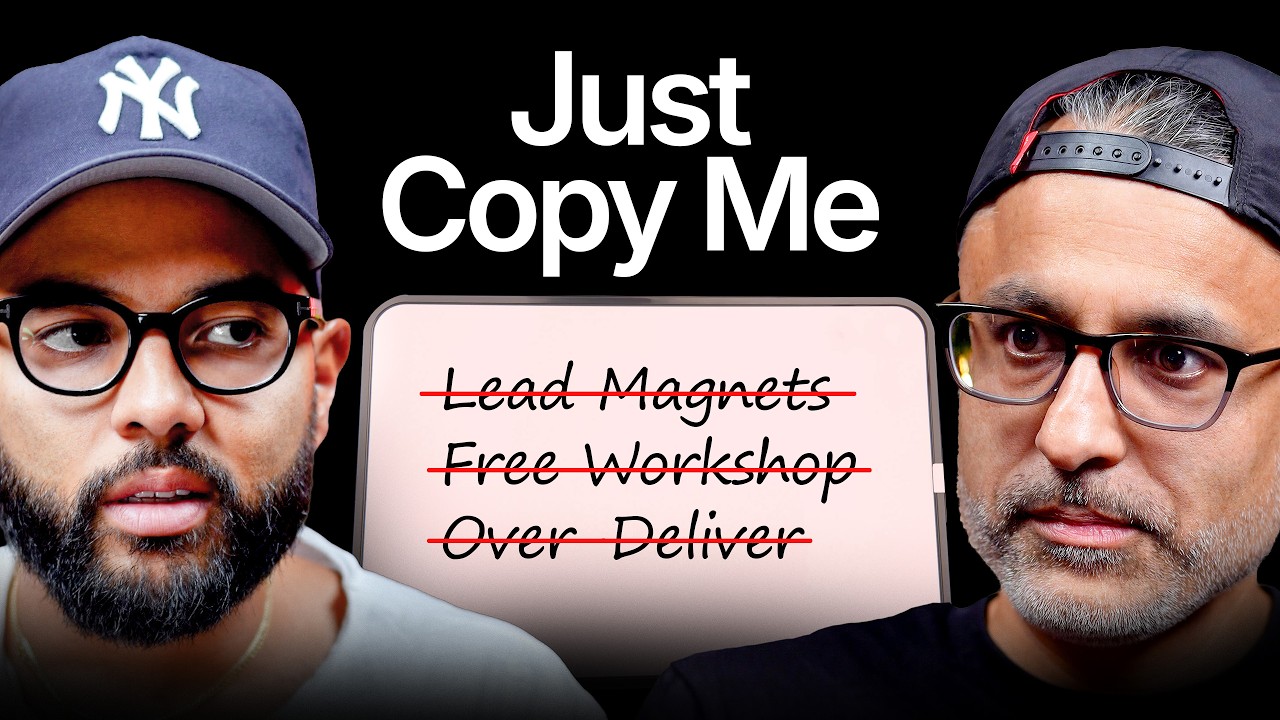
In this conversational coaching video, Neel Dhingra and Omar dissect why many entrepreneurs, coaches, and real‑estate professionals struggle to turn social‑media content into paying clients. They argue that the flood of lead magnets and posts creates a "mountain" of overwhelm, causing prospects to ignore offers. The solution is to replace endless content with a well‑designed conversion event (a webinar, masterclass, or live room) that moves people from indecision to action. They outline a repeatable framework built around the "3 Ps": Packaging (crafting an outcome‑focused title and clear bullet points), Promotion (testing demand with ads before building the product, personal follow‑ups, thank‑you‑page videos, SMS/voice memos, and CRM automation), and Presentation (structured, engaging delivery that starts with a strong hook, breaks limiting beliefs, and ends with a clear offer). Throughout they stress niche targeting, testing titles, using scarcity, engaging participants via chat, and following up relentlessly. Practical tactics such as pre‑show reminders, post‑sign‑up videos, and personalized voice messages are shared to boost show‑up rates. They also discuss mindset shifts—extreme ownership, treating presentations as performances, and focusing on the feeling you want the audience to have. Real‑world examples (high‑conversion webinars, failed large‑scale events) illustrate the impact of proper sequencing, belief‑breaking, and concise content. The overall message is that mastering the conversion‑event funnel turns social‑media traffic into a predictable, scalable client‑acquisition machine.
Chapters
If you're really good at what you do, but your content isn't paying you, you're not getting clients, there's one problem you need to fix. Everybody's blaming the market, but the truth is more content is making this worse. Every post you make, every lead magnet that you create just gets piled up onto this big mountain of stuff that makes people feel even more overwhelmed. There's one skill that helped me solve this problem, and it's made me more money than all of the content I've ever posted combined. We're gonna break the entire thing down in this video, and once you learn this, You will never have a problem getting clients again. But like what I'm seeing now, and I don't know what your thoughts are, is like when people are downloading these lead magnets, they're just going into this pile. And I imagine like someone's sitting here, bro, there's a mountain of stuff behind you that you'll never look at. Like look at your saved posts on Instagram and the AI lead magnets and the thing and the that thing and all the things you're going to do. It's just a pile in your brain. And because it's so full, You don't do anything.
Yeah. Well, I will say you have to take ownership. If you're not happy with how much money you're being paid or how much you're making, you have to take ownership of that outcome. That is, I found like, especially in real estate, your world, people tend to blame the external, but then it's like, no, there are people making money right now. There are people paying for things right now. And so if you first take extreme ownership and realize that there's something that you're missing, to learn, which is what we'll talk about, then a lot could change. And I think it's funny that you bring up the AI thing. Every time I see an AI, AI just edited my full YouTube video and added up special effects, dude, there's 8,000 comments because people are like wanting the game.
Yeah, and I see people that I work with and all their, like everybody wants the newest, latest thing and they just throw it into the mountain behind 'em and never do anything with it.
Now, no shade to the people who are offering that lead magnet. Because like, good job, good on you. You're getting emails potentially. But I want, and we're going to have a, this conversation we're going to have is very high level, which is not really a conversation most people on YouTube would actually get.
Yes. This would be normally like in a private thing.
Yeah.
Because like, I feel like it solves the problem of getting people off the fence. Yes. Because everybody's undecided. I think you just went through this with your home purchase right now. You're like, Hey, I don't know if I want to buy or rent. You've gone back and forth on it at least 7 times in the last week. Literally. Just honestly, if you're being real, like, and then think about the buyers of your, your programs, anything you sell right now, whether it's real estate mortgage, like a lot of people I serve, or people coaching, consulting, an agency, it doesn't matter. People are just a little more uncertain.
Yes.
They're a little worried about money, inflation, markets, all these things. And so because of that, and maybe they've been burned in the past, you never know, right? So there's all these things. So now we need to like move them across the spectrum and it's becoming like they're stuck. Maybe they're stuck in indecision.
Yes.
So how do we move them across? Well, you could keep shoving them content and following up and doing cold outreach. Cold outreach in our industry is dying because people aren't answering the phone. So I just found that there is no better way to pull people forward than to do some sort of conversion event.
Yes.
It could be a webinar, it could be an event in person. And now somebody's watching like, well, I don't do any of those things, so I'm about to tune out. Well, You can create something small. Like, I remember just doing this for 20 people and it works so much better than getting them on an email list and praying that somebody is going to come, you know, see one of your emails that are dripped out and then they're going to click a link and go buy, sign up and buy it. It's just not happening. Yes.
And it is not happening because of the hyper-increased distraction of doom scrolling. Consumption is just at an all-time high. AI this, AI that. So that should inform you as a business owner, as a salesperson, as somebody who does business to create the feeling in a person to take the next step. So you can't do that on— you can't do it to a deep level on social media. I can't— you can't even do it on a deep level on YouTube. Like YouTube long form is probably one of the highest forms of influence and persuasion. For free, like free without any opt-ins, but a Zoom call or what we like to call a webinar. Maybe you've heard it called a masterclass. The beautiful thing about this is once you dial it in, which we both dialed them in from an art and science standpoint, that it's repeatable. It's, it's, and it just works. And then once, once it clicks, you have an asset that serves you and you could do it. You could do it. Once a week, you can automate it. I, I, I don't like always sharing like numbers and stuff, but we did an automated series of these just a month ago and we did over $600 grand in sales.
And you weren't even on it.
And I wasn't even on it. So, and it's because it's not about whatever we think it's about. It's not about the stuff, the features and whatever you, you know, slides, slides. It's not even about slides. It's what comes outta your mouth. It's who you are as a person and it's what a person feels at the end of spending time with you, period. Like something my mentor Myron Golden says is, if people say yes or no to you, it's your fault.
Yeah.
Whether people say yes or no to you, it's your fault. Everything we do is communicating buy from them or don't buy from them. Everything we do is communicating Believe them or don't believe them. So then how do you get people to believe you? How do you get people to feel like buying or doing business with you?
Yeah, there's a whole process you can take people through and we're about to get into like the exact steps someone would take from start to finish. And it starts with your content. Like you just said, how are you creating the feeling of people wanting to take action, wanting to move forward? There's things you can do every single day in the videos that you post on short form on Instagram. And also on long form if you're doing it on YouTube. But then the main concept is like you have a step right now for people to sign up and buy and work with you, and then you have content over here. There's too much of a gap. You're asking people to make this leap. So what you need to do is create a step in the middle. I call this a second door. You have one door to your house right now. We need to just add another door. And what is that door going to be? It's going to be a conversion event.
Yes.
And it's a room. So I just call it a room. It's either a virtual room or it's a real room like we're in right now. We're going to pull people into this room, then we're going to talk to them while they're in the room. We're going to say things in a certain way, in a certain order that's going to convince a portion of the people in the room to start now. Get them off the fence.
So good. Sequence matters.
Yes. The order in which you say it.
You might be saying the right thing. You just might be saying the right thing out of order. And that's why it's not connecting.
So, and I made like 1 or 2 tweaks. Boom. You see it? Yes. You ran your stuff through Analysis. You just paid $20,000, like we talked about earlier, you just paid $25,000 to learn this with 3 or 4 people with Myron Golan and his daughter, like going through in detail.
Yeah.
The little things, just the, it's like one word here, one sentence here, but make sure you say that before this part.
Yes.
And all those things. So we're going to get into that. But the first thing is the biggest mistake I see people making when they start one of these rooms is they call it the wrong thing. They call it the thing. So it might be the dumbest example of this and no shade if you did it, is homebuyer class or, you know, learn AI workflows. I see this all the time. They're selling the thing. And so it's just like, what is the outcome of the thing? What is actually attractive to people? So before you get into slides, flow, the steps, all of that, I just think of the packaging first. I call it 3 Ps, like packaging, promotion, then the product, or in this case, the presentation. But the presentation's last. The first thing is the package, just like content. You teach the same thing. You got to think about the package first, then the content. So packaging first, what would you say your biggest advice is to people to come up with the name of this thing? Why is it so important?
It's so important because that is the first signal that they want more of whatever that is. So the reason why naming your class, webinar, signature presentation, a very specific thing and a desire or an outcome, or it could be, I like using mistakes. Because if people subconsciously, if they know that if I learn what not to do, then I'll be in better position of what to do. So either way, when you use general language or when you use process language, you're not even— you're having people do mental gymnastics to decide if this is for them or not, if they need it or not.
Yes.
But you can be very clear. Like right now I'm in a season where it's like, Pros and cons of rent and buying in 2026. Like if that messaging in my season right now, if that was, somebody just said that, like that you'll know exactly what you should do next. Oh my God. I mean, I'm on there.
Yeah. Or 7 secrets or 7 mistakes or 3 mistakes.
Yeah.
The 3. And then you might be like, well, I might want to learn those so I don't make that mistake right now because it's going to cost you thousands of dollars. Yes. Tens of thousands, hundreds of thousands. And then I think of outcome-based titles, meaning like What are you going to get?
Yes.
So how to do this without this problem. Like these are great frameworks for this. And so we'll put some in the description. Like we'll put, we have like a lead magnet on this that you can learn from. Hopefully it doesn't go into the pile of garbage that you never look at. But the main premise is coming up with a great title, 3 bullet points on what you're going to get. So I just want to be clear with people. Like if I post an image of this thing on my Instagram story, I don't want them to be confused because like I said earlier, they've never been more overwhelmed. They're— they got 17 notifications on their phone, their kids calling, their wives on the thing, like all these things pulling them in different directions. And they have all these open loops from all the things that they saved before that they didn't do. So in that world, you just have to be clear. Like our friend Brian Miller says, clarity is the most important thing. So I would just be super clear with your title and what you're going to get. 3 bullet points.
Yeah, so good. And then, and then it's just a commitment, a commitment to do it consistently. Because like, here's the thing, don't do all this work just to do it once. This, this is an asset, a repeatable asset that you can use in your business. This presentation that has, can give you predictable outcomes. And like at this point in my business, it's, we put this much in ads, this much people show up and this much people buy. So if we want more people, let's just put more money.
It's like a machine.
It's literally that simple. And I really hope that people arrive to a place in their business where it becomes about numbers, because then what gets measured gets improved. I love how Daniel Priestley, a business consultant expert, will say, if your favorite band or your favorite concert, like the Backstreet Boys, no one's expecting the Backstreet Boys here at the Las Vegas Sphere to do anything new. They don't want them to do anything new. It's just, just do what you're great at. Do what we know you for. Do what is predictable. What I— because there's trust in predictability. So I think there's something powerful that like your favorite band or your favorite musician, artist, they go around bringing the same presentation and then it's a, it's just a new crowd.
It gets better and it's proven.
And it gets better.
Yeah.
Dude, last thing I'll say on this. There was a guy who spoke at our church a couple of weeks ago. His name is Gary Chapman. He was the bestselling author of the book The 5 Love Languages. This guy, he's like 80-something now, and he had a slide presentation. And I texted my friend Sam, our friend Sam, and I was like, dang, bro locked in his signature presentation in like 1980, bro.
And he stuck with it, bro.
He was promoted as the guy who wrote 5 Love Languages. He was introduced as the guy who wrote 5 Love Languages. He then spoke to the church on the 5 Love Languages, and then he sold his book, The 5 Love Languages.
And paid him.
And we— and then we paid him. And then, uh, but the, the powerful thing is, in the middle of his talk, he was like talking about how he arrived to this concept, and he was like, I look back, we've sold over 60 million copies In over 60 languages and with one, with one message, like one idea, like don't get bored is what I'm trying to get at.
Yeah. And it's also like, if it's working. Oh my God. If it's not like you, you said, hey, I got to just keep doing the thing. Literally. So once you find the thing, you're going to make some tweaks. We're going to find some things that we need to fix right now in this video. But once you've got it, just keep running the play. It just What Omar's saying is it's going to print money for you.
Yes.
And all you need to do is run the play that works.
Yes.
And then there'll be some tweaks because of market conditions. We'll tweak 2 or 3 things, we'll keep going. So the first thing is the title. The next thing is serve fewer people with that title and who you're going to speak to. If the talk or the presentation is for everyone, it's for no one. We need to narrow the audience. And you would think that like, oh, if I narrow it, I'm going to lose people. But right now I've just seen this thing where specialists are getting paid, people who specialize in a niche and you don't wanna go too narrow, but if it's general, they could just go to GPT, they could just go to Google, they could go on YouTube. So it just feels like all this other mountain of crap behind them. But when you're like, no, I'm gonna cut through all the noise and I'm gonna teach you this one thing.
Yeah.
So if you're teaching AI workflows, what's the one workflow that you could teach that's gonna make them $100,000? Or if you're gonna show them financing or real estate, like how do you structure creative financing or how do you help people who are business owners get into homes? Yes. So the secrets for business owners, now you're not putting on a class for everybody that seems generic, but it's for a specific group.
Yeah, I, this is the way I do it in my approach to content and then marketing. So for my brand, things that build my brand, I have general appeal, broad appeal. Broad appeal for your brand. Like, you are the blank guy, you are the blank girl. When it comes to invitations or offers or next steps, niche messaging. So broad appeal, that's why on YouTube I'll make videos called How to Become a Millionaire, but then how to become a millionaire, that's, that's like so broad. But hey, if you, are you looking to build your personal brand? That is, that is niche messaging.
So And somebody would see the ad or the thing and say, this speaks to me.
This speaks to me.
Hey, if you've been having a problem with this, hey, if you're struggling with this, I've got a thing. I want to share this with you. Or, hey, here's what I noticed about the market right now. There's these types of people and there's these types of people. What's the difference? If you want to learn, I'm going to share it with you in my 3 secrets and my 7 mistakes. You're going to learn this, this, and this. That's the 3 bullet points. And then you ask people to sign up. And when it's clear and it's very special, it's specialized, people are signing up more. Yes. When it's, lack of clarity. I've seen this, the biggest mistake I see with people's titles and their offers is it doesn't appeal to anybody. Like it could have been just, it's just general. And like, people are like, I didn't even know what that was for. If I'm smart, I'm relatively smart and I don't even know if it's for me, like, or how it would help, I'm not going to click on it.
And I want to highlight that you're probably, as we're talking, I think your brain is going, whose ads right now are making me literally think, like, because they spoke to me. Like, dude, Alex Hormozi has an ad. He's like, if you're an educator online with over 100,000 followers, I want to invite you out to my work. I'm like, you know, bro, an educator, 100,000 followers.
Dude, he— I saw an ad for my industry. He said, if you're a mortgage company owner, not just a thing, he wants to know if you own your own, run a team, or have an owner.
Wow.
And you're doing $1 million a year in top line, I want to share something with you.
So crazy.
Okay, that's like specialized, very— and then now he's got the right person. So if you want to get more premium clients, we need to talk to what did the— what are the problems they're facing? So I think about one group of people that I want to serve. What do they need help with? What are their struggles? And this is going to come in handy when we get into the next steps. But if we're talking about— let's just use business owners. So you might serve business owners in multiple niches, but let's talk about real estate. Well, if you're going to help business owners buy real estate. Business owners are people who are actually making money right now.
Yes.
Like if you think about entrepreneurs, they're making money, they have a unique problem. Maybe they don't document their income, maybe they're unorganized, maybe they're very busy. So you can help them with those problems. That would be great to serve. Now, if you're trying to help them with like business growth, marketing, personal brand, there's unique problems that they face that you could serve. So I just think knowing who you're speaking to is very important.
Very important.
And then now the next step is, okay, we picked the title packaging, we got that dialed in and we are promoting it. Now promoting it is like the, I think people think you just build it, they will come. And the biggest fear I found is people tell me, if I put this together, I get the right packaging. Now I posted and 3 people signed up. What do I do now? How do I get people to sign up?
Well, number one, you better show up for those 3 people.
Of course.
Like, I hope you don't use any automations and you do this, you scale the unscalable and you text them directly and be like, saw you signed up, you send them a voice memo. Like, I hope that happens.
Because even if, like, I remember the first ones we did, 10 people, 20 people, you know, now there's a lot more, but it doesn't have to be big numbers to make a big impact. And you're going to do it 1-to-1 anyway, so you may as well do it 1-to-20.
Exactly. So, and it will accelerate, like it does accelerate wherever they're at. They are going to be better because they came. Now, if you want more people to show up, in my opinion, I would start running ads.
Yes.
And then the ads are going to tell you whether people are responding to even the title of it and if it's going to the right people. And ads, I'm learning, are so sophisticated that you don't even need to put in who you want to target as much anymore. It finds the right people. So it's like, it's never been a better time to run paid ads. I'm learning. And And then, yeah, but here's my thing. Just getting them to sign up is just part of the battle. Because like, again, everyone's distracted. Sure. We have signup rates and then we have now show-up rates. The things you can do to get people to show up, because it's still in the form of promotion, is to talk about what you're doing. Don't think for a second you said it already or you said it before, you said it yesterday. Talk about why you're doing the class on social media. What, like what you've been missing, what you've been noticing about whatever market or industry you're in. And, and you're almost— what's happening is people will just connect all the same message. Dang, he hit me with the ad and then he's showing up organically talking about this stuff like, oh, he's, he's a real human being. She's a real human being who's like actually excited about this thing. And by the way, if you don't talk about it, it means you're not excited about it. And why would somebody show up for something you're not even excited for? So I would say start just talking about your stuff, especially if you believe it helps people. Like I love Russell Brunson says, if you have something good to sell or you have a service that helps people, it's your moral obligation to promote it and sell it.
Yeah. And you're actually being selfish by not doing it.
Correct.
Because you're going to allow people to get misinformed, got lack of information. Maybe they get the wrong information and they don't do anything. because of it, or worse, they get ripped off because of your inability to serve them. So I would just encourage people to like think about it of coming from a place of service. So now you have the thing means that you're going to talk about it more because you have a next step. It's not asking people to take the whole leap. You're just asking them to take the next step, which is come to this room that you've created, and it could be on Zoom. So I think when people think about getting people to sign up and show up, you know, you're like, well, Neil, hold on a second. What am I going to teach? Remember what I said earlier?
3 Ps.
It's packaging, promotion, then the presentation. We're going to talk about the presentation, so hold on. And I found that the biggest mistake people make is they do the one last. They do the last one first.
Yeah.
They have the order backwards.
Right.
I'm going to think about the presentation. I'm gonna start working on the slides. Here's a new AI tool and like, hey dude, what'd you use for that slide? What font is that? I'm like, bro, what about the packaging? A presentation with nobody there Is like it never happened.
And people do this with courses. People do this with features. Or if you're creating a software or an app and you're so fixated on making it good in your eyes and you haven't even tested it. And one way I always break this premise in business is Apple is about to release their 18th iPhone. So like they're testing something in real time and they're charging for it. Like they're getting compensated to make what they're doing better. So If you want to be compensated to test something, then promote it first, get people signed up on the idea, and then, and then figure it out later. And we'll tell you what.
And also, like, if you think about risk, you know, because people are like, hey, I don't want to risk my time. And my first thing is like, well, bro, you have time. You should risk it. It's not even costing you anything, but you can run ads. Let's just say you spend $1,000. and nobody signs up. That would honestly be the best $1,000 because—
Oh my gosh.
You didn't spend any time on a presentation, you didn't put anything together. You're just testing to see is there a demand for this topic and these bullet points? If nobody converts or signs up, you're like, well, I need to fix that. Imagine if you already spent a week, 2 weeks on building the presentation for the thing that nobody wanted.
Right.
So it's just a better way. The most experienced entrepreneurs, most successful people in SaaS and product, they test with ads for no product. They just want to— they'll spend $5,000 to see if people buy something that doesn't exist. If people, enough people sign up, like, okay, I'll go make the thing now. Yeah, that's the way they think about it.
And I want you to know, because this is a belief shifter and the belief shifter that people don't have a reference point for how you help them.
Yes.
So you will have— you have the reference point for what you've been thinking about for 3 years or for 10 years. Like you've been wanting to do a thing, but nobody knows you've been wanting to do a thing. They don't have a reference point for how you help them. So leverage that to both of your advantage because maybe you've never done this before, or this is a new thing you're doing. That's a good thing. And so that's why it's smart to just test the language and marketing.
So now we got some people signed up. Now I will tell you the, the best thing I've done to increase show-up rate. Is, uh, there's actually 2 things. The first thing I did that increased show-up rate was to just simply put a video on the thank you page.
So good.
So I learned this from my friend Shiran. He said, hey, where do they go after they sign up? I'm like, here, just a confirmation page to tell 'em to check their email. What if you put a video there that resold them on why they should attend and how important this is, how excited you are to share with them these things? That would be a great way. It's also on that same page, you could put a link to book a call with you. There's a small percentage of people who just want to skip the line. You've had this happen to you where you're offering a 5-day thing.
Literally.
And somebody wants to, hey dude, can I just buy the thing? Whatever you're offering, I'm in because they've been watching your content forever and they were just honestly waiting for you to make an offer to them. So make a link at the page that helps people book a call with you, with your team directly. So that'll just catch a few people that were ready to go. And then the next thing is, is what's the email you're sending? Like you just said, if it's a small number of people, I will send a personal video through text or iMessage. We have an extra iPhone to text people videos. It's good. Like, it's not scalable, but it doesn't need to be if you're only getting 20, 30 people.
You know what? You challenge me because I'm like an online entrepreneur. That's how I would categorize myself. And you're like a very industry, like relationships, you know, you got people's numbers, they got your number, you text, you call. And that actually challenged me because I was like, No, dude, I should totally be more— not— I don't want to say accessible, but dude, we're talking about clients here. We're talking about paying customers. And if you sell something that has long, what they call LTV or lifetime value, so what? Just if they have your secondary phone or even your primary, who cares? It's business. You know, it's like this is about networking. This is about—
What you're saying is like people should feel like, hey, this is a real human that I'm dealing with. He's going to stand behind his product or service. Yes. and his team is there, he's there, and it's real. So if that means get an extra phone, whatever you gotta do.
That video though is powerful. So sign up.
Yes, sign up.
Okay, so you use a platform that's so easy to use called Luma Events?
Yes.
Does Luma do the video thing?
No, so that one would just send an email, but you can put whatever you want on that email.
Okay, cool.
Including an embedded video. So you could put a link to a video and it looks like a thumbnail of a video and they would click it, it would open up a video for 'em.
Okay, cool.
All that to say is just think about what happens after someone signs up, because if they're not getting a confirmation that encourages them to show up, the show-up rate's going to go down. And then obviously there's a whole sequence of emails and texts and all that stuff. You should be hitting them up a little bit more than you think is actually in some cases a lot more than you think is reasonable. And it's okay. Yeah. Like people want to be reminded if you text them 3 times, if they sign up for it. Yes.
They'll appreciate the reminder.
And I've asked people this. I've said, hey, do you, does it bother you? Do you think I'm spammy? They're like, no, please text me. If it's something important, I want to be texted because again, I'm very overwhelmed and busy as a consumer. And so I just want to be reminded. So when you do this correctly, you'll get more people to show up. Now you got them on the thing. What are we teaching? Now we get to the part which people put forth, which then you got to go back.
I have a sneaky tip. Once you start, set an automation to text people that you've about to, you're about to get super started. Like it's actually like, Because even at the hour mark of when you start a presentation, people could be literally in the middle of picking up a kid at school or something. But that 10 minutes in or 15 minutes in has super increased show-up rates. And then what also has increased show-up rates for me is like a voice memo call or voicemail calls. People get a phone call and be like 10 minutes out and they actually, hey, this is Omar. I saw that you got signed up. Hey, I made a mistake. I didn't increase the room limit and it looks like we have so much people signed up and it's true. I have more people signed up than I do have allotted for. So show up early and in the comments, tell me that this phone call got you here.
People say it, right?
Oh my gosh, it's crazy. Thank you for the phone call. Thank you for the phone call.
It's all through your CRM. HighLevel. So this can be done. It's personalized, but it's also automated in terms of delivery, but it's his real voice on a voice memo. And then somebody is like, well, I only have a few people. Well, then you could use the automation or you could just literally have your team or you'd send the messages yourself, voice message 20, 30 people, watch your show-up rate double, which would be great. Now the next thing is like, okay, they joined the call. Now we're starting off the presentation, you know, the things that we do in the beginning and then how we get them to actually take action. This is the most important part. But like before we get into that, what are the things you have to think about when you first start? Now this Some people watching are like, well, I'm doing this live. Most people are going to be doing it on Zoom. Yes. And if you're doing it live, the only difference would be how you package it. You wouldn't, you wouldn't do the reminder an hour before. You would probably do the reminder the day before. Yeah. So there's a little bit of nuance for like in-person versus Zoom. But once you've started the presentation, what's the first thing you do?
Well, first, I want you to know that the first thing out of your mouth is the most important thing. And I made the mistake in the past. Tell me where you're watching from. Tell me where you're tuned in from. That's my first thing out of my mouth. And my friend Marcus Y. Rozier, he just told me, he's like, the first thing you say out of your mouth sets the tone for why they're even here. And so you— what you want to do is you want to think about what is something I want them to focus in on Or something to get them excited for. And, you know, different industries would, or different scenarios would require different things. But I went from going, put in the chat where you're tuning in from. And, but that doesn't— think about, we gotta think about people from their point of view and where they're at. Does that serve anything? Does that do anything?
No.
Okay.
Okay.
So if we're trying to get people to feel like taking the next step with us, I say the first thing out of my mouth on a webinar is throw a 100K in the chat. Just 100K is going now. I get a lot of people on my stuff, but it doesn't matter. Throw homeowner in the chat. Throw next house in the chat. Like, what is the thing that you want them to focus on? And by the way, there's something powerful about telling what people should do, not put in the chat what— like when you get— cause people to think, but they won't do it. They won't do it. They're already thinking about everything in life. And like, so this is an extra thing.
Make it easy.
Make it easy. So I just want you to know—
In the poll, if you're selling a home in 2026, drop the word home in the chat.
Yes.
Cool. H-O-M-E. You know, you told them what to do. Now what's weird is somebody might feel weird being the first one. So maybe you have your homie on the chat that types the first one. You know, let's just get the break, break the ice. Yeah, sure. When you're starting, whatever you got to do. This is also great for keeping the chat going in a smaller one. Yes. Is have a few friends on the call. Like if you had like people in our group, they have other group members support them. Hey, I'm doing my first one. Kind of nervous. I only got 30 people, which means only 15 are going to show up. So could you guys come on? And like 3 or 4 homies will be on the call in the chat.
Yeah, dude, I know we're getting a little tactical, but this is The game, guys. Okay, do a call over a webinar. Just want to make sure. Do a Zoom call over webinar because you can see names and faces. If you have 10 people on, just call them out. Hey, yo. Hey, Neil, throw in the chat.
Home.
Hey, yo, Kai, put in the chat. When people hear their names, they light up.
Yes.
And when— and if you ever want engagement, You must engage first. So, so just, dude, this is a call. Yeah, you don't have to act like the way I'm talking is like there are hundreds of people on the call because usually I have hundreds of people, but don't act like there's 100 if there's not 100 is what I'm saying. Like, be a human. It's okay.
And you could— and you just adjust based on what you're teaching. If it's grow, if it's to grow your business, if it's to buy this thing, whatever it is, put that kind of outcome that you're seeking later in the call. You could start it off with that now. When you're going to start your presentation, whether I do this live, but it can also work on Zoom. And it's based on the fact that you just said the first thing is very important. If you start strong, the audience will give you grace. If you start weak, what happens is people tune out or they write you off and they're like, let me get off this thing. Or they just mentally check out. They have, they're not on the Zoom, they're doing something else. They're multitasking. They're like, yeah, this wasn't this. I made a decision that this isn't worth my time, so I'm going to half pay attention or I'm going to tune out or I'm going to sign off. Worst case, they're going to leave the room. So what you want to do in the beginning, I have 3 intros that I like to use. One is a yes statement. It's an enrolling question. And you do this a lot too, where you'd be like, how many of you? And you ask a question. And the thing is, you should know that most people will say yes. Drop a yes in the chat if that's you. How many of you feel when you see all these things and you see this and this, this, overwhelmed and just, you're like, man, I don't know if I can learn this, or I'm feeling that. Then you put the feeling that you already know because you've done the research in the past and they would say yes in the chat and then you're going to get into the next step. But like you've already got them enrolled in what you're about to talk about. So that's a great intro that just breaks the ice. The other one that I love using is you get quiet and you just say, we have a problem and you pause. Like everybody locks in because like, what is the problem? Is the— if it's live, is there a problem in the building? Is like the building on fire? Like, what's going on? Like, everybody focuses in on you. So I would say, we have a problem. And then you define the problem you're about to solve with your presentation. So you say, so many of you have this, this, and this, this, but the problem is you're not doing this. And so in the next 30 minutes, I'm gonna walk you through my XYZ framework.
So good.
That's a great one. And the last one is just opening with a story that's more advanced. And I think you have to be a better speaker to start with a story. That's good. No, I love that.
I love Brian Miller. His framework of starting any kind of talk is like when he says like raising the stakes, because like if early on you get to the idea that if you don't do this, this is what life would look like, or this is where you might end up, it creates another level of buy-in to pay attention to what else, whatever else you have to say. Now I do want to say, that this isn't reading a script, even though you can have a script. This is a presentation, which also means it is a performance.
I practice.
You should practice. You should, you should be more theatrical than you would be grabbing your coffee in the morning. Like, you got to put it on like this. If you're in sports, this is the game. This is game day. You don't, you don't practice your 3-pointers at practice the same way you shoot them in the game. Like, no, you're intense in the game. You're excited. I love that. Something Myron said last week at the workshop, he said, all business is show business. The person that performs the best garners the most attention. So be excited and like believe in what you're saying.
Yeah. And the best people that we know in the game are excited to teach what they're about to teach. Like if you ask me or you right before you're about to teach, we're hyped. Like, I'm excited. I'm ready to roll. The people are there to learn from us. Like there's nothing You're blessed. You're grateful for the opportunity.
Where does that excitement come from for you?
For me, it's that we're about to change someone's outlook or life. Like, it sounds cheesy, but people tell you afterwards, hey dude, this really helped me today. I'm so glad I came. And I've also been writing checks that now need to be cashed, meaning I've told people it's going to be awesome. Now it's my turn to deliver on that promise. So I'm like, hey, it's an obligation that I rise to the occasion. So it's like I'm naturally an introvert, but now I need to come up and bring my energy up. Yeah, because I told them it's going to be dope and you don't want to not be excited. So that was the first thing. But then the second part I think is I'm excited to serve more people in my business. Like I'm excited to grow my business and I already know that because I did these things, it's going to work. Like I have a certain level of confidence coming in. Yeah. So I'm just excited to do the thing. Like, you know what I mean?
Dude, I just want to make a distinction because so much, I would say new business owners, they have a hard time doing things that they don't identify as they love. Like, they want to love what they're doing. But if you really think about it, successful people don't love what they do. They love what, what they do does.
Yes.
And if when you focus on— you just said it— serving, it's like we can make this all about tactics and presentations and like doing like the things and clicking that and sharing screen, or it could be like, no, this is the vehicle in which I serve people. And when people get my help, their life changes. And when I see that life change, man, that fires me up. Like, but that's why, that's why you can be in real estate and still show up every day to work. It's like, is real estate inherently exciting? It's like—
The process is boring. You hate it some days. Contracts and getting points and getting happy clients afterwards that really appreciate you and refer you more people. And like nothing, you know, there's nothing better than someone giving you a compliment. And then giving you, uh, sending you their friend or their family. Like, it's just a dope thing. So think about that when you're getting started. Come from a place of service. So you're excited, you're enthusiastic. And then the first thing you just said is we open up the, we open up the call with a, with a good intro that you've rehearsed. Now, the entire presentation does not need to be scripted. You can flow. I like a bullet point outline so that I can just flow.
Yeah.
But that beginning part, you should know what you're going to say. I have found that when you start shaky, it bleeds through the whole thing. I had an experience recently where I had the most amount of people on a webinar in my entire career, and I started the shakiest I've ever started. And you came in like 30 minutes in and you're like, dude, I could sense your voice was off because I was still, I was still recovering from the mess-ups. Like I literally fell on my face in front of a bunch of thousands of people and then I couldn't stop thinking about it. So it took me like 30 minutes to get back into confidence mode.
Mm-hmm.
And so I just think That could all be avoided by just making sure your intro is locked. You know exactly the words that you're going to say and you've practiced them 17 times. You're not a bad presenter, you just haven't practiced enough.
Yes.
Like you're not an introvert, you just need more practice. That's it.
I love something my friend who teaches sales, her name is Macy. She said that if you're in business, you're a professional enthusiast. Like you're, that's what you're good at is being excited about stuff. And the word presentation's root word has the word present. Which that's what you're giving people. Like, this is what a presentation is. It's literally something you thought of and put together and you are giving for to make their life better, to think differently about a thing or to feel more empowered to take that next step. And when you think of it that way, then your preparation matters. And because if the presentation's a gift, then your preparation is a form of what you're giving them.
It's—
I've thought of this and I And I'm doing this on purpose. So I think that's really good. And I think what you want to do is really just, Brian Miller would say, state the obvious. Hey, so I know why you're here. Or tell the story, hey, we got a problem.
And then that problem sets the stakes.
Yes.
That if you don't do nothing, there's a problem.
Yep.
And you may miss out on this solution or whatever. So you're setting that up. And then I like to give people a preview of what we're about to do.
Yeah.
So today we're going to be— I'm going to be walking you through this, this, and this. And then I like letting people know that there will be an offer at the end. Like, so there's an— I'm going to give you guys an opportunity to work with me at the end. So if you want to say, or there's going to be a bonus at the end, make sure you stick around for this. So I think planting the seed that there's something coming at the end. So that way, A, it doesn't throw people off guard like, oh, you just brought us here to sell us your service. No. I brought you here primarily to educate you and you'll leave with value regardless of whether you work with us or not. There's going to be value. But if you want to work with us, there is an opportunity to do so. Yeah.
And I think just it removes— so now they can actually receive. Yes. Because up until that point, people do just tend to wonder, man, what does this person got? What is this person? Well, when you say I do have something for you and it's going to be toward the end, and so just stick around at the end. But my— I like to go, can we make a deal? This is kind of just my way of doing it. If I deliver on my promise, which is to give you everything you need to know to be confident and have the clarity you've been looking for, do I have your permission to tell you about a cool opportunity? And now I just—
Yes, yes, yes. Yes, dude.
They're just saying yes. And sales is a series of yeses. If we do this right, we should be at the 10th yes by now. Like we've literally garnered yeses up until this point. The reason why And this, this, all the sales principles happens in every sector. When you go to the mall and you go to an H&M, you walk into an H&M and they say, is there anything specifically you're looking for? What is the answer to that question every time it gets asked? No.
No, I'm just browsing.
So, so you know that when you ask this question, it gets in, it gets a no. So then why do you keep on asking it? Obviously they're not Trained. They're not trained. Then you go to a Rolex. If I go to, if I go to a Rolex with Ruby, they ask, would you like something to drink? So then it's like, sure. Sparkling or still? Sparkling.
That's 2 yeses.
Hey, what's your name? Ruby. Would you like an apple juice?
Yes, please.
What about a chocolate? Like, they got 4 yeses out of my family before you even did anything. Before we did anything. And then, and then they go, would you like to get on the waitlist? That, that like, they're not saying, do you want to buy this thing? They're, they're, they're just get it, get people in a yes state. And that, that's just a very powerful sales principle. This is why it's your fault if people don't want to do anything. They're, they're literally, they may be resistant. They're, they're opposite. They're in a no state, you know?
And I think about if we're talking about mistakes people make, started wrong, there's not engagement, it's a cold room. And then you get to like the part where you're making this opportunity for people to take action and there's no— like it would take a big leap for someone to break out of that state.
Yeah.
But if they're already engaged, it's much more likely that they'll take the next step.
Yeah.
So you can do this in person, you can do this on Zoom, doesn't matter. But then now we're getting to the part where like, okay, we're going to start teaching.
Yeah.
Now I think of before you get into the framework that you're going to teach, we need to do something first. This is a big thing that people skip. They just go straight to the teaching. Now, I have found through years of doing this wrong, and then I figured it out and actually learned it from all the trainings that are out there, from Russell Brunson, from people like— who's that guy? Jason Fladgen talked about this— that the most important thing that you can do before you get into any teaching is to break beliefs. So when you're talking to people, you have to realize like they are— they have an idea in their head that this won't work, this won't work for them. They're skeptical. And so you can't sell to someone or teach someone if they already have an idea that's locked in their head that this doesn't work. So we need to like break that whole mold first before we start teaching. So what's your process? Because you just went deep on this one thing.
Yeah, well, I want to flip what you're saying because the teaching is that— like, that is the teaching. The teaching is shifting the belief or the stronghold or the hangup in the person's mind. So this is why it's so important to be a great listener as a business owner, because people are already telling you why they're not doing something. Now, where do you get these points to teach from? You get these points to teach from, from real life. Who have you helped? This is just something I want you to consider. If you've helped people in the past, Families, human beings, men, women, what odds did they define with your help? So if we're staying with the real estate example, they might be the first homeowner in their bloodline.
Yep.
They might be, they might have purchased a home with a medium income. Yeah.
Or lack of down payment.
Lack of down payment.
Or poor credit. They own 2 things and they didn't qualify. Like, there's always an obstacle.
There's always an obstacle that you genuinely helped them through. Now, they didn't know that. They didn't know that was possible until it happened. So your job on these presentations is to address those things. So you want to— and you can call them mistakes. You could put them in a framework. You know, you could say these are the 3 biggest myths Myths.
Calling out the mistakes. I'm going to bust some myths and then I'm going to give you some solutions.
Yeah.
The first myth that people have is that you need this. Yeah. The first myth that people have. Or it's too expensive or interest rates are too high. Whatever you're teaching, like you would just think of what these people are already thinking on their head. So you're calling out the thing. It's like you have a, you already know what's on their mind.
Yeah.
And if you don't, do some research, like talk to past clients, talk to people who didn't buy, talk to people who did buy. You can also ask AI.
Yeah.
Hey, I'm serving a group of 30 to 40-year-old millennials who are thinking about doing XYZ. What are the top concerns they have about doing X in today's market? It will tell you a list. Now some of them are going to be garbage generic, but some is going to be gold. Yes.
And then the way you tell, these are mini stories. So you're not even like, they will feel like the people that are on this call will believe they're being taught. And the truth is, is they are. Here's because, because here's what's the contrary. The contrary is to start talking about all the various loan programs that is available.
Well, or your framework.
They don't even— some people don't even know getting approved for a loan is even a thing. They just know that people like them don't buy homes. That's like, that's all they know. They just know that they don't want to live somewhere for 30 years. And they've heard that you have to like commit 30 years. They— that's all they know. So by you talking about nitty-gritty stuff, it will only overwhelm them. And an overwhelmed person never takes action.
Yeah. So that's like the reason why someone's failing with this process, right? The biggest reason is they're going into the teaching and the person doesn't even know that they want— like they have a story in their head that this isn't the right thing for me. I don't even know what you're talking about at this point. So you haven't literally—
you haven't framed it up yet, which, which is why they didn't take the next step or why they don't take the next step. Dude, if you have 10 people on a call, there's no reason why you can, you couldn't convert at least one of 'em, like in any capacity, you know, sign up for the next call, buy an offer or whatever. If people are at your, if you have people's attention at an idea, you named it well, you started strong, and then no one bought, you're overteaching and you're overwhelming.
Confusing people.
Confusing people. So that's really good. Just 3, what are the 3 biggest myths? What are the 5 myths? Just to tell you what I do, like when I help with people's personal brand, 3 of the myths that I talk about or the mistakes is, you people believe it's oversaturated. I tell a story about a real estate agent who's been doing his thing for a long time and he's not—
Proof over promise.
Yeah. And then I, and then I, they, you tell this story and then you end the story with the principle like that, that will literally—
Codify the whole thing.
And what you're doing, here's what you're doing. You are literally handling objections before they even come. So, and what do we know? Most objections are money-related, spouse-related, or process-related. Like, I've done this before.
I love the one you said of it's too saturated. Like, for any business offer, people will say, I'm too late. Yeah, it's too saturated. So then you give an example of someone who recently started and crushed it. Yes. Crush that belief. So you've killed the belief for a lot of people on the call right now. There's still some skeptics. They got more proof coming, but you've shown a real example. So whenever possible, don't just give theoretical, try and give a real story. Yeah. Now it's not, to be possible every time, but in this case it is possible. You have a story, give it to them.
Yeah, if— which, by the way, you have stories because you live life. So like, no excuses on like, oh no, nothing. No, bro, like, you've lived life, so you're just not paying attention. And so when you actually— when you tap into this, what we're talking about, you start looking at life differently, because then you start telling— you're like, dude, that's a really good story that points this to, to this principle. Um, so You do have stories, number one. Number two, you can borrow stories from movies and children's books. There are lessons in it. When I read my, to my toddler going to bed, I'm like, that's a fire lesson. Like it's a life lesson.
Disney's lesson, bro.
It's crazy. They got millions of dollars invested in these lessons.
Yes, you could say this. And, um, and then what Omar's saying at the end to make it sticky, and this is the advanced move. Yes. Because if you're on this, if you're still watching this, You're getting the stuff that both of us, like we talked about earlier, have paid the price in terms of mistakes, ads, promos that didn't convert. Also, we paid mentors hundreds of thousands of dollars to learn what we're teaching right now. So the thing that would be advanced to make the whole thing stick is a statement at the end. So when you said, um, it's saturated.
Yes.
So I teach the thing and then I end it with this. It's not saturated. Most people just suck at what they do. Or what's your one-liner? Now, if you don't have one, you can ask AI.
Literally.
Hey, here's my whole story. Here's the whole thing I'm teaching. Help me wrap this up with a powerful one-liner that would stick with the people that I'm teaching. It will give you some options. Now, some of the options are gonna be trash, but you're gonna see in there and then you can go back and forth. And then now you've got that one-liner you could wrap that little section up with.
Yeah. So good.
And that's the advanced move that I don't see people doing. And when I started doing it, People are screenshotting that. That's the tag on social. That could be the reason why someone takes you up on your opportunity at the end of the call.
No. And the reality is if you use, if you come up with it with whatever tools you need to come up with it, it becomes yours. And this is what we're now, we're getting process. Now we're getting into the world of intellectual property where, you know, you could totally use a quote from somebody and that's fine, but you can also come up with one. And like, let's just take for instance, this example of like, I'm too young to be a homeowner. Let's just say that. And then I got, you know, I have this story of a friend, his name is Art, and Art actually makes a pretty decent salary for his age, but he's renting so low right now that he's like, there's no way I can make this mortgage. And then we actually talked through how he can rent out the homes or rent out some of the rooms and actually make money from buying homes. He can actually—
He can live for free.
He can live for free. So, so then you see the buildup now. Now the bar could be, Buying a home doesn't take away money. It actually pays you more in the future or whatever.
Going into debt isn't bad. This is how you get rich.
Yeah.
The wealthiest people use debt as a tool. Now, you know, so now you're, oh, I was always told that debt was bad. I was always told that mortgage is bad. You should own your stuff free and clear. When, well, why are these billionaires taking out debt? Why is the richest guy you know, borrowing money because that's how they leverage. Like, so you're breaking these beliefs as you teach these things. Now we don't have time to get into all of them, but it's very important that you just repeat that process. So we just did a few examples. Just do that a few times and take your time with this part because like I said, when I don't do this, my conversions suck.
Yeah.
When I do this, my conversions are great because you're going to get way less objections and people don't tell you why they don't buy. That's the problem with a lot of this. You get fired and no one tells you.
Yeah.
People just leave and then you find out they bought with somebody else or you don't. That's the good thing is you don't know. But if you start looking up, like all these people were interested, they raised their hand. They wouldn't come to the call if they're not interested.
Right.
They end up doing something with somebody else if they don't do it with you.
Right.
So you just didn't give them what they needed at that point, or they didn't vibe with you or whatever. Or maybe it wasn't the right time and then they converted later and you didn't stay in contact. The fortune's in the follow-up sometimes, right? But for whatever reason, like if you can get better at the skill, that number you said, 1 of 10, what if it's 2 or 3 of 10? Now you're at like 20, 30%. Now that doesn't seem like much on a 10-person call, but when you get to 20, 30, 40 people on a call, you just had a call where there was like less show up and you told me the amount of people who purchased at the end and I was shocked. It was like 300 people on the call or something. And tell me again, how many people bought or signed up at the end?
It was close to 100.
That's insane, bro. Yeah. That, that, that, that doesn't happen.
No, I know.
No, like that's over 33% conversion.
I'm happy with 25%. Like that's where I'm like, I always like to try and aim for it.
And this is not like people signing up for a free call or something. This was somebody taking out a credit card and making a purchase for his next opportunity because he wanted to get serious people.
Yep.
And he got a third, over a third of the people on the call to take action. That means that your presentation is dialed. Yes. So like it works. So, so now, okay, we've broken some beliefs. Now, if there is a framework, like you said, sometimes the teaching is going to be this myth-busting, belief-breaking. Other times for something more tactical, you might need to teach the framework that you just promised in the beginning. I would tell people less is more. One of the biggest mistakes I've made is overwhelming people on a call. You will think you can accomplish way more in a call than you can. And I would encourage people to do like a 30-minute call with 30 minutes of Q&A. Don't sign up for like an hour call when you've never done one before.
Yep.
We can do an hour call now because we can retain people for an hour. But I would encourage people to go small. Less is more. Teach a few things and then tell them you're going to get into Q&A later. But when people are overwhelmed, why does it cause them to not move forward?
Because they're thinking about everything else other than what's next. They're thinking, they're actually thinking about what came outta your mouth and how it applies to them in this certain moment in time and like everything they got going on. And like, so it really, what it did was like you just chose for them to focus, in my opinion, on the wrong thing. They're literally focused on doing something or—
So you, there's a real example. So you just told us about an amazing case where you had 33% conversion rate, which is unheard of. On a call. Well, let's rewind.
Let's rewind to 2023, bro.
All right, 2023, bro calls me and says he had hundreds of people on a call.
I had 450 people on a call.
450 people on a call. And I want to ask you how many people purchased at the end?
Zero.
Not one person.
And I paid like a photographer to film it or take photos. I paid art to like—
You lost money.
I did a giveaway. So I super lost money.
So you got nobody and then And if you had to attribute, I mean, there's a bunch of mistakes. I'm sure you didn't break belief. What is the main mistake you made that caused you to not get anybody?
The main mistake I made started in here, and that was me thinking that if I, if I just give it all away, that all the tactics, then they're going to want more. So I literally had a multicam set. I did so much how-to. I actually demonstrated like I had, I hit that ATEM Mini. Switch the angle to arts on the fly. I was like, all right, here's where you want to put your light. This is where you want to put your mic. And then I like end the call.
It was basically like a workshop.
It was literally like a workshop. And it was— there's nothing wrong with teaching the how-to in that manner. You just have to know that people pay attention differently after they pay. So like they're more receptive. Now, with what I know now, what I was doing was—
this is a—
I was speaking a completely different language. To people that were on this call, they were like, bro, what? What kind of mic did you just say?
Like, yeah, the other part is, is you've, you've gone ahead too far or you've given them so much. And even if it's all valuable, now they have a bunch of list of things to, to think about, to do, which is—
and it has everything else but the freaking offer.
Work with you. Yeah. Yeah. Because like, I got to go do all this other stuff you just gave me. Yeah.
So, so the objective, I'm, I'm telling you, the objective of this Is to focus on what a person will feel at the end of this.
That's the only—
we want— because people do things for one thing and one thing only, one reason and one reason only, because they feel like it. And so if they don't, it means you created the feeling to not do it.
Yes.
So focus on the feeling, which— this is why it's so powerful to speak on beliefs and storytell, is because I promise you, if you get good at this, They won't want to leave the call because they'll want more, which is, I'm glad you want more. So here's what we can go from this point. Like, you know, as we wrap up. Yeah.
Level transition to the offer. Yeah.
And the transition is simple. I stole it from Jason Fladlen and it's simply, here's 3 things that can happen at this moment. I could let you go and like, you'll try and figure this out yourself, but who knows that everything you've tried to figure out yourself, that's like not the best way, right? And I wouldn't feel good about myself if I just let you go. Secondly, I could do something that I'm going to say, I'm going to talk in like inception mode. Secondly, you could tell people something you could do but don't do. So the second thing I can do is I could put you in a process where you got to get handed off to another team member and the work. The second thing I could do is I could sell you a course. But we all know each other.
Nobody does it. Yeah.
Who bought a course and never opened it up? So here's what I have planned. It's the third option. What if there, we can work together and help you XYZ in this amount of time? Would that sound good?
This is the, what he's doing here is you should never offer people a next step without telling them why you came up with this.
So good.
There should be a reason why you put this whole thing together. And one of the things that we've both done is we will typically demonize the opposite of the thing you're doing. So for example, if you said groups are bad, you would offer, I found with groups it sucks and nobody does anything, so I do this. Or if one-on-one, it would be the opposite. If courses were bad, you would be offering a community or something, a cohort.
Yep.
And then with like with homeownership or real estate, I have found that people, you would tell them, hey, you know, like one of the biggest reasons why people have failed or don't take action is not because they don't qualify. It's not because of this. It's because they don't have the right plan. And so over the last 10 years, I spent putting together this type of plan, this type of plan. And I came into this. And you talk about the thing that you've come up with after all the years of experience, all the failures, the people who didn't make it. And this is bulletproof and this plan really helps people take action, whether it's and get these results that are going to save you time and money, all the things that they want. And whether you are going to buy in 6 weeks or 6 months, this is an asset. And so I can do this for this many people and you can move them to that next step. And so I just think people move into the offer without telling them why the offer was created to begin with.
Yeah.
And if you don't tell them why, like it's just less impactful.
Yeah, 100%.
And you could, and then there's little things like name the things, makes it more valuable. If you're offering a program or something, you can name the components of it. I used to spend too much time talking about the things in the thing. Yep.
This many calls, this many videos.
Yeah, all the bullet points. And I would just go on and on and dude, it's so crazy. I had an experience recently where I reduced that whole offer to one slide and I had the highest conversion ever.
So good.
People don't want to know about the whole process. You just want to make them feel like buying and moving forward. And honestly, I think part of that process was nailing the presentation first. Yes. Because they have the confidence that this dude knows what he's talking about. We had our beliefs broken earlier. Like I learned so much already. If this, and I kind of think of the vibe like this, if you like this, you're going to love this. Yeah. If you liked what we did for the first 30 minutes, you're going to love what we're going to do for the next 3 months. You know? So No.
And the reality that the reality to that is a, it's a concept in sales that has served McDonald's. It's, would you like to supersize that? So like the idea is when people have said yes to something, have given you information and they signed up for your class and they showed up and they stayed, your offer is, would you like more of this? That's like—
It's very simple.
It's very simple, but if you're not, If you're scattered all throughout, then they don't know what they want more of. But if you, if you do this the right way, um, and then what I love about that whole story about you just having one slide that says, if this is what you want, click the link. Yes. And then don't just— you want this, right? This is what, uh, Macy would call it, pin it. Just pin it. And she talks about like she has toddlers. She's like, okay guys, focus, focus, focus, focus. This, this, this, this. And it's—
And I think like different stages, different offers to all the things. Now people probably see me do something more than now go into the things because the logical person does need to equate what am I getting if I'm buying something? Yeah. So, but then you can get into the stack and you've done this too where it's bullet points. But the main key is to not spend so much time on talking through the things. I remember a guy who we both know, would start doing a product demo right there. Share screen.
Dang it.
You will lose everybody. You will lose— I've done this before. I'm going to share my screen right now and let you guys know how the next steps are going to go. What happened? People started thinking about all the work and all the things. They weren't bought in yet, and now I'm giving them more tasks to do. And so it kind of scared people away. So I didn't really— I thought I was overdelivering, but what I was doing was pushing people away. Yeah. So I just think get them into the next step, then like hold back like all the how-tos and all the things because that's like you said, it's going to be when somebody is already in. Yes. Then you can go deep with them. Yeah.
But I do want to mention something that has revolutionized my conversions on Zoom is called sitting in the sale, which is after you do say it, if people do move on it, let's say you had the 30 people on and let's say 5 people, You can actually ask them, hey, why did you go?
Why'd you sign up?
Why'd you sign up? Why'd you book a call?
Why'd you?
And they're, they're going to help build confidence in people who are thinking about it.
And then I saw you do that. That was really good.
It was huge.
And a lot of people are selling for you now.
Yes.
I saw the people and I was like, wow, that was genius move. That was— and we're going back. If you're not following along, this is the call where Omar converted at the highest rate ever in the history of marketers. But he, he basically sat in the call And asked people who just signed up, why did you sign up? And then they just sold for them. And then yes, there's a guy who's going to ramble, you cut them off. But most people did a great job selling for you.
No, for sure.
Because they were speaking to the beliefs of the other people on the call.
And it's coming from the most genuine place. You know, why'd you just join? Why'd you sign up? And then the flip side is, if you want, if they're down to hang out on the call, so you can actually address, hey, do you have any questions about the process? Is there a reason why you haven't? And I used to actually, instead of saying the, hey, can you let us know, raise your hand why you bought the offer? I used to go, can you raise your hand and tell me what's on your mind? Which I actually still do like toward the end. And because the reality is like I make most of my money on this time and once it ends, it ends. The feeling that I created is now vanished and they're going to go back to life. So I want to make sure that— what do you— what's going through your mind? Oh, you know, I'm just— I still need to talk to my husband about it. Okay, cool. What, what are your guys' dynamic? What's your dynamic like?
Oh man.
Like, I mean, he definitely wants me to, you know, succeed and do this. Amazing. What would your husband need to know to be better equipped to make a joint decision? Then, then now you're getting down to the root and you're really serving and you're like, okay, here you go, hand this. And then they're on their way. Um, and I, I will say, even to be the person who has the patience to do that with a person, that is selling too. It's like, wow, this person really does care. Yes.
And so I think the Q&A is a great opportunity. So that's why I said earlier, if you do a 27-minute class, 30-minute class, the last 30 minutes, if somebody needed to go, They could bounce because they only put the 30 minutes, but most people will stay, listen to the Q&A. You can address, hey, I noticed you, and say the next step was not buying something, it was booking a call or signing up for the next step with you as a service provider. You could ask them, hey, I noticed you signed up, welcome, so excited to see you on the next call or to do our call, Susan or John, call them out by name, let them know in the chat, and then you could bring them on camera or on call to talk a little bit. And then you can keep answering questions. I found that the non-buyers will ask questions or not. They're the tire kickers, they're the overthinkers, they're the people who just keep asking but never do.
Yeah.
Those are great because you can try and move them to take next steps. But honestly, they're helping you convert their other people because you would say every question you answer, you drive them back to your solution. So you would answer the question, give value, and then you would say, that's honestly why these calls that I'm going to be doing are so important because we go over those in detail and everybody's situation is different. So if you're like, if you have the same question that Susan just asked, that's exactly why I created this program, right? Because that's what we do together. That's a good next question. And then each question is an opportunity for you to drive back into your thing. And I found the longer I answer questions, the more people sign up.
Yeah. Because you're just sitting in the sale and like people are thinking, people are, sometimes it's super logic, logical processing. They're just like, man, okay, he said it was going to be at like 8 PM. And I just, I take my kids. Like, I know that's all they're doing. They want it. And that's why something I do do to protect the Q&A moment, to not just let it be a pick your brain session, is I just say, now, if you have any questions about the offer, specifically about the offer, if you have any thoughts, then you narrow your— Yeah. So then it's like, hey, Omar, so how do I start a podcast? It's like, I'm only taking questions right now specifically. Now, if you have a question, I'll answer those questions, you know?
Yeah. But I think every audience will be different. That's an audience that wants all this game for free. If you're teaching something narrow to a narrow group of people, they're probably going to have questions about the thing you just taught. So then you can just not gate it and get into the questions. And then I would just, if you have the ability to do so, I would make sure to wrap with, this is, it's similar to a re-pitch, but it's a revised re-pitch for me on a webinar. Is I will tell a quick story to wrap it up.
So good.
And the story should make somebody feel something. It should be emotionally resonant with the audience. And so I would think of like, what's the story of my own personal development? How I started here and ended here. What's the story of maybe one of your best clients? And so I want to wrap with this. This picture right here probably doesn't mean anything to you, but this is the James family and they reached out to me and so-and-so and they had lost, you know, like a story. It's not like trying to play with people's emotions, but it's like, what's the story that makes you get a little bit choked up when you think about it? And we've all had those clients and maybe it's your own story that gets you choked up. I would tell you that is going to be the most powerful thing you can do to wrap this call up.
So good.
Either your speech or your call, just tell that story at the end and then say, this is why I do what I do. It's for stories like this. It's for that family. It's for me. And so I hope you guys got value from today. Again, This would be your last chance. If you want to sign up for the thing, I'm going to put the link up again one more time and just put it and give them one more chance. I found after that close, another 4 or 5 people will sign up.
Sure.
And you're serving those people because they were on the fence and you just, they just needed a little bit of nudge from you. Yeah.
And what it is, is like Myron says, if you say anything, just make sure you end by making it about them. And when you tell a story like that, that is like almost identity shifting. They're adopting that story as their own. Now it's going to be their future story that they're attaching to.
I used to not be able to do it and then I would just click end the call. It was so awkward. I'm like, dude, what do you say at the end? All right, you guys, see you guys later. Peace.
There's so many, like I'm learning stuff even at 100 webinars. But one thing I do is I just put up the QR code, I throw on some Olivia Dean, Let it play out. And I end the recording, but let it stay on. There's people, they're still on. So I'm like, I'm just going to put it.
And then dude, sure enough, other people signed up.
They're just signing up.
Like, yeah, no, I'll give you that as we wrap this up. And I'm going to give you guys one last thing on this that's going to tie a bow on this. But before I do that, I'll give you the extreme example. I did that call I talked about earlier where I started Shakey. That was the longest webinar I've ever done. I think we ended at almost 5 hours.
That's crazy.
But the reason why I kept going is I kept checking my phone and people kept signing up. So like, why should I end the call? Like, the longer I stay on the call, more people sign up. So until it stopped, I was like, hey, there's hundreds of people still here on this call and they still want to learn. So we're just going to keep answering questions. We're going to move on to the next thing. I had enough material where I could just keep going to the next guest, the next thing. And the longer I stayed, the longer more people ended up staying. And then we ended up selling out of the whole thing in one call, which is— But That was like a marathon for me. Sure. But one problem is you have to go to the bathroom.
You—
I remember just leaving in the middle of a Q&A, but like, that was the only problem with being on the call for that long.
Yeah, no, but that's why it's the power. There's just something about the container of a call, like the container of a call and how it's almost like an escape from reality if people are genuinely getting help, if there's actually energy there that is like— most people are working in cubicles or they're like, they're isolated. They live in small town America, they're going through life, and, and you're literally giving them an ounce of hope about their future in some capacity that I feel like all offers are offering better than what is. No matter what you sell, whatever you sell, you sell better than what is. And so when people are experiencing a slice of heaven, they don't want to leave it. 'Cause they know they're going to have to go back to what is why they're going to go back to the reason why they hopped on this call to begin with.
Yes.
Is because they knew that something internally, there's more, there's better, there's different there. That's what people are going through. And so that's why selling is serving. Honestly, this is why I've adopted the whole idea and to give of your time. And then also like to not waste that opportunity 'cause you're going to go back home, Yeah. You know, and be with the kids and stuff.
And so as we wrap this up, I'm going to tell you, I didn't— I thought of this when I was driving back here before we did this, and I was just going to ask you on this live. Okay. So if I put you on the spot, just tell me you can't talk about it. But what if, just what if right now people are still watching this and they're like, yo, is there any way that Neil and Omar could help me with this? Like we could get them here and spend a day with them and they could leave with their thing dialed in. They're offered the questions. and even use some AI to get them through the process, but they would be ready to go. I think that would be like a big thing because people never carve out the time to get it done properly. So what if we had a small group of those people come in here? Would you be down to teach this? Like we could just teach them the whole group and have them leave with that? 100%. Yeah.
So that'd be the call to action.
So we're thinking about doing this. Here's how we're going to do this. In the description, is a link to be on my email list. I'm gonna send out emails. I send out emails every week, but the next 2 issues when you're watching this are gonna be specifically related to the thing that we're talking about today. So you're gonna get free value anyways, but when you're on the list, you'll be first to know about this workshop that we're gonna do right now. We're filming this in our studio here in Las Vegas. Me and Omar share this building, and in this space right here, we can have 50 people, up to 50. I'm not sure if we can fit that many, but we'll decide on the final number.
Yeah.
And we will let you know. Now, if you're not on the email list, you're not gonna know about this. Because I'm not going to post about it. I'm not going to run ads for this. It's going to be first come, first serve. The last time I did any workshops here of a, like in a small group, they fill up and then it's done.
Yeah.
And so I did 3 last year. They were all full to the max. So I'm going to do one. I'm just going to do one. And you'll be on the email list. You'll get the first dibs, you get the first notification. So make sure if you haven't done so already, click the link in the description to be on the list. You'll be first to know. And then if you haven't subscribed yet, I don't know what you're doing, dog. Like, make sure you subscribe to the channel and we'll see you on the next episode.
More from Neel





Don’t let people tell you what you can and can’t do. #personalbranding #podcast #entrepreneur

How to use Ai the right way for scripting. #personalbranding #entrepreneur #ai




Your audience already has a story about why it won’t work. #personalbranding #entrepreneur

The new YouTube strategy to hook viewers. #personalbranding #entrepreneur #podcast