How to Start Building an Online Community | Neel Dhingra, CEO of Forward Academy
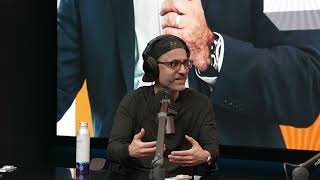
Neel Dhingra explains how to build profitable online communities by starting in a niche and giving value before asking for sales. He points to Dr. Pimple Popper and Gary Vaynerchuk's "jab, jab, jab, right hook" approach as proof that 100 to 1,000 true fans can compound into a real business.
It's Dave Meltzer here live at the Blue Wire Studios in the lobby of the Wynn Hotel in Las Vegas with entrepreneurs the Playbook. And have I got a special guest today, Neil Dingra. Welcome to the Playbook.
Thanks for having me, man. Really appreciate it.
CEO of of course and content creator of Ford Academy and doing a Ford event here in Las Vegas as well. But, Neil, I wanted to have you on because this is not a traditional world anymore. And I believe that people don't understand the size, scope, and scale of the audience. And that's the biggest inhibitor to what people are trying to do in content, because they don't understand the size, scope, and scale. So they think they have to please everyone. Where you're a specialist in content in specific niches, and those two niches probably are bigger than you can handle. What has been your biggest lesson of the size, scope, and skill of the audience when you're creating content to build.
A community, that is an absolute great point and great way to start. Because people don't believe that there's enough riches in the niches, Right. So there's. There's so much there in whatever your subject matter expert in or whatever you're passionate about, Right. So in my case, like you alluded to, maybe when I first started, I was only talking about one thing, which was real estate finance, specifically mortgages, home loans, things like that. Right. And you would think that that is super narrow, but within that niche, there was a lot of people that are interested in the content and interested in learning. And so I found that, you know, if you have knowledge to share or you're passionate about something, there's an audience for you. I mean, it's there. And when you broaden that among beyond just your city or even your region, when you go national or international, it's insane, insane, insane.
And I had a difficult time myself because coming from a traditional background of building brands, personal brands, by the way, with Lee Steinberg, in the sports world, I thought that audience was big. When you had Troy Aikman, Steve Younger, Warren Moon, you know, everybody knew who they were. But it's nothing compared to even my own personal brand and my own niche. And the person that helped me most understand this is a woman, and her name is Dr. Pimple Popper.
Wow.
Because when I looked at Dr. Pimple Popper, I said, how the heck does this lady have a Bravo show? How does she have more subscribers on YouTube than the entire NFL Pro Football hall of Famers that are the most popular sport in America? How could this be and so I started a journey to understand how communities are built through content. You have done the same thing. The riches are in the niches. So how do you help people that are like a Dave Meltzer that has always been known as, oh, that Lee's guy or Warren Moon's guy or there's no name to it to build it where millions of people every day watch Neil and David.
Yeah, I think it's just a matter of what is your message going to be like, you know, what is the information that you could share? And, you know, a lot of people feel are always in the mode of saying no for the audience. Like you just said, you know, you're saying, well, you know, I'm not that interesting, or maybe, you know, well, there's already people doing that, so I can't do it. It's too saturated. It's not at all, you know, even today, 2023, we're heading into. There's so much of a void of people who truly know what they're talking about, who can help people, who can educate. And there's, you know, tons of communities you can build online. And even from a small creator perspective, if you just start sharing that information, you'll find you'll, your tribe. You'll also find that people are really grateful to learn from someone who is just a few steps ahead of them. So, you know, you've, you obviously have a huge track record in business and in, in the world that you were in coming into content. Well, a lot of people don't. So they feel like, hey, if David's doing it, Neil's doing this stuff, I can't do that. Look at those guys. They have a lot of stuff to share. Well, here's the thing I found, especially when you're doing infotainment and you want to share information, people would love to learn from someone who's just a few steps ahead of them. So, like, there's only so much I could learn, maybe from Elon or Jeff or Bezos.
Great point.
But like, if a guy is just a few steps ahead, maybe a couple years ahead of me, and he did it, then I feel like I can do it. So I found that the most powerful content you can put out there, someone's watching it and they feel inspired or empowered to do something and the closer you are to them as far as, you know, trajectory, like, they feel like I can do this. And so I would encourage people, you know, even at any point to start looking into it just because of how.
Powerful it is and understanding the size Scope and scale of the audience and the niche or expertise that you're in, determined upon whatever level of expertise, like you said, because there's different levels of people that may be one or two steps ahead of you. And so there's always an opportunity. But one of the things about being a traditional brand person is that I grew up under an era of understanding the power of engagement of a community and the power of very small numbers. Meaning I've been speaking for years on stages and I have not forgotten, nor will I ever forget how much money and how excited I was to stand in front of 100 people. Yeah, 100 people. And now I have, you know, my content guys tell and you've seen them. Oh, that video didn't do well, Dave. It only got 40,000 views. And I'm thinking, that's all a pet go park, right? If someone said, hey Dave, for three minutes, I'm gonna let you stand on pitcher's mound at Petco in front of 40,000 people and give them your best advice about branding or marketing or sports entertainment, I would have like freaked out, thinking it was the best opportunity in the world. But now, once again, perspective wise, we've lost perspective on the advantage and power of 100 people.
Yeah, you see it on YouTube, you know, with all this viral content, Mr. Beast and billions of views and, and so you think like, well, these guys are so far ahead of me. But it really puts it in perspective if you ever do live events. So we just talked about the beginning show. We just, we have an event every summer in Vegas, forward event. And I'm sitting on that stage and there's, you know, 800 people there looking at you. And it feels like an auditorium, you know what I mean? It feels like a stadium full of people and looking at you. And like you said, that's, it's so powerful, right? And when you think about those would be typically views that people think is a failure on the Internet. And what, what else, or were you, what else were you going to do on a Monday in the afternoon where you could reach a thousand people, where you could reach just a couple hundred people? It just scales your communication. So I was just on a podcast and the guy told me, hey, Neil, you know the secret for, you know, building brand and making money and all the things that you want in life is and getting respect, all that stuff he said, it's, it's just shaking more hands, right? It's just, there's more hands, you have more hands you shake. The more money you make, more relationships, you're going to have.
Right.
And so I was thinking, like, it's super simple, but what if we were doing that virtually. Right. Like, what if I'm shaking a thousand hands a day and then eventually tens of thousands, eventually hundreds of thousands every single day. What is the compounding effect of that over a 12 month period? Imagine the trajectory of whatever it is that you want to accomplish, whether it's making money or just building a brand. And you don't even know what you're doing it for yet. Just imagine the effect of shaking that many hands every single day and how it compounds. And I found it to be like, you know, coming from a small town in Nevada, just putting out the content and the amazing people I've been able to connect with because I hit record.
Yeah.
I mean, like I'm sitting here with you because I hit record. And so all these great people I've got to meet over the last few years just because of putting myself out there. And it starts with 10 views and then it gets to 100 and so on.
Yeah. And most people quit, which makes it even more advantageous to be someone that can appreciate 100 or a thousand people. Because most people quit before they get to 100 or a thousand. And now you're in what I call an empty space. The competitive space is the bigger space where everybody wants to be Rogan on their podcast or they want to be the rock with their content. But there is a missing middle class of content.
Correct.
Where, you know, and I see a future, you know, with companies like thinkific and especially Kajabi, with a studio that there's a space of experts that will put out, you know, $27 training courses. And they will be quite happy their first month to get 100 people to sign up for a $2,700 course. And then the next month, 110. And the next month 120 in the next month. And pretty soon they have a residual annuitized business of millions of dollars and they will never have a million followers.
Correct.
But yet they'll have 1200 people a month taking their newest course every single month. Because that person resonates. How do we motivate people to understand the power of this middle class that's missing and the opportunities that exist in every single industry, career and job. Every single one.
Yeah.
Popping pimples, content, sports, whatever it is.
We talk about chiropractors. Yeah, right. There's a guy putting out videos of popping people's backs and he's having people fly from all over the country to have their back popped at his place. He's writing a book. He's doing all these things. So just opens up doors that you don't even know are there yet. But I think, I just think of it like this. Every. You know, we have a tent as a content creator, as a personal brand, and you're trying to bring more people into the tent. Now, can all these people transact with you? No. Can. Can.
Can.
Can you benefit from them being in the audience? No. But having people in the tent allows you to reach the few people who you could transact with, who could move the needle for you in your business and life. So I think about, you know, creating content of just making it valuable. You know, I was on a podcast with Gary V. A few years ago, and I said, gary, I'm in the finance space. The content's kind of boring. What do I do? Content on? He goes, neil, you got to do information or entertainment. Just pick one or the other. I'm like, well, I'm a nerd. I can't really entertain people. I'm not going to dance or tell jokes, but what I can do is inform people. I have a lot of industry information I could share. He's like, do that in an innovative way. What are the hacks? What are the tips? What are the, you know, the money tips that you can save with people, Even beginner stuff. The beginner stuff, honestly, seems to reach the most people because nobody's putting it out there, right? So those are the tips that brought people into my tent. And then now in the tent, like you said, how many true fans do you need to move the needle for your business? 100, eventually a thousand. That is a wildly successful business. If you have a thousand people in there that will come to your events, that will learn from you, that will buy your products and services, that will refer you clients, whatever it is that that business is, whether it's a pimple popper, a chiropractor, or. Or a real estate agent. Right? It doesn't matter because you just now have this scaled communication and people only need you until they don't need you, until they do need you. But if you have that top of mind awareness now, you've gone not only top of mind, but top of list with all these people in there.
Yeah, it's so interesting because a lot of people don't understand the power of that community, but they also don't understand aggregate effect or exponential growth. And in fact, Gary, I was consulting on a sports agency six Super Bowls ago. I didn't even know what a Gary Vee was. I. I was working with AJ And I had a radio show, naturally, syndicated with Gal Media, called the Sports Blender. And Gary said to me, dave, you know, you should turn that into a podcast. And this six years ago. And I looked at him, I said, gary, there's way too many podcasts. There's 200,000 of them. I'm very successful on the radio. Why would I do a podcast? And he said, because there's not enough of podcasts, especially with the type of content from someone your age, with your experience and in your genre that sports entertainment. And so he said, look, I'll help you because you're helping me. I said, whoa, okay. He said, well, how many followers you know would be worth the investment to build this out for a year? And he was surprised because I said, I want two ambassadors of the show. I don't care how many people listen. He said, what do you mean? I said, I want two people that will tell everyone to listen to my podcast. And. And they need to every year get two people that will do the same for me. And he said, and how much are you willing to invest to do that? I said, a million bucks. And he said, you get it. I said, what do you mean? He said, you understand what you're doing? I said, yeah. I said, because I'm turning 50, literally 10 days after I met him, I said, when I'm 70, 20 years from now, I will have one of the most popular podcasts in the world, two people at a time, because I know math, I know aggregate effects. And he said, yeah, 2 million people telling 2 million people a year to be engaged with your podcast. There's probably nothing better you could do for your financial legacy than build that podcast. And I said, sold. And here we are at the win doing that for you. This idea of aggregate effect, people don't see the two times two. It's five years and you only have 64 people. But I knew that's the exact pace to get me onto 2 million in 20 years. Because of the aggregate effect.
Yeah.
How important is that point of telling other people, of resonating with them to a point where they're like, you gotta listen to Neil.
Well, you look at the stock chart of any super valuable company, look at Tesla, Amazon, all this, and it muddles along even Apple for a long time, like a decade sometimes. And then all of a sudden you see this hockey stick growth, right? And so that same thing happens with personal brands and content creators. But I think the thing is, is like, you know, you got to think about what you want to spend your time doing. And, like, I think most people are in the mode of symmetric opportunities. So, like, I'm going to get this degree, and then I'll get this job. I'm going to make this investment. I'll get this return, and that's fine, you know, but it's not exciting after a certain point. And if you want something really big or an outsized return, you have to play a different game. And I think of it like an asymmetric opportunity. So content and a podcast or doing anything on the Internet is asymmetric, meaning you put in the time and the investment. Your return is not correlated to that investment. After a certain point, it gets. It's. There's no ceiling. Like, this thing can just keep going. And there's very few things that, like, anybody in the country could just. It doesn't matter if you're rich, poor. It doesn't matter if you got a. An ax. If you have Internet access and you have one of these phones, you have access to play in the game. Right? And so it's crazy to see that that opportunity exists. And, you know, those who are taking advantage of it are seeing these crazy returns. You know, I look at TikTok sometimes, I see, you know, people making just videos with the phone. No. No crazy content crew. We're not in a $6 million studio, and they're crushing it. They're getting more views than you or me. Right, right. And so it's crazy to see that it's. It's leveled the playing field completely, and those returns add up. It compounds.
And to that measure, one of the other things that you have in common with, you know, Neil Patel and some other of the younger people, you know, as I got involved with Gary, it was because I was helping his brother with a sports agency. And you both, Neil Patel, and you have learned the lesson of giving back, of elevating others. And I think that's also another component, as I have mentored young guys like Neil Patel when he was 19 and Jeff Fensters and people like you that now have used me as a milestone to get far past what I know. And now you're giving back and giving forward. Your ven is called forward, and you have an academy. Everything you do is about really elevating other people, and it's really allowed you to elevate yourself. How important is it not just to create the content, to be an informative expert, but to actually give back and help other people do the same?
You Know, it's interesting, I was on stage with Gary at the event and I asked him, hey, Gary, like, how does all the, how do all the things that you do succeed? You know, because it seems like we're trying to talk about adversity. And I was trying to find something that failed. And there's probably been many failures. But if you look at his recent track record, you know, this wine company starts, gets acquired and the NFT project blows up, you know, and the sports agency and Vaynermedia and I don't know how many other things he's done. Yeah, all these kinds of things. Like, he does so much success, success. And he told me, he looked at me and I don't know if the audience got it, but he says, neil, I don't need the money. And, and so he's not trying to sell something, he's just trying to provide the most, the highest experience to the customer or to the end user. Right. And even if you're in the beginning stages of the game, if you look at providing the most value, right, then more people are going to tell people about the content, more people are going to tell them about the product or service. So I was looked at it like, hey, if we can get the people to have success. And then your people in your groups, whether it's someone who came to your event, that tells everybody, same thing like you said, tells just two people that this was the best event I went to this year, or they come to your, your class and they're like, you know what, super valuable. And they tell people about it. So we didn't even really do much paid media. We just made sure that everybody there had the best experience and got the most value from whatever it is that we're doing. And then from there it just continues to scale. So I think think of it as like, you know, it seems kind of cliche, but you gotta, you gotta help other people in order for you to get the return you're looking for. And so many people, you could just tell that the motivation is for the quick dollar or, you know, they want to sell you something, if you flip it around and stop asking, stop selling so much, you'll get the sale. You know, it just comes naturally.
Yeah. And I think one of the components that a lot of people are missing in things that we look at and you do really well is you're helping me and so many other people in my space as well, is to be able to articulate the value, not articulate the price. Yeah, right. You're not selling Features and benefits. When you and I first started working together, all you talked about was the articulation of the value. Like this is what we're going to bring to the table in quantifying this value. And a lot of people don't take that extra step. They have good intentions of providing value. Yeah. But they make the assumption that everybody understands it. And you and I both know there's a lot of subtleties to what we do and a lot of subtleties of success. And if we're not the ones articulating the subtleties of the quantitative value of what we're doing, we are at a miss. We are losing out. And one of the things that Gary does extremely well at your forward event or as you do at your forward academy is to articulate that value. Whether it's the wine, the NFTs, Sasha VaynerMedia, VaynerSports or, you know, Vayner future, whatever else he's doing with VCon and all the great things, he's just terrific at articulating it. You know, for you to help people do that, is that a component of the academy of not only teaching people how to create the content, but articulate your own value of the content in that kind of niches of the riches?
Yeah, exactly. Like you think about a super simple example. You know that app, the ipod comes out, I don't know when it was 10, I'm probably dating myself now. But how long ago that came out? Any one of us would describe it as the world's first digital media player. Right? That's what it is, that's what it does. But how did Apple describe it? A thousand songs in your pocket. Right. It's the benefit, like you just said. And they're selling that benefit. That's marketing. Apple's a genius at this. Right. That's where they're, that's why they are one of the most valuable companies in the world. But you know, from a consumer perspective or from an individual entrepreneur solopreneur perspective, well, how can you do that? And I think it's just flipping that around. So we help people kind of articulate, like what is the benefit of this product? Not necessarily the product or the features and benefits like sell the vacation, like what does this actually get you? And then we have an hour and opportunity to then educate them about all the benefits we got to get them in. If we lose them upfront, we don't even have an opportunity to educate them on any of this stuff. So I think most people in content creation in any type of Format are just selling in some way or shape or form. They're not really serving. And if you could flip it around, you'll have the opportunity to make the sale. Just, just delay it. And that's another thing I learned from Gary was, you know, he takes it really far where he talks about, you know, jab, jab, jab, right hook. I think he throws many jabs and then hooks. But I think it is a super timeless concept of just like giving before you ask. Even in a simple thing, thing where you want to sell something online, if you can give some context and some case study and then ask for the business, it works exponentially better than if you just come out there like most people do and try and ask for the sale. So we, we try and incorporate that in everything. Just giving information first, that's valuable before you ask for anything.
Yeah. And you do a great job of that in both providing the value and articulating and managing the expectations of that value and cohesively. It allows you to, as you say, take advantage of a huge opportunity that most people, including I think you and I, still can't fathom.
Yeah.
You know, the closer you get to fathoming it, the closer you realize I can't fathom how big the universe is. I feel the same way about the audience. I can't fathom how big the universe is. You know, that Webb Telescope just freaks me out thinking there's a billion galaxies or whatever the heck they.
What's crazy is it allows someone today to hit fast forward. I mean, think about, you know, those of us who've been in business long before any of this social media stuff, like how long it took to get those benefits of brand. Like how long would it take you to build a personal brand without social media? It would take decades.
Yeah. Even if you were on NBC playing starting quarterback, it took a long time.
A long time to, you know, get to that level. And now you can hit fast forward, get there so much faster. And so I think it's just a, it's a huge opportunity. It's not too late. People, people just need to. Yeah, it's not too late. And I think there's a, there's a mass. It's just, you know, a lot of the content that's out right now, it's in the early stages. I mean, you're doing I don't know how many vertical videos a day. Last year we're doing no vertical videos. Like this is something new you're doing. Right. And short clips, like 30, 40 second clips. Vertical and you're reaching so many people, That's a new strategy. And then the next year there'll probably be something else new, and we just keep evolving with it.
Yeah. And you do a great job of helping me and so many others as well. Neil Dhingra, he is the CEO and content creator for Ford Academy Ford Events, which takes place in the summer here in Las Vegas. Make sure you join us in our community. We're here to be of service and of value to others and hopefully help you articulate the same. Neil, thanks for joining me in your hometown here at the Wynn in the Blue Wire studios in the lobby of the Wynn. I'm Dave Meltzer here with entrepreneurs the Playbook.
More from Neel





Don’t let people tell you what you can and can’t do. #personalbranding #podcast #entrepreneur

How to use Ai the right way for scripting. #personalbranding #entrepreneur #ai




Your audience already has a story about why it won’t work. #personalbranding #entrepreneur

The new YouTube strategy to hook viewers. #personalbranding #entrepreneur #podcast