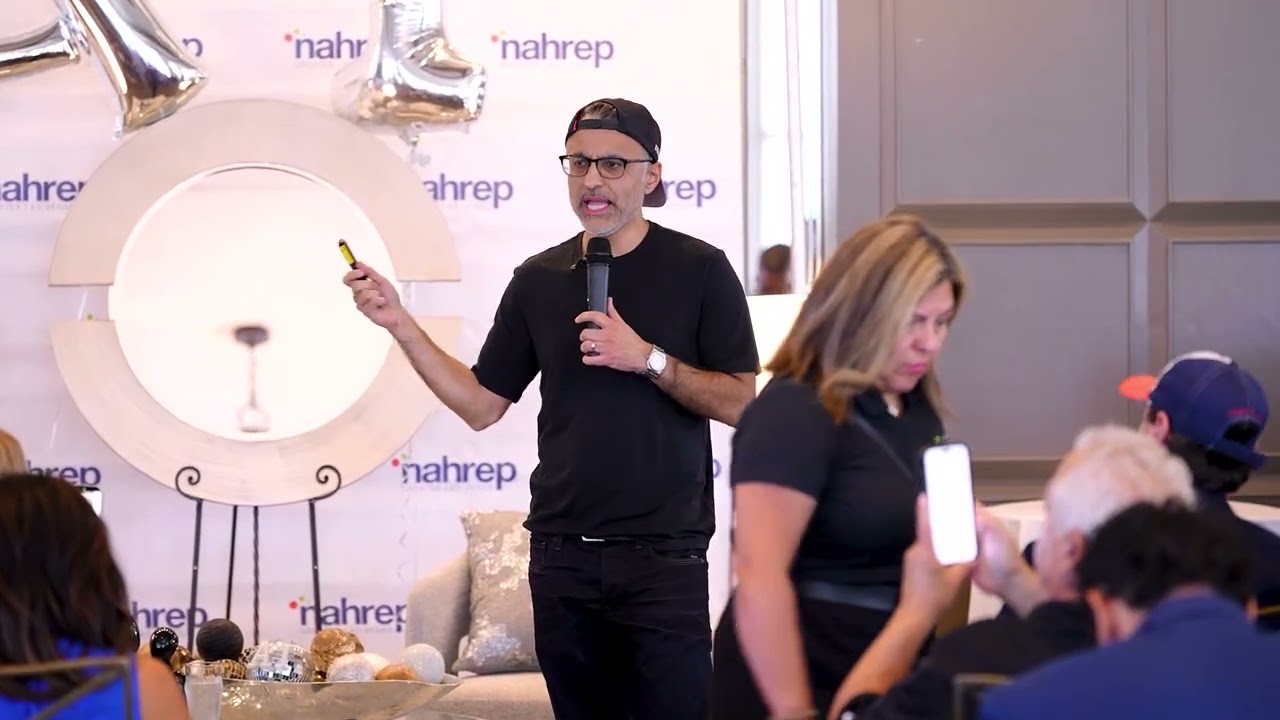
Neel Dhingra shows how to build a real network through one-on-one outreach, then use AI tools like ChatGPT and HeyGen to scale your message without sounding generic. He argues the market is now a power curve where the top 10% of agents capture 90% of business, so specialize in affluent niches and teach perspective, not commodity tips.
Chapters
You know, you want to send out the next email campaign, you want to post a video, and you want to just get a bunch of deals or get a bunch of relationships. The way I built my network was one handshake at a time. I sent messages like that for hours every single night for years, and that led to so many connections, more referrals, more opportunities. And you see the ripple effect because not only Chris is saying like, hey, my life's different because I sent you that one message,, but my life's different too because I got to connect with so many amazing people over the years. So I would just encourage you that I didn't know Chris was gonna say that shit, but like that is a powerful start to what we're gonna get into because all of the things we're talking about today are AI and strategy on how to scale your communication, how to scale your business. But the thing I did that got me rich, that got me connections, that made me happier in life was not scalable. It was talking to people one-to-one. And so yes, let's go down the rabbit hole of AI and tech, but don't forget that your biggest advantage in this room is you. It's your connection, your ability to do the things that AI can't do. Like, Zillow has an advantage over us. They have scale, right? But they don't have the local expert with the relationships and the knowledge that you have in this market. So we need to lean into our strengths and not try and compete on a different playing field that's not even advantageous to us. We don't have the advantage there. We have the advantage here. So I'm gonna get into some stuff right now. I brought a video with me. Hopefully this plays. Did you guys get the audio plugged in there? Yeah. To that? Okay, cool. So I'm gonna share— hold on, I think I just— did I mute myself? I accidentally muted myself. Okay, so I literally— I'm sorry guys, I just pulled up like 10 minutes ago. We were trying to jam. Does anybody ever try and jam too many things into one day and you misjudge time? So I do that, I do this all the time, and then I keep making the same mistake, but We made it. Chris is like, where are you, bro? I'm like, I'm just pulling up, so we're good. I think I just left my car in the entry. We didn't even park. It's okay, it won't be towed. It won't be towed, she said. Okay. All right, so I want to play this for you guys. I just prepared this actually this morning. Good morning, it's Thursday, August 6th, about 10 AM, and I'm recording this with no camera, no studio, no second take. The most common question I'm getting right now is, is it a good time to buy? And look, the honest answer It's always a good time to buy. It's actually a great time to sell as well. So if you're thinking about buying or selling, let's connect. I work with first-time buyers, move-up buyers, luxury buyers, investors, millennials, empty nesters, even downsizers. Whatever your real estate or mortgage needs are, call me, I can help you. Well, first of all, that video is created by AI. I just asked ChatGPT for some scripting and plugged it into AI, and then it generated this video 4 minutes later. So it's actually 98% there in terms of looking and sounding just like me, correct? Would you guys agree? Yes. But would you also agree that this is the exact same thing that almost everybody says? Yeah. And so this is what's considered AI slop, okay? If you guys don't know the term, slop is producing content with AI that's garbage, okay? And so that actually looks good and somebody might put that out and not knowing that this is like you're trying to appeal to everyone, you're trying to be a catch-all, there's no real advantage, they can't see who you are. This is not what we want to do, okay? Also, I made another version because I knew this was for NAREP today, and I knew there was going to be the Hispanic— the Latinos are here, right? Is it— are there Latinos? Everybody's here, right? Okay, good. So, um, I'm ashamed to say that I didn't remember much from Spanish class in high school, but now we have AI, okay? So AI's got my back. Buenos días, es jueves, 6 de agosto, son como las 10 de la mañana y estoy grabando esto sin cámara. How is my Spanish, by the way? Is it good? Is that good? Very quickly. So I don't know if you guys know this, but I speak 22 languages fluently now because of this tool. Uh, you can use AI to produce any language and any content, or any language that you want for any piece of content. You just plug it in, and I'll give you guys this tool in a moment here, and the right way to use it. But it's incredible, the power of all these tools that we can use to really scale our communication. But the problem that people are using, or the problem I'm seeing with agents and lenders right now is they're using this wrong. They're asking AI what to think. They're asking it to think for you. The smartest people right now, the people that are making the most money using AI, are not asking AI what to think. They're coming to it with an idea and asking AI to refine it, multiply it. So I bring the LLM, either ChatGPT or Claude, I bring one of those models my idea first, and then I say, "Hey, here's what I'm thinking, here's why I'm thinking it. You can push back if necessary, but help me refine this into something valuable that I could teach. Help me refine this into a valuable message for my audience." And then it will help me work through all the things, it'll ask me questions, and then it turns into something that only I created, not the same thing that everybody else is saying. Does that make sense? So that's the thing we need to do different here. Most people are asking AI what to think, But AI does not replace having a point of view. It rewards people who brought one to the platform. If you bring it in an idea, it makes it 10x better. This is probably the most powerful thing I'll tell you right now in terms of how to use the LLM. And then we'll get into how to turn it into content. Now here's the other thing I noticed. Right now the bar is really low, but I have found it's not hard to stand out in a world that has normalized mediocrity. Did you know that when I first got into mortgage, and I'm sure you guys heard this as well, or real estate, even when I first got into events, when I invited Kris to that event 6 years ago, everybody told me it's saturated. There's too many people doing it. How many have heard the term like, or the statement, "Real estate is saturated. The world doesn't need another real estate agent." I started a podcast last year and they told me, "Bro, the world doesn't need another podcast." You guys, you You know, just do something else. There's so many people. And here's what I found out. Nothing is saturated because most people suck at what they do, right? Would you agree? So like, you guys probably think like, you probably do things that your competitors don't. Raise your hand if somebody is in a home, specifically in a home, because of the work you did to go above and beyond on a transaction. Right? So, all the hands that just went up, the other people, are you guys in the industry? I'm just making sure. Who are you helping? I don't know, maybe you guys are vendors, but either way, that shows you right there that the work we do matters. Your advice really makes a difference for people. So it's not cliché or dumb of me to say that we change lives in this room. Would you agree? Because we went above and beyond, and somebody's in a home because of our advice and our hard work. Maybe they got denied somewhere else. Maybe they got misinformed by their family member or their uncle or the news, and you were able to help them get into a property and they're better off because of that. That has ripple effects for that person's family as well. So the first thing we need to do before we get into the rest of the presentation is just get back to a place of like, our work is really important. My advice really helps people because I've found the number one thing that holds people back from putting out the content is you think it's, Nobody cares, nobody's gonna listen, and you're disqualifying yourself before you even do anything. What you wanna do is qualify people. You wanna qualify yourself and then qualify people. This is the difference, and it comes through in what you're teaching. Because if you're not excited about what you're doing, nobody else is gonna be excited about it. If I wasn't pumped, I mean, it helped, Chris was like pumping me up, but like even without that, if I wasn't excited about being here with you guys, nobody would listen to me. You need to not try and convince everybody about real estate and mortgage and all the things that we're talking about. They need to just know that you are convinced. If you're convinced, it's gonna come through in the content. Does that make sense? So, I wanna share with you one other thing that I'm using this tool for, and then I'll give you guys the tool. We send client updates, and some of the people on our team were like, well, Neel, I don't have an assistant for these updates, and I don't want them to come from me, because then it would appear like I'm my own assistant. And I'm like, well, no shame, but like, why don't we just make a fake assistant? Okay, so this is Chloe, and she sends out the updates. Hey there, I am Neel's AI assistant Chloe. I wanted to give you a quick update on your transaction as well as let you know about some important upcoming dates. So this can go out automatically at certain milestones along the way, and it gives you a really professional appearance and also These are called UGC style. These are fake people, by the way. You can pick whichever one you want, but it's your assistant and it's the content that would actually connect with people. So this, this tool is called HeyGen, and it's what I use for all my AI avatar videos and our UGC style videos. If you want to scan the QR code, you can get the tool. I want to make sure I make this actionable for you guys. That— I've tried probably a dozen different AI avatar tools for video generation, this is the best one. Anybody use HeyGen in this room? Uh, we have 3 people already who are using it. Okay, cool. Well, if you're not using it now, you have it. So just scan this and then you'll have it on your phone. You can come back to it later. Don't try and create your avatar right now because we got shit to do, but after this you could do it. Okay. I'd love it. Okay, so the other tool I'm using right now that is incredible that I'm getting so much lift from is called Claude Design. How many of you are using Claude right now? Claude, and then there's a tool, if you're in Claude on the left side, there's a little paint button. It looks like old school Microsoft Paint. That paint button opens up something that's in beta mode, which has been embedded, it's been in beta for the last year or so, but it's called Claude Design. All of our design decks, materials, stuff we use for clients, brochures, we're creating using Claude Design, and it's incredible. Have you ever seen a flyer picture created by ChatGPT and it looks exactly like in the same type of style. Have you guys noticed this? This is again AI slop. You should not make that flyer. But if you use Claude Design, it looks custom. It looks like you hired a graphic designer to make your image. So I would just encourage you guys to check that one out and I'll give you some more as we get into this. I don't know if you guys saw the stat last year, but In 2025, 10% of agents did 90% of the business. Did you guys see this? It's going to be even worse in 2026. So the top 10% is doing all the business. The other 90% of agents and lenders, by the way, it's the same as Truist Mortgage, are fighting over the 10% of the scraps left over right here. So like, these people right here are where you want to be. These are the people making the majority of the money. Okay, and this is the way it used to be. It used to be in our industry, there's these people on the left side who are maybe, uh, struggling, but then there was a big group of people in the middle making decent money, good money, and then on the other end was the people who are making crazy amounts, like the high, high earners. But there was this bell curve of average that has completely inverted in the last 24 months. It's now a power curve, so it's completely flat.. And if you look at this, it's almost true for every industry. So right now what you're finding is all these people are in this flat part of the curve. They're making okay money, but they're trying to move up. But then you get into this top curve where people are making big money, like multiple six figures, and each notch up on the power curve is a huge lift. So what you want to do is get into that power curve using technology, using AI. And so the whole premise of what I'm about to teach you and everything that I do this year is escape the middle, escape this middle muck. You do not want to get stuck in average. Average is very expensive, you know, compared to the people who are making more money. Now, one thing I've noticed, this chart of people who are struggling versus people who are crushing it, I've noticed the same is true in the US economy. Have you guys seen this? People who own a lot of stocks and real estate are— have never been richer. But then the average person is like telling us about how expensive everything is. And, you know, the cost of housing, the cost of gas, the cost of everything— inflation is killing them. So what's happening is this K-shape where the rich are getting richer and then people are going in the opposite direction too. It's very sad, but that's just the truth. I don't know if politicians are going to be able to fix this, but that's the trend right now. So what do you do with this information? I don't know if you saw the stat, but first-time buyers represent only 17% of the market right now. I have found that many people in our industry are putting all of their energy into marketing to first-time buyers when it's the smallest segment of people. If you want to just put life or your business a little bit on an easier path and make more money, I would start marketing to more affluent people. And it's nothing like you can't help the people who are coming up, but just one way to do this: market to people who already own a home. They've already done it once. They wanna move up. Maybe they wanna buy other property. So if you think about it, yes, don't ignore the first-timers. I'm not telling you that. Like, completely, no. I'm just telling you it's not gonna be the biggest segment of your business. The bigger segment is gonna be people with money, people with assets, people who already own a home that wanna move into a new home. The people who are making the most money in our group are people serving move-up buyers, not first-time buyers. So you can still make content for them, but just make sure that you're not focusing all of your energy there because you're living life on hard mode right now. It's actually very difficult to do that. You guys feel that when you're talking to clients? It's really difficult for those people. So one thing that I wanna do before we get into some content, and I'm gonna stick around afterwards because we only have 30 minutes here, and then afterwards we have to wrap up, but I'll hang around if you guys wanna jam on ideas. One thing we need to do is narrow your focus. I was speaking at an event, and speaking of move-up buyers, and before I was the keynote speaker, I was walking around talking to all the people in sales there, and they were telling me, I was just asking, "How's it going?" I was trying to get a feel for the room, and they were telling me, "Well, yeah, last year was kind of rough, but I'm really looking forward to a big 2026. Like, I hope everything get, it's kind of a fresh start. We kind of went through some ups and downs, but I'm pumped to be here." So basically what I was hearing was, The last 12 months weren't what they wanted them to be, and they want to do better next year, which is most people. But then I came across a few people who were like, man, last year was my best year ever. Last year I crushed it. This year's looking even better, 2026. And I was like, well, what is different about these people? And I was shocked to hear what they told me. They told me that they stopped marketing themselves as a jack of all trades and they started focusing on one area within the market. So this one guy told me, he's always getting people and they're like, I'm closing $10, $20 million, $30 million a year, but I want to do better. Cool. This guy, he's like, well, last year we did $190 million. And I was like, oh, that must be your whole team, like the whole office. He's like, no, that was me. The rest of the office was even more. I was like, well, hold on a second, bro. What are you doing different? What drugs are you on? You know? And he's like, well, I just changed my whole marketing to work on move-up buyers. And I was thinking about serving people who already own a home and they want to buy the new home, and I came up with this process called the Two Home Tango, you know, where you can rent out your current home or sell it, and then we help you buy the new one, and I just really focused all my marketing on that. As a result, he ended up being known for that and getting way more business. The other thing you need to understand is when you pick one of these niches, you would think you're going to lose all the other ones, but you get more than what you focus on. It's just one— think about it like this way. It's one door into your house of working with you, but there's many rooms within. But you just need to pick one door for your marketing because that makes you stand out from everybody else who is doing, like I said in that first video, where they help all the people. If you're a jack of all trades, you're a master of none. People want specialists right now. Generalists are struggling, but specialists are getting paid. So what do you want to specialize in? That's the focus that we need to talk about. So, I'm gonna help you guys do this. Think about this, who do you wanna serve this year? Who do you wanna serve more of? Maybe think about, of all the deals you closed in the last year, 12 months, who were the people that you enjoyed working with the most? And then sometimes you might be thinking, well, shit, dude, they were all hard, I don't wanna enjoy it, I didn't enjoy much of them. Well, which one did you get the most fulfillment from? Or which one would you like 100 more of? If I said, Neel, "John, Chris, I'm gonna give you 100 more of that client," you'd be like, "Dude, that's awesome. I would love that." What would that type of client be? So think about that in your head. You don't have to decide right now, but get focused on that. So I was gonna ask you right now, why would someone refer a client to you? Like, when you get a referral from a business partner or from a past client, what is the reason why they refer them to you? Just raise your hand. If you could just yell it out. Trustworthy. Trustworthy, okay, what else? Respect. They respect you. What else? You get it done. Honest. Honest, okay. So, anybody else have anything, the reason why somebody refers you? Your good looks. Your good looks, okay. I love that. Transparency. Transparent, okay. What did you say? Fights for you. Fights for you, yes, that's great. That's actually a good one, negotiating. What did you say, ma'am? Extraordinary experience. You're experienced, okay, good. So, go ahead. A sense of urgency. So you have an urgency, you move quick. Okay. So what I want to tell you is, these things that you guys all said are good compliments. These are great compliments, and it is a reason to work with you. I'm not saying it's to be dismissed. But it's not a clear position in the market. And the reason why it's not a clear position is because we could have said it about every single one of us in this room. Somebody said they're honest. I believe we're all honest. If you said you're a liar, you probably are going to be hosed, right? So you have to think about this test. If the thing I'm saying, if the opposite is actually an argument, then this isn't going to work as my position. It's just a compliment. So when he said honest, there's nobody in the industry who's gonna say I'm a liar, right? If you said I'm hardworking, there's nobody in the industry who's gonna say, well, I'm freaking lazy as shit, bro, hire me today. Like, that's not a clear position. So what you want is something where somebody could take the other side, right? And so you have to think about like, what are the things that differentiate you? Now negotiation is one, somebody said negotiation, that's really good. Getting things done in a short timeframe That is actually something that isn't very common. People can take longer to do things in our industry. So you have to lean into what's actually unique. Does this make sense for you guys? Yeah. Okay, so the market cannot refer what it can't describe. So if you think about everything being generic, what is something unique? So let me just give you an example. There's a guy in my group who's crushing it right now, and his focus is he helps business owners buy homes. I help self-employed business owners, entrepreneurs buy homes because I truly understand their unique situation, their income, all those things. So I'm gonna focus on that. That's what his niche is online, and that's something that stands out, right? Because you can go even deeper on that. You could say, business owners who've been denied by a bank, I have a unique way of calculating your income, call me. Because of that, you stand out. Now some people want to serve Another group, one lady in my group said she wants to serve women. And I was like, well shit, that's kind of like sexist, right? You're not going to work with the men. Well, she said she wants to serve women because that's her passion, and she wants to serve not just any women, but women who are divorced or separated or single. Like those people she feels like are underserved, and she wants to put her messaging to those people. Because of that, she stands out. When we looked at her pipeline of closed deals, 60% of the transactions were men. Because she stands for something, so you remember her. Oh, you're the gal who does all the girl stuff, like you're the one who really helps families who are women who are newly separated, I want to work with you. Or you're the guy who does this. And so no one is going to say, you're the guy who's honest. Like, that's not something that stands out because everybody's honest. No one's gonna say you're the hard worker because By the way, if you're not those things, you can't even be in the industry anymore. If you don't work hard, you'd be dead on arrival right now. So I want you to think of who do you want to serve, and then this will help you stand out. This will also help the content stand out that we're going to create. This will also help AI help you because you have a message for a specific person. The other thing I've noticed is most people have not picked a direction strong enough to silence the others. So I don't know if you guys feel like this, but I feel like paranoid lately. I will, and it gives me like a sick feeling. You tell me if you agree. I'm at 11 o'clock at night, I'm scrolling social media, and I see a video from another person in the industry. I'm like, man, I should have made that video. So let me save that, I'm gonna work on that tomorrow. Tomorrow I'm at a thing like this, and somebody's gonna be over here in the hallway, and they'll be like, dude, I'm crushing it with my email newsletter. Here's all the stuff about my emails. And I'm like, oh dang, okay, let me save that, I'm gonna start working on that too. And then later in the day, somebody's telling me about this other idea with these videos on YouTube. And then somebody's telling me about this other strategy, these leads. So what happens is, by the end of the day, I've got 4 ideas that I never started or half started. And I'm feeling even more overwhelmed. And so I will tell you, the reason why many of us— and this is, I'm speaking from my own experience— the reason why I felt so tired all the time and why I wasn't getting the results is because I had too many open loops in my head. You're thinking of doing too many things and they're not able to be closed, so then you just feel exhausted. As a result, you're not giving your best to your clients, you're not giving your best to your family, you're not giving your best to each situation or each piece of content. So by the strategy I'm giving you here, it's not just about marketing, it's about like closing some of those loops. So now I'm focused on this right now. I'm making content. Somebody told me the other day like, hey, I'm crushing LinkedIn. And I'm like, that's awesome, bro, but I haven't logged into LinkedIn in 3 years, so I'm gonna, I'll do that later. I'm not saying he's not winning on there, but I'm just saying that's not my focus right now. So part of being the next level entrepreneur, the next level agent, the next level mortgage person in this room, is saying no to a few things, right, that don't serve you. You can't keep adding shit to the pile and then wondering why you're not getting anything done, okay? That's just my lecture for today, but. This is what I want you guys to think about. So let's move on to the content and then, how much time do I got, bro? Well, we've already used some of that. I've got 5 minutes, okay, so I'm gonna burn through this real quick. And then we'll just talk some more, but this is the content strategy I wanna share with you. This is the most important part of the marketing right now. And bro, why'd you guys give me the least amount of time? What happened, bro? I'm just kidding. No, they're good. They jammed so much value. Who is the people who put this on, by the way? Are they here? Oh yeah, here, okay. Hey, can we just give these people a round of applause for Nara for putting this together? This is awesome. I think, uh, it is like if you're organizing people to come to a place and put on work, I, I feel like you're doing God's work. I put on events, it's very difficult to get people to show up and to learn and to connect with each other, even though you guys like it. You don't want to do it until you're here. So what I realized is part of leadership is taking people places they don't want to go, but then they'll thank you when they get there. You have to like pull people. That's how I got Chris. His life has changed, but he was fighting me in the beginning. He's like, "Ah, I'm kind of busy that day." But then when he came, his life was changed. So that's a part of the process. So this is the marketing spectrum, okay? This is a spectrum of people on social media, on the internet. On the left side is the never. These are people that are not open to learning from you. They don't want to buy a house. They don't want to learn about buying a house. They don't want to learn about mortgages. Okay, on the opposite side is the now group. These are people ready to buy in the next 60, 90 days. The now group. The middle is 85% of the people online. This is called the not yet crowd. They're not yet ready to buy. Then they might be, but they're worried about interest rates. They might be, but they're worried about inflation, or they'll politics, or there's just all this uncertainty, they think the market might crash, whatever that is, they're stuck in the not yet group, okay? Now what I found is we focus all our energy on the now. This is where we get paid. So this is where you guys focus all your transactional stuff, all the people you work with day to day. This is important 'cause this is how you make your living. But with your marketing, you wanna focus on the middle, okay? This is the biggest group. So if you've ever posted things and you're finding that like not many people are engaged, not people are reaching out from it, it's because you're speaking to the now group. You're not speaking to the not yet group. Does this make sense? So think about this. If I went to a, showed up at a bar with one of you guys and you were, I was like, hey, I'm thinking about buying a house. Our lease is up. We got pre-approved and we're starting the process. Like, can you tell me like what's your advice? What area should I look at? You would talk to me different. You'd probably go straight into it, to helping me. Versus if I was that person sitting with you at the bar, and I was like, "Hey man, we're about a year away from buying. We have 8 months left on our lease. I just started a new job, and we're just getting situated. And so, what do I need to do to get ready so that next year we'll be in a good spot to buy?" Your advice to me would be totally different. Because I'm in the "not yet" group, right? You can't close that person the same way. So just think about how you would speak to people different if they weren't ready to transact. Because right now attention on the internet is not going to people who can sell. Attention goes to people who can educate, not just advertise. Most of the content I see from everybody in our industry is just an ad promoting yourself. What you want to do is actually educate, help somebody. When you do this, the not yet group trusts you and then they'll want to move forward with you. Does that make sense? So the best marketers have figured out how to make that not yet group feel smarter, not sold to. I have found that most people in our industry are talking down to that group. They're like, you know, almost making them feel stupid. What you want to do is make them feel smarter, because I like people who make me feel smart. I want to work with those people. This is going to be the key for your content strategy. So I'll give you some ideas on this, because we don't have time to go through all of it, but one of the ways you can get people to notice your content is not just give them a lecture. So you might say, 'Hey, this is the number one thing you need to do if you wanna buy a home in Las Vegas. Here's the first thing you need to do if you wanna get approved for a mortgage,' whatever that thing is. Now that's better than no video at all, but the video that I'm seeing getting a lot more reach right now is when you just observe what's happening and then give your two cents about it. So you might say that these buydown strategy, this credit strategy is going viral right now, and it's actually for good reason. Let me show you what I mean. And you would tell people what's happening. Okay? So let me give you an example. This is when interest rates have moved down. So they're, you know how they're up and down all the time? Every time they go up, I make an opportunity video about what that does for your buying opportunity. Right? And then when they come down, I make a video about how this improves your buying power. 'Cause there's always an opportunity no matter what's happening in the market. So here's that video where I talked about rates coming down last time. All right, so we have breaking news in real estate right now. Mortgage rates have dropped from around 7% all the way down to the low 6s. And so here's what that means as a buyer. If you were thinking about buying a home and you were getting a half-million-dollar loan amount, the rate used to be around 7%. That's around $3,300 a month. Now that same half-million-dollar loan, because rates have dropped to the low 6s, your monthly payment goes down by about $250. But here's the other cool part. Let's just say you were okay with that $3,300 principal and interest payment. You can now buy more of a house. So that same $3,300 payment gets you now a loan amount of $540,000. So basically your purchasing power just went up by $40,000 based on the new lower rate. So this is gonna— the reason I say this is this is about to happen again. We just saw rates go up to 7, and then some shit's gonna happen with politics, or who knows, it's a crazy world, and it's going to come back down. And so what's that mean for buyers? Most people come on and they just tell you what the rate is or what just happened, but what does it mean to somebody who might be 6 months away from buying. This is education, not just advertising. The other thing is it's not Neel Dhingra telling you what happened with rates. If you notice in the beginning of the video, I took a screenshot from Fortune magazine so they don't have to decide, hey, should I listen to this guy? Because anytime a video goes quote-unquote viral, it's going to show it to new people. New people have never seen you before, so they don't know that you're the expert. They don't know you've been in the business 10 years, 20 years. So they're seeing you for the first time. If they're seeing you for the first time, you want to start with an observation. And this is what will reach more people. And by the way, when I do this, so many people in the industry and beyond, past clients, they'll share the content. This is all like the shares on this video. This is not a viral video, but it just gets shared hundreds of times. You know what's crazy is even people in the industry who are your competitor, they will share your video. And some of them will ask you for permission first. They'll say, "Hey, Neel Dhingra, would you mind if I share your content? You said it way better than I could." I was like, sure, please. Let me get— before I do that, let me just think about this. You want to share me as the expert to all of your sphere of people? Well, yes, I'll approve that. You know, that's awesome. We can go ahead and do that. But the truth is, is you guys can do this because not many people are doing it. On this day, I was the only person in our market, in our region, who made a video like this. As a result, it gets a bunch of people sharing it. Okay, the goal is to make people feel smarter. If you forget anything, everything I taught you on the content, just Remember, does this video make them feel smarter? Does it help them? If the 24 hours pass, would they remember something from this video that I taught them? If so, it's a good video. If all they learned was that they need to call you when they're ready to buy, that's an advertisement. That's not any education. There's a difference. And then I'll share one more thing before we go, because this is really important right now. I need like 3 minutes and then we'll wrap up, okay guys? All right, cool. So I've seen two types of content right now, and I just did this for a group that paid me a lot of money. We went through all of their content and we decided which category it's in and why it's not working. There's two types of content right now on social and on YouTube as well. There's commodity content and perspective content. Commodity content is like the tips, tricks, hacks. Here are three, three ways to do X. This isn't terrible, but it's just not standing out because you could get it from ChatGPT. You could get it from a Google search. The other content which is unique that's standing out is perspective content. This is teaching people how to think about things. So let me give you an example of this, okay? You want to create a shift in the way they think about buying, about debt, about anything that you do process-wise. You want them to say— this is the best compliment I ever get— is, "I never thought of it like that." "Oh, Neel Dhingra, you changed my opinion." I think about the people I look up to the most, the people I respect the most, they change the way I think about something. And it doesn't have to be crazy, it could just be a small shift in the way they think. So we had a group in our, somebody in our group who was making a video about, she's a real estate agent and she sells a lot, she focuses on listings. So she says, I asked her, I said, Susan, what do you have that you wanna post a video about? Like, let's come up with an idea. She had an informational piece of content about the 6 things she does before she lists a home. And she wrote 'em out like, "I do this, I do this, I do this, and when I do all of these things, the home sells faster and for more money." And I was like, "Okay, that's good." Just like checkbox number 1, that's better than nothing. But then I thought to myself, why would you do all these things? Like, what's the bigger idea, right? And you can use AI to help you with this. Is there a bigger principle attached to the thing I'm teaching? So when you think about it, here's what we came up with. When you're buying a primary home, the number one factor for whether you write an offer on the house as your primary home and how much you're willing to pay for the house, the number one factor in your mind is the fantasy of you living in that home. You walk through the house and you can picture your family and the kids. You look at the yard, you picture the kids going, like I was just thinking when I saw this golf course, wouldn't it be cool me and my son were on the golf course out here? 'cause we lived here. Like, you're picturing yourself there. You guys have done this before, right? So, when you're doing that with a buyer, and they come to one of the door handles as the house they're looking at on the open house, and they grab one of the handles, and the handle falls off the door, the fantasy is broken. And it really impacts whether they write the offer, or how much they're willing to pay. And so, this is why I tell my clients to do this. This is why I tell my clients to do this, because when you do it, you get an offer quicker, and you get it for more money. Right? That second video doesn't exist in the real estate industry because it's a unique perspective. It's not just like, do this. It's why should you do this? Do you see the difference? So that second person gets respect, they get more business opportunities, they get more referrals because they made something unique. So anytime you want to make a video to teach people things, start thinking, what is the bigger reason behind this? And sometimes it might be something simple, but something— sometimes it might be a deeper principle. And you can use Claude, you can use ChatGPT to help you with this process. Do you guys— does it make sense to you? Yeah. Okay, cuz this is incredible. We're doing this on each piece of content, and it has produced my most viral, like millions and millions of views for me. Now, for people in our group who are just coming up, they're getting thousands of views, tens of thousands of views, and they were previously getting hundreds because they made this one shift of not talking about, um, the, uh, commodity. They're talking about perspective. So just think about that. And then I'll leave you guys with this. I want to share one other thing, uh, one other tool I'm using, which is NotebookLM. How many of you guys have used NotebookLM? So NotebookLM will create stunning infographics for your buyers, for your sellers, and your presentations. NotebookLM is— you definitely want to use this. I don't have time to get into how to use it right now because we ran out of time, but I'll just give you a quick preview of how I use it in my, uh, videos. So here's a video that I shot at my office. Hopefully it plays. We have breaking news. Mortgage rates have just fallen to a 3-year low. Let me show you quickly what this means for you. So according to Freddie Mac, rates are now at or below 6%. Just to give you context, about a year ago they were hovering around 7%, and now they're at 6%, in certain cases a bit lower than this. So let's give you the context on what this means. On a $500,000 mortgage, a year ago you would have been paying just over— so I walked them through the whole process, but those infographics, the graphics that I'm showing you today, they've all been created using NotebookLM. I just literally brain dump what I want, and then minutes later it spits out the graphic perfectly designed. It's the most incredible tool, and I think it's free to start. So I would use this for your infographics. The other cool thing you could do with this is you could create really cool presentations for buyers. So imagine when you meet with a buyer for the first time, you could have a presentation about the opportunities you see in the market, the checklist of things you want to— that you need from them, what's the next step, so you can walk them through that on Zoom or in person., and they'll just be like, wow, you really take this seriously. That's really intentional. That stands out from all the slop that I'm seeing. This is a great way to do that because most creators just talk about things. You be showing proof by showing them things. So the whole purpose of me sharing this with you guys was to say that the content creators who are getting more respect and more business from their content are not just telling people things, they're showing them. People need to connect the dots in their head. When I was telling you about those people that exist on the internet and which people you should market to, what did I do? I didn't just tell you, I made a graphic to show you. When you show people a graphic, it reduces the cognitive load, so it makes it easier for them to watch. You have to realize this: most people on social media are— I don't know how to say this nicely— they're just dumb. Like, but I'm trying to clarify. They're not like literally dumb, maybe some people are literally dumb, but like for the most part, they're in a dumb state of mind. You're right, it's your state. Think about how you consume content. You're sitting on the couch after a long day and you're scrolling. You're not in like peak intelligence mode with your notes ready. So in that mode, if you know that about these people, we need to make it easier for them to learn from us. The way you make it easier is you show them a graphic. It's like going back to like when you were reading books to your kids. This is how we have to treat people, like toddlers, okay? So just think about how could you make it easier show them a graphic of the chart. If you're gonna talk about the inventory, instead of you telling people about the inventory, show them a chart of how it went up. This is your opportunity. If you're gonna talk about rates, show them the chart of how it came down. Now they connect the dots. And I'll leave you guys with this, 'cause I don't have time to go into the last thing. This'll be the very last thing, I promise, 'cause I have so many things. But I made this video, okay? This is like on the personal content side. How many of you guys in your social media will share things not just related to business and getting clients and trying to help people, but you also share things about your personal life. How many of you do that? Oh, good. What's something that you share, sir? When I go out and eat with my kids, take them out to have lunch or take them to school. Okay, so you just share like your family. Now, I'm gonna guess— what's your name, sir? Luis. Luis. I'm gonna guess that, Luis, you probably have a client that likes you, that works with you, because of the way you take care of your family. Would you say so? Would you agree with that statement? So because he shows his family and stuff, people wanna work with him because they like that about him. So I would just encourage you guys to do that. There's one type of video, this is the last thing I'll teach you guys and then we'll jam. One video has got me the most connections from a personal content. It's just one type of video. So I'm gonna show you just an easy example of this. I was traveling home from work, after like speaking in 3 different cities, and I got back to Vegas, it was on a Thursday night, I got home, it was almost 10 o'clock at night. I got off the plane, I just flew in from Orange County, I came off the plane, I got all the way out, I took an Uber home 'cause I didn't wanna have my wife come pick me up 'cause it was too late. So I got in the Uber, and I get right to the line where you're outside the Vegas airport, and I felt like my backpack was light, and I realized I left the laptop, my $4,000 MacBook Pro on the plane. So, I ran back in. And by the way, has anybody ever left something on the plane? What did you leave? I left my phone. Your phone? Did you get it back? It was not easy. It took a while, right? Anybody else leave some shit on the plane? I left my full carry-on. Oh, your whole bag you left? Dang, bro. Okay. Did you get it back? No, Southwest. Oh, they stole that shit. He lost it forever. Okay. So I mean, we've all left stuff on the plane, but here's me as I'm leaving after they told me, hey, fill out this form, we'll get back to you. You can't go back, the plane's gone. Fill this form out, we'll try and find it for you. I was like, gosh, I'll probably never see that laptop again. So this is me making the video as I walked out. So I left my laptop in the seat back pocket of the plane. Has anybody ever done this before? And, uh, I can't go back and get it because it's gone. I tried to go back, they wouldn't let me back anyways. But, um, What happens to it? Like, they said just fill in a form. So I just asked people what happens when you leave it and what have you been— your experience. I'm telling you guys, the comments are full of people telling me the shit that they left on planes. People have left some wild thing on the plane. I'm telling you right now, if you go to this post, it's on my feed right now. Somebody in the comments left a child on the plane. I swear to God. They thought that their husband had it, the wife thought the thing had it, and then they got out and they're like, oh shit, where's Tommy? You know? In here, people are like sending me contacts at Southwest, connecting me with this. 2 weeks later, I'm at Lifetime Fitness in Summerlin. Some dude taps me on the shoulder and says, hey, Neel Dhingra, did you ever get your laptop back? I was like, I've made 1,300 videos about real estate and finance. Why are you asking me about this one? Well, here's the reason why. Because when you tell a story, it has a much higher chance of being remembered. People remember 65% of information when it's tied to a story versus just 5% when it's facts. So when you have personal stories that you can tell, this is gonna go a lot further than that, right? And I have so many more examples of this, but like, I was flying out, it's now been 8 months since that happened. I'm flying the other day, and I'm like, "Hey, I'm about to come into Kansas City, like, can't wait to see you guys." Somebody replies, "Don't forget your laptop." You know, people remember this. People come to us at events, like somebody today will remember nothing I told you, but you'll remember, "Oh, you're the dude that left his laptop." And so I would just tell you that storytelling is gonna be your number one way to connect with more people. Tell stories, and not just business stories, but personal stories. And the most powerful story is going to be the story of something you learned the hard way. A mistake you've made in business. If you share a mistake, people love you. There's a scientific study on this. It was done by Harvard. They did two tests. Somebody was speaking and presenting to a group, just like me,. And they did the presentation. At the end, they asked people to sign up for some program that they were offering. He did the exact same thing for the other group. In the other presentation, during the time he was talking, he spilled coffee on himself. During that presentation, they had more people sign up. People like people who are real, who make mistakes, who are honest. And so I have found that everybody in our industry only shares the wins. They just share like, hey, top producer, I'm doing this, I'm crushing it, another deal closed. 'Look at this.' But what about when you messed up? You know, like, what about when you made a mistake? That's gonna be the best video you can make. So before we go, what is— anybody have a mistake you've made recently in business, or a mistake you made when you first got in that you learned something from it? It doesn't have to be like oversharing or something crazy, but does something come to mind? Anybody want to be brave and share one? Who's got— everybody's perfect here, or somebody have one? Who's got one? Okay, go ahead. Thank you. One from today. Okay, from today? Okay, awesome. Yeah. What do you got? I was the first person to get up there and speak, and my plan was to get up there and talk through my why story of why I do what I do. Yes. But I was the first person to speak. I didn't know how long I really had. So you got nervous. And I'm sitting here listening to you going, man. Yes. What's your name? Donnie. Donnie. Okay, so Donnie's saying that today she had the benefit of speaking to this amazing group at the country club and she had a plan in her head of the story she was gonna tell about herself and it was gonna be super powerful and she had this whole work down her head, but everybody's got a plan till they get punched in the face, right? So you came in here, you didn't know, you got a little nervous and then you didn't say it. So if you were to share this about you made a mistake, so many other people are gonna relate to that 'cause they've all made a mistake of what we thought we were gonna say and then it didn't come out right and so on and so forth. So that would be, do you think she should post this video? It would crush. So many people relate to you because of that. And people— and somebody's thinking in this room, they're like, Neel, what does this have to do with getting business? Well, I'll tell you what it has to do. We admire people who have struggles. Characters that you look up to in movies and things like that, you admire them more for the struggle than the success. So if there's no struggle, like, the success doesn't mean anything. So I would just encourage you guys to think about a mistake you made. Could be today, could be last week, could be last year. And what you learned from it. You should never tell a story without there being an actionable takeaway. But we're out of time, guys, so I'm gonna hang out. We'll jam on questions, but thank you so much for being here. Appreciate each, all of you. Thank you, Chris, for having me.
More from Neel




Don’t let people tell you what you can and can’t do. #personalbranding #podcast #entrepreneur

How to use Ai the right way for scripting. #personalbranding #entrepreneur #ai




Your audience already has a story about why it won’t work. #personalbranding #entrepreneur

The new YouTube strategy to hook viewers. #personalbranding #entrepreneur #podcast
Why you shouldn’t discount your prices. #personalbranding #podcast #entrepreneur