neels convo w/ sun yi (internal use only)
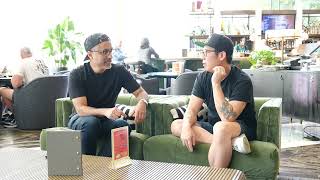
Neel Dhingra and Sun Yi map out a content business funnel from free lead magnets through a $17K annual mastermind, targeting busy entrepreneurs with ROI-focused messaging. They discuss packaging ideas into soundbites, repurposing long-form content into clips, and hitting roughly 8% conversion rates across price tiers from $30 to $200 monthly subscriptions.
Chapters
Neel Dhingra spoke on stage, he came to watch.
Yeah.
And like, he's talking, you know how he's very like high energy when he's like speaking on camera?
Yeah, yeah.
I'm like, I can't do that, right? And I was like, do you know, I asked him like, do you know anyone who's like kind of more—
Yeah.
And then he mentioned you.
Yeah, mine's super, but I'm more dry sense of humor, like probably like you, like more, I'm an introvert nerd. And so when I go speak, I would be like, I don't know, it's just awkward. But then I just embraced it, you know what I mean?
But you said that it works.
It works, yeah. So I just be myself. But there was like, I hired a coach, I had two speaking coach. One coach, the first time, he was like, "Here's how you need to stand, here's how you need to do this." And it was very like professional, like, and he was like, "Body language is everything, how you walk into a room conveys all this." And I was like, "I don't know, man." So I tried it that way and it was like so awkward. So I just said, forget that shit. Then I got another guy, he's like, yeah, just be yourself. And then he helped me like just structure my thoughts. 'Cause I have so many thoughts, I just wanna structure it in the best, present it. 'Cause you know how like you got the best ideas, but you need to package them the best.
Like— I'm so bad at that.
Yeah, so I have, my thing is I have so much stuff I wanna teach, but then this little slot, how do you pick what's best? And then what I found is like less, is more, so going deeper on a few things, but then it's almost like you have to teach it in soundbites, so similar how you do content. You're coming up with like the one-liners, the soundbites, what people would take their phone and take a picture of, you know, frameworks.
You have like one talk that you—
Yeah, I have one talk and then I can adjust it for the room, and then I'll do like open Q&A, I like that, or I'll do, like a strategy session to do just different types of things. Like, you know, like you guys want to learn just about converting, we could talk about lead magnets, email marketing, funnels, whatever, like whatever they want to do.
But I found most people— Because like there's the personal branding stuff.
Yeah.
Which I'm sure you like talk about the mindset and all that. And then like once you go into the email marketing, like that's almost like a —different, yeah. It's almost like a different, so how do you deal with that? Do you teach all of that stuff in your—
Yeah, so what I found is for business people and these type of people I'm talking to today, if I say how to build a personal brand, they're like, I'm busy, I don't know what that, and I don't connect personal brand to dollars. So you have to spend a lot of time connecting the dots. Like, hey, a personal brand's gonna get you more clients better margins, you'll make more money, like it's great business, but they don't get it yet. So what I have to say is content creation makes your life easier, you can make more money. So it is personal brand, but it's like content creation more.
Maybe you talk about email marketing first.
Yeah, so I'm like, here's a content that leads to business, and then we use email to convert. But what they want is automation, like they want, They want things to work. So I tell them, yeah, there's work involved.
Is that like your biggest obstacle?
Yeah, they want like—
So how do you handle that?
So they want to do— they don't want to do the work. So I have to tell them—
Or they want to hire somebody to do it.
Correct, yeah. So I have to show them like, hey, here's me doing the work, here's the results I get. And then here's people in our group doing the work, here's the results they get. Now, there is some of you involved. Yes, you can use some tools to automate, ManyChat, all this shit. But for the most part, you need to be involved. Like you have to be making the content. And I said I don't have time in the beginning, but then I realized the power of it. And so now I make the time. So I'm not telling you to like add hours to the day. I know you guys are busy, but I'm saying look at your schedule. Is there like 2, 3 hours this week you could delegate something?
Yeah.
So you need, it's not like you need to add more thing to your plate. I need you to remove something else that's like low value and put this in because this will be the highest value thing. And then this is gonna pay you big time.
I found that usually like the two things that for our clients, 'cause like some of our clients are like pretty big now, like the two things that they almost never outsource is podcast and email. So I actually think that if you're really busy and if you just do those two things, 'cause those are both long-form content, like all your other, like the rest can come from that.
Oh yeah, yeah, that's true. So like your email sequence can come from the content.
Or like if you record like an hour podcast every week, there's like plenty of content that can come out of that.
Yeah, that's true. So I do that. Yeah, because you're right, there's a list, there's an email, I have a new email newsletter and the topic for each week is whatever I shot last week. So you never run out of stuff. And then short form comes from the long form.
All your show from is basically then leading either to get them to subscribe on your podcast or your email.
Yeah.
That's it.
And then what's your offer? Like, 'cause I know you have like a storytelling workshop.
Yeah, so I actually like, I have a community called Nairal Nation.
Okay.
And I wanted, I was looking at your accelerator thing and I was like, interesting, I wanna do something like that.
Yeah.
'Cause what I'm thinking about doing is like, mine's $30 a month, we have like 1,000 people there, but I wanna kind of, separated into two tiers. So like, kind of a little bit more high ticket one. Yeah.
And then— Low ticket.
Where I get in a Zoom call with them, like weekly. 'Cause like right now I do Zoom call weekly with everyone.
Yeah.
And it's kind of, it's good, but because it's like such low ticket, like most people don't come or they'll just watch the replay or—
Yeah, they're not, there's no buy-in.
So how do you get like those people —because I'm sure like in your group there's probably people like those entrepreneurs who doesn't want to do the work.
Yeah, so what you find is like if I sell it, I sell it, so I will sell it through like a webinar or a thing. The number of people who just click on and go buy is very low because it's like it's relatively expensive. You can join anytime, that particular group, the low ticket group. So what I'll do is like if I talk to the people today, I'll offer them, if I can Pitch it live, I will, but sometimes at an event they don't want any sales stuff, so I'm like, okay, I'll just get you in my email list, then we'll send out a sequence. And people will come join, and we'll offer them something special to get in. Occasionally someone just sees the thing, buys it, but like more often I bring them in through the conversion event, like a webinar, they saw me speak, you know, 'cause then I can—
How often do you do the webinar?
I do the webinar once a month, I speak on different things all the time, so I'm like always out there. But then I can get a premium subscription because I'm selling something. It's like $200 or something a month. But normally someone would sell a community like that for like $20, $30 a month.
Yeah, like me.
Yeah, because it's just cold traffic.
Oh, so you have, so that's like your low ticket or your high ticket?
That's a low ticket.
Okay, what's your high ticket?
So I have a mastermind that's like $17K a year and I only sell that at the event. And that's 100 people max.
Got it.
But we sell that at the event and it fills up every year at Forward event. Like the big event that I do in July. So we have 1,000 people come for that and then people can purchase the Mastermind there. But that I need to sell in a different environment. So some people sell high ticket through like a challenge or something or like a longer series of webinar, but you can't just sell I mean, I haven't been able to do it. I don't know who does it, but a $20K or $15K thing on just a 1-hour Zoom, like they need more time with you, you know? So that's more like a long play.
But is it mostly people that are in your—
I would say 50/50. Like some people are in there, then some people found me through my content, then they come to my event.
Like whenever I do like a workshop or— if I do like one-on-one coaching or some sort of like a more like a mastermind group, the people who join that usually never come from my community.
Yeah.
And it's almost like these people have been waiting for me—
To do something.
To do something like that.
Yeah.
Because they knew that the $30 a month wasn't gonna happen.
Yeah, so this is interesting. I'm so glad you said this. So I was just speaking at an event last week in Texas. And I was like, I would normally sell them $200 thing a month. Like, and you could pay annually and get a discount. So it's like, I just do a heavy discount if you pay for annual because then there's less churn. And I want you to commit for a year anyways. So I'll do a huge discount if you could join for the year. But I would normally, like if it's a room of 300, 400 people, I might sell like 20, 30, like just under 10% of the room. 8% of the room will buy. Mm-hmm. So I go to this room of like 400 people and they're like, hey—
You mean like events like this?
Yeah, but bigger, a little bit bigger than the one today, but similar, yes.
But they're, oh really? But those are like cold audience or no?
But some of them follow me or it could be cold. It could be cold audience too.
Usually when I speak, it's mostly cold audience.
Yeah, so it's like probably, I would say 70/30, 70% cold, 30% knows me.
Probably because you're in the—
Industry, yeah. So I'm in their world. But some of them, like, they just got introduced to me, first time see me. So I do a really good presentation and then I can make them like an offer. But so I was doing this and then this event that I was speaking at, they were like, hey, we want you to sell something, but we want to rev share with you. And they weren't paying me either. Sometimes like if they pay you, there's no off sales. But this place wasn't paying me and they said I could sell something, but they said if they would like me to sell something more expensive so that I could do a rev share. So I was like thinking like, what could I do? Like, by the way, how much do you charge for like a workshop?
Usually like $700 a day.
Okay, so I was gonna do like a workshop.
It's like half day.
Okay, so I'm gonna do a 2-day workshop with me where we'll go through all your content strategy, do this. But then to make it more valuable, I'm gonna have my team, which is a pain in the butt, which we don't like doing, but like we'll set up your funnel and your email sequences.
Yeah.
And like the stuff that nobody ever does, like the shit that people want but they never do, their ManyChat, like all the automation stuff. And so if I package it as a system instead of just like Workshop with Neil, it could be higher price. So I sold it for like $6,000. And then I did the whole pitch and I did the talk that led to the thing and then I, Sold it. And it was crazy, there was still the 8% that bought it. So I'm thinking like, I sold a $1,000 thing and 8% bought it. I sold a $6,000 thing, 8% bought it. So I'm like wondering if there's just that many people who wanted to work with me or if it was a different buyer. I'm not sure, but.
I think it's like a totally different buyer.
It could be somebody who's like, okay, this was DIY cheap. This is like, I'm busy, I need to get it done.
Yeah, 'cause there's a lot of people who just wanted one more handholding. And I think even if you are selling the same exact thing at a different price point, they just assume that this is gonna require more work from me.
Yes.
This is gonna—
Less work.
Yeah, this is gonna be more like—
Yeah, so I was like, hey, some of you have been talking to me about doing this for years. Why don't we just get it done in 2 days? That was the sale. And they were like, okay, yeah. You know, and just sign up first come first serve. And I can only do this many, I'm sorry, I can't do more than this.
It's like the whole, like, the likelihood that they're gonna get something out of it is higher, I guess.
Yeah, and then I showed a lot of proof. So I was like, here's the people who've come in the past, here's the proof that it works, here's, uh, not just my proof but my students. So I think that worked.
So your group, like, versus your mastermind group, yeah, Like how's this set up? Like what do you actually?
We do like scripts. I just introduced like some AI stuff. We give them, this has been a hard thing for me is—
You come up with stuff every—
Every month. Yeah, we give them ideas.
Once a month.
Yeah, and then we meet on Zoom every other week, not weekly, biweekly. So 26 calls a year. But then the—
What do you talk about then?
We go through Wint Q&A, content reviews. I give them like lessons. If I'm like, here, here's a piece of, something that's working I want to teach you guys. Sometimes we just spend the whole time doing review, like, hey, can I give them feedback right away on their content?
Is there any mechanism for you to, like, the accountability part, like trying to get them to take action?
Yeah, so they can post in the community, like, when they've done something. We can assign homework, they can say they did it, their score goes up. You can do, like, gamification, so you can give, like, merch a one-on-one call if they hit the high scores, you know? So you can do stuff like that, but it's hard.
What about your mastermind?
So the mastermind is like, we do this, we have a biweekly call, so opposite week of my other calls. So like every Tuesday I'm doing calls, but that group, we also meet in person a few times a year for like a retreat, like a workshop, 2-day workshop, like a weekend. And we go through like a lot of cool stuff. And then on that group, I'll bring in like people from my network, special guests, So I'll bring in like, 'cause I noticed people would ask me to come speak to their mastermind all the time. Like, "Hey, could you come teach?" I'm like, so there's this network of people like you, me, Chris, like all the, we're all helping each other. So like, "Hey, you jump on my call, I'll jump on your call. I could teach something, you could teach storytelling, whatever." And so you bring in your network. So they're also paying at the mastermind for access to your people. So like some of the people end up like meeting Chris or other people in my network. I'm not one of them. But everyone's willing to help. Like, at the high level, they're all like— because they all have a group, you know, like, hey, and we all just help each other.
It's like, it's cross-pollinating, like, it's, um, because I noticed that with my clients too.
Yeah.
Like, they all kind of know each other and they all share some part of their audience. Like, there's like a—
Yeah, and like, somebody might buy your thing after my— like, there's enough to go around, you know. I'm not worried about that shit, but What's crazy is like that group, the problem with me is when I show up to a call, somebody pay me $100, somebody pay me $15,000, something like this, I still give like the same. So it's hard for me to be like, I need to gatekeep, that's the hard part.
I actually think that the thing that you teach doesn't matter at all. It's actually, 'cause like I noticed the same exact thing, right? 'Cause I FacePaced. Yeah. If these people that are like, you know, doing one-on-one mentorship with me, if they just came to my community and they would actually get the same information. But the thing is—
It's the mechanism.
I guess they can ask questions, that's one of the difference.
Yeah.
But what I noticed is that the people that hire me in the mentorship, they're at a completely different level in there. They have 50 employees, they've already like— they're at a completely different mindset.
They're more serious, yeah.
They like, they're not the type of person that says, oh, I'll do it and then I'll do it later and then it just never happens. Like they, when I give them stuff, like literally the next day I see them—
It's posted, yeah. That's so cool.
And this is really the only difference.
But then these are the people, so what's crazy is those people are in a unique position to monetize what you're offering or to get benefit right away. So like a guy booked me for a call one-on-one because he has an event and he wants to do a pitch. And that's like one of my expertise. So I help him with it, give him feedback, and then a month later or 2 weeks later, he's pinging me. He's like, hey dude, I made $100,000. That call was $2,500. Like, so they get direct ROI because they're doing things. So I always say, like, in my— when I'm selling my mastermind, I'm like, hey, if you know you're going to be doing stuff, this is going to be like the accelerator. Like, I'm going to be helping.
That's why I want to do the 2-tier thing.
Yeah, but if you don't even know what you want to do, you don't— you're just newer, then you need to start Here, you know, because I can't help you as much. Like the people who give, who get the best advice are the people doing things.
Yeah.
Hey, I just did this. Can you gimme the feedback? So now people were trying to book me for one-on-one within the mastermind and I would say yes because they paid the highest amount, but then my calendar got blown up. So now I said, we're not doing one-on-one, we're doing hot seats. 'Cause I need to leverage it for the rest of the group. So if you want to come do one-on-one, anybody else in the group, you want to watch? Susan, yeah, I'm never doing that anymore because it's just my time is so bad. So I do a group, but then, then even then there's too many people booking. So then I said, before you can do the one-on-one, I need to know like what homework you've done.
Yeah.
So like some, I'll give you example, some lady says she wants to host a workshop. She wants to know how to package and position her workshop. I'm like, okay, fill this form out. Like, when is it going to be? What work have you done? What have you thought about? What's the outcome? Why would someone sign up for this? How much have you charged? Like, do you think you could charge? All this stuff. And it could be all, we change it all on the call. But unless you fill that out, and I noticed like half the people don't even fill it out, so we never have to do the call. Then the half that show up, they show up prepared. So we're not wasting time on like, they're not, it's just some idea.
These are people in your mastermind?
Yes. 'Cause they can get more, like webinars, workshops, events, any kind of, like the strategy is one-to-many selling. So most of these people, entrepreneurs, they sell one-to-one. But we're teaching them the one-to-many. Like you can do selling through content, webinars, events.
Like mortgage brokers and something like that?
Yeah, mortgage brokers, real estate agents. And then now I wanna like, grow it, because I noticed at my big event I'll have like insurance agents come, CPA, financial advisor. So I'm thinking like eventually I could serve people in client service business because they don't know what they're doing.
Yeah, I was going to— like people who have brick-and-mortar business.
Yeah.
Or even if it's like an online business, they actually have a certain amount of revenue because yeah, this kind of the low ticket is just like Yeah. It's like, it's basically babysitting.
Yeah. In my community, I have a, what is it? I mean, 1,000 people have bought it, but 200 people max on the calls, 300 if it's like, if I really promote a call. So 20, 30% at best participate. The rest of the people, I don't even know if they log in. Like they bought it for the year or they bought it and they come back and forth, you know? And they turn off.
What's the audience mostly like? What do they do?
That's the same group, real estate mortgage. Yeah, so.
That's a good niche, huh?
It is, yeah. I mean, there's a lot of different value, but they need the help. They're in a position to monetize it. Every client means significant to their business. Like they get one client, it's thousands of dollars. So like if I can help you.
So it's not too like, Like expand the niche or are you—
Yeah, I could extend it, but I haven't even tapped into like the full niche already. I mean, there's so much more I could do within it, but I just don't have the bandwidth. Like I would need more coaches.
Like real estate agencies, property agents.
Yeah, that would be the niche. It's way more than I can serve. So I haven't even exhausted it, but I was just thinking in case the industry goes to, decline, which it is declining, there's going to be less agents in the future than they are today because of AI, um, and commissions are shrinking slowly. So you need to do more business. The only people who do more business are professionals. Like, the average guy who just does a deal, um—
You know Ryan Serhat? Yeah, yeah. So I, I met with their team. I did a podcast with them once, and then I met with the team who So they have a group where they just focus on helping real estate agents build their personal brand.
Oh yeah, I saw that.
Yeah. So, and that group is huge. So I'm assuming that there's still, even if it, even if like AI comes out.
Yeah, they'll still, because personal brand is the antidote to that.
I feel like the top guys will actually be more needed.
Yes. Because like even in AI content, like, there's gonna be people who prefer watching regular content. They don't want the fake content. And same thing with client service. Like, they still need— it just allows you to serve more people.
Yeah, yeah.
So that's what the best people understand. And so I'm helping people with that. But yeah, it's just like, what do you wanna, you know, for me it's like, dude, who do we wanna serve? And also, like, where do you get the most fulfillment? And I don't know, I'm getting tired of dragging people. You know, like, if you don't want to do it, don't fucking come. You know, like, just leave me alone. Because— but if you want to do it, I'm all in, let's go. But I'm tired of like dragging people.
I feel like people that I meet in real estate and things like that, they're actually easier to get them to take action because—
Yeah, it's still hard, but yeah, but they're easy.
Like our industry Like, you know, like, I really love my audience.
Yeah.
But the thing is, it's not a good audience for profit because, like, a lot of them are these, like, ooh, oh, I, I'm, you know, I want to do what I'm passionate about, right? It's all good, right?
Yeah.
Obviously you want to be passionate about what you do, but there's— they're so caught up in that that, um, like even like in the creative, like usually designers, video editors, like, um, like I said, the coaching with like life coaches and yoga teachers, like they're all like all about passion, right?
Yeah.
That they don't want to do anything that they don't want to do. And when I meet people that have like an actual business, right, roofers, contractors, real estate agents, mortgage brokers, like these guys know that this is work.
Yeah.
And it's not all about, "Oh, I just wanna do what I love," right?
Yeah.
So I actually think like, that's why like when I talk to them, like their passion is business.
Business, yeah, they want more customers. That's it.
So they'll do the work.
Yeah, especially if they know it works. What they don't like is like, personal brand is harder because it's like, this may or may not work. What's it worth to you? It's worthless, but somebody else, it's worth everything. Like, what's your—
I feel like you can't sell per— so—
That's the problem. It has to be content that leads to personal brand, also leads to business, and then you insert it.
Or you just not even bring up— so, like our agency, we just— like 80% of our clients are personal brands.
Okay.
And the way I— like, I tried selling it in the beginning, personal branding and like we're gonna help you with your personal brand strategy and things like that. And nobody cared, like, but then what ended up happening is like people will see, for example, like our first personal brand client was Gabby Bernstein. And somebody saw Gabby's website.
Yeah.
And they were like, oh, I want to make website like Gabby. And then once we started working with them, we were like, okay, like So what do you help them with?
You're like your highest level clients, what do you do for them?
So the first thing we do with every client— well, not every client, but almost all the clients— is we do like a 3-hour kickoff meeting where basically we do like a personal brand strategy.
Yeah.
So I just have them like tell us the stories, and I try to see patterns in all of their stories, and like what is this person about, what are their weaknesses, What is like the main— their superpower?
Yeah.
So like, I have to go through all of that, but if I were to sell that, people are gonna be like, I don't need that, right?
Yeah.
But then everybody, as soon as I say, oh, like, I make websites— so I don't even tell them that I do personal brands, I just tell people that I make websites.
Yeah.
Because then they'll be like, oh, I need a website, or I know somebody or they'll be like, whose website have you done? And I'll tell them these two websites, and they're like, oh, I really love her website, whatever it is. Then once they come in, like, I'll ask them, like, during the sales meeting, I'll ask them a few questions that I'm like, okay, you see, I'll give them, show them an example. You see how here Mark has a story, and this is the thing they're pushing. That's how it translates to the sales page. Oh, cool. Yeah, yeah, I go over the whole thing and I say, okay, so what's your story? What is the thing you're selling? Yeah. So once I explain it that way, then they're like, oh, I need that.
And I'm like— But they don't— you don't lead with that. Yeah, yeah, that makes sense.
Okay, so then I'll say, okay, then we're gonna have to do a brand strategy first before we jump into the website, and that's gonna be $20,000. And they're like, okay, sign me up. So that's how I sell them.
That makes sense. So they don't even know. You're educating them on the problem and then the solution.
So it sounds like you're kind of doing the similar, right? Because if you go in with like, this is how you get leads through email, they're gonna be like, okay, how do I get people to email me, right? And then you say, okay, like you have to have some sort of an opt-in or some sort of a feedback where people will subscribe. But in order to do that, you need to attract audience It comes from here.
Dude, this reminds me, this is, as I'm talking to you, this is a great idea. I was like, I do my formula content connection conversion.
Yeah.
Let me go in order. I should almost start the talk earlier and just show the conversion.
Yeah.
Be like, okay guys.
Just go backwards.
Yeah, so I'd be like, here's a conversion. Here's the example. Here's how many business, here's how many clients we got. Leads and then turn into clients. Now this is all possible because of this framework. Which I'm gonna teach you, but how many of you be interested in like learning this? Okay, now that all the hands are bought in, because I'm starting off with content connection and it's like—
And it's also like I learned this from years ago, I took this online course about lead magnets and so what this guy did was he made a lead magnet that teaches you, he's like here's a free 5-day training Yeah. And every day he sends them a video. And what I'm gonna do step by step, I'm gonna set you— I'm gonna teach you how to set up a lead magnet on ConvertKit and blah blah blah so you can start your mailing list. And now you have your mailing list.
Yeah.
So everybody like do that for free, right? And then once— so after day 5, they have all their mailing lists. And then on day 6, what he says is like, okay, now that you have your mailing list set up, like everybody asks like, How do I get people in my mailing list?
Yeah.
Well, that's what I'm gonna show you how to do with Facebook ads.
Yeah.
And then that's the actual course that you sell.
Dude, that's cool, that's smart. We gotta reverse engineer. Bro, this is funny. I'm gonna try this tomorrow, I'll let you know how it goes. So tomorrow, or not tomorrow, I'm flying from here to Nashville.
All right.
And then I'm speaking to—
Oh, you're doing another talk.
I'm doing, speaking to 1,000 people there and they're not paying me. They said I could sell something. So I'm like, I need to figure out what's gonna maximize. So I'm gonna start with, and only have 30 minutes, normally I have an hour, this is 30 minutes, which is hard to do a talk plus sell. And I can only sell for a small bit because otherwise it turns into a pitch, which they don't like it. So it needs to be like, I'm just gonna start with conversion. I'm gonna show them like, I'm gonna jump straight into a video that generated 1,000 or 500 leads that turned into 17 clients. Wow. From a 60-second video. I'm gonna start with that and then go backwards. Be like, okay, now this is only possible because of this, this, this. And then if you wanna learn all this, you wanna come, come to my workshop, you know? But I think, yeah, it's like all that dirt they don't wanna do.
One of the ways I get my clients that are kind of starting from scratch is I have them run Facebook ads in the beginning because or like any kind of pay-per-click ads because I feel like it's hard for people to keep putting out content and doing this without seeing any kind of results for indefinite— because like guarantee in the first 3 months like nothing's gonna happen.
Yeah.
Nothing significant is gonna happen. Maybe 6 months, maybe some people even longer.
Yeah.
But in the meantime, like I want them to stop being hater.
Something they need, uh, you got to get them easy wins.
Yeah.
So that's the hard part. How do you do that? So I maybe have some plays that work, you know, like, hey, we're gonna try this framework and I know it has high chance of success. Like even if you're new to this and it might, you know—
Like in content?
Yeah, so it might be a piece of content that even people who suck at content, they got something from it. Now if you're really good, you might get a lot. So we'll teach that and have it and even help them execute it if they're in our, in-person group. But yeah, we'll try that. You know, just some people, like, getting them the winning— I noticed this too, winning's different for different people. Some people, I assumed winning was making more money. For some people, they're actually okay making less, but they have a higher quality of life. So like, some business people you'll talk to, they're like, bro, I don't want 100 leads, it's too much headache.
I see.
So for them, it might be autom— Yeah, it might be more, so I was selling, I didn't realize this until a couple years, I was selling the wrong thing. I was selling leads and the dream, yeah, but the thing they want is clarity, less overwhelmed, they want easier life, more time with their family. So that's what I switched, like okay guys, here's a system that can help you with this. Now, if you want to use this system to blow up your business and go crazy, you can. But also if you just want to use it to—
Save time.
To save time, that's cool too. It works for both. And let me walk you through it. So I was doing a talk in Denver and Chris was there. And in the middle of my talk, I just bring it up. It's kind of like a left turn, but I just bring up like in the connection piece, I say, I talk a lot about my family and my family's my most important thing in my life. And here's what I talk about. And then in that piece I said, hey, if you're not putting your family first, like, this isn't gonna work. Here's a time when I went through something where I was so focused on work that my wife almost left me. And I just tell a quick thing. So I said, hey, make sure that you're prioritizing that because it'll cost you. So Chris is like, dude, you should start with that and then say the way you solved it was through content.
Yeah.
'Cause how many people are in the room, their wife's mad at them for working too much? It's gonna be the whole room. How many people need more time? Like, it's the whole room. So if you said, dude, my wife almost left me because I work too much, and then I had to make some changes. Here's the change I made, you know what I mean? That might work, you know what I mean?
Because I feel like most, even like, yes, like for entrepreneurs too, but just in every, like even with our clients when I see their sales message.
Yeah.
It's you, because like what I noticed is that most people, like, we have this like, uh, natural defense mechanism where, you know, like, like we're, we're not wired to go chase success. We're actually wired to avoid pain.
Yes.
And to sell anything, like, I noticed that, like, because most people don't want to be billionaires. Most people don't want to even want to be $100 million. Yeah. They just want financial security.
Yeah.
They just want that safety.
So it's more, so this, I think this is a great thing like we should focus on is like being more, the outcome feels reasonable. 'Cause I'm showing the crazy success, which is cool, but like they're thinking that's too far-fetched. Like that's cool for you, Neel Dhingra.
I think it's better if you say like, instead of saying, here's how you can make $1 million a month, if you say, here's how you can make Extra 5 grand a month.
Yes.
Like that actually is more attractive.
Yeah, so there's this guy who was one of my case studies and I was like, hey, he grew his business, he's making a lot of money, but the quote I put on this slide was he actually likes his job again. And then another guy, he's making more money, he's doing good, but then the quote I put on the slide was he sent me this DM and he said he went on vacation with his family. He took his family, his parents plus his current family to like some island. And he said it was the first time in his career that he actually put like the out of office thing on. Like he didn't have any bother, any like worries.
That's true, you know what?
And then dude, the tears like from the audience, like dude, they connect. And then I said, do you understand what I'm saying? Like, yes, we can make more money, but we should also have a good life. We're not getting any younger, guys. I don't know if you see me, I'm getting old, you're getting old. It's time to make a difference. Like dude, the whole audience is like, And I'm not just saying this to like be a sales guy, but I'm saying this is like how I feel and it works. Like my life is different.
So the people that you were talking to, like how usually how big are their team?
It depends, some are solopreneur, somebody's got like an assistant, somebody else has 20 people on their team. It's very, so that's the hard part for me.
That's like the part, like for me, as you're saying that, that's exactly what happened to me.
Yeah.
In the first 3 years, we grew to like 23 people and I was drowning.
Yeah.
And it was, it didn't feel good because like, first of all, I didn't know how to, I didn't know how to like lead a team.
Yeah.
Like, everything happened so fast. Like, I didn't know how to like set up process. Like, just, I didn't know how to do anything, right? And it just kind of happened. And like, literally from the moment I wake up, Like I would wake up with like an urgent email. Yeah, yeah, yeah. All the way to—
Fires, yeah. And it, dude, it's like, dude, I don't even want this. I don't even, give me, take the money back. You know, like I don't fucking want it.
Yeah, like so many times I'm like, oh, I really envy those guys who have a 9 to 5 job, right?
Yeah.
And I've been talking to a lot of entrepreneurs like that.
They built a prison.
Yeah.
So that's the problem with some of these people like, I'm like, hey, you want more business, right? Like, yeah. Then why aren't you doing the thing? What I find out is they don't want more business because it's more headache. They want sustainable.
They want to make a lot of money with less time.
Yeah, they want sustainable business. I think they do want to increase, some people, but like, yeah, it needs to be sustainable because they've all been in a position where they had a lot of business and it was a bunch of pain, like fires everywhere.
So you teach like automation? Yeah.
But it doesn't work on its own. Like, like I'm saying, like if I say, hey, there's a class on ManyChat, nobody gives a fuck. But I'm like, yo, here's a class on how to automate your leads so you can create, you can do, run your business on autopilot. Okay, let's go. You know, like how many—
Like, I feel like the content, because I see this a lot, like content, the type of content that works really well, somebody will show like I took a week off work last week.
Yeah.
And my company generated this much money while I was away.
Yeah, dude, it's a dream. And then some people are selling it pipe dream. Like, it's like, bro, somebody thinks like they're watching that and they're like, oh my God, that's so cool. I'm like, bro, you haven't even made $100 grand yet. What do you— what, like, you— that's so many steps away.
Yeah, because they'll show like, okay, on day one I made $1,000. So yeah, it's not like crazy number. So it's like very—
Yeah, I think like the case studies need to be like, I got one deal, three deals, I got one relationship that led to this. Like this is what they're doing anyways, so—
They have to be able to see it and go like, oh, I can see myself. Like I can see myself in that.
Yeah, so I try and make it more attainable, I guess. But yeah, I'm gonna test this tomorrow. I'm gonna see what happens, 'cause I'm always trying new things, so I get enough speaking. And then I just got better at speaking because just reps, dude. I speak like 40 times a year, like online or in person. So I'm just— and then we do it for content, plus I meet all these people.
Do you find yourself like repeating a lot of the same things?
Yeah, if it's a new audience, I'll just repeat. But if it's somebody who's seen me before, I need to like go to level 2, level 3. So it depends on the workshop. But for like an introductory event, they're like, you know—
So you already know, okay, beginners, I'm gonna talk about this.
Yeah, and I might take a pulse on the room. Like, hey, how many of you guys are posting content this week on Instagram? If it's like the whole audience, I'll adjust on the fly, skip through some beginner slides. But if it's like, dude, only one quarter of the room is posting, like, okay, I need to like go backwards a little bit. I'll take a pulse on the room, but I've noticed most of the rooms, people are posting. They're just wasting their time. They're making ineffective content that nobody watches, no engagement. They wanna know how to like get more views, but then also they wanna know how to make it meaningful for their business. But it's like, I don't wanna lose the people by talking only about going viral 'cause somebody in the room doesn't even care about going viral. They just want customers.
I think most people don't.
Yeah, the guy who's been doing it, he wants to go viral. He's desperate to go viral. But the people who aren't, or just casually, they don't give a shit about that. That's the majority though.
Like, I feel like people who haven't gone viral yet, they want it, want to go viral. But like, once, once you have like a few posts go viral, you're like, who cares? You really don't care because, yeah, you know how little effect it has in your business.
Yeah, exactly. But yeah, man.
Is your strategy like content to get them into email or?
Yeah, so I, dude, I'm like so bad at it, but it works. But like I have no, like I—
The stuff you teach.
So I'm teaching, they'll come into like a lead magnet. So they'll get into email. I have a weekly email and I just use that. So that's like top of funnel. But then top of funnel for me is also just watching my videos and content. I also have YouTube and then also have my community, which I sell through webinars and events. So like I have so many different things, but it's not like perfectly organized, you know? That's the thing, it's like a mess. If I took—
But I don't think it ever can be.
You ever see that meme where the dude's pointing to a whiteboard and there's all this shit everywhere, you know? That's like my business, you know? But it works.
I feel like that's how, I think that's actually the right way.
To do it.
Yeah. Because a lot of us think that automation is like we have this perfect funnel and everything goes through there, but it's actually more like, it's like a wide net.
Yeah. You know that guy Daniel Priestley?
Yeah.
So I did a podcast with him and I had him at my event.
That's like the Australian guy, right?
Yeah, he's British, but he's on like Stephen Bartlett's show and stuff. So he was like, he's like, when do you do your webinar that brings people into the low ticket? I was like, "I used to do it monthly, now I do it when I feel like it." And he's like, "Well, why?" I'm like, "I get tired of doing it." And he's like, "Do you think that Coldplay gets tired of playing their hits?" And I'm like, "No, I guess you're right," you know? But it's also like, I just don't want to.
I was just asking you, like, do you find yourself saying the same thing over and over again?
Yeah, I do, but if it's an— the only thing that bugs me is if I feel like someone's heard these jokes before, someone's heard this before, I feel bad. But if they haven't, I'm fine to play the greatest hits, like, because I know it works. I know the line's gonna work, like, I know they're gonna feel it.
I actually think that that part, like what he said about Coldplay, that's like something that's not talked about enough because—
Yeah.
Kind of, that's one of the things that kind of got me stuck. It's like, I feel like a broken record, like, and it's like—
People need to be reminded more than they need to be taught though. Right? Like—
But you have to deliver it with the same—
Excitement.
As if it's like the first time you're singing, right?
Yeah. Like, you would— Coldplay would suck if they didn't play it the same way. And imagine how many times they played the song. So I'm like, dude, I just need to give it— these people need my help. They haven't heard this before. Let me give it to them, you know? So I just have to get myself in the right thing. But yeah.
It's also the reason why people hate like re-photographs. Posting the same content, you know. But yeah, I've got to do like that. That's actually where I'm at now. It's like I'm getting comfortable just share the stuff.
Yeah, but it's also, I don't remember it. I need to see it 6, 7 times before it clicks, uh, and then yeah, I'm thinking how do we redo. And you know, somebody told me also, they're like, hey, content's not coming up with 1,000 ideas, it's coming up with 10, and then you find A thousand ways to say the same 10 ideas. I've been talking the same shit for 6 years, but—
But I think you can even say the same thing, like—
In a new way?
No, in the same exact way.
Oh, verbatim, okay.
But, 'cause like, you know what? I actually like started watching some of my old content.
Yeah.
And I'm like, some of the videos, I'm like, holy shit, I was like so much better back then.
Yeah.
Like I had a completely different energy, right?
Yeah, you probably burnt out.
Yeah, I need to bring that same energy back.
Yeah, I noticed that too. If I'm not into it, it's not gonna work. That's why I like live because live doesn't let you off the hook.
More from Neel





Don’t let people tell you what you can and can’t do. #personalbranding #podcast #entrepreneur

How to use Ai the right way for scripting. #personalbranding #entrepreneur #ai




Your audience already has a story about why it won’t work. #personalbranding #entrepreneur

The new YouTube strategy to hook viewers. #personalbranding #entrepreneur #podcast