The NEW YouTube is Here (Watch Before 2026)
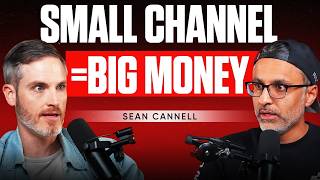
Sean Cannell explains how to build YouTube as a real business: focus on watch time and conversions, not subscribers. Use mid-video calls-to-action, lead magnets, and consistent publishing. Test whether people click, stay, and actually convert on what you're selling.
So Most entrepreneurs treat YouTube like a hobby and wonder why it doesn't pay them like a business. So today I brought in my good friend Sean Cannell, who is the YouTube guru, to talk about the exact framework that separates the pros from the amateurs. And it's actually not what you would think. John, thanks for joining me, man. I appreciate you being on the show and I want to get into, like, straight into all the tactics, which we're going to dive into. But first, the mindset shift, because we just talked about this on your show, where people are treating this like a thing they do on the side that they don't really care about. And the best results are going to come from doing things with intention. So you talk about you cannot treat YouTube like a hobby and expect to pay you like a business. What do you mean?
Competition is highest for lazy content. And I don't think competition is the issue. I think it's a lack of clarity and intentionality. So the game has changed. Here's the number, Neil. 20 million YouTube videos are uploaded every single day.
Wow.
20 million. And that sounds like if you're listening to this, you're like, well, there's no hope. I shouldn't even start. But competition is highest for lazy content. A lot of that content is not thoughtful, it's not crafted. We're not talking about fancy cameras here. We're just talking about taking the time. Good title. Thoughtful thumbnail. Some level of structure to it. And so I think in today's world, you got to be in the top 10% because mediocre content is where the majority is. So what does it take to. To rise above? Just more intentionality, more attention to detail. Will unpack what that means. Thoughtfulness. And we were talking about it, you know, the top, top 1% of creators are storyboarding their content and they have big teams.
They're testing 50 thumbnails.
Yes, all kinds of thumbnails. Hours going into the content. But then at the bottom end, people are just rushing content out. They haven't developed the skills, they haven't studied, they haven't developed mastery. And so if you will just do a little bit more, we have this free gift we give out. It's called the Five Hour YouTube Work Week. So you don't need to take a ton of time. If you normally take 30 minutes to plan out your video, structure your video, do a little bit of research. If you went to 45, it's going to make a difference if you doubled it and you took an extra 30 minutes. So now you take an hour to really sit down. The thing is, it's not a linear curve in terms of the results you're going to get. It could be exponential. If you're normally getting 100 views, 200 views, you spend a little bit of extra time putting in more attention to detail, then you could be getting a thousand views, 10,000, 100,000. And then that taps into kind of that Dan Martell principle. Buy back your time. You start hustling in this next six months, applying what we're talking about in this episode to get some traction on YouTube. What is that? Mapping to more growth, more money and money that you could reinvest back in. Your strategy to buy back your time, Hire a personal assistant, get maybe a virtual editor and start to delegate a few things. And so if you're willing to put in the work and sort of double down to learn some new skills, then there's massive opportunity on YouTube right now.
Yeah. And I found the, the personal brand. And there's no better way to build a personal brand than with long form video because that's how people really connect with you. It's probably worth way more to have somebody watch a 10, 20, 30 minute video than to just watch a 30 second reel on social. So I found that the personal brand is the one domino that makes everything in business easier.
Yes.
Sales become easier. Brand becomes, you know, whatever you're promoting becomes just way easier, becomes an unfair advantage over all the competition. So when we're talking about the work you need to put in, don't forget, like the rewards are incredible for people who can do this.
Yeah.
And it's not that difficult to get on the other side. Yeah. It would take a lot to compete with Mr. Beast. But like, bro, we're not trying to do that. You know, especially if you're in a business where every client, every person that buys your products and service has an impact on your business. Yeah. Then you don't need to reach the same bar of like millions and millions of people.
Well, and national association of Realtors, I know you help entrepreneurs, you know, mortgage, but you know, real estate agents, they said that only 9% of agents are doing listing videos. Only 9%. So only one out of nine are even doing listing videos and online video. Then you have to ask how well are they doing it and how much energy are they putting in it. Now I'm empathetic. We do a lot of coaching with real estate individuals and real estate pros. And I get the juggle. It's like, bro, I got, I got clients to See? And stuff to follow up with and paperwork to do. And, like, I barely have enough time in a week. Maybe I could carve out an hour for content. I think that emotion management, energy management, time management, and just taking a fresh look at your calendar, at your schedule, and doubling down on exactly what you just said. Like, you got to have the anchored mindset that what's waiting for you on the other side of building a powerful personal brand and building a powerful YouTube channel is more leads and more conversions and more transactions. And the flywheel takes time to build. It is like a train at first, is barely moving. It's so hard to get the momentum started. But you're. I mean, you're about to do Forward Conference Year 6.
Yeah.
And the momentum is crazy, and momentum is built over the year. But that's also year six. People do content for six days or six weeks and they give up because you're like, it doesn't work. What are you talking about? Six weeks?
Yeah.
You know, even six months. And I understand you got to, like, measure roi. But this stuff does take time to build momentum. That's where all the accolades are. 99% of the other professionals and entrepreneurs will try it for a few weeks and quit. So if you could stick with it, keep leveling up and learning, then there's the rewards go to those who stay in the game.
Yeah. At a certain point, it's just a game of attrition, right?
Yeah.
So you got to just be in the game and also do it with intention. Meaning why did this video do better? You know, if you post 10 videos, two of them are going to do better than the other eight. What's different about those? What was the packaging? How do you start? So we're going to get into some tactics on how to get more people to click and watch your video, but then also how to convert them. So the client conversion bridge, how do you get them from your video to your funnel? Or booking an appointment or starting to work with you so you can get paid. But before we do that, I just want to get into topic selection because this is the big thing. We were just about to shoot these pods today. Before we're shooting this, we shot a couple episodes for Sean's channel, and we just spent a little bit of time coming up with the overall theme. What's the North Star of this conversation going to be? I imagine Sean, if we just did a random combo, probably wouldn't perform as well. So can you go through. Do you have a framework or something? Yeah, when somebody wants to do an informational video or a conversation with somebody, Say they want to interview somebody. How do we come up with that topic or title?
Yeah, most videos fail before they're filmed because the topic is something that wasn't worth clicking on in the first place. So I think when it comes to YouTube, you got to ask yourself just three questions. This is the audit. Did they click? Did they stay and did they subscribe? Did they click? And we'll come back to topic, but did they click like, what's the topic? What's the tension? What's the curiosity? What is the title? What is the thumbnail? And what is the topic? Is this a subject of interest? Is it compelling? Does it in a sea of sameness where a lot of people are echoes, how do you cut through the noise with something fresh, something new, Fresh language, fresh words. What does the thumbnail look like? Because if you never get the click, it doesn't matter if you give away a free Bitcoin at minute six, no one's ever going to make it there because the they didn't actually click. And then it is a progression and each piece matters. It's sort of like, this is a lot of pressure, but it's sort of like a linear framework and if you miss a step, if the hook sucks, if the beginning of the video is not aligned, it's sort of like waste too much time, then they jump off. So again, they don't make it through the progression. So did they click? Did they stay? And then ultimately did they subscribe, would speak to not just subscription, but did they go into the conversion funnel? Did they actually take the next step in the journey? Was there something in the video that gave them connection? So if we're isolating on this idea of topic, I think it's the number one most underrated YouTube strategy is topic selection. People think it's title and thumbnail, but that's actually second topic. And maybe it's. It's. Here's a thought. It's like right now, AI is hot. You should be talking about AI. It's affecting every industry and it's getting a lot of views because it's new and it's now. I had Neil Patel on the podcast and he made a bold claim. He said the only thing working on social media right now is new. Yeah, the only thing. And he mentioned going to answer the public, which allows you to search. Answerthepublic.com, which allows you to get insight on what are people searching and what's getting views on, not just YouTube. But you could look on Amazon what products are trending. You can look on Instagram, TikTok, Google, Bing and YouTube and you can get insight of what are people talking about now. And it's something somebody you do the article strategy newsjacking with your unique per point of view. You're talking about something that's right now. Well so then here's your options. You could do old school how to get started in real estate. Five tips. Not bad but like really been done. And if you don't have a personal brand yet, how are you going to stand out to get noticed? The flip side, if you talk about brand new AI real estate listing tool just changed the game or the fed just well that's a topic choice. That's actually choosing what topic are you going to talk about today? And your ability to also then package those topics. So are you going to talk. It could be news, it could be trends or it also could just be what time of year is it? Are you tapping into a season? The timing and so like the new.
Way to do X My best webinar this year for 2025 was the new way to crush on social, the new way to buy a home. The new way. So the market's changed, we're in a different season now. You could incorporate too. But like the new implies, hey, there's something novel about this strategy. Maybe I should check it out.
And it's funny you say that Those are the two most powerful words in social media and YouTube are new and change. I did a study on Tom Bilyeu impact theory.
Yeah.
And he pulls a lot of views, has a lot of different podcast guests and whatnot. But if you look at his most viewed episodes, almost all the titles say change or changing. The economy is changing, everything changed. You know, money is changing, dating and relationships is changing. Now this actually taps into a deep psychological trigger where if you went back to more primal times, we are wired to wake up, check out our family, check out our kids, check out our food supply, walk around and be like, is everything cool? We're like, it looks cool. There's nothing, nothing wrong on the horizon. Kids look safe, food supply looks fine. Now if you were to wake up, walk out of your tent and you saw bear prints in the dirt and you're like, something just changed. There's prints. That is a threat. If you looked on the horizon and you saw, oh, there's dark clouds, winter's coming, like there's okay, that's going to be we need to prepare for this storm. That's Coming now, critics might say this is clickbait, but it's honestly just good marketing. It could be taken to the extreme if you're being dishonest. But the key, as a strategist, even as a business owner, you need to be looking moves ahead and be thinking about what is changing. And here's the good news. This is why YouTube will never be saturated. The world is always changing. Yeah, things are always changing. And if you can become credible in your personal brand to be a distributor of knowledge, that is changing. One of my videos right now, it's on its way to a quarter million views. Pretty good for our numbers on the Think Media podcast. It's on the future of YouTube. What do people want to click on the future? They want to click on like what's, what's new and what's next. So being tapped into that and then new to your point and, and I'm careful with it, but I'll, I'll land the plane saying this. You know what's fascinating to me is toothpaste. Toothpaste, bro, it always says new, new and improved. It always says new, like now, let's think about this. Has toothpaste really changed in the last 30 years?
100 years?
It's probably not changed at all, but yet somehow they're still putting new. What did they do? They added charcoal. They tweaked one ingredient. And it's funny, if you think about the phrase new and improved, that's not even possible because if, if by nature it's new, then it couldn't have been improved because it actually would have to be old version is improved. But even just the phrase new and improved is like a made up marketing term and yet they're slapping this on products. So I am a proponent of everybody listening, being ethical, transparent, and avoiding unethical clickbait. But if you can be thinking about ways there. These are some deep business lessons. There's a reason why even some of the best authors, they have a good book and then what do they do? They rerelease the 10th anniversary version of the like new and improved.
It's the same book or the ad like a forward.
Yeah, they add, they tweak one thing and that also. But so you should be always doing that with your products, always doing that with your messaging. Be thinking about. I think people feel the pressure of like they have one framework or the stuff they teach and they feel like I can't be constantly coming up with new stuff. You're not reinventing the entire methodology, but you're finding Ways to make it fresh. You're adding a new tweak to it. You're adding AI enhanced. That's one of the things we've done. Like all our stuff's AI enhanced now. We've added tools to our frameworks. And so by the way, it's brand new Video Ranking Academy. Our main course is the same seven steps because it's a timeless framework framework. But it's new all the time because we're always improving it and adding AI this enhancement. Things are changing.
Prepare for what's coming. Like all these things are happening. So think about like everybody could do this right now. It's new to you. The other thing that is, is incredible. I found like as a freeing thought for people, creating content is like, look, people need to be reminded more than they need to be taught. You could be doing the same thing packaged differently, coming up with new ways to present it. It's going to reach new people primarily each time. Like I've noticed and we're going to talk about this. But like subscribers matter the least amount they've ever mattered in YouTube history. So like I look at a video and by the way, guys, like right now as you're watching this on YouTube, you might be listening to the audio version, but if you're watching this on YouTube, I noticed that most of you guys aren't subscribed to the channel. So do me a favor, hit the subscribe button because that's going to allow me to reach more people and subscribe, do all these cool things. Because less and less people these days subscribe. Yeah, they just watch the content and move on. I found sometimes 80, 90% of my viewers are not subscribed. Yep. But they love the content.
There's, there's a powerful insight there. And it's consumption is more powerful than subscription. Here's what I mean. The algorithms will keep showing you more of what you consume. There might be people you follow on Instagram, maybe you don't, you don't want to follow them. But there's. You start watching a couple of their videos. Like for me, I've been studying narcissism, covert narcissism at a really deep level and DSM 5, these different types of things. Well, what happens when you start studying.
Something like that digs down the rabbit hole.
It starts showing you more content. And some of the accounts I see, they are not people I follow. Yet if I watch the video halfway or watch the video to the end, it shows it to me again. Well, here's how YouTube works. Consumption is actually more powerful than subscription because someone might click, subscribe, but you're buried and your subscribers aren't actually seeing your videos or seeing your content. However, if you find a new creator and you start to consume one of their videos, give it three minutes, give it five minutes of watch time, seven minutes. That consumption matters a lot to YouTube because minutes matter most. Subscription can happen in one second, but someone doesn't actually engage the the most valuable thing that people can actually pay you with in social media terms is time itself. Top time on platform, the time invested actually consuming your content. And so YouTube understands that immediately. The algorithm understands that immediately. And thus you want someone to click did they stay? And whether they subscribed or not, what they realize is like, your videos keep showing up on my homepage, your videos keep getting suggested to me, and your best videos will get, you know, recommended. And then to that point. That is why in 2026, subscribers don't matter. Consumption matters because if someone consumes your content, not only will that will future content continue to be recommended to them, but people like the them will be shown that content. So how do things go viral on YouTube? A small group of people consume and actually spend a few minutes watching one of your videos. YouTube is analyzing everybody and it's saying, oh, people who like entrepreneurial type content, people who like how to bake sourdough bread, people who like diy, people who are into optimizing their taxes, people who are into fitness. So if a few group of people watch and are satisfied in the number one metric for satisfaction is time. Like the fact I keep giving you a few minutes of my time or even hours, then it's, it shows there's a level of I'm engaged. And thus they go, okay, let's show it to some more people. And if you can hold retention when a greater group of people click on your video and stay, then I'll show it to even more people and the lid is unlimited. So you could be starting on YouTube right now from zero and absolutely start to build your brand, get views, grow your channel. Because you tap into best practices to get people to click and actually consume your content.
Yeah, I think about the, you know, the fact that you could just make a video that people want to watch watch times number one. Right. And then you're thinking about how do I retarget these people? How do this? YouTube will do that for you. Yeah, if you publish next week, it's going to show the video to that person.
Yeah.
And so I remember I had a successful video last Year and then I didn't follow up. I fell off the train. Like, I got busy with stuff, personal stuff, business stuff. I was focused on another platform and I didn't publish for like a few months. And I lost that momentum of like, hey, I just had a hundred thousand plus people watch this video. I could have followed up. A lot of those people would have seen my next upload Y because they watched the last one. So I think, yeah, making sure like you being consistent is important. Right? You talk about that a lot. But when you talk about getting people to convert. Okay. Because subscribers don't really matter. Watch time matters. It's important. But then for most people. And we're gonna do this kind of like super tactical right now. And I'd love your opinion on this. So I have people in my industry who want to make a YouTube video. Maybe they're not gonna upload every week. Maybe they're just gonna do once a quarter. Right. They just wanna do it at a basic level. They would like to make a video that almost serves as a vsl. Okay. They wanna make a video that teaches something. In that video is going to be a call to action to book an appointment to take the next step with their business. So I'll just use real estate, for example. But it could work for any business. Like let's just say it's the new way to buy a home in 2025, the new way to get a deal in 2025. Do. Maybe the whisper, the parentheses is like do this before 2026 or watch this before the year end. Because there's an opportunity right now and there actually is an opportunity right now. And you could apply this to whatever business you want. It would work. So in that video you would talk about the what's changed, what the stakes are and then how people are negotiating today. And honestly, it could be something that a negotiation tactic that's been around forever, but maybe it's working today. It wasn't working last year or the year before. So it's new. Okay. In that video, how would I turn this into clients?
Yeah. So you've got to give a call to action, to something compelling.
Is it a lead magnet? Is it an appointment? What's.
I think you have options. And so. So let's talk about the mistakes. What I've noticed and we do have a lot of people in real estate. And you could say service providers and then you could say any business owner. Like how do you get leads and then how do you get clients? Mistake number one, they don't even Give a call to action. Yeah. So the fact you, you actually give one number two, they actually don't give it enough time. Maybe you're afraid you want the watch time. They don't stop and give a call to action, but actually take the time to explain it. The idea is like, well, what if somebody jumps off? What if you give a call to action in the middle of the video and you know, it kind of kills that audience retention. Well, here's the alternative question. What if you don't give a call to action? Well, then nothing will ever happen. Your business will never grow. So even if a few people jump off, slowing down enough, you know, I, on my podcast, my main format of content that I work on, if it's an hour episode, it's like a habit and a routine for me. It's two ad spots and it's always my own stuff. And it might be just at what.
Point in the video, like. Yeah, call it 20 minute video.
Yeah, well, in a 20 minute video it's probably one ad spot.
Okay, 30 minute, you could do two.
I probably wouldn't do. I, I'm talking an hour. So. Okay, yeah, so I probably in 30 minutes I do one, in an hour I do two. And I'd re. Hit it. So I'd hit the one. But my point's like, yeah, roughly halfway. So if it's an hour long, it's like at 23 minutes and then. And at whatever the logical spot is. But I just want to make sure that I, and then I actually slow down and articulate what it is and what is the value. So in this case, this would be a lead magnet.
Yeah.
And I think if you're a service provider, maybe you give away. I was coaching a channel that does cruises and so I. It could be a quiz that could be very powerful if you want to build one assessment. Quizzes can be really powerful, but it also could be, you know what eventually we drilled down in coaching was like hacks. Like if you're. This couple does cruises all the time, you know, all these different secrets. And I actually have never even been on a cruise, but I was thinking about like, is there, is there a way that you could get to the elite level deck? Because if they'll always give you a tour and they'll let you try it for one day even if you didn't pay for that or something. And so if you knew all these little hacks, then mid video, you also might say like, so today we're actually going to be doing our tour. Tour of the Platinum level, you know, actually you have not because you ask. Not like if you just ask, they'll usually let you do it. And even if you never upgrade your ticket, next time they want to give you a tour of that experience, let's just say. And that's actually one of 17 cruise hacks that most people don't know about. And I actually have a free guide. You can download that. And what I found their resistance was the mistake. Number one, they don't even give calls to actions. Number two, they don't slow down to give a long enough time to explain what it is. Number three, they might not actually weave it in. So a lot of times in my content I like to plan tips. Five tips. Tip number one, write a good title. Tip number two, you know, have a good thumbnail. Tip number three, follow the four part perfect video recipe. Now I'm not going to go into that right now, but if you want to check out my free guide, you could go to perfect videorecipe.com and so then actually even one of your tips is the free guide and that's not what the video is even about. I'm very intentional to weave that in. And so a real estate agent, if you want to do your free assessment, if you want to go do a quiz to see what you qualify for, at one point a sophisticated business would have perhaps a few different free gifts or mechanisms. And when you're pre planning your content, you think about which one is the best. And then I think lastly it's like perhaps doing it multiple times. Two more things. Like when I say multiple times, what I'll do is a lot of times it'll be like an ad spot mid podcast for me and then I do an outro and during the outro I'll rehit things as a reminder. So just as a reminder, like if you got value today, hit the like button, rate and review. And by the way, as a reminder, if you want to get a copy of my book YouTube Secrets for free, you could go to ytsecrets.com and I.
The PS line on an email kind.
Of, yeah, hit it again. And what people hedge is I think, yeah, they're kind of afraid to sell when and oftentimes this is actually a free thing. They're afraid that maybe somebody's going to critique them. I've learned this if you're not getting 5% complaints and we don't even get those numbers and I feel like we market, yeah, certainly not very hard compared to a lot of people in the industry. But you know, people probably say, yeah, I think media definitely like promotes their stuff. It's like, yeah, for sure. And so. And not even close to 5%. But if you're not getting 5%, meaning you sell too much in your videos or a few negative comments, like it's all one big ad, like it's actually revealing that you're probably not doing it enough. There's always going to be a couple people that are.
I got one complaint at our live event. They said, hey, I didn't come here to be sold something.
And what percentage, how long was it?
It was a two day event and I had a 15 minute.
Yeah.
Session to tell them about my.
And so probably less than 5% of the time. Less than 3% of the time you talked about your thing. For sure. So it was 97 value, which is good math. That's still what my hour long podcast would probably be. If it's 60 minutes, not even five minutes of promotions.
Yeah. So. And then you think about the results you get, the impact you're making. It's way more than the one person who might be offended. And I would say, honestly today, bro, I don't see who's complaining. You know, like on a video, they know that you offer and especially if the thing you're offering is valuable. So let me give you example. I'd love to hear your critique on this. So let's just say it's a real estate and again, you could apply this to anything. Let's say you're teaching the new way and then you're like, I'll use your. Your idea. So I'm like, guys, this is one of. I'm going over the top three today of the hacks to get a great deal in 2025, but there's actually seven. So there's four more. I don't have time to get into them today, but I put together all of them in a PDF. If you want to grab that, there's a link here or in the description. Go ahead and grab that. And now. And then you can just continue the conversation.
Yep.
And then again at the end you could be like, make sure you grab my top seven tips on getting a deal. Guys. This guide, it's a few pages, will save you tens of thousands of dollars and save you so much time and headache. So make sure you grab that.
Let me. And here's a couple things too. If you can physically print it out, even if it is only digital.
Yes.
So for anyone's watching, hold it up. Hold it up physically or it could.
Be like B roll of it. Scroll on the screen, on the phone, whatever.
Yeah, that's. Yeah, show. I actually have a real estate guide. I put it on an iPad, I put the COVID on an iPad and, and then hold up the iPad to show the COVID of the free download. So these are just enhancements that make it a little bit more tangible.
And then these are people now who have gone from casual viewer to, they've raised their hand. The only way you're asking for that guy is if you're thinking about buying.
True.
Right. For the most part. Right. So now you've got a buyer signal. Now they've given you permission to follow up with them. So I think at first I was thinking, hey, what if you just asked for them to book an appointment? Well, people don't necessarily book an appointment right away. It is, it is effective. I've seen people who are CPAs, I've seen people in real estate where they do so much content and in there's always a link to book and they do get those calendly bookings, but it's like few and far between.
Yes.
And so you have to do a lot of videos to get that. Like if you're just doing one or two videos this year, I think you're not going to get the opt ins. If, I mean you're not going to get appointments booked. You would rather get the step before that, which is this free lead magnet.
I agree.
Yeah.
And then I think the missing piece is, I think probably everybody, including myself, underestimates the amount of energy you should be investing in. Follow up.
Yes.
They also underestimate some very discouraging numbers as it pertains to like marketing attrition. So I was discussing this with CBT the other day and my CMO Melissa and like we do paid ads and this is about to suck the wind out of the podcast. But I think it's just like knowing what you're up against. And it was this idea that. And you get this, you pay for a lead. But did the lead even, did you actually even capture the lead?
Yeah.
And then did the email with which they signed up for even make it to their inbox? It might be in junk. So. So you're trying to give a free thing, but that person, did they even get it and open it? So that's, you know, like, well, shoot, what do I do about that? But then you get into, okay, and then if you do webinars, do they even show up to the webinar? And if they show up to the webinar. Do they even stay for the webinar? So this is also just like the general attrition. To your point. Their intent to get on the phone with you is probably there, but you, you got to follow up more times. Like they kind of want to do it. This is why people do like phone sales. Even just a double call, one call comes through, people are like, I don't recognize that number. And then it calls you again and it increases. Like that's a second. Like, how much are you following up? So I think the encouraging thing is just to sort of shift your mindset and think about just methodically, patiently working through these steps and doing it a lot. Maybe just because you promoted your free thing, you want to talk about it in every YouTube video you've did. And somebody might have tried to download it once, but it never made it to their inbox. They're like, that's right, I did want to download that.
Yes.
And they do it again. And then it finally makes it to them or, or them hearing about it again reminds them to even go read it and open it up or them doing it again.
It's like reminding people more.
Yeah, reminding them more.
Form in the long form, in the emails, everything.
And then check this out. One little tactic. So you should have an autoresponder sequence. You teach this so they opt in, they get your free thing and then you have six emails over, over the next couple days or whatever. But one of the things you want to do is in 1, 2, 3 hours after the initial opt in, you need to email them again as an autoresponder. And this email says, hey, let me ask you a question. And then what it asks them to do is you just go, hey, I'm just curious, what is your biggest challenge for me, what is your biggest challenge right now when it comes to YouTube? Please just reply to this email with what your challenge is. I don't have a chance to reply to all of them, but I do read them all because number one, that's great consumer insights for me. But here's why. It crushes, improves email deliverability. If somebody will not just are you making it to their inbox, but if they will send you an email back, then your future email deliverability skyrockets. These are the nuanced tactics that I.
Did that on a webinar opt in and it crushed where people replied to the email. I just said, let me know you're in. Just reply, I'm in.
Yes. And so incredible. And so, yeah, like, and, and this is all learnable, it's all figureoutable. And as you think about dialing in those details on the process all the way back for the real estate agent, then your, your results are going to go up. And then as a slight side quest, I do also want to encourage listeners. And you saw, you were talking about on our show that we recorded even early on in 2018, when you were shooting your cringe videos, you were still getting business. And sometimes that business though was less tangible. It was more like you had a conversation and someone goes, man, I love the stuff you're putting out. Yes, there's a real estate agent in my area, a good friend of mine, Anton Stetner, in Snohomish County. And he, he said, you know, one of the things I've just been measuring is my phone rings more is people are saying, I'm watching your videos. And, and I'm watching when, when he does a showing or somebody on his team does a showing, they're like, oh yeah, we watched a bunch of Anton's videos. So now we're not talking about a lead or attract, but we're talking about the brand lift. And I think the big key is both because I do understand some people might be like, well, I can't measure that though. Or if it's, it's not affecting my bottom line, Sean, like, if I'm not actually seeing the math, why am I doing this? I get it. So you do need real sales, you do need to track return on ad spend, you do need to track roi. But you're underestimating the rigor over the long haul of the brand lift for everything else that's happening. They downloaded your guy, they maybe never read it. Goodwill, even in download, I've done that a lot. There's so many webinars I sign up for and there's so many free things I've done. And I'm like, yeah, you know, I've even purchased things. One of the biggest sad stories of my life was, it's not that sad. But I was at VidCon years ago and just Tim Ferriss was just sitting in a session and it felt like a dumb thing to say, but I mentioned something like I go, tim, like, dude, you're like one of my favorite authors. I bought your book. I haven't read it. It was like four hour body because it's, you know, 500 pages. And I was like, that probably wasn't super encouraging to say to an author like, dude, I bought your book. I haven't read it. But I mean, maybe Was glad I bought it. He's like, oh, so has it really impacted you? But that's the, the. The funny thing is there was even a connection. Having not read the book. There was an affinity, an affinity there from just the value he's put out. And a lot of times when you're a fan of an author, this is definitely a side quest. But it's like you, you have an exchange through what was a connection through? I was exchanged.
Yeah.
Just the video they watched and the three negotiation tactics was a ton of value you gave them. 7. They haven't got to it yet. But this is all just value and connection. Lifting your brand and is going to come compound into sales over time.
And you think about using it as a conversion tool. So I think, you know, some of the people in our programs who get the most are not getting it directly from leads. They're getting it in the form of increased conversion, increased connect rate, people treating them better, people shopping them less. Meaning like if I send you, if we connect through other means, not social media. You were referred to me and then I connected. Hey Sean, great to connect with you. Here's the next step. Blah, blah, blah. Here's the info you requested. By the way. I have this video. I have a video that talks about the three ways to get a deal. I'm going to go over this with you in person, but check this out when you have a chance. Your opinion of me will change as you watch that video authority and you will watch if, if they watch it. And I would say don't hide this in the bottom of the PS of the email. Put it in the body of your email. Drive people to it. I think people say build it. They will come. Like I would drive people to the video anytime you have a connection with them. And then I've just found that when they watch that, if it's done well and maybe they go down the rabbit hole with you, you just become the one person they want to work with. And so I think that's totally unreal. I'm glad you brought that up because that is that that video may not even have a call to action. It would still convert for you.
And if only 9% of realtors and you could. I mean it's probably worse in all kinds of different industries. But are doing videos according to national association of Realtors. You, you just set yourself in the top 10% and that's like a list people.
Yes.
Hand to hand. Like just hey, yeah. Oh yeah, nice to get to know you. Oh, you're new in the area. By the way, do you have any questions? Yeah, I'm just curious, like, what about, like, the school districts and stuff? You're like, oh, I actually have a video on that. You send that in a text message, one to one, the authority lift, the trust lift. And instead of. They're probably just, you know, watching random reels anyways. You just gave them media to consume and it's going to map towards. We're talking about YouTube, but, you know, Instagram reels and whatnot. If somebody could start binging a couple different things from you. Your. Your voice is in their house. You're. I've had many conversations from both spouses, either the guy or the girl that will come to our events and they'll go, you know, admittedly my spouse is kind of annoyed because, like, your voice is talking in my bed all the time. I'm like, okay, that's kind of because. But because they're watching your. Think about how intimate that is. Video content is on someone's phone. It's on someone's screen. It's in their home, it's in their office.
The podcast on the commute, whatever. Yeah, yeah, it's crazy. It's wild. So that is the. That is the difference. I think for people who are using a smart. They're not just waiting for magic to happen. They're actually making it happen by sending it out to people. So we talked about getting more clicks, getting better topics. You know, how to convert more by inserting strategic calls to action in your videos. So for someone as we wrap up here, like, for somebody that's listening to all this, like, man, dude, I feel a little overwhelmed. What is the action plan, John? Like, okay, someone wants to do this. They're like, yo, I don't have my YouTube running right now. Maybe I published years ago and I let it go. Yeah, I have a dead channel or I have no channel. What is that step? What's the action plan for entrepreneurs?
So I think here's first action plan for dominating YouTube in 2026. I'd say pick one of three buckets. One, you can start a podcast. Is that relevant for you? It's really nice format. We're doing it right here. And by the way, this is a little too fancy. Like, get Riverside. That's a great software. Get a decent webcam. The Insta360C. It's 150 bucks. Get a USB microphone set up at your office. That's going to give you the opportunity to interview anybody you want. Also do solo rounds. Your Home office, your actual office. It also is going to allow you to even share screen. You could do PowerPoint presentations, Google Earth, you could share screen record with simple software. So like pick a format. That would be one format. Now your other option could be to pick vertical video. I'm a big long form guy, but I think vertical video is the easiest way to dip your toes into the game. YouTube shorts are getting 200 billion views a day right now. YouTube shorts are getting four times the views that TikTok is getting daily. And TikTok is kind of going away. It's becoming M2 in the U.S. they're navigating to a different platform. They're going to be phasing out TikTok that's starting like in September 2025. And so that's a whole side quest. But the point is YouTube shorts are blowing up. But those vertical assets can go on multiple platforms. People should subscribe to your stuff to to learn more about that. So pick a format. You can start with your smartphone. Start with vertical. Do you want to start? Maybe a video podcast. But my favorite would be this. Create strategic, high intent 8 to 15 minute videos that answer specific questions or teach specific skills or jump on specific trending stories, talk about news, things like that. And get some simple accessories off of Amazon to just pop your phone up horizontal, plug in a mic. Neil actually my favorite strategy for a lot of professionals is turn your car into a mobile video studio. You might already have the dash mount for your phone.
You shoot it horizontal, right?
And I'd flip it horizontal. Your car is a sound booth. No mic needed, no mic needed. You have daylight, turn the video horizontal. Get an iPad or a legal pad and spend the time to just follow a simple framework. What is the title and the hook? What is the 1 to 3 points? What is the call to action? So you might sit there, don't even be afraid if you look at your notes and you just might say, hey, in today's video, I'm going to talk about seven things every new home buyer needs to know. If you're purchasing a home in King County, Seattle area number one. And you might say, you know, before just meeting my name is Sean. I've been serving the Seattle area for 10 years as a. And you might quickly the the hook that we use this is already, I mean I'd say punch fear in the face and start without worrying about all these technical details. But we use the 3A formula which is attention, authority and agenda. And so say something to get attention. Establish your authority and set the agenda. And it could be as simple as what? There are seven things you need to know if you're buying a home in 2026 in the Seattle region. I'm going to give you all seven. And there's been some changes if you actually want the deal to close because the market's hot right now. But hey, if we're just meeting, my name is Sean Cannell. I've been a licensed agent for the past 22 years and I've won an award or something. It's nice to have a level of authority or connection there. So that's like one sentence. And then in the agenda, you've already really said it with the seven things. So you're like number one. So then you could just roll through on your legal pad riff just like you're having coffee with somebody, a client, and be brief, be bright, be fun, and be done. Hit record, talk for eight minutes or nine. And there's kind of a. People want to know the ideal length. I wouldn't say there's a magic number, but longer is better if it's not just fluffed up for no reason. I'm saying eight to 15 minutes. Like if you go YouTube shorts can be three minutes now. So if we want to move to a rich video, if you got seven things to say, that's a good eight minute video. If it's eight or 12 minutes, it just has a good chance of being a rich, educational, helpful, practical video. But here's the cool thing about this. You had somebody text you that's like, hey, I'm going to be 20 minutes late for, you know, the showing. So you're like, all right, flip your phone horizontal. Maybe you've already planned some ideas out in your notes. You use a little AI skills or something. You just go, hey, can you help me plan on my video? Like I'm thinking about. Oh, yeah, like, you know, conventional versus fha. Help me organize my thoughts, jot down a few things and then hit it. Turn it on. We're talking. No editing too. Talk through the video, turn it off, Maybe the client shows up, do your thing with them and then upload it later and sure, title it. There's some technical things with, you know, thumbnails and stuff. But you could get into the long form game. In summary, with your car studio, flip your phone horizontal, start pressing record, stop overthinking it and upload these right around 10 minute videos. And then just that's going to build so much momentum. If you just do that. Forget thumbnails or like crappy titles or whatever. The reps of doing that once a week for four weeks, eight weeks while getting subscribed to this podcast and then just getting a little bit better with every upload that becomes the foundation of a flywheel that can really start having content work for you and, you know, over time, like, will that last over the long haul? What's interesting is, you know my friend Michael Zuber, who, you know from one rental at a time. What, the uneducated economist?
Yeah.
Films his videos in his truck, puts it over and like the. The phone is horizontal in shotgun and just happens he's speaking also out of the stuff. He just studies and geeks out on his own and hits record and talks for 10 or 18 or 20 minutes, talks about lumber prices and just goes for it. And has had. I forget how many tens of thousands of subs, maybe a couple hundred thousand now. And. And so like most people are overthinking it and I, I have total empathy for that. I think it's. It's also one of the hardest. It's one step at a time. But that first step, I think feels like a big hurdle. Hurdle. Someone's watching this right now at the video department roadcaster. Beautiful lights, everything super crispy. Nice cameras. They're comparing their beginning to your middle.
But I think I did the first one long form just at my desk. You know, I didn't even know proper lighting ends up. I just turned it on horizontal and just talked. And you talked about this really quick, long videos. You know, I. I think, I don't know if this is a strategy. I just accidentally did it. So I remember running into at your event actually years ago, Evan Carmichael.
Yep.
And he was like. I was like, hey, man, big fan. Love your stuff. Like, what's your. What's your tip? You know, biggest thing. And he was like, dude, make a lung. What's an. What's a one hour video that you could make if you were to go to the bar with me right now in this casino right now, downstairs, and we just sat there. What could you speak on for an hour?
Yeah.
Intelligently, without notes, without anything. You could just jam on this because you're that knowledgeable and passionate about it now, some people watching may not have that deep level of, you know, communication expertise. That's okay, you can get there. But maybe it's 30 minutes for you, maybe. Whatever it is. And so I remember thinking at the time I was not doing on you on talking about real estate, but I was like, look, I've had some success on Short form video. I was getting like a couple hundred views on social, I mean on YouTube. I've had success on short form, but not YouTube. So I remember just hitting record, making a horizontal video and then just being like, I'm going to show you guys how I've gained 50,000 followers on Instagram in the last X number of days and walk you through my process. And I had a little outline. I would look down at the outline sometimes during the episode and talk. Bro, I upload that video. Did 300,000 views.
That's wild.
I had no, no subscribers if. What the heck is going on? And was I the only guy making an hour long? This is many years ago. It's like if you go to my video, my channel, you look up old, you'll see it. Yeah, like 300,000 views. And I don't even know what I was doing, bro.
If the topic necessitates to your point, an hour long conversation, there is a big opportunity there because time on platform matters most, you know, watch time matters most.
And I remember trying to get even the file into my editing thing and it was like there was too many gigs, bro. I wasn't even ready for it.
So funny.
And it's like such a massive file.
But it's, it's also you're tapping in. Like I think what some people think is they're like when people attention spans are shorter, people want shorts. It's like, well, some people do. People with short attention spans, but serious people or people with money or people that want to get educated or people that invest in themselves or people that are looking for something to listen to while they're driving or while they're doing chores or while they're at the gym. Like that podcast format, you're. You're putting something out that is reaching the intent of a serious consumer.
Like a masterclass.
Yeah, you're. And that's the kind of content we're talking about. So I would say. And actually there's a hidden YouTube secret that is visible in plain sight when you look at Top YouTubers. Ryan Trahan just visited 50 states and had this massively viral series, Mr. Beast. Of course, as a model of the Top YouTuber. How long are his videos? 24 minutes. How long are a lot of the Top YouTubers videos? A lot of the people doing video essays and breakdowns and commentaries, it's around 20 minutes, 30 minutes, 40 minutes. They're almost like made for TV viewer lengths. They're like Netflix, Hulu episode length of content. So that's where I'm speaking to. There's. For the professionals listening to this, there's just so many topics that if you organize your thoughts a little bit, it is going to take you 23 minutes to talk about it, and that's okay. And, and you could be talking about relationships, marriage, fitness. You. You get biohacking, you get going, you start getting into the distinctions of depth that your audience of professionals that are listening to this, they've got that depth. I think it's learning how to just kind of organize it, start putting it out there, give a good hook as to, like, what's the context? Why am I listening? And you know, when. When you've been doing it for a while. We. We talked about in our previous episode, this my friend Owen video threw out on Facebook that he said, hey, is anybody trying nicotine? And the funny thing about that is it was a recent biohacking experiment that I did. Not a smoker. I'm not vaping, but legit. I saw, you know, Alex Ramosi's doing it like Dave Asprey. And I'm like, oh, okay. It's kind of in the biohacking thing. Well, at this point, with my friend Anthony, who's a roofer up in Washington, we Biohack stuff and ChatGPT. I've invested an outrageous amount of time talking about nicotine on ChatGPT. How many milligrams. What's the effect? Learned that it was a. For three weeks, I was super Sean. Then the fourth week kind of sucked. And then I just quit cold turkey. And I was like, oh, now I see what it means. Like, this headache sucks. I don't know if I want to do this anymore. But, like, already I went through enough that if somebody was like, yeah, I've kind of seen this trend. Do you have any experience? I'm like, well, I happen to. I could actually talk about it for 20 minutes right now. And I'm relatively new to it. So for the professionals listening. Weird example. Yeah. It's like you start putting your thought expertise into these buckets, film these videos in your car, and that's. Or get a fancy studio. And that's just the beginnings of it, you know. Then start setting yourself up for the long haul. As we mentioned, you know, forward six is coming up. A lot of people underestimate how much they can accomplish in one year, but they. They overestimate how much they can accomplish in one year, but underestimate how much they can accomplish in three years to six years. Start with the minimum effective dose. One long form Video a week, keep it simple, start putting it out there and here's your permission. Well, what if I miss a week? It doesn't freaking matter. It really actually. What if I take a month off? It actually doesn't matter. Like do one video a week for. Just get back to it, come back. What if I like some months, there's a. So I don't even want to. That's what people do. It's like it's all or nothing. It's like I don't even want to start because we're going to be going on that cruise with a family. And three, I'm going to wait till after. Don't, don't wait until after the cruise. Don't, don't even wait till the end of the day. You're listening to this podcast right now. Get your next long form video or your first long form video posted in the next 24 hours and then just keep going. And if you got to take a week or a month off, who cares? The flywheel is going to be the compound effect that builds over time and it really starts to kick in once you get the reps and things get interesting. Six months in, really interesting. A year in, you're still going. Two years in, you've already outlasted the majority. They say the average podcast that starts never gets past 10 episodes. You just get past 10 episodes and you're already in the elite group of individuals that have, you know, outlasted those businesses. A game of attrition. So yeah, I think that getting started simple and then scaling up with these details over time is the way 100%.
And bro, I like that you said start a podcast like it is an easy way to have a longer video. It's just to have a conversation now. It's not long for the sake of being long, but there's rich information.
Yeah.
And that's. So this episode is going to be 50 minutes something but it's 55 minutes of like game that can make you get you seen more and get you paid more. Yes, that's valuable to the listener on their commute on the thing. So think about what is that long video you could make. And it doesn't have to be. That was just one of the ideas that Sean brought up today. But what's the 20 minute video? Maybe what's the 50 minute video depending on what the topic, if it warrants that long of a conversation. But man, I just think about start looking for the reasons why this would work. You know, so many people watch this stuff and and the questions you get. And the questions I get are like, what if this, what if this, what if this. You're all looking for a reason why it's not going to work. Like, you're. You're seeing the problems before they exist. Yeah. And so I would just start, like, that's okay to do that. If you're like that, you overanalyze things, that's great because you. You're taking a full accountability thing of the whole landscape. But take that hat off and let's just look for the reasons why it's going to work. And you'll see so many more opportunities that way. So, Sean, if people want to learn more about starting their channel, maybe how to take it to the next level, what do you guys. How can you help them at Think Media?
Yeah, I mean, I think media, we help people start and grow successful YouTube channels.
I think different businesses. Right.
For all different types of businesses. And we do actually have a lot of really good, you know, general best practices advice. But we do have a lot of. We have a whole playlist for real estate professionals, a lot of loan officers as well that are in our community and business owners. I think the best resource people could check out is the Think Media podcast. And depending on when this one comes out, we have two parts that we dropped, including takeaways from Forward, which was a killer episode. So I'm sure we could link that up in the show notes. And then I'm Sean Cannell, rhymes with YouTube channel on social media, so people can hit me up in the Instagram dms.
You might get some biohacking advice too, bro.
Yeah, some biohacking advice and recent biohacking experiments that I've been up to.
Yeah, man. So thanks for being here, guys. Thanks, Sean, for joining us. And if you guys have questions, if you're watching this, drop a comment on what you want us to dive deeper on in the future. And then if you're listening on audio, just send me a DM on Instagram to let me know or post it in your Instagram story and tag me. And until then, we'll see you on the next episode.
More from Neel




Don’t let people tell you what you can and can’t do. #personalbranding #podcast #entrepreneur

How to use Ai the right way for scripting. #personalbranding #entrepreneur #ai




Your audience already has a story about why it won’t work. #personalbranding #entrepreneur

The new YouTube strategy to hook viewers. #personalbranding #entrepreneur #podcast
Why you shouldn’t discount your prices. #personalbranding #podcast #entrepreneur