TWICE BANKRUPT to MILLIONAIRE | Chris Miller CEO Koios Beverage Co. | NeelHome Podcast
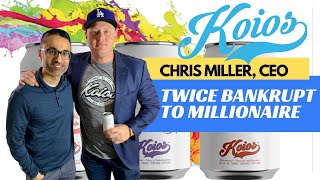
A long-form YouTube podcast interview (April 2020) in which Neel Dhingra speaks with Chris Miller about his rise from addiction and two bankruptcies to founding Koios Beverage Co. The conversation covers Chris's early sales work, a pivot into comedy and content creation, struggles with Adderall and mental-health diagnoses, the product development and near-failure then relaunch of Koios (including a $10M raise and placement in thousands of retail stores), and practical lessons on sales, community-building, and content strategy.
So on today's episode, we talked to my buddy Chris, who's been bankrupt twice and went all the way from a drug addict to the founder of a publicly traded beverage company. Check it out. So, Chris, man, like, we used to work together. When Was this? Like, 2000.
I worked for Neil. Okay. Yeah. Like, I worked for you and your brother, and I actually used to look up to you. Really, I did. Neil's one of the smartest guys I've ever known. Again, I was joking. Before we started, if. If you tested Neil's iq, I'm sure it's off the charts. If you haven't worked with him and you see this and you're considering it, you should. He's one of the smartest guys around. So. Yeah, I worked more for you than with you, but.
Yeah, but that was our first kind of introduction. I know you had grown up with a lot of the guys that Arjuna Martin worked with back in the day. And then, you know, as the. Then the market collapsed and everybody kind of went their separate ways, dispersed, me and my brother stayed with mortgages, and everybody else kind of went their own way. So what did you do? Like, what was your journey after the collapse? Because that was 2008. 2007. 2008.
Yeah. So once I left Reno, I. I got into. I tried to do mortgages and failed at it pretty poorly.
Okay.
I never really learned sales skills, like, proper sales technique. I would tell anyone who's listening to this who's thinking of being an entrepreneur, you have to learn that skill. Go through the training, you know, really learn how to sell and sell yourself. But, yeah, I got into mortgage, failed, lost all my. So hit rock bottom. And then I got into finance. Just on a whim. I took a job selling insurance, and it was like door to door.
Okay.
And it was. It was brutal. Boiler room. I'm not leaving your living room unless you kick me out. You're either buying this or calling the cops sort of scenario, Right? But I got really good at it. Got really good at sales, and then, you know, I became a top producer, and then we branched off and built our own office. So, ironically, in 2008 was the year I made the most amount of money I've ever made. You know, we were. We were selling safety and insurance and annuities and things that protect wealth, you know, when it all came crashing down. So 2008 was a great year for me, personally and financially. Although I would say I was telling you before the podcast, I was pretty miserable. I think once you hit certain Levels of income, you realize that the money doesn't always make you happy and it's hard.
That's a good point. Like, I see that happen all the time where. When you don't have it or when, like, you lost it and you want to get it back, that's the first thing. That's the only thing you think about.
Right.
But then you start to realize, like, it doesn't really help. Like, you know, I mean, it's good. Like, if we made. If you and I did something, we made a bunch of money this month. What does that change? Like, you have a bunch of money in the bank, an extra zero or whatever. Right. But then. Yeah, I know that sounds, you know, kind of elitist to somebody who doesn't have money, but sure. At the same time, like, it doesn't. You don't wake up the next day and you're like, oh, I'm super happy now because I got an extra six figures in the bank.
It doesn't change any of your insecurities or shortcomings or if depression or any, you know, thing that you're dealing with. Right. Like. And yeah, to your point, to your listeners, too, like, you know, at my lowest, I would have been like, fuck these guys. Like, you have money now. It's easy to say that. Right. Like, of course. By the way, am I allowed to cast? Is that.
Yeah.
Yeah. Okay. Yeah. No, but to your point, yeah. I mean, if you're out there and once you get it, just realize that it's. It's fleeting in a way. You know, it helps you have better healthcare and take care of your kids if you have them, and your parents. Which is one reason I got out of comedy, because I was like, I can't be a starving artist.
Yeah.
In my 30s. Like, that's just. I can't do it.
So then how did you get. Okay, so you did the insurance thing. It wasn't fulfilling. You made some money.
Yeah.
Ton of financial product sales, basically. Right.
Yeah.
And then one day you just realized, like, this isn't for me. Or was it like a transition where you're going to do this plus a side hustle.
Yeah. So I think for most people, you know, I was thinking about coming on here today and what you might ask and talk about, and I think one of the big things for me is, like, we live in this culture, culture of Super Hustle. And I think it's awesome. I think the downside of the Super Hustle movement is that you can get really isolated. I think we live in a culture Too, where technology is really isolating people. And there's a lot of people that really feel lonely, but they don't know how to talk about it. So the. So I was super hustle mode, you know, lost contact with friends, all that, and I. It kind of happened slowly. Dude. It was. You know, I remember making, you know, my first $400,000 a year, and then half a million, and then, you know, north of half a million. And I had the car, I had the whip, I had the girlfriend, you know, dating a Broncos cheerleader, pushing a 750 on rims, all those things. A sick penthouse in downtown Denver. And I remember waking up every day just feeling sort of dead inside. And then it got really dark. You know, I got really depressed and didn't know how to deal with it. So it happened kind of slowly. And then I just realized I didn't love finance like I thought I did. You know, it's kind of like. And that industry is great, and I think. I think, you know, there's a lot of really great professionals in an industry. But, yeah, it just wasn't for me. I felt like I was selling stuff that just wasn't really, really helping. And you said earlier I am a very outgoing guy, very creative, and so the industry didn't lend any creativity to me. I couldn't. It kind of shit on the way that I. That I am. You know, I'm obviously covered in tattoos and a little different, and showing up for meetings in a suit every day just started to wear on me. And, yeah, I wanted to do something. So how did it start? How did the, like, transition start? Yeah, I started doing podcasts, you know, in 2008 and started making videos.
But this is before guys, before podcasts were. Everybody had podcasts. Like, this is, like, years and years before content was even big.
Yeah, no. So I had the full setup and was making videos, and we had a.
Show, and you're probably before it was hitting mass audience.
Yeah.
So it wasn't like you were early.
Totally. But I so much fell in love with. And I'd love to hear how you feel about it because you're such a technical guy.
Yeah.
But I fell in love with creation. I fell in love with going, you know, hey, I made this video, and people responded to it. It gave me so much energy. And I think part of it may have been ego, but another part was just, hey, I'm really touching people in a certain way. And it really fired me up. And so I started doing comedy videos or, like, funny videos or what I Thought was funny. And then someone was like, hey, you should try stand up. And on a whim, I just went to Comedy Works, which is one of the best clubs in the world, and entered a contest and won and was immediately hooked. You know, if you've ever spoken live or done anything like that, it's.
I've had the opposite experience. I don't like it.
No. Yeah, I can see that.
Well, that's because we're doing informational, so I get super nervous, you know, and then it's a. It's a really dry room.
Yeah.
And you're trying to connect with people, and it's tough, you know, but I'm getting better at it, for sure.
That's good. It's a skills. I mean, a lot of people think they're funny, and then they're not. They're not.
Yeah.
You're really not.
And so that you did for several years, too, right?
Yeah. Yeah. So I went, you know, I'm one of those full tilt guys. I do everything, including the bad things, 100%. And I jumped into it full steam. Like, I would even practice at night. I'd, like, set up a camera and I would look into it and tell jokes, and then I would watch the video and be like, that was dumb. This is stupid.
Yes.
Yeah. And I've done Gotham and Laugh Factory. I've done shows with TJ Miller, Dave Chappelle. I've worked with all of them and traveled to do it. I always joke that I was on tour, which I wasn't. It was just. We did a lot of traveling for it.
Yeah.
And comedy's really hard. You know, it's. I would argue it's probably the hardest art form on the planet.
Yeah.
And the reason being, you know, you're all alone. You're either what I. And it's also, conversely, what I love about it, that you're either good or you're not. There's no pretending. Right. You either sink or swim. And so. But it's a really hard lifestyle. Those guys and girls don't make any money. They travel a ton. It's really lonely, you know, you can go crush one night in front of 400 people, and then you're just in some rinky dink hotel in Kansas and you. You know, it's hard to come off that high.
Yeah.
So a lot of people self medicate and drink and. And there's just no it. And so five years into it, you know, I thought I wrote a movie that got optioned, and I thought, oh, I'm gonna. I'm gonna make a million dollars doing art. Like, this is gonna be great.
Yeah.
And it didn't happen, and I didn't pay attention to my finances, and, you know, went broke again.
Okay. And that's a cool. So this is something that's important that you bring up. Like, so, you know, many people have their passion, but it's not practical. Right.
Right.
So you talk about you're in a business that's making. You're making. You're excelling, you're making money, but it's not fulfilling. You're not happy. So you want to find something that you. That does make you happy, and then that's. It flips to the other spectrum, and you're like, dude, I'm not gonna make any money in this. And it's actually, like, causing complete financial disaster.
Yeah.
So then you have two sides, like, but there's something in the middle where, like, you don't enjoy 100 of what you do, but you still are happy. Like, if you're. You're amped up, you're ready to go every day.
Yeah.
And there's stuff like that you're not gonna love. Right. Or is it possible to find something that you just.
No, I don't think so. I think. I think, you know, Charles Bukowski said, find what you love and let it kill you. I think he said that too. Because if you find something you love, it probably will kill you if you go full tilt right there. You know, for him, it was art or writing and drinking, and it eventually did kill him. But it all becomes a job. Right. Like, you might love to do comedy or, like, you might love to snowboard, but if you do it every day and there's pressure to perform and it gets.
Yeah.
It starts to wear on you. So.
But yeah, I talk. I was talking about this the other day, too. Like, we. We transitioned our business so we were in the same kind of stale, terrible business as far as no creativity, no marketing, really. It's all sales.
Yeah.
Well, just. What. What deals can we get?
Which is hard.
That's a hard decision because you're. You're basically as good as your yesterday's.
Numbers, you know, which gets exhausting. It's hard.
It's. You feel like you're on a hamster wheel always. Right.
Yeah.
So. And I was like, how do I get off of this and build something that's more sustainable? So then we got into the content stuff. And the content stuff, it was same thing. Like, I loved creating something, getting that positive feedback.
Yeah.
From the audience, like, oh, I like this. Or, oh, this helped me. Or, you know, and I'm not going to be able to entertain people, but I can definitely inform people.
Yeah.
And I could do it in a unique way. I could be myself and not be the typical, you know, banker guy. So doing that, like, all of a sudden it was like, okay, yeah, now I don't hate what I do. Cause I was getting burnt out. It wasn't like I hated it, but it was just after doing it for 15 years, you get burnt out. You know, it's like the same thing and the same chase of the next month's deals. And you're just on this wheel. So this kind of transition to now, it's more like you're actually building something sustainable. It's like a brand that you're building and you attract business. You don't have to really chase people anymore.
Yeah.
So that's what kind of flipped it for me. But at the end of the day, I still need to take care of the deals and stuff. So I did a last week where I was like, yeah, you can have fun, put out content and do this stuff, but at the same time, like, don't forget to fly the plane. You still got.
Which people do they forget to do.
The fundamentals of, like, meet with the clients, get the business done, run the business properly. Don't, you know, make sure your money's going to the right places and stuff. Yeah. Otherwise, if you go all the way to the fun stuff, the other stuff dies.
Yeah. No, that's. But you're. You're a very wise guy. I feel like. Like you're very smart. I did. I did exactly what you were talking about.
Yeah.
And neglected the important stuff. And. Yeah. It crushed me.
We see it all happen all the time. Like, people are like, they jump all the way on the other side.
Yeah.
And then all of a sudden, a couple years later, the business is in shambles.
Right.
But if you manage them both. There's a way to manage them both, I think. And that's where the magic is.
Let me ask you, how do you. Because I think certain people are like, you're a highly organized guy. If you guys. Have. You guys have seen Neil's desk, It's unbelievably immaculate. Right. Like, I feel like you're a very immaculate. You're right. You're an organized guy. Like, how do you manage both? How are you able to it mentally as a father, as an investor, as banker, someone who really cares about his business.
Yeah.
And the Content, wanting to put out really rad content. How do you manage?
I think you just do the best you can. So I don't know if this is a skill, but could you have 10 things going on? Like a couple fires with business, some problems to take care of, a client issue. Your phone has a bunch of emails and. And texts that you need to reply to.
Yeah.
And you've want and you're doing something. Can you have all that going on?
Ghosts. Should we just catch paranormal activity on film?
Yes. So can you have all that going on and then kind of compartmentalize that and just deal with what's in front of you for the next 30, 40 minutes and then get back, you know, like. Yeah, just juggling all that stuff. A lot of people will ask me, how do you keep track of everything? Or how do you.
Do you have a system to use? Do you have like a. Like we use. We use ClickUp because we have a coios. We have so many projects happening all the time from events to.
Ours is not that great the one we use. But we have a communication tool called Slack. It's used by most companies now for like, for just instant messaging. And then within there you can set projects and reminders and calendars. And then I also use like other productivity.
Did it take you a while to get your team to fully integrate it and like get it?
Yeah. Like some people are like, sometimes it.
Feels like an extra step. You're like, I don't want to log into the stupid thing.
Exactly. Same thing with like CRM. People don't want to add, but then they'll forget if they don't. So. So once they see the value in it, then I think it. I think it's. That's always a problem is getting people to implement. But once you get. Once they see some value or like something positive come from that they're in. So that's what we do to keep track of stuff. And I think it's just a matter of like, how much can you handle. And I'm comfortable with chaos. Basically.
I like it.
So it makes it more. I would rather do that than be bored.
Yeah.
You know, or like I've had to.
Get good at it like for a long time. I would get. So I got diagnosed with adhd and the reason we started Koios, you know, is cause I had a drug problem with Adderall. It was destroying my life.
Okay.
I always joked that I wasn't in back alleys doing shady stuff for it, but it got pretty bad and come to find out Like, I went to therapy because I got. You know, it's hard. Nevada's hard to describe, especially Carson. We grew up in Carson, which is the wild west still. But I grew up in a very macho environment, so it was always about how cool you are, how tough you are, how big you are, how much money you make. And that kind of ruined me as an adult. Meaning, like, I could never tell people I was struggling with certain things, Right?
Yeah.
But come to find out, I'm on the spectrum of autism, too, so I get really obsessive compulsive about certain things, and then too much sensory overload for me is a problem. So, like, I walk around our office. So now we have around. I don't know, just in our office day to day 10, but we have 40 people that work on our. You know, so there's a lot going on.
Yep.
And I have to walk around with noise canceling, headphones on all day or else, you know, I had. I had. Yeah. And I had a couple. I had a couple times where I really lashed out on some people. Like, really freaked out and realized I have an issue. But. So, yeah, so I think for everyone listening. Yeah. It's like diets, right. You got to kind of figure out what works for you and be really open to the process and.
But I had. I've felt that we're like, there's so many things going on, and then somebody's trying to talk to you, and then your phone rings and you want to break something.
Yeah.
You know, I mean, like, it gets.
To you for a second, which I did. Openly. Yeah. No. I was such a. Such a dick. I don't know how people work for me. They're either terrified or it's only because I pay them more like. Like, it's a joke. But, like, yeah, it's. I'm an intense guy, and then too much chaos drives me a little nuts. But I've learned to deal with it. I've learned it. You know, what I really learned with the team is to learn to communicate, to be. To be very vulnerable and go, hey, Neil San Diego. I forgot your name. Eric. I'm feeling overwhelmed right now, and I feel like I want to lash out. So if you could give me a few minutes, I'm gonna just walk away. I'm not mad at you. I just need to process what you're saying, and then I'll come back. But it took every relationship I had to the next level, because now people would go, oh, okay, I get it. Or. And it would help Me communicate so that I didn't freak out and throw a can across.
Yeah. I already learned something. Yeah, that's good. Yeah. Because I usually keep it inside.
Yeah, I couldn't anymore. I was like, freaking out.
So you talk about, like, hustle culture and basically, like, everybody promotes work hard. Put in the work grind.
20 lunches for pussies.
Yeah.
Fucking grind till you pass out.
And, and I think, like, they, they, they talk about that because it is required. Like, I don't think you can build anything really big and sustainable without putting in a lot of work. But I think the thing that people don't realize is, like, when you're doing all this stuff, you're juggling 20 different things and it's because you actually like it and you don't really think of it as chaos or working. Like you'll put in the 20 hour day or whatever or, you know, however many crazy hours in the week. But you don't feel like you're really, you know, grinding like crazy to the, like, to the point of. Of detriment.
Right.
Because you just want to do it. That's what. Yeah, that's what you want to do. You want to build something and you're getting something mentally back from it.
Yeah. You know what I found, bro, is like, number one. I think for those of you listening, there's only one thing I could help you with, is I think we're tribal people. Sebastian Younger wrote a book called Tribes, and it blew my mind. I remember, you know, when, like, you read a really good book and every few minutes you just put it down and go, what? It was one of those experiences for me because I. Again, even. And I'll tell you all about choice, but, like, koios was this really cool project, and it allowed us to be who we wanted to be and do what we want and. But then I was still getting miserable, and I realized part of it was because I stopped doing things that I really loved. And part of that, what I really love is, like, hanging out with my boys. Right?
Yeah.
I used to think way back when I hustled even hard, like not harder. But I totally bought into that. And I do. That sounds weird. I would sort of isolate myself and be like, oh, my boys are at a barbecue. I can't do. I gotta make more content. I gotta. Yeah, I gotta answer more emails. I gotta. And then. And then I. Yeah. Just miserable. So what I would tell people is, you know, balance it out somehow. And I would say that even for.
Me.
It'S little things. Like, I bought A one wheel. And I get on my onewheel every day at the same time, and I just ride through Denver and I'll go get like a coffee. And that brings so much joy to my day that it makes the day awesome. And then, like, five o', clock, I go. We. We sponsor a bunch of UFC guys. So I train with a bunch of dudes from. Yeah, but that. But that's part of my schedule now.
So, like, by the way, real quick, on the one wheel, somebody told me about this. Do you, like, can your nose go down and then you just rush it?
Yeah.
So that's the one reason why I don't, like, I'm like, scared because I have a boosted board and I do the same thing. I'll ride around.
Yeah.
Like, it clears your head.
Yeah, it's the best.
I really like it. But I'm apprehensive about the one wheel because of that.
Yeah. For those of you listening, you got to be careful. I've wrecked so many times so bad. So publicly, too. Like. Like where you fall and you're like, 30 people just saw me eat shit. I'm an adult. That shouldn't happen. Yeah. So be careful. One wheels are dangerous and they go like 25 miles an hour.
Okay. So sorry I interrupt you.
No, it's all good.
I have ADD as well.
So fun. But, yeah, no, I realized, like, little the day. So, like, the UFC guys, I get there, it's five o'. Clock. Everyone on my team knows it's part of my schedule, but I get to be in the locker room and, you know, you know, punch mitts and then, you know, grab ass with everybody and talk shit and.
Yeah.
It makes me feel like I'm a part of something. And I can tell you, just those little implementations in my life have. It's like a 10x return. Right.
Okay.
Which has made the work funner, I think. You end up being more creative. Your work is better. You're better to your clients, you're better to your customers, your people.
So you, like, step away for a minute.
You. I think you have to. I would. I would argue you have to like it or you're going to burn out somehow. I read this Harvard Business Review about, you know, balance, essentially, and. And because I had this theory for a long time that I would shove down people's throat, I was like, why don't we treat business more like athletes treat their day to day? Meaning. Yeah, if LeBron James practiced 20 hours a day, he wouldn't be in the NBA anymore. He'd be Burned out, his body would give up. Right. What great athletes are really good at is recovery. Why don't we spend more time recovering now? I, because I, I think the theory is people think, oh, for recovery I have to go to Aspen for a week.
Yeah.
And I don't think that's true. I think if you can do many recoveries every day, your life will be 10 times happier no matter what you're doing. But yeah, and that's, that was one of the issues. That's one of the issues I have with like the hustle culture. It's like no one ever talks about recovery. No one ever talks about like self care. No one ever talks about, like mental health. No one ever talks about. And those things are real, dude. People can.
Yeah. And it is, it does get. I really understand what you're saying about the isolation thing, because basically if you're putting in, if you're. That if you're running your own business or you're a solopreneur, sort of, you can.
I like that word.
Yeah. Basically, like you're, it's, it ends with you. Like you have to do everything right. So then everything is your fault. So you're like, you have to get everything done and everybody comes to you with all their problems and are you like me?
Do you obsessed? Were you like.
Yeah, yeah, yeah. Like, just. You wanted to always push the envelope, you know, you want to get the basically on tilt. Like you're living a day, your life on tilt, you know, but then at the same time, you don't think you're on tilt. You just think like, this is what you should be doing.
Right.
So it can be, you can become completely isolated from family, friends, everybody. And then you like, shit. All of a sudden you're lonely. Yeah, yeah. And then you're like, fuck, what did I do? So it would be cool along the way to have like stepped away a little bit from all that.
Yeah, just ride your skateboard at lunch. Be a weirdo. Like, go out in the sun and ride your skateboard and smile like a little kid, you know, in the morning, instead of driving to get coffee, I started walking. It's a 30 minute walk. Because I think people listening, this will be like, you know, I don't have time for that. Like you do, you just, you just haven't decided or. I always tell the dog on the nail thing. You ever heard this one?
No.
His buddy comes to his friend's house, sitting on the porch, he has an old basset hound on the porch. And the basset hound Keeps moaning every few minutes. The guy's like, what's wrong with your dog? And he goes. He's laying on a nail, and he goes, why doesn't he move? And he goes, it doesn't hurt bad enough. And I think most people are laying on the nail and it doesn't hurt bad enough for you to make a change. For me, I'd hit rock bottom. I was like, you know, I have my dream company. We get to work with professional athletes, travel all over the world. It's kind of cool, right? But I'm still kind of unhappy. And so, again, to that point of, like, you can work hard and have money and have everything, but if there's not some balance, if you're not taking care of your brain, yeah, you're gonna fall apart at some point. I think some people like you, like, I know Neil's got a very. You have a high drive. You have a high capacity to. To focus, work hard. And some people just don't have that. Like, I used to think I started in Amway. I tried to get you and your brother in it. They said no, by the way. So I didn't do a very good job.
But even then, like, we knew you were all about. Like, you were always hustling for something, so it was like you were trying to do mortgages.
Yeah.
Maybe. Look at. Maybe doing real estate at the same time. You were selling us Amway Amway, which.
Is a great business if you're in it. I learned a lot from it. It was. It's. It's a great.
We were doing the energy drinks, and it's kind of crazy because, like, when you. When I started, like, that was the first thing you sold us was the fucking Amway energy drink.
Remember? Yeah.
Like, you love that one energy drink, and that was the number one product, like, that you pushed.
They sold out for $3 billion.
Wow.
Yeah.
Jesus.
To Amway. Wow. Isn't that gnarly?
That is crazy. Yeah. So tell us about. So you're doing the comedy thing that's dying. Basically realize it's not practical. You're not gonna make any money.
Yeah.
So then how did you come to. How do you say it?
Koyos.
Koios.
Koyos was the God of intellect.
How did this.
We thought it was super born. Yeah. We thought the name Clever. I was like, it's like Nike and then people can't pronounce it. And I was like, that was probably a bad idea.
It's easy once you tell me Coyos. But.
But, yeah, business life Lesson. It's never going to be perfect. You're never going to. It's the design. Always change. You know, just start it. Right. Yeah. No, I. I got diagnosed with ADHD and got prescribed Adderall, and so I was suffering from that. You know, for those of you who take Adderall, I'd highly encourage you to get off. You know, it's only one molecule away from being methamphetamine. It ruins all kinds of functions in your body, from hormonal function to.
How much Adderall were you taking?
120 milligrams a day.
Holy shit.
Which is like doing math. I was cracked out.
Well, I have 80 ADHD. Not HD or ADD. I don't know what. What the difference is, but they prescribed me the same thing. But the amount I was taking is 10 milligrams a day. Yeah, it's like the lowest dose.
Yeah, yeah. No. And yes. For some people it really works. Like, it made me a weirdo. Like, I would take two of them and then drink, and it would make me like, sex compulsive. Where I would, like middle of the day, I'd be like, booty calling people.
Wow.
Because of what amphetamines do to your brain. And then I. Yeah, and then I would just keep upping the dose and I'd have to take Ambien to go to sleep. And I have all kinds of weird Ambien stories of taking too many and my, you know, my team or my roommates finding me, like, walking around the house, talking to the walls. Yeah, it was weird. Conversely, at the same time, I, you know, I was doing comedy and I realized pretty quickly that I probably wasn't gonna make in it. I don't have children like you, your beautiful children. But I do have a mother who counts on me. And I was like, I can't just be a broke comedian for. Which is fine, if that's. If you're okay with that lifestyle. That's dope. Good for you. It takes a lot of courage to walk that path. Right. To be that different. To not worry about material possession or needs or income or whatever. But I couldn't do it. And so the ironic part about coios is that I started it to just be an online e commerce dropship stuff business that I could make three or four grand a month doing okay. And still be creative. Like, there's a huge. Is driven as I am to the point of like, even hurting myself being driven. There's a huge part of me that's also a lazy, like, artist Like, I want to be a drunk poet, like, and live in Paris and say whimsical shit and people go, oh, that's awesome. He's so brilliant.
But you're also a capitalist too.
Like 100%.
You've been selling stuff since I, since I knew you.
Yeah, I used to sell gumballs in elementary school. Yeah. So no, I am. And I think I'm only a capitalist. Like, I understand there's still a part of me that wants to make a lot of money. I don't think I've ever admitted this anyone. I think there's a lot of me that wants to make money because I still am tied to the scorecard. Yeah, I'm still very much tied to, hey, look what I did. Look how much money I have.
Even though you won't tell people that you, you, you walk around like, even if you say you did really well, you have a bunch of money in the bank. You don't. Even though nobody would know that. You keeping that scorecard in your head.
Yeah. And you're like 100%.
It gives you confidence. You're like walking around like, oh, I'm successful.
Which is also dangerous because I remember making 5, 600 grand a year as this guy and I thought I was a good entrepreneur, and I wasn't. It's a totally different skill set learning to sell and then building sales.
Like, sales, sales is just a hamster wheel because the second you stop selling, your business stops.
It's over. So there's understandable. You said something SM earlier though too. I think what you're learning is like building systems.
Yes.
Like there's a difference between having a goal and a system. I read a book by this guy who said goals are for. Goals are dumb.
How are you going to achieve them? Like, it's big. Consistently, I'm gonna make seven figures this year. Well, how the are you going to.
Do that and then do it consistently without dying or being on the hamster wheel? Right.
Yeah.
Systems are savage, big time. And what you're building is a rad system. So yeah, it ironically was meant to just be a three to four thousand dollar a month thing. I wanted to make a natural alternative to Adderall. So I spen in a kitchen, like experimenting, working with, you know, some of the top people in the world at what they do to help us formulate it. You know, at the time, I realized too that people love Adderall and the stuff that we make. And you know, if you look at bank success with 300 milligrams of caffeine. And I don't think our brains have caught up yet. We haven't evolved as a species to deal with what we deal with on a day to day basis. And what I mean by that is, you know, there's too much data, there's too much noise. Even your car, like, you have a Tesla. But like, for those of you who don't, you have like a gas car. It even goes, hey, stupid, you're out of gas. Like, pull over. Or like your tire pressure. Like, there's something always beeping at us. And I don't think we've evolved to keep up with that.
And everything else. Right.
Dude, it's nice. Like, I get made fun of every day because I keep my phone on do not disturb. And people are like, you're the CEO of a publicly traded company. I'm like, yeah, but I don't. If I let my phone, big ding at me all day, I'd be a wreck.
Yeah.
So I never answer the phone and people get upset about it later. Yeah.
Organize it later.
So. Yeah. And then we developed it and very quickly realized that the market was sort of clamoring for something better than just caffeine. It took off. You know, we back on that hamster wheel. We would literally walk into supplement stores and go, here's what's going to happen. You're either going to pick up our supplement or you're going to have to call the cops because I'm not leaving until you make a decision.
Really?
Yeah. And it would usually make someone laugh. And I'd be like, no, I'm serious. Like, those are the two choices. And so sales cap back on. Yeah, sales cap. And for those of you who are like, listening to this and you're thinking about starting a product, you know, when you're making those pitches too, always make it a. Always make it an easy decision in the sense that you could take all the risk out.
Yeah.
So we used to take all the risk out. Meaning I'd say that and be like, but look, if it doesn't work, I'll buy it all back. I'll even buy the bottles you sold back. Back. I'm that confident that it's going to work. Yeah. And nobody ever made us buy bottles back.
Yeah. It's a grand promise that, like, you never have to really deal with.
Right. But we meant it. It was sincere.
But the confidence is what matters then, I think, because then people tell. They can tell. Like, if he's this confident.
Yeah.
So I would tell people, like, why not say, I'M the best. My product's the best. I would, technically, maybe it's not. I don't know, maybe there's somebody else, but who cares, right? Why not put that out there?
Yeah, I agree. Yeah. And then we had some success. And very, very, very stupidly, very dumb. Like, my ego has gotten me in so much fucking trouble my whole life. It's, it's just. He's such an asshole, right? So very egotistically, there was some of it that was like, yeah, I really want to reach more people. Yeah. And we thought, hey, a beverage is a good delivery system. People aren't as like afraid of a beverage. Is there a supplement? No research, just total testosterone based decision. Let's put this in a drink. That'll be dope.
So what was it, the first part? It was actually like a capsule.
Powders and capsules.
Okay. So you would swallow the pill.
Yeah.
Okay.
Yeah. And then very dumbly, we, very stupidly, we decided to put out a beverage and it, it got crushed. Almost went bankrupt again.
And why is that? I don't understand. Why is that a D move?
It was dumb for us because we didn't understand the market. We didn't understand the capital requirements necessary to really build a beverage brand. We didn't understand distribution. We didn't understand retail. You know, we work with some of the biggest retailers in the world and it's, it's like learning a new language.
But isn't it true that like, if you knew all that shit, you may have prevented you from doing it? Like, I understand that. No, you're going half, you're going before you've done all your research. But what if all that shit made was too onerous and you're like, fuck, I don't know if I can.
I love this question because it's a great teaching point. Yeah, I don't think it would have stopped us, but it would have changed. I think it would have saved us a lot of mental damage.
Okay.
We would have started small, more regionally, really focused on supply chain. We would have really focused on local distribution that we could control that so that we could drive down price points and, you know, MSRPs. We would have built the team locally. We would have, you know, we would have been able to control more of our margin, you know, not spend as much money. But we went too wide too fast and it almost broke us. It was really scary.
How'd that turn around for you?
We pulled back after we realized we had gone over our skis pretty badly, which was hard for me. Right. Again, another ego move of, like, man, I screwed this up. Like, I really this up. And people's lives were on the line, and we had investors at that point, and so it was kind of a dark time for me, too. And then around 2016, so, yeah, four years ago, we rebranded. We realized our branding sucked, the drinks sucked. We just missed the mark. So we went back to the drawing board and we had to eat that pill of, like, we're all Gonna Live on $2,000 a month again in our 30s and figure this out. Out.
Yeah.
And thank God for the team that I have, because I have some soldiers on my team who are like, all right, dude, let's. Let's do it. We're all willing to take that step back, too, to figure this out. And we rebranded. We went out and raised 10 million bucks and went back to war. And then, you know, shortly after relaunching, we launched pretty quickly into over 5,000 stores, including Walmarts, GNCs, you know, whole Foods.
So one thing I think, like, you know, people hear these kind of stories all the time. They got ideas for their own product or whatever, or whatever they want to do, and they don't realize, like, okay, so you have an idea to take this from a supplement to an actual drink, carbonated drink, or whatever drink you're going to do. Like, how do you even. Where do you begin? Like, Like. Like, as far as. How do you, like, come up with the ideas of, like, who's going to help you make this? Or how are you going to do. Is it. Is that just a research process that takes time or what?
Yeah, no, that's a. You're right. I'm glad you slowed that down, because I feel like I listen to podcasts sometimes, and I'm like, dude, how do you go? Yeah, but how'd you get there? Like.
How does it get to this? And then is it, like, is it. When you're selling supplements, does the government have to approve, like, what you put in drinks? Like, is it, like, FDA kind of thing or.
No, so they tried years ago, and a bunch of supplement lobbyists basically squashed that.
So can you sell whatever you want?
Basically, you could get in trouble. So there's banned stuff. There's like, you can't sell hormones. You can't. Even though some people do it, you know, you can't have a lot of them get tested. Right? So. But yeah, it's pretty. It's pretty scary that way. I think food and beverage still has a long way to go. And even with labeling Right. Like, there's a ton of foods out there that you guys are eating that you think are great and they're not. Because food companies can label things pretty misleading. It sucks, but it's true. And you'd be shocked if you go down that rabbit hole how many things you ingest that just are not good for your body, I bet.
Yeah. So I'd rather not know, I think.
Right. Yeah. That would eliminate a lot of things for you, Neil.
I need to up my game on that.
Yeah, you're lucky. You could probably eat whatever you want still, and you still look amazing.
Well, I'm trying to outsource it, so I buy meals from. From. I would eat the bad things all the time. So then I found a meal service that would just make the food.
Yeah, those are great.
And they just deliver it to you and then I don't have to think about it.
Yeah, those are great. So. So yeah, there's. There's a lot of. There's a. But most of those never make it to top tiers. Right? So, like, consumers are pretty smart now. They have access to a ton of information, so they know what good ingredients are. Good manufacturing practices. Most people can't manufacture at a high level without having to go through every check and balance. Meaning, like, you could start small and I'll get to that. I'll get granular on that. You could start small and, like, buy bulk powders. Right. If you were like, oh, I want to make a health and beauty product, and it had beta carotene in it and vitamin C, you could order all that bulk, which would just take a Google search, and you'd find bulk ingredients. And you could put those capsules together by hand and put them in a bottle and slap some duct tape on it and say, Neil, supplements. And walk around, try to sell them, and you might get a couple stores that go, yeah, this is a great ide. As you start to scale the business, though, there's so many rules and checks and balances that, yeah, it'd be hard to be a dirtbag and make bad things. Yeah. For us, we're obviously very fanatical about what goes in stuff. Hyper fanatical.
Yeah. So let's talk about that. Like, what's in this?
So we have nootropics, like L tyrosine.
What is nootropics for people who don't know.
Yeah, it's a Greek word. It basically means anything thing that it would enhance brain function. So technically, cocaine is a nootropic. I mean, it is.
Yeah.
Nicotine is a nootropic. Nicotine in small doses has been shown to dramatically increase brain function. Psilocybin is a nootropic.
Adderall.
Adderall, yeah. Meth, caffeine. But for us, we focus on nootropics that are earth grown things that have dual benefit. Like, like it's going to give you focus but also build brain function over time as well. Repair, help, adrenal function. So you're kind of getting lost brain cells. You can repair. You can really, you can, you can rebuild.
Okay.
Yeah.
Can't make someone dumb. Smart, maybe a little bit.
That's on them. Yeah. So, yeah, we have mushrooms in there. It's the only beverage in the world right now with lion's mane mushroom, which we're super excited about.
What is MCT oil and what does that?
CT oil is a healthy fat derived from coconuts. Helps with brain function, helps you feel satiated so you don't feel as hungry. It's got a lot of functions to it.
Cool. So you come up with kind of like ideas of what you want to put in it. Then there's a testing of how to get it to taste. Right, right.
Yeah. Which took us five years. So again, going granular, like if you have an idea, especially in food and beverage, it was years of us just. Yeah. Doing a ton of research. So if your idea was to make a new sneaker that had biodegradable souls, you could do enough homework and find someone who could build you the prototype. Someone who'd probably build it for free. If you were clever enough, you could find someone to help you with the design. I mean, it's going to take a lot of hard work in your spare time of coming up with some of the concepts you could do all your own. I mean, don't you think? Neil, you're again, one of the most brilliant guys I know. But don't you think anything you have ever wanted to accomplish. Yeah. That data is available. Yeah.
Through Google.
And books. You can still read books. Those are real. But everything you've ever want. Abs. How to get women, how to have better sex, how to have better body function, how to be rich, how to build a business. It's all there.
Yeah. The books are there.
Yeah, yeah. It just takes a little digging. So, yeah. Back to the sneaker concept. You get a prototype, you. You could even build a fake Instagram account to test it just to see if the idea would work. We're to launch a new enhanced coffee line. And before we even had it available, we threw it out on the Internet to see what the reaction would be. It's like a focus group, right?
Yeah.
So you can do a lot of that testing and development early and do it for very little money. And then, yeah, you got. You. At some point, you have to figure out a go to market strategy. Am I going to go direct to retail? Am I going to walk around and sell these out of the trunk of my car? And some of your capital position will determine your strategy. Right.
Um, how about raising money?
That's a tough one, I think. I think I got lucky because I came from finance. I spoke that language. I obviously had a ton of confidence when talking about large sums of money.
I can just picture you pitching an investor. Like, it's pretty. Com. You probably made a pretty compelling case.
Yeah, right. Yeah.
I think. I think, like, anybody who's invested in companies or they realize, like, they're not investing in this or like, they're investing in you.
Right.
Your ability to, like, are you gonna live, breathe and die for this?
Yeah.
It's gonna work. Because it all rests on you at the end of the day.
So, Neil, you make a great point.
Like, I think the idea is everywhere, right?
Yo. Yeah, Ideas are. What's that saying? Ideas are like assholes. Everyone has one.
Yeah, exactly.
They are useless. What's the magic is in the execution, and execution is really hard. It's like the idea of, like, why don't more people have apps? You know how to have them?
Yeah, the information's right there.
Why. Why don't they have them, though?
Because they don't want to put in the work.
It's hard.
It's hard.
It's really, really hard to have abs.
I wish I did, but.
Yeah, me too. I don't. They're under there. Under like 4 inches of fat. Raising money is. You know, it's. I think. I think if there's any young listeners on this, or I guess it doesn't matter. I think one of the things that I didn't focus on getting out of college is my network. Yeah, look, I wish I would have paid more attention to what you were doing and stayed in better touch. When I did learn that concept, every person I would meet. And this sounds. It may sound selfish, but I've always been one of those guys that if I meet someone, I go, this person gives me energy or they're smart. I'd love to just be a part of their tribe. I'd love to every now and then call Neil and be like, hey, buddy, because you're. Again, you're Brilliant. I'd love to be able to call you and be like, hey, I'm thinking about this, moving some money in these stocks. I know you used to day trade. What do you think? Because that information is priceless. So I used to stay in touch with a lot of guys, and I knew some of the guys that were wealthy and, you know, did big business deals. And when I had the. Yeah, when I had the idea, I actually just cold called him and asked for a meeting and started pitching and then working my way through each person. So if you're listening to this and you're like, I don't know any wealthy people, then start asking people. Somebody does. Yeah. And push for a meeting, ask for the phone number, and know that when you go, you can create value somehow or that you're that confident in your concept that this person needs to hear it. They need to be a part of it. And so I just kept pushing, like I would. I met with the president of AXA Financial and Hard Closing. I was like, give me some money. Put your client's money in this. And he was like, dude, I can't, but I know a guy.
Yeah, yeah.
And I was like, well, can you call him right now and put him on speaker? Like, I was aggressive about it, though.
But that's a. It's. It's crazy because so many people are saying no, no for, like, you know, they're already saying no before they even ask. Right. They're not even asking. So, like, another strategy or. You probably are really good at this. But this works for sales people of any sort. Yeah, but, like, when you're reaching out.
Cold to somebody, like, I'm gonna hit something back here.
I think you're okay. So if you're reaching out to people cold dm, email or call, there's the tact to doing this, right? You can't just.
Do you do this for the show?
Yeah, for the show or for people I want to meet or people I would love to do business with or, like, I'd like to get that meeting with. Right? And like, everyone will listen to this. Like, oh, well, I took Chris's advice or Neil's advice. I asked, like, 40 people to meet with me for my. For whatever I'm trying to sell, Right. It's my product or service or whatever. And. And nobody responded. And I think, like, they don't give up. Well, they give up. But the problem is, I think there's something to be said for how you ask, right? Like how when you're asking someone for a Meeting. How are you doing it?
Yeah, that's. So my approach is going to be a little bit different because I'm an aggressive person.
Okay.
People always think I'm yell and I'm not. They're always like, why are you mad? I'm like, I'm not. This is how I am. If I were asking for a meeting, I would, you know, it's different. Like I, I recently reached out to someone that is a competitor. He's a really well known CEO and I hated him for a long time. I hated him. I wanted to fight. I met him, I bumped into a Bernie man. I was like, I want to, I want to punch him in the face. And someone was like, why bro? And I was like, I don't know, because I'm hyper competitive.
Ye.
And I used to judge him frankly. And I reached out to him very humbly. So this approach was different. And just immediately said I'm sorry in the subject line. And it was this, you know, three paragraph approach of like, hey, I judged you and I'm sorry. And that was wrong. And I'd love to actually get to know you. And he responded from one CEO to another, like, I, I think we should get together. And so that worked for that. But like for me, if you're, you know, raising money.
Or selling anything, okay, that's different.
So if you're selling something, you've number one. You have to put a ton of emphasis on your own time. So oftentimes people in sales will make cold calls and it's like, hey, could you, or do you have any time available? And that's just a shitty approach. You're gonna get shit on every time and people aren't gonna take you seriously. So yeah, any sales call would be, you know, you want to think through what the objections would be and then eliminate those throughout the conversation. Um, so you know, if I was calling someone like we used to call cold call stores, I'd been, I'd done 40 calls, like Neil said, and not giving up and realized, here's all the things that these guys and girls hate. And then I would build that into the presentation. So I'd say, hey Neil, are you the owner? He'd go, yeah. And I go, hey, great. I'm Chris Miller, the CEO of Co Beverage Corp. We have X, Y and Z. I really want to work with you and be in your, your store. And then I go, well, what is it? And then I would tell them what it is. And as I'm telling them what it is, I would tell them why it makes sense to work with us. So we have a money back guarantee. I'd like you to do it on trial. I'd like you to pick up 12 bottles. I'll take your credit card today. We'll get the relationship started. Which do you prefer? Credit card or. You know. And so I would always be closing. Always asking closing questions, always pushing for an answer. A sale. But, yeah, I mean, it's. It's. I'm kind of rambling, but it's like, you have to have a strategy for those calls. You have to be confident. You have to know what you want to ask for. I. I kind of look at it like, you know, guys who are really good with women are confident just going, I want to date you.
Yeah.
You know what I mean? And then they're good at juggling the answer. And it's a skill set. Um, you know, if you're afraid of it, you know, learn things like, just go to a Starbucks and ask for a free coffee and see if they'll give it to you. Yeah, but it sucks. Like, I. Dude, I remember the first time. I remember wanting to quit sales. I was, like, crying. I'd moved from Nevada to Denver in this big city. I'd lost all my money. Now I'm failing at the sales job. I went 0 for 3 my first few appointments. Fucking just getting shit on in people's houses, feeling like a dirt bag. I was like, man, I don't want to push people. You know, do they really need this? And then I remember the day it snapped for me. I'm in this appointment. The guy goes, no. And I was like, what do you mean, no? And I got mad about it. So I was able to push through it and then made the sale and then went 6 for 6 for the rest of the week and never looked back. Right. My point with that is that, yeah, some of you are gonna have to go through a lot of shit. You're gonna have to eat a lot of. You're gonna have to eat a lot of ego and.
Yeah.
Get shit on and.
Until you don't. Right. Like, as far as when you're meeting with these people, all of a sudden I think it's your attitude or, like, the way you present something, it's the confidence in what you're doing.
Yeah.
Because like you said, you were able to have that confidence even if you don't really like the product. Most people, you can see through that now.
Right?
Like, they can't sell something. Right. If you're selling something that you don't 100% believe in. You're already starting handicapped, I believe now.
Right.
So just selling for the money is not going to work anymore. Anymore. I think people's radar has gone up because of all the sales activity over the past two decades.
Yeah.
They've been pitched every which way. Like, people's emails have been lit up. Everything's been like every, every sales tactic has been exhausted, I believe.
Right.
So how do you cut through this? Right.
I had a guy pitch me the other day and he was doing sales stuff and I kept calling him out. I was like, did you just like the two times, like, you know, do you know how that works? Works? Hey, Neil, I have 11 or 12. Which one works better for you? You never give anyone one choice. It's always two options.
Okay.
Hey, what works better for you? Mornings or afternoons? It's a, it's a, it's the difference between two positives. Right. It's like they're gonna have to pick one. Or like, if you ever get really manipulative and you want to, like always co. You know, coax your friends into going to the restaurants you want, you go, hey, what do you guys think? Chinese or. Or Sushi? It's. It's never like, it's like you're always directing someone towards the.
What you want.
Yeah. But he kept, he kept sales pitching me and I was like, did you just use positive options? And he got all embarrassed.
Yeah, no, but I'm saying, like this, all this stuff has been used so many times.
Yeah.
Because it's. Because that's happened now, it's less effective.
But don't you think there's like some, there's some core psychological.
Yeah.
Things that do work. They are for sure, like, leading the conversation. Yeah. Objection. You know, dealing with objections ahead of time. And they really do work.
Yeah, no, for sure. I think so. And a lot of people are just going without the preparation of, like, what could the objections be?
How's this conversation going to go? Yeah. Even role playing, would you say A lot of people who are like listening or maybe getting into real estate, they don't think through and then they just pick up the phone.
Yeah. Because they're told to just hustle. Make the 40 calls today, make the 20 calls, call, set these appointments, and then they get shut down because they're, because they're losing so often they stop doing it.
Yeah.
So it's like you're not getting, you're not getting anything out of this. So what do you think?
Sorry to think, because I have this. You just Made me have this vivid flashback of I used to leave appointments and someone be like, no, I got to talk to my wife.
Yeah.
And I would. I would walk out of the meeting so pissed off for my own selfish reasons. Let me make that clear. Sometimes it really didn't make sense for people.
Yeah, yeah, yeah.
But I didn't care. All I cared was, is that I got a no. And that my sales percentage would go on the board and I'd have to look at it and go. I didn't make something happen. So I would walk out of appointments and someone would be like, let me speak to my other financial advisor. Or, hey, you know what, Neil? We still want to shop around for rates. Or, hey, I'm uncomfortable with you pulling my credit. Or. And I would go home and write them down and then script out the most clever answer I could come up with. And then, no, bullshit, I would rehearse it.
Yeah.
And say it out loud so I could be comfortable with what I was actually saying. Until the point where I, you know, my closing ratio was like 90%.
That's awesome, man.
Yeah.
But I think. So this is what I think for people in outbound sales, unless you're going to elevate to the level you did as far as with the. With practice, confidence, handling objections, being aggressive, however you want to do it, always closing all that stuff. Unless you're going to get to a, you know, a. A plus game or with that, then you're always going to struggle. So it's probably because you're in the wrong industry or this isn't for you.
Yeah.
And you maybe want to do it a different way. So that's what I found is, like, I'm not going to be that. I'm not going to go ask for. For, like the sale like you would. Because I'm just different. Like, I'm a totally different personality. Right. So that's.
Why are you saying that, like, for real? Neil's for real.
Yeah. I'm different.
Are you more of a. I'm introverted.
I'm not like, like, aggressive with sales. So I. I would get. I would be like, I'm really good.
And then would you say that's changed for you? Like, were you more aggressive back in the day?
I was. I was more aggressive because I was more like. Like, I was. Think I was better than everybody else in my market. So I thought we were the best.
Which you probably were again.
Yeah.
Maybe. Yeah.
But it just wasn't translating right. So I switched to more of like, instead of just telling People, why don't we just show them stuff, you know? You know, like, you know, and it actually, our business doesn't necessarily require as much sales if you had enough inbound, you know what I mean?
Yeah, yeah.
So you can change that around. Like in your business in the beginning when you're getting going, you have to cold call all those retailers. I was like, how are the, how else are they going to find out about you? You know what I mean? So you guys switched to this similar, like you did influencer marketing. That's what I want to ask you about, was like you, at some point you guys switched to doing a lot more social stuff. Yeah. Can you tell us about that?
No. I love what you're doing, buddy. Like it's in it, everyone. Because you said, you said a couple really wise things today.
Yeah.
Because I think people listen to certain things on the Internet and you get neurotic about like people get stuck on like, oh, Chris said, I gotta go. It may not work for you that way.
Yeah.
But what Neil said earlier in the show was like, if you're gonna do content, you can't, you have to have a balance. You have to take care of, of the main part that feeds you. Even though content may be funner because it is funner for sure. But I love what you're doing though is you're creating value first. So even when I was a great hardcore hard close sales guy, I went above and beyond more than anyone else in my office, which is why I had my production was more than everyone else combined. Like I'd meet a client and then send them a book and then I would send, send them, you know, two more books on things that I knew they liked and then more books on the subject we were going to talk about. And I would call them and play with them. I'd be like, hey, you know there's a quiz when I come back on Monday, right. And I'm going to quiz you and if you fail, I won't be your, I won't be your advisor. So. And I would have a lot of fun with it. Right. But I would create value in between each step. That would make people. Because I legitimately cared. I legitimately wanted to help educate people on what I thought was the greatest thing. And I love that you're doing it and you said something really smart. It's like if you can create enough value and content, people will come to you. And you've already kind of eliminated the need to do. To be. Yeah, to be a dick. To be a Hard closing, hard charging.
Yeah.
Here's like, leave the pen on the table and just be quiet. Move.
Yeah.
You know, I have.
That's crazy. But, yeah, I've sat in.
I've sat in meetings where I did the pen trick and sat there for 10 minutes in silence.
And then awkwardness, finally, is enough.
Yeah. Then the guy was like, all right.
Really?
Yeah.
I think that's more like. So you feel so strongly about what you're selling that you'll do whatever it takes.
I believed back then, and I used to teach my guys, because I ran the sales team, was that if you don't love people and you don't think lead. If you lead with love, then. Then that tough love is just part of it.
Okay.
Does that make sense?
Yeah.
And I really loved people. I really thought what we were doing was the best possible option. So I used to give the analogy, and it's a bad one, so forgive me, but I always used to, you know, beat on my guys. What if your brother was doing crack? Would you just light. Would you. Would you. And he was. It was ruining his life. Would you politely pitch him on the idea that he shouldn't be on crack? Would you get in his face a little bit? Would you let him walk out and give you an excuse like, hey, let me go talk to my wife about it? And I used to get really intense like that because I cared so much. So to me, the intensity, I didn't even see it at the time, that it was probably a bit obnoxious.
That's awesome.
But I really cared. With that being said, I've also been kicked out of a ton of living rooms, like, awkwardly.
Yeah.
Like, I've had husbands try to fight me.
I've just wondering, like, somebody pulls a shotgun at some point.
No one ever. No one ever pulled a gun. But I'm probably pretty sure I was pretty close a few times. Like, I used to get fired up, you know, back when I was, like, 27, with even more ego and testosterone. And, you know, a guy would be like, you know, I'm just, Chris, I'm not buying tonight. And I'd say something like, well, then look at. At her and tell her you don't care about her then. Because that's essentially the decision you're making right now. And you'd be like, you're on her, not me. I don't care. I'll be successful. I don't give a. Wow. I'll still make. I'll still help other clients. And then, yeah, dudes would blow up and wow, man. Intense, right? Yeah, it was dumb.
So then like, okay, so you guys with, with your marketing going forward for the new company, like, what have you found as far as social media influencers? Like, what are you seeing there?
Yeah, so we. I like your socks, dude.
Oh, thanks, man.
Are these. Sorry everyone. Are these shoes really the new thing? Like, those are the jam.
I like them. Yeah, they're. They're really com. The most comfortable ever had.
Did you ever have any boosts or anything? Adidas?
No, I never tried those.
Oh, those are so good.
Really? I think I weigh enough.
That was a fat joke. You guys missed it. Yeah, no, I. We looked at the way we had done it before, just like pounding our heads against the wall. And Neil's right. Like you, if you come up with one of these products, like the guys who just sold our X Bar for 600 million to Kellogg's corporation, they never took outside capital. Two partners. Those guys banked a ton of money. They made a bar and they just went out and he goes, there is no secret. We just went out and sold it every day. Yeah, there is no, there is no magic sauce.
Product has to be good, obviously.
Yeah, no, I mean there is, there's, there's. I think you get good at systems and you can, you can really be efficient. But yeah, it was a lot of us pounding pavement and I mean, dude, walking into the worst, you know, convenience stores in the worst neighborhoods and you know, getting shut down by like 17 year old kids who are like, I don't. What? You know what I mean?
Yeah, yeah.
And then we realized we couldn't play that game. It was too expensive. Meaning, let's say you get into 400 Walmarts today. Number one, you probably can't handle it. Number two, you probably don't have the capital to be able to withstand it. Meaning all the shipping, all the things that come with it. You don't have the ability to do end caps or in store displays. Cause you probably don't have the capital, assuming you're just starting out and you happen to land an account. And so I always tell people that getting a product into stores, and this is gonna sound douchey and I'm sure someone's gonna hate me for this, but getting it into a store is easy. That's the simple part. Getting it out of a store consistently for five years is a whole nother thing. And so when we relaunched the company, we decided to re engineer the distribution process. And I realized pretty quickly, I just read Tribes and I was like, man, who's our tribe. Like, what. Who. Who do we want to hang out with? Part of the reason we did coios was this idea of, like, I can be tattooed, we can go to LA Fit Expo, and I can be in sweats and tennis shoes and it's not weird. We can do crazy events. Like, if we did a Fit Soda beach party, no one would blink. And I was like, those are the kind of events I want to be around. I want to be around fun, kind of create it. Or like, we could sponsor a music festival and no one would care and it would allow our team to go and have fun while we're working. Right. Like the Fit Expo, we had a villa, we had athletes with us. We. And it was a blast. Like, we were all sad when we left. That's what. That's what I've always wanted is can we have fun and do good while we do good. Right?
Yeah.
And now we kind of have it. But when we were getting ready to relaunch, I was like, man, how do we build a tribe? And who is that tribe? Like, who are we? Who would we want to hang out with? Who is the. Who's our. You know, because I used to struggle like analysts and like, I get on like, TV shows and people like, who's your demo? And I'd be like, are you asking that because you just don't have any other questions to ask? Like, you didn't prepare for this and. Or do you really care what my demo is? Because then you tell people and it's like, oh, okay. What's the average answer, too? It's always like 18 to 40 year olds, males and females.
Okay. Yeah.
So we really started focusing on who's our tribe. You know, the alarming part for me is I didn't even know. I was like, who am I? Who are we? Like, what? So it was really cool for me.
To go through it and it ended up being fitness community.
Yeah.
You know, like, if I look at your Instagram page, it's all these fitness people.
We do do a lot of fitness stuff. Yeah.
Because that just fits. Basically. Like, they want to. They want a healthier option. They want to take care of it.
Yeah. No. And in the beginning, we did esports. You know, I was. I was big on esports six years ago, again, before people knew about it and thought it was cool. We used to sponsor Team Impulse. And I wish we still had enough money to compete in that realm because it's exciting and I love playing video games.
Yeah.
So we really identified that, like yoga, you Know, natural, holistic, you know, we ended up sponsoring yoga on the rocks and all that stuff. But we. We really narrowed down who our tribe would be, and then we decided, let's build. How do we build the biggest digital tribe we can without even having a place for them to go yet? Who cares? Cares. And how do we connect with them? So I always tell people we're more of a digital communication company than we are beverage company, because it's true. And as we built this swell of people now, so I would tell people, building an audience. And I think this is so important. I would love Neil's feedback because again, he's 10 times smarter than me. But what I used to do wrong on social media, Gary Vee used to say it all the time, and I didn't listen. I didn't get it. He'd talk about connecting with people, and I was like, oh, okay, well, whatever. What does that mean? And if someone. If you have a thing, a platform, and somebody connects with you on that platform, I don't think you understand how big of a responsibility and like, tip of the hat or like, how much that person's opening up to you. And I think it's incumbent on people trying to build big audiences that you should reach out to them, take the time to look at their story, like, their real profile, find something you can connect with them on and start a conversation. And I know Gary Vee has been saying that for years, but I never got it until we started really building code. Like, we have an entire team of people that all they do is sit there and answer and talk to people.
Yeah. It's a real community, like. Yeah.
And so it only had hit me when I hit depression, and I was like, I get why people want to be in communities now. I get why they're.
They're. They're like, hungry for it because we.
Don'T have it anywhere.
Yeah. So they're on there messaging people. Like, I've experienced it on just a very small scale. Just some dude isolated in fucking Florida who's in the same industry, and he's like, man, I watch your stuff and it's awesome. I wanted. I want to do the same thing. Like, what do you think about this? And it's hard to manage all these people, like, as far as the communication goes, but when you do, you build like a real strong community because then they'll tell everybody else, hey, check out this guy, or check out what he's doing, and they really start to become like your best advocates.
Right. And friends.
Yeah. Yeah.
For sure do. Know what I mean? Like, like you said something again that was smart earlier about being genuine.
Yeah.
If you're genuinely care about a community, you'll. The money will come if you, if you add value. It's like Tony Robbins always say, like the amount of money you make in your life is in direct proportion to the value you create. If you're building a community and you touch people's lives and you communicate and you act like a real person and you actually care. Yeah, the money, you'll be there. But even more importantly, the magic you can create from that. Like, you know, if any of you watching this, we ever see you at an expo, come say hi. We. You'll feel the love in our team. Like people want to be there. They want, you know, and it's really special.
So they believe what they're doing. They like, they like the people, they like community. It's all, it's all, it all works together.
Yeah. But again, I was, I was such a like driven dickhead that like I didn't get community for so long. Like, yeah, I was such a self selfish dickhead. Like I'd be like, oh, thanks for. I'd be like, you're welcome. That you're following. Like, I would be a dick. I didn't get it because that's pretty bad.
Like as you're growing and I see this happen all the time where people aren't responding ever. Who the fuck are you to not respond? Like, somebody gave you what you wanted. You want to build an audience. Now you have a small audience and you're not communicating.
That should be one of the video clips that's on. They know. It's so true though. Like this person felt vulnerable.
You know how hard it is to send. Like I've typed a comment like when I was first getting on social and.
Then been like, no, that. Yeah, yeah, I'm not gonna say that. What a dork. And yeah, you beat yourself up, write it four times. Douchebag.
You don't even send it. Like wrote out a whole dm, sent it. They didn't see it. Delete it.
Yeah. I mean, no, there's a psychosis to it. Yeah.
I don't want to put myself out there. Like, if I were to say, is.
That true for you? Like you'd reach out to like guests or whatever and.
Yeah.
Would you be like embarrass a.
Because I would write it and I would like do that. I would look like a fucking idiot, you know, or like that's. I'm a douchebag yeah. Yeah. And so it's really hard to be vulnerable and, like, tell someone if somebody did that.
True.
And said how they felt and stuff. And then you don't even fucking reply. And it says. And you don't reply. Like, that is the worst. Especially when you're trying to grow. Like, I understand when you get to a really big scale, you may miss some. And that's just part of.
Part of the game.
Yeah. Part of the game. But, like, you're. You're dealing with that by having people on the. In the staff that helps you respond to everybody.
Because I'm obsessed about it. It was ruining my life because I'd be on Instagram all day, day, like, just wanting to talk to people, like, hey, thank you so much, and, oh, my God, we love you. And.
Yeah.
Hey, I saw that you went to the rodeo in Reno. I used to go to that. How was it?
It's faster for me now to send voice memos.
I do. I do. I do the same. I do the same. And I remember. I remember the first one I sent. I was like, gary V. Would be so proud, because this is. It's another step. Like, I could show you 10 on the phone where people are like, I can't believe the CEO of this company reached out on a Sunday afternoon to say thank you. I. He used to talk about that in Twitter, sending, like, video messages in the comments, which is where I stole it from.
That's cool. But this is something that's important for people to understand is, like, everybody talks about you. You raised money. What's the number one thing that people want to know? Scale.
Yeah.
How to scale your business? How quickly can you scale? What's the total? What's the TAM like? You know what.
What's your e. I used to get big bankers that would ask me that. I'm like, why are you asking me that? Yes.
What the fuck?
Why do you care?
Stage. It doesn't matter.
Yeah. So you probably just did that because you're nervous or whatever. I don't know. But, yeah. Why do you care? My fucking EBITDA is. It's gonna be. It's gonna look like shit until it does it for 10 years until we get bought out by Coke at $4 a share.
Exactly. So, yeah, they don't realize that, like, all these metrics are really, like, the scale. Everyone's focused on scaling, scaling, scaling. But, like, doing things, things that the banker or the guy in that meeting would say are stupid is where there's gold now. Like, people don't realize doing dumb shit. Like someone would say, oh, you're going to waste the next eight hours replying to individually to people and having individual covers. That's dumb. Like, that's the lowest, that's the worst use of your time. But they don't understand. Like that's where the things that people are unwilling to do. Like the big brands aren't going to do that. Like, you know, are you going to be able to communicate with a big brand like that? No. Like, so you're building Tribe communications community and that can scale, that can create its own scale.
Right.
Because those people will be your best customers.
Yeah. You know, for me, I think what I never got and yeah, so many again nuggets right there for everybody. But I, I think I was bad at it before because I was selfish and then I was only doing it for money. Yeah. And so they. It wasn't genuine. And I think for me, I'm still growing as a person and there's still a lot of things I want to get better at, including being more emotionally available and you know, our VP of sales, who's the backbone of our company without her, be nothing. Gina. She. She's always like, you're so like. And it's like, yeah, it's just because sometimes I get in that zone of like trying to protect the herd.
Yeah.
But I think now as I've grown, I'm really into community. I really do care about people. I. I really do feel special when that random person posts about our drink in Milwaukee, Wisconsin and went out of their way to go get it. And I feel so honored by that. But it changed to me when I got depressed and I was like, man, tribes, tribes matter. Tribes are everything.
Big time.
And it's sc. It's a little for me because I feel like as a society we're getting really away from that. But that's a whole nother show.
And so that. I think that that's the advantage that people need to realize when they're like, David versus Goliath, how the fuck can I win?
Yeah.
You can do these things, which the big brands will never do.
Yeah.
These are the things that only brands like you, only local people like me would be willing to do.
Right.
Because you know, that's.
And that's where buddy, I will spend. I'll spend 20 million a year at a certain point just to have people do, you know, I mean, like, it's that important to me. Like I.
Because that's the backbone of your business at some point.
Yeah.
So if people to buy the product, then go to the website or like, yeah, we're going direct to consumer now.
That's another thing I was going to tell people the way you can compete, I don't know how banking works, but in consumer goods, I think. I think with how Shopify works, it's. The game's changed. People want to work with.
They want to go direct.
They do. And so if you are thinking about making a thing, you don't have to compete at retail anymore. You can go direct and really, really compete, Especially if you're doing the things that Neil said. But yeah, I mean, you can go to our store Locator. We're in over 6,000 stores nationwide. We'll probably eclipse 12,000 this year. From Whole foods to natural grocers to Walmart's to GNCs to vitamin shops to you buying Reno. Yeah, GNCs and Walmart.
Oh, nice. Yeah, but I didn't buy it there. I just went to the website.
Oh, nice.
I ordered a case.
Oh, nice.
So that's the way to do it.
We should just sponsor your show.
Yeah, that's it.
Hard close every time. Sell me a sponsorship.
Okay. That's awesome.
Every fun. We should do that live.
That'd be cool if you guys find out more about Chris. He's on Instagram as well, right?
Yeah.
You don't do much personal content.
Everything's kind of, you know, I. Dude, I'm kind of glad I did this because it's inspiring for me. I love.
You should set some time aside to do it, man.
I know. I need to.
So check out coyos beverage.com, right?
Yeah. Are we. Are we wrapping up? Yeah. I wanted to ask you real quick. Quick, though.
Yeah.
What would you tell people about content when they have. Like, there's a part of me that even though I know I'm, you know, I feel like I'm entertaining. There's part of you. Like, there's so much data now. How do you separate.
What do you mean? Oh, like overload.
Yeah. Like. Like there's 70 guys talking about grind till you die and.
Oh, yeah.
Like, how do you. How do you really differentiate?
Well, you got to look at what's going. Like we talked about earlier. What's. What's going to work for you. You may not be that dude. I'm not you. You're not me. Right. So we figure out what's going to work for individually. So there's so much advice coming at you. I think you got to just pick something and try it. I think what's happening now is people are getting so much information, it's becoming so overload that they don't. You just are permanently stuck in this analysis phase. And I'm going to come up with a strategy for our social media. Well, you've been saying that for two years. You guys haven't posted three times. So like, what's going on? Like, where's your what's on going. Going on here? So why not just try and. And it doesn't. I think the thing that people don't realize is nobody cares. There's so much content. So if you, if I, if I was just getting started and I did a shitty video or my first podcast sucked. Shit, dude, there's not going to be that many people watching or listening to it anyway. So what?
Right?
What does it matter? Yeah, yeah, we're think our, our content is so important, you know, I'm not going to put something trash yet. Why not? So I think like it's just a matter of just trying. And then if it sucks, what is the downside? It's not that much downside. You know what I mean?
One more question, if you don't mind. How do you weekly. Do you come up with content based on life experience or do you build a back catalog of stuff where you're.
Like, so we create content. I think this.
Can I take a picture of you, by the way.
Yeah.
Post it on the coios Instagram.
Yeah. So you would, you would probably be better served to do content. Content in batches. Like, you know what I mean? So like you say you did this video right here, right?
Yeah.
This can produce a long form con. It can produce a long form video, long form podcast, audio podcast, three or four written articles, blogs, probably 10 pieces of micro content that I could use.
What you just said is so smart because I don't think, I don't. I've never heard it that way before. Even though I should have been smart enough to think of that way on my own.
But that's out there. But you don't realize how until you actually do it. We've done it like we've, we cut this up. We're like, oh, here's six clips that we can use. Here's some for you, Chris, that you could use.
Right.
Where you said something that you've never said before.
Right.
That you might want to share with your audience.
Yeah, yeah.
In a unique way. And the cool thing about capturing conversation versus trying to film straight to camera is that this is just. We didn't have an idea. I didn't tell you what the fuck we're going to talk about today, Right? We had no idea. So the conversation just happens naturally and that's what people want. They want something genuine, authentic. So I would tell people, if they want to get started with content, just think more like capture the conversation or document a meeting or a podcast, however you want to do it. And then from that you'll find good stuff because if you know what you're talking about, it's going to come up in the conversation. Right. So that we create in batches, we'll do like three or four interviews, maybe go film an event or something. And then, then from that grip of long form content, we'll extract all the micro clips and then we'll take it a step further and extract illustration clips, like images.
Yeah, yeah, those are good, by the way.
Thanks, man. So we do those. We kind of do all these different things and it's just like you hit them with different things and see what works.
Yeah, that's awesome. So, yeah, no, people can go to our website, Amazon, walmart.com, gnc.com, i mean, we're kind of everywhere at this point. So. Yeah, and if you are all the thing, all the trash I talks about connecting, if you ever want to email me, I don't know if you guys can post it or.
Yeah, we could put it up here.
Yeah, yeah. I'd be down to talk to any of you guys. So reach out, say what's up? Hit follow us on Instagram. But yeah, I'd love to communicate with you. So cool, man.
Thanks for doing this.
Yeah, of course, buddy. So good to see you, bro.
Yeah, likewise.
More from Neel





Don’t let people tell you what you can and can’t do. #personalbranding #podcast #entrepreneur

How to use Ai the right way for scripting. #personalbranding #entrepreneur #ai




Your audience already has a story about why it won’t work. #personalbranding #entrepreneur

The new YouTube strategy to hook viewers. #personalbranding #entrepreneur #podcast