Why Haven't Home Prices Crashed Yet?? What the media WON'T tell you.
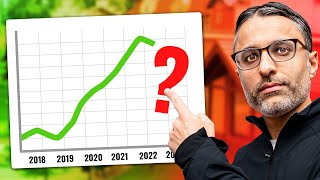
A 2022 YouTube video arguing that recent small national home-price declines are an inflection point, not a crash. The speaker contrasts today's market with 2008—highlighting higher homeowner equity, stricter lending standards, and long-term demand amid constrained supply—and identifies rising mortgage rates as the primary risk. He forecasts modest pullbacks (≈10% in high-growth markets over 12–24 months), cites CoreLogic’s flat national outlook, and outlines buyer/investor negotiation opportunities (price cuts, seller credits, repair allowances, assumable financing).
Well, it's happened. Home prices have fallen for the first time in a really long time, and we are about to see a shift in the real estate market and the overall economy. Now, the media, who, if you don't know by now, seems to enjoy a bit of bad news, is all over this and sparking even more fear. This is exactly why we need to dig into the data to get the real story and more importantly, see if there's any opportunities coming for us. So today I'm going to talk about three things. How much home prices will fall, what are the risks ahead, meaning what would be a real cause for concern, and what to do if you're a buyer or an investor looking for opportunities. Now, that last part is going to be super important, so make sure you stick around to the end. And when you talk about the opportunities in real estate, it's important to look at what are rich people doing with their money. I was really shocked to see that Blackstone, one of the largest investment firms in the entire country, just recently, like two months ago, raised one of their largest real estate funds for the sole purpose of buying more real estate in the coming years. Now, they've been buying real estate all along, but they're about to double down on this investment. It's interesting to see that the news is scaring individuals away from buying real estate, but yet some of the biggest, most wealthiest investors in this country are about to buy even more real estate. Now, before we get into this, if you haven't done so already, please hit that like or subscribe button, because I'm doing my absolute best to put out more content this year, and I'd really appreciate your help to reach more people. Now, like I said earlier, the media is overhyping this because fear is what drives the news. For example, a recent story said that home prices had their biggest decline since 2011, but if you read more, the decline was less than 1%. With home prices up nearly 20% in the last year alone. A decline of 1% is hardly a cause for panic, but it does mark an inflection point. What this means is home prices are gonna go sideways for a while, and in certain markets, they're going to slightly decline before they go back up again. Now, what you are seeing a crash in is listing prices. There have been more price cuts in the last three months than any quarter before. That's because sellers and listing agents always seem to be caught off guard during these shifts. And some are so naive that they're pricing their home as if none of this is happening. So the big question is how much will real estate prices fall? The answer is a little bit less dramatic than what the media is telling you now. It's important to note that any strong asset class that's up a lot is going to have a small pullback. This is actually normal and healthy for the market in the long term. Now, on a national basis, the data firm CoreLogic is predicting that home prices will basically just go sideways. They're going to be slightly up when you look at this year versus last year, but that's on a national basis and each market is different. So if you're in a hot market that spiked super fast, you could see prices slightly decline sooner rather than later. Now, after personally reading hundreds of reports on this topic, I'm going to predict that home prices in those high growth markets are going to pull back approximately 10%, 10% from where they're at today. And this is going to happen over the next 12 to 24 months. Now there's one major risk to keep an eye on, which I'm going to get into in a few minutes here. But as of right now, given the current data, this is what's most probable. Now it's important to know that in those high growth markets, what really caused prices to spike was low supply, cheap money and high demand for housing. The demand growth is due to population and job growth and or it could be just a high desire to live in a certain area. As of today, the cheap money has been taken away which has cooled off buyer demand. But the other factors still exist. And remember, when you look at these declines, you have to look at the final closed sales price, not the price that the seller or builder were asking for. Another reason why you're seeing demand plunge is recession fears. Because this drives young home buyers decisions. When you get to one of these inflection points, many buyers become confused or scared. Confusion causes many buyers to go to the sidelines initially, which is why you see this sharp decline in demand. But over time, this seems to normalize. Many of these young home buyers fear that home prices are going to crash like they did back in 2008. They also feel that the market is due for a sharp pullback because home prices are up so much. From 2018 to 2022, the national home price index was up over 43. And in certain growth markets, home prices were up even more. Like here in Nevada, home prices were up over that same four year period over 60%. And a big chunk of these gains happened during 2021 and the beginning of 2022. This crazy run again was fueled by super cheap money and a low supply of homes available for sale. Many people feel that this created another housing bubble. But I think you'll be surprised when we look at the characteristics of today's market versus 2008. When you think about a housing bubble, it's mostly fueled by debt, meaning people are taking on way too much debt to buy properties. This is called leverage. And in the years leading into the last housing crisis, there was way too much leverage. People weren't putting much money down when they bought property and they were using their homes as ATMs. Another key factor for a bubble is extreme speculation. This means that people are buying the asset with the sole purpose of making quick, fast money. Back before 2008, real estate was seen as a get rich quick versus the buyers of today are looking at holding property for the long term. Now, it's important to note that on the debt side today, Americans are sitting on a record amount of home equity. The majority of homeowners in this country currently have more than 20% equity in their homes. And there's only a small fraction of homeowners who don't have any equity in their house. Back in 2008, homeowners had very little equity, and when prices pulled back just a little bit, they were quickly upside down. This is what fuels foreclosure activity. And if you look at the current data, foreclosures are at a multi, multi year low. That's because even if you go into default on your loan and you can simply sell the property if you have equity in it, the main reason why somebody would walk away from a property is if they don't have any equity in it. Even if you can't afford your payments, you could hire an agent, sell the property, and then you would walk away with something, avoiding foreclosure. So based on the fact that there's all this equity out there, even if home prices pull back a little bit, you're not going to see this wave of foreclosures. Another assumption that people have is when they see inflated stocks crash or the cryptocurrency market crash, they think, well, real estate must be next. But when you look at the differences between the assets today, it's pretty clear that real estate doesn't trade like that. You'll notice that towards the end of every bull run in stocks and crypto, people are calling for these things to go to the moon. And more and more people start buying based on the sole idea that they're going to make money Fast. This is called pure speculation and greed. Like I remember recently when bitcoin was at $50,000, there were so many people calling for it to go to 100,000, saying it's going to be there in no time. And there were so many people piling into it. In the real estate market, you don't really see that type of speculation today. Like I said, most people are buying the property to hold for the long term, either as a primary home or as a long term rental. Sure, there's a general premise when people buy a home that it's going to go up in value over the long run, but that's not the sole reason they're buying it. There's real utility with owning a home in a neighborhood that your family wants to live in. There are real advantages to owning rental properties for the long term. Real estate is not some get rich quick scheme that you're seeing with these pump and dump investments in the stock and crypto markets. Another important factor between the current market and 2008 are mortgage lending standards. In today's market, it is still fairly difficult to get a mortgage compared to how easy it was back in 2008 before the market crashed. If you look at the mortgage Credit availability index, lending standards back then were so loose, basically anybody and everybody could get financed. To buy a home today you have to actually qualify and prove that you have the ability to repay these loans. This is just another factor that would prevent mass foreclosures from even being possible. Now, the last thing to note for this section is the supply issue. If you look at the chart of the number of single family homes being built in this country, you'll see that after the crash of 2008, the number of homes being built went down significantly. Now it's been well below the 50 year average for the past 14 years. What this means is there hasn't been enough homes being built to meet the population demands of this country. There are so many millennials who are forming households today, and these millennials are in the peak home buying years. So regardless of what happens with the economy, there simply aren't enough single family homes to meet the all these people who want to live in them. This is important to consider when you think about what's going to happen with home prices over the coming years. Now, before we get into the opportunities I'm seeing, let's get into the one risk factor which could blow this whole thing up. Now, like I said earlier, the main reason for the decline in demand was because the money became more expensive. Interest Rates for home loans went up, and they went up fast. We've seen interest rates go from 3% to 6% in the past eight months. Now, keep in mind, when these rates were in the low threes, that was way too low. And that was more just an anomaly based on what the Fed was doing at the time. But even so, a move from 3% to 6% in such a short period of time is totally unprecedented. And this will take some time for buyers to adjust to the new rates. As of the recording of this video, mortgage rates are hovering in the high fives, low sixes, and that's the upper end of the range that we've been in over the past few months. But here's the thing. If they go much higher than where they're at today, this presents a real risk to the housing market. The reason is most homebuyers finance the majority of their home purchase. So in that case, they're really buying the monthly payment of the property, not just the price of the property. The higher that these monthly payments move, the less that buyers are able to spend. Now, some realtors and lenders will point to historic rates and say that rates are historically low. I've heard people say, well, back in my day, interest rates were 10%, 12%. But the thing is, back in those days, home prices were also $80,000. So it's not really a helpful comparison. But anyways, you're going to want to keep an eye on these rates. I put a link in the description which will allow you to look these up from time to time. And if you see the rates hovering in the same range, then that's normal. But if you see them spike towards 7%, that would be a cause for alarm. If these rates go up into the next range, then my prediction for home prices will get worse as well. Now, most experts don't predict that they're going to go much higher, but I just want you to know about this because this is the single most important risk factor to the housing market. Also, keep in mind that mortgage rates move with inflation. So when the Fed is eventually able to get these inflation numbers down, you should see mortgage rates cool off as well. Now, let's get into the opportunities. This is my favorite part because I love taking information and then figuring out how we can use this to reach our financial goals. As we've shifted to a buyer's market, you're going to see opportunities. There's many sellers who listed their properties for too much money. The property needs updating, and now the listing is sitting on the market for a long time and it becomes stale. Now, a year ago, you could list a property in any condition, you would get 10 offers, but that's not the case today. Today you actually have to have a good product. You have to price it properly and that's hard for every seller and listing agent to do. So here's the thing. On some of these stale listings, you're going to have an opportunity to get the property well under the asking price and or with concessions from the seller. Recession is a credit or a give back from the seller to the buyer and you can work this into your deal. For example, you can get a seller credit to buy down your interest rate, which will make your monthly payment lower. And then keep in mind, when mortgage rates come down in the future, you'll be able to reduce your interest rate and monthly payment. Now, nobody can predict exactly when mortgage rates will come down, but I know there's going to be an opportunity in the coming years. Fannie Mae recently came up with an article that said interest rates are going to cool off into the mid fours within the next year or so. So using that data, the game plan would be to use the current environment to get a much better deal on a property today. Go ahead and take the current interest rate and then keep an eye on the rates, because when these rates pull back, you'll be able to reduce your rate and your monthly payment on that original debt. There's also some other opportunities in the market where you could get a better deal on a property and take over the seller's current financing, which might be at a much lower rate compared to today's rates. This means you get the best of both worlds. You get the pullback in the price and you also get the cheap money that was available a year or two ago. These opportunities are a little bit harder to find, but they do exist. I'm going to actually make another video on that specific topic coming soon. Another opportunity that you're going to have in today's market to structure a better deal is with these dated properties. Many properties that you look at today are going to need some level of upgrading. With the current negotiation power, you can structure some of these repairs into the deal. You can get a credit from the seller that could cover all of your closing costs. Then you could turn around, take those funds that you would have normally paid towards costs instead. Use them for new carpet, new kitchen upgrades, or anything that's needed to make the property up to the current standard. Now, if you need an even larger credit, what you can do is you can structure certain repairs to be paid by the seller either during the transaction or at closing. This gets a little bit more complex. So you definitely want to work with a real estate agent and a lender on how to structure this. But basically what you would do is you would put the cost of these repairs or remodel into the deal. So the funds needed to pay the contractors would be withheld from the seller's proceeds at closing and then those funds could be dispersed to make the repairs. Just a few months ago, trying to build this type of repair allowance into your deal was absolutely impossible and but now you can definitely do this on the right deal. Now also keep in mind that your ability to negotiate and work out one of these deals with the seller is going to depend on each specific deal, each specific market. Every deal is going to be a little bit different. Another thing that's really important to understand is that smart investors make the most money betting on what is most likely to happen. So while yes, there is a small risk, a very small risk, that things get out of control and the whole market and everything goes to hell, but you're not going to be able to make money on that thesis, what's most likely to happen is something that's way less dramatic based on all the data points that we're looking at today. I talked to so many wealthy people who are quote, waiting for the market to crash. And the thing is, the last time it crashed, very few people were waiting for the market to crash. They were in debt up to their ears, they were over leveraged, they weren't prepared for this. And that's part of the reason why the market crashed is because people were on the wrong side of the tracks. If you talk to many people today and they're all prepared for this crazy event to happen, that means that the crazy event is actually less likely likely to happen. Now if you have questions about your specific scenario or what's going on in your market and any opportunities that maybe you could capitalize on in the coming year, I put a link in the description of the video where you can get more information and possibly book a call to go over your specific scenario. I'm going to be watching all of these data points and will bring you the information as it becomes available. And until then, I will see you guys on the next video.
More from Neel





Don’t let people tell you what you can and can’t do. #personalbranding #podcast #entrepreneur

How to use Ai the right way for scripting. #personalbranding #entrepreneur #ai




Your audience already has a story about why it won’t work. #personalbranding #entrepreneur

The new YouTube strategy to hook viewers. #personalbranding #entrepreneur #podcast