Why Your Voice TONE is COSTING You $1M/Year - Jeremy Miner Masterclass
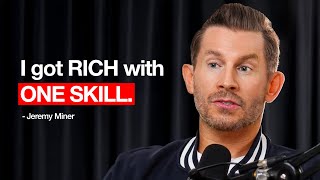
Jeremy Miner breaks down five vocal tones that drive sales: curious, confused, challenging, concern/empathy, and playful. He argues your tone costs you money because most people default to one voice instead of matching the buyer's state. The framework is learnable and high-leverage.
If you really want to take your income to the next level, be it levels that you previously dreamed of, sales is the way to do it.
I believed in the lie that I had to do this, this and this. And what I found was, had nothing to do with the hours I was working. It had everything to do with the skill sets and how my brand appeared to my market. They're controlling the narrative of what you just said. You want to learn how to frame that narrative so they think what you want them to think about you.
Keynote, he said most people fail for the simple reason that they don't have the right skills to succeed.
And as a salesperson, you want to understand what neurons are firing that causes a prospect to say compared to saying yes, what causes him to go into fight or flight mode is not interested.
Let's look at kind of a framework here. That's how you were able to crush it in sales for 17 years.
There's really five core tonalities you have to really master if you want to be like a top 1% salesperson or even higher. Okay. The first one is, so when you.
Hear financial freedom, what comes to mind? Like, what is the idea that you think about? And here's the crazy thing, it's actually not as far fetched as you think. You might just be thinking about it wrong. You don't have to go out and start a new business. You don't have to come up with this great idea. It comes from one skill. Like for me personally, I got rich with this one skill, and that is sales. There's a right way to do it, wrong way to do it. And today I wanted to dive in with the expert on this. He is the number one person for this type of conversation. And he's going to get into exactly what does this mean in 2024, 2025. I have with me Jeremy Miner, who is the, I guess I would say the expert in this category. Like, he's the, he's known as the goat in terms of, you know, using psychology to actually sell. And he cut his teeth in the sales industry for almost two decades, making multiple seven figures annually in net income. Not from running the business, but just from selling net income, not just the top line, that's the bottom line. And now he runs Seventh Level, which is the fastest growing sales training agency here in the US thank you so much for being here, man.
Hey, thanks. You know, at least my grandma says that we're, we're really good, you know, but thanks, thanks for having me on. My, my sales crew was A lot of fun. And, you know, now I get the experience of starting my own business and doing the deal, you know.
Yeah. And I think of, like, people, so many people. I wanted to start with the goal of being financially free because I just hear about this all the time. But I think, like, if you really want to take your income to the next level and, you know, be at levels that you, you previously dreamed of.
Yeah.
Sales is the way to do it.
Well, you have to learn how to communicate. Communication is your number one skill set that you can acquire, and it affects you financially whether you like it or not. So even if you're not in sales, you know, we call this non sales selling. You're out there trying to persuade, you're trying to influence, you're trying to move others to your way of thinking every single day. You don't even have to have a sales job or even get paid. Right. If you're, let's say, I don't know, an attorney trying to convince the jury that your client's innocent, what are you doing? Trying to persuade, influence, move others. If you're a, you know, I don't know, a, A mom trying to get your kids to do their homework, you know, you're trying to persuade, you're trying to influence. If you're an employee trying to convince your boss to give you a pay raise, you're trying to persuade, influence, move others. I mean, everything that you do in life has to do with your communication skills. So if it's something that you really don't learn how to do, you're just at a disadvantage over other people who do that. You might even be far more talented and smarter at something, but you don't know how to communicate that message. And that causes you a lot of financial losses, for sure.
Yeah. So that's the huge part. I think if people realized it is a part of their life, even if they think of sales as a negative thing, you're selling whether you like it or not, you know, you're, you're in it.
It's just how you sell. Yes, Right. See, that's, that's the stigma in society. That's how, you know, how are, how are salespeople viewed in society at large? They're viewed at a lower status now. Why is that? Right. It's the way they've been taught how to communicate. Right. The old high pressure, you know, push them into a type of sales that works against human behavior that even salespeople don't even like used on them. So if you don't like being pushed and pressured by salespeople. And you're a salesperson. Imagine how your prospects are dealing with that. That doesn't mean that you're like all timid and be like, well, you know, if you're interested, get back to me. There's a, there's a medium balance in there where you want to get the prospect to view you as the expert, the trusted authority. You're still assertive, but you're doing it in a way that gets them to like, trust you enough to emotionally open up and tell you what's really going on. Right. So there's, there's a lot to that. But, you know, we want to raise our status as salespeople. We have to change the way we're actually communicating.
That makes sense. And so this is the thing I think people realize, or this is the idea that they think, they think either I'm good at it or I'm not. And I think you even quoted this at one of your keynotes. You said most people fail for the simple reason that they don't have the right skills to succeed.
Yeah, it's something I learned I heard from Tony Robbins in a random SE CD when I was like 21 year old kid. I mean, this is, you know, you're talking like, what was this 23, 24 years ago when people used to listen to the brown things, magical, round things, CDs, right? Yeah, but it's true. And I could have been butchering a statement, but you know, you will fail if you don't learn the right skills necessary to succeed. And I, when I heard that, there was like a, it was like a moment. I just been in sales for maybe two months. I was a 21 year old kid in college, you know, knocking doors, selling, you know, home security systems during the summer. And, and I started to realize, you know, that when I heard that from Tony and he went on to expand that everybody's taught skills, but there was a difference in the skills you could learn, that there were some skills that were far more advanced than others. And I'm like, oh, I thought salespeople just said the same thing and got the different results. And, and why a salesperson was successful over somebody else is they were just born with better charisma.
That's why I see like the gift of gab or.
Yeah, the gift of gab. Right. And I, you know, I always ask this when I'm, when I'm speaking to an audience or something. I'm like, you know, raise your hand if you were born with Advanced questioning skills. And everybody's like, no. And I'm like, yeah, you know, raise your hand if you were born with advanced tonality skills. Nobody raises their hand. They're like, no, raise your hand if you were born with advanced objection handling and prevention skills. Ah, I see. So none of us are born with those skills. Those are skills we have to. What we have to acquire. We have to learn those skills. So when you hear, oh, that person's a natural born closer. Well, what evidence shows that? What scientific was that in your DNA? You're, oh, that's a negative A type blood type. They're a natural blown closer. Like, there's no. That's just a myth. Sales is something you acquire. It's a skill set you have to learn if you want to be. If you want to be good, if you want to help a lot of people. That's what selling is.
Yeah. And I think of there's so many opportunities in today's economy to sell anything.
Yeah.
From low ticket to high ticket and all the, all the areas in between. But once you have that skill, it's eventually, when you do start your own business or you might do bigger things in the future, having that is the foundation for, for success.
I mean, it's everything. Like if you're going to interview for a job.
Yeah.
You have to learn how to communicate and frame your message the way you want the interview to view you. And so many people go in there and they just, you know, they'll ask them a question and they'll just blurt out an answer and they hope it sticks. But they, they literally are causing that interviewer to frame what you just said according to their interpretation. Yeah. You don't, you don't want that. Like, they're controlling the narrative of what you just said. You want to learn how to frame that narrative so they think what you want them to think about you. That's a whole different ball game at that point.
So quick question for you. Are you going to make the same amount of income this year as you made last year? If so, cool. But if you're not okay with that, I want to personally invite you to the number one event for people who want to grow their business with modern marketing. It's the fifth annual Forward event happening live in Las Vegas this July. The one thing that separates Forward from every other event is the energy in this room. This year, I'm bringing in top speakers from all around the country. People like Dan Martell, who has the fastest growing personal brand in business right now. Chris, do who's the number one teacher on this topic? And a host of other experts. So if you are serious about growing your business in 2025, I would love to see you there. We are down to the last group of tickets. This event sells out every year, and this year it's happening faster than ever before. So there's a special offer. You can click the link in the description or scan this QR code and I will see you in Las Vegas. I think of like people is more about persuasion and, you know, kind of setting the table for what you're about to do and then leading the conversation to that outcome. But I think right now I hear a lot of sales advice from the guys who teach closing and, you know, like the best closers and use this close. It works 90% of time and use.
This script 90% of the time.
Yeah.
Well, I'd love to see the data on that.
Yeah. But you just hear all this stuff on social. Right. There's just an information overload of like sales advice. But I feel like that the puck has moved. Like, I feel like the game has changed. I know you talk a lot about this. Like you.
And we're changing still.
Yeah. So we're selling in a way that was 10, 20, 30 years old to people who actually put up their guard when they hear that kind of stuff. Yeah. And that's, that comes. That gives us negative confrontation that you talked about earlier. Yeah.
You, you want to learn techniques that work with the brain and what I mean by that, that work with human behavior. Most sales training and, and the sales training I went through in my earlier years, not granted, I, I went to school for behavioral science and social dynamics and human psychology. So I kind of had a, an advantage of, hey, I was understanding how the brain makes decisions. And as a salesperson, you want to understand what fires what neurons are firing that causes a prospect to say no compared to saying yes. What causes them to go into fight or flight mode and say not interested. When you cold call within eight seconds, they didn't really hear what you were doing. What caught, what triggers that reaction? You know, did they wake up that morning? Let's say you're, you know, you're in real estate mortgages. Let's say that you're a real estate agent and you're cold calling some expired listings. Did that prospect, you know, wake up in the morning, you know what, at 3:45 today, after I've had kind of a stressful day at work, I think when that real estate agent calls me about my home, that I took off, you know, listings about nine months ago. I think I'm going to go into fight or flight mode about nine seconds in and say, oh no, we're not interested in selling the house. Is that something they planned out or is that a triggered reaction based on the salesperson's tone and what they said when the prospect actually answered and said hello. And once you learn how to like eliminate trigger words that every salesperson uses. Right. That prospects are used to that script and you learn how to shift your tone based on the context in the conversation, suddenly became a lot of fun. You get to help a lot of people.
Yeah.
Get paid a lot for it.
So let's look at like kind of a framework here. I know you talked about the. Any PQ methodology that changed the game for you. Yeah. And that's how you were able to really just crush it in sales for 17 years. But yeah, I feel like everybody says the same thing and they say they start this conversations the same way and then that's an example. So like let's look at the real estate example.
Yeah.
Like they will just call somebody and they'll be reading from a script.
Yeah.
Hey, Mr. Miner. You know, this is Neil with XYZ Real Estate and saw that you're listing, you know, and that I think just in that beginning section of the. It's a cold call.
Yeah.
My guard goes up. Like even without. I don't know what the trigger word is there but.
Well, most of it's their tone.
Just.
Just so you know.
So without even. Not a certain word.
It's just how you're tonality because it. So that's how you're. So there's really three parts of the brain. Okay. And I won't give everybody the scientific terms, but I'll kind of give you like some basic stuff. So you have like. A lot of people would know it as like it's your survival part of your brain. A lot of people call it the reptilian part of your brain. Right. That's your flight or flight mode. Okay. Then you have the midbrain and then you have what's called the neocortex, which is your, like it makes a decision for you. Okay. So your survival part of your brain. Let's say that you're walking into a grocery store and you're crossing a street where there could be some, some cars driving and all of a sudden you hear this lady scream like terrified scream. Right. What. What's your first reaction? You're gonna go like this. So that part of Your brain was triggered by her tone. Okay? That scream, that tone caused your brain. So it's the way God wired us whenever he put the first humans here on the earth. I don't know when that was. Maybe millions, billions of thousands of years. That's all debatable. But that triggers your survival part of your brain to like, am I safe? That's. That's like fight or flight. Okay? You didn't really hear her words. You just heard the tone. Okay. And what happens a split second later is the words go up to what's called your midbrain. The midbrain starts to interpret what those words mean. Okay. And then it goes right into neocortex. And your neocortex says, oh, I'm okay. She's just yelling at her son to be safe crossing the street. I'm good. See? But you reacted based off the tone. So if I can shift my tone, and there's certain context, especially when cold calling, where it's almost like you have to. You have to have a familiar tone where they feel like, oh, I. I kind of should know this person, because that keeps their brain, like, curious. Like, oh, how do I know this person? Rather than try to get rid of them. Like, yes, John. There. Yeah, John. Hey, it's. It's James. James Miller with xiz. See the familiar tone?
Yeah. So you're wondering, like, do I know this person?
Yeah. So what your brain is going to do is like, who's James Miller? Who's Jim? It sounds like, I know Jim, but, like, did I meet them at networking event? I should know them. So you wouldn't dare be like, who is this? Or not interested. You'll just go with it because your. Your brain is processing. This person seems to know who I am. Like, they're familiar because I used a familiar tone. But if I'm like, yeah, is this James Miller? James Miller? It's Jeremy Miner with XYZ Company. I'm a real estate agent here with XYZ company And the reason why I'm calling you is your brain is like, oh, salesperson. Yeah, because it sounds like a telemarketer. Right. So I literally almost could say the same words. But my tone is from a familiar tone to that monotone tone. And I'm going to get a completely different result.
Ye.
And basic stuff like that.
And that just sets you off to fail. From the beginning. You're set up to fail. So I think about. You talk a lot about this, and I think this would be huge. Is starting off the conversation whether it's in person or on the phone with a pattern interrupt.
Yeah, it depends on the context.
Right, so this is for a cold call.
Yeah. So a cold call. That, that is definitely a pattern rep. Because they're not used to that script. Like how many. You gotta realize, like most of the prospects you're calling in every industry, it's not like you're the first one that's ever cold called them.
Yeah.
Right. So most cold callers literally use some form of hi, my name is introduce yourself, then tell them what company you're from because it builds credibility, or so you've been taught. And then tell them the reason why you're calling. Well, your prospects already know that script, so their brain automatically goes, oh, salesperson. That's what is triggered. Salesperson trying to sell me something. Guard goes up because it sounds like everybody else. And the tone especially triggers that because it sounds like a telemarketer. So when I eliminate that type of verbiage and when I trigger words and when I eliminate like, you know, words like, hey, John, I'm just following up or I'm just checking in or I'm just circling back. How many emails do you get that.
Start just circling back.
How many of those do you read? The whole thing?
Not very many.
No, because that's just circling back or just following up or just checking in is a trigger word that your brain is used to that script from all other salespeople that have tried to follow up with you. Yeah.
And this is for email copy as well.
That doesn't mean you don't follow up. Just don't use the words follow up because literally you might as well say.
So what should people do instead?
You might as well say like, hey, I'm just calling you to get you to buy for me again because you didn't buy for me last time. That's what their brain hears when I use that trigger word.
So if I'm. Okay, let's, let's use this as an example. I've, you know, sent information out to a prospect. I'm following up.
Yeah. So let's say you've already talked to them because that follow up calls you. You've already talked to them. They didn't buy for whatever reason.
Correct.
Or, you know, whatever reason that is. So if I'm, if I'm, let's say if it's a real estate agent, because that kind of. You're in that space. That's a second largest industry to train. So I know a lot about it. So. Yes. Is this John? Yeah. John. Hey, it's. It's Jeremy. Jeremy. Jeremy Miner. We. We talked. Gosh, I want to say it was like four, five months ago. You were looking at that house on. I think it was like the 55 Savannah Lane Roadhouse there in Savannah. And I tried to reach you a few times after we, we. But I didn't hear back from you. Did you guys give up on getting like a. More bedrooms for your kids or what. What actually happened? Yeah, see I'm framing that. I'm framing it at the end as the end result. Did you give up on blank or what actually happened? Right. You also like if you've ever read like Chris Voss's book negotiating book. I'm pretty good friends with Chris now. Spoke on a few stages. Them he'll he kind of does a frame similar to that but it's just a way. It's just a pattern erupt. So it's the same thing. Start with the familiar tone. Yes, it's James, James, James Miller. We talk and then I'm gonna go into like this confused tone. Okay. Now when I say confused tone, I don't mean like you're confused like you're 97, you have dementia.
Yeah.
Like I don't know what's going on. I mean you're confused like. Yeah, we, we talked. Gosh. I wanna say. See, I'm confused like about the time we talked. So all that's doing is it's interrupting their pattern and they're. It. It's almost. It causes them to be a little bit confused but like they stay engaged if that makes sense. They don't feel like it's a sales call. And typically when you do that, it's really good to actually. And it's going to sound crazy to shuffle papers while you're on the phone. Yeah. Do you know why? Because they hear that sound and it's interrupting a pattern, you know. Yeah. We talked about. I think it was the house on. I got the papers here Savannah Lane. You guys were looking for like a four bedroom house because you only had a two. Did you guys give up on getting the house with more bedrooms or what actually happened? Yeah, let's say if they go she or something. So that's just an example of like I'm interrupting.
Even the way you asked the question it would make. I'm just putting myself in the prospect shoe. It kind of makes me want to explain what happened.
Yeah.
Or like, you know, it's hard to.
Give up on what you said you wanted.
Yes.
Now you don't say did you give up on what you said you wanted.
Yeah.
See, that's defensive. And especially that tone is kind of like you're. No, I didn't give up. We just decided to go somebody else or whatever, you know, so.
Okay, so this is really good. It's the tone in which you're asking the questions.
Can I explain why?
Yes.
Your tone. Everybody write this down. This is really important. If you're watching or listening to this, your tone is how the prospect interprets your intention behind everything you say and ask. That's how they interpret why you're asking the question. Got it. Makes sense. Is he asking me the question? He or she asked me the question to try to manipulate me to sell me something, or is he asking me the question? Maybe I used a concerned tone because he's generally concerned about the consequences if I don't change this.
Yeah, that's huge. And I always think of. I always come back to this. It's like the people that were calling, they had a problem.
Yeah.
They needed a property, or in this case with expired listing, their home, didn't sell.
Yeah.
Or if you're selling a program, whatever. Like, they. They reached out or were interest. They expressed interest in whatever solution you had. So they have this problem, you have the solution.
Yeah.
Where do we go wrong? You know, it's like all of a sudden now you've created this, like, adversarial relationship. Yeah, but we're so, like, we have the thing that would help you, and that's the thing.
Like, that's what I always tell CIS people. I'm, look, who. Who has the problems? You're the prospect. They're like, well, the prospect.
Yeah.
I'm like, who has a solution to solve the problems? Well, I do. I was like, well, why then? Why are you qualifying to the prospect? Why wouldn't you learn techniques to get the prospect to qualify to you? Now, that doesn't mean you're like, you do some, like, frame where you're like, you know, towards the end of the conversation, if I feel you're a good fit for us, I'll show you what to do next. Like, nobody. That. That's not what I mean by that. Like, that's a douchebag move that will get your prospects defensive or their guard will be. They'll be, yeah, okay, good. And then they're like, like, I'm not going to open up because I know they're going to try to close me at the end. So it's, It's. It's getting them to qualify to you like, you know, like when you're talking to them, like, it could be the context or whatever, but I might get in the conversation, like. Yeah. Towards the end of, you know, you know, towards the end of the call, if you feel like, hey, this, this the same mortgages, you know, if you feel like, hey, this might be what you're looking for, we, you know, we can talk about, you know, possible next steps. Would. Would that help you if I did that for you? Would that help you if I did that for you? Now who am I getting to qualify to? Who? I'm getting them to qualify to me, because remember, I'm not the one that has the problems. Yeah, they do. I'm the one that solves those problems. If I'm in a mortgage, I'm getting them lending or whatever. I'm the one that solves the problem. Then not being able to, you know, get the funding for the house.
Yeah. And it also seems to change the way they treat you because I've noticed a lot of sales people tell me they talk bad about their customers.
Yeah.
It's because they're hung up on, they're treated poorly, they're dropped. Meaning like, the guy didn't show up for the, the appointment or he was working. You know, this happens a lot in a lot of the industries I'm in. They'll work with somebody for some time and then they'll ghost you.
Yeah.
And they. And then they bought with somebody else or they got their loan with somebody else.
And.
Yeah, that's a hard thing.
They didn't build enough gap from where the prospect was to where they want to be.
And it almost felt like that person was expendable or just, you know, they.
View you as a commodity.
Correct.
Right. Just like a prospect might view a real estate agent as a commodity and trying to negotiate you on your fee. It's the same concept. But here's what you have to analyze is like, okay, instead of blaming the market or the prospects, right. Like, oh, our prospects are always broke. Oh, the market's just bad. Woe is me. Because that's not going to help you as, you know, why not look at ourselves? Like, okay, what am I saying? What am I not asking? How am I using my tone that's causing these people that have problems that I can solve to run the other way? Yeah. And when you start analyzing that and you learn skills now, you're like, oh, it's me. So, like, even though, you know, with, with my success as a, when I was a salesperson, you know, in the trenches. If I lost a deal, like, I never, like, blamed the prospect. I'm like, where did I. What did I not do there? Like, what did I not see? What did I. Ah. You know, I should have asked him this question when his tone sounded a little bit uncertain and I lost the deal probably because of that. I'd go back and, like, listen to recordings and. And anything is on the phone every. You know, and when I was in corporate America, you know, selling B2B over the phone, everything was recorded. So I'd literally go back and hear the recordings, and I'm like, ah, that's where I was at. I triggered that cold call basic. I was tired into the day. My tone was flat. Didn't sound familiar. I triggered that reaction. I should have got that deal. Or, you know, if it was, you know, probably before Zoom, I did some. Like, when I was selling virtually for a company, I was on Skype and I'd have those recordings, you know, or in person, you know, so I'd always go back and analyze the recordings and stuff like that and see, where did I go wrong? You know? And then you make tweaks.
Yeah.
And that's how you get much better. When you figure that out, that's huge.
So what are the other tones? So you talked about two tones so far. Like, what are the other tones that you would kind of shift to during the conversation?
There's really five core tonalities that you have to read, really master if you want to be like, a top 1% salesperson or even higher. Okay, the. The first one is the curious tone. So. So. So walk me through what. What. What type of house do you guys have now? Or walk me through, do you guys own the property or now, or do you actually rent? Just a curious tone. Right. You know, it's. It's curious instead. Like, walk me through, John. Do you guys own the house now or do you rent robot? Right. Sounds kind of weird. Okay, now with a curious. Curious tone's pretty easy to master. That's probably one of the easiest. Okay, now, there are subcategories of each of those tones. A familiar tone is a subcategory of a curious tone. It's not really one of the core five, but it's a. It's a. It triggers curiosity. So it's a. It's a subcategory of the curious tone. The second biggest tonality you have to master is a confused tone. Now, sometimes if I. If you're one of our clients and you're in our virtual training courses, and group training stuff. It's. You understand what I mean by that? Because we give examples and show them. But sometimes I'll do a real about a confused home. Like, you can't be confused. You got to show them the expert. And I'm like, I totally agree. I'm not saying you're in the presentation, like, oh, I don't know how it works. I don't know what, what we do for that. Like, I don't mean that. But just like that example where you're kind of confused. Yeah, I think we talked, what was it, like three or four? It might have been four months ago. You guys were looking at like the five bedroom house because you had like triplets that were born. Did you guys give up on finding the bigger house or what? What actually happened? See, that's a confused tone. Yeah, that tone keeps them engaged. It keeps their brain curious. Engaged, okay. Or let's say, let's say a prospect, they give you an emotional word. So you ask a question like, oh, this is just caused so much stress. You know, most salespeople say, oh, I'm so sorry to hear that. Now let me ask you. And they'll just go to the next damn surface level question. I'm like, you just lost the sale right there. Because what are the, I always say this. What are the two biggest drivers, emotional drivers that causes a human being to want to change? Pain and the fear of future pain. So if you can't help the prospect relive their pain of their current situation and past history and have a fear that that's going to continue or if everything's perfect, that they could have future pain, that prospect feels no need to change. And when they feel no need to change, that's why they ghost you. That's why they don't show up. That's why they give you tons of objections. That's why they don't buy from you. Because at the core element of our being as, as human beings, we all have a deep fear of change. Even though they say we want to change, we have a fear of the unknown. And we are more than likely to stay with what we know, even if we don't like it that much because it's more familiar to us over something that is new or something that is unknown to us. So it's your job as a sales professional, real estate, mortgages, any industry, to simply help your prospect overcome the fear of change. And when you do that, you're going to find you get way less objections. And if you do get an objection it's really easy for you to help them overcome it.
Yeah.
Because you're helping, you've already helped them overcome that fear of change.
So this is how you go from problem finder to pro, from product pusher to problem finder.
Yeah, yeah.
And you're trying to find out what problem they have.
And I'm trying to help them find out what their real problems are. Because most prospects don't really know what.
The real problem, so they need to identify it first. So this is making the prospect, I guess, problem aware.
It's getting them to self actualize. It's like a psychologist, the, the highest paid psychologist in the world that charge like a thousand dollars an hour. They don't tell you what's wrong with you, they don't tell you what to do. That's what average psychologists do. The ones that make the most money ask you questions and shift their tone that allow you to tell yourself what you need to do.
So then you don't, you're just guiding them along.
You're like the facilitator.
Got it?
That's it.
So that's huge. Okay. So then when they've said it now.
Themselves that they have the power to change their situation and they, they view you as the person that got them there, when really all you just did is facilitated them realizing it themselves.
So this is why your approach is, I guess is, is, is more different than others. It's almost like we're taking this role of psychologist a little bit with the.
With the, yeah, but it's how you ask the questions. You can't just like a psychologist already has higher status. Right. Because they got the degree on the wall. So like, it's like, give you an example of this. So like you go to the doctor, the doctor starts examining you, ask you a few questions and eight minutes later like, okay, all right, let's, let's go to the exam room to do the mri. Just go ahead and take your clothes off here. And here's your nightgown. What do you do? You take your clothes off, you don't even question them. Look, yes doctor, I would take my clothes off. Isn't that crazy? That's why, you know why? It's because you view them in a higher status. Okay, but if a salesperson said, okay, ask you a few questions like, okay, you ready to buy? It's 25 grand, you'd be like, what? I'm not buying. Why? Because the salesperson, you don't view them at a higher status, you view them at a lower status. So it's your job as a salesperson from the start of that conversation. Whether it's in person, virtual, on the phone, it doesn't really matter. To come into that conversation within, like, split seconds where their brain starts to view you at least as the same status as they are. And throughout that conversation or conversations, keep raising your status in their mind, where by the end, they view you at a much higher status in that conversation because they view you as the person who can solve the problems and get them the results they want. That's called situational status.
Yeah, that's huge. And so we got the confused tone. Yeah, curious tone. What are the other ones?
Yeah, and let me go back to that confusion. This is important. So let's say the project said, oh, this is causing so much stress. You can stress. I can simply repeat back the word. Okay, like you're confused. Hold on. How do you mean by stress? It's that confused tone. Okay, now what triggers in their subconscious brain immediately is like, oh, he didn't understand what I meant by stress. I need to what? Explain that better. Oh, gosh, you have no idea. That's been going on just last week and now just by me using a confused. Hold on. How. How do you mean by stress? It's kind of that confused concern tone. Their brain says, he didn't understand what I meant. Nobody's gonna be like, well, you idiot, you should know what I mean by stress. Nobody will ever do that. Right. If I use that tone. But that tone triggers their brain to say, he didn't understand what I meant. I need to expand on that. When they expand on that, they start to emotionally open up and relive their pain. That's an example of getting them to relive the pain. That moves them to change. See what I'm saying?
Yeah.
Now, next. Next tone is the challenging tone.
Yeah.
Okay, now, challenging tone is not something you're going to use at the first part of a conversation because you don't have much trust or credibility yet. You can't challenge somebody at the beginning. Let's say if I'm three fourths of the way into the conversation and there's. I've built trust, I built a much bigger gap. They start to recognize that they've got many more issues and problems than they originally thought they had. They now view me as more of an expert, somebody they can trust. So you're okay if your mom challenges you on something because you trust your mom, but you don't trust a salesperson the first few minutes. But if I Do a good job. Enough job building a gap, helping them relive the pain. They're emotionally bonded with you as the human being. Okay. And so I can lean in and say, well, I mean, you certainly sound motivated, but what happens if you don't do anything about this? You just stay in the house you are now, and you keep having these. The gang violence that's been going on the last couple years here. Yeah, I can use that challenging tone. I mean, what. What's. What could possibly happen to your family at that point? And then I lower my tone at the very end into that kind of soft concern tone. That's just an example of a challenging tone.
Yeah.
What happens if you don't do anything about this? See, but I can't say that at the very beginning, three fourths away. And after I build trust, I can challenge them on that. And they'll be like, oh, gosh, no, I have to do something. Because they respect you by that point.
Okay.
If you don't know that skill, don't try that, folks at home. If you don't know how to build gap or get them to let their guard down. Because if you just try to do a challenging tone and they've been surface level with you the whole time, that could backfire on you. So you have to learn everything before that. And then the. And there's subcategory. That would be like a skeptical tone. Oh, so they. Oh, they. They were making you pay that much of an interest rate. It's kind of a skeptical tone. Like I'm seeding doubt that maybe another mortgage company. Oh, they. They were forcing you to pay that. Notice the words. Forcing, making. Yeah, see, negative words. Right. Oh, they were having you pay that. See, that doesn't sound that negative. Oh, they're having you pay that interest rate. Doesn't sound anything. Oh, so they're. They were. They were going to force you to pay that high of a rate. See, I'm seeding out by that skeptical town.
Yeah.
Yeah.
And then it also, like, it. It doesn't necessarily talk bad about the competition. Yeah, but you're just seeding out like, hey, maybe I wasn't being treated. Maybe I was being ripped off.
Doubt in their mind that the company they're already talking to maybe not be that good. Because if I'm like, oh, that's a horrible. Right. That's a bad company. They're gonna be like, well, of course you're biased. You're a salesperson. But if I look. Oh, they're. They're gonna make you pay that.
Yeah.
Like, you know something that they don't know about it, but you're not saying anything bad about the company, so they don't get defensive.
That's interest.
See what I'm doing there? There's a lot more to that. But yeah.
And it's also just about being really intentional with your words.
Yeah.
And so it looks like this is, you know, a lot of people will say, well, Neil, I'm trying these things and I'm not getting the result. It's. It's like what you said you haven't looked back at. How did you really sound when you said them? It's not about the words. It's how you said the words.
It's how you said it's. It's. It's really how. It's not. Because let's say that you're a salesperson, you're in a company, you all use the same script. Why is one salesperson out selling everybody else three to one? Because of how you're asking.
And also they go off script.
Yeah. And they go off script. See, scripts are. Scripts are actually really good. I suggest scripts, but I suggest that you understand the framework of that sales structure and not obviously read it because you sound like a scripted robot. Like, you know, you watch any movie. Tom Cruise. Everything he says in mission impossible is 100% scripted.
Yeah.
Does it sound scripted?
Not at all.
No. It sounds real. Sounds natural. Right. Because he's memorizes lines and he knows how to shift. So with the salesperson, you might have a script, but based on what? If I ask a question and that prospect gives me an answer, that doesn't really set up my next question. I have to know instantly, within a split second how to tweak that next question. I was going to ask to something a little bit different. Yeah. That makes the prospect feel like I understand them. I understand their unique situation. Right. Because I'm including the data that they are telling me about their problems and issues into the next questions. If I don't and I just ask the next question on the script, it sounds surface level. And the prospect feels like you're just asking sales questions.
Yeah. But you can tell. It almost feels like you're on a track, you know, and just moving along the track. Okay.
It's like an SBI interrogator so that you freeze up. You either like, hey, just get to the point, tell me what it is, or type interested, or can you just tell me it's going to cost? Or enough of the questions like, I know what you're trying to do. Can you tell me the cost? Or they'll be like, they'll just go with it. But every question you ask, they'll just give you vague, generalized surface level short answers. And do human beings buy on logic or emotion? Emotion. They don't use logic. Right.
Yeah.
And then you have the. Sticking with the tones, you have the concern tone, the tone that shows empathy. This is probably one of the hardest tones for a salesperson to master, especially if you're a man, because men don't really. The DNA wasn't built with empathy like a woman would be. For women, this is easier because it's already wired in their DNA. They're nurturing, they always show empathy. Right. But for men, that's the hard one. Okay, so let's say if a prospect is, you know, let's say you're a real estate agent and, and you've been trying to get this prospect to come see this one house, and they keep, you know, like, pushing it down the road. Pushing it down the road. You keep calling, calling like, yeah, let's do it next week. Then they don't answer. And then, you know what I'm saying, like, you keep chasing them. The next time you get back on the phone, hey, John, Try to, you know, we've been trying to actually schedule this property tour for the last three or four weeks, and it just hasn't seemed to work out. Like, what's, you know, this is off the record. What's really holding you back from wanting to go see it?
Yeah.
See how that tone shifted down to that concern tone. Prospects aren't going to waffle with you at that point. But if I'm like, yeah, we've been trying to do this for several weeks, like, what's really holding you back from seeing it? Like, oh, I've just been too busy. Yeah.
You get a service level question, surface.
Level question, surface level answer.
Yeah.
Yeah. So when salespeople say, oh, my prospects just don't open up too magnet. Well, it's because the questions you're asking are surface level. You're forcing them to be surface level by what you're asking.
So how does someone get really good at this? Is, is it role play? Is it obviously trained by somebody who.
Knows what to do? Right.
Yeah.
You know, I love salespeople. They're like, you know, like, they're. Because in our, in our client training course, we, we, we train them because you're trained by me, you're trained by our sales trainers that I have trained that crushed it in their industries that now train salespeople as well, but they know what to do. It's perfect. Practice made perfect. Isn't that like Alex Hormozi said or Michael Jordan? I know, somebody said it, right?
Yeah.
You know, Michael Jordan said it best. You can, you can shoot a thousand jump shots a day, but if your technique is off, if it's, if you were taught the wrong technique by the wrong person, you're still going to suck at basketball. So, like, who's, who are you going to practice tonality with? The salesperson that hasn't mastered it themselves? Who are you going to practice tonality with? Your spouse who's not even sales? Yeah. Who are you going to practice with? You probably want to be practiced with by somebody like, you know, Tiger woods probably practices with somebody that's pretty dang good at golf. Yeah. He probably wouldn't do that good if he practiced somebody that's not that good at golf.
Yeah, it's like other sales people, the community of people programs. And like, I think this is the way people get just the reps to get better at this.
Yeah. I mean, I learned tonality and body language and face expressions by an acting instructor. Yeah, he's really, really talented.
So then we got concerns. What was the last one?
And then you have the, the playful tone. Okay, so the playful tone is really important to open up your prospects. It works on any personality, especially a type personalities. Okay, so let's say that you, I don't know, let's say that you're a real estate agent and you're coming over to. You cold called. You successfully set up an appointment to come by and look at a house to maybe get the listing. I'm just, just throwing it out there. Okay. You come to the door, you knock on the door. The, the, the prospect comes out and says, hey, how's it going? What would most real estate agents say? Give me an example.
Yeah. If you, if you said it as the prospect.
Yeah, the prospect. Let's say that the real estate agent knocks on the door.
Yeah.
And the prospect says it first. How you doing today? Come on in.
Doing great.
Yeah, doing great. Now that doesn't hurt you? Yeah, it doesn't really help you. So everything is all about pattern erupting. It's all about getting the prospects to let their guard down. We call that disarming. Always be disarming.
Yeah.
So what I want to do is I use a playful. I'd use a playful tone. Say, just let me take a drink of water so I can get the tone right here. That's why I like the hot water when you're speaking, opens up your vocal cords. That's another tip for you guys at home. You want to speak better, especially if you speak on stage or podcast. And everything you need to drink, like, really hot water. Not where it's scalding you, because that would hurt, but, like, just under that. I'm not talking lukewarm, because your vocal cords will open up. It's easier. So knock on the door. Hey.
Hey.
How you doing today? Come on, this. You know, just hanging out, being the boring guy. What about you? What are you guys doing? Just that little thing. Oh, gosh, I'm sure you're not boring, Jeremy. Yeah, see what I'm doing there? I'm almost, like, putting myself down a little bit. Not in a negative term, but in, like, a playful term. And that causes the prospect to come to my rescue. You see what I'm saying? Oh, you know, just hanging out, trying to stay out of trouble. What about you guys? You getting in trouble today? Oh, no, no, we've been good. We've been good. See, just that little thing right there is a disarming technique, because what happens in their brain is it releases dopamine when they laugh, and that's a disarming technique. So it gets them to let their guard down and open up. I'm not doing it to be funny or to be a comedian. In fact, I'm not funny at all. If you know me, I'm, like, the most serious person on the planet. Like, I have no personality sometimes, but I'm using it to disarm that prospect, to get them to let their guard down. Okay.
Yeah.
Or like, let's say, you know, somebody calls in, you know, as, you're. You're a lender, right? You're a mortgage. Somebody calls in like, yeah, you know, we're. We're looking for, you know, a loan for the house or whatever. Well, you know what? That's. I love that. You know, I've never had somebody called me that that did not want to get lending for a house. So you. I think you're in a good spot.
Yeah, yeah.
You know, just little stuff like that, like. Oh, yeah, yeah, yeah, that's right. Yeah, just a little. Gets them to open up. Just a playful tone.
So this could be any one of these. Can be the pattern interrupt.
Yeah, it could be. Yeah.
And depending on the situation.
And here's the thing. You're always panerupting the whole conversation.
Yeah.
That's what you that's what you understand. Like when I say always be disarming. ABDs of science, always be disarming always means always. From the start of that conversation to the middle to three fourths to the end. If you're in B2B sales and you're talking to, you know, your sales cycles longer, whatever, everything you're doing is all about disarming the emails you're sending, disarming the text messages you're sending, disarming. You're always getting them to keep their guard down because the moment the guard comes up, up, what happens?
Yeah, just go south. Or they, or they give you these basic answers that don't mean anything and then you get ghosts.
They have uncertainty. Yeah, yeah, uncertainty. When your prospects guard goes up, they have uncertainty in their brain. Uncertainty leads to objections. I want them to have 100 certainty because they have 100 certainty. I usually can eliminate most objections in their mind before they happen. That makes sense. That's called objection prevention. That doesn't mean you're never going to need objection. But if you can learn, you know, objection prevention techniques like disarming and stuff, and you're reducing, let's say 50 to 60 of the objections you get now by default you're just going to make more sales. I always like it when I, I always love it when I. In the past, I don't know if sales trainers say it anymore, but I heard a few sales trainers maybe, you know, five years ago when I started, they'd be like, oh, the more objections you get, that means they're more interested. I'm like, how does that make any sense? The more objections they give you, the more they're interested. What about the lay downs that had zero objections? That doesn't make any sense. Yeah, no. The more objections you get, the less likely they are to buy because you've triggered uncertainty in their brain. And uncertainty leads to more objections. That is not a good thing. You want to try to prevent those. And if you, if you learn disarming techniques and you learn how to build a gap from where they are to where they want to be, they start to view you as the expert, the authority that can get them there. So they do have a concern. It's really so much easier for you to help them overcome it because they already trust you.
That makes them feel like you're trying.
To sell them something.
Yeah, this is huge. And I think of it just goes back to the point of like, hey, it's not adversarial anymore, you're just more of their Counselor, you're going to help them get to the other end of whatever it is they're trying to do.
Yeah. 100, 100. It's all about disarming.
And so this is the thing I want to shift to, to wrap up is also in the B2B side. I know you help a lot of people B2B. And you're. And you're in, in your agency or in your training company, you guys are training people within the industries.
Yeah. B2C. B to B2B. We're the revenue wise. Supposedly our rankings is just an outside agency that ranks sales training companies. Not. Not my grandma.
Yeah.
But we're the largest business to consumer segment company in the world now. And overall between B2C and B to B were the fourth largest overall in the world.
Okay.
As far as revenue. Annual revenues.
Love that. And do you. I know a lot of the training that we see online comes from people that are related to or start off in the automotive industry. You know, you see a lot of this stuff like, what do you think of the advice that's out there today from guys like say, Andy Elliot or.
Like, I don't know, Andy. Andy's. They have their headquarters in Scottsdale as well. I don't know exactly where, but I'm sure Andy's great. I just don't know. I would never judge a book by its cover. You know, until I met Andy and really understood his methodology, I wouldn't really know what to say.
I know you like, you review other people's stuff on your social and kind of like.
Yes.
I don't know if you ever done his stuff, but he has a lot of advice about the same things of like how to disarm people, but it's more related to, I guess, the automotive industry.
This industry we train for sure. Yeah. Maybe our disarming techniques are different. I don't know. But I, I'm. You know, a couple of my guys showed a couple motivational videos from him. Seemed pretty, pretty legit on the motivational. I just don't know what his sales methodology is. I don't know. Everybody's like, you guys got a meat go to dinner? So maybe, maybe we'll do Andy reach out to us. We'll go out to dinner.
Yeah.
There's some methodologies.
There's a collaboration there.
I'll have them on my podcast or something for sure.
So this is the thing I'd love to do is just if we're looking at a specific example, I'd love to hear your feedback on this. So let's just say, you know, I'm speaking at an event, for example, for these people in the industry.
Yeah.
And a lot of the people in this industry, they don't have a personal brand. They don't do digital marketing. They're more old school.
Okay.
Nothing wrong with that. It's just a relationship business.
Yeah.
And so we help them kind of modernize their marketing.
Yeah. Good.
And so we go through this. We go through a presentation of showing them the different things that they can do to do this.
Yeah.
And the opportunity there. And showing real examples of either myself or people in our programs that have done this.
Yeah.
And at the end, we'll offer people an opportunity to join our program.
Sure.
Now some people will join right away, which is awesome. And they get. And they start to take action. I feel like the people who have compressed time between the time they hear an idea, when they actually try it, those are the people, like the most likely to succeed in the group. Yeah. But then we have a lot of people who reach out and they will. But then they don't do anything and.
They don't get into the training programs.
Correct. They don't get in. And so I know you deal with this a lot as well. Like, what is the strategy for following up with these people who they were? They expressed interest, they saw the presentation, they raised their hand that they want more information, and then they literally just fall off the feet.
You know why they don't act on it though? Because they're human. They're afraid of change. Yeah.
It's a new. It's new marketing.
They want what you have. That's why they raised their hand and said, help, help. Otherwise it would never responded. So obviously they know they have some type of problem. They might not realize how bad that problem really is or what the consequences are if they don't do anything about solving that problem. Yeah. So somewhere in your presentation you've got to be able to use. Because when you're selling one to many, it's different techniques. Not necessarily different techniques, but different ways you frame things compared if you're selling one to one or if I'm selling like if I'm in a boardroom in B2B, selling one to eight is I have to use different frames if I'm selling one to ten thousand or one to a thousand. Because you can't help them overcome their concerns one by one. Right. That's not possible. So you have to be able to tell like different frames and stories to be able to help them overcome that. Concern in the presentation to get them to feel like it is, let's say, far less risky for them to purchase your training and get what they want to get the funding for that than it is for them to do nothing at all and stay in the status quo and the problems stay the same in reality, which is more risky. So it's just. It's like how you're framing it that's causing them to want to do it, but then come up with an excuse like, I can't go into debt, or, you know, now's not the right time, or I don't. I can't afford it, or I'll do it later, or I'll do it later down the road. So you've got to be able to see stuff. So when we have live events, we will bring clients in to actually speak, and we'll do panels and we'll cover the main objections that we know salespeople would have, like, oh, well, I just need to put in more reps. I'm young in sales. If I just put in the years and the reps, eventually I'll learn how to do it. Yeah, crazy is that. So I have to have, you know, a client there that used to believe in that lie as well, that myth, and they'll talk about, you know, what, you know, when I first was looking at the training, I believed in this lie that if I, you know, since I was 22, that, you know, if I just worked hard, like some of the vets in the company that were 20 years older than me, that, you know, and did more reps, that eventually, like, I would figure how to do this. But after I started doing it for two, three, four years, I started realizing that, like, literally, like, if I don't learn the skills, like, it's going to be the same for me 20 years later.
Yeah.
You know, and so it's just. It's like, it's getting, you know, what would be good for you is to get clients to kind of answer those big lies that your audience has or those myths that they believe that really hold them back from having the results they want. Because in our market, like, it's not like salespeople don't come to us that don't want to learn how to sell more. It's not like that companies come to us that. That don't want to learn how to sell more. They all want that. But if we don't frame it the right way and help them overcome those little things in their mind that hold them back where they have that Fear of change. They're not going to move forward no matter how much logic you prove. We could show them we have a little bit under 24,000 testimonials from clients. Like big testimonies. Not like, oh, Jeremy's hair is cool today, but like, oh my gosh, I, I've learned how to do this. I've learned how to do this. My closing, you know, I tripled my closing percentages last month. Or I went from this amount of income to that amount of income. Can't use those because they're not compliant anymore, as you know. Dc, you have to cross out the, the income testimonies, even from clients, which is crazy. That's another story. But you could prove it to them all day long. That doesn't mean that they're going to feel like, well, that person's different. Well, that person's different. Well, that person's different. Right? Yeah. And so you got to be able to help them overcome that throughout the body of the presentation.
So these people are just in the mode of disqualifying themselves.
Else. What do you mean?
So they're watching this, they see somebody else who had success. Easy for him to say, it's not going to be me.
Yeah. And that's where you have personal. Yeah. Then you'd be like, if that's a concern that, you know, the audience had, like, you, you have someone's like, you know what? I, I was in an audience once. I'm like, well, of course that guy can do it. Or of course she can do it. She's really pretty. Or I believed in this slide that I had to be really good looking to, to be really good as a real estate agent. Right. But you know, and so, so that identifies with that audience member that's like, yeah, I believe that too. And so I believe that I was going to have to work way more hours because I wasn't as good looking as all these other real estate agents. I didn't have the, the pretty blonde hair or the brunette hair, red hair or whatever. I didn't wear the nice dresses or whatever. And I believe in the slide that I was going to overwork myself and blah, blah, blah, blah. But then what I found was, and see, that client just helped you overcome those little hidden things that holds that prospect back from ever accomplishing what she wants to do in a real estate career, whatever it is.
Yeah, that's huge.
I think that's just how you frame it.
Yeah. I think it's also a lot of people are burnt out and, you know, Afraid of trying something new or they've been sold in the past, it didn't work out. So I think one of the things that has helped a lot is also showing them that there's a better way, you know. To what? To doing business. So when you're introducing a new idea where they don't know that this is the solution. So, for example, a lot of the audience would be burnt out. They've been doing this on an average multiple decades. You know, you talk to a guy, used to be they would tell you how long they've been in the industry by years. Now they tell you by decades. Because, you know, it's like the average age of the people in the industry is in the late 40s.
Okay.
So I've been doing this 10 years, 20 years. Okay. Are you burnt out? You know how many people feel burnt out? Almost all the hands go up.
Yeah.
So, you know, the biggest lie I was told was that if you work harder, you'll make more.
Yeah. If you just stay in longer, get more reps, you're going to eventually get. Get a pool of business. You're just gonna have clients coming to you.
And the truth is, for those who have been commoditized, you kind of just. It's, it's, it's the same year on repeat. You know, you got 20 years, but it was year one.
Yeah.
So selling them this opportunity, I guess, of not necessarily the product, but more about the outcome. You say that this is the biggest mistake people make as well as. Yeah, because you're selling the actual program.
You're trying to sell your thing, which.
Is videos and personal brand.
Yeah. They don't buy your thing. They buy the results of what your thing does for them. Right. So if you're a branding agency, they don't buy like, oh, I'm gonna buy this branding program. No, they buy the results of what the branding program does for them, which helps them build a brand where they get more listings and they can make more sales. Right. If you're on the real estate side, same thing on the. The mortgage side.
So is that like showing them? Okay. Because I did this. Here's how my life is now. You know, it's. It's a lot about. It's less hours because we attract more.
I believed in the lie that I had to do this, this and this. And what I found was, had nothing to do with the hours I was working. It had everything to do with the skill sets and how my brand appeared to my market. And because I didn't have a Brand people perceived me as, like, lower status in the market compared to all the other agents that were more branded. And so once I changed my brand, everything changed, and I work half the hours. I mean, there's. There'll be more to that, of course. Yeah, but that's how you're. You're framing it. It'd be a better frame that I'm just giving you kind of short version.
Yeah, but that makes sense because now you're selling this. The vacation, I guess, is what they call it. Like, here's the opportunity of where you could be if you did this, you're.
Selling their future state and that their objective state. I call it their objective state. Some trainers call it their future state. I call it their objective state.
And so then earlier what you said is the risk of inaction becomes you're stuck here.
Yeah. Which is more risky? Is it more risky to get the funding together? You. You get your brand set up, and now instead of getting two listings a month, you're getting eight? Or is it more risky doing nothing at all? Stay in the status quo, and you just stay at two listings a month? I mean, reality, which is more expensive.
Yeah.
You know, but you have to say that in a different tone. Like that tone I just did right there. Just me talking.
Yes.
I wouldn't use that on a prospect. I'd be like, well, in reality, I mean, you know, Josiah, like, which is more risky for you? I mean, is it more risky for you to, you know, get the funding together? You know, we train you, the branding, and you go from two listings a month to eight? Or is it more risky for you to, you know, do nothing at all and, you know, stay in the status quo at two listings a month and, you know, nothing. Nothing ever changes? I mean, reality, which is more risky for you? See, the tone has to be the right. Because if I said it in the first type of tone, they might. They might be like, yeah, yeah, you're right. Yeah. Because it's like they feel like you're using as a sales tactic, but with that tone, when I have that concern tone and I verbal pace it out. Right. That's a whole nother story we could talk about. You got to learn verbal pacing. The prospect feels like I generally am concerned about the consequence if they don't do this. And I am. See, I always had this belief that sales is not something you do to people. Sales is something you do for people. Like, if there's no sale, if nobody bought anything from a salesperson, there'd be no such thing. As an economy, if there's no such thing as an economy, that means we don't have a society. Sales has always been here. Like that's what an economy causes there to be such thing as a society. Even, you know, back in the days, whenever that was where they're out, you know, hunting and gathering or whatever, they were still trading stuff. They were still selling each other stuff. Like, oh, here's some furs. I'm going to give you a spear. Like they're. That's selling. Right. So it's always been here. You know, it's just, do you want to stay in the status quo and sell the same. We always have get same results or do you want to learn a higher level sales ability where you help more people? Yeah.
And so do you believe that as we go on in the future that sales people. Because right now it seems like sales people make. They're highly rewarded. Right. Compared to other people in the company.
If you have the right skills, if.
You'Re doing it right.
Yeah.
And so the, you know, the top salespeople have this great earnings potential and they're kind of sought after. They almost become like, you know, a lot of people in ops will complain, like, hey, that you guys, the sales guys get treated so much better than us because they're bringing in so much revenue.
Well, it's like, it's like somebody saying, like, well, why does LeBron James get paid more than the, you know, the, the team manager? That's not fair. Well, LeBron James is bringing in the revenue, so the people are bringing the revenue typically will get paid the most because it's a skill set that most people don't have. Right. So LeBron James, like, like, you know, Michael Jordan, like, Steph Curry, like, why, why do they get. Why do they get paid tens of millions of dollars a year? Well, because they have a Skill set that 99.999 of the world does not have. And that's why they should get paid the most. If you're, you know, clerk at the grocery store, nothing against that. I think those are good starter jobs. But that is a skill set that a lot of other people can learn very quickly. And so your employer doesn't feel like they, like they have a lot of other options. Yeah, they only have one LeBron James. They only have one Steph Curry. They only have this one person that can do this. So as a salesperson, if you're, you know, like the companies I sold for, they're, you know, one company. I was driving in 40 of their their total revenue for the entire company. And it was a huge company, you know, doing about 350 million a year. So, like, what are they going to do with me? Yeah, you know, what I'm bringing in.
You know, they're going to take care.
Of you, you know.
Yeah.
When I'm bringing in like almost half of their, their revenue, they're going to take care of me. So even if that company, like starts going out of business, guess who's going to be the last one at the door? Me. You know, and if you are, because you have knowledge. Right. That most people don't have as a salesperson, if you learn that knowledge and you know how to apply it, you're gonna have a hundred other companies trying to recruit you every 10 seconds, which is a good, a good position to be in. Yeah.
And I think of like, you know, you even talked about this on a podcast once. You said, hey, there was a company that tried to put you on a salary plus, then you're like, no, no, let me just take all that.
Yeah, no, no, no, I just like, you don't need like in B2B, they'll put you on like a salary and then, you know, commissions, whatever. And I'm like, yeah, just no salary. And just like, instead of this percentage per sale, just pay me this. And they're like, okay, you know, yeah.
It works out better for you. But I think this is the thing, if everybody's, you know, watching, listening to this is, hey, you know, this skill set, just what you learned today in this episode and hopefully you dive deeper on this can be the missing link in terms of you taking your income to the next level. I see so many people trying to start their business and learn the latest marketing hacks and this and that. If you are good at this, I'm telling you right now, just even as a mid sized business owner, this is highly sought after. Like to this day, people, like we're looking for people all the time and I know of so many other companies that are looking for the same type of person. And so I think that is the key for someone who wants to level up, up in terms of income.
Yeah.
Is to get good at this.
Salespeople always that number one question I get asked any live event, how. Or even a virtual event or anything, how do I gain more confidence as a salesperson? Jeremy? And I'm shocked when somebody asked me that because I'm just like, well, you want to gain more confidence, you just got to gain more skill level because your confidence level will depend on Your skill level. Because your skill level either makes you more sales or, unfortunately, makes you far less sales. So how can you have high confidence as a salesperson with a low skill level? It'll make any sense. How can you have. Literally have a high confidence level as a real estate agent, as a mortgage broker? How do you have high confidence if your skill level's down here? You can get pumped up every single day by motivational, you know, videos or whatever, but at the end of the day, if your skill level is here, that means you're not selling that much, and your confidence level will always go back down to where your skill level is. So when you increase your skill level as a salesperson, much better questions than, you know, what asks now? How to verbal pace the questions out. You know, like, I'll give an example. I was watching a YouTube video the other day, and it would. It talked about. What was his name? Martin Luther King.
Yeah.
And his speeches. And it was analyzing his speeches and Winston Churchill's speeches. And they purposely, even in their speeches, would put little dots where they wanted to verbal pause and paste like I just did right there, and pace out the question, because it triggers the audience to stay engaged. It forces the brain to stay engaged. It cannot wonder. But if you just talk the whole time. So imagine, if. So, Martin Luther King, I have a dream that one day mankind will be equal. Not on their color of their skin, but whatever he says after that. Yeah, yeah, but imagine if he said, I have a dream one day that mankind will be equal by. Not by the color of their skills, but by their character in one ear, out the other. You didn't even hear that, you know, but because he verbal paused in between those sayings, it forced your brain to stay engaged, and it forced your brain to hone in on different words he wanted you to hear here. Yeah, it's verbal pacing.
And so this is the skill level that I think comes with training and all these things. And then it puts you in the.
On free YouTube videos.
Yeah, it puts you. But it puts you in the top category, and that's when your income can really rise. So I think this is the skill level.
Your amount of skill level will always determine your amount of income level.
Yeah. And the reason why I kind of bring it back to financial freedom is because when I looked into YouTube, for example, we look at our channel, we look at how many people. What are our viewers watching? Yeah, the. The. The top. In the top three things, it was how to make more money.
Yeah, that's it. That's a That's a. Definitely a human, human need. Money doesn't give you happiness, but it does give you more options in life to help more people, donate more to your church, donate to your charities. So your uncle has some type of rare cancer that's not treated by the insurance, you can help them out. Like if you don't have money, you can't, you can't do this type of thing. It gives you more options. Yeah. Skill level gives you more options in life.
And so what's the best way, I guess for people to stay in contact with you? Just follow you on IG or.
Yeah, they can follow me on Instag. Jeremy Lee. Jeremy Lee Minor. My verified account, there's 700 some thousand on that account. And they go to barnes and noble.com they can get our Barnes Noble bestseller, Wall Street Journal bestseller called the. I don't have one with me. I didn't bring one. But the new model of selling, it's an orange book. New model of selling, selling to an unsellable generation, co authored by Jerry Acuff as well, a good friend of mine that runs a consulting firm. But it's a tactical book. Well, they'll learn some skills. Now, are you going to master sales from reading a book? Hate to tell you this, no. Because books are just words. You can't learn tonality or how to ask or say those words in a book, even an auto book, because the way they make the author read it, you can't train that. So if you, you get into ig, you follow me? You want to like, learn. Hey, like I, I want to look at some training programs so I can learn how to sell more. Just message me on there and somebody on my team will message you back every once in a while. And boom, I might message you back. Like do that every once in a while. I'll get bored. I'll just, just message somebody back and. Yeah, they can, they can look at our different training programs for their industry to give them the skills to raise your confidence, sell more, make a lot more people. Hey, you make more money, but more importantly, you help way more prospects solve their problems and get what they want. And that's why you should have gotten sales in the first place.
Yes, sir. So that's the key. Thank you so much for doing this, man. I appreciate you.
It's great to be on your show, man. I really appreciate it.
Thanks.
More from Neel




Don’t let people tell you what you can and can’t do. #personalbranding #podcast #entrepreneur

How to use Ai the right way for scripting. #personalbranding #entrepreneur #ai




Your audience already has a story about why it won’t work. #personalbranding #entrepreneur

The new YouTube strategy to hook viewers. #personalbranding #entrepreneur #podcast
Why you shouldn’t discount your prices. #personalbranding #podcast #entrepreneur