Zillow Crash & Burn - The Coming Housing Crash??
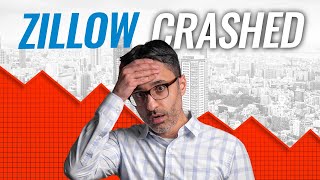
YouTube analyst Neel Dhingra (video posted Nov 4, 2021) explains Zillow's decision to exit its iBuyer/home-flipping program (Zillow Offers) after accumulating ~7,000 homes and taking expected losses of roughly $0.5 billion. He attributes the failure to rapid over-acquisition, paying too much for inventory, limited due diligence, long holding times, rising repair/contractor costs, and a slight cooling in housing prices. He argues Zillow's failure is operational (company-specific) rather than a direct signal that the US housing market will crash—expect localized pullbacks (roughly 5–10%, up to ~15% in overheated markets) and pressure from rising mortgage rates. He sees Zillow's core businesses (leads/advertising, Zillow Flex partnerships, mortgage/title/insurance services) as intact and potentially profitable, but expects short-term stock weakness and reputational damage.
Zillow just announced that they're losing a half billion dollars on their home flipping business. The stock is crashing and this is sending warning signals throughout the rest of the housing market across the country. Zillow just announced that they were in way over their heads. They have 7,000 homes that they need to quickly sell. Because these properties are now being sold for less than what they acquired them for, resulting in a massive loss. These properties are going to have to be sold at a discount. That, plus there's huge costs associated with buying and selling. So the company stands to lose upwards of a half billion dollars on the total transaction size. They also announced that they are permanently exiting the home flipping business, aka Ibuyer business, and they're laying off 25% of their entire workforce. I'm gonna break down what this means for Zillow stock and more importantly, what it means for the entire US Housing market. I'm gonna go over three things today. First is the background on what's happened. Second is what does this mean for the US Housing market? And then lastly, what does this mean for Zillow stock going forward and is it a good buy to invest in this company? So Zillow has multiple lines of business, but one of those that was launched recently was the ibuyer business called Zillow Offers. This is where they acquired properties directly from sellers. In certain markets. Customers would go to their website and click that they wanted to sell their home to Zillow. Zillow would make them an offer and then close on that deal quickly. The this was supposed to be an easy process for sellers and also enable Zillow to acquire properties and then turn around and sell them for a profit. They were supposed to acquire these properties at a slight discount to the market, and then they were supposed to sell them at a price above that, cover all their costs and turn a profit. Eventually, the program was launched in select markets throughout the country and it quickly took off. It was a little crazy how quickly they were acquiring properties and how much they were paying for them. Now, many people said that Zillow's overpaying for these properties. They argued back that they wanted to overpay by a little bit in order to get the trust and goodwill of the US Housing consumers. Just think about it like if more and more people were saying, hey, Zillow gave me a fair price for my home, it was super easy to sell. That would start to gain momentum at scale throughout the whole country. And then they could eventually turn the knob and pay a little bit and a little bit less for the properties, and because they have such huge scale, they would turn massive profit. What was weird was that I started to see home flippers in certain markets really impressed by the fact that they could turn around and sell their flips to Zillow. And I saw people selling them saying that Zillow was basically buying them for too much money, that they were really impressed with how much Zillow was paying them. Many people also said they were impressed with how little due diligence Zillow was making on these properties. Like they were buying them kind of sight unseen with very little inspection and making it super fast and easy. Now, that's great for the seller of that property, but it's not so great for Zillow, who's buying thousands of these properties in different markets. So the problem with this strategy is that they end up holding a lot of properties in the interim before they can actually flip them. They want to sell them as quickly as possible, but inevitably you have to hold the property on your books for a month or two months or three months while you prep it for sale, and then while you eventually sell it. It takes time to handle all this process from A to Z. It turned out to be a recipe for disaster because they acquired so many properties so quickly, they got in over their heads very fast, and then they ended up holding these properties for too long. Another problem with the home flipping business is if the property needs repairs or improvements before it can be sold, you have to bring in contractors and vendors to do that work. Right now, in many of the markets that they serve, there's a shortage of reliable contractors to come in and do this work. So their costs kept rising. Their holding times were going to be too long. And at the same time, the housing market just started to cool off just a little bit. Now, a little volatility doesn't affect an individual seller because maybe the prices fall 5%, maybe 10% in certain areas. But when you're holding this many billions and billions of dollars of properties, a little bit of volatility can completely wipe you out. So this is what's leading to this massive loss and them struggling to get rid of all properties fast. So their game plan now is to not sell these one by one, just to go ahead and liquidate them all. To a large institutional investor, think of like a blackrock or one of these large Wall street firms, they just want to put this whole mess behind them and move back to their core business. And this is going to result in over a half billion dollar loss once it's all said and done. So the news and a lot of people in the industry are saying that this is predictive of what's going to happen for the US Housing market, that Zillow is basically saying home prices are gonna fall and they're abandoning this business. Here's why this is not true. There's other companies in the home flipping business. Opendoor is one of them. Opendoor CEO came out yesterday and said, hey, we're in the exact same business as far as ibuyers go, and we're not having the same issues because we have a better way of acquiring properties. We're more diligent when we acquire them and we pay the right price. Therefore, we're able to turn a profit for each home rather than lose money. They have a way to account for the volatility and they're just really pros at managing the home flipping business. So when you think about others in the same home flipping business and how they're able to manage it and not get screwed, you have to think this is a problem specific to Zillow. So it sounds like they just really got ahead of themselves by overpaying for these properties and they just went way too fast. They also find out that they just weren't equipped to handle this volume of properties and get them turned fast. When you're holding that many properties in a flipping business, time is definitely not on your side. So while the real estate market is definitely cooling off in certain markets, that does not mean that there's going to be a real estate crash going forward. And in my opinion, you're going to see a small pullback in certain markets. Depending on the market, you could see a 5 to 10% pullback in price. If the market was really, really overheated, you could see close to a 15% pullback. But it's really going to depend on your specific market. And in certain markets, there's still a major supply issue, meaning that there's way more people moving in and demanding properties versus the number of properties available for sale. So in those markets, you're going to see that prices don't really pull back that much. Where you are seeing prices pull back is where sellers are unrealistic and their agents are looking at prices where they were a few months ago and thinking that the environment's the same. So they list their properties really high and then they have to chase the market back down. But if a property is listed at the right price with the current market and it's desirable, it meets the buyer's needs, it's in a good neighborhood, those properties are still selling very quickly. One other thing to look out for is interest rates. Because when interest rates rise, we see that home buying demand cools off because almost everybody out there buys a property with a mortgage. And when the cost of that debt rises, people are less willing to pay up for properties because it directly affects their monthly payments. So what you'll see is interest rates moving up into the 4 or 5% range will definitely cool off demand. So while I don't think that supply is going to increase because they can't build homes that fast, I do think that demand could cool off depending on which market you're in and then also depending on how high interest rates go. So this is definitely something to keep an eye on. I just don't think that Zillow's negligence in home flipping business translates to the housing market crashing. It just means that they were basically running a bad division and it cost them big time. What does this mean for Zillow stock? Well, the CEO is trying to convince everybody that this is a multi lane freeway. Zillow offers was just one lane on that freeway and that there's still other lanes which are going fast. That's going to be their core business, which is basically acquiring attention from consumers and then helping facilitate buying and selling with real estate agents in different markets throughout the country. They charge for leads, they charge for advertising. They and they also partner with real estate brokerages. This is called Zillow Flex. Zillow is now a real estate company. So what they do is they partner with local brokerages in different markets and they acquire the leads, they give the leads to that local brokerage, the brokerage does all the work. And then Zillow collects about 30% or so of each commission on each closed deal. This is a massively profitable business for them and it's going to grow over time. The other thing that people are saying is that Zillow's estimates are way off and that's why they're exiting the home flipping business. Now these are two separate issues. Their zestimate is still a trusted thing. Now, definitely the news of all this happening doesn't help their brand, but eventually this will blow over. So people are still going to use Zillow as their estimate for their home price. They're still going to go there. There's a billion people that visited Zillow last year. I think that their traffic will definitely take a little bit of a hit, but people will still come to there because they are viewed as the trusted brand. Within the real estate industry. The CEO also wanted to reiterate that Zillow offers served just a small percentage of their customers, that their main business is thriving. So here's what I think. Wall street was giving them a higher multiple, meaning that the street was willing to pay a higher multiple because of all the future growth. They've just cut off one of the future growth pieces of this business. So even though the rest of the business is thriving, I think the stock is going to be struggling for a little bit here. But there's still value long term in the brand and their core business, which is thriving and growing. They are also operating related businesses for real estate, such as they own a mortgage division, they have a title division. I think they're launching an insurance division. And they basically want to serve the customer from end to end, meaning they start the transaction with Zillow and they could finish it all the way with Zillow. So that part of the business remains intact and they are anticipating growing that business over time. So as far as investing in the stock, I definitely wouldn't be all in on it, but I do own some shares and I'm going to hold those to see how this whole thing plays out. I'm definitely going to be watching this company because I think that the CEO is under extreme pressure right now. He just cost the company a huge amount of money. He cost his shareholders a ton of money, his employees. There's just so much bad press that this is going to take a little bit for it to all blow over. And I think that the best way for him to get out of that mess is to launch something innovative, something new, something to look forward to. So I think that they're going to be under extreme pressure to expand in some shape or form. I'll definitely be bringing you updates that I see happening along the way. And until then, I will see everybody on the next video. Sam.
More from Neel





Don’t let people tell you what you can and can’t do. #personalbranding #podcast #entrepreneur

How to use Ai the right way for scripting. #personalbranding #entrepreneur #ai




Your audience already has a story about why it won’t work. #personalbranding #entrepreneur

The new YouTube strategy to hook viewers. #personalbranding #entrepreneur #podcast