Nexus 360 - Ascend Coaching
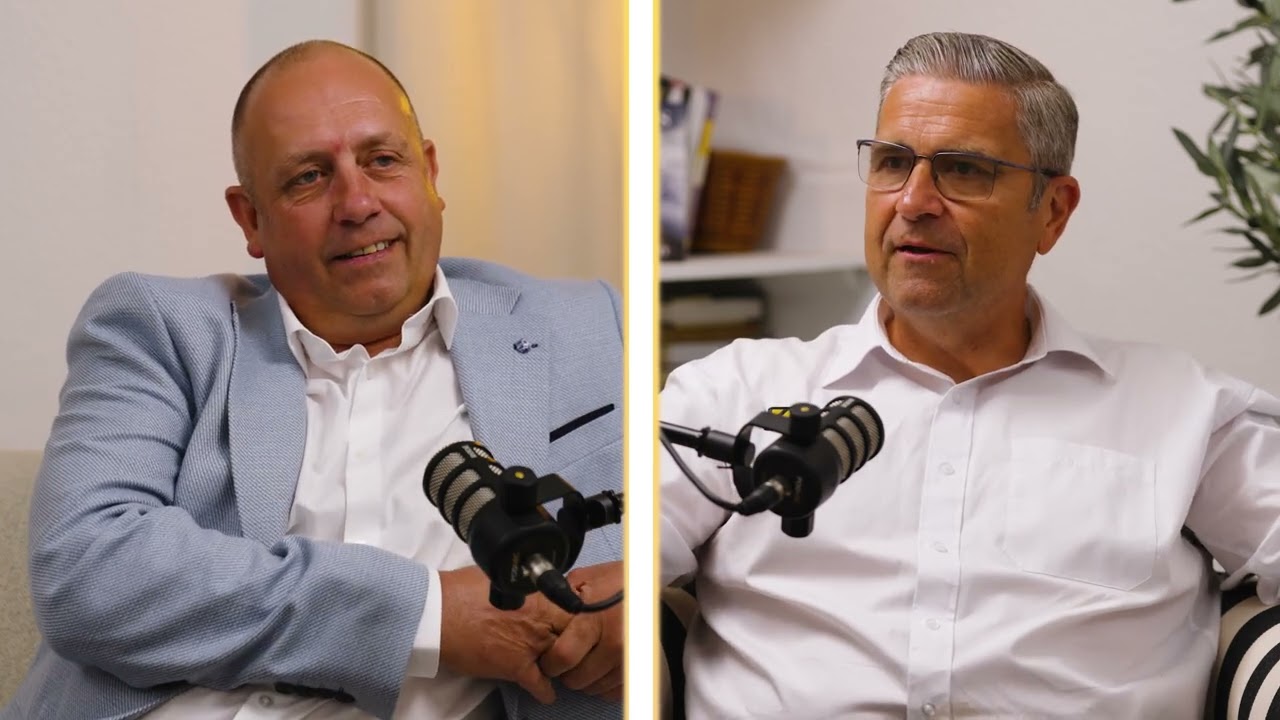
Mark Shevill, founder of Nexus 360, spent 25 years in IT at Halifax Bank, Shell, and RBS before building a fractional CTO service for small businesses. He breaks projects into quick wins to show ROI early, uses AI and CRM to maintain visibility, and stresses that networking moved him from being computer-focused to relationship-building.
Chapters
The number of companies I've seen that want to grow from half a million to a million, for example, and then they'll say, well, I'm not investing £20,000 to do that, I just find insane. People actually recognising that they are going to get a return on investment is a real challenge, and a lot of businesses, especially SMEs, are reluctant to put that investment forward when they're not going to see that come back for maybe a year or so. People don't like to change. If they've done what they've done and always have done and it works, don't change it. But in order to be able to move forward, you've got You've got to accept change. If we implement a solution that brings about too much change, it becomes counterproductive. People are not going to need your services right now. They might not need them for another 6 months, but when they do need them, you'll need to be the first person that they think of.
You become successful, you get relative success. What personally do you think that costs you? Welcome to If It Is to Be, It's Up to Me by Steve Bennett. This podcast has been put together in association with Ascend Coaching, and what I want to do today is sort of like talk about the, the journey of where Ascend came from, how it's moved forward, and sort of like the impact it's going to have in the future. We're joined today by somebody who's had a massive impact in the way that Ascend has moved forward. And that's Mark Shevill. How are you doing?
I'm very well, thank you.
Good.
Thanks for inviting me.
Nice to see you, and thank you for coming on. What we're going to do today, we're just going to sort of like shoot the breeze about sort of how we met, where we, where we've sort of like gelled, and some of the things that you've been really influential on in helping me move forward. You know, the future of Ascend really has come from some of the advice and help that you've done. But first, what I want to do is ask you sort of like a little bit about yourself. Give— I want— what I want you to do is give the audience a little bit of a background of where you've come from, the, the, the sort of like the accolades that you've, you've got from your career, and then we'll move forward from there.
Okay, so, so my background is 25+ years in IT predominantly, working in corporate environments. I started out Straight from university at Halifax Bank, where I got an Engineer of the Year award for that, for developing Halifax's paperless office environment back in the late 1990s. Moving on to Shell Oil, became technical lead at Shell Oil, and then dropped by accident into project management. Then ended up spending about 10 years at Royal Bank of Scotland, where I built their data centres, and then moved into the Direct Line Group and managed their call centre telephony. For numerous years, implemented probably what I consider the first sort of machine learning AI solution for call center telephony back in 2007, and then moved on to deliver huge international projects for Greencore Group over about 4 years, including a billion-pound acquisition in America. Then into Thomas Cook, where we were doing a European call center and network solution when they went bust, and ultimately that put me out of work and ended my IT career, really. In parallel to that, I've run businesses for about 15 years, starting out as a specialist cricket shop on the high street in Middle Retford, which is my passion, and that moved into a branding company which evolved into a digital business card which then evolved into Nexus 360, which is where we are today. So a combination of a lot of IT background, corporates, but ultimately what I'm wanting to do now is bring that corporate experience apply to SMEs along with 15 years of the business, the rights, the wrongs, the highs, the lows, and then everybody can benefit from, from a huge amount of experience and knowledge, I guess.
It never ceases to amaze me, your background and where you've come from. Every time you say it, I'm like, Jesus Christ, how much, where you come from. And the reason being is because I think we get on so well, do you know what I mean? It's like we sit, we talk about where I want to go, you'll take it away, you come back, We, um, and your ability to actually translate, like, what I'd call layman's terms, because I ain't no IT specialist, I don't know what I'm doing with the IT, um, is amazing. And I, and, you know, publicly, I'd like, like to thank you for that because it's, it's put me in really good stead to be able to move forward with Ascend and, and the Elevate and Conquer program, which is what I launched back in November.
Yeah.
So bearing that in mind, and you talk about Nexus 360, tell me a little bit about Nexus 360 because that's sort of like the background of what has helped me get my coaching program online. So just give me a little bit of that.
So Nexus, I guess the word Nexus means to connect things and the 360 is the whole job lot. So where that originated from, it evolved from the digital business card platform, which was a great idea, but which is ultimately, I guess, where we met originally. It evolved from the digital business card platform to offer a CRM solution, customer relationship management solution, which we white-labeled. But then that helped us to evolve into doing more work with clients, not just on CRM, but building portals, building solutions, and in your instance, a membership solution. But that— what it did is it brought me right back to where I very first started in automating solutions for companies, but by understanding what their business needs were to bring that through. So Nexus 360 now really focuses on, if you want to put it in terms of the fractional chief technology officer, so we come in and we work and we look at what we can implement now as a chief information officer. where we can improve operations, whatever that might mean, across multiple platforms and not just CRM-related.
Yeah. And that for me was a key and a major influence in back in December when we'd sort of like, we'd launched the Elevate and Conquer. And my personal sort of like journey I, I've always been old school. So when I was doing, uh, building my, my business, um, um, back in the day, it was about going, going out, doing the miles, knocking on doors and seeing people. Yeah.
Yeah.
And I came to you before we sort of like, um, before we, we went down the line of building Elevate and Conquer. I came to you and said, how do I automate everything? How do I get things online so that I can spread my time about, you know, so that, you know, I'm getting that bit of a residual income out of something that really, you know, I wanted to make it affordable. I wanted to get as many people involved in Ascend Coaching as possible.
Yeah.
And you spoke about the membership thing and how we could keep that going.
Yeah.
And then back in December, it got confirmed where I was going with that, is it got confirmed. You remember when we saw Daniel Priestley? And he said the way that we put things together for 2026 with the digital program and making things automated, you were the guy who brought that to me. And it hit home in December thinking, yeah, Jesus Christ, we're ahead of the game. He's telling people to do this in 2026. Yeah. And this is where I wanted people to understand the journey because sometimes you get involved in a business And like I've sort of like started running the business, and we were talking about it earlier before we started that you're bit and bob and you're not sure where you're going and you change your plan. But I've stayed true to a story. I've stayed true because it's it's my story. You understood that story. You understood that story, and you came out of it with a program that actually. has helped me be able to stay on the cutting edge. And with that, what I wanted to ask you is, how do you see Ascend now to what you saw at the beginning?
It's a different beast, I guess. So I think rocking back to when we were going to a networking meeting in the car and we were just having a general chat about various things and she said, I've got this idea and I want to have a bit of a a program online, but I'm not sure where to take it. I get quite excited really about other people's businesses because I like to see them grow. I mean, I like to have a thing that I can have an impact somewhere to help them evolve, no matter what type of business it is. But I think looking back, and we had this conversation, and it's like, if I get somebody to fill a form in, and that form will then add them to a mailing list and I can talk to them. And we went from, from that, I think, to Not just a form, but spinning wheel that's interactive. And conversations we had around that are still like, we can't actually do that. No, yeah, we can actually do that. We will make it happen. I'm not sure how, but we'll get it to work. And we got it to work and it was great. And then that takes that through a journey and we went then through a sales ladder effect. So we offered a free option community and then we move people through that sales ladder and encourage them and nurture them leads. So it's gone right through that. entire motion now, um, that we've got people coming into that, into that community and into that journey. There's still lots and lots of work to do on that, as we're well aware.
Yeah.
But, you know, we're nowhere near finished yet. But there's a— but that's evolved, um, and I think that the, the whole Elevate and Conquer program is, is a complete brand in itself now, right through from, you know, just looking at how we've integrated the logo, the mountain, the, the whole analogy of You know, starting at base camp and then moving right through to the top of Everest is a journey in itself for your clients as well as you as a business and me as a business.
So you as a businessman, knowing sort of like what you do with the career you've done, the businesses and the experience that you've had, what would you say is the biggest challenge that you come across when you're trying to work with a business?
From my perspective, I think it's for them to believe in what it is that I'm telling them. I think quite often people don't really understand that we've been through this journey lots of times but with corporate, and in corporate it's a little bit different because you've got lots of people backing you and people saying, right, okay, this is the way we're going to do it. We can understand business benefits, return on investment, and it might be that it's not, you know, you're not going to get that return on investment for, you know, 3 years. But so people actually recognising that they are going to get a return on investment is a real challenge. And a lot of businesses, especially SMEs, are reluctant to put that investment forward when they're not going to see that come back for maybe a year or so. And quite often it's happened, I mean, we've done some work for people that have had a return on investment within 6 weeks, which has been fantastic. But realistically, it's got to take time to grow and evolve. And convincing people that that's required. You know, you've got to have that investment to be able to get to where you want to do. And the number of companies I've seen that want to grow from half a million to a million, for example, and then they'll say, well, I'm not investing £20,000 to do that. I just find it insane. But, you know, it's difficult. It's a real challenge for us as a business.
I get that. I think it boils down to, even from a coaching point of view, It boils down to we've turned into sort of like the nice-to-haves, whereas if you're wanting to move forward and, and, and literally enhance the future of your business, you've got to invest.
Yeah.
And whether it be time, money, or, or, or both, you've got to be able to— and the key thing that you said there that I picked up on is if people believe in what they've got, they can give you a good sort of like brief and, and give you a way forward.
Yeah.
And I found that a lot of people that I come across in the SME type world, they struggle with the, the belief of, will this investment work? And how do you, how do you sort of like give them any ideas of overcoming that?
So, so essentially what I like to do is I like to, I like to give a roadmap now. So I'll give them a roadmap of where you are today, Where you want to get to and what's necessary to get there. It doesn't necessarily have to be done tomorrow. It can be done over 12 months or 2 years if you want. So whatever's comfortable. So you can invest in a piece that might be, you know, a quick win. Quick win, get your return investment, gives you confidence to move forward a little bit. So that's what I try and do. I try and show and illustrate actually where you're going to get your return investment and how that's going to work. by breaking it down into smaller, more manageable pieces rather than having a big loss. The other part of that for me as well is that one of the most challenging areas of business is people accepting change. It's been a problem throughout my entire career. People don't like to change. If they've done what they've done and always have done and it works, don't change it. But in order to be able to move forward, you've got to accept change. What I think with that is that if we implement a solution that brings about too much change, it becomes counterproductive. So it's really important that we bring in little bits of change at a time, and then it becomes generally accepted and people are happy to move forward.
You see, that, that's amazing because what you're doing is a very similar thing to the way I sort of like structure the coaching, and that is You know, day by day, you're compounding something. You know, if you change it, if you want to change some things in your life, you've got to change some things in your life. I don't care what anybody says, whether it be in life or business. If you carry on doing the same things, you're going to get the same results. And yet, people who have got this inner belief that they can move forward with a business find it really difficult because they look at the whole picture and they're overwhelmed by the whole picture. And we have to break it down. We have to like make them realize that it's not about— it's okay having that fantastic picture up here. Yeah, this is where we need it.
Yeah.
Because when the obstacles come and the obstacles are building up, if the dream's big enough, you're never going to lose sight of it. And this is how you build your sale on the same thing, is that if you have actually got a good belief and you know where you're going, Then obviously the backside of it is that you're going to get where you want to be.
And I guess that's how we've sort of looked at how we approach with Conquer, because trying to get everybody in at this all-singing, all-dancing top level is ultra difficult. Bringing people in a little bit at a time and giving them a taster, and then if they like it, they take on a little bit more and then a little bit more. But then the program itself is also iterative. to just give little bits of time to actually build to where they need to get to. So it is very much a common denominator right through business or personal.
Yeah, I talk a lot about success habits within the sort of like program and in my day-to-day coaching, and I find that those success habits are about the compound interest that you get. You know, if anybody understands investments, when you get your compound interest, you know, that you— once, once you've got, you know, you put £1 in and, and if it keeps compounding and compounding and compounding, within 2 years you've got £1 million.
Yeah.
Now that type of thing is what happens when you do that for yourself. And this is where I love working with you because you understand that. So although you're not a business coach, You've got this understanding of if you do the right things every day and try and better yourself every day, something good's got to come out of it.
I always operate on the 1% thing. So if you do 1% of something more and add 1%, then gradually over 50 days you've got 50%, so to speak. Yeah. You know, and we've got multiple pillars of strategy and multiple pillars within your business, so you've got to keep on working each individual one. a small percentage of time, and ultimately over time it evolves to greater things.
Brilliant. So for sort of like Elevate and Conquer and knowing what you know in the digital age, where do you think it could go from here?
Uh, that's putting me on the spot, that is. But hey, um, so I think the big one for me at the moment is obviously we've got to, we've got to Generate traffic. Yeah, the generating of traffic, but to ensure that Elevate Conqueror and you with Steve Bennett as a brand become the authority of lifestyle coaching, business coach. And I think that's really important. That's where we get to. So my focus is now a lot more on getting the traffic, but also interacting with the the sort of chat GPTs, the AI solutions where people are asking that more than just going on Google and the series and. is to be able to rank you up there and then ultimately then take that next step further to the public speaking. Because once we've created that authority, that creates demand, and with demand comes the bigger engagements.
Yeah, and, and the reason why I asked that was because the way you've just related that back to me, I've never really gone through my full business plan with you, never given you a full insight.
No.
Yet everything that we've discussed, you know where I want to go. And the focus, obviously the funnel for me is that I want to get out there. I want to be able to talk to people. I want to be able to show people some of the, some of the highs and lows of my life and how I've rebuilt myself. And you taking that on board, you know, is it, it might, it gives that feel-good factor of the fact that you know what you're doing. You give me a bit of a safety net. You know, there's something there that we can work together with. solely because you understand. And that— this is one of the reasons why we're doing this today, because I always wanted to put the journey right about where, you know, Ascend, Elevate, and Conquer, and the public speaking. It's a reverse order, yet the public speaking is going to be the thing that I want to actually promote.
Yeah.
You know, for 2026 and move forward, getting that in place isn't just about going out and telling people that I want to talk to them. It's about exactly what Daniel Priestley says to us in December. You've got to become the key person of influence.
Yes.
The only way that you can move forward in your business, especially being an entrepreneur, a solo entrepreneur, or a small business, you're like that minnow in a massive ocean. How do you become The shark. And the simplicity is awareness. How do you build awareness? Well, the key to awareness right now is the craze in digital IT. It's the social media. It's the way that we're all informed.
It's consistency as well. I mean, that's the other thing you've got to remember is consistency. You can do, you do as much as you want, but if you don't keep it consistent, you disappear again and then you've got to start and rebuild. And so consistency is vital.
And that's what I love about the CRM Nexus. Because I build content on there and it saves and it schedules. What a scheduling tool. Because it, you know, I have this and you know this, I've discussed this with you. I had this mental monster about having to do hundreds and millions of videos and get them all in a bank and, and be able to just pick them off one at a time. But now I can just spend a few hours a day, put a few videos together, put a few posts together. and be able to schedule them on what you've developed in Nexus, which is such a godsend, and it keeps consistency. And one of the keys in business, which is what you've just said, is that consistency. It doesn't matter whether it's advertising or anything like that, but it's about making sure that you are there. It's about making sure, you know, you are actually— you're in the market, basically. You know, you, you want to put yourself in the market, you want to make sure that you're seen, and some of the key things that you've done for me is obviously helping me do that.
Yeah, it's also the other element of that as well, is just making sure that we're talking to people all the time. People are not going to need your services right now, they might not need them for another 6 months, but when they do need them, you'll need to be the first person that they think of.
Yeah.
And again, that's part of that journey and that consistency and just keep subliminally messaging people, letting them know that you exist and there you are and this is what you're doing and how you help people. So yeah, consistent all the time.
Brilliant. So moving on from that, one of the other things that I wanted to talk to you about was the way that we have sort of like ended up getting a relationship and, you know, it came from networking.
It is.
Really. And I talk a lot about networking to people. I talk a lot about— and this is the other thing about showing up, consistency. Some people go through their lives shying away from networking. Some people go, they try it once and say, oh, it didn't work. What's your thoughts on that?
So I guess look at my background. I've spent my entire life sitting behind a computer. So when I was running my own business, When I was doing cricket, it was one thing because you talked to other people who were also passionate about cricket and it became— ultimately that probably ended up being a downfall of my business because I spent that much time talking cricket and not a lot of time doing business. But now I'm having to go out and actually start doing the networking. It's a whole different skill. It's a whole skill that I've never had to experience before realistically. But I quite enjoy it. I'm still not very comfortable with it half the time. But I enjoy going out, enjoy building. But I've ended up joining building and relationships as well. And I think whenever I go out to network, quite often I'll just say, tell me a bit about yourself. And immediately people tell me about the business. I'm not asking to find out about your business, not right straight away. I want to know who you are, the person, because people buy from people and it's about really networking, about relationship building and And that evolves over time. So I think for me, networking, I enjoy that because it's about relationship building and not about just throwing a business card at somebody and expecting a phone call back.
100%. People are in this situation when they go networking that they think it's a bit like the old machine gun, like scatter the business cards out. If they chuck enough out, they'll get some back. 9 times out of 10, when somebody throws a business card at me, at me, it literally— now what I do, I scan it into my CRM. I scan it into a CRM and I forget about them because the CRM will do the work.
Yeah.
Yet if they'd come and spoke to me and they've actually given me a reason to remember them, I'd want to follow up. I'd do it, you know, I'd be on them at LinkedIn. I'd want to follow up. I'd want to find out who they are, what they're doing, why they're doing it.
Yeah.
And that for me is a massive thing in networking. You know, that's one of the things that has probably put me where I am today when it comes down to Ascend, because I've put myself in some really good positions. Turned up, I've done the time, I've tread the boards, and what's coming to fruition now is that there's a lot of businesses that know who Steve Bennett is, know the brand, know Ascend, That didn't come overnight, and this is where I was coming from with the question. Networking, does it work?
Absolutely. Yeah, absolutely. Yeah. So I find quite often, and I'm still very much guilty of it now, is that when we do projects, we get embroiled and embedded within the project, and my time is taken up to deliver those. And what I find then is that when I finish the project, I've got no pipeline because I've not actually done the networking. So one of my big things at the moment is to keep the projects going and keep the networking going and keep doing them because then I keep building my pipeline. I went out last week for the first time to a local business networking group. I had 2 appointments off the back of that. I didn't go out there, we were just talking and that's exactly what I need. But if I hadn't made the effort to go out and speak to people and just go to that network, I wouldn't have had that tool.
Right.
But you've got to do it. I think it's one of the most important things in business is building them relationships. Yeah.
And then finally, obviously, to keep in sort of like tandem with the way things are going, I brought the book out, If It Is to Be, It's Up to Me. The book was obviously part of the funnel. So public speak, read the book. If you like what's on the book, it promotes Elevate and Conquer. The book, what do you think about, you know, what I've done with that book?
So far, I mean, I think you've obviously getting it out there. I would have liked to see a bigger, bigger launch on that personally.
Mm-hmm.
But I think we've got to do a lot more marketing of that in terms of getting it out and getting in front of people. I think the public speaking and the book, I think, is going to come hand in hand because that's, that's where it's going to get the reputation from and the brand and See, and that's the key.
You know, you've just said that to me. Yeah, I thought, you know, the way that I did everything, I thought it was enough.
Yeah.
Yeah. Yet the cold hard reality is, is that it's got to be bigger, it's got to be better. And that's, I think, advice to a lot of people is when you're thinking about what you think's all right, get a second opinion because sometimes you you go down a rabbit hole and it's not quite 100%. So with a second opinion, you might actually get better success.
Possibly, yeah, might be. But not everything's right. So, you know, I think bouncing ideas is really important.
So what I also wanted to ask you, Mark, is, you know, we talk about success and we talk about where people go in life and that they've got these goals, these ambitions and things like that. you know, we've took advice off the likes of Daniel Priestley and people like that because we see them as a success. Where I wanted to go with it is, you look at success, what do you think success actually costs you?
Cost. I think cost is in the personal, personal rather than financially. It's not financial.
Yeah, I'm talking, I'm talking Like, when we look at it, what I'm talking about is, is that you become successful, you get relative success. What personally do you think that costs you?
There's numerous things that are flashing through my mind right now in terms of relationships, those that potentially might have had to sacrifice. I think, I think realistically, I mean, I've often spoke around the importance of resilience, and I don't think anybody actually appreciates how resilient you've got to be. The number of knockbacks that you get, the rejection, you know, the time, you know, you start a business to actually be a little bit more free and have more time and do what you want to do when you want to do it. And the truth of that is it's not really like that. You know, I mean, I've probably not had a week off in 3 years now. Luckily, I've really got a really supportive family, but they might not have been— if they hadn't have been, then that might not have been the case, and that would have been a potential downfall of business. But I have a little sticker. I opened up a Chinese cracker, and after that came a little thing saying, don't give up, luck is on its way. And I have it on my monitor in front of me all the time just because I've got another knockback to and another knockback, you know, so for every 10 knockbacks you might get one success, but that success is really important. That's what you live for.
Yeah, and, and when you're talking about sort of like the relationships and the way that things have moved forward in, in your career and that sort of thing, how do you deal with that?
The relationships-wise?
Anything, you know, the cost that success has brought. You've brought some really good success into your life.
Yeah.
How do you deal with that cost?
For me, I'm just really grateful that I've got like a family that want to be around and want to support that, because I think without that— I mean, okay, I mean, it's not just around business, but I've been chairman of my local cricket club, which has been a huge part of my life, and I were involved in that for a long time, and that was 7 days a week, and my family were part of that as well. Having, having a family around me that's really, really supportive is Incredibly important because none of it would have happened without that.
Brilliant. Well, thank you for your time.
Thanks very much.
I really appreciate you coming on, and, uh, I look, you know, I look forward to seeing the success of Nexus 360, and I wish you all the best.
Yeah, thank you very much.