Podcast Episode 10 - Marelize Fourie
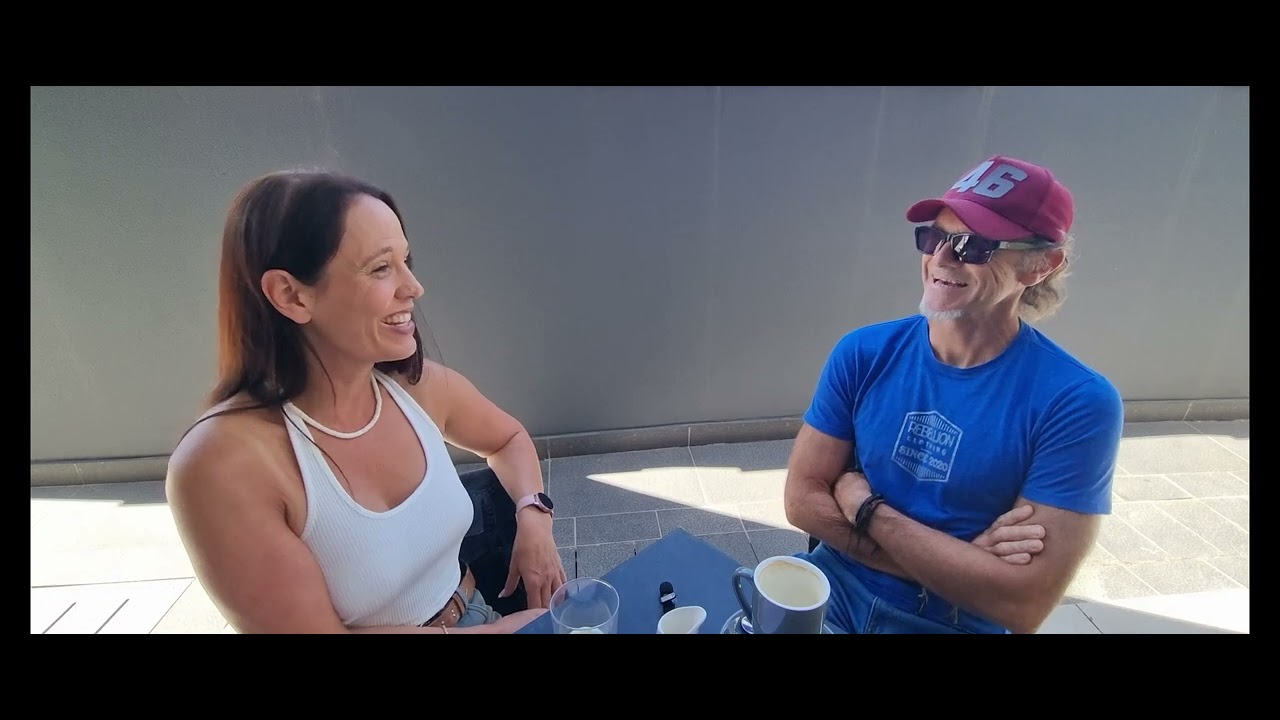
In this interview, Molly Spree shares her experience completing a three‑month weight‑loss and health‑coaching program. She lost nine kilograms, improved sleep, energy, and mental clarity, and shifted her mindset from exercising to burn calories to exercising for enjoyment. Initially motivated by post‑pregnancy weight gain, unexplained muscle burning, and concerns about long‑term health risks such as heart disease and cancer, she sought coaching to understand food’s impact rather than follow diets. Molly describes the program’s structure—daily check‑ins, accountability, personalized food‑label education, and optional intermittent fasting—highlighting how coaching, consistent weighing, and support helped her stay on track. She notes the program’s sustainability, reduced grocery costs, and lasting lifestyle changes, including better label reading, fewer cravings, and a more mindful relationship with food. Stress at work occasionally slowed weight loss, underscoring the link between stress and metabolism. Molly emphasizes the value of the knowledge gained, viewing the financial cost as an investment, and recommends the program especially to women, including those in menopause, as a non‑fad, long‑term health solution. The conversation concludes with gratitude and an offer for ongoing support.
Chapters
Hello. Hello.
How are you doing?
Good, thank you.
Good. So this is Molly Spree, and she completed our three-month program, and you lost how much weight?
Nine kilos. Very proud.
Yeah, and how tall are you?
I'm one point six eight. Wow!
That's actually a lot of weight.
Yeah.
Well done. So tell me a little bit about yourself before you started the program.
So I've always been quite active. I've been a gymnast all my life. After school, I kept going gym, tried the gym, I've been doing boot camp. I always thought I'd been eating healthily, and yeah, surprise, surprise, I started battling with my weight. So it was always the odd 5, 6, 7 kilos that I thought I could lose that I picked up after the birth of my daughter that I battled with.
So it was like you started this program because you thought that, okay, so there's got to be some way of losing this weight and you couldn't find a way to do it.
I think there were 2 reasons. I don't do diets, so I thought I need somebody that can coach me a little bit about food and the impact on my body. So I think that was definitely the one decision. I also did it for health reasons and not just for weight reasons.
Yeah.
Since last year, I didn't feel myself. I had burning muscles and all kinds of symptoms that I didn't understand. And I thought, no, no, no, something's happening in my body and it must be what I eat. And that's really why I Yeah, started doing this.
Did you— are your muscles still burning?
No, it's gone.
Maybe you're not training hard enough.
Yeah, you know, it's an interesting point because, um, I think typically we've also been indoctrinated, humans, calories in, calories out.
Yeah, yeah.
And that's— it has been part of my thinking, my thought pattern. Um, nowadays, um, exercise I'm exercising for the fun of it and not to lose weight. And that's actually a very nice place to be in.
Yeah, yeah. It's a funny thing, the calories in, calories out philosophy. Yeah, it actually causes thyroid to slow down when you're counting calories, when you're trying to go expend more calories than what you're putting in.
Yes, the thyroid doesn't like it.
Thyroid doesn't like it.
Nobody teaches that at school. Exactly, exactly.
And what were your thoughts on the program before doing it? I know we went back and forth a few times.
Yeah, of course.
And there was skepticism.
It took me a while to decide. I think it just sounded impossible. I didn't quite believe it. Too big to be true. And I really had to get my head straight. So we engaged towards the end of the year, and I only started in the UN. Really just because I knew if I'm going to do this, then I have to commit. Yeah, I didn't quite believe it until the first week, and then I started seeing results, and that's amazing.
Yeah, that's nice. I mean, that obviously inspires you and motivates you to keep going.
Yeah, 100%. You don't have to wait 4 weeks before you start seeing actually it's working. So that was very good.
Okay. How long has it been since you finished the program?
So I finished first week in March, and I'm still losing weight, which is good. I was very short of my goal weight when I finished the program, but I've reached it now, which is really nice to see.
Nice. And do you see it as being like a lifestyle going forward?
Is it sustainable? Definitely. No, look, I think it is a lifestyle. I think you have to make that decision. It's not something you're going to do for 2 months, get the results, and then go back to old habits. It definitely is sustainable. It's not hard. I think I just read labels a lot more carefully nowadays. I actually know now how to read a label, which I didn't know before.
Yeah.
And it is, it is definitely a lifestyle. Yeah, for sure. And yeah, you just feel so much better, so why not?
Yeah, it's funny with that label thing. It's like you, you realize that most of the chain stores are laden with foods that are full of carcinogens and things that are bad for you, and, you know, fat-burning blockers, endocrine disruptors, and all these kinds of things. And I think what people don't realize is that the food industry is in it for profit.
Yes. That's what they're doing.
Yes. They've got to put like loads of it on the shelves, so they've got to keep it preserved. And if it's being preserved in the shop, it's being preserved in your stomach as well. So yeah, it doesn't digest and it's going to be spiraling.
Yeah, yeah, yeah. I definitely— I was listening about you don't know what you don't know. Yeah, at least now I know a lot more, but I realize it's a learning thing, constantly going to learn new things.
And were you nervous when you started?
Yeah, very. I'm very hard on myself. I also knew with you coaching and checking in daily, that's sort of that added responsibility. Big brother is watching. You're held accountable. Yeah. So, which, you know, I think that's definitely a benefit from a coaching point of view, you know, to have that. Also very nice to have a go-to person. If you're not sure, if you're standing in the shop and you just don't know what to do, You were always just a text away, which is great.
Yeah. On that point, did you, um, how did you find my coaching stuff? Did you like the way I coached you?
No, I loved it. I think it's inspirational, it's motivating. Um, I was a little bit scared of weighing every Sunday, but, you know, because it's a, you know, you're either in or out, you have to do it properly, but you were always supportive. You always had an answer for what has happened in that week if you weren't sure about what's happening with your weight. So that, that was very nice to have.
Yeah, so did you start to get more and more confidence in me as we went along? Yes, absolutely.
I think it is, and it is, you know, trial and error in the beginning. You don't know what to expect, but definitely it became very apparent that That you're always there to guide and to educate, which I've really enjoyed.
That's part of the program. Awesome. All right, and how did you feel, like physically and even mentally, in the initial stages of the program?
Look, first, definitely in the beginning, a little bit of— I think your body goes into shock. I couldn't do my boot camp as actively as I wanted to. I just didn't have the energy. But I think as your body got used to it, you really start getting the energy, that mental clarity that everyone talks about is a real thing. So yeah, all in all, physically you sleep better, so it's all good.
Were you, before the program, were you not sleeping well?
Very disrupted.
Really?
Yeah, so sometimes you battle to fall asleep, sometimes you wake up during the night, and you know, that definitely hasn't been the case.
Oh good, so you find that you're having more sustained, longer sleeps?
Yes, yes.
That's quite interesting, falling asleep easier.
And I mean, that's critical just to be able to be productive and upbeat. Sleep has an effect on everything, so very important.
Even as far as weight loss goes, yeah, the recovery and the burn.
Yeah, yeah.
Okie dokie. And you feel— I know, I know for you it was like a real investment for you, you know. You had to, you had to think about this from a financial perspective when you paid for the program.
Yeah.
And, um, you know, it wasn't easy for you to just fork out the money that you spent. Do you feel at this point that it was money well spent?
Oh, absolutely. I think the big thing is knowledge is power, you know, nobody can take that away from you.
Totally.
You know, it's also nice to know that you're still around, that one can check in with you if you're not sure, so it's not after 2 months you just disappear. And for me, who don't believe in diet products and quick fixes, it's definitely just sets me up for My future in terms of my weight management and my health, which is really important.
It's an interesting thing, you know, it's like the old saying where they go, you know, it's R10 to tap with a hammer, but it's R10,000 to know where to tap.
Yeah, yeah, yeah, and that was very evident on the program.
Yeah, all right, and you kind of know that this is the way forward for you, and it's like No, it's non-negotiable.
I think it would be silly to think after 2 months that you can sustain it by going back to normal habits. So it definitely, definitely is the way.
You did a great job on it. I mean, you know, you knew the process was working and you just followed the process standard. Every week you never faltered, you know, you pushed it hard. And now after the program, you've You can obviously see the benefits of, you know, living your life like this and making it a little bit easier, you know, as far as food products go that you can have after the program and that.
Now that's— I love the second food list.
It isn't the first food list. The first food list is water.
Oh my goodness. But actually, you know, what I loved about the initial stages was you never ever get hungry. So, you know, if you start eating the right stuff, and now when I get hungry, I have to think, okay, why am I getting hungry? You know, what am I eating wrong? So it's that constant awareness of your body and how it's responding.
Yeah.
Um, but yes, uh, there is a life after the first 2 months of your life.
Yeah.
Um, I think there's a lot of things you can experiment with. Um, my, my pantry at home is a, is There's a lot less food in there, so, you know, that's also quite nice. You don't buy these volumes of stuff.
Yeah, exactly. It actually works out cheaper.
Yeah, it does. It does in the long run. It definitely works out cheaper.
Yeah.
Um, so it's very sustainable.
Yeah, I, I, I, um, I had a guy start about 2 weeks ago, and, um, after his first shopping spree, he WhatsApped me and he said, I can't believe I spent I spent 500 rand at the shop today where I normally spend like 1,500.
Yeah, yeah.
But you just, you only realize at that point how much you've been eating.
Yes, yes, 100%.
And then, yeah, so why, you know, like you say, you didn't get hungry at all. I mean, obviously in the beginning there's a little bit of hunger there, but, you know, I try not to push my clients too much into a hunger thing, you know, make it like a really uncomfortable thing. Although there is a little bit of like, okay, so let's try, you know, go a bit longer without food kind of thing. I was like, oh, I don't know if I can do this, and then you realize you can do it, you know. But there was no like big jump into like a starvation thing.
No, never, never, ever. When you introduced the program, we had 2 options, either 2-day meal or 3-day meal, and I immediately just went for the 2-day meals. And even on the 2 meals a day, and even on 2 meals a day, it was very comfortable. I have tried intermittent fasting before, and it was fairly easy for me always, but this was super easy.
Yeah.
You almost had to remind yourself, okay, you actually need to eat. And I know you say don't eat if you're not hungry, but it really, if you want to combine this, and I know it's optional and I chose to do that, it's just so much easier to eat and to plan for meals because the intermittent fasting and your plan just goes hand in hand.
Yeah, I mean, you even did a few prolonged fasts.
Yes, like a 24-hour fast. It was very easy. I think the biggest thing is your mind, it's your brain.
Yes.
Your brain tells you, hey, you should be eating.
Yeah, okay.
So that was my biggest habit. It wasn't hunger pains.
Yeah.
It's just really, it is a little bit of a change in mindset.
So then tell us a little bit about yourself, like what do you do for a living?
So I've got a desk job unfortunately, which makes it difficult for me to get my 10,000 steps a day. I'm in HR. I look after a team of 8 young people in a construction environment.
Oh wow.
So it is quite stressful.
Yeah.
But yeah, I think even through the program it was easier to manage the stress. Some of your supplements that you recommend also helped a lot.
Yes.
Because yeah, dealing with people every day can take its toll.
Yeah, yeah. I mean, that was the other thing I wanted to ask you was, I know there was a few A few times in the program, you'd say to me, oh, this became extremely stressful. And then, and we noticed with those periods that you lost less weight in that period, you know. So it's interesting how the stress blocks weight loss, you know. However, you still did quite well because you wouldn't lose, you might lose—
Yes, it's just sort of gone from a kilo to half a kilo.
Half a kilo, yeah.
Just slowed it down.
Yeah, wow. Would you recommend this program to anybody?
Definitely. Definitely. Look, I think it is an investment, but if people really start adding up the amount of money we spend on weight loss products that doesn't work—
And are not healthy normally.
Yes, and excessive food bills, that really comes down over time with this eating program. It's absolutely worth it. I think I would definitely recommend it to anybody who— I think especially women, you know, women in menopause is a big thing out there. Yeah, yeah. And we get so desperate because whatever you do, it doesn't work.
So definitely. Just on that question, so do you find that you have less attention on your health now? Like, you know, like a lot of people worry about cancer and their bone health.
Yeah, I actually forgot to mention that that was the third reason why I started, because we've seen increasingly in our organization and just among our friends, heart diseases and cancer is completely on the increase. And I know what you eat has got a massive role to play.
Yeah.
So it was just this awareness. I am a single mom and I still want to be around with my daughter for many more years.
Yeah.
And, and that was the third reason why I really actively started looking at something that's sustainable and a life change.
Well, I mean, I really appreciate the fact that you looked at my program, you know, and I know, you know, there's so much rubbish out there about pushing all sorts of diets on people and all sorts of other things on people, you know. I see there's a thing going around about these gummies that you can—
Yes, I saw keto gummies there.
And you lose like 20 kilograms in 2 weeks eating gummies, you know, I'm up for that, you know. And it's all fads, and unfortunately puts a bit of doubt into, you know, these programs that do work, you know.
Yes.
So it's like, I know myself, you know, it's like I've been eating like this for 10 years, and I have absolutely no attention on my body and how I'm going to to get sick or something huge. You know, I have no problem with my heart.
Yeah.
The other thing, it's quite interesting. I went to the doctor about 3 years ago for— I was in the United States and I was doing a program there and they had to give me a medical before I did the program. And they asked me, how old are you? You know, and I said, well, then I was 52. I said, I'm 52. And he was like, You have the heart of like a 17-year-old boy, you know. He's like, what pills do you take?
I was like, I don't.
I'm not sure.
Yeah, you know, blood pressure was in range, uh, everything's in range, you know. So, so it's—
that's just an indicator. So I guess I'm always so confident. Anyway, thank you very much for doing this for me. Molly, you did so well on the program. You're one of my favorite people on the program, and, um, we'll, uh, we'll stay in touch going forward. You know that I'm always available for questions.
Thank you. Thanks a lot, and thanks for sticking with me and believing in me.
More from Nick


Back at Dischem for part 2 of my new game. #nutritionfacts #comedyvideo #maltodextrin #wellnesstips







Nic Wozniak had some great wins on our program. #winning #wellnesstips #fyp #food
