Revolutionizing Your Health An Insightful Conversation with Marina and Nick Howarth from BBHC
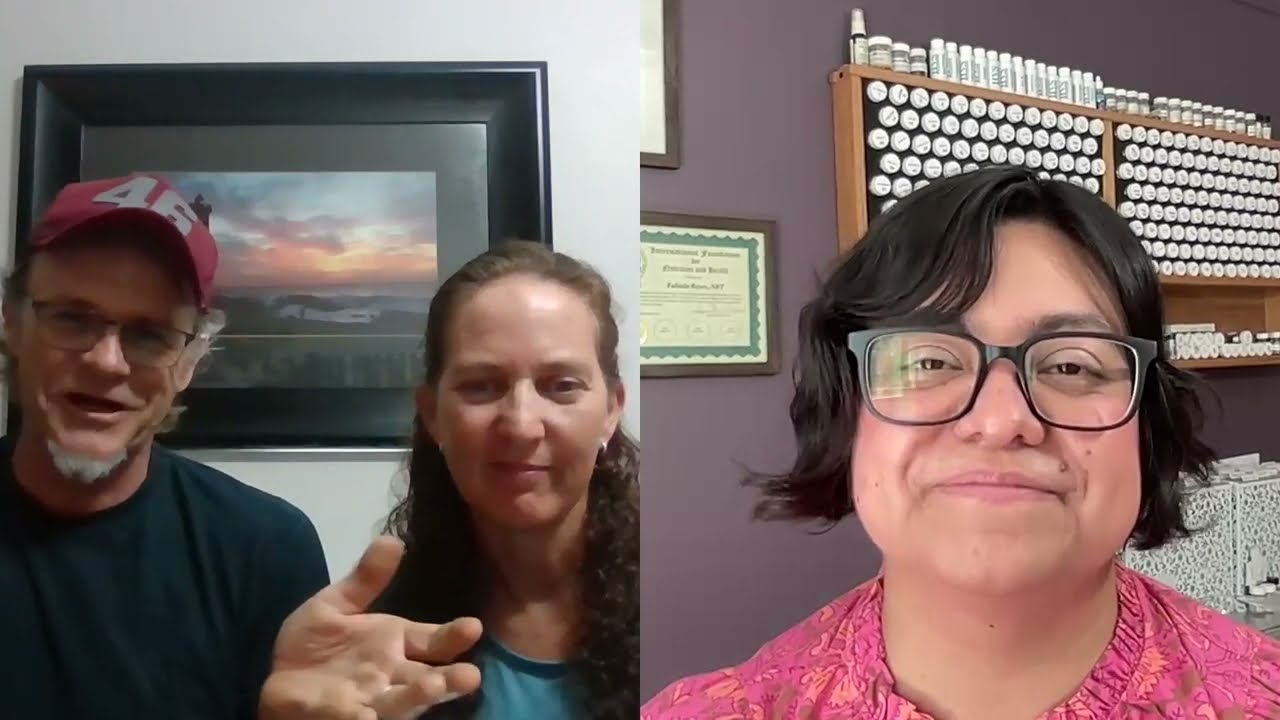
In this interview hosted by Fabiola, Marina and Nick Howarth, owners of Best Body Health Coaching (BBHC), discuss their ten‑year journey from discovering Tim Noakes’ "The Real Meal Revolution" to building a root‑cause health coaching business. They explain how poor nutrient assimilation, synthetic supplements, and endocrine disruption underlie conditions such as insulin resistance, type‑2 diabetes, heart disease, and chronic inflammation. Their assessment protocol combines a detailed questionnaire with body‑shape photo analysis to pinpoint dysfunctional endocrine organs (liver, thyroid, adrenals, ovaries, etc.). Based on this, they design a personalized two‑month program that includes organic, whole‑food‑derived supplements, herbal remedies, dietary guidance, and daily one‑on‑one coaching. They stress the importance of organic, bioavailable nutrients over synthetic vitamins, describe the liver as the central hub for detoxification and hormone conversion, and share client success stories (e.g., a woman whose menstrual migraines vanished and who lost 15 lb). The Howarths also outline their international, multilingual coaching team, their supplement brand, and how listeners can contact them via their website, email, or Facebook. Throughout, they critique the profit‑driven pharmaceutical industry and advocate for natural, evidence‑based, root‑cause approaches.
Chapters
I'm Fabiola. I'm your host. I'm very delighted today to have pioneers on the subject of nutrition and really helping people get to the root cause of whatever might be going on. So we have Nick and Marina, and to make sure I don't miss anything, I'm going to let them introduce themselves. Or, hi guys, thank you so much for being here today.
Hi. Hello.
Thanks for having us. So I'm Marina Howarth. This is my husband, Nick Howarth, and we are the owners of Best Body Health Coaching Company. And we started it because we have a passion for helping people and true help. You know, really, that's why we like your podcast, because we like to get to the root cause instead of just handling symptoms. And yeah, Nick can tell you a little bit more about The business itself?
Yeah. So, we started it 10 years ago when we ventured into this. We've always been interested in health, but we found that we knew nothing about it. When we were putting on weight and we weren't healthy and we were like, okay, we're doing something wrong, you know? So, we bumped into a book called The Real Meal Revolution. It was written by Professor Tim Noakes. And, He's a South African professor, a pioneer in diets and sports nutrition and everything. And I'm a lifelong athlete. So it was— I'd followed him my entire life. So anyway, we did a course through him, through the Professor Tim Noakes Foundation. And from there, it just evolved into a business that really like, like, which is the name of your podcast, you know, The Root Cause. We really got into what the root cause was for why people are sick, why people can't lose weight, you know, all of these things, why people have aches and pains, why people have diabetes and how to handle it, you know. And over the years we've researched and experienced for ourselves the way our program is kind of rolled out, you know, so we've done it ourselves and we still do it 10 years later. We're very strict, you know, and we try to be good examples to our clients, which is, I think, part of the successful action, you know.
Right. Well, that's so awesome. Yeah. I mean, you're, you're so right on, you know, getting to not, not just being reasonable as to why people are not getting to you know, to the maximum health, because we definitely know that the body knows how to heal and repair itself. And it's when it encounters these different barriers like chemical toxicities, mold, parasites, you name it, that are never truly addressed, right? And people just like, unfortunately, sometimes they just, oh, give me a pill and I just want to feel better, right? Yeah.
Yeah.
Which I've never heard of, by the way, like none of my clients. But, uh, but I, I really love your, your mission and your concept. And, um, yeah, and I think having been, you know, helping clients or helping people for as many years as you have, as you probably have some amazing success stories I definitely want to, uh, uh, hear about, um, as we, uh, continue this interview. Um, that's so awesome. So what are some of like, um, You know, you mentioned something dear to my heart, which is diabetes. Um, my brother has, um, type 1 diabetes and my mother has, um, type 2 diabetes. And, uh, interestingly enough, this is something that was diagnosed for them later in their life, right? And, um, when you're born with something like that, well, genetically, I guess it makes sense. Okay.
Yeah.
That's how you came out of the oven, you know, like now we, we deal with it, right? It shouldn't be that way either way, but Um, but when someone has some of these ailments later on in life, um, it just speaks to the amount of toxicity, right, that we have in our world, the amount of toxicities we're exposed to.
Mm-hmm.
So what kind of, um, and not just talking about diabetes, right, but heart disease, um, the amount of chronic inflammation that people unfortunately are always subjected to. And, uh, based on your knowledge and based on your experience, clinical experience, what would you say It's that you found is the, like, if you can pinpoint it or name a few kind of like, um, um, barriers to healing and why people may not be getting better when they should be.
Are we referring specifically to diabetes here or just in general?
Yeah, just anything that you've— I mean, diabetes just resonates, you know, resonated with me when you said that, but I'm sure it applies to everything you work with.
So, so, I mean, what I found is that, um, You know, you have— yeah, you can even, you know, like the health industry, the natural health industry. So you can go and you can take your vitamins and you can take your minerals and you can have all of these things. But if the body's not assimilating the goodness out of them, you're basically wasting your money. So the way that you have to be able to get— you have to be able to get your body into a position where it's digesting food properly it's breaking down fat properly so that it gets the fat-soluble vitamins like vitamin E, vitamin D, you know, and if it's not doing that, you become deficient, which then is like a spiral of— a dwindling spiral of deficiencies, you know. So, a vitamin E deficiency causes this and an omega-3 deficiency causes that. And so, and the other thing as well is with the natural health industry, there's a lot of people who do a lot of good in that industry, But there's also— it is also kind of turning into an industry where there's a lot of yield and a lot of profit looked after, you know. So like, for instance, you'll get most vitamins that we see on the shelf in an average health store is a synthetic vitamin. And a synthetic vitamin is for acute use. It's not for chronic use, you know. So that's the one thing. And then what I was saying originally is the body just doesn't assimilate these things. It goes straight through. And why people saying, but I'm taking like 5,000 milligrams of vitamin C a day. Why am I still getting the flu? You know, it's like, well, maybe 5 milligrams are making it through to the cells, you know? So that's, that's what we do is our program gets the body to a point where the cells are accepting nutrition again, because diabetes is an interesting subject and a lot of the population of Earth actually have it and they don't know it.
Yeah.
Or a mild version of it, like an insulin resistance or something like that. And what that actually means is, is that insulin is not entering the cell. That's diabetes type 2 I'm talking about. I mean, diabetes type 1 is a whole other subject.
Right.
Diabetes type 2 is where you've had a lifestyle that has basically caused this, you know, and now the cells have shut down and they're going, we're not accepting insulin anymore because insulin, there's too much of it and it's causing inflammation. and the cell being a little organism that has a survival potential of its own, then says, hang on a sec, you're harming me, we're going to block you out.
Yeah.
So, if you can imagine a cell with these little landing pads, like, and the insulin being a little spaceship that lands on this landing pad and is accepted into the cell, those landing pads shut down to the insulin. So, you become insulin resistant. That's where the word comes from. Insulin has a few functions in the body. One is to remove glucose from the blood, which is why it goes high on a high carbohydrate and high sugar diet. And the other is to take nutrients and put it inside the cell. So, it takes glycogen, which is what the liver turns carbohydrates into, and it puts it inside the cell. But if it's not allowed inside the cell, those nutrients are not going in there anymore. And what it does is it creates a terrible snowball effect where the person's now hungry all the time because he's malnourished, he's not getting the nutrients. So he continues to eat, which makes his insulin go higher, which makes his cells more resistant. And it just gets worse and worse and worse and worse. And that's, that's what it is, you see. So you have to reverse that so that the body can then— or the cells in the body can then start accepting nutrients. Like they should do, and it's actually not as hard as it sounds. And it's—I mean, there's obviously a technical thing to it, but it's—it's actually very easy and practical to be able to do that. You know, if you know how, and that's kind of what we do with our program—is we—we not only get people through the program where they get healthy and they lose weight as a consequence of getting healthy, they—they—you know—they—they—they now can—they're now educated, and they know they've—they've had a full. like experience, like the proof is in the pudding for them now. Oh, well, I saw when I did this, I was healthy, and I saw when I did that, I wasn't, you know. So, they know what foods make them fat and make them unhealthy, and they know what foods make them thin and make them healthy. So, that's kind of why we've been so successful is we aim for that. We have to find out exactly what it is that's wrong with the person first, though, to be able to hone in on, you know, what is actually going on there. So, yeah, that's in a nutshell.
That's awesome. No, I love that. I mean, I loved your analogy of the spaceship. Uh, because it's, it's so like people can think with that, right? But, um, I like to say there's like, imagine a hotel and there's no vacancy, right? All that, um, high insulin in your body is just, and all that glucose, right? It's just, it's not good for you. So, um, your cells are trying to send you a message. How do you go about like, you know, determining, well, when someone comes to you, definitely you, based on their assessment and whatever testing you do, you probably are able to determine, okay, this is where, these are the type of nutrients that this person is not assimilating. And so would you, um, would you mind sharing like what your process is in regards to how do you support people's health, uh, finding that out and then how you move them to your program?
Yep. Yes. Um, so we have, um, 2 steps that we do. Um, we do a full, um, health assessment. We just do it telephonically. Uh, first of all, we find out a bit more information about the person and his body and what's happened in, you know, so far in his life. And then we have a whole lot of questions, which is really just yes and no answers, but it gets what manifestations your body is exhibiting at the moment. And with that, we are able to see which areas of the endocrine system is not functioning properly. And what the second part is, we also look at photographs of of the person because whichever part of the endocrine system is not functioning properly, what happens is the body starts to deposit fat in that area and makes your body have a certain shape. So, by looking at the photographs, we are able to see what shape your body is. And together with a health assessment, we can then see, okay, this person needs to handle his liver or we need to handle the adrenals or whichever area. And then based on that, we create a personalized program for them which has the correct organic supplements to handle those areas. It has the correct food for that specific issue. And it specifically tells him, we give him a meal plan and whatever to say, this is what you do then. After this, you do this. And it's a simple process. which is 2 months long and it, you know, handles all those specific issues that come up on the health assessment.
Wow. That's so cool. I love that about pictures, you know, and I'm scrolling down Instagram or Facebook and, you know, what's your body shape? And you answer all these questions. And, and I love that because then that you're right. You know, that is, there's a physical assessment to it. Like when you look as a practitioner, Um, how eyebrows can tell you so much about the thyroid or, um, you know, belly fat, right? About insulin resistance and stuff like that. So that is, that's so awesome. I love that, that process. And, and I think it, um, it speaks to your integrity and really analyzing what's going on with, with that person's body versus just, oh, okay, well, we know how you feel and, um, you know, uh, this is a recommendation, but you really get to like what what organ or what system is not functioning that is making you feel that way.
Yes. But even doing those questions, the person that you are doing the assessment on, they thought that, you know, it's just part of life and that's the way they are. And then you ask them that specific question and they're like, really? Does this mean that there's something wrong in my body? You know, and it makes them think, you know, and they realize what is actually going on and that they really do need to address Wow.
Yeah, that's true. Because sometimes about going symptoms is increasing that awareness level, right? And, um, getting people to, to first realize, yes, there is a problem, and then what must be done about it in order to, to get better, get them to want that change.
Yeah.
Um, wow, that's, that's really cool. Um, yeah, I've recently— I don't know if you're familiar with this book, it's called The, uh, The, uh, Blood, uh, Blood Code. Um, and I can't quite remember the name of the author. It's a doctor who, um, has even like figured out the ratio like to determine insulin resistance. Oh, okay. And like you get your glucose, your, your fasting glucose, and you get your fasting, um, insulin number from your labs. You plug those into the system and then it gives you a ratio. And, um, I've been playing with that tool late— um, lately, and I'm like, Wow. Just because someone's glucose level is in a healthy range and someone's fasting insulin is in a healthy range, when you look at the ratio, then you can see, you can, you can really see whether that person is being insulin resistant or not. And you're right, you know, half— well, I will— I want to say probably over 90% of the population, uh, definitely are, um, to some degree pre-diabetic or diabetic. And like you said, they don't even know it, right? Because they're just so—
Yeah.
We're so stressed.
15 years. It takes about 15 years for diabetes type 2 to really set in where it's like, okay, I'm sick now. I need— something's wrong here. But if the correct blood tests were done earlier on, you would have been able to pick it up very early, you know? But they just test fasting glucose and, you know.
Yeah, I know. Yeah, yeah. And it's like, so as practitioners, I guess we're on a mission about educating our clients, right? And be like, no, You gotta tell your doctor this is what you need. And I often tell people, well, uh, who's paying for the insurance, your doctor or you? You know, I'm like, oh yeah, them to get you the care that you need. But oh, that's so interesting. Yeah, so that kind of makes sense as to why some people's, um, you know, like, uh, systems may take that long to just— to, to the system finally break down and be like, okay, I'm ill, do something about it because, you know, we're not gonna make it. So that's fairly interesting.
Mm-hmm.
Um, would you, uh, speak to like why quality of supplements has, you know, what is the importance of truly adding? So you're removing barriers, right? You're working with organs and systems, but why is it important to, to do like, to do it organically, right? To have a good quality supplement. Why can't I just go to the store and buy like the generic vitamin B that, you know, Yeah. So speak— can you speak to us about that?
So, so basically you've got to get your— I mean, as far as vitamins go, 90% of the vitamins on the shelf are not organic vitamins. They are synthetic vitamins. So you'll get like, for instance, even like vitamin B1, for instance, thiamine. Thiamine is not vitamin B1, it's thiamine. You know, so it's, it's, it's not— it's a synthetic vitamin B1. Handlings like a person, you know, has cognitive issues or energy issues or something like that. And you quickly give him a whole dose of that for a week and it kind of handles it. But it's not meant for prolonged use. You know, you could get your vitamin B from nutritional yeast. You know, that's, that's where you should be getting all your B vitamins from, you know. So, so you can actually— but the reason why people Generally, people out there cannot get their vitamin B from nutritional yeast is because their bodies are not absorbing the vitamins like the way they should do. So they're not absorbing the synthetic vitamins either. But if they want to, because obviously in nutritional yeast, for instance, it's a very low level of vitamin B, but it's real stuff. It's the real McCoy stuff that really does the job that vitamin B is supposed to do. So vitamin B5, vitamin B1, vitamin B12, I think it's got vitamin B6 in it. So, so then it takes it and it uses it all. Now it's nutritionally dense food, you know, and the body takes it and it uses all of that and it does the correct function in the body, you know. So, and for instance, with vitamin C, for instance, so you go, you pick up a bottle of vitamin C and you look on the back and it's ascorbic acid, you know, and ascorbic acid is like one of 76 elements in vitamin C. You know, it's the worst one. It's not even a good one. You know, and people take it and then they, you know, they take 10,000 milligrams because he's got the flu and his tummy runs and he doesn't know why. And, you know, all of this kind of thing is happening. So, and then backing up to like what we, what we use mostly is herbal remedies. Like we do use the vitamins. So, you know, we'll get our vitamin C from sauerkraut, for instance, and those kinds of things. But you'll get your vitamin B from You know other things, and but when it comes to like herbal stuff, you need to get the organic stuff because it's no point in trying to handle the endocrine system, which is literally a communication system of the body, which is made up of little fatty globules called glands that communicate with one another through the production, dispersion, and reception of hormones. These things, remember, they are fatty; they are fatty glands. So when you're putting toxins into into the body. They are going to gather in these fatty glands. So then this fatty gland starts to shut down and it's a communication terminal in the body. It's trying to communicate, it's trying to receive and send communications. But if it's compromised, communication breaks down. And you have a look at any organization which comes from the word organism, funnily enough, because it has life. You break communication down in any organization, that organization starts to break down. You see, so it's got everything to do with these endocrine disruptors, and that's why we make sure that we take them off the stuff that's making them sick and causing the endocrine system problems. And we're— and then when we're healing the endocrine system with our herbs, we're making sure that they're not putting more of the same stuff in that's damaged them in the first place. So Organic is extremely important. It's not just a fad, you know, like, oh, I eat organic and I go down to the store and I buy the organic stuff, you know, it actually has purpose, you know, because if you put like, for instance, glyphosate, this Monsanto glyphosate thing, so that mimics estrogen in the body, you know, and can you— I mean, we have enough estrogen, we don't have to— we don't need any more of it. You know, there's enough of that in our diets and our environment, you know. So there's those— that's why it's really important to look at the organic side of things and not just, you know, go buy anything off the shelf. You've got to get the quality stuff because in the end, if you don't, it's going to cost you more money at the end of the day.
But even just the labels on the supplements, you know, sometimes they add things to the supplements like maltodextrin or, you know, sugar. starches and, you know, so then it basically nullifies what you're trying to do with taking that supplement in the first place. So you have to read the label and make sure that it has the correct stuff in it as well.
Yeah, you're right. It's like you're emptying the trash can and then someone is putting more trash in it at the same time, right? Yeah. It's like baby pandas trying to take care of baby pandas, you know?
Yeah. In South Africa, we have our own brand of supplements that we give to our South African Clients, and the only reason it actually turned into a very successful business. But we didn't start it to make a business out of it. We started it because we just couldn't find the right supplements, you know. And we'd also we'd send our client to a health shop, and then you know the health shop owner, God bless him, would say, "No, no, no, you don't need that. You know, you need this is what you need." You know, you know, and we're like, "Oh man, go back, give that stuff back." You know. Yeah.
So we started our own brand, and you know.
We make sure it's all organic and they get exactly what, what we want them to have in the right dosages and all of that, you know.
That's awesome. Yeah, I, I've been just learning so much more about herbs as well and how they truly are our medicine, right? And, um, and with, you know, no side effects, right? Like, I, um, sometimes I suffer of migraines or headaches and I do, I take, um, Cellagesic from MediHerb from Standard Process.
Yeah.
And, um, and aspirin was, you know, a salicylic that— or was, you know, it's mimicking, um, aspirin is mimicking salicylic. And I'm like, oh gosh, you know, like if I knew this before, you know, like many, many, many, many, many years ago depending on aspirin for headaches, then I would have never really done the aspirin. I would have just been like, hey, I'm gonna take my salicylic. That's what's on my medicine cabinet now. So yeah, that's so cool. Yeah, no, and it's so amazing because You know, like, I feel like you haven't, um, like, you've seen a need for a change of, uh, paradigm, right? And when it comes to nutrition and people's health and how that ripples into their lives, right? You— they're healthier, they're happier, they have better relationships with their spouses, they're having relationships with their co-workers, with their kids. And how does just— it's a whole, like, um, yeah, a ripple effect. And the fact that you went even above and beyond with like, okay, we need the tools to be able to repair this, this, our clients' health and created a company so that there was no barriers there and you really are helping them so comprehensively. So that's, that's really awesome.
Yeah. I just wanted to back up to, to what you were saying about, you know, natural remedies and then you have the pharmaceutical remedies, you know, And a lot of people don't really realize where pharmaceutical remedies come from. You know, these pharmaceutical companies send scouts out into places like the Amazon Basin, Central Africa, the Outback, and they find these herbs that really work. And then they take them back to the lab and they make a synthetic version of it because you obviously can't patent a— you can't patent nature. Now, I'm not getting all conspiracy theories about this. I'm just making a point about Why natural medicine doesn't get tested? You know, it doesn't get tested because there's no money in it because you can't you can't patent it. So it doesn't have all these. So it says oh currently untested. You know, and the only reason why the pharmaceuticals are tested is because there is money in it. You know, there's a synthetic version of what's already out there. You know, so it's interesting that you said you found this this natural remedy. You know, which is which which aspirin mimics.
You know? Yeah. Yeah. No, you're right. I will. I, yeah, I agree with you. And I think, I think over the last few years, um, since COVID people have just, at least for me, you know, with the people I'm working with, they're looking for different answers. You know, they're like sort of fed up with what they're doing and they're like, I don't know, something doesn't make sense. I keep taking this and I don't feel better. Whether that's a supplement, whether it's that medication or whether it's whatever, right? It's not within our scope of practice to tell people. to stop, stop taking their medications or not, right? That's between them and their doctors.
Totally.
But I do see that as we work on really getting to the root cause of what's creating that their systems not to function, because their bodies are back online, that there's almost— that the need for additional help becomes less and less and less. So I definitely, I love to hear, you know, like those success stories from my clients who are like, come in, they're like, hey, my doctor said I don't need to take, uh, blah blah blah anymore because my heart is doing better. I'm like, yay! You know, we celebrate things so profusely because they're, they're just, they're amazing. You know, you don't have to depend on something else to feel better, whether that's, yeah, like I said, a medication or a supplement. Your body is doing its job because you work so hard to get it to that point.
Yeah.
Yes.
Yeah.
Can you, um, can you share some of your, like, what you could consider your most success stories? You know, you're like, oh, this client, you know, you always think about them.
Yes, I suppose. I mean, there are so many, but I just recently finished a lady who has had problems with her menstrual cycle from the time that she started. Every time it happens, she gets migraines and nauseous that she has to be in bed for the first 2 or 3 days. Now that she's working, she has to take off work. She's married. Her husband is like, don't, you know, I'm scared of you, you know, type of thing. And, you know, she started our program and the first month it was still a little bit, you know, heavy, still a little bit of a headache. The next—
But it wasn't as bad though.
Not as bad at all. And then the next month, her husband didn't even know she was on her period. Because she was working, she didn't have a migraine, she wasn't in bed, you know, and she just— it changes her life. It changes her relationship with her husband. It changed work for her, you know, because she's always worried that she's going to get maybe laid off because, you know, she has to stay off work or her husband is going to, you know, get sick of her type of thing, you know. And it just changed everything. And she was so happy that now, you know, that part of her life, it's just handled and she knows what to do from now on. And it's just easy, you know. So that was— it was a very nice win for all of us.
She also lost 15 pounds while all that happened, you know.
On the side. Oh, wow. That is so awesome. Yeah. Gosh, you know, like women and how awful that we are. You know, the perception when we are going through our cycles because of what our bodies are experiencing. But that is so awesome, and I love it. You know, earlier, you, Nick, you mentioned something about how when you get, uh, the body healthy, then you start losing weight.
Hmm.
And that is so true, right? How you start addressing these toxins that are keeping you— I mean, fat is a protective mechanism, right? I mean, there's the reason why babies are chubby, right? Right. And there's, uh, and there's a reason why as women, as we age, we may have a little more, um, fat here and there. You know, it is a protective mechanism. And when you remove like those heavy metals, um, like I was saying, parasites, mold, uh, you know, like glyphosate, right, which is like everywhere, um, then your body, the fat is like, oh, I guess I no longer have a job here. And then you kind of just like— Yeah. You know, it's— then you use it, right, for fuel, and then you start really utilizing those. Yeah. What's in your body and then feeling better. So that's so great.
And it's an interesting fuel to use as well because, you know, when you— people often wonder why people who start burning fat as fuel and move away from the carbohydrates and Why they always seem to be healthier and slimmer is, you know, when you're eating carbohydrates, you can't really store that much energy. You can only store like about 6,000 calories at any given time. And that's in your liver and in your most frequently used muscles. But when you're using fat, which basically turns into ketones and triglycerides, you can use— you store 100,000 calories as opposed to 6,000, you know. So hence, I'm a sportsman. I do sport every day. I ride a bicycle, basically. That's what I do. So, so I, I ride a bicycle. I'm an avid cyclist and I eat once a day. You know, I don't need to eat more than once a day. It's just because my, my body's burning fat as fuel. I have massive stores of energy. You know, I never eat before I ride my bike because it makes me sluggish. It's like eating is actually, you know, it slows me down, man. Yeah, it's really— it turns into when you, when you really Get into our program, and this is probably 90% of our clients come back to us. Say, "I can't believe how much attention I had stuck on food all the time." You know, I was like always thinking about. Now I'm like, "Oh, it's time to eat again." I've got to eat. You know, and it's like, you know, maybe we all like good food. Let's face it, we like good food. You know, but yeah, no, like you know, you're not thinking about it all the time. You know, so it is quite interesting that.
Yeah, yeah, no, I agree with you. I relate. I'm born and raised. in Mexico. And, um, I can clearly remember just, you know, we like to spend hours at the table just like either eating or munching or, you know, talking or— Bread and oil. Yeah, yeah. I remember one time as a kid, like, we were finishing lunch or breakfast, I can't remember what it was. And then, um, we were just at the table, had been at the table for so long that it was time for our next meal. So we had to get up. Um, and I was like, oh my gosh. And my husband he is a health coach himself, and he is, um, from, from, um, the US. And so every time he goes to Mexico when we visit, he has such a hard time with the— well, are we getting up? Like, we're done eating now? Yeah, like, why does sister keep bringing food? I'm like, that's just the culture. But you're right, we're never at a fasted state, you know? We're always thinking, just had breakfast, what's our— what's for lunch? And I'm It hasn't even been 3 hours and you're already asking me what's for lunch. So yeah, no, I agree. Yeah, fasting is such a fascinating, right? I mean, it's definitely taken over, um, you know, intermittent fasting over the last few years. It's become, you know, a lot of, um, uh, known practitioners out there have— are talking about, you know, fasting, practicing fasting. Um, you know, Dr. Mercola just, you know, right, having written Fat for Fuel and stuff like that. So Yeah, fasting is amazing. Definitely, I think in a controlled environment and supervised, of course, as well, then you can get so many benefits from fasting. Yeah, that's, that's so cool. I mean, you can go—
if you were obese, you could go over a year. You could go over a year fasting without eating a single thing. And it's been done. There was a guy here in South Africa recently who lost 75 kilograms, which is about 180 pounds or 170 pounds in 100 days fasting. Wow. It really is just a matter of, you know, making sure that you have your electrolytes and, you know, and your B vitamins basically.
Right. Yeah. Yeah. Doing it right. Supporting your body through, through that process. Yeah. I mean, you know, I think it's as much as I love modern society to a very large degree because, you know, we can do things like this, right? You're in a whole different part of the world and I'm in a different part of the world and we're able to connect like this. So technology has its advantages, but at the same time, it's really taken us out of, you know, since the Industrial Revolution, going to bed when the sun is, you know, gone down. And we're just so immersed into our modern world. We've forgotten some of those principles that we, that humanity has been practicing for thousands of years.
Totally.
thousands of years.
Yeah.
And, um, and to the increase of— due to the increase of chemical toxicities like you were mentioning, glyphosate, that's just how it's slowing us down, getting our bodies getting poisoned. And then we wonder, you know, why are we not losing weight? Why is there heart disease? Why is there an epidemic of diabetes? Why is there, you know, women's, you know, going through hell of menopause? Or, you know, as soon as they get the cycle, they have to go on birth control because They're awful, you know, things like that. Yeah. Well, I'm kind of ready to start your program, by the way.
Oh, great. You're welcome.
Yeah, it's good. We love it because, you know, I think the selling point on it is that we're 100% confident in the program. It's not— we don't— we have no shadow of a doubt that it will help every individual that does the program.
You know, that's so cool. We just Yeah.
And it's not complicated. It's, we've simplified it. We've made it simple, you know, and it's based on simple principles, you know?
Yeah. Yeah. That's awesome. Back to basics, right? Back to like, what reinvents the wheel? You just have to follow, follow that physiology path. That's so cool. So if, so you work with clients from all over the world, I presume?
That's right. Yes.
That's so cool. And how, if someone, you know, whoever Whomever might be listening to this from whichever part of the world, how would they go about reaching you and getting started on their journey?
Well, we have a website, www.bestbodyhealthcoach.com. They can go on there, find out more about the program. They can, you know, send us a message or sign up right there and then. We have a Facebook page called BBH Coach that they can go look at some success stories, you know, and see how we've helped different people with different situations. They then just contact us on marina@bestbodyhealthcoach.com or nick@bestbodyhealthcoach.com, email us or, you know, Facebook message us and we can schedule a health assessment for them. And then once we've done that, we'll be able to tell them exactly how we can help them and get them started. And yeah, I mean, sometimes it looks a little bit daunting for people, you know, how are they going to do that? But the fact that we do one-on-one daily coaching, you know, we're there holding your hand, answering questions, you know, and we make sure that you get educated, you know, throughout the 2 months so that by the end of the 2 months, you are confident that you can continue this lifestyle on your own and, you know, maintain your health and your weight. So yeah, they just need to reach out to us and then we will be happy to do a free health assessment and it's no obligation and take it from there.
We also have, we also have, we have 6 coaches including Marina and myself. We have a Spanish-speaking coach and we have a Portuguese-speaking coach, one in Brazil who speaks Portuguese. And then we have a coach in the UK and then there's 3 of us here in South Africa. So, you know, we can handle South America. We can handle probably the rest of the world. We deal a lot with Europe as well. You know, Sweden, Finland, Spain, Germany, Austria, you know, Italy, China. We've had people in China, Australia, New Zealand. Yeah. So, yeah.
Doesn't matter where you are, we'll have someone that can help you.
We work all the time.
100% international.
Totally. Yes.
That's awesome. That is so cool. Well, I can definitely feel the, you know, like the energy, right? That you've, you've made a decision. We're gonna help heal this world from the ailments that are preventing them from being happier and healthier and to have the life that people deserve. Um, and whatever might be stopping them. One last question. So what are some of the most common things that people may, you know, like if I have this or maybe this, so what are some of those health conditions that you help people with?
Liver. Liver is usually the one, you know, and liver is kind of the center of the universe in the body. So we make sure that we have We normally, I'd say 90% of our clients, we handle the liver, you know, like the thyroid, for instance, is secondary to the liver. The liver first gets compromised, then it's not converting the thyroid hormone, you know, so the thyroid has nothing to do and it becomes hyper, you know.
Yeah.
The liver causes the kidneys to break down. You know, the liver is the detoxifying element, you know, of the body. And it has all sorts of different functions. It's a wonderful organ. You know, and it can also, if you've just got 25% left of your liver, we can actually, it can actually repair to just about 100%. It's an interesting organ that. So, so the liver is what we, what we normally deal with. And I mean, with the liver, if you, if you get itchy skin, you know, a lot of the times like eczema type, you know, rashes on the skin come from the liver. It actually comes from bile. comes from a blocked gallbladder. There's things like, you know, someone who loves eating meat. You know, he's the guy who stands around the barbecue and eats the meat off the barbecue, you know, before they serve it up. And then he still eats more meat.
Yeah.
You know, that— and the guy, he's got the beach ball belly, you know, and he's got the ascites in the belly, which is the fluid which leaks out of the liver and actually fills up the abdominal cavity. It's actually not fat that when he gets a beach ball belly, It's it's hard, you know, like a beach ball. It's actually fluid, and you know when they get on our program, we put them on we put them on herbs and on certain types of food which which go for the liver and really start healing the liver and get the liver moving again. And the guy finds himself, you know, going to the bathroom like twenty thirty times a day as his belly goes down. Guys get on the phone with me like, what's going on?
You know? Oh gosh.
The liver is the main thing, you know? But I mean, a lot of it, you know, with women, you know, it'll probably be liver, thyroid, like the two of them, or liver, ovaries, you know, and men is like adrenals, you know.
Women, they won't necessarily know that it's their liver. They come to us saying, you know, I have PCOS or I can't sleep. Or you know, I'm so stressed. You know, and then once we do the health assessment, they find out oh, it's because of this that I'm like this. You know, and then we handle them. You know.
Yeah. Yeah. Yeah. That's awesome. No, I love it. I love that example of the beach belly because it's true. You know, you're like, what's going on?
And normally what happens is the you know the guy is out of proportion. You know, his rest of his body is not fat. He's just got this beach ball belly. And that's, that's a failing liver. Like, you know, you really need to— if you've got a beach ball belly, you need to, you need to really take note and do something about your liver, you know, which is what we do.
And it's that, it's that, you know, client who's like eating right, doing all the right things and still inflamed, retaining water, all that fluid. And I'm like, okay, you know? Yeah. Yeah. Liver is the king, right? I mean, it's It's so important. I thank God it regenerates because I think without that feature, I think we'll be in a lot of trouble.
Yeah, totally. Yeah. It's not something you can do without, you know? Yeah, you've got to have it, you know? So it's interesting, you know, the whole liver thing. It has so many functions. It actually can even be classed as part of the endocrine system, although it's an organ, you know, it does a lot of hormonal stuff, you know.
Yeah, yeah, no, I can totally see that. That's so awesome. Well, I really appreciate your time that you've spent with us and, uh, teaching us about what you do and how you help others and everything that you do for people and all over the world. So we'll make sure to, um, add your contact information as part of our show notes to make sure that people can reach out Um, without any barriers of time zones or location and of space. And then we'll just make sure that, um, all that, all that is in there so that, yeah, you can be reached easily.
Thank you so much.
I really— yeah. Um, well, if there's nothing else that we want to cover, I know we could go on forever, right? Because there's different topics. Um, but I really appreciate your time. I really appreciate, um, answering my questions and educating the audience.
You're welcome.
Thank you for having us.
All right, see ya.
Bye. See ya. Bye-bye.
Oh, okay, I think we got— I lost you. Did I gain you back?
More from Nick


Back at Dischem for part 2 of my new game. #nutritionfacts #comedyvideo #maltodextrin #wellnesstips







Nic Wozniak had some great wins on our program. #winning #wellnesstips #fyp #food
