How to Find Books That Actually Change Your Life
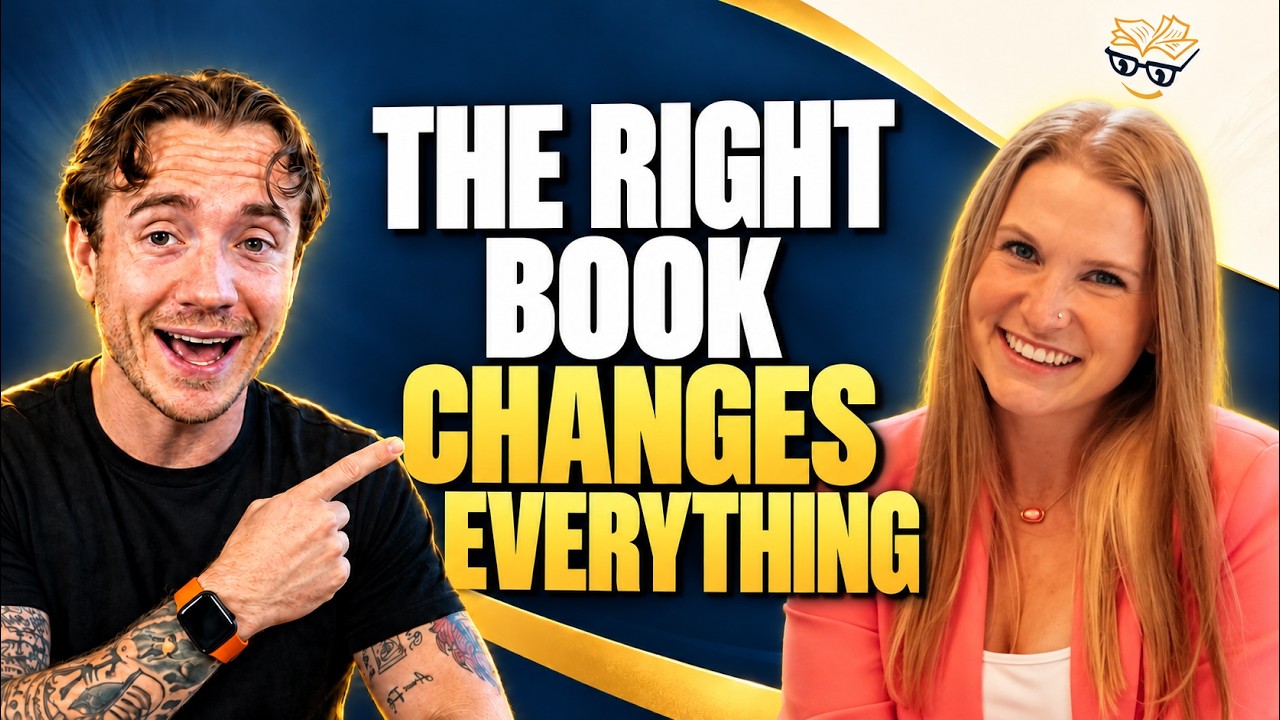
In this inaugural episode of the BookThinkers: New Voices podcast, host Sarah interviews nonfiction author and reading advocate Nick Hutchison. Nick shares his transformation from a non‑reader athlete in high school to a prolific reader and author of Rise of the Reader, explaining how a summer commute listening to business podcasts sparked his love for books. He describes the evolution of his original Book Thinkers podcast, why he stepped back from hosting, and the launch of this new show to spotlight authors without turning interviews into sales pitches. Nick offers a practical framework for selecting the next book: conduct a personal self‑audit of current problems, skill gaps, and curiosities rather than following trends. He announces the Book Thinkers Book Club, a community designed to combat the U.S. literacy decline (51% of adults read zero books per year) by meeting monthly with authors, providing memory‑training resources from grandmaster Kevin Horsley, and fostering accountability among motivated readers. The conversation also touches on the audiobooks‑vs‑physical‑books debate, with Nick emphasizing visual input for deeper retention while acknowledging his own heavy audiobook consumption. He highlights recent statistics on reading habits, his upcoming TEDx talk on declining literacy, and the book Limitless Daily by Jim Kwik as a recent catalyst for daily reading. Throughout, Nick’s enthusiasm for an “infinite game” of reading and his belief that each book is a potential “gold nugget” that can change a life are central themes.
Chapters
There are more books being published than any of us could ever read. So how do we find the voices actually worth listening to? That's what we're here to find out. Welcome to BookThinkers: New Voices, Conversations with Nonfiction Authors, a new podcast dedicated to discovering the people, stories, and ideas behind the latest and greatest nonfiction books. And for our very first episode, I am joined by someone who has built his career around helping people discover books and the people behind them, Nick Hutchison. Hi, I'm Nick Hutchison.
I am excited to be here, and thank you for inviting me to be the first guest on this beautiful podcast.
Of course, it's not like you own the show or anything.
But I thought it was cool that you, you thought I would provide some value. So excited to demonstrate what this show is all about and share my love of books, of course.
Absolutely. You actually have your own book, of course, uh, Rise of the Reader. And tell us about, not just about the book, but how it really just aligns with the entire mission of what BookThinkers is doing.
What usually surprises most of our new audience members is that I was not much of a reader growing up. In fact, I was the exact opposite. I was more of the athlete stereotype in high school and college, not really much of the academic. In fact, I'm famous for having a 0% homework average in AP Calculus. So I was always capable of doing the work. I just didn't think it was cool. So I chose not to. And that behavior carried with me throughout most of my college experience. But going into my senior year, I was in an internship. It was a sales internship. And my boss asked if I would go on a local sales trip with him. And so I said yes, and we hopped in the car and he asked me if he could put a podcast on. It was a business podcast and I had never listened to a business podcast before, but he told me he listened to them all the time. So I told him, oh yeah, I listen to these all the time too, which was a total lie. And so we started this drive and I was listening to a very successful business person share how they became successful for free on this podcast. And I was blown away. And he told me at the end of that car ride, he said, Nick, Listening to the same songs or the same playlist every day into work, it's not going to change your life, but the right business podcast might. And so for the rest of that summer, I had a 1-hour commute each way. So I started listening to 1 business podcast on the way into work and 1 on the way out of work. So 10 shows a week. And what I noticed very quickly was that most of the successful people showing up and sharing how they became successful were giving at least some credit for their success to the books that they had read. And the same titles kept popping up all the time. And so I started to question myself, like, does this whole I'm not a reader persona really align with the success that I want in life? And eventually I realized it didn't. And so to make what could be a much longer story shorter, I went to my local Barnes& Noble one day, I grabbed a stack of 10 books, which by the way, at $20 apiece, $200 in total was a lot of money. for broke college Nick to spend. But I grabbed those books, I went home, and I started reading. And I went from non-reader to reader almost overnight. And I shifted my entire identity, and I started solving problems and building skills and learning more about life, humbling myself constantly through books. And so that, that's kind of the origin story of Book Thinkers. Like, books just had such a massive impact on my life. And I tell that story in the beginning of Rise of the Reader, because it just shows that I wasn't always obsessed with this industry. I am now. But I definitely wasn't at the beginning. And it kind of humanizes the industry to say like, yeah, I wasn't preaching this stuff since I was in high school. I only fell in love with it when I realized I didn't like where my life was, and I wanted something different.
Okay, I have to ask, was there a single book assigned in high school that you actually read? Because there's only one for me and I remember it.
What was it?
Mine was Heart of Darkness, which I think that's Joseph Conrad.
I haven't read it, but I'll tell you, I didn't read any of the books assigned to me in high school.
If you've watched Apocalypse Now, I'm pretty sure that's that book. But I only read it because she put the audiobook on in class so we could listen to it. And it was narrated by Kenneth Branagh, whose voice is just fantastic. Fantastic. So
I will add that to my TBR. And no, I didn't read any of the books assigned to me in high school. I was way too consumed with, with high school football, high school wrestling, girls, you know, being cool. And it's sad. Like, I wish I could go back and press the restart button on that period in my life because I started reading and taking myself seriously later than a lot of people do. I'll tell you another quick funny story, Sarah, which was that in one of our classes, I don't know what age this was, but we had to memorize part of a Shakespeare solo, like the To Be or Not to Be speech.
I can still do that entire soliloquy.
Oh, really? Soliloquy. There we go. That's the right term. Well, I studied day and night. I knew this thing backwards and forwards. I knew it in Spanish. I didn't really, but like, that's how well I knew it. And I get up in front of the class and I was so insecure that I had so much stage fright and I wanted to be the cool kid that I just blanked, even though I knew it like the back of my hand. And the teacher, instead of like giving myself a moment to get centered and actually show the class that I had done the work, I made a joke to the teacher, like, who would waste their time studying this? The whole class laughed. I sat down, I got a zero on it. And it just goes to show, like, I was a very different person back then than I am now, thanks to the books that I've read.
Now I'm trying to think of the— okay, it's to be or not to be, that is the question. Whether 'twas nobler in the mind to suffer the slings and arrows of outrageous fortune, or to take arms against a sea of troubles and by opposing end them. To die, to sleep no more. To sleep, perchance to dream. Aye, there is the rub. Okay, make me stop. I don't know why.
Hey, you know what? Repetition leads to retention, so get it out there. Refresh the neural pathway. I, I don't know why I was
I still know that. So you used to have a podcast called Book Thinkers. And now we're coming out with this new one. What— why are we doing this?
Well, a couple of reasons. Number one is that after hosting 300 episodes myself, I kind of burned out a little bit, if we're being honest. And I thought, I don't want to lose that momentum. So we need to start another podcast within the business where we can interview and shine the light on all the amazing authors that we serve in so many different capacities. But I don't want to be the one to host it. And so you are the right person to host it. Why don't you tell everyone a little bit more about your background?
Oh goodness. Yeah, I come out of the podcast space and it's kind of funny because your origin story with books is kind of mine with podcasts because I never listened to podcasts before I started working with one. And I became the executive producer of a podcast just because I happened to be the director of marketing for a company That had a podcast. So I just inherited it and I was completely lost. I had no idea what I was doing, but I spent a couple years just really immersing myself in the medium and learning more about it, and I completely fell in love with it. And not for even the same reasons as you, like you realize how much you can learn for free from these people. Like, yeah, I think that's a great aspect, but for me it was that podcasts are just such a great medium for storytelling. And this isn't a place where you go to give information and statistics and like you're educating, but you're not doing it in such an obvious and textbook way. You're using stories to make sense of information because we don't need people to give us information. We have Google, we have ChatGPT. The only thing that AI cannot give us are people's stories. And I just fell in love with storytelling and the medium just fit in so perfectly. So I've been in this industry, podcast space since 2018, 2019. I've been to all the conferences, spoken on most of them, and I now have a production company that I run and work just with businesses to create podcasts that are strategic marketing tools. And you and I met when You stole my presentation in Vegas and we started working together to make the podcasting process better for hosts and guests and help our authors expand their reach and really impact people with their stories.
Well, that's perfect. And yeah, I think you stole my presentation, but we'll leave that story for another day. And yeah, the podcasting world has changed so much. I mean, we've been, as a business at Book Thinkers, we've been placing authors on shows to promote and market themselves for years and years and years, but the landscape has changed. And so what are some of the things that you have recognized about the podcast industry that just kind of, I don't know, they push your buttons a little bit?
Oh gosh, do you want me to get on my soapbox? Because I can rant about this. You know I can rant about this for hours. But I think the biggest thing is that, like I said, a podcast is a place for stories. It's not a place for sales pitches. It's not a place for true traditional marketing. It's just a place to tell stories. And I wanted to give authors a place where they can come in and not try to push for book sales, not say, well, you'll have to read my book to find out about this. This is in the book. I just want to get their stories. And why did you feel like you needed to write a book? What was happening in the world or in your life at the time where you just said, I need to write a book. People need to know about this. And I just want to get those stories and just really be able to get to know the people behind the pages. And I feel like the guesting landscape has become so transactional. So, I'm trying to help authors build relationships through podcasts and build connections and grow audiences that are actually connected to them and I think this is the perfect medium to do it.
Well, let me connect the dots for you on why I decided to write my book, Rise of the Reader. So in that story, I'll kind of pick up where I left off. I started reading books and I fell in love with reading and I started reading 100 books a year and I built the Book Thinkers audience on social media to many, many tens of thousands of followers at the time. And I was getting probably 10 to 20 inbound DMs a day on Instagram from readers in my community asking questions like, how do I choose the right book? Or what's the right book for this subject? How do I take notes? How do I remember more of what I'm reading? And so I was answering those every single day when I would sit down at the end of the day and log off from my computer, I'd just be answering DMs. And then I was fortunate enough to spend some time with one of my author mentors, MJ DeMarco. I was at his house in Utah, and he was telling me a story that he, you know, for a while he would drive around a very nice car, a Lamborghini. And when he would come out of a restaurant, let's just say he got ice cream or something like that, there'd always be a kid out in the parking lot looking at his Lamborghini saying, how do I get one of these someday? And what he would do is he would pop the hood, which I guess is where the trunk is on a Lamborghini, and he would take out a copy of his book, The Millionaire Fastlane, and he would say, No answer that I could give you in the next couple of minutes is going to change your life. But the answers inside of this book, that's what can change your life. And so he was giving people all of the context that they needed to get their own Lamborghini instead of just like the little bite-sized chunk. And I realized that in the DMs, when people were asking me these little questions and I was giving them little answers, they were missing the broader context of how books changed my life and helped build my ideal reality. And so I decided, wow, I've got to write a book. I've got to write a book where my single answer to their question is connected to the rest of the process so that they can actually take action on it instead of just like get the little hit of dopamine, like, wow, he answered me today. So that's why I decided to write Rise of the Reader. I knew that books had the power to change people's lives. I just wasn't giving the full answer to those that really needed it. And there was so much inbound demand for the information. So I just sat down for a period of like 6 months. And as people kept asking questions, I kept writing more answers inside of the book, and then reformatted it so it made sense and delivered it to people. So that hopefully that helps connect the dots a little bit about why I actually wrote the book.
No, I, you know, I love the story behind books. And you've been doing this for so long, and you've read so many books. Are there like, why haven't you stopped? Why are you still looking for new books?
I don't think I'll ever stop. Honestly, I'm obsessed with it. I'm so infinitely curious. And you know, there's this interesting thing. It's a little bit of a dichotomy, but I'll explain it. The more you read, the less you know about the world. You know, there was this 21, 22-year-old version of Nick who was a total know-it-all. I knew the answers to everything. I had it all figured out.
I think that's every 21, 22-year-old.
I think so too. But then like you read a book about one tiny little micro area of your health or your personal finances or your relationship, and you realize there's this entire world and library of interconnected resources and studies and influencers and people who spend their entire lives on that one tiny little micro area. that you thought you had right, but you had wrong. And so the more I read, the more areas of life I realize I know nothing about. And so there's always a next book and a next book in a different perspective. So the more I read, the more I want to read, because every time I read a book, yeah, I come away with some answers, but I also develop more questions. And so I don't think there will ever be a time where I hang it up and I'm like, you know what, I'm done with this game because I think it's an infinite game. I really do.
What is it about like a new book that will get you really excited?
There's a, there's a great metaphor inside of the book Think and Grow Rich by Napoleon Hill, where he talks about being 3 feet from gold. And so whenever I pick up a new book or I listen to a new podcast, I always imagine that I'm 3 feet from gold, like on the next page, There might be that golden nugget that changes the entire trajectory of my life. And I'm always motivated to find the next one because I've found so many already. Like, out of the 1,000 books that I've read cover to cover, I would say there's a, there's a high volume of them that have significantly changed the way that I think about something. And so I know that every book has the power to do that on the next page. Which is why I continue reading and I keep going. That's what keeps me motivated. And look, I've got all sorts of tips and tricks on how to get the most out of every book that you read. But I think that underlying philosophy of being 3 feet from gold and knowing that on the next page, your life can change. That's the thing that keeps me inside of the books.
I love that. For people that are going to be listening to this and hearing from these new authors and Hearing their— the stories behind their books and the passion behind them. You said you have a bunch of tips and tricks. What is the number one tip for people listening just to be able to figure out like, that is the next book that I need to read?
We all need to slow down and do a little self-audit instead of reading the next book because it's a bestseller or your friend read it and recommended it. Instead, try to connect with what you need. What problems are you facing? And is there a good book to solve that very specific problem? What skills do you need to acquire to get from where you are today to where you'd like to be walking into next year? And then are there books to help you acquire those skills? What areas of life are you just so genuinely curious about? A specific person from history, a time in history, an area of life that's expanding today. And are there good books that can help you satisfy that curiosity? I think doing a self-audit and asking those questions, and then finding the right book for you will lead to more progress and more positive action than just reacting to what's trending and picking up a book because your favorite influencer said it helped them. Yeah, it helped them solve their problem. It's very unlikely that you're facing the exact same problems that they are. So be a little bit less reactive, be a little bit more introspective and proactive. And I think that the books that you read will have a higher chance at helping you in life.
That's great advice. And now you have something new that you're launching. It is the Book Thinkers Book Club. And I know I'm really excited about this. I know you're really excited about this. And I think everybody should be really excited about this. So talk about it and what is it and how can people join the club?
For so many years, we've helped authors promote and market their books, and we're going to continue doing that. But we have this entire audience of hundreds of thousands of readers across social media that, yes, we serve them by giving book recommendations and tips and fun social media posts. But I've never really built a community where like-minded, ambitious individuals can get together And take reading seriously. I mean, we've all heard that famous Jim Rohn quote that you are the average of the five people that you spend the most time with, and my goal is to build a community where you can find those five people that are just as motivated as you are. I think being a small business owner or being in the nonfiction personal development reader space can be kind of lonely. Like oftentimes, you're the most motivated person in your local friend group, and it's hard to pull against. The average of the 5 people that you spend the most time with if they're not moving and they're not motivated. So I want to build a space where you can refresh and kind of update the people that you're spending time with and make sure that they're aligned on the same types of missions that you are. So inside of the community, every month as a group, we will be implementing one great personal development, nonfiction business type book, and then we'll actually be meeting with the author live to implement the book with them. So that's kind of the format and the structure. There will also be a ton of amazing resources inside of the classroom that I'm building with a longtime mentor and coach of mine named Kevin Horsley. He's a grandmaster of memory, kind of like grandmaster of chess. Like, they actually have that designation. And to give an example, he at one point had the world record for the fastest to memorize the first 10,000 digits of pi. And be able to identify a specific number. So in the contest, they'd be like, hey, Kevin, what's digit number 7,221? And he would know it like that. So just shows you what you can do with your memory. So he's the one helping me create the content. And look, in the United States today, 51% of US adults read zero books per year, and only 16% of US adults read on a daily basis. And as a result of that declining reading and literacy rates, IQ is dropping, mental health is getting worse, like yada, yada, yada. So the Book Thinkers Book Club is just a space to help solve those problems and hold people accountable to living up to their potential and use books just like they've, you know, they've changed my life and I want them to change everybody else's life too.
Okay, it's not a podcast without a little bit of controversy. So I'm going to ask for your opinion. Are audiobooks counting as reading?
Yes. I think, you know, I know we disagree on this a little bit, which is great because I love inviting a little bit of controversy. The data that I've read shows that somewhere between 60 to 80% of the inputs to our brain are visual. And so when you think about consuming an audiobook while you're driving in the car and you're multitasking, the chances that you form enough of an emotional connection to what you just learned to actually implement it are lower than if you're not multitasking and you're leveraging your visual input with a physical paper book. So that's the way that I love to study. It's funny because Kevin, my partner in this community, he's a Kindle reader. And he believes, like, reading on a Kindle is like using a GPS, whereas reading a physical book is like using a paper map to get from point A to B. So we all have different ways that we prefer to consume content. I'll say that I probably listen to 30 or 40 audiobooks a year. So I do listen to a lot of audiobooks. I think they're a lot better for us than music if we're trying to make a change in our life. But I actually listen to a lot more podcasts than I do audiobooks. So anyway, there are all of my different thoughts on the subject.
That's fair, because I will say I am almost strictly an audiobook listener. And it's just so convenient. And I do have a Kindle. I don't know if I've ever turned it on.
Yeah, I have one and I don't think I've ever turned it on either.
It's somewhere. It's in a drawer. I should probably give it away because I don't use it. Um, but I, there are 2 questions that I'm gonna be asking every author that comes on this show. So I'm going to ask you, what is an idea that has just been stuck in your head recently?
I will be a little bit cheap and I'll restate something I just said, which is that 51% of US adults read 0 books a year and only 16% of US adults read on a daily basis. And that has been stuck in my head. In fact, I'm doing a TEDx talk at Harvard in a couple of weeks. Talking about declining literacy rates, like reading has declined by 43% over the last 20 years, and that cuts across every demographic: age, gender, race. We are just becoming a society that doesn't read anymore. And you're right; it's not convenient to read. It's more convenient to listen. I agree a thousand percent. But I just think they impact us in different ways. So. That has been stuck in my head, and I can't get it out of my head. I think it's the reason I started the book club. I think it's the reason I'm doing the TEDx. I think it's the shift that people will see on my social media and with my personal brand. And I am going to make reading physical paper books more attractive again to people over time. It's a big shift. But that's going to become one of my major missions in life.
I love that. And now I know that you have a very long list. So I'm going to say, what is the latest book that changed the way you think about something?
You are right, I have a long list. I've read over 1,000 books cover to cover, and that includes audiobooks. So I've listened to probably a few hundred from beginning to end. You know, and I do have a 5% that I think has created 95% of the change in my life. So I'll say that the book that comes to mind right now is Limitless Daily by Jim Kwik. It's a daily reader meant to help increase that stat that 84% of people read nothing on a daily basis. And every day you just pick up the book, you flip to the date, you read one page, it has something useful. And that book has been changing my life because I think it's going to be the bridge For people to go from, I don't read anything, to like, yeah, I read something physical every single day, even if it's just one page. And it's been impacting my life in a really positive way. It's also the first book that we are featuring in the book club. So if that's something that the audience is interested in implementing with me, then I'd be happy to see them there.
Perfect.
Well, hey, that's a wrap. Sarah, thank you so much for the amazing interview. I'm excited to tune in almost every single week to hear from a new author, why they decided to write their book, how it's going to positively impact the world. I think we need more content like this. So thank you for hosting the show. By the way, audience, if you've made it this far, this is a new show. Like it, subscribe to it, comment on it, share it on all the platforms, get it in front of the people that need it the most. And with that, adiós, amigos.
Bye.
More from Nick
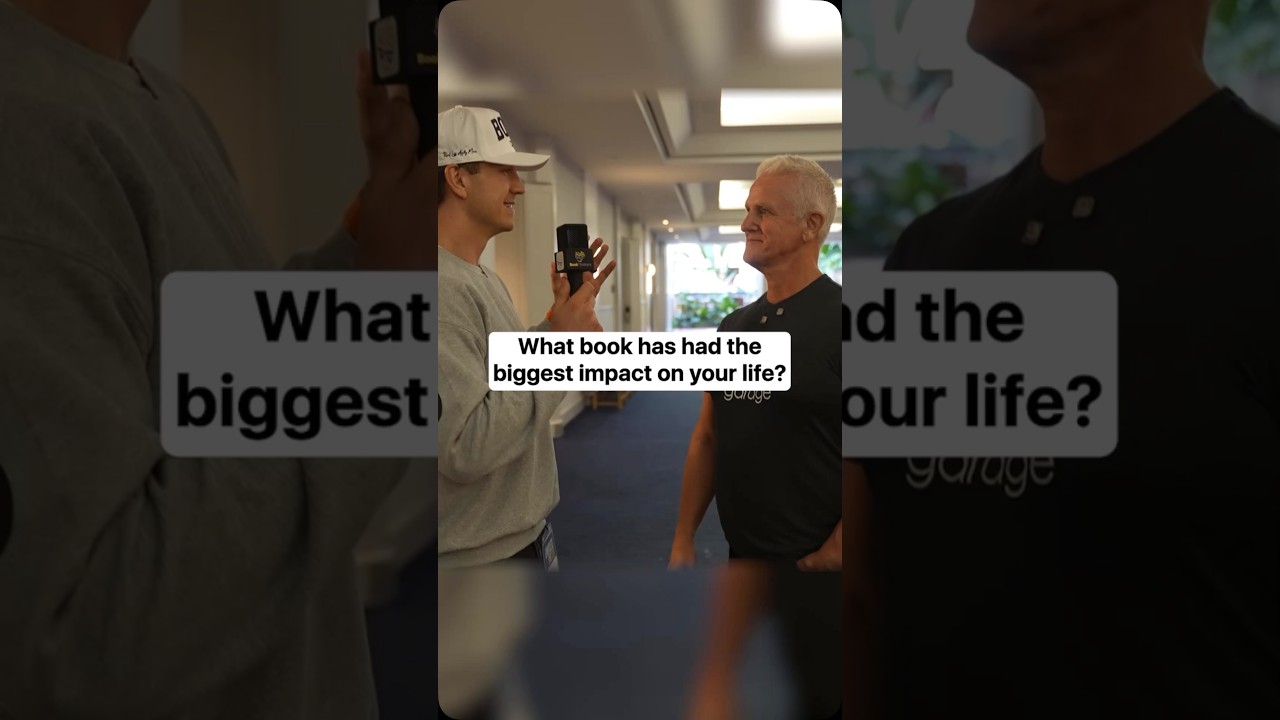
Garry Lineham shares that “The Power of Now” had the biggest impact on his life


Napoleon Hill’s “Think and Grow Rich” is a timeless classic #selfhelp #personaldevelopment

4 Books to Help You Get Better at Decision Making #selfhelpbooks #bookrecs #nonfictionbooks

Have you read this book yet? 📖: The 5AM Club by Robin Sharma #selfhelpbooks #robinsharma

Dan Sullivan on Listening to Your Customers Instead of Watching Your Competitors
5 Books That Will Boost Your Financial Intelligence #financialfreedom #nonfictionbooks

The People That Preach the Loudest About Virtue are Usually the Most Power Hungry