What High Performers Know About Turning Challenges Into Opportunity
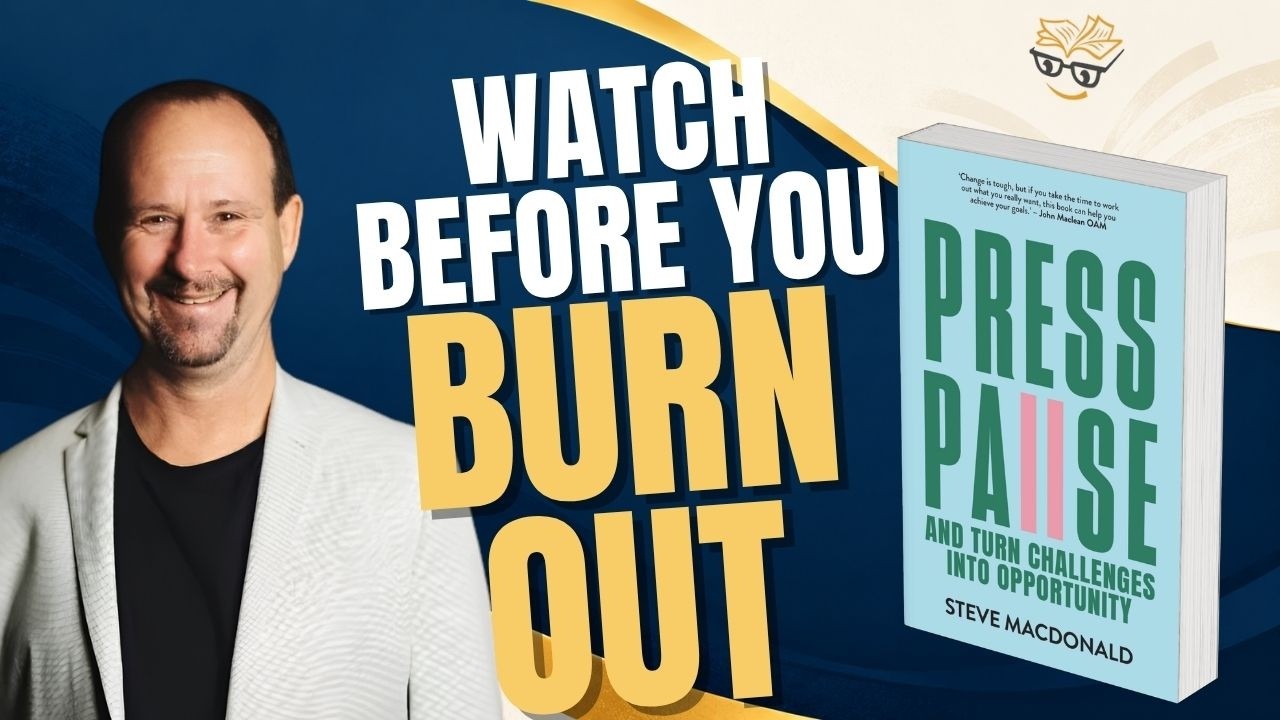
In this BookThinkers New Voices interview, host Sarah talks with organizational psychologist and high‑performance coach Steve McDonald about his book Press Pause and Turn Challenges into Opportunity. McDonald shares personal burnout moments that sparked his awareness of the need to “press pause,” explains why a simple break often isn’t enough, and introduces the core framework of his book: five reflective questions and a gap‑analysis tool that help people assess whether they are on a path they chose. He highlights two diagnostic lenses—where you spend your money and where you spend your time—to surface hidden values, and discusses how strengths can become liabilities when over‑applied. McDonald presents practical “pause” habits, such as a 60‑second breath break and the concept of a “super‑habit,” and describes how to embed pausing into daily routines. He outlines the primary audience (high‑performers and people in life transitions) and offers resources: a free pressure‑test on his website, purchase links, and a limited‑time free‑copy offer. The conversation closes with a personal book recommendation (Gradually Then Suddenly by Mark Batterson) that reinforces his message of gradual effort leading to sudden breakthroughs.
Chapters
Have you ever looked at a life that seems perfectly fine on paper and thought, is this it? Steve McDonald is an organizational psychologist and high-performance coach, and his book Press Pause and Turn Challenges into Opportunity is about recognizing the moments that force or invite us to stop, take stock, and decide whether the life we're living is actually taking us where we want to go. Steve, welcome to Book Thinkers New Voices.
Hey, good to see you.
It's good to see you. I'm excited to really dive into this, and I want to start with just what was that moment that made you realize you needed to press pause in your own life?
Yeah, I had a couple of different moments, but one that really stood out for me personally was I remember being in a meeting. It was a leadership team meeting, and we were running around and having, you know, all those good conversations that you have But I remember just sitting there and it was almost like I was having this out-of-body experience. I was watching the room. So, I was actually sitting there and watching the room and I thought, wow, this is really weird. Even for me, that was weird. And so, I just happened to say to the chief operations officer who happened to be a psychologist by training, that wasn't the work she was doing anymore. She said, look, I feel really weird. Like I just had this thing where I'm watching this meeting. I'm kind of out of body. She said, Steve, I reckon you're burnt out. I reckon you need to go home. And so I was like, nah, I'm not burnt out. Burnt out's for old people. And I was kind of in my, in my, uh, 20s at the time. I said, nah, that's for old people. I'm not burnt out. I might be just a bit tired. Uh, and I've been working hard like I always did. And yeah, we were trying to get some change through and there was lots of that kind of, you know, politics, if you like, of trying to get stuff through. But I was pretty excited. So I, you know, drove home, sat down, couldn't find my keys to get into the house. I just sat down on the patio out the back. And I remember my wife kind of leaning over me and waking me up and saying, Steve, Steve, you okay? And I was like, yeah, of course I'm okay. I'm just sitting. I'd been sitting outside for 4 hours. I had completely, I don't know, fallen asleep, passed out. I was sunburnt. In Aussie, it was in the middle of summer, so I was completely sunburnt. And yeah, that was a week of me being off work and just slowly trying to recover. That was my kind of first experience of saying, well, Sometimes you just gotta stop and press pause. Yeah, really weird experience. Now, I'd like to say I learned from that experience. It's actually happened to me twice since then, not the patio thing, but the kind of getting close to burnout. And so that's kind of why this idea of pausing every so often in life just to see if we're on the right track and where we're going is so important to me anyway.
Yeah. And now, In your book, you talk about even after that wake-up call, you did take some time off, but you basically just jumped right back to the same treadmill you were on and did the exact same thing. Why wasn't that wake-up call enough?
Well, it's human nature. I mean, as a psychologist, this is one of the reasons I wrote the book. I observed lots of people I coach did the same thing. They'd be looking for a career change or they'd have something happen in their family or there'd be a health incident or some burnout. And then they do exactly the same thing. They do this, yep, I'm going to go away. I'm going to stop. I'm going to rest. And then a couple of months later, I'd find them in exactly the same kind of spot. What I realized it is, is press pause or pausing is a bit like telling people to work smarter, not harder. Or it's a bit like telling people to calm down. You know, I don't know if you've ever had that moment when you've been a little worked up about something and someone said, hey, just calm down. You'll be okay. And you think—
Oh, it works really well.
It's amazing, isn't it? Yeah, I know.
I instantly just like, oh, okay, I'm calm now.
Yep, yep, yep. Works every time. Um, and pause is a bit like that. People go, yeah, I get it, but what am I supposed to do when I pause? Uh, and that was kind of the impetus, and that actually was the impetus for the book. I also had a personal, um, moment as well, which I, I tell in the book, where we had a family Quite an unfortunate family event where we were sitting, my wife and myself were sitting watching TV. It was a Friday night, you know, typical Friday night, everyone's tired, kind of vegging out in front of the TV with some pizza and wine. And we noticed there was a police car outside, and so didn't think anything of it, but they came to the door and knocked on the door and let us know that her brother had passed away in very unfortunate circumstances. Which, of course, you can imagine grief was just through the roof. And what I observed, obviously being part of that, the family came together and all made promises of doing life differently and being closer to each other and building good relationships. And all with good intent and all meaning it as well. So, I don't think there was any observation of people trying to do it without meaning. I think they actually were really meaning it. But, you know, 6 months later, all the relationships had gone back to the way they were. Life had gone back to the way it was. And again, it was this same pattern that I noticed where we get to a certain point and then we stop and we go back to what we had because, you know, what we had is actually easier than what we want to get to in many cases, even if we don't like what we have.
Yeah, that's— We really are just kind of creatures of habit and we go back to what we were doing.
We certainly are.
What, what is one of the things that you suggest to break us out of that?
Yeah, I think the first thing we actually need to do, and in, in the book, you know, we talk about, I talk about 5 questions, but I think the most important one, and this is something I've just noticed in life, that when we pause, we actually need to stop and just reflect and ask ourselves a question. Are we actually happy with where we're going? Is this pathway we're on, is this actually a pathway that we've chosen or is it a pathway we've just found ourselves wandering down and we get to the end of the path or we're halfway down the path and we think, well, I'm even on this path. I didn't even choose this path. And so, this idea of reflecting, I think, is super important. I also work with some people who, I, again, have some people in my family who are really deep reflectors, but they just go around in circles. So, it's often a phrase of what we say is ruminating. So, they think about what's not working. They're ruminating. They're just going around in circles. That's not the reflection I'm talking about. It's more the question of, am I on the right track? Is this a track that I chose for myself? Sometimes in life, we get on tracks that we didn't choose for ourselves for a whole bunch of different reasons. And so, if we are on a track and it is one that we've chosen for ourselves, then we can kind of say, do I want to stay on this path? That's relatively easy. It's more if we're on a path that we didn't choose for ourselves, what do we do in that case? Because sometimes we can't get off that path. Sometimes we're on that path, it's a path we're on. The question then is, what can I do with this path? What's the direction I want to go if this is the path that I don't have any choice around? And I think that stopping and asking that deep question first before we try to change anything. If I'm going for a hike through the woods and I see 2 paths and I suddenly say, well, which path do I think I should be on? And I just take off one without thinking, which I have done on many hikes. I find myself in interesting spaces, which is okay on a hike, probably not so good in life. And so, just stopping for a little bit and saying, which path do I want to take? I think is absolutely critical.
Yeah. And you also suggest looking at 2 things in your life. It's where you spend your money and where you spend your time.
Yeah.
And that helps kind of see what it is that you value. But what happens when those 2 things are telling completely different stories than the values we say we have?
Yeah, well, I mean, how often do we say that We say that we value health, and yet when we look at our budget, it's going to a whole bunch of stuff maybe that's not healthy. And this is not about being perfect. Or we say we value family, and yet when we look at our time that we spend, we spend very little time with family. The friends one was one that I had to really challenge myself on because I said, you know, I value my friends. I value having good close friendships. And yet, when I was looking at my time during those burnout times, I was spending very little time with my friends. I was actually spending most of my time at work. So, my time budget, if you like, showed me what I really valued. And so, I think it is really important. It's a hard question. That was challenging for me to say. I say I value my friends, but yet, if I was to ask my friends, they'd probably say, Steve, we've not seen you for ages. We've not heard from you. Not sure you do value us unless it's for something to do with work and then you give us a call. And so, I think, as you've said, that question of what do I value and is my time, is my budget, is my energy moving along that line or is my energy, my budget, my time moving in a different way than the things that I say that I value?
And you alluded to those 5 questions that you ask in the book. Which of the 5 was the hardest for you to actually ask yourself and answer?
It's a good question. I talk about this gap analysis, which is what we've just been talking about. And I found often in coaching, because I use those 5 questions in coaching, when I ask people to actually stop and reflect on the gap, that question that I just had, we would have the conversation in a coaching session and it was all Fine. But I'd have people afterwards at the next coaching session say, Steve, I really disliked you. I really disliked you after that session. And what they were saying was, I like you now, but I didn't like you before because you were asking me some really hard questions and I didn't actually want to deal with those questions. But now that I've dealt with those questions, I'm ready to move forward. And what was really obvious in their faces is you could see people who had wrestled. And when they came to that next session, there was a lightness about them. Now, some people said, yeah, I have a gap and that gap I'm okay with. Like, I'm actually okay at the moment investing more in family than I am friends. And I'm actually more okay at the moment investing more in health than I am family or investing more in health than I am work. And they're okay with that. It's never for me to, or for anybody, I think, to judge anyone's decisions. Everybody makes decisions for For reasons. Sometimes they haven't stopped and thought about those reasons. But if they've stopped and thought and say, you know what, I'm comfortable with that, well, that's good. But those 2 comments, so Steve, I disliked you. In fact, some people went a whole lot stronger than that. Some people were like, I hated you, Steve. Really lovely people. But the lightness on their face in that next session was quite amazing and the lightness about their whole self because they'd had a conversation that they hadn't normally had a conversation with themselves about. And pause had gone from something about like work smarter or calm down to actually something that had become meaningful for them. And for some people, that was an hour. They spent an hour thinking that was enough. And for some people, it was a month of thinking and that's what they needed. So, this idea of pause doesn't mean you have to stop for long times. You just have to stop long enough to think is often a comment that I make.
I can't imagine someone saying they hate you. You're just so, you just seem so nice.
I can't imagine it either. I can't imagine either. I had someone the other day say, Steve, you know, sometimes I just want to hit you. I'm like, wow. I was being a little bit annoying at the time, I must admit. My football team was doing very well and theirs wasn't. And it's somebody I'd known for a long, a long time. But yeah, I can't imagine either why anyone would say that.
Seriously.
Exactly.
One of the things that you argue in your book is that sometimes the strengths that got us to where we are can actually start to hold us back from where we're trying to go. So talk about that. How does a strength start to become a liability?
Yeah, it's counterintuitive as well because we're often taught, and which I believe in as well, focus on your strengths, build your strengths. What strengths do you bring into this situation? And that works most of the time. And this is why I love psychology because there's all these psychological principles that work most of the time, don't always work all of the time. So, as an example, I'm somebody who, if I set myself a goal, one of my strengths is I set myself a goal, I will work super hard to make sure I deliver on that goal. I told a story about burnout at the start of this podcast. That's what happens. So, it's a strength that's taken too far, I end up burning out. I'm somebody who likes to get to the bottom of problems. I like to understand a problem, understand why it's there, and then do something about it. And that seems to be a strength of mine. People who know me say, Steve, I love the fact that you take some time to understand. Sometimes though, there are problems in life that seem to be unknowable or unsolvable. But I stay there. I stay there well after everyone's gone. I'm not sure we're going to solve this problem. Let's just move down another path. Let's try something else. And there's me still trying to solve that particular problem. So that resilience, that sticking at things is a strength, but if taken too far, can actually cause me to come unstuck. And so that's why having good people around you who know you well, I think is so critical, who can just say, you know what, Steve, I reckon you're doing that thing again. I reckon you probably should Maybe try something different. And because they care for you, they understand you, they know you, they're not going to do it the minute something gets hard, but they will do it after it's taken too long. So, yeah, I do. And I see that probably another example actually is somebody I coached had a really strong strength of looking after people around her. She was incredible. She was the kind of person in a workplace, if Something was going wrong, she would be the person that everyone would go to, to talk to. And she was fantastic, full of wisdom. The problem was is that that started to cause her to get burnt out because she was leaving work with everybody's problems. And so, she had to actually start saying no to people, which wasn't a strength of hers. And so, over time, she developed this, you know what, I get it, Steve. I get this is an issue for you, but actually, I don't have capacity right now, or I don't have time right now, or I think you need to go talk to somebody. And that was really quite fascinating to watch her work through that and struggle with it the whole time, to struggle to work against a strength of hers, but realize her health, her wellbeing, her mental health, everything actually depended on her managing that strength a little. Yeah.
Yeah. And in that story from the beginning, when you were so burnt out and it was pointed out to you, but you're just like, no, I'm good. So who do you want to pick this book up? Because I feel like the people that really need this book might not know they really need this book.
It's absolutely, it's the fascinating idea of pause. People who are moving fast don't think they need to pause. And so, I actually, when I wrote this book, had in mind a number of people that I work with and coach who are in their minds high performers, and they are high performers. They're people who are moving quickly. There are people who are making decisions. There are people, and many of them are the type of people who say, I don't really have time for reflection, Steve. I'm just too busy doing, which is why I talk about pause can take a minute, pause can take an hour, pause can take as long as it needs to. So, that's probably the first and the main audience. I have had a number of people who, yes, they're high performers who have reached out to me, have just said, Steve, I was going through a career change. Or I was going through a bit of a life transition, either a relationship or kids leaving home or a relationship transition. And they said it was just really good to sit with a book and just work through a bit of a process because I didn't actually feel like working through the process. My head was all over the place. And so, just to stop and think and work through a process. So, they're probably the 2 people, someone who actually is going through some form of transition in their life. And the other is that high performer who says, nah, I don't need to do this. I'm all good. Uh, I think, you know, I'd encourage them to pick it up. It's a short book to start reading and see how far they get.
And if someone listening right now has that kind of nagging feeling of just, is this, is this it? But they're not ready to maybe blow up their career, blow up their relationship, their life. What does pressing pause actually look like if they're just going to start doing it tomorrow?
Pressing pause, I would say the best thing you could do is actually just practice pausing for 60 seconds. So just get into the habit. We, in fact, one of the things I talk about, pause, it's a super habit. So a super habit is this idea. I don't know if you've come across this idea, but I've used, I changed it from a keystone habit, which is what the research says, to a super habit because I think super habit's far more effective. But it's the idea, you know, In the morning when I get up, if I take 30 minutes and just reflect on life, do some form of devotional, reflect on life, my day, I exercise better, I'm a better person to be around, I tend to make better decisions because that 30 minutes is my superhabit. If I don't do that 30 minutes, then my day is all over the place. I probably don't exercise, I don't eat healthy. For other people, exercise is their superhabit. They know that if they just do that one thing, then the rest of their Their life tends to work out okay. I talk about pause as a superhabit. Just get used to, before you have a conversation, take a breath. What's going on in your head? What's going on in your body? Before you walk into an appointment, take a breath. When my son was 14, he's now well and truly past 14, but when he was 14, I had to take many breaths. Sometimes I did, sometimes I didn't. There was marked difference when I took a breath and didn't take a breath. So I would really encourage people, Just get into the habit before you have a decision to make. When you find yourself worked up, just take 30 seconds, 60 seconds, breathe, pause, and just ask yourself a question. What's going on inside right now? What's going on in my body? What's going on in my brain? And I reckon once people start doing that, my observation is that people start then getting into this habit of just slowing down enough to be in control.
And if somebody finishes Press Pause and only answers one of the 5 questions honestly, which one do you hope it is?
Well, that's a great question. Of course, I'd say all 5 are equally as important, but of course I'd say that because I wrote it, didn't I? Yeah, yeah, yeah, that's right. I can't say one is less important than the others, then I could get rid of it out of the book. However, having said that, I do think, um, I do think once people have had that gap conversation, so is this the path that I want to be on? That for me is the question that unlocks the rest of the process. You know, most of us know how to, once we've made a decision to change, most of us know how to do that reasonably well. I think there's enough tools out there and lots of really good tools about discovering our lens and our fuel. So I really think that gap question. Is probably the single most important question.
And what did that gap look like for you?
Well, for me, as I said, there were some gaps with what I was doing with my friends. So where I was working with my friends, family, there was a path that I was on that I wasn't actually— and I didn't realize this until my second burnout that it was not the path that I'd chosen. It was a path that I was actually very successful on. I was doing very well on, but it wasn't a path that I was chosen. And it was also in life, and I do believe that life often gives us these opportunities to transition and move. And I had walked past that once or twice, and I'd actually become the person at work who was fighting the system constantly. And it wasn't that the system was wrong or bad or poor. It was actually that I now needed to be on a different pathway, and I was still trying to stick to the pathway that I was successful on. And so, that was probably for me the most challenging question because it meant that I had to go back and study. It meant that I gave up a good job to have no job for a little bit. I had a young family at the time. Fortunately, I had a partner and a wife who was very, very understanding of that as well. But she could see in me, she could see the light had gone out a little, even though if you saw me, I was smiling, I was doing all of those things, and I was doing well at work. Um, so I think, you know, despite the friends and the family, I actually think it was— I was on the wrong path and I just needed to pause long enough to say, hey, that path's a great path, but it's not your path, Steve. This is your path over here. That was hard.
I feel like one of the things too that you mentioned that's really interesting is that you said like, and I was very successful at it. And I feel like one of like the things that kind of throws people off and gets in the way of them realizing what they need is that if you're going to be like, there's a problem, then you must be struggling with it. Like you must not be moving forward and highly productive and everything, but you actually can be highly successful and still be dealing with something like that.
Absolutely. I mean, there's a cliché, but clichés often have a little element of truth. And this cliché that there's many people who get to kind of the peak of their career, they climb the ladder of success and then find their ladder's leaning against the wrong wall. And how often does that happen where we pick up something that we seem to be good at and so chase that, but don't actually stop and ask, is this what I want to be doing or has the pathway changed? I have a really good friend of mine, a gentleman by the name of John McClane. It's not the Die Hard diehard John McLean. He's an Australian. He's an athlete, was a wheelchair athlete, but he's now in his— he's just turned 60, but he's represented Australia in 5 different Olympics. He was the first wheelchair athlete to do the Hawaiian Ironman. He did that 3 times, then swam the English Channel, and then represented in different events. He's now on the world surfing stage. He's now taken up surfing. His story is one of constant reinvention. I've done that. I've done well at that. What's the next thing for me in life? And so we often have lots of conversations together. His thing is about change, mine is about pausing, and he'll often say, you can't really change until you pause and then ask yourself the question, are you prepared to give up what has made you successful to take on another adventure? And, you know, he makes it sound easy and it's not easy, but it's one of those really interesting questions. Will success ultimately make me happy? Or have I been successful for a period of time? And now how do I leverage that to try something different or something new in life?
I'm feeling like a real underachiever in comparison.
No, if I go for a run and I think to myself, yeah, I'm not sure I'm up for the run today. I just have to think about him and then that's it. We're off running.
It's always good to have that kind of motivation. If somebody was ready to take that breath and hit pause and wanted to pick up your book, uh, where can they do that?
Brilliant. So, um, like I'd say, it's available at all good stores. It is on, uh, Amazon, um, or they can jump on to my website, stevemcdonald.co. There's a link there. One of the things I would love to offer, um, listeners or watchers of this podcast as well is, um, we have a a free test, we call it a pressure test, a free pressure test that I've put together for people to use and to do that. But if someone actually wants a copy of the book, you know, for the first 10 listeners, if they go onto the contact page and just write where they saw this podcast and put in their details, we'll actually send them a free copy of the book as well. So if they would like a free copy of the book for the first 10 people only, Very, very happy to do that. They just need to give us their details rather than mind games, and then I won't be able to know where it goes. Just put it on there, and we promise just to send the book and nothing else. So just to send the book, nothing else. There won't be any steak knives or anything extra that goes with the book, just the book. But we'd love to offer that. Or if someone wants to get a version earlier than that, if they just go to Amazon and can purchase it for their Kindle or purchase a hard copy off there as well.
And how do they take that pressure test?
Uh, there's a— when they go to the website, stevemcdonald.co, they literally— there's pressure test will pop up. They just press start pressure test and they're straight into it.
Easy enough.
It's very short. It'll take less than 10 minutes, probably only 5 minutes. And at the end of that, they'll get a bit of a report around how they're equipped and set up to handle pressure. What I find is most people have some strengths. And then there's a couple of areas that people can kind of focus on for themselves. So it's quite a useful tool.
Love that. Now, the last question that I always ask, this is Book Thinkers, so we are all about life-changing books. What is a book that changed your life?
Books have changed my life is one of the things I'd love to say. I was the kid who lay awake at night at school, I'd get the readers from school and I would take it back into school the next day because I'd finished the whole book. So, I've loved books my whole life. One of the books I'm reading at the moment that has really, really kind of impacted me, and it's a book I picked up a little while ago, it's a book called Gradually Then Suddenly by an author, Mark Batterson. And it's this idea in life that we have long vision, that things often take some time. and it feels like nothing's happening. And then all of a sudden, suddenly things happen. Like, I've been going to the gym for 6 months, nothing's happening, and then suddenly people go, wow, Steve, you look fitter. That's kind of speaking that over myself. I'd love that. And so it's a great book around this, you know, stick at the gradually, stick at the gradually, because the suddenly will come. So Gradually Then Suddenly is a book that I'm reading at the moment, which is— I'm finding very inspirational. And Yeah, kind of reaffirming a whole lot of messages that I believe are really important.
Love that. Well, Steve, thank you so much for joining me and giving us all permission to press pause before life forces us to. Press Pause is available now, so all of those details will be in the show notes. And to everyone listening, thank you for joining us for BookThinkers New Voices, where we meet the people behind the pages. Until next time, keep reading, keep learning, and keep discovering new voices.
Amazing. Thank you. Thanks for having me, Sarah. Appreciate it.
More from Nick
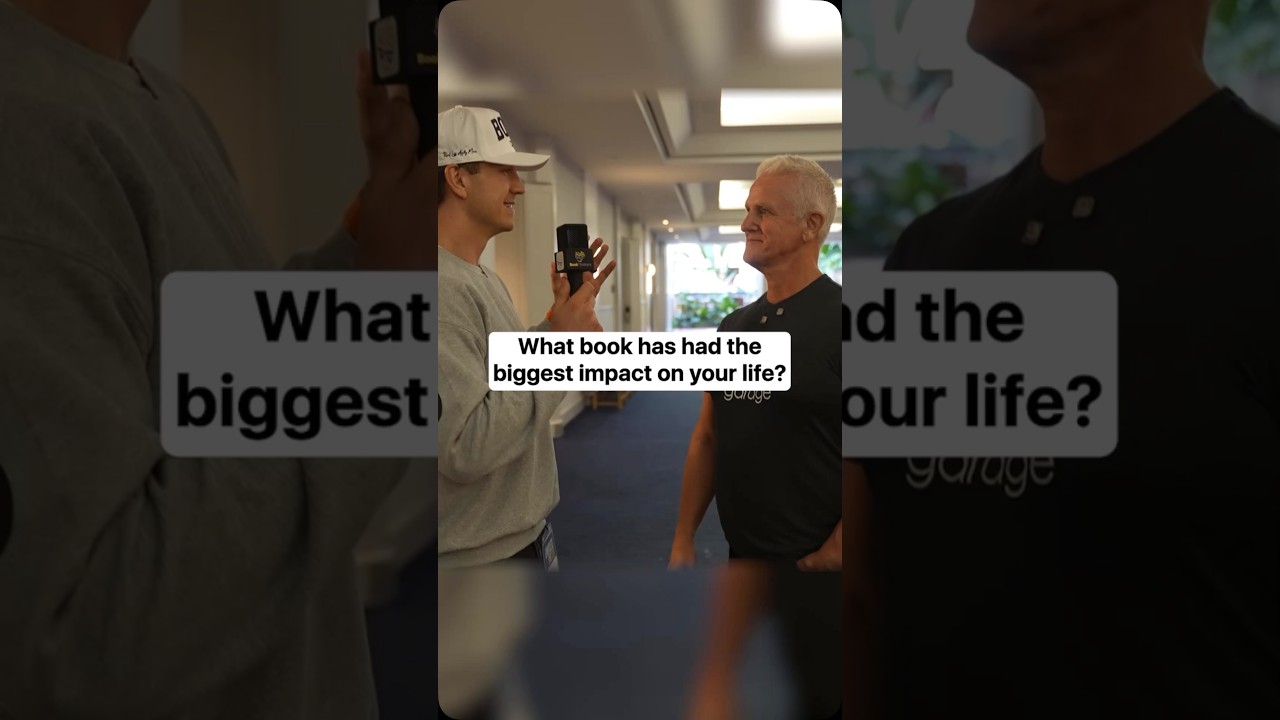
Garry Lineham shares that “The Power of Now” had the biggest impact on his life


Napoleon Hill’s “Think and Grow Rich” is a timeless classic #selfhelp #personaldevelopment

4 Books to Help You Get Better at Decision Making #selfhelpbooks #bookrecs #nonfictionbooks

Have you read this book yet? 📖: The 5AM Club by Robin Sharma #selfhelpbooks #robinsharma

Dan Sullivan on Listening to Your Customers Instead of Watching Your Competitors
5 Books That Will Boost Your Financial Intelligence #financialfreedom #nonfictionbooks

The People That Preach the Loudest About Virtue are Usually the Most Power Hungry