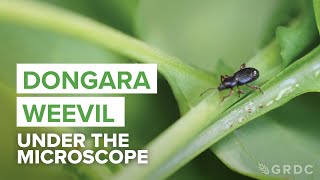
A weevil found only near Dongara in Western Australia's grainbelt attacks crop seedlings and causes patchy damage. Growers worry it resists conventional chemicals. Researchers are running a two-year study with traps to figure out where it lives, how to spot it, and how to control it.
Chapters
The Dongra weevil was first discovered about 10 years ago. We think it may have been misidentified in the past as desianthra or vegetable weevil. But no, it is different and it is a completely new species we haven't seen before. The reason why it's taken so long for us to actually discover it or to actually identify it and describe it is it's very obscure. It disappears for a while, it just pops its head up every now and again. And it's also very isolated. At the moment, we've only discovered the weevil in the Nangedi region, north of Miningyear and near Dongra in the Irwin region. We think it's confined to this small area just because they need to survive on the cracking clays. We don't really know. Maybe it's because over summer they can survive by going down the cracks and surviving those hot summers. Crop damage from the weevil can be quite severe. A grower will go out there and find big chunks of their crops just absolutely wiped out. The weevil will go in there and attack the hypocotyl just below the soil surface and chew away at that dramatic.
Big patches of canal has been lost and that's heavily affecting their yield and the outcome at the end of the year. The main concern with growers at this point are really wanting to know what they can do to prevent the damage that they're experiencing their crops. So hopefully the research out of this will give them some answers.
Farmers really want to know where they are, when they cause problems, when they have to look out for them and if they can spray them, and why traditional chemicals seem to be ineffective. Insects do have a good sense of smell and just using antennas, they can pick up volatiles in the atmosphere. These weevils may be particularly adept at running under clumps, hiding in cracks and just avoiding chemicals.
So there are 10 traps at each site. They are put into the ground, some on the edge of the fence line and then eight into the paddock, basically just to try and catch those weevils so we can do some further research on them.
At the end of this two year project, we're hoping to tell growers that, okay, we know exactly where they are, what you really need to look out for, what the symptoms are, what the signs are, and hopefully we'll be able to tell them, okay, this is how we can manage. Sam.