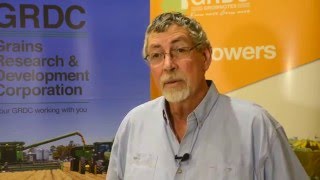
Neil Fettell, a farmer-researcher with 30 years in agricultural science, explains how GRDC panels connect local grower problems to research that actually reaches farms. He works on low-rainfall systems and crop physiology in central west New South Wales.
Chapters
Yes. My name's Neil Fattel. I'm from west of Condobelen in the central west of New South Wales. I have a small farm there which I run with my family. But my main role in industry has been as a researcher. So I spent over 30 years doing research with New South Wales DPI and the University of New England. And right now I'm still working as a research advisor for a local farming systems group called Central West Farming Systems. My research experience has been in low rainfall farming systems and that's right across the range from cereal crops to pulses, things like soil water and using soil water efficiently. And probably now I'm working more in crop physiology and I'm interested in the way that modern genetics can help us manage crops better and bring that right back to the farm level. So bridging the gap from fairly high level research back to the farm. The grains industry these days is a pretty exciting place to be. We need to keep making productivity gains for farmers to stay in business and to be sustainable. And the only way we can really do that is by bringing good science, I reckon good science back into the way farmers grow crops. And that gets me out of bed in the morning. It's that linking of science through into good agronomy, into farming and then making sure that growers benefit from that. I was keen to start to join the Northern Panel. I'd previously been on the Southern Panel, but I'm really enthusiastic about making a difference to farmers and to making a difference to the way that crops are grown and the sustainability and the profitability of farmers. And I think I bring a breadth of experience, both from being a farmer, a researcher, and also working with organisations like the University and CSIRO that I see across that whole range. And I'm hopeful that that breadth of understanding will help me bridge the gap between science and farming and make sure that our growers get the benefits. The Northern Panel is an important part of grdc. I think one of the strengths of the whole structure of GRDC is that we have the panels. It means that we have local reps from the whole of the Northern region talking to farmers, finding out what their issues are and their problems are, identifying where we can make a difference and then making sure that the appropriate research is done, but also making sure that the results get back to the farmers. So that's a crucial part of the panel, the Northern grains industry, which now covers both New South Wales and Queensland. It's like the rest of Australia that the challenge is to improve productivity by overcoming the challenges that we have in terms of things like water supply and weeds and nutrition, but also to go looking for what scientific breakthroughs are happening and making sure that Australia doesn't miss out on those and that we get the benefit to our growers, because a lot of the research these days is done overseas or in other parts of Australia. We have to make sure that that's brought back to our farmers, and so they get the benefits of that.