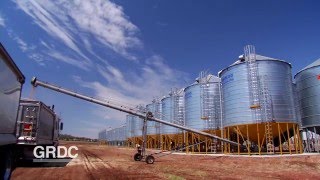
Short advisory video explaining best practices for storing planting seed. Covers why planting seed is valuable, desired seed quality (varietal purity, no weather damage, weed-free), recommended storage (aerated, fumigatable comb-based silos), hygiene and pest-monitoring routines, target grain temperatures (below ~23°C in summer, below ~15°C in winter), routine germination/vigour testing, and timing of treatments (apply fungicide/"pickle" just before planting; apply grain protectant generally except in Western Australia). Also points viewers to GRDC extension resources and a storage specialist hotline.
Chapters
Planting seed is one of the most valuable parcels of grain that we actually have on our farm in its own right. A thousand dollars per tonne upwards and the potential for it to be a real asset in terms of a good sound crop establishment or crop population in that early phase of our crop production. What are some of the key aspects of planting seed? Grain that has got varietal purity, grain that hasn't had weather damage and is weed free? What is the ideal type of storage you might consider for planting seed? Preferably a storage that is, say a comb based silo aerated and is able to be fumigated when required. This gives you the full range of options for a grain parcel, if you like, that's going to be stored for five or six months or even possibly longer on your property. Okay, so what are some of the key points of storing our planting seed? What's been the hygiene of those bins? Have we cleaned them out well prior to storing the grain? Have we used say a diatomaceous earth or dry side aeration? We manage that aeration well so we achieve nice cool temperatures in the grain, vital for maintaining germination and vigour. Aim for those cool temperatures under 23 degrees in summer, under 15 during the winter months. Monitoring every month, very important that we're actually sieving a bit of that grain, maybe using little insect probe traps to detect early any presence of insects, keeping records of those monthly checks, and then when we find pests, being able to seal up that silo and achieve an effective fumigation, these are all some of our key strategies for protecting that grain. Carrying out a germination and a vigor test is also a very important part of managing the planting seed. If there's a poor result from those tests, that gives you the options of looking for an alternative parcel of planting seed. Try and consider also in terms of treatment, that the pickle or fungicide application is left to the very latter stages just prior to planting. This gives you the options of selling that grain if it's not used for planting seed. With the exception of Western Australian growers, we do recommend a grain protectant be applied to planting seed. For more information on storing planting seed, there's the GRDC's extension team's information website and also there's a hotline available which you can ring and talk to our grain storage specialist.