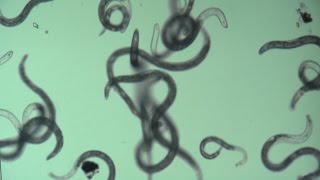
Root lesion nematodes can cut cereal yields by 60% in northern Australia. Research across 21 field sites found that resistant varieties surprisingly reduce nematode populations in the soil, making rotation with resistant crops like sorghum a key management strategy.
Questions this video answers
Up to 60%.
About 60% of paddocks.
Five years.
Differences of up to tenfold in numbers left behind.
21 trials in total: 14 winter trials and 7 summer trials.
Chapters
The latest research into one of the northern region's most damaging cereal diseases, root lesion nematodes, is delivering good news to grain growers. It might be microscopic, but its impact is huge. Intolerant wheat varieties can experience yield losses of up to 60%. And the nematode species Pratylenchus thornii is found in about 60% of paddocks. They can be very costly for the grower, but on top of that there's something which are very easily overlooked. There are no tell tale signs above ground and frequently the best way of determining root lesion nematode effects. It looks like a droughted crop or a slightly nutrient deficient crop. Earlier research identified poor variety selection contributed to the nematode problem. This led to the ranking of varieties in terms of yield loss. Now research group, the Northern Grower Alliance, GRDC's grower solutions group for southern Queensland and northern New South Wales, is looking beyond a variety's tolerance to a different characteristic, which is how many nematodes are left behind by growing a particular crop or variety, which we call resistance. And there's been a huge amount of new information in terms of how important that choice is in terms of the magnitude of the problem you're leaving yourself for following years. Five years of research has shown differences of up to tenfold in the number of P. Thornii left behind. This Darling Downs farm is hosting the latest in a series of trials. We coordinated with the grower that basically plant different wheat varieties in strips across his paddock here. So two varieties planted, Caparoi Durum, which is moderately resistant, which basically doesn't build the population up. The other variety being Strzelecki, being a very susceptible variety, building the population up of P. Thornii, hence creating a high and a low strip across the paddock. In total, there are 21 trials running, 14 winter trials and seven summer trials. Within the winter trials we had ranging from wheat, barley, canola, baby beans and chickpeas, and a whole range of other smaller minor crops as well. To assess P. Thornyi numbers, soil samples to a depth of 30 cm are taken. The more nematodes per gram of soil, the greater the yield loss. And as this latest research is showing, there are other impacts as well. The way nematodes work is that they create an inefficient root system, so hence the plant cannot take up the moisture and nutrients in the soil profile. So yes, while we're losing yield, unfortunately we're still not picking up a protein benefit. In addition, we're leaving extra nitrogen behind and also soil moisture in the soil profile as well. For growers, the implications go beyond their wheat crop. According to Richard Daniel, if you have got this nematode, it's about trying to ensure that you have a range of resistant crops in the rotation. So sorghum is a good example in the north, which doesn't host Pratolinka stauneii. And it's a very useful way of trying to ensure those populations don't get out of control. There's little doubt it's difficult managing a disease you can't see, but by applying these research outcomes on farm growers will see a more profitable.