GRDC in Conversation: John Hamparsum
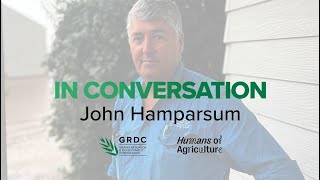
John Hamparsum, a Liverpool Plains farmer, discusses his family's irrigation legacy and navigating crises: losing 69% of his groundwater licence in reforms, surviving droughts and floods, and now investing in solar and tree planting. He's involved with Farmers for Climate Action and supports rural mental health through fishing competitions.
Chapters
Well, John, I think we just can roll into it. It's obviously very conversational. You're the last stop on our tour up here in northern northern New South Wales.
Sick of it then?
Not at all. No. I'll tell you, I just reckon it keeps getting more interesting. The different people you meet and the different stories.
It's like any of those deep dives. The deeper you go, the more the rabbit warren just sucks you in.
Oh, does it ever. And that's the beauty of this in conversation style is we can just see where it goes, mate. I guess.
Yeah.
Firstly, what we've been asking people is just to tell us a little bit about what you're up to here. We're obviously on the Liverpool Plains. I'll get in early and say many people around here would be calling it God's country, but also many people around Australia would call this area God's country. Tell us a little bit about your pocket of the world. What makes it special?
Well, it is special. Liverpool Plains is, you know, some of the best soil in the world. There's, you know, only a few pockets of this black vertisol soil. And we're just so fortunate to be here. We didn't come here by accident though. So, you know, my father actually was instrumental in us getting here, I suppose. But yeah, it is. It's the most beautiful soil you'll find. It's. So, yeah, what are you guys farming? Very jealously. Yeah. So we haven't got a big operation with sort of 1500 hectares and we've got irrigation, so we've got groundwater as well as surface water. So the groundwater resource is for. Well, we used to have a much bigger license but then through water reforms we lost 69% of our license permanently, which had to happen because the government over allocated the license by, you know, way too much. And then. So our other water source is the Mukai river, which is an unregulated river. And that term unregulated basically means that there's no headwater works on the river, so there's no dam that controls the flow of the river. The river is ephemeral. So it just, you know, and where I have a license that when it's a flowing above a certain level, we're allowed to access it and pump it to our license size. So. So they're the two sources of water we have which we use on the farm which is predominantly. Yeah, it's about 950 hectares, is irrigated and the balance is dry land or riparian and river area. And We've got some areas there we're doing a koala tree planting project on too. So. Yeah, right, yeah, that's with Country Road and Landcare Australia. It's a great little project we're doing. So yeah, we've got, yeah, that's the breakup of our farm, I suppose. Yeah.
And who, who's farming here with you?
So my sister is in partnership with me and she is also involved in a lot of other off farm boards. So she's a director on Namoy Cotton and Cottonseed distributors and, and a number of other things interests as well. So her other time is spent here on and yeah, we run the business together and my son Ben has just returned temporarily home while you know, just finished his four year degree or double degree in agriculture and business and then he's heading over the States and Canada later this year and I don't know, he might come back, I hope.
Yeah, unreal. Now tell me we just can hear a little bit of rain coming down outside. Is this welcome rain?
Is it? Well, it is.
Is rain rain?
Rain's rain. You know, look, everyone loves rain and I, you know, and we're on a floodplain so sometimes we don't like. But this is, yeah, it's welcome. I mean it's a bit difficult at the moment because we're actually irrigating and black soil, for those who don't know what black soil is like when it gets wet it really sticks to you. So you will grow in height by you know, sort of three or four inches very quickly when you walk in wet black soil and when you're irrigating and changing siphons at 3 o' clock in the morning and it's wet, it's tough, it's hard work. And so when you get a little bit of rain and you still got to keep irrigating because the crop needs water. Rain can be a bit of a pain in the bum to be honest. And yeah, I was out 4:30 this morning and it was sticking to my feet and yeah, I sort of, I wasn't cursing it because it's just nice to get the rain. But yeah, we're starting to get a little bit more now. There's a couple storms today. I think we've had 14 mils there this morning and then a bit this afternoon. So I mean we'll, we'll stop irrigating if we get enough to, you know, tide it off and if it becomes dangerous to get around the farm, well, we'll just shut the water down until it Dries out enough and we'll get going again because with irrigation and cotton and peak flowering with the cotton, you just don't want to get behind. You got to be a bit careful there. You can start chasing yourself. Yeah, well, the crops still using the water. So.
Yeah, you said before that your, your old man didn't come here by chance. So you're not farming here kind of by chance based off the decisions the old man made. So tell me a little bit about what led him out this way.
Yeah, so a bit about, oh, I guess the family history. I mean, on the hampersome side, my grandfather, he came from Armenia and he was basically, I guess you could say a refugee in a way. When the Australians invaded Gallipoli, the Turks used that as a good cover up to start the genocide of the Armenian people. And my grandfather was able to escape onto a French refugee ship. And then he went to Nice in France and then he came to Australia and according to the Armenian society, and I believe he was the first Armenian to come to Australia, and he was down in Melbourne, was involved in the textile trade business. And then my father was born down in Geelong and then he moved, or the family moved to Killara in Sydney. Yeah. And my father grew up in Stanhope Road, Killara. But he always wanted to be a farmer. And his father was involved in textiles and trading. Textiles and spinning businesses. But my father, he always wanted to be a farmer. And so he went to school in Sydney in the North Shore. And then as soon as he could get out of school, he went to Hawkesbury Agricultural College. And during his holidays he came up here, or to Barnbar actually, to work on a family friend's property because he just wanted to be on the farm. And so when he was at Hawkesbury, he had a ol. A model Ford, which I've still got, and he used to drive up to Barnaba to work. And there's a shortcut that went from Breeza through to Gunnedah down the Puliming, which was a black soil track, and it went through the plains grass back then. And it was the driveway, the road. Otherwise you had to go up around where the Komodori highway is now, which is up through Breeza, up through Coolus and then round to Gunnedah up on the hills. And he knew about this black soil from that experience of getting bogged here.
I think just out the front.
Yeah, well, basically, probably weather like this where a storm had gone through, but not the whole area. And he drove through and it got caught in the middle and he got to know about this black soil. Anyway, sorry about. Long story short. But when he went farming down in South Australia and didn't do very well at that game, and sold the place and got out of it. And then he went to South America, where we've got relatives over there, and he visited them. And then he went to America and he bought an old pickup, Ford pickup. And he. He drove across America and looked at farming and to learn about agriculture because he's just passionate about it. And in the Brazos Valley in Texas, where there's black soil similar to here, he saw what they were doing with this black soil. They were growing cotton and corn and soybeans and sorghum and all these different row crops. And the light went on in his head, I know where some of that is in Australia. And it's just sheep and wheat. So he came back here and he went to the local real estate agent and he said, I want to buy some country on this black soil. And the real estate agent was like, this guy's got wood duck written across his forehead. Because nobody wanted black soil. Bull was a pound a pound back then. The wheat that grew here. Cause the soil was so fertile, it grew up and then just fell over. Because at that stage the gable variety hadn't been invented or developed. Sorry. And so, yeah, the people who were here mostly were soldier settlers. So they came out of second World War. And through the ballot system, which is up on the wall there, you can see the lots that were made drew these lots. And the lots down on the black soil were 1800 acres each. Whereas on the red soil in the hills, they were 600 acres. And that sort of gives you an indication, you know, this is fit for purpose. You know, the Hill country was good for sheep. So they got 600 acres. The poor buggers that drew the black soil, I got 1800 acres, you know, Poor bastards. Yeah, it's really tough, but, you know, and that's the old story of it. And my father knew something that they didn't. And so he thought, you know, I'm going to get some of this country. And the guy that drew this block, the property, drayton, which was 1800 acres back then, before it was expanded later on by my father. But he was a soldier settler. And they, under the rules of soldiers settlement, basically, when they drew their lot, they were given the property to farm. And they had to put a house on it, put a boundary fence and permanent water. And after 10 years, if they did these things and looked after it, obviously the title Then transferred to them so they actually owned the property. And this guy that drew this property, a bloke called Charlie Stokes, he got it in 1951 through the ballot system. And on the 1st of January, 1961 was the first day that he actually owned the property. And that was the day in the Clues pub that he had another title with my father. So the first day he could get out of it, he got out of it and he went and bought some red country place called Kilnini up in the hills near Spring Ridge. So he. My father was sort of like, you know, everyone was going, what do you want this stuff for? You know. But he had a dream and an idea and he had a thought there'd be water underneath as well. So he got the place in 61, January 1st. And then in 1965, he put his first irrigation bore down. But in the meantime he'd actually started, you know, to start with cattle here. Got rid of the sheep straight away. He hated sheep. Wretched nibbling creatures, he used to call them. And then he. Yeah, and then he put down first. So he started doing a bit of row cropping and put down the first irrigation bore in 65, a successful irrigation bore in 65, and started irrigating. And so he was a real pioneer, you know, he was first to do row crop sorghum and corn and had a dibble in safflowers some. He grew a lot of sunflowers, you can see the woods on the wall there. And yeah, really got into some pioneering type agriculture and changed the land use around here. Like, a lot of people thought he was going to go broke and then the property values started going up and then they were angry at him because they had to pay higher rent rates and because the values of the land was going up and those that wanted to, you know, either switched over to row cropping or they sold out. And other people came in. So that's a bit of the story. So that's how we ended up here. Yeah.
What a history.
It's just, I guess he knew the value of it and he had a dream and he knew what you could do with it and got in and did it. So then. Yeah, look, he's been pioneering a lot of things. He was. He and another guy called Jock Warm were first to grow cotton down this far south in the early days, 82. And now it's. It's predominantly cotton all around us now. So.
Yeah, so what for you was, was the opportunity or the want to come home, I guess.
Well, growing up on A farm and free labor as a kid. I actually know I shouldn't say free labor. My father was always very good. He did pay me for my work. There weren't big wages, but, you know, I had a bit of money in my pocket. So, yeah, I guess I just loved doing what I was doing back then and I wanted to be a farmer as well. I went to Hawkesbury Agricultural College as well.
Same car?
No, I didn't have a Ford. Yeah. Old Falcon station wagon.
Yeah.
And. Yeah. And then after I left college, I went and worked my way around Australia and I'll Toyota tube carrier and. Yeah, worked all the way around as one of the dreams I had and set myself a goal to do it and. And then after that I came home. Nice thunder there and the rain's pouring outside, it's lovely. And then, yeah, I had to come home there because I was going to stay up. I was up in the. In the Northern Church at the time, but we had these wet harvests year after year in the late 80s, it was. And it was in 1990. I was up there in July and it was a dry season, mustering season up there. And my father sort of was intonating that, you know, we haven't even got our cotton crop harvested and we've only. We're running out of time before we got to plant it. And I thought I got. I probably should get home. You know, I just get that feeling that it'd be a good idea. And I. So I came home and I'd been home since. So, yeah, in the end, we had five weeks to go from the end of picking through to planting.
Just a quick turnaround.
Yeah, it was crazy. I was just so wet and we were driving cotton pickers through mud and. Yeah, long story, that one, but never want to go there again. And that's actually set up a lot of the mindset on our farm of earlinesses next to godliness. So, you know, if we can get things done early and on time, trying, you know, prevent picking in the wet and things like that, we. We sort of manage a lot of what we can do. I mean, look who has a business without a roof over it. You know, that's what a farmer is. So, yeah, we're at the vagaries of the weather, but we try and do what we can to minimize that impact.
So you talked about mindset, but how has discipline come into that? And I guess looking at like foregoing opportunities based off timing, I guess.
Well, I mean, some might say that I employ too many people but we work on the basis that if we don't get the job done on time, you'll more than pay for your wages with what you lost, you know. So yeah, we probably run an extra person than a lot of other people, but then we try and get that job done on time. So that is that. Which is. Yeah, yeah.
So timing's everything and you'll. It's you and your sister farming, but you employ extra staff for those key periods.
Yeah, well, we keep trying to maintain just permanent stuff here and every now and then we use casuals, but predominantly just permanent people and keep them on good and bad times. Yeah.
And so what stage did you end up taking over the day to day running?
Well, the really sad part was my father got cancer in not long after I got home and it was prostate cancer that was unfortunately misdiagnosed by a doctor. So it developed further than it. I mean today, you know, it's a curable, reasonably curable disease unless it's a very aggressive form. But anyway, with dads it was reasonably aggressive, I think. And by the early 90s, I got home in end of 1990, August 1990, I think it was 92 he was diagnosed and he died in 98. So I was fortunate. The gift that cancer gave us I suppose was that we knew it was coming or my father did. He didn't tell me everything, but he was very good in mentoring me into managing the farm and running it. And I was really fortunate that I had that experience. I was sharing it and he gave me enough rope to hang myself. But then just before I would, he'd cut the rope and help me out. So having that, that handover period I guess was a gift that cancer gave us as compared to say a car accident or something like that. So yeah, I had time to ease myself into management and it was good. Yeah, really good period. And then, I mean, look, I was only 30 when my father died and it was a. Well, 30, 31 I think it was. Yeah. So it was, you know, like straight into running a farm, managing all these staff. Had to learn the hard way, you know, what's your management style, how to. Probably the most stressful thing I think probably running a business is the people, you know, hail, storms and floods and they're all things you can manage, but you can't manage people what they bring to work and that sort of thing. So you gotta learn how to do that. That was probably the biggest learning curve I had.
I'm interested how or when your sister came back into the business and you two partnered, but also, how did that come about and how was it managed?
Well, so she's a chartered accountant by trade and she was over in London working for Gold Sachs.
Yeah.
Wow. She'd worked for Ernst and Young in Australia and very. Apparently she was very highly regarded.
Yeah.
And then she was. So she's had some very good jobs and experiences then. And she'd done her travel too. She'd been through South America and stuff like that and all through Europe and to Belgium. But when my father, in the latter stages of his cancer, she decided to come home and I think it was in 96, I think she came back and she came back in the. In the farm then, and we sort of. Yeah, we worked very well together and she's been with me, with me as a partner in the business since obviously.
Your old man really evolved farming really for this area, but also for him. Did you have, as your sister came back, as you took over the managing of the business, did you have an area that you were really looking to kind of hang your hat on in terms of farming within the business, or was it just continuing on with what your old man had started? And.
Yeah, I think that probably it was continuing. It was an evolution like everything. You take a while to work out what your style is and what you enjoy and how you do it and how you run the business, I suppose. And I'm not sure where the proverb or the saying comes from, but they say a man never really grows up until his father dies. And I think that's true. I mean, all of a sudden you're the person has to make the decisions. You're the person who has to live or die by that decision. You just can't pass it back and say, oh, it's your fault. It's up to you. And so I guess that's how, as a young person growing up, we had trouble with the banks after my dad had died. And we had a very good relationship. We developed a relationship with a new bank at the time Rabo came in and they backed us, which nobody else would at the time. And they've been, you know, very good to us over the years. And so finding out how to do that type of thing and how to. And we went through some terrible times in the early 2000s. Dad died in 98, and then we basically had. In 1998, just after he died, we had five floods in that winter, so we lost our winter crop and had trouble getting a crop planted and all those problems and. And then all the insect issues that Came with it. We had a currency position that was out of the money. We had to buy back and it's all. Anyway, we basically went through about five and a half years of hell because we. Then in November 2000, we had a flood over the whole farm and lost our wheat crop and most of our cotton crop. And this is Juanita, my sister. Juanita and I were quite young and we were trying to run the business and the banks at that time were chewing on us. And anyway, fortunately we were able to find somebody who would back us financially with Rabo and. And then we had. Hailstorm came in and wiped us out. And then I think the year after that we had a sandstorm. We had a drought sandstorm which then, you know, it ring barked all the cotton plants and so we lost 30% of the cotton crop with that. Then we had a 2,4D drift over our crop, 80% of it wiped out. So, yeah, we went through a really tough time. But one of my uncles said to me at the time, he said, john, he said, cherish it, he said, because if you can survive this, you'll vow to survive anything and when you do have the money, you won't be stupid with it. And, yeah, we came through the other end of that tunnel. It was a. I don't know if you can swear on this, but, yeah, basically it was a shit waterfall and no one turned the tap off, would turn the tap off for us. So, yeah, until finally that did turn around and things started getting better. We knew how to run the business in a tough time. It was a great learning experience at the time, but it was tough.
Was your uncle right? Yeah, I'm interested. So today with what you guys are doing here, like, how's it. I see that you've got a few different signs. Farmers for Climate Action. You're obviously very progressive in the sense of the areas of agriculture that you're involved in in and supporting. What's happening kind of in the paddock. What do you. What are you guys looking at and how's that evolving as well?
Yeah, I guess. Well, my father's always very progressive in, you know. Well, he used to use the word balance rather than sustainable because back then the sustainable wasn't a key word. But I guess that instilled in me that same philosophy that, you know, if you're here for a short time, well, this, you know, get in and just rape it. If you're here for a long time, which we are, you know, you want to improve the soils, you want to look after it. And he started that journey back in, I remember back in the early 80s he had a Japanese soil scientist, a guy called Eric Kawabi, who was revolutionary in his approach to managing the soils. And I guess that instilled in me the need to. Your soils are your backbone. That's what looks after you. So we've always, well, I've always continued with that approach and looking after the biology in the soil and how we farm it and the fertilizer types that we use and the rights of fertilizer. All those things come into sort of the ethos of trying to achieve the best result, but also the best result for the future and for the future generations. So yeah, I guess that's just an evolution of time and having those teachings as a young man, I guess, and then continuing on and developing them as far as. Yeah, you asked about farmers for climate action and things like that. You know, I was always thought that, you know, climate change was an issue. I didn't think it was going to be a major issue. But in 2013 I went to China on a tour cotton. We were going over, looking at spinning mills and working out whether we could deal directly with Chinese spinning companies. And that was my aha moment. That was my whoa, this is real. When we were there for 14 days and we could look at the sun every day without hurting our eyes because of the pollution. Being on the 70th floor of a hotel and not being able to see the ground because of the pollution. Driving for five hours at 120km an hour on a bus, on these massive freeways and between areas and you just don't get out of the pollution. It was pollution, pollution all the time. Driving past these massive coal fired power generations that had hills nearly the size of the breeze, a hill of coal beside them belching out the smoke. I then realized and I. And the real aha moment was when we showing this cotton spinner, a Chinese cotton spinner, a photo of a John Deere cotton picker and he was going, photoshop. Photoshop. We're going, what do you mean? He said, that's Photoshop. We're going to the cotton picker's real mate. That's what we pick our cotton with. He said, no, the sky. And we're going, what do you mean? He said the blue sky. He said that's Photoshop. And we're going, no, that's what it's like in Australia, mate. And that was sort of like, wow, that's what these guys accept what they've got as their reality. We've got this blue sky we accept as our reality, but we don't realize. And that's when I came back to Australia, I started thinking climate change is really going to be serious. We have no concept in this country. And look, I've done. We've put in a lot of solar on our farm. We've got, I think, 250 kilowatts of solar now. I've got another 100 kilowatts to go in. And look, that's hopefully reducing our footprint, but it's also reducing our costs as well. And look, I fully understand that, thinking that in Australia we're going to change the climate by doing these actions. It's a bit like standing on the Harbour Bridge. And he's a friend of mine saying, standing on the Harbour Bridge, peeing in the water and hoping you're going to change the temperature of the water. Well, it's not going to happen. We've got to have. Everybody's got to be on board and we are just a grain of sand on this beach as far as climate change goes. But if we're not setting the example, how can we ask somebody in a third world country, look, you've got to change, you're making this terrible. So we've got to set the example, I suppose. And so for that reason I've done that and 13 years of my life fighting a coal mine at the back of the farm. I suppose that's all part of it. Yeah.
Yeah. I want to ask you about the last few years you've had. So you went through those five years in the early 2000s of losing crops. History repeated itself only a few years ago.
Yeah, well, that's true. So we had the drought that, you know, I don't need to tell people out there how bad that drought was. So for us, it was three years. We had two years, first in our history of having a farm with no crops other than what we had irrigation water for. So with the reductions we've had, you know, as I said, the 69% reduction now, bore water license, you know, that really cut back the area of crop we could grow. And we had no winter crop, there's no dry land crop. So nearly 80% of our farm was fallow. That was an absolute eye opener. We kept our staff on, although we had one guy who wanted to leave and we said, well, we're not going to hold you back. We didn't replace him, but we made it through the drought and came out the other end a bit bruised and battered like everybody. But we, we survived it. Then unfortunately, the year we came out of the drought, we then, you know, had a beautiful crop. And November 2021 the whole farm went underwater. So it was a repeat of 2000 as far as. But we'd learned from 2000, we learned how to manage after that, you know, those floods. And at that time it was a horrible, you know, picking weed up, you know, it was a week off harvest and then it suddenly went underwater and, and I don't know, somebody out there bought that weed. I don't know why that would have had roots growing out of it and all and full of dirt. But anyway we were able to sell it. And the cotton crop that didn't survive, we quickly, very quickly turned around and planted other crops in there. And fortunately through our herbicide programs, you know, with you know, the roundup ready cotton, we don't use any pre emergent herbicides on our cotton country. So that didn't lock us out of, you know, planting sorghum or sunflo or whatever. So yeah, we quickly turned things around and we did it. And then just for to rub a little bit more salt in the room, November 2022 came along and basically a week later from the previous year, the whole farm went underwater three times. And so yeah, we had to. And one thing, you know, look, the reason why our soils are so beautiful is we live on a floodplain. We're in a narrow part of the floodplain so we can't flood protect, we can't put levees up, we've got you know, over topping banks. So when we, when it flood we don't impact our neighbors. We share the flood, so to speak. And you know, with the privilege of these beautiful soils comes that damage that the flood brings. So you know, I own a grader and I own an excavator for a reason. And you just get stuck in it and rebuild the farm because it all gets knocked down. You basically got to rebuild all your infrastructure. And so there's a lot of work and that's when I bring casuals in to help out. You know, we just still got a farm, still got to grow or try and resurrect what crop we've got and go again. So yeah, look, it's. But that, that I guess five years of tough and we're 20, 23, 24 now. We got through 23 harvest just we had about a bit, nearly half of it off before it rained and downgraded the rest. But a very dry winter here last year, like we had no in crop rain. But these beautiful black soils that hold so much water. You know, we had a full profile from the flood in November 22, so we were able to grow a crop on a full bucket because there's bugger all in crop rain and we still got a reasonable harvest. Yeah.
And so when you go through events like the early 2000s and then the last few years, you mentioned you're taking this long term view of it, but it must hit the bank balance pretty hard. Like how do you balance that? I guess the desire, I don't know if that's the right word. To go hard to try and recover.
Yeah, I think, look, it's. And go through succession planning at the same time. I guess it's you, you really got to draw on your experience and that, that, that five years I was telling you about after my dad died was great experience to draw on when these things hit us again. Because, you know, one, keep your mental health, you know, don't, don't lose stuff. You got to, you know, keep thinking straight. It's a business without a roof on it, accept it, get over it and rebuild. So the mental side is very important. Getting in and just doing things, you know, like trying to surround yourself with good staff as well that have got similar sort of belief in what you're trying to do. And don't, don't throw the, you know, the baby out with the bathwater, so to speak, by going in and going hard and wrecking your soils just because you're a bit behind. Stick to your game plan. Stick to what you know you can do well and try and make every, you know, post a winner. Doesn't always happen that way. I mean, look, things, you know, we could easily, I mean, with the forecast, we could easily get another flood in February, you know, so. Because the Mount Endurelion oscillation wave that's due I think in sort of late February is going to be a pretty strong one, I think, looking at it. And that could be another flood. That one will hurt because everything's out on the table now. Like, you know, we're basically at the roulette table and all the money on the table, so. But yeah, we'll make it through.
We'll see what happens. You mentioned mental health. I want to ask you about fishing. It's a pretty good little conduit and I'm sure the two are very well intertwined. Tell me a little bit about that passion for fishing, but also how that time away from the farm benefits you.
Yeah, that's a good question. I Mean, look, and I warn people out there, I mean fishing can't be the solution. You know, you can easily go and hide in fishing to hide your problems. But I use it because it's a. They call it the flow, I think in these woke people going about stuff. But it's getting into that zone where you are so focused on what you're doing that you forget about all your other issues. And that's for me, when I get on a stream, whether I'm fishing for cod trout or I'm out in the ocean fishing for tuna or chasing bone fishing, kirabati, whichever it is. To be honest, when I'm fishing, I'm not thinking about anything else. I'm so focused on that target. It's a primal need for some people. I mean, I enjoy, you know, catching and releasing. I used to, you know, do a lot of hunting when I was younger and I don't do that now. I prefer to catch and release. But it, it satisfies that hunger, that need to go out and hunt for me. And you can basically everywhere I go fishing is beautiful. Like it's. You just have to slap yourself and go, you know, can you believe you're here? You know, you look up and you're in the mountains or a beautiful trout stream in New Zealand or up around in the New England, you know, chasing cod and you just look around, you just can't, you know, wow. You know, I'm really in, in this place. You know, I go up to Harvey Bay and go on the inside of Fraser island chasing tuna on the flats with fly and you know, you look around and you just go, this is the most beautiful place in the world. And so it ties all those loves together for me. I love bushwalking. I just love fishing. And so yeah, it puts everything together. I'm just planning a trip right now to New Zealand. So it's coming serious backcountry though. It's choppering in and backpack job.
How good. Tell me about the Bayer. Was it the big fish competition?
Yeah. So I'm trying to remember. What year was it? 2018.
Do you want me to go get the trophy for you?
It's somewhere around there.
2018, it's a big trophy. That's how it's so easy to see.
The trophy is bigger than what it actually represents.
It'll be at least 20 meters away from me. And that 18 is very big.
Yeah, okay. It's 2018. So by a of couple came up with the concept about, you know, they wanted to put something back into Agriculture in particular, they want to put something back into rural mental health. And some very smart people within Bayer thought, you know, well, how can we do this? And they, I don't know how they came up with the idea, but they worked out. You know, farmers generally love, you know, being outdoors. They love fishing and when they go fishing they all talk and they, you know, they share their problems and stuff like that. So they, they created the Bayer Big Fish Challenge, which basically you're in a team and I encourage anybody who's listening to podcasts to look into this. You get into a team, group of mates and you form a team. You can call it some stupid name. I think we're the Dry Creek Fishes or something. First house rule. Dry Creek Fishes is the name of our team. And when you go fishing, you basically catch a fish, different species hopefully and you put on the fragment and the number of centimeters. So the biggest one you catch of that species, the number of centimeters, then buyer donate money based on the number of centimeters to towards the, what's called the fly program, which is a rural mental health retreat for people to go to from people in agriculture. And this money that is raised through going fishing with your mates helps fund it. So you can then if you've got a mate or you know, somebody that is, you know, going through a pretty tough time mentally and they need a breakaway, you can nominate them to go to this, the fly program and the mental retreat and they will get the opportunity, all expenses paid, the travel, everything to go to this and experience, you know, the snowy mountains or wherever the program is being held and be out with other people, like minded people, and they've got facilitators that help you through the issues you're dealing with. You get reconnect with nature and yeah, might learn to fly fish. You don't have to, but they do fly. Their flight program is about fly fishing and it's been identified around the world. I mean in America there's some massive programs with fly fishing which has been proven to help people like a lot of breast cancer sufferers. There's big groups in America where they go fly fishing because it helps them to deal with their issues at the time. So yeah, I encourage people to look into it. You know, it's been a great program. Anyway, I'll look at the trophy I was on. The first program was a bit of a pilot project, so it wasn't that big a competition. It's a lot bigger now. There's a lot more people involved and it's a much more prestigious Award, if you get it. So I was sort of. I shared that reward with another guy from Victoria as Kevin Brooks.
Yeah. Well, include a little bit of info in the show, notes around that and a couple of links.
Yeah, I really encourage people to look into it. I think it's a great program and it's a great program if you know somebody that's going through a bit of a tough time to have a look at and nominate them for it, because it did. It's a retreat, you know, you get away and you're dealing with people who are professionals at that too. So they know how to deal with it and give you that break away from the farm.
So, John, looking ahead, what's over the hill, what's. What's coming up ahead? Obviously we've got New Zealand fishing. That's in the very, very near term. But what does the next five to 10 years or so look like for.
You guys out here on the farm?
Farm and life, what's happening?
Yeah, so look, we just want to get better at it. We're still novices, I think, but there's a. There's some stuff we're doing with our soils which is, you know, starting to really pay off. It's a bit like a flywheel. As you get the soil biology right, it just starts to run itself and that's helping reduce our inputs a lot. And we're getting much more efficiency out of the products we're using the solar that we're expanding on slowly. My envisage is probably not five years, but closer to 10 years where hydrogen, you know, we'll be making our own hydrogen and powering our own tractors and headers and irrigation bores with hydrogen.
Yeah. Wow.
Because, look, there's a lot of time with that. Solar's just put pumping power back into the grid and we're not getting much money for that. They're thieving it from us. But I'd rather put that money into a hydrogen generator, basically, and storing it when we need it and using that energy on the farm. We looked at biodiesel there a little while back, but it was quite achievable. But the price of fuel dropped too much at the time to continue with that project. But I really believe that hydrogen will be a major contributor to. To agriculture in the future. So, yeah, I see that that's definitely going to be the future for us in that area. What other things in. In five years time? Well, I'm not sure one of my children, Sarah or Ben, will come back to the farm, hopefully. And I'LL get more time to go fishing.
That sounds pretty good.
Yeah. So that's probably where we're going. Yeah.
Fantastic. Well, John, thank you so much for taking the time to sit down with us. I think. Yeah, it's a beautiful part of the world where you guys farm here. And really interesting story as well, which I'm sure so many people are going to get. Get so much out of.
Well, I hope I don't bore anybody too much.
I don't reckon so.
Yeah.
Thanks, mate.
No worries. Thank you.
More from Gerri







GRDC National Variety Trials (NVT) Case Study: Helping Oat growers make informed variety decisions



Managing rhizoctonia in wheat and barley: Impact in low and medium rainfall zones 🌾🌾
