GRDC in Conversation: John Woods
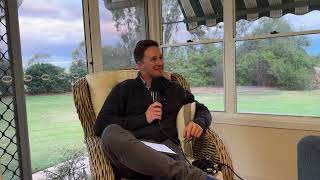
John Woods, a grain farmer near Goondiwindi who chairs GRDC, reflects on 12 years with the organisation as his term ends in September 2024. He discusses GRDC's shift to regional staff, the creation of Grains Australia, and how the organisation invests around AUD 230-240 million annually in grain research and development.
Questions this video answers
About 30–35 kilometres south of Goondiwindi and about 90 kilometres north of Moree.
Winter: wheat, barley, chickpeas; Summer: sorghum; occasional mung beans.
He joined as a director in 2012.
Around 12 years (connected since 2012); his term finishes at the end of September 2024.
Circa AUD 230–240 million per year.
Chapters
Can you tell us a little bit about where we are here, south of Gundiwindi?
Yeah, yeah, look, we, we farm 30, 35 kilometers south of Goondiwindi, about 90 kilometers north of Moreree. Pretty much just a broader broad acre operation, all farming run a handful of cattle from time to time on the grass country. But we're, we're basically farming enterprises in grain farming enterprise. So summer and winter here. So wheat, barley, chickpeas predominantly in the winter and sorghum predominantly in the summer. And every now and again I might have a brain explosion and try some mung beans, but yeah, that's the bread and butter of the show.
Only every seven years.
Well, some people sort of talk about mung beans and I love the mung bean industry obviously being a core stakeholder in the GRDC family. But yeah, sometimes you sort of say the seven year because it's just long enough to forget that you might have got walloped out of some bad event or weather event with mung beans, but it's just long enough to think that we'll give them another go.
One thing I want to ask you about. And so in my friendship circles, fair few fellows will say there's a big debate between whether the east of the new is better or west of the new. You're lucky that you dabble on both sides, but you've had the chance to travel a lot of Australia's grain growing regions with your role as GRDC chair. Well, where would you say is God's country?
Ooh, geez. I'd upset some people now wouldn't I, if I offer an opinion. But bottom line, I don't know that I would farm anywhere else than where we farm. Look, we're pretty comfortable with where we are. We obviously have the highs and the low and the dries and the wets. But it's interesting how you look at the farming system in the last 20 to 25 years. It's extraordinary the resilience that's now being built into the system. So when we have a really bad and particularly a dry year, what used to be low rainfall, very high risk country is now becoming moderately resilient. And so a bad year there might be at a tonne to the hectare, whereas in a bad year previously they'd be a zero to the hectare. So I think that's probably the thing that I'd say is plenty of challenges in all these systems. But the resilience in the system now rewards most players. Like there's people farming far west of us where reliability is Now a lot more. Sure. And if I look at places in Western Australia, particularly in parts of South Australia or parts of the Mallee, it's extraordinarily the resilience that's now being built into the system. And it's particularly around, you know, husbandry and agronomy and particularly the soils work that's going on across, you know, now probably 15 to 20 years.
And I think for me, like, as you're saying that, I'm thinking back to 2019, driving up through Condobelen and some of those areas through it'd be central West New South Wales, southwest New South Wales. And the discipline of some of the farmers to just make decisions and live by the decisions in these areas is ultimately what's getting them the performance as well in, as you say, some of those dry years too.
Yeah. And I think there's no doubt Australian grain growers particularly are seen as being early adopters. And it's because we have to, you know, we are. We're in a semi arid zone. We farm in some pretty low rainfall zones. We farm some soils that are pretty scary. When you travel globally and you look at some of our soils and think if you brought some Europeans or some Americans and saw our soils and we do they come out here. Some of our soils are very challenging. I mean, we're very fortunate that we've got a pretty nice soil type here, but we're light and heavy where we farm. But it's extraordinary what has been able to be delivered in those systems. And because of the early adopters and growers are very keen to get innovation. There's also a bit of a competitive streak in growers. You know, we like to sort of be mates with our neighbors, of course, but we're always a little bit competitive to make sure that we, you know, if we can pip them at the post, we'll. They'll have a crack at that. And so that incentivises us to always do a little better and drive our systems a little harder and make those decisions that are always winning decisions.
And I feel like in your nature you absolutely wouldn't be competitive with anyone else around your area.
No, no. Pretty much just a leg out here, but. But it's living a very good neighbourhood and we're very complimentary to each other and we always watch, but we're always interested in what the peer to peer thing, and that's. We've always found that peer to peer extension is very powerful. But we know inherently, talking to neighbors and one thing that we did some Years ago. We haven't done it recently. We need to probably revitalise it. But in our little Bailey, we, you know, get towards the end of a season and we'd throw people on a few Eskys in the back of a Ute and we'd go for a drive and, you know, in the afternoon and go and check some paddocks and everyone was showing each other their best paddocks, you know, and everything was shiny and fantastic and great. And we then took a view that actually, you should not do that. What you need to do is the challenge is that whoever comes in the afternoon with the beers in the backers of the Utes, we actually go around and we have to show them the worst paddock and what you would do differently or what you did to stuff it up so you owned it. We all learned from it and we all sort of bit of camaraderie around all that, but we actually looked at some of the worst outcomes and learned from that, you know, as opposed to always looking at the winning stuff and.
Get a few other opinions and ideas as well.
Absolutely, yep. And, you know, get a couple uppercuts from your mates, have a few stories.
That you just can never live.
Yeah.
So let's talk about then, your. Maybe your blunder, if there is one that comes to mind that your mates would pick on you for. Have you had one outcome of a growing season here that you might like to own and share with the GRDC.
Audience from a shocker perspective? Yeah, I'm happy to own that shocker perspective. Probably the second year, first or second year that I came home, which was in basically year 2000, 2001, I came home after doing some other stuff and we did a spray job and I was actually doing the spray job. I was actually on the spray rig and I got the actual tech amount right, but didn't get the adjuvant amount right in a product and ended up with a catastrophic failure in not all our country. But it was just a particular barley crop and a few paddocks and we were challenged all season. Why the hell hasn't this stuff worked? And anyway, sure enough, you start going, counting the drums and you realize you actually stuffed up. So that was my big stuff up many, many years ago. Fortunately, not catastrophic on the business or anything like that, but it was a learning curve to make sure that you're very diligent. I read the label, but here I was. I literally dropped a decimal point in my calculation.
Bugger.
Bugger.
Let's talk about. So for you farming here, growing up in and around this area, what has your career been looked like? And what were the interests for you in those early stages? Straight out of school?
Yeah, I mean, born and bred Gundiwindi, so right on the river. And the oldies have been here since sort of the mid to late 60s when they got married in the late 60s. Went to school locally. My mother, I'd jokingly say she didn't like me, so she sent me down to Sydney to school, which is about 800km from here. So I did secondary school down there. And then unusually, I then went to Queensland for university, so did an ag degree in Queensland, knocked that over in four years, which is actually the time to do that degree in. Just to be really clear, I didn't actually extend it or anything. It was actually done in the right timeframes, as opposed to some of my mates sort of probably pushed out maybe to a fifth year, but we won't go there. And look, I was really clear even when I was at school in the later year 11 and 12, I was pretty keen to go and do something else other than go back to the farm and just experience other stuff. So I did the uni degree and I was very fortunate. Before I even finished the uni degree, I got a job actually in the cotton industry and I ended up being the state field officer for Cotton Australia, as people know Cotton Australia today. So I did that for about six years and then at the end of that, I considered what I should be doing, whether I should be going home back to the farm, or whether I should pursue a more professional career. And I did seriously consider that. Both Sydney and Brisbane, I looked at options, had offers, and then I decided, look, it's time to go home. So. So I came back to the farm. So that was the process there. But I will say my time at Cotton Australia was an extraordinary time and the industry was very good to me and I learned so much in that role because I did a lot with Queensland Farmers Federation as a policy officer as well as on the ground with growers around. Best management practice and the transition of the industry from conventional cotton to what is now known as Bolgard all occurred around that 2000 and early 2000s. So it was a unique time. It was a very challenged time for the cot industry, but I was there to see that transition and assist them through that.
The corporate world or the agribusiness world's loss probably is the farm's gain, but what was it that was and that decision point to go left and look at the professional corporate career or right to the farm. What was it that you were weighing up at the time and ultimately how did the farm win in that decision?
It's a really good question. I'm not sure that I can really probably put it all in context, but I think there was a few drivers. I mean, the farm, which is the sort of the family history pieces that, you know, my parents obviously were here, as I said earlier, in the late 60s and then. But in 1980 when I was nine, sadly, my father was killed in a helicopter accident. And so my mother was left at the age of 35 and two young kids, my sister, who's two years older than me, so she was 11 and I was nine and we'd only just taken on another place. And so Peg, my mother, just saddled up and she loves farming. She was born and bred farmer and so she continued to pursue the business In, I think 1984, four years after the death of my father, she bought another place and so she was committed and she did remarry during the 80s. I mean, she's still here to this day and still sort of very supportive of the farming operation and still a part of the farming operation and just loves it to this day. And so part of that consideration of mine back in the late 90s and early 2000s when I made the transition, was. Was mindful of that, that if I'm going to make the change, number one, I don't want to be too old to come and get into farming and get too out of touch. I still need to have the energy to pursue it and also manage a transition or a succession within the family.
Tell me a little bit more about your mum, her characteristics and how she went about. What was her approach to farming?
Well, she was born and bred at Northstar, which is only just east of here, about or as in they farmed at Northstar, so It's probably only 25, 30 kilometers east of where we are today. She's very resilient, very good businesswoman and very highly regarded with regards to her farming acumen. So she and Bill, who she ended up marrying in the mid-80s, they were always seen as good farmers. They win crop competitions and things like that. We were very early adopters on no till and getting, you know, the latest gear. So I was very fortunate in that regard. They were definitely ahead of their time. Even my father and my mother in the late 70s into 1980, where we put in elevator and silo systems and pit systems, we ran our own trucks, we ran contracting business. They started with 1100 acres and then just continued to grow the business. So yeah, so my mother's been obviously here through all that journey and she managed what was a tragedy but turned it into success and supported us all the way through the process. But she's a very strong and able woman and still contributing today when she's in her late 70s.
That transition for you back into the business, did you come in Guns Blaze in a Million Ideas or did you kind of come in slowly and your mum was still the boss?
Yeah, it was probably, it was pretty unique. You know, we're a pretty unique situation because I've effectively had my mother and her husband Bill, who I have an enormous amount of respect for. So they were running the business and so I had sort of eased myself in, obviously had ideas but there's obviously dynamics like there is in any family setup. And so we all got on, we continued to build the business and then probably within five or six years of me sort of coming home, Bill decided to retire and remove himself from the farming operations. And so they, my parents sort of basically bought a house or parents, my mother and Bill bought a house in town. And so that sort of transition started to occur fairly early after I came home.
And for you then, look, you obviously sunk your teeth into it and then we're going to start to get towards this grdc. But the off farm roles and the interests in that, how did they come about and was it the first however many years, was it just purely 100% involved here or because of what you'd done with Cotton Australia? Was there interest in things still happening outside the farm gate?
Yeah, look, absolutely the external of farm gate. I always feel that farming is very challenging in its own right. So I never dismiss the fact that this is a full on job running a farm farm business. And as all farmers know, the men and women who run their farms and their farm businesses, they're all things to everyone and everything and they need to be multi skilled, you know, from marketers to, you know, tyre changes and everything in between and running all the business stuff. So I don't discard that. But I always felt I needed to do something more or make a contribution elsewhere. So I was very fortunate when I moved out of a full time role at Cotton Australian. Coming home I applied for a particular role and I was very fortunate to get it, which sort of helped that trajectory. And I ended up on the council of the national, what was called the National Rural Advisory Council and it was a federal government organisation that looked at all exceptional circumstances which is mainly around drought. And so I did that for six years and was on the council for that, traveled all around Australia doing drought management issues on behalf of the federal government. And they used to have subsidies available and that was really interesting. But it also exposed me to agricultural systems in serious distress and also individuals in serious distress. And that was pretty hard to handle. But you're there to try and support through the federal government mechanism. And we were part of that group. And then so I was able to do the farm thing that was probably, you know, 20 to 30 days a year. And then I've just sort of morphed into different roles on the way through and obviously just ended up at GRDC somewhere along the lawn.
One of those roles that you've had that really you hold quite close to your heart or that you're most proud of.
Certainly since I've come home, probably some of my biggest learnings and probably the thing that's probably given me the most significant impact from the way I act from a business perspective, is actually my role at the National Advisory Council. When we saw businesses and people in deep distress, it probably made me a little more conservative in the way in which we run the business. So we probably run a stronger balance sheet than what I may have otherwise done, because we saw balance sheets in 2002 through to 2007, during some of those horrendous droughts, literally turn from 90, 95% equity down to 15 and 20, and they're out the door, particularly in WA and in the South. And so that may be a lot more conservative in the way in which we run our business. And I just hope that we never return to those times because our leverage, because obviously we've expanded too, like most farmers have, those that are still in the game now we're consolidating. We just need to make sure that we're mindful of the balance sheets and make sure that we manage the expectations around our financiers.
I want to talk about the grdc. Obviously you've been on the board and chair for quite some time. Even a little extension in there as well, which is handy. What was it initially that got you to throw your hand up to be involved?
I've always wanted to be involved in organizations that are actually doing things, you know, driving impact, true outcomes. I've obviously dabbled in the politics and agripolitics, but I'm not heavily engaged. I'm a member of agripolitical organisations and I support them, but I put my time in other places and I really take my hat off to those that are involved in agropolitics because I still see it as a key thing to make sure we have representation. But the GRDC more particularly, I started getting a little frustrated around the communications and what was occurring at grdc. Always respected grdc, thought it did a very good job, but outside looking in and it was outside looking in. I wasn't part of a panel or anything like that. I did a little bit of research, engagement at a grower level type thing when they'd have a forum and get ideas, you know, what's the biggest challenge for you? Oh, fleabane, you know. But bottom line is I just thought the organization should be doing better, should be delivering bigger and stronger outcomes for growers. And I thought it was actually not well aligned at that stage to growers needs. And I thought it needed to be driving bigger impact and more connectivity for the growers. And I've still got the pad here from when I did my application and was fortunate enough to get an interview where I've written out the reasons why I wanted to apply. And you know, they were all those sort of drivers. You know, we just need to be doing a lot better and make sure that we're actually delivering and we're acting like government, we're, you know, very bureaucratic and that sort of thing. So. And then when I was fortunate enough to get into the board as a director, we were very fortunate to get a really good board under Keith Parrott, who was the chair at the time. And we started, you know, some momentum to get some change within the business. And then I've been in the business and I hesitate to say, but when I finish my term at the end of September this year, I will have been in the role or connected to GRDC for around 12 years.
It's quite a substantial period of time.
It'll be the longest ever. And I don't say that people should do that. And I feel a level of responsibility for being on that journey for that period of time, but still really energised the day that I step out of grdc. I've still got energy and I've still got real opportunity for the organization. Not my ideas, but there's real opportunity for the organization. And in some ways, in part I'm a little impatient, but I'm always looking for energy and drive and making sure there's an evolution in every organization and it should be a continuum. So grdc, just like we as individuals, we need to innovate and we need to continue to evolve And I expect the same thing of GRDC and the way in which we do business and the impact of our investments to always strive to do better.
And so when you walk in 2012 for that first day, you obviously got the position as a director and you've.
Got these big ideas.
Did you just come in and kind of shoot from the hip like this, where I think we're no good and this is where I think we're doing things good and run with it, or did you have to go in a little bit conservatively?
No going there. Very much a listener in the early phases to get to know the heartbeat of the business, the who's who in the zoo, what which is particularly important, the strategy of the organization, how we're executing. It took months and months and months for us to get to know the business. Cause there was. Every director was new, except for one in that term. And so it took us a lot to sort of get comfortable with the organisation, get our feet under the table, as it were. But once we started to get engaged, we got informed and the management were very good in informing us when we were asking questions. And then obviously, over time, I've just got to know the business so well. And there's no doubt we could see opportunities very early in coming into the business. But it was with the backdrop of the aspiration of us doing better, acting differently. Our research partners are changing. We need to be far more agile, we need to be far more impactful and we need to look for new and emerging partners that might deliver different products and services or outcomes for our growers.
So for me, like, I wasn't familiar with the GRDC at all 2012, I'd just come off a year jackarooing. We were still, and it seems funny to think like we were still sewing everything, no gps, just put the wheel there and it's good enough and kind of keep going round and round. The evolution of the industry, but then also in turn, the organization from 2012 through to now, has it been a huge uptake in technology and innovation within both the organization and the industry?
Yeah, I mean, two very, you know, the industry chatters obviously on that question is so big, like, just what's changed in the last. What is 12 years is extraordinary, really. Yeah. But from an organisational perspective, there's been, you know, some would nearly say a revolution. It's not a revolution, but it's been a very big evolution for grdc. So when I came to the building, every staff member was based in Canberra. And as we sit here Today, probably nearly 60% of our staff are based in the regions. We've decentralised the organisation and that's a structural change, but it also helps the culture change and it also enables us to employ more people that would otherwise not want to work for someone like grdc. A lot of people don't want to work in Canberra, but the biggest driver of the decentralisation going to the regions like, you know, Toowoomba or Adelaide or Perth, and decreasing the size of the Canberra office is to make sure that we're closer to growers and closer to our research partners. They're the two things that we need to drive the outcomes we need to be delivering to growers, because they pay the bucks. And so to get closer to them, to make sure we meet their needs is absolutely critical. And that's why we've got staff literally living in their backyards these days. So that's that connectivity. And then, of course, from a research partner perspective, we just want to make sure that we get good outcomes, because GRDC doesn't do R and D in its own right. We rely on service providers and research partners. We want to make sure that we're close to them, number one, to support them, but also we want to make sure that they're delivering. So if we contract them to do something over three to five years, to have that connectivity in that relationship, to make sure that we're delivering is also powerful. So that structural change within the business has been extremely powerful in the way in which we operate and the outcomes that we're getting. And also, I hope, helps the respect that we have between growers and our team and our staff and our panels, you know, because without our, you know, quality team at GRDC and our staff, we're just a brand at the end of the day. It's the strength in our people and our panels that craft these investments, contract these investments, manage them with our research partners and then get the execution to grow us.
And from the outside looking in, I'd say it seems like for yourself, but also the broader leadership team as well, there's a huge amount of accountability and responsibility that you put on yourselves. And the standard that, as a lady, that you, I guess, expect that this is. We're given. It's not a right that we're here. We're actually privileged to be here and let's get on and make sure we're doing the best for the industry.
Yep. And look, to be honest, Ollie, I probably couldn't put it any better. I mean, exact. It's actually the Way in which we sort of, we think, you know, the responsibility is, is significant. We're investing circa 230 to 240 million dollars a year at the moment. We need to make sure that those investments are the best quality investments and we don't want to be in a position where we're just putting money out the door for the sake of getting money out the door. It's about actually making sure every investment has a return attached to it. So when we develop an investment, we make sure that we actually do the economic work to make sure it is actually going to deliver something, or we hope that's going to deliver something. The rationale's there and then we monitor on the way through and deliver. And the other thing is we take in some part the responsibility for a broader agriculture sector. Because the grains industry is now the biggest industry. It wasn't the biggest industry. It's got nothing to do with me, particularly sitting at GRDC. But it's amazing the last 12 years, or if you went back 15 to 20, you know, we weren't the biggest sector, you know, we were like number three, number four, you know, you had wool in front of us years ago. Obviously the meat industry have always been big and here the last two or three years, the grains industry is now the largest agricultural sector single in Australia. And so we're sort of the quiet achiever. And I think GRDC in part reflects that. Our growers are quite achievers. We don't run the flagpole up too much. We're not high demand politically, but equally, I think we need to make sure that politically we're respected for that. So when we do need help, we should be recognise that we normally run our own show. We take responsibility for our own actions, we help ourselves, we innovate ourselves, we have service industries that support us, et cetera. But we also want to make sure that we're respected politically when we need them. And GRDC has always taken that responsibility very seriously. We're a big player in the sector where we can help others, we will. So collaboration is a big piece of GRDC's business. If we can negotiate a deal with the cotton guys so that every cotton grower is a grain grower. So we should be doing more and more together. Same with meat and livestock Australia. There's a lot of sheep and cattle producers, even goat producers that are grain growers, where we can do aligned activities. We should be doing that to leverage the growers dollars and making sure that we're actually getting the best bang for our buck. And better impact and better efficiency and better alignment.
Is there a project or a part over the 12 year journey that you are, that you hold? I guess quite highly. Maybe you can go with a couple if you want, but favorite memories or moments that have happened over that tenure?
Look, I think there's always things that you probably wish you had done better and these other things that you are very pleased that are bearing fruit. There's a lot of investments that have delivered significantly for grdc. But probably one of the ones that probably stands out, which is now just starting to get the runs on the board, is the establishment of Grains Australia, which is an organisation that's wholly invested from GRDC. That costs GRDC and growers money, you know, circa four and a half to $5 million a year now. But that's about aligning a whole number of organizations. So we've effectively collapsed four organizations and put them into one. And we've still got some more work to do there. But that's about delivering, you know, trade and market activities, market information education into our Southeast Asian markets and also classification activities across all our commodities. They were all done by all these small individual organizations, different directors, different CEOs. We've been able to amalgamate and align common strategy resource it appropriately and hopefully get some really big gains. Because when we go into market overseas particularly and domestically, this is a consideration as well. But certainly internationally, you know, we should be going up there as Australia Inc. You shouldn't have the barley guys going up there and then separately next week you have the wheat guys going up there and then the week after you've got the pulse ladies going up there and then, you know, it's just insane. We are not big enough. We're a massive exporter globally, but we're still not a big producer in Australia, so. As in globally, but we export a lot. And that's why we're seen as a big player. We need to be really smart about how we act globally and make sure that we've got aligned activities. We go up there as Australia Inc. And if we can get, you know, three, five, $10 a ton across all our commodities to growers every year as a support because we're doing that work on behalf of growers, like that is big bucks in growers pockets. So that's, that's a standout because there hasn't been that structural change in the grains industry ever. And I mean ever. And I think a lot of other organizations and industries could do well to reflect on the grains industry's consolidation in Effort and also getting better, efficient use of dollars and leveraging the dollars more effectively. And it takes a lot of people to do that. That's just not me. That was very much grdc. Organisations like gpa, GGL really getting in behind it and growers supporting it, which has been outstanding.
What do you think it is when it comes to big changes like that? Because obviously the ag industry we've been around forever in a day, incredibly traditional, but also the world and society and whatnot is changing. Expectations of practices of whether someone's a consumer or they're just a community member is changing. Like what have you learned about managing that change process? To ultimately lead people and go, we've.
Got to evolve, you're only as good as the people that are around you. And I learned that very quickly. If you're a solo voice and going back earlier when you mentioned, you know, when you walked into the board of grdc, coming guns blazing, at the end of the day you're a very lone voice if you're the only one. And if you don't have broad support or like minded people, it's very difficult to get anything done. And I've been fortunate to have people around me and hopefully me around them to be supportive on new ideas, new opportunities and being able to get the momentum to pursue that. And I think that's the challenge in any leadership role, to try and work with people to engage, inform, challenge each other, get a better outcome. But in all these positions, you absolutely need to be clear where the line in the sand is. You can't continue conversations which then ends up to inertia. At the end of the day, you still need to get the outcome. So always consider what the outcome is that you're looking for, the impact that's going to be delivered and craft the way between here and there. And yeah, there's probably going to be some compromises. There always often is, especially in businesses where you're involving a lot of people. It's a bit different when you're in a, like a farming operation or something. Like it's kind of here, it's my call, you know, we don't quite, we don't run it like an autocracy here, of course, but if I want something done, that's likely the way it's going to be done, you know. Whereas in business like GRDC or industry reform or consolidation, you need to take people with you. But mindful of the line in the sand and we have had, you know, I've certainly had a number of very difficult and robust conversations because you're affecting people's livelihoods. But at the end of the day, it is for the industry good.
Is that a responsibility you take home as well? Are you able to compartmentalize that role you play as GRDC chair and go, we are going to make tough decisions, there is going to be people impacted by it. But at the end of the day, I'm acting in the good of the industry.
I'd actually really love to say that I can, you know, just park it. You know, at the end of the day, there's always something sort of lingers in the back of your mind. We're all different personality types and, you know, there's been sleepless nights on decisions that we've made and all that sort of stuff. And I don't like rubbing people up the wrong way. But sadly, sometimes you've just got to chart the course. And if it's in the interest of growers, that's the way I'll view it. Because that. That's my role as chair of grdc, that's my role as to support growers. And that is always the thing that really informs me what is for the greater good for growers in Australia, because at the end of the day, they're the ones paying the bucks and they're, you know, we need to support the family. The family farmers and all farmers, whether they're corporate or otherwise, in the grain sector because they're supporting our rural communities. It literally goes as deep as that.
Yeah. I do have a few more questions I want to ask you, but one is probably the most serious question I'll ask you all day. What role do you think humour has in leadership?
Yeah, that's interesting. I think it's actually vital. I do think people need to have some of the serious moments, so long as it's appropriate and it can be managed. You know, you. Sometimes you need to lighten the mood and I don't know why you're asking me that question particularly, but I probably have been known to lighten the mood from time to time at the appropriate moment, even in the middle of a board meeting. I think it's a bit of humor and a bit of banter is very healthy and it just helps decompress some of those more pressured times. And you don't always do it in a pressured time, but we're serious a lot of the time and I probably find myself getting more serious as time goes on. But having those lighter moments are fantastic and for others to, you know, pull a bit of a Cheeky stunt or something like that on you is always good fun too.
And I didn't ask that.
Fair.
I know that. No backstory or anything like that. I only ask that because you're normally laughing and I'd say this is the longest I've been able to keep you on a straight and narrow for.
That's very good. Good observation. Yeah. Yeah.
Well, I know we're handing over the podcast after this. You've got a new gig podcast host. Who knows what you'll be doing.
That's right. Yeah. For all those listening. I'm actually pulling Ollie on. I think I, you know, I'm going to have a bit more bandwidth come after October when I step out of jrdc and I think Ollie just might be in a bit of strife. No, he won't be. He's.
We can collaborate.
We could collaborate. Now there's a deal, isn't it?
You come to me. I've got a couple more questions. What do you think you're going to miss the most after 12 years inside the walls of the GRDC?
Oh, yeah, that is interesting. I think there's no doubt the. I mean, as chair of a board, you do have a level of influence in the organisation. The culture, I would hope the culture of the organisation, the execution and the timeliness, that sort of thing within the organisation and some of the ideas. And I'm certainly going to miss what you would regard as the influence in the business. And if I attach anything else, I'll probably, you know, there'll be a big miss with the. With the people, you know, the connectivity with the GRDC team and our panel members and just some of our research partners. I mean, it's not like we're all disappearing or anything, but it's just that more constant connectivity and just knowing in an organization like our grdc, it's extraordinary how people have each other's back. Even though we're always on a challenging each other or a continuum of improvement. It's amazing how we support each other and still quote, unquote, still get shit done, you know, and do it to effect. So it's probably the people piece is probably going to be the bit, but I mean, I'm still going to be around, I'll be shoeing other bits and pieces and I'm still a grain grower and still looking to, you know, make sure GRDC continues to perform in the future.
And so just to check that you're still in touch, are you going to miss the Chairman's Lounge?
The Chairman's Lounge. I love it. Kicking back in the lounge.
That's part of it, isn't it?
Oh, we just Dolby on the scrap heap, mate. I'm not platinum like you.
Well, I guess a question which some people might be wondering, what's next for you? What are the plans?
I think I definitely will just take a little bit of a breather. I actually haven't been looking particularly for roles and, you know, obviously I have conversations with people, but I'm not rushing out the door. I just need to finish. Cause I want to go hard right to the end. Anyone who knows me knows that I'll be going right hard to literally the last minute to make sure that we continue to do work. And I also continue to work for Grainbrothers in my role as chair. So what's next? We'll just have to wait and see. You know, the farmers core business, we've obviously expanded over the last 10 to 12 years since I've been on GRDC, we've made a few acquisitions, but I'll look to probably add something, you know, external. You know, I've got another director role with Lawson Grains and that's really enjoyable and they're doing a great job. And so if I can make a contribution, that's the key. If I can make a contribution, I'm happy to participate.
Well, I'd say thank you very much for the opportunity to sit down and chat with you. It's been bloody interesting and look forward to seeing what's ahead.
Thanks, Ollie. Great pleasure and great job. Keep up these podcasts.
Well done and thank you for the coffee.
Too easy, mate. Cheers.
More from Gerri







GRDC National Variety Trials (NVT) Case Study: Helping Oat growers make informed variety decisions



Managing rhizoctonia in wheat and barley: Impact in low and medium rainfall zones 🌾🌾
