GRDC in Conversation: Steve Davies
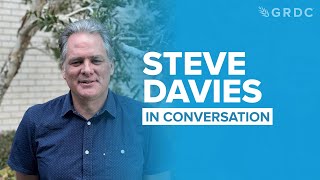
Soil scientist Steve Davies spent two decades in Western Australia's grains sector, developing soil amelioration techniques like deep ripping and liming. Working from Geraldton with CSIRO links, he saw substantial yield gains when growers adopted these methods to remove soil constraints, driven by direct collaboration between researchers and farmers.
Questions this video answers
Around 30,000 people.
About 20 years.
The Seed of Light award for excellence in research communication (2017).
About two-thirds (≈66%).
About 20% undertake non-mechanical soil improvement; combined the two figures total ~86% of growers.
Chapters
This series is a GRDC investment that takes you behind the scenes as we sit down with some of the people shaping our grain industry, uncovering their journeys, learning more about their passions and the projects that are part of their everyday. We are over in Western Australia. This is now the third part of what has been the GRDC in Conversation podcast. We've covered southern Australia, we've covered the north, across New South Wales and Queensland, and now we've headed west to meet with all sorts of growers, advisors, researchers and people involved in the Aussie grains industry. Welcome to the next series. Well, Steve, I reckon we just roll into it.
Okay, mate.
It's going to be a mixture of a grains podcast, mixture of your stories and maybe a bit of commentary of what's happening in this fire drill around us. Yeah, just another day in downtown Perth.
It's a dude with a vacuum cleaner going in there, so that's probably a good sign.
Pretend firefighter.
That's right, Ste.
So we're down in Perth. This isn't your local neighbourhood, but I take it you spend a little bit of time here. So Geraldton's home time in Perth. Talk to me, what does a week or a couple of weeks look like in your life?
Yeah, look, it can depend a bit on the time of year. I must admit this time of year we're pretty busy with field days and things that are going on as well, Spring field days. So we've got a bit of extra travel this time of year, you know, from base to field days, contributing to those interacting with growers, which is always great. And yeah, then I guess as someone who manages projects, you know, do sometimes get down to head office and you. Yeah. Catch up with your senior managers and try and work stuff out on the administrative and bureaucratic side of things. Yeah. Then other times. Yeah, just in the office flat out trying to keep up with all the work.
And can you talk to me a little bit about the town of Geraldton? What do I need to know about Jarrow as a town and how did you end up there?
Yeah, so Geraldton's a regional center in sort of the northern wheat belt of wa. So the grain growing areas in the south southwest corner of what is a very, very large state of Australia. And Geraldton's kind of the northernmost major town in that. That part of the region. In that part of the wheat belt. So it's a major regional center, around about 30,000 sort of people in Geraldton and surrounds. So yeah, it's a great, great town. It's come a long way in the 20 years that I've sort of been there in terms of, you know, redeveloping their foreshore and just making it a really lovely place to live actually. Great climate. Yeah, we, we work five minutes from the beach so you know, it's pretty good. And yeah, what took me there? Well, yeah, like it's one of those stories of where you go somewhere for a contract, you know, for. I was, I'd done some post, postdoc work with CSIRO and over in Canberra and I was sort of looking for the next, the next job and this. Yeah, I got this position as a soils research scientist in Geraldton in Western Australia. I had actually done my PhD in WA. My wife was from WA. So it was sort of coming, coming home to. Had a lot of family over here and stuff like that. So it was sort of coming home in one sense. But yeah, you go there for a sort of a three year contract and then 20 years later you think, heck, I'm still here, you know. So it was sort of one of those situations which I know quite a few people have that story ending up in regional towns where they just say, yeah, you know, you come somewhere but then you end up, yeah, you end up staying, getting more opportunities and yeah, I love the office there and I love working up there. I love working with the growers up there. So it's been actually been a really good thing.
Have you ever found it limiting being in a regional town? And I'll say especially in Western Australia, it is quite removed from the major centres of Australia but it's. Yeah. Has it ever limited you at all?
Look, I think, I think for me probably the thing that I've noticed the most is I think I feel the main limitation for me is like I don't have any problem living in a regional centre. I think it's got everything I need. I like, I come to Perth and I know there's a lot more to do here in a sense but it's also a lot more annoying. There's a lot more traffic. So I'm quite happy up in Geraldton. But yeah, the thing that's limiting I think is as a, as a scientist you've sort of got this side to you where yeah, like we're quite applied scientists, we absolutely love working with growers and I think, you know, the benefit of being regionally based is far outweighs I guess this other issue. But the issue I guess you have in way is that sort of academically and as a, as a scientific professional you don't quite get those opportunities to sort of go to, you know, lectures at a university that, you know, they might have a special lecture series or something, or there might be, you know, just meetings of your local soil science society or something, you know, and you're not getting to go to those sort of opportunities and sort of quite connect in. And so it does sort of. That's kind of a bit of a limitation, I reckon. Like, it'd be kind of cool if you could get to a few more of those things. We're quite sort of blessed in WA in the sense that we've got a really big sort of grain belt, really big wheat belt. But, you know, we. We got quite a small research community in a way. Like, we're quite. Because we're sort of over here on the west coast, not sort of. We've got a big desert in between us, all the other states, you know, we're kind of this. We kind of know quite a few of the people involved in the research industry, especially, you know, when it comes to sort of applied broad acreage, you know, soils and nutrient and agronomy sort of research. And so it's kind of good in the sense that even though you might be out at a regional place, you still kind of do end up making connections with people from, you know, from the city and from other regional centers. So it's. It's not a biggie, but it'd be kind of nice sometimes to have been able to get to some of the lectures and just be involved a little bit more almost in that slightly more academic side, I suppose, but that professional sort of, you know, science side of.
Things, to understand more about how you've spent 20 years, obviously, in WA and nearly six years with CSIRO. What's the connection to agriculture and when did it start?
Oh, that's a really good question. Yeah. So my father came from a small farm outside of Port Pirie in South Australia. So there was a bit of a connection there. But he wasn't the eldest son, so even though he was probably of all the brothers, he was potentially, you know, he was very interested in agriculture. I think he. He could have very much enjoyed himself as a farmer, I think, my dad. But. So there was this little bit of a connection there and then. Yeah, I guess when I was sort of getting to the stage of going to high school. So this was in Adelaide in South Australia, which is where I was born. Yeah. My parents sort of felt that maybe me going to this Urbury Agricultural High School, which is a high school that sits alongside the Waite campus, which is sort of the university agriculture campus in Adelaide, like right in the suburbs. And her Brae is an agricultural high school that sits alongside that. And they just sort of thought that would be a good fit for me. I wasn't actually particularly academic in my early years at Late Bloomer academically, and so they thought that was probably a better fit. And so I went to this agricultural high school and so kind of, instead of doing languages and music, we kind of did ag stuff basically in high school, as well as all the usual, you know, maths and sciences and English and stuff. And we actually had the opportunity to do agricultural science as a. As a subject. As a subject in year 11 and 12. So, like what we. What you would call an ATAR subject these days, so a university entrance sort of subject. And it was really cool the years that I went through, because there was literally just nine of us that sort of chose to do that. In our. In our year level we had a teacher who was really quirky. He was actually a PhD, so he'd done a PhD in zoology. So we just used to call him Doc. And he was just really. He treated us differently to the way most teachers would treat high school students. So he sort of, he was really into making sure we fully understood what science was and how it worked. He was a really good teacher. He was really unusual. But one of the things he did was he got one of the outbuildings set up as a laboratory, a fairly small outbuilding, but quite a. Set it up as quite a nice laboratory. And, you know, here we are sort of year 11 students, and he actually gives us a key, gives. Each of us gets a key, gives us a key and says, you can go to the laboratory whenever you want. You can hang out in there at lunchtimes, you can work on your little experiments, you can just hang out there, you can do whatever. We ended up doing all our classes in the lab. We'd just sit around the lab benches and he'd walk around and just do our ag science classes. He'd do quirky things. Like sometimes he'd be just carrying a bit of pipe and he'd just sort of blow it in your ear and he'd say, what do you reckon, Davies? And this sort of stuff. So he'd be like, don't get me wrong, this guy was pretty quirky, but he was awesome. Like, he was totally awesome. Like, he was, you know, like he had a mattress in his office and a guitar. He'd just sleep at work sometimes. Stuff you Just wouldn't get away with these days, you know. But of those of, you know, I guess to sort of comment though, on the impact like he, he went beyond the syllabus. He sort of gave us an understanding, statistics, even though that was actually sort of beyond the syllabus because he said, if you're going to get into science, this is what you need to start to understand. And I'm pretty sure of those nine kids that were in that class, seven went on to do PhDs. So that's, to me, that's impact and it's sort of something that I think about a lot and just think, wow, you know, education can look quite different. And you know, if, yeah, almost. If you sort of get outside the model maybe and let people try some creative ways, maybe it can be pretty inspiring, you know. So, yeah, for seven kids to do PhDs in the science, it's not necessarily all agricultural science, but in the sciences, you know, that's. That's crazy. Seven out of nine with, with that.
Style, and I'll call it that style of management that he gave to you guys have. Do you reflect back on that and when you've been managing staff across your career, do you. Have you tried different ways to engage and, and connect with people in different ways to, as you say, like, get the best outcome out of them and inspire them?
Yeah, I don't inappropriately blow pipes in their ears and stuff, but just saying, you know.
But the guitar thing. Yeah, no, one just think of something or two.
Yeah. I'm probably a bit more conservative than Doc, I reckon. But look, I think, yeah, look, I do, I. I guess what I do do is I do sort of try to sometimes because it's. I think it's what drives me quite a bit is just step back from all the busyness and, you know, all the administration and the bureaucracy and reporting and, you know, some of those pressures. And I do step back from it a bit and just say, you know, the big picture is we, you know, we're trying to grow food for the world more sustainably. We're doing something that, you know, really makes a difference. I think kind of one of those things in soils, you know, I reckon soils is a great area because sometimes you're pulling sort of the big levers of production, we might say, and, you know, that if you, you know, improve these soil conditions, you are actually making the whole system not only more productive but more sustainable and that sort of thing. So I think sometimes, yeah, just trying to help people see that. Yeah. That bigger picture is Maybe part of it. And I think Doc, in a way sort of gave us a bigger picture of, you know, science and, and maybe what it could achieve along with a few, you know, interesting stories and interesting methods. But, and I think maybe having a bit of a sense of fun sometimes I am the person that sort of cracks jokes in the, in the meetings where we get together sort of thing. So. Yeah, that's kind of, yeah. Interesting for you.
Like. So you said you weren't overly academic at school. What changed? How did you become more academic?
Yeah, look, I think, I guess it's a bit of a process. I think that experience at high school with that teacher that kind of gave us that trust, you know, got us really enthused for science and, and what was possible gave us that, yeah, trust and freedom to, you know, yeah, have keys and go into labs and do our thing, you know, I think that made a difference and I guess, look, it's a bit of a process, I guess, you know. I did my agricultural science degree through the University of Adelaide and that went, went well. I started sort of looking for work and was kind of a bit of an odd situation in a way in that I went for a job with actually with the department over here in Western Australia and one of the guys on the interview panel, actually quite a famous researcher over here, an academic over here, he sort of said, oh, look, we don't know the process, the outcome of this interview, but you'd be a really good PhD candidate if this doesn't work out sort of thing. And we've got, basically got a PhD for you if this, if this job interview doesn't work out. So that's pretty okay. So I sort of, yeah, the job, I think I was pretty close getting that job, but it didn't quite work out. And yeah, so I ended up sort of following up on the PhD thing and yeah, the rest is history, I suppose. So I ended up doing PhD over here sort of through UWA, but based a lot with CSIRO here, you know, with some amazing researchers, people that as my supervisors who sort of still inspire me quite a lot really. And you know, I still look to them as just, you know, and the incredible nature of their careers. But yeah, that, that, yeah, it's funny how things work out. I guess that gave me linkages into csiro, which helped me with, you know, which I think, you know, was helpful when I went for sort of postdoc positions with them. Gave me links, you know, here from, from those days and then by sort of working with csiro over east. It's sort of linkages that I still work, you know, to this day. I'm sort of working with a few people over there on some smaller projects or smaller for me, big for them, you know. So, yeah, it was interesting how it worked out.
And for you, I'm interested. So your career so far, 25 plus years. But what is it that's still energizing you and keeping you involved in the grain sector especially?
Yeah, I think like at the moment, I still think that the work that we're doing we can like we've made some incredible strides and I think we've captured that. I guess we've made a bit of an effort in the last four or five years to sort of make sure we capture a little bit the outcome of that. That story and that journey, like the outcome for the industry and make sure we can sort of tell that story of how significant it's been to the industry, how profitable it's been, how. Yeah, and so that's been amazing. So. And, but, but I guess we're still backing ourselves to say we reckon we can at least for, for some of our soils and production systems, we can, we can still make it, make another big gain and that can sort of underpin our, our grain production in a lot of areas, you know, for the next couple of decades, even in the face of, you know, challenging sort of climatic conditions and stuff. So that's part of it, I think. I'm also at that stage of my career where you're trying to, in some ways, you do a lot of hard work behind the scenes, you know, to get projects up and things and that. But you're trying to support your staff in their development and for them to kind of, yeah, I guess have, have success in their careers and make, make their contributions. So you become a little bit more of a facilitator in, in some respects while still trying to maintain a little bit of interest in research and do a bit of the stuff that, you know, there's still a big, you know, for any researchers that time that, you know, when you get that data set in and you get to analyze it and you see some real big impacts of treatments that you might have, you know, that's a huge payoff. That's, that's a, that's a big deal. And then being excited about sharing that with the industry and, and open to industry's reflection on that too. It's really important. So, yeah, it's a great industry to work in. Like, it's just. Yeah. So you can Put up with a bit of sometimes the more difficult stuff, the bureaucratic stuff and the reporting demands and that you put up with a bit because fundamentally your core role, you know, you still love what you're trying to do, you still love trying to be a part of that food production system in a sustainable way and, you know, help an industry that ultimately, you know, I respect the people that do it and what they're trying to achieve and. Yeah, and yeah, like they, they're very innovative and very. I think wa. You know, the growers here do tend to be pretty innovative and keen to adopt and keen to drive the system and to understand and solutions focus too.
It's the outcomes orientated, isn't it?
Yeah, yeah, definitely, yeah, yeah.
One question just around the team side of things, what are you noticing about the types of people that are coming into the research world? Like, has it. Is it changed? Like, is it the same kinds of people are coming in or is it different? And maybe what are some of those observations that you've got from where you sit?
Look, to an extent, I think that, yeah, I think people to me seem to end up pretty similar. They seem to end up. I don't know, there's something about this industry where people end up, even if maybe they don't come into it, you know, like super passionate and they're still trying to sort of figure out a little bit what they want. They can end up pretty passionate about the industry, I think, especially if they got quite a bit of grower contact and, you know, you sort of get in with leading grower groups or growers and I don't know, there's sort of a bit of an energy and that, that can build with that. And so I think in a way people end up maybe in a similar place. I think there is a bit of a thing these days, I guess, of, you know, are these guys going to stay in the same place for 20 years and, you know, and build a career in a regional place? I think that's a bit more of an unknown. I feel as though perhaps just generally people are happy to move on to another thing or another opportunity and that's fine. I mean, they've got that right. But I think there is something too in having some stability sometimes and people that kind of commit to a place in an area. So, yeah, maybe that's. That's a bit different. There's some really smart crew around, which is good. Smarter than me. I think that's good.
Right. Focusing in on you.
The.
As I've chatted to A couple of different people over the last week, your name's come up a couple of times.
Your.
Your work and what has been credited to you is. Is your work, especially in. Around soil amelioration.
Got that word right, yeah, that's pretty good.
Especially in the development. But then also the extension of practices has been instrumental in supporting, as you say, the sustainability of the industry.
So where.
Where did that type of work come from? Did it come from left to field?
Oh, so the soil amelioration sort of story. I think it's really important to acknowledge that there was sort of stuff going on already. Obviously there was people that worked in the space and there was really good work and a lot of fundamentals. And I think it's really important to note that whilst as researchers, we sort of capitalise on opportunities and sort of get into the science and the understanding and, you know, do experiments which are really important. Like, they really are important. But it was kind of driven by growers initially. Almost like they kind of said, oh, look, you know, we've come across this machine or we're trying this out. And I guess one of the things I learned from observing other people that I worked with in the office at the time was that, you know, if there's an opportunity there kind of, you know, do your best to jump on it and actually work with the growers, work alongside them, try to understand what's going on. And sometimes just by making that start, it sort of then gave you an opportunity to sort of jump into, you know, getting a bit of. A bit of research, you know, funding to. To look into that further and to try and understand it more, figure out where it fit, figure out what the true value of it was. But it's always this combined journey of yourself with the growers. In my opinion, the growers are often have the germ of the idea in some respects, and we might try and bring other ideas and have other aspects that we sort of look at and try to understand and we definitely try to sort of quantify it and. And, you know, and then. And then, yeah, yeah, we, we, we work hard to sort of share it and to sort of, you know, get it out there. But yeah, there's always this to and fro. It's always like this. You. And even when we talk about, you know, research outcomes, I guess one of the things that we've tried to do in our group is still, even in that process, we still tried to understand from the growers what's it like to take this from a plot, like a, you know, 40 meter by 2 meter plot, you know, which might be replicated and you might have, you know, a dozen of them across the wheat belt. But what's it like to actually take that and roll it out over 3,000 hectares, you know, over a few years for a farmer, like, that's a different proposition entirely. So there's this other whole bank of knowledge which is actually about, well, how do you pragmatically and efficiently and effectively and without stuffing things up, actually implement that, you know, broad acre? And I think by trying to sort of understand that and capture it, you know, when you get those questions at a field day or whatever, you've got this sort of bit of a knowledge that's actually a combination of your own understanding, but it's also a result of a whole bunch of conversations and interactions with, you know, farmers and that, that have actually implemented this stuff. And so, yeah, I think that's really, yeah, really valuable kind of thing. So, yeah, really important I think, to just sort of know, understand that, you know, you're part of this ecosystem and there's a whole lot of people that contribute along the way. Other researchers too, obviously. It's. Yeah.
And so for me, as someone who doesn't know a whole lot about it, what does that journey of that project looked like from really when you started it to where it's today and where can it go from here?
Wow, that seems like a pretty big question.
In two sentences.
In two sentences. Come on. Yeah, get on with it, buddy. Yeah, yeah. So look, yeah, I guess I'll just try and very quickly tell a bit of a story, I suppose.
Take your time.
Yeah, look, I guess one of the things that happened in the northern wheat belt was I was working with Peter Newman, who's another, you know, really well known researcher over here in the weed space and an excellent communicator. And he put a lot of effort into understanding communication and how to do extension really well. And sharing an office with him was fantastic. I learned a lot from him and I wasn't a natural good communicator or anything. I wasn't particularly confident. There was a lot I didn't know. So I was a little bit, you know, out of my depth sometimes and. But yeah, I learned a lot from him. And he kind of, you know, bought up a mobile plough to the northern wheat belt to sort of just look at this weed seed burial thing and you know, and it basically works. You bury these. You know, the northern part of the wa wheat belt was one of the homes of sort of herbicide Resistant rye grass and wild radish and so fairly small seeded weeds. And, you know, by burying them, like just inverting these sand plain soils and burying those, you could sort of cut those weed seed banks by 90% or more if it was done well, you know, and it was just. It wasn't that you could ever take your foot off their neck. You'd have to keep doing the integrated weed management. Like they would come back if you. It wasn't a cure all forever, but it really did kind of. Yeah, you know, that was, that was, you know, a significant outcome in its own right. But then I guess I was sort of working on some soil water repellents project work. So soil water repellents is a pretty big issue for West Australia just because we've got so many, so much sandy topsoil. And it's a, it's a more common constraint of sandy surface soils. So these hydrophobic water repellent organic compounds coat the soil surfaces and just literally resist water entry. And so that was an issue that had been raised by farmers and they were really pushing for more research to be done on it over here. And. Yeah, and so there was this sort of period where we were working on a technique which kind of did overcome this in terms of the soil inversion. We were able to incorporate lime into acid subsoil layers. We were sort of putting nutrients and organic matter at depth, which is sort of where the root systems actually sit, you know, just sort of below the seeding depth. And we were seeing all these soil impacts that were kind of quite substantial in addition to sort of what was happening to the weeds. And so I sort of jumped on that opportunity really in terms of doing research, working with neumes, Peter Newman and growers and so. And then at around this time, a grower in South Australia, Roger Groucho, he'd sort of been doing a lot of clay spreading and clay incorporation. So you sort of mix, you apply, you know, clay rich subsoil from your own farm onto the surface of your sandy topsoils. And that overcomes sort of this water repellence constraint too. And it has some other benefits. And he'd sort of had a backpacker that said, oh, you know what you need for incorporating this clay is a spading machine. And he said, hang on, hang on, what's a spading machine? And so Roger bought over what's called a rotary spader. So it was a machine from the Netherlands that, you know, it's just literally got these sort of big arms with spades on it. That can sort of, sort of partially invert, partially mix a soil down to, you know, 40cm or so. And a couple of the guys in WA had actually basically bought Roger's original secondhand machine. And this was a secondhand, worn out, pretty worn out little three meter machine, three meter wide machine. They brought it to WA and I was sort of in. They knew that I was working on soil water repellents. They'd seen every bit of the soil inversion stuff and they got in touch with me and so that, you know, we put in the first replicated experiments in Australia in 2009 with that machine and showed that it could overcome water repellents again, even better, sort of mixing of lime things into these acid profiles. And so, again, growers were instrumental and they went to a lot of their own time and expense to help move that machine around and get some experiments started. And we just started to see this adoption. Growers just bringing in bigger machines, just taking it on. We were sort of learning with them what that meant to sort of implement that stuff. But there was success there. And we sort of continued to research and try to understand it, tried to understand sort of what the boundaries were around soil types and conditions to do it and the best ways of doing it. At a similar time, you know, Dr. Paul Blackwell, who was with DPIRD, retired now, and others were looking at sort of deep ripping developments, so, you know, better management of compaction. We'd had quite a strong push on controlled traffic farming. So try to keep wheels off of soils and try to stop compacting soils, which is still a very good thing, if anyone's wondering. So keep trying to do it. I know it's not easy to maintain controlled traffic systems, but it is the best. It is, yeah. It's the best place we can get to if we can manage it. And, yeah, so, you know, deeper ripping came in. We were sort of realizing that with bigger machines, compaction was going deeper and we were getting these benefits to deeper ripping. There was sort of what they call topsoil slotting. So that's sort of allowing topsoil to fall in sort of columns behind ripping tines, which again, allow lime and nutrients and organic matter to get deeper into the profile, create really good pathways for roots. So all these things were sort of coming together as a bit of a package, really. And liming had been promoted in WA with a lot of success for a long time. But these tools allowed us to just overcome the fact that it's really slow to move into the subsurface soils where the problem really was. And so, yeah, we were sort of circumventing or, you know, hastening the impact of that lime in terms of improving acidity. And you take all those things together. And I guess my belief of what it sort of does is that by sort of taking out all those soil constraints and opening up a lot more of the soil volume to the crops, it actually allows the improvements in crop genetics, the improvements in crop nutrition, crop protection, general crop agronomy. It allows all those improvements and all the work that we have that all the whole industry's done on those issues, it allows all that gain to be fully expressed. And so then you start seeing these like 40 or 50% yield increases because you sort of unlock the potential of the system in a way. By unlocking the soil, you unlock this other potential. So that's, I'd love to sort of test that thought experimentally and try and understand how much of these gains, you know, interact with an improved soil environment sort of thing. Don't think anyone's going to pay me to do it, but it'd be cool. And yeah, so I think, yeah, it just really does allow. And we, and we grow crops now on rainfall and get yields that we, 20 years ago it would have been sort of a write off and we probably just would have accepted no yield for some of the drier years. Whereas now, you know, we're still growing one and a half ton crops in those years, you know, or one to one and a half ton crops. And that's really something that's really, you know, a significant step. And that's, that is literally the combination of the whole package, you know, coming together. But I think the soils are a bit fundamental to it because if you, if your roots can't sort of access that greater volume of soil and all the rainfall that's available, you know, you just, you don't, you can't get anywhere unless you sort of, you got to get that part right first.
Limiting yourself right up front.
Yeah, yeah, exactly. So, and I guess, yeah, I mean, I think I was sort of saying earlier, but we have tried to sort of measure a bit now the adoption of these practices and that. And we know, you know, we know sort of from a survey just in, done in early 2024, that 2/3 of growers undertake some sort of mechanical soil amelioration each year, which is huge. Like, that's massive. On top of that, another 20% are doing sort of non mechanical, you know, soil amelioration, soil improvement. And so that'd be things like applying your Gypsum or your lime to the soil surface, not necessarily with any mechanical intervention. And so you sort of think, well, hang on, that's 86% of growers are actually actively trying to improve the condition of their soils and trying to make their soils work as effectively as possible, take away those constraints. And I think that's amazing. I think that's, I suspect there's nowhere else in the world that has such a high rate of active, you know, soil management in that sense of, of trying to improve soils actively. I don't know that for a fact because other, other, you know, research hasn't been done to understand adoption of other things. But yeah, that's huge. And we know that even from farm, you know, actual farm data that it's highly profitable. So it's a massive contribution. When you start to add 86% of people are doing it, we don't really know how many hectares, but many, many hundreds of thousands, probably millions of hectares being treated and you know, with the profits that we know they get from that, like it's a massive contribution.
Do you think the rate of, I'll say, advancement of what you've seen over your 30 odd years, can we continue evolving and advancing and seeing these, I guess, these really big step changes, or are we starting to look at more incremental, smaller percent changes?
Look, I always think it's, I think it always is this journey of incremental coupled with, you know, some step changes. I think, I think there is still room for step changes. Our data would suggest, you know, we still, you know, could, could improve our access to the, the rainfall that we do get and improve more of that, getting more of that through the crop. You know, I think there will be potential to have some step changes along with a lot of incremental gains. But yeah, I'd like to think that there's still, you know, quite a big opportunity, I guess. Yeah. It's interesting because one of the things, I guess, you know, that the sort of the wisdom of the time when I, when I first started with the department was, oh, well, soil constraints only really matter when in a dry year when the water's limiting. You know, if you get enough rainfall, the crops are getting all the right, all the water they need from the top 30 centimeters. And this was kind of the prevailing wisdom. It was just sort of this assumption that, well, you know, they don't, constraints don't matter that much if it rains often enough. And you sort of think, well, it sort of sounds logical, but in fact, you know, what we measure in sort of absolute yield sense is we get our biggest gains in the wet years and the really productive years. You know, we might go from, you know, a crop on an unammunited soil of three and a half tonnes hectare, which is good for wa, but, you know, we might get up to five and a half tonnes a hectare on an ameliorated soil in those better years. So, you know, it's, it's a massive gain, you know, in those years. So I sort of think, well, that shows that, you know, these, you know, there's, there's a lot of potential in that system and we sort of know that we still maybe got 30 or 40% of the water that we could still capture. So there is a big gain there. I guess maybe Ollie, I guess maybe the challenge is that sometimes to get that extra step, you know, it costs more and it's harder to sort of get that extra step. Like it doesn't necessarily get easier to keep getting the big steps in production. So maybe that's the challenge is just. But I never write things off now because I sort of reflect to people, I sort of say, oh, look, if I'd said to you 20 years ago that you were going to be deep ripping to 80 cm and you would have mixed the soil to 40 cm and you would applied, you know, however many tons of lime, would you have believed me? They said, nah, we just wouldn't have. We would have said, nah, it's. We'd never be able to invest in that. We'd never be able to afford to do that. That's just ridiculous. We don't even have the, you know, they may not have been initially had the horsepower in the tractors and stuff to do that. And yet that's what we've done. That's, you know, where we've got to, you know, for soils that are at appropriate and responsive to do that with. And, and so I think don't, don't write things off because, you know, if, if the value proposition is there, if you say, well, I can do this, it's going to cost me a lot. And I know that for decades onwards I'll be gaining another tonne ton and a half, two tonnes of extra yield with land values the way they are. It'll happen, it will happen. There will be. And yeah, sure, machinery might need to be modified and developed and that for that and new techniques and things boarding, but I don't write off the industry at all. Like it'll adapt, it'll find a way. Because I think, I mean, honestly, I think farmers love it too. A lot of farmers just love it. They love trying to work out and they love seeing their land improve. They love seeing, you know, that productivity increase and to make the most out of, you know, the land that they have. Yeah.
I want to go back and ask you a question about yourself. 2017, you received a Seed of Light award for excellence in research communication.
That's. That was a bit lucky, wasn't it?
That's an incredible achievement, but I think acknowledges just the impact that you've had for the grain sector.
Is there a question.
How do you reflect on that, receiving that award?
It did surprise me and it was quite funny at the time because, yeah, I don't know, just the way it was being introduced by the person that was sort of saying it at the time and just saying, oh, this person has done this and this. I actually thought it was someone else. So I kind of didn't actually, I was a bit like, oh heck, that's actually my name, you know, because, you know, like you work in a team and there's other people that perhaps haven't seen, you know, necessary receive that award, but they're sort of deserving of it, if that makes sense. And I know, you know, you gotta, you know, you can't just give it to all soils researchers, even though that would be quite valid. Just saying, you know. Yeah. And so I was a bit surprised at the time, but I guess, yeah, for me, I think recognizing the team, recognizing that it was actually, you know, honestly so much, you know, the growers and other people that you worked with that really helped facilitate all that and were a massive part of that journey, you know, so you get this sort of award which can seem a bit solo, but it was always for me, you know. Yeah, just really being, I guess, thankful and grateful for. Yeah. Working in a team and having the support even to be managers and that sort of facilitate you and actually, you know, support you to do your research work. Like, you know, they're in the background. But honestly their, their role is really critical and I try to sort of, you know, let them know that. I do understand that and I appreciate that, you know, that they've got a big part in the success as well.
Yeah, no, well, I think, Steve, it's been awesome to sit down and have a chat with you. We've survived it with fire alarms, security guards, haven't quite been stiff armed yet.
That's right, that's right.
I think just hearing from you about those different projects and the different steps that have been involved in it and more about your background and career and back to doc at school. It's amazing just where those different impacts and influences have come from to ultimately, positively contribute to the grains industry as well.
Yeah. And look, it is a fantastic industry and great group of people to work with, the consultants and really dedicated. You know, I can't necessarily speak so much for other parts of Australia, but NWA as I say, it's big grains growing area, but it's kind of a small network of people that consultants and researchers and things that are working on the issues for the industry. And in a way that's kind of cool because you do get to know people, you do have an understanding, you know, to a degree of what other people are up to and what they're trying to work on. And yeah, they're such a dedicated, enthusiastic group that put a bit of extra go a bit above and beyond, you know, into, into their work. It's. It's pretty inspiring in its own right.
Well, thank you so much for sitting down and having a chat.
Yeah, no thanks, mate. We caught up. We made it. We survived. We did.
Thanks for joining us for the GRDC in Conversation podcast. This series is a GRDC investment that's sharing the stories of the people who are living and breathing the Aussie grains industry. Make sure you check out some of our other conversations and hit follow on your favourite podcast app to never miss an episode.
More from Gerri







GRDC National Variety Trials (NVT) Case Study: Helping Oat growers make informed variety decisions



Managing rhizoctonia in wheat and barley: Impact in low and medium rainfall zones 🌾🌾
