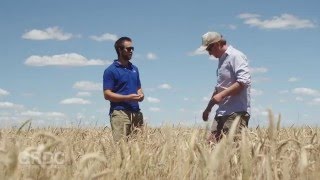
Two researchers discuss adapting harvest weed seed control for wet southern regions, where ryegrass germinates late in the season. They're testing ways to shift crop maturity so weeds mature with the grain, plus working with farmers to refine techniques and measure whether the economics work.
Chapters
There's a lot of work being done with low and medium rainfall zones and technologies there. We're trying to adapt that to down here in the. In the southern region, in the high rainfall zone here. One of the differences is that you have that early season weed control. But what happens at the end of the year? In spring, you get those late germinating weeds, and those have the potential to set a lot of seeds into the seed bank.
If you have gaps in the paddock or slug patches that have managed to get through, that's where the rye grass really persists and gets going. And suddenly you get big areas in a paddock that blows out. It can be very detrimental to your bottom line.
Two main aims to the project. The first one being we want to actually focus on how we can change crop maturity and crop physiology to match the requirements to be able to use harvest weed seed techniques. Then we can go into the paddock, use the, talk to the farmers, and actually refine how those techniques are going to be worked in their system and how beneficial the profit and economics are going to be at the end of the year. Techniques are a little bit different in the southern region. You walk through a paddock now and a lot of the weeds have already either lodged or set seeds. So we need to kind of change the way of thinking around that and get the system working for us by either making economic decisions throughout the year to change that end product, or just a completely different idea of machinery altogether. What we're trying to do is sink the maturity and growth of the crop you're growing and also the weeds you're trying to control. So if you get a wheat crop that might be over a meter tall, your eye grass is now over a meter tall. So what if we perhaps either sow later or use a different crop cultivar just to try and get that weed seed at a different level, change its kind of physiology, and then allow that to then feed through the header and then put it in a usable form so we can control weeds at the end of the season.
I think it's got to be an integrated approach and that's the way I'll put it to my clients. It's not going to be one thing that's going to get you out of the woods. It's got to be a combination of good techniques.
Traditionally speaking, everybody down here at the start of autumn burns all their stubble. Let's try to think of doing something different with it. How are we going to use that stubble and what's going to make it easier for the next year sowing.
We need to be using very strong pre emergence, making sure that we're using up to date chemistry and rotating chemistry to prolong its effectiveness. But we also need to be getting into techniques such as windrow burning, such as weed seed management, cutting hay, the likes. We're all out to learn about how this is really going to drive our farmers forward.
It's a really great idea that GRDC given this money to grower groups to implement these ideas down here and deliver those results that actually make a difference in the high rainfall zone.
The key to a profitable farming enterprise is to get the weed seed management under control so you can get profit across the whole farm.