How to get the best from your management team - Natasha Searle
Natasha Searle outlines six principles for getting more from your management team: clear vision, explicit culture, communicated expectations, confident decisions, effective resourcing, and regular monitoring. GRDC research found the gap isn't knowledge but implementation, and top 20% performers use advisory-board governance to drive accountability.
Chapters
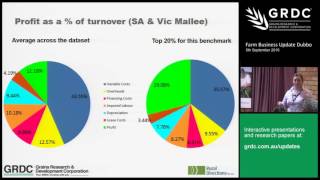
Cool. Thanks Andrew. And thanks to GRDC for the invitation to speak to you this afternoon. My session is on how to get the best from your management team. So as Andrew was saying, part of my role is delivery of human resource management services and farm business management services with clients one on one and then also do delivery applying those systems with clients through workshop basis and training programs as well. So today I'm bringing you I guess some principles on how to get the best from your team. But as opposed to talking about what you need to be doing with your team on the ground, it's more about what as an individual, as the owner or manager, your business do you need to be doing to be able to get the best and to leverage from that team. So the session will cover some principles, six key principles that I'll talk you through and then we'll have a look at some insights into a GRDC project that we're delivering from rural directions and with some national partners and the key findings from those and the impact on management approaches. We'll also look at the key features and benefits of advisory boards and how you might be able to apply some principles from the advisory board type model into your own business and finally how to work effectively with advisers. So thinking about getting the best from your management team, what are we talking about here? So a management team in this presentation I'm referring to your internal and external team members which from an internal point of view this is your team of family and non family labour. And from an external point of view you'd have a number of different people that would be maybe engaged in your business. So some examples there on the board. So that's who I'm referring to as I go through the presentation about the management team. So there's often a number of people that can provide input to your business and you can be made up of family, non family labour and scale of your team will vary from business to business but there's often these people that provide an influence. But as a manager are you leveraging the best that you can from these resources. So to be successful your team's absolutely reliant on your own ability to be able to implement these following six things that I'm going to talk about today. So a clear vision and strategy, so the plan, a clearly defined culture, communication of expectations, confident and robust decision making, effective resourcing and regular check ins and monitoring of performance. So I'm going to spend some time just to unpack each of these six. So to begin with, with planning in mind, just going to talk about intuitive versus formalised planning. So intuitive management is driven by gut feel and it often relies on what's in someone's head. So this is an effective style if you're working on your own or in a smaller scale business. But where it can come into difficulties is if there's a business shock and you're intuitive from that intuitive point of view. So as business complexity grows, your intuitive management can struggle to keep up on top of things. But there's many farms and small business owners that have a really strong intuitive management style, but it can be better suited to an operational planning than strategic planning. So it's not to say it doesn't work, but we've got a lot of advantages by taking a more formalised approach. So this is where we're incorporating systems or structures to add rigour to planning and decision making. And it can add value to your intuitive management by ensuring thorough planning. As your business grows, it's important to implement formalised systems, particularly with strategic planning. And we're talking about good governance. And as we move into the next session, Alison will pick up on governance as well as part of the succession planning discussion. But governance here, basically governance means consistent management, so integrating consistent management within the business and this helps with bringing out the best of that intuitive flair. So formalised management is also conducive to team engagement and really important when you're transitioning management from one generation to the next. So useful in that IP capture. So how do we actually capture what's been going on and what's been working really well in the business over all of these years? If we formalise it, we can capture that to pass it on to the next generation. So now if we think about the role of strategy and strategic planning, the strategic plan is the high level plan to achieve your goals. It defines what the business will do to achieve those objectives. And this is the thing that you're communicating to your team for them to understand the why for the day to day. So that's the high level plan. Operational plans are just as important and these are developed after you've got your strategy in place. So they're the things that are involving your day to day, week to week, farm operations plans, your rotation planning, the planning that you're doing with your agronomist through to maintenance programs and then your work plans that you're developing with your team members. The second thing which is important from a whole of management point of view is culture. So you can have the best business strategy, but it will fail every time if the culture of the business isn't right. So just divert your thinking to a local sporting club that you might be involved with or familiar with. And culture gets thrown around a lot with sporting clubs. So you can be thinking about they've all got the same strategy to go out and play that game of sport, the cricket, the footy, whatever it might be. But that strategy doesn't matter if the culture is not there and they're not actually getting their players turning up, or they don't have that good following of the next generation of kids coming through. So that's what we're talking about with culture. And so it's demonstrated by the values that are lived by the management team. And this is where it's really important that as a management team, we define the culture that we're expecting from our business and what we want to represent our business. So it comes up with the look and the feel for when people are talking about our business and wanting to engage with us. So an effective culture creates focus and motivation, loyalty and cohesion and provides resilience during tough times. So that's a key one. When things aren't going so well, if we've got a good culture, the team will hold themselves together. It creates also competitive differentiation and strategy can be replicated, but no one can replicate your own culture. Communicating expectations. So from this perspective, we're looking at providing clarity on what your expectations are and really setting that standard. So if I had a whiteboard here, I'd draw this line. So if we think about drawing the line, or the line in the sand, thinking, if we don't do that, others will do that for us. So we've got to be really clear as owners and managers of our business what the line is, so that otherwise someone else will draw it, and more times than not, it be below expectation, as opposed to always exceeding expectation. And if it's exceeding it, well, let's push the bar a little bit higher. So the standard you walk past is the standard you accept. So we've got to be really clear on expectations and the next generation are expecting that from us, that we outline what we're after, we're providing feedback and we've got some really good communication strategies in place. This promotes clear roles and responsibilities. So thinking about, have I got an organisation structure? What is my organisation structure and is it role specific or is it person specific? We need to pull it back to a role basis and then develop job descriptions so that we're really clear about the specific roles required in the business to take it forward. So Other ways expectations can be communicated is through your business plan, through gross margins, cash flow budgeting, your operations plans, policy, which we'll talk about next, and to team work plans. So policy is often intuitive within farm business, which is fine because it's often been reflected upon for years and years and that's sort of those business rules that you've been operating by. But generally, a policy is a principle that guides decision and helps to achieve rational outcomes. If we can spend time formalising our policy, we can help take the emotion away from some of those bigger decisions. And it allows us to get on with our business and be able to just focus on working on the business and making it all happen out in the paddock, essentially. So from a robustness point of view, it allows us to develop that rigour in decision making and it helps to influence behaviour so everyone knows where they stand. A policy sets the standard. So we've got here that, you know, review policies every two to three years. Just depends on what the policy might be. Some things you might need to review on an annual basis, other things you might be able to push out. And we're not suggesting here. I was in Tassie last week talking about policy and drafting some up, and the clients are saying, do we have to do pages and pages for each one? It's not about a page, two pages, three pages for each policy. Some might just be three lines, but it sets the rule. If you're getting questions or you've got a risk that you're trying to manage, create some policy around it. And it just sets those rules for how you do that in your business. So some examples might be your machinery replacement policy, your grain marketing policy, what your policy is on motorbikes and use of bikes, might be on spending and how you're handling purchases and that kind of thing. Just some simple business rules that help you with managing ongoing questions and it helps to manage any conflict. So resourcing the team, we're thinking about what the motivating factors are. Sometimes you hear things like, oh, I don't know what I do from a client, I don't know how to motivate my team. I don't know what motivates them. And then we say, well, are you talking to them? So we've got to talk to our people and understand what makes them tick. What are the maintenance factors versus motivating factors? Maintenance factors are things like, so everyone expects a fair day's work, fair days pay, so we can't think that we'll add another five grand to their salary, that this is going to solve everything and they'll be meeting expectation, we'll get them on track. What we find is they're actually after leadership communication, they want to talk to you and they want autonomy and being involved in the business. So sharing things around the. The high level plans are really important for motivating the team. Providing training and support helps with that overall capability development and providing tools and equipment that help people to undertake their work efficiently and safely will help get the best out of that team and then monitoring and continuous improvement. This morning's session with Sam was talking about benchmarking and the role of so you can't manage what you don't measure. So using benchmarking and other qualitative ways of measuring performance. And the key there is implementing key feedback sessions. What have we found on farms? So there's a project that we've been delivering nationally for the GRDC called the integration of Technical data and profit drivers for more informed decisions. We call it Profit Zone. So it's around a profit driver type project. And nationally we've been working with a number of partners. So in the north, northern New South Wales have been working with Agripath and in the south we've been working with Meridian. And there's been four key profit drivers that we've captured with this being gross margin optimisation, low cost business model, risk management and people and management, which is the one that we'll explore now. And what we've found with the survey process is that there's an implementation gap as opposed to a knowledge gap. So as an industry we've done a really good job of closing the knowledge gap, but it's actually the implementation gap which is causing this difference in the percentage of turnover as net profit that's being retained by the business. So to demonstrate this, we've got our top 20% for this benchmark. So this is some data from SA Victorian Mallee businesses and the top 20% is actually retaining almost 30% profit compared to 11.2%. And that's been sort of, I guess, concluded around some of these factors around management and implementation. So how do we try and close this gap and increase the green for over an average data set? Some of the key characteristics that were observed when interviewing these growers were that these farm managers have a systems focus. So what we mean by that is that the continually looking at ways of how they can refine their business and their production systems. So they're simplifying it, they're identifying their strengths and they're doing and working to those strengths. And they also take a systematised patterns of work approach, so they're looking at how they can streamline things and make the system simpler. So as an example, the growers were asked about their ideal finish finish date for sewing for their location. And virtually all of the survey participants were able to say what their finish date was. So the knowledge was there. But then when asked about how often did you hit that? It was only this 20% that was able to say that we were consistently hitting that date in variable conditions. So that's where this organisation, timeliness of operations and that kind of thing comes into play and where we're picking up some of these characteristics of these high performing businesses. They also take a helicopter view when under pressure, so they climb up silo height and they're able to take a really good overview of what's happening in the business and identify where there's emerging challenges and issues, or have a look forward and go, okay, well what's the issues going to be five years from now, ten years from now? So they're able to take that helicopter view, they internalise and take responsibility for key decisions so the buck stops with them and they don't look at blaming others or making excuses. So a neat little model that we use internally. So I manage a team of consultants and we use it day to day within our team as needed. I deliver as part of when I start a workshop as the ground rules, but it's got really good application for you guys as managers, as farm business owners as well. So if we start off with this line of choice, this is where we are now. So we can choose how we behave. We can either take ownership, take responsibility and be accountable, or we can fall below the line and blame excuses, denial so we can picture and hear different things that would appear to when we're falling below the line or when we're above the line. So the goal is to try and bring our team and ourselves from a mindset point of view, above the line and be future focused. And this means that we're being proactive and results driven. So from this data set where we were surveying these farmers, they're taking responsibility, they own their decisions. They also focus energy on the things within their control, so they're not investing energy on things that they can only maybe influence or more so just be concerned about. So the global prices and things like that in here, the things they can control is timeliness of operations, what their rotation plans look like, how they engage with their team, what communication processes have got in place, what their strategy is. There's all these day to day things that this is what these farm managers are doing. They're focusing their time here. They also have superior implementation ability. So that's self explanatory with what we've sort of been talking about, where they're able to utilise the skills within their team to get stuff done. So they're focused on that implementation and getting it done. Right time. They've got right people in the right roles and they also have strong observation skills. So they've got an active radar for trends and they're observing what's going on around them. They're also really good at filtering information. So you get so much information now. They're good at filtering and picking out what they need and how it fits in with the strategy. So they're those top six characteristics that we've recognised through that project. So using that, how do we actually apply that and close the implementation gap? So some questions for you guys, as business managers or as advisers working with clients, what are some of the barriers within the management team for successful implementation? What are some of those things that are holding the business back? Are we spending too much time? Are we spending enough time working on the business? Are we working on the business as well as in the business? Are we working on the business while the sun is out or are we only doing it late at night? Are we working on the right things? Is time management an issue? Do we have people in the right roles? Do we have job descriptions in place and do we know what people's strengths are and are we capitalising upon that? Is there a more effective way of implementing our business plan and engaging our team so that we are working more effectively together? And, and so that's where I can touch on the role of advisory boards in business. So in this way the GRDC has provided information you might have heard about the role of advisory boards. So I guess in the next few slides my aim is here to sort of give you some ideas on how you might be able to apply these sorts of principles. Where it's essentially management meetings and you may choose to bring in external service providers, or you can apply these principles yourself at a low cost but high impact basis for your own business. So some documents you'll see if you Google advisory boards, they'll talk about external advisor input and that kind of thing. But you can implement all of these principles. If you've got a good team with good communication, you can do this yourself. So the role of an advisory board is to Enhance the farm business through a clear direction, agreed culture, confident decision making and increased profitability. So a lot of those things I was talking about in that first slide. So an advisory board supports implementation. And so that's the key. With that we can do our planning, but are we actually going to action and are we actioning some of those things? So the board type approach provides you with some structure that allows you to bring the expertise together and make that implementation happen. So we see demand for these structures to assist businesses with succession and debt management. Also increasing accountability and business growth to help take the business to the next level. The other useful aspect of the advisory board is it helps to separate business and family and then manage both of those aspects as well. So where these things intersect, we can spend some time working on the business from that side of it. How is it delivered? A farm advisory board is tailored how you wish to use it. So you set the charter for how you wish to use a board. But typically when we run the boards with our clients and what we hear clients doing that are implementing their own management meetings themselves, they're typically meeting every two to four times a year. So quarterly we don't hear of often monthly, that's pretty full on. So starting even with two meetings a year is a really good way of getting this underway and it allows for that overall management and integration of production, financial and personal objectives. So an advisory board, the key with that is that it's non binding strategic input as opposed to where a statutory board fits. So don't want to get confused with the terms board. So if you've got a company structure as how your business is structured and you've got reporting requirements as part of the Corporations act, an advisory board is essentially a management group. So does an advisory board model suit all businesses? I believe so and think that there's many principles that we can apply to help enhance the business. So the governance principles apply to all businesses, whether it's small family, farming business, say with two, three people working in the business through to larger scale corporate type arrangements. Many examples of businesses operate in this way without external support as well. But if you're looking at how you might get implementation moving a bit quicker, that might be where you'll bring somebody in to help with actually getting stuff actioned. The benefits of an advisory board is allocated time working on the business. A focus on strategic business and operations planning creates accountability and support for change. It has an implementation and action focus. It creates a forum and a time to be able to discuss the hard questions. So you're actually allocating time to be able to work through some of those harder things that you don't want to be just doing out in the paddock. When you're trying to hook up something, you're actually waiting until we can spend time on it. And it's planned, structured, with an agenda and to be able to work on those sorts of things. It allows development of policy to aid decision making and enables creative and innovative thinking so you can bring everyone together and really flesh some things out. So you can use the power of your group. If you are engaging with your advisers through this sort of process, it allows you to bring them in at a strategic level for input. So often it's the day to day stuff that you might be engaging with your agronomist about, but this sort of process might be able to bring them in at that strategic level so they can see the big picture for how they're engaged. What's the first step? So if you're considering developing an advisory board, the most important aspect is to define your charter. So what's the purpose and the scope of the advisory board? What's the membership? Who's going to be involved and what will their roles be? Just because they're working in the business, it doesn't necessarily mean that they have an automatic place on the board. We've got to be managing that from an entitlement mentality point of view as well. So that's part of that succession story and bringing the people along that need to be. So it allows you to develop some of those roles within the business. Frequency of meetings will be two times a year, four times a year, and when will we undertake those? As we plan those meetings, what will be the key themes for those types of meetings? If we do something in February, we're often going to be talking about the season that's just wrapped up as we're going into the next production period, that kind of thing, and the business rules for board operation. So if we're engaging with advisors, then as part of our management team, that's our responsibility to be really thinking about, well, how are we going to engage with them and how are we going to get the best from them if we're investing in this input? So we need to understand as managers of our own business what the outcomes and expectations are. So we're thinking about as a management group, what we want from our advisers. Then we're going to communicate that to them and outline being quite transparent about what we're after, what's expected of them, what deliverables so that they know why they're being engaged and they'll love it as well. So an advisor wants to know why they're being engaged and how they can support your business. Being open and transparent allows you to develop that professional relationship, a consultancy brief, or you might be familiar with a client agreement form or some sort of agreement being put in place. As part of our normal process, we develop client agreement forms and that's all about understanding what the purpose of the engagement is, what the deliverables will be, what the term of engagement is going to be, what the outputs. Thanks, Andrew. What the outputs are going to look like and a budget. So then you can actually, if they don't give it to you as an adviser, you ask for them to put something together or you put it together so that you've got that overview that's been spelt out really clearly. An interdependence thinking behaviour means that we're working in a collaborative way, so no one's dependent on each other, we're working together. So that's a key characteristic of working in teams more generally and then developing a review process where you might be undertaking an annual review. So it gives you that chance to review how the relationship is going. It's OK to quit your relationship with an advisor or a supplier or whatever it might be, but putting some review things in place so you can actually talk about and give each other feedback. So to wrap up, high performing farm businesses take a professional approach to feedback. Farm management governance is integrated into all they do. So remember, governance is just consistent management. They attract excellent internal and external team members to work both in and on their business. And these businesses can be known as an employer of choice. So you might hear that term from time to time in industry with papers that come out about developing. As an employer of choice, employees and advisers work effectively with the management team and are achieving the business goals through superior implementation ability. And this is achieved through them having a clear vision and strategy, a defined culture, they've got clearly defined and communicated expectations, they have confident decision making processes and use policy as part of that. They resource their business effectively and they have an attitude of continuous improvement and innovation. And that's it. If anyone's got any questions. Thank you, Natasha. Thank you.
More from Gerri







GRDC National Variety Trials (NVT) Case Study: Helping Oat growers make informed variety decisions



Managing rhizoctonia in wheat and barley: Impact in low and medium rainfall zones 🌾🌾
