Increase your productivity through 'Go Zone' time management - Mark McKeon
Mark McKeon presents a time-management system built on body chemistry: Go Zones are 30-60 minute focused work blocks, Slow Zones handle routine tasks, and No Zones are pure recovery. He recommends a 2:1 ratio of work to recovery time, plus sleep and social connection, to sustain productivity without burnout.
Chapters
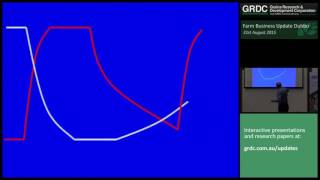
Beauty. Thanks. Thanks very much, Gavin, for the intro. Thanks for the welcome, everyone. How you going this afternoon? All good. See the rooms are filled up from the back. Does that mean you've heard about me? That I get a bit excited and sort of sprayed out there a little bit? Get a little bit. Even my blood type is B positive, so I'm a bit stuck with that. Thanks for staying for the last session, everyone. I'll do my absolute best to make sure you get a return on that investment. I thought the previous speakers have been fantastic. Well done, Kate and Greg and Angela reminded me of how sometimes I don't communicate that well. This session is a combination of personal productivity and personal resilience. So there's something in this for you if you are on the land or if you are a farm advisor, accountant, agronomist. You might have answered this before, but who's actually on the land here? Thanks. I'm not a farmer, but I have spoken at quite a few farm events and recently an update recently, this year, early this year, I did a two week tour around regional wa, speaking to and meeting a lot of the grain growers and I just learned a tremendous amount about wheat variations in crop rotation and the rise of lupins and GPS seeders and so on. So I hope my analogies will be relatively on the mark. But I know that sometimes I do give people a wrong impression. And when Greg and Angela spoke about the importance of communication, it reminded me of recently when I moved house. I live in Melbourne, but for 27 years I lived right out in the burbs and I've recently downsized. I've got two adult sons in their 20s and they both came with us when we moved. So their downsizing hasn't worked so well so far. But when we got to the new place we had, it's like a townhouse closer to the city and there's three bedrooms upstairs. So there's myself, my wife, both my sons and one of my son's girlfriends was with us and talking about family meetings. And the two removalists were these young Chinese guys, ripper young guys, but English was very much their second or maybe their third language. And we had to speak very slowly and simply so we could understand each other. And we're carrying the mattresses up the stairs at the new place and I could see this guy doing a head count, trying to work out who was with who. So he said to me, oh, so you have three children? I said, no, no, mate, I've got the two boys. And he looked at my Son's girlfriend, Jem. And he goes, what about her? And I said, no girlfriend. He goes, ah, what's your wife think? My wife thought I was dreaming what my wife thought, but. So you've got to be really careful you don't give people the wrong impression. So I thought, because we only have about an hour, I thought I'd try to impress you early by showing you some of my recent results. Because I used to work a lot with athletes. I used to train athletes and sort of train corporate people. And my first degree was in Human Movement and Applied Science. I try to have the maximum impact I can on people. That's what I'm just really passionate about. This fellow here, this was Port Macquarie a couple of months ago, he did the one hour workshop here. He was at the end, he's pretty happy. This young woman admittedly did the seven day intensive, but again, you'll agree the results were there. But he was a busy farmer or an accountant or agronomist. There's so many things to do working on the land. That's. The Home Office had a look at new cropping techniques and new financing options and this person unfortunately didn't have time to listen to what is essentially a very simple message. And unfortunately, there they were at the end of the day that, ladies and gentlemen, we needed to catch a drop in standards. Some people actually go so far that they don't have any form of recovery in their life and they get themselves into trouble. They got into trouble for coming back with a half load because people just overload themselves. And those of you who do work on the land, you have a couple of additional complications. The first one is you work from home. I'm assuming the vast majority, if not all of you, work from home. So straight away you've got a harder separation between work and home. And as Saul said earlier in the morning, you have no control over the weather and I always knew that. But earlier this year, having that experience with the farming communities really gave me a greater understanding of just how significant a thing that is. Things that you can't control. Let me try to prove this to you. A number's going to come up on the screen. This is the audience participation part. You've got to yell at the number. You ready? Here we go. That's 1000. A bit chopped off. New one comes, add it, give me a total. A little bit more enthusiastically if you manage it. That's better. Good, you're going well, Almost there. It's 4,100, not 5,000. So that's probably why you employ your accountants and you your farm advisors. But it just really indicates that if we rush, we make mistakes, and we don't want to rush today. If we locked the doors and didn't let you out, I could keep going for hours about things that I think are important in this area. But we're going to focus on just the essentials. So what we're going to do is try to describe a problem that a lot of people face and then give you a solution. And that requires me to just give you a minute or two of chemistry, because on this graph here, think of the line up, the vertical line there, that being that your vertical axis, which is quantity, and the horizontal axis is time. Adrenaline, you can see there. And S and M. That's not the S and M that Gavin reads about on weekends. That's serotonin and melatonin. You might have heard of them. They're naturally occurring neurotransmitters. They are chemicals, if you like, that float around in your bloodstream, that control your energy level and control your mood. And adrenaline is your reserve, your turbo boost. So we want a higher level of the white line, the serotonin and melatonin, and we only want, hopefully, a lower level of the adrenaline. So you might have had a tough day in your office at Dubbo or out on the land at seeding time, and the seed is working 18 hours a day to get it all done, or at harvest time before there's too much rain or the crop spoils or whatever, or you're shearing, you're just working really hard. But hopefully you don't need the adrenaline to get you through that, because the serotonin and melatonin elevate your mood, which enables you to cope with things, and it elevates your energy level. So that's what we want. But sometimes people allow the balance to change. You might have got through a tough day at work or at the farm or in a corporate environment, and. And all of a sudden you're woken, three o' clock in the middle of the night by a possum jumping on the roof, making this loud noise, and you're not even aware that it's a possum. It's just something's woken me up without any drowsiness at all, and you're straight out of bed and you're walking around thinking, what's that noise? And if it was just a possum, you go to the kids and say, all right, boys, dads here, the situation's under control. But if that noise is someone breaking into your house to rob you. You can nick off at the front, let them fend for themselves. That's that fight or flight mechanism where instantly you're ready for action. It's why you can swerve your car before you've consciously realised a bus has come through the lights in one of the main intersections in Dubbo. Or you can quickly duck your chin underneath your shoulder if someone has a poke at you in a bar or on a sporting field. Never underestimate the power of adrenaline. When I was a teenager, I was walking along a river with a fence. One side a river, the other side, all of a sudden, a snake in front of. And I vaulted over that fence and there was a rail. And I honestly don't even think I put my hand on the rail as I jumped that fence. If there had been a high jump coach, I reckon he would have signed me up. At the time, one of my work colleagues actually lifted up a car, the back wheel of a car, to pull out a cyclist who had been trapped under a car after an accident. So never underestimate the power of adrenaline. There's incredible documented cases of things people do as soon as the adrenaline goes up like that. The good stuff, the white stuff, the serotonin and melatonin, goes straight into storage, because adrenaline is the dominant neurotransmitter, the dominant chemical we have, so everything changes. So as soon as I've got this high level of adrenaline, I'll talk faster, I'll breathe quicker, my heart rate goes up, my blood pressure goes up, my nervous impulses are enhanced, I'll wear out the channel change on the remote control. I'll look forward to things. And once that start, I'll wait for them to be over because I'm always in a hurry to get onto the next thing. You can tell when someone has a high level of adrenaline, because for them, heavy traffic becomes like a personal insult. A stop sign is just a suggestion. You feel like you can sense your mobile is about to ring, and when it does, you quickly whip it out to answer it. And if it doesn't ring, you keep checking it, just to see if you might have somehow magically missed the call. When you're a bit stressed out. Does anyone here like to have an alcoholic drink at the end of the day? Why stop at one? Why wait till the end of the day? That's how we roll down in Melbourne anyway. Anyone ever woken during the night and you think to yourself, must be about 3 o' clock in the morning and you look at the clock radio by the bed, it's 3:02. Anyone ever done that? You know what you think then that clock's fast because that's how good our wind built time mechanism is. So you think 3 o' clock in the morning, I've got to get up at six, I've only got three hours left to sleep, right, I have to go back to sleep right now. And the harder you try the worse it is and you think to yourself, I'm not going to look, I'm not going to look. But you do and it's quarter to four, then it's ten past four and you get to about five o' clock and you look at it one more time and you think, I've only got an hour, I'm never going to go back to sleep now, I might as well just lie awake and wait. And next thing you hear is be, be beep, beep, beep. You've let yourself off the hook and slope the last hour. Been there. Classic indication of too much adrenaline. Now who's ever say if you're a grain grower and you're getting close to harvest and the weather's looking a bit dodgy and you've just got to work around the clock for a couple of days or a week to get it all in, or you, you maybe played in a sporting final or you've looked forward to a family wedding and there's a huge build up and you're under pressure and you just manage things or you might have somebody sick at home that you're looking after and as soon as the harvest is in, the game's over, the wedding's done. You get like this anti climax, you strong while the pressure's on, but as soon as the pressure's off you sort of hit the wall and you get this anti climax letargy, the feeling that's what called the adrenaline pit. Because what happens is the adrenaline responds to some sort of an impetus. Now sometimes it's the possum on the roof, but very often it's a chronic sort of impetus. Is it going to rain? Is it not going to rain? Am I going to get this finance? Am I going to get a certain, what's my yield going to be this year? Should I lease a harvester or should I buy it out? Right, Will I buy this new bit of land? Will I invest in shares? What's going to happen with the world economy? And the adrenaline comes up but your body is always working to get the adrenaline back to its baseline level. It's always trying to come back. It might take hours, days or sometimes weeks, but it's trying to get back. And here's the point of all that preamble. The white line, which is the serotonin melatonin, starts high, is suppressed by the adrenaline. It doesn't automatically kick back in. Once that threshold's there, it limps back, back in. In my old footy days, after a game, after a game for about two hours, you just wouldn't, you wouldn't want to eat, sleep, talk. You just felt like sitting in a dark room, you'd come good and kick on later in the night. But for so many people with demanding jobs and busy lives, they get to this point and if you excuse this pointer for a moment, there's nothing here driving my energy and mood. So I'm feeling flat. This is mid afternoon fatigue, can't get my head off the desk or I can't actually get started. A classic story. A fellow told me he was a grain grower in WA on some marginal land and he'd been close to being financially shut down for 12 years. And he told me he had this water, of course, is precious in that environment. And he had a water leak and it was under pressure and for him it was an easy job. It was close to the shed, you could just turn it off, go back, do some cuts, do the weld. For him, a 20 minute job. He had everything he needed to do what he said. But he stood there looking at it for an hour, watching the water seep away because he just couldn't get going. That's that situation right there. And what we do very often when we get in that situation because there's nothing driving, because it's like, I need a couple of strong coffees, where's the Red Bull? I have a confrontation or I deliberately take a risk to get myself going again. And we allow the adrenaline to spike back in again before the natural repercussion of the serotonin and melatonin will do the same. So over time it changes because as soon as the adrenaline comes up again, the serotonin and melatonin will go straight back into storage. So over time it looks like this. It's like an infinity symbol or a radio wave, but it's going downhill. And that graph there, ladies and gentlemen, depicts addiction. I've worked quite a bit with drug users who say when they're honest. First couple of times I took it, I've never had a high like it. Nothing's been close to that. But after a few goes, it didn't work so well. I had to increase my dose, try to get that high again. Then I tried some different stuff, I put things together and now I'm just trying to get back to where I used to be without it. The point of all that is that the adrenaline high here, which allows us tremendous impetus and tremendous feats of strength, strength and endurance and mental capacity after a while. If you overuse the system, the adrenaline high here and here is actually at or below where it used to be without it. Are you hearing me there? Because if you overuse the system, you wear it out. If you overuse the system, you render it ineffective. Now I'm no expert on agronomy, but I do believe that if you keep pulling, planting a certain strain of wheat in the same paddock year after year without resting it or rotating it, that it changes the soil to the point where you won't get the yield. Is that a reasonable suggestion from a non farming person? Well, we do the same thing. We render our own ability to deal with pressure and stress ineffective if we don't have some strategies. And you might have noticed that there's also a little yellow sea down the bottom there, which I just want to briefly explain to complete the chemistry lesson. Has anyone here ever had a cortisone injection for tennis elbow or a crooked shoulder from cricket or sore back or knees, anything like that? Anyone had a couple people had them. You probably know that cortisone is an anti inflammatory and it's meant to take away the pain and the pressure and the crepitus and the swelling and the loss of function, usually in a joint. Well, we make our own cortisone, but we call it cortisol. It's virtually the same thing. And the role of cortisol is an anti inflammatory. So cortisol, when you first wake up in the morning, should be a little bit higher. So it gets us going, gets everything going at the start of the day, so we get moving and then as we get moving, the cortisol drops off to virtually nothing. Then when you go to sleep the next night, while you sleep, it just builds up a bit to get you going the next day. However, with people who don't have strategies to deal with what I'm talking about, cortisol goes the other way. It starts where it should, but it ramps up like a shocker. And then you might think, well, hang on, Mark, if cortisol's an anti inflammatory, surely more is better. But unfortunately, like so many things in life, too much of a Good thing works the other way. And when we have too much cortisol, we actually lose all the anti inflammatory capacity of our body. So you wake up in the morning and you think, geez, I must be getting arthritis because all my joints are aching, I can't get myself going. Your skin tends to get a bit itchy and scaly. Especially men tend to put on a bit of belly fat. You get these cravings for salty and fatty foods. You crash at night, only to wake up two hours later wide awake thinking about all the things you haven't done today, didn't get to and you have to do tomorrow. And you can't concentrate on anything for more than about 10 minutes. And in emergency hospital, emergency wards, one of the first things doctors will do if someone comes in and it's a suspected heart attack or something like that, is they'll measure the cortisol level because they call it the death hormone. Nice cheery statistic. It gets better. I was just getting to the good bit. And in 45% of the cases of heart disease in our country, the first warning sign is sudden death. So that's God's way of telling you to slow down. But all that together, this has a name. So the red line, which is the adrenaline going up and down but diminishing and the cortisol going the other way has a name. It's called adrenal fatigue. We have two stress hormones. The first one is adrenaline, the second one is cortisol. They both come from the adrenal gland. And you might know the word renal relates to kidneys. Well, adrenal is added to the kidneys, just sits on top of your kidneys. That's where they both come from. And if I get a real fright, it's almost like someone's pushed a button because I can feel a squirt of adrenaline coming in and burning you inside. Everyone I'm sure has experienced that feeling. But what that depicts there is adrenal fatigue. You've worn out that system. Like the fellow in Outback Wa who couldn't fix his water leak, he was suffering from adrenal fatigue. There was nothing wrong with him emotionally. That was an actual physical manifest of what had happened to him over the last few years. So what's that got to do with us? This is a condition that I see so many times in all walks of life. And a lot of people who are on the land, and I say this with the greatest of respect as my father in law has been a beef cattle farmer for 50 years. People can get isolated and working from home. Potential isolation and pressure together create a potentially dangerous combination if you don't have strategies. I also see a tremendous amount of inefficiency in all walks of life, and that's why I've developed this thing called the Go Zone that Gavin mentioned in the intro. So I want to tell you about the Go Zone, and I hope you'll be prepared to consider giving it a go in your own life and see how it might actually fit. And just to preface that, I just want to admit that I'm a student of this as much as I am a teacher of this. And I have been guilty of that myself, because when I used to train the footy players, I also used to edit a magazine and I used to run 10 corporate gyms all around the state of Victoria. So I would get up at 5 every morning after having gone to bed at midnight. If someone would ring me for a chat, I'd say, what can I do for you? Because I was in such a hurry to get onto the next thing and I'd never have a dull moment in the magazine office that I edited. We had 10 staff, we had the corporate gyms and I'd race around and had staff in them, and at sort of 3 o' clock I'd down tools and race down and train the footy players. So there was never a dull moment at all. And one time, one of the Collingwood footy players had a little bit of extra weight that he shouldn't have had, and it was my job to get that weight off him. So I used to get him. After this crazy day, we'd had to ride his push bike from Heidelberg, which is an inner suburb of Melbourne, where I actually now live myself, by coincidence, right out to Eltham, which is sort of a bushy part, about 25k out of town. He'd have to ride his push bike up and down the hills. And I had a gym where I used to live and I'd put him through a workout in the gym and he'd ride home again. So I'd work out with my metabolic calculator how many calories he was burning and he had to be losing his weight. And we're doing it two and up to three times a week and it wasn't actually working. And one night I was quite angry and I was waiting for him to arrive. So I opened my curtain at the appointed time of 8:17, and he's actually already there. He's actually in my driveway. The bike's lying in the driveway. He's got my garden tap running and he's splashing water from the tap underneath his arms and to his hair to make himself look like he'd been sweating. So I knew that something was amiss, but I didn't let on. While he started the workout in the gym, I had to scout around the front. Of course, you know what I found in a little alcove about 50 meters from my home? Yeah, his ute. You see, he'd been putting his bike in his ute driving to Eltham. So. Righto, Mark, let's go. I'm ready to work out. So I didn't let on that I knew gave him a doubly tough workout trip to the vomitorium. It's like 10:30 at night. He's in the driveway with one leg over the frame of his bike. So I've grabbed him on the shoulders and I said, caro, you've worked out so hard. Just for tonight, I'll drive you home. So I put his bike in the back of my one tonne van. I drove him back to Heidelberg. He had to get out of my van, back onto his bike and pedal back across to Eltham to pick up his ute. And I'm waiting in the bushes going, gotcha. You know, crazy, stupid things we used to do. But really, I shared three things in common with a lot of people that I meet. The first one was I had a bit of knowledge in human movement and biomechanics as you do in farming or accountancy or agronomy or finance or whatever. Second thing is, I really wanted to do the best I could for my clients, the footy players. And I know you do, providing for family, the whole succession thing, being good at what you do, contributing to the community, all that. I get that. And the third thing is I had a bit of an ego and I wanted to be successful, and I know some of you do. The fact that you are here and are continually educating yourself and are looking for new ideas and challenges indicate that in a positive way. But you put all that together and sometimes people get it out of balance. So here's the Go Zone. Now this. The Go Zone arose out of three lessons in life over 20 years. And I finally sort of put it all together to put it into this packageable format. But the first lesson was when I was a teenager, I was a cricketer, I was a batsman, and I was playing in like this state games and they were picking like a national junior squad and I'm batting away. And I had one key thought when I was Batting. You know what my key thought was? I got to make 40, because if you made 40, you were automatically through to the next round of selection. You couldn't be cut by the selectors if you didn't make 40. It was up to their discretion. So I'm thinking about the goal. What an idiot. I was thinking about the goal. Now, Justin Langer, who's a former Australian opening batson, I'm not comparing myself to him, has this great saying about mental discipline. And the saying is this. The essence of mental toughness is the ability to focus only on the very next thing, the thing that's right in front of you. So Justin Langer says he got to the point in his career where it actually mentally didn't matter to him whether he was facing his first ball or he was already 100 runs or he'd just been hit on the helmet, because the only thing he had any control over was the very next ball. Now, that's why cricket's a good analogy, because they come one at a time. And I know life's not like that. It's not like a kung fu movie where the bad guys come at five second intervals so the hero can get rid of that one before the other one attacks. They never jump at once. And I know life all comes at once, but the issue is so many people are focused on the goal. I've got to get this yield per hectare, I've got to get my cattle to this sort of weight and I've got to have good brisket before I send them to market or whatever. And I've got to get this. It's goal, goal, goal. But once you've set the goal, that doesn't achieve the goal. It's only the actions that achieve the goal. So one aspect of the go zone, once the goal is set, you are not focusing on the goal. You are focusing on the next task which is going to lead you towards that goal. The second lesson is that I've written a few books along the way. I've also got a new book coming out soon called how to Be Happy without money. That one's 4, $400 a copy, so if anyone doesn't seem to be going too well, that one. But anyway, when I was between books, I had a tight deadline with a publisher because the first one had sold a few copies and they wanted the next one straight away. And my family was younger and I didn't want to miss out. And I actually had that crazy life I was talking about, so I didn't want to miss out on all the family stuff. So I'd bath, you know, bath the kids and reading the story and all that stuff. And once the family had gone to bed, I'd get my laptop out and I've got a writing program on the laptop and I'd have it fully charged. And the first thing I'd do would be unplug the power cord. And you might remember the laptops of a few years ago were nowhere near as good as they are now with the batteries. And the battery would last for about an hour, an hour and 10 minutes. And I'd write until the battery warning beeped. And if I was on fire and I'd written a thousand words, the battery would beep and I'd stop. Now you might think, wouldn't you keep going if you're on a roll? But if I was struggling and I just couldn't get started, I would still keep going until the battery beeped. And that would be my stopping point. Now you think, well, why wouldn't you keep going if you're on a roll? Here's why. That whole adrenaline thing, because all the chemistry underpins this whole go zone thing. If you get a group of athletes and I've done this, and I've even done it with SAS soldiers, if you tell athletes we're going to do this really hard training program and you, and you tell them exactly what it is, let's say we're going to do 20 by 200 meter sprints with a 30 second recovery. That's pretty tough, alright. And after that we're going to do three 1km time trials with 4 minutes gap in between each. That's a pretty tough session. But they'll get through it, they'll get through that session. And then after they've done that session, if you say now we're going to do another five, they'll collapse and they literally won't be able to do it. But if you told them right from the start they were going to do the whole thing, they wouldn't be happy, but they'd actually be able to do it. And the point is, if you lie to your body, your body's got this incredible, everyone's got this incredible innate ability to control what we need. So writing's a little bit stressful in a positive sense. So if my body knows I'm going to write for about an hour and 10 minutes, it just releases enough adrenaline to allow me to do that. But if I lie to it, next time I say I'm going to do it for an hour and ten minutes it won't, believe me. And you start to lose control of that mechanism. We all have this fantastic inbuilt control, but you can lose the ability to control it. So you actually know that if you feel like you're fidgeting when there's no real need and you sort of have a bit of mood swings and so on, that sort of stuff can be indicative that you've lost your internal locus of control. So the second lesson about the go zone is a time limit is crucial, especially for people who work from home and don't have a corporate regime of discipline imposed on them by the company. Your own discipline is paramount. And the third lesson is just something working with athletes. When you hear an athlete interviewed, you know, they say, I'm just taking it one week at a time and all that. And you think, what a boring answer. It's exactly the right answer. And because athletes have to get not too high in the highs and not too low in the lows. When I used to be involved in the magazine, I used to write the stories under different pseudonyms and I used to sell the ads when we were getting started. And some days I'd sell three double page spreads in the morning, which is really good. And I'd be so high, I'd be running around the office ringing the bell, high fiving people and ringing the next customer saying, how many pages do you want this issue? I got too high on the highs. But other times when I couldn't sell a page because like many of you, I was a determined person, I'd have a list of people to call and I'd ring up and say, look, Jeff, don't suppose you'd help us out this issue, would you? No, no. And we're struggling here, and I do it in a very sort of negative, almost perfunctory manner just to tick and flick. And a lot of people do that, and they do things very inefficiently like we did, counting those numbers. So lesson number one, once the goal is set, focus on the task that gets you towards the goal. Lesson number two, a time limit is crucial to apply some discipline. And lesson number three, don't get too high in the highs, don't get too low in the lows. This is how it works. The go zone is a clear desk or a clear shed or a clear car, depending on how you work. And just a simple one minute of breathing in and breathing out, because this is a period where you are stepping up to a higher level of physical and emotional effort. This is Your highest level, because people have lost this level. So many people can't get into the go zone because they're so distracted all the time and they're always thinking about something else. Now that Harvard uni did a study and the headline result of the study was that 50% of the people in the study admitted to spending 50% of their time thinking about something other than what they were actually doing. So if you extrapolate the result into society, it means half the people spend half their time distracted. And I see that all the time. People walking around, checking their phone. One of the big stats with the pedestrians getting knocked over now is they're actually so distracted they're reading their smartphone and they walk into traffic or off the train tracks and you see it all the time. Or people in. Or people in business who have to ask again, what was that wanted me to do again? Or they'll send an email that's really poorly worded and doesn't convey the right message. One of my sons who's really switched on with social media stuff, you say to him, jake, can you put the bins out? Yeah, no worries, dad. Half an hour later he says, what was that you wanted me to do again? If you're lucky, people are just distracted all the time. We want to regain the ability to really focus. This is an adjusted state where you are at your best not to run 100 metres, but to make smart decisions and have the most impact you can on your clients or the people who might be working for you or with you on the farm. It is crucial, in my opinion, to have your list, your prioritized to do list of tasks and they are specific tasks going to move you close towards your goal that day. And the go zone is the time you do the most important things. You do not procrastinate during the go zone. If you've got some difficult calls to make or some difficult conversations to make or reports to write, you do those in the go zone. But these should be the most important things for your farm or your farm support business. This is where it gets interesting. The target. Because in the go zone, the target is always within your control. Let's say I've got 20 things on my list that's a combination of phone calls and a couple of emails that. And I've got to do a little bit of research on some stock pricing or some crop information and I've allowed myself, let's just say two hours, 20 things. Two hours. So two hours is 120 minutes. I've got 20 things that's six minutes per task. What do you reckon I should go for? Should I try to complete my list? Should I get halfway through my list? What about if I'm in an accounting business and I'm in a business development role and I've got to ring some prospective clients, so I've got 10 local farmers that I'm going to ring? What should be my target to get three meetings to get an agreement for one new client, what should be my target? And the answer to all of those questions is none of them. The target, when you're in the go zone, is always to keep going until the buzzer rings. I am challenging you when you do a go zone, to set your watch, set your phone, buy an egg timer, or if you're doing home duties, put on a load of washing and then when the dry cycle bings to tell you it's the end of the washing, that is the end of your go zone, because you are never trying to get to the end of your list. Because I don't know about you, but if I magically, somehow got to the end of my list, I could just rip off that page and write another list, couldn't you? So we're never going to get to the end of the list. That train's not coming, so we want to take away that aspect. There's two reasons, in my opinion you should do this and two reasons that people who do it find it effective. The first one is you will just get more done. I can guarantee you will get more done and you will do it in an efficient manner, without mistakes or without the vagaries of an email that sends the wrong tone, or a fence repair that's not tight enough, or a seating row where the GPS is off that's not exactly straight, or the right depth. But the other reason is equally important, and that's because it's liberating. It stops you worrying about all the other stuff that's floating around, because it's the anxiety, which is the huge issue with people. False modesty aside, I can some damage to my teeth from sport and I've had a lot of dental work done over the last few years and I absolutely hate it. But I can actually honestly say that when I have a dental appointment, I can mentally not worry about it until the moment I actually get there. I don't worry about it the night before, I don't worry about it that morning. I can just compartmentalise that. And when I walk in, I think, oh, no, here we go. But the damage of the Previous few hours and the previous few days is not there because I compartmentalize that. And that's part of what's happening with the go zone. If I've got some difficult things to do, I don't have to worry about them now because I'm not doing a go zone until tomorrow. This depends on you. Some people might need to do it every day. Some people do need to do it every day. You might choose a couple of days a week. I prefer to do mine in the morning, late morning leading up to lunchtime. I do it for two hours from 10:30 to 12:30. 12:30. I'm still working the rest of the day, but I feel like the hard stuff is done. Lunch is the reward and it's like I'm cruising through the rest of the day even though I'm still working. And that's a great feeling for your optimism and your well being to have that done. If you're not an organized person at the moment, I would suggest you only start with an hour or maybe only 45 minutes. Because the people who are most gregarious and most like to have the freedom are, are the people who need this the most. One of my colleagues at work has now tripled his output by doing go zones four days a week. And when he started, he had to start with 30 minutes and he'd come out after 30 minutes like he'd done a couple of rounds with Danny Green. He really struggled to keep on track because you know what most people do. Let's take that example of the business development. I'm trying to get more customers for my business. I'll ring the first one. No, no, no, not interested. Okay, ring the second one. Actually, I've just signed up with your competitor, number three. Not only do I don't want to work with you, I've talked your best client into going somewhere else as well. Three tough things. You know what most people do after three tough things? Wouldn't mind a coffee. And then they'll go out. They'll go back from the shed into the house, they'll have a coffee or in the office and they'll let themselves off the hook and they'll check the paper and have a chat to someone else and they think, oh, it's only half an hour before I've got to do something else and I can't get back to it now and we just let ourselves off the hook. But when you're in the go zone, that's different. Because if you've got 10 things on your list and the first three are disastrous. It doesn't matter because you're doing the fourth one or if the first three could not possibly have gone any better. It doesn't matter because you're doing the next one. Just a langer. The only thing I have control over is the very next thing. Now if you can develop your mind to get to that mindset, you will instantly regain if you've lost the ability to truly focus. And I don't want you to put your hand up, but I just want you to ask yourself, are you as sharp and focused as you used to be or have the capacity to be? I haven't expressed that well. But most people have lost their ability to focus and really concentrate. And it's great to get it back to be able to step in and out of this go zone. So up to two hours. And in those two hours there are no distractions and no excuses. A friend rings, you either say I'll call you back later or you reject the call. You don't go and have a drink during that time. If a non important thing comes up, you leave it to later. If someone comes and says mark, have you got a minute? Well, if you haven't got a minute and it can wait, you ask it to wait. Because people won't respect your go zones unless you do. And you've got to make that call about whether it is a distraction and excuse whether you are letting yourself off the hook. Because your aim is to keep going on the list one task at a time. Not to the end of the list, but until the buzzer goes. And you always finish with a little debrief and instantly you determine when your next go zone is going to be. I finished my go zone at 12:30 today. I'm looking at my calendar and I automatically organizing my next go zone. So the list that hasn't been completed transfers to tomorrow's go zone. Now of course the obvious question is well, what happens? I've done a go zone until 12:30 and at 2:30 something really important happens. What do I do? You step back up, step back up into the go zone and you develop your skills to step up and step back. But you have to understand you can't be in the go zone all day. Every day you end up in the de facto slow zone. I'll talk to you about now. So this is a gozone desk. If you're working in an office environment there is not stuff all over the place. The chair is not looking at the window deliberately. All is there is the list. The computer the phone, everything you need, nothing that you don't. And that's the coffee over there. And that's the symbol that comes onto your desk or on your person when you're in a go zone that stays away. Other times, this is the photo of your family that you put on the desk to motivate you to do the hard things. I have a model of the Pantheon and Pantheon's a building in Rome. Anyone ever been to the Pantheon? I'm sure some of you have. And it's virtually unchanged for 2,000 years. And it's a great symbol of strength and resilience. So I put that on my desk while I'm doing a go zone. It reminds me to stay in the go zone. And if someone comes into the office and they see it, oh, you're in the go zone. And they walk out. But I had to get them to respect the go zone first. Or if you're around the farm the whole time, you just have something in your wallet that you just put a ring on your finger or you just put something in a different pocket. Symbolism is crucially important that you are going to stay in this go zone. Now the other two zones don't take long to talk about and then we'll wrap, then we'll see how it all fits together. The slow zone and is the zone that most people are in 100 hours a week or more. There is absolutely nothing wrong with the slow zone. It's your comfort zone. It's your routine zone. It's the time where you just do the normal stuff, but not the most important stuff. The crucial point here is the third one that says it's productive but non stressful. This is not when you make a decision to purchase some more land or not to. This is not when you make a leasing. This is not when you. As Greg spoke before about, don't always just swallow the advice of the experts, make your own decisions or get a second opinion because you are making big decisions. When we talked about farm investment that Gavin had right at the start and the cost of running a farm per year, these are significant businesses and you're making big financial decisions. Or will I change a relationship? Will I move house or will I extend my house? These are not slow zone decisions. But it's amazing how much, how many times people make a decision in the slow zone. The slow zone is when you're in the groove. Of course, you know the problem about being in a groove? It's only about that far above a rut. I did a lap of the Zoo. I hired a push bike and did a lap at the zoo before, and the animals are all absolutely in the slow zone. They do. They just get fed. They even had a tiger, had to climb the pole, but instead of leaping up the pole to get its food, it just sort of meandered its way up the pole because it was in the slow zone. And they say, I'm not criticizing the zoo, it's fantastic for kids and so on. But no, they can't release those animals back to the wild because they can't get back into the go zone. I see it a lot with people who are successful and retire, and if they don't have anything to sort of drive them, they get stuck in the slow zone. A friend of mine sold a restaurant and he worked really hard, and within a month he was getting up at 8:30, and by 10:30 he'd be sitting on the couch in a tracksuit, unshaven and falling asleep because he got stuck in the slow zone all the time. So there's nothing wrong with the slow zone, but so many people can't get out of it. And this is a slow zone. Desk may look a little more familiar to some of you, but almost every second this person, somewhere in their brain is thinking, wouldn't mind another coffee. Should clean up that paper. Got to return that call. Oh, there's my gas bill, I've got to pay. And it's all you're doing is diluting your impact. If you emphasise everything, you emphasise nothing. And people just get very inefficient, but they get used to it. And we get used to being totally distracted because we've got smartphones on and it's beeping the whole time and there's so much information. We just get used to being distracted. And when you do have to focus, it doesn't feel that pleasant. It feels a bit unpleasant. But I'm here for you to win back your power, to concentrate. Now, the third zone is equally as important, and this is the one where we may have to wrestle a bit, because this is where some people struggle and the reason they struggle is guilt, because the no zone is where you recover. Can you remember the chemistry slides about the bloods going up and down? Well, this is like think of a piano accordion. You squash it in a squeeze box and it makes a noise. The no zone flattens everything out on all of the lines. It flattens out all the lines. It's like Restore factory settings. If you use an IBM, it's pressing Control, Alt, Delete on your Computer, this is how you restore it. But the no zone requires three things. The first one's hard, second one's harder. First one is that you're not working. Now, for a lot of people, they pack up their office and a lot of you, you pack up their office and you go home. You don't work. 24, 7. Those of you who are on the land, you're immersed in that environment, but you don't, hopefully, work. Farm stuff 24, 7. There are times when, when you're not working. The second point which is harder is that you are not at work and not thinking about work. Who would admit they spend a fair bit of time when they're not actually working on the farm or in business still thinking about work on the farm? Yeah, of course, lots of people. Because as soon as you say to yourself, don't think about work, don't think about work, don't think about work, of course you think about work. It's only natural. And that's where we require the third thing. And the third thing is where the no zone comes in. Because the third thing is you are doing something that either distracts you. Now, in the go zone, there's no distraction, but in the no zone, there's total distraction or total immersion to the point you are no longer thinking about work. I'll give you my examples. I'm a keen surfboard rider and a keen golfer and tennis player. I also love astronomy. And Venus was out last night. You'll see it in the west. And even this morning. Sun was coming up one way, moon was going down the other way. Magnificent. I get out at night with my little nerdy hat and a little telescope and I follow across the line. And I love chess. And I've got a pen collection from all over the world. And I get them out at night and I click them up and down. I put the green ones next to the blue ones and I move them around like they're little toy cars, you might think, what a boring, nerdy, hopeless array of pastimes. But if I'm trying to drop in on a four foot wave or sink a six foot putt or make sure the green ink in my pen from New York is still working, I am absolutely not thinking about work. And it can be like paddling up a river where you are physically tired or can be playing a game of chess where you hardly move, but the end result is the same. You get the restoration of your blood chemistry. And in order, you need to do that in order to do tomorrow's go Zones, you have to do this every day, but a couple of times a week you have to do no zones in order to get back to be able to do go zones. This is a no zone desk. Because you know what? Sometimes you do your best thinking when you're not thinking, well, I buy that cedar or will I lease it? And then you finally go for a three day holiday and you're not even thinking about it. And then halfway through, all of a sudden it pops into your mind and it's definitely the right, you know, intrinsically, it's absolutely the right decision. We just got to get out of our own way in order to do that. And the problem is a lot of people feel guilty because they don't feel like they're actually achieving anything if they, I don't know, go to yoga class or read a book or knock off early or ride their trail bike around the perimeter fence or whatever you, your hobby or passion is. But you shouldn't feel guilty. You know when you should feel guilty, everyone? It's when you go out for dinner and you've drunk most of the red wine yourself. You're the only one who orders dessert. At the end of the night you go, let's split the bill. That's when you should feel guilty. Not about having a no zone. Let me what was Justin Langer saying about mental toughness? Yeah, it's actually more than one thing at a time because when you look at the way he says it, he actually says it three times, which I love. The ability to focus. Only very next thing, the thing that's right in front of you, he says it three times. That's how precise it is. And that's the mindset, what you want in the go zone. And the benefits, as I said, are the efficiency, but also the liberation. Everything. All of the physiology underpins this. But you don't even have to think about this. As long as you are changing gears, you've got the ability to step up when you need to and step back when you have. If I bump into you in the streets of Dubbo in a year's time, you don't remember my name, I won't be offended or some of what we've discussed. But if you said, oh, you're the fellow that said stress isn't the problem, the problem's lack of recovery, I would be elated because that's the problem. The stress enables us to achieve greater things than we could otherwise. To live longer. Absolutely. The empirical data says good amount of stress will allow you to live longer. As long as you've got strategies. Does anyone know the actual definition of the word resilience? Resilience actually comes from the metals industry because it wasn't in our vocab, it wasn't in our nomenclature about 15 years ago and now it's everywhere. And resilience actually describes, originally described, a metal's ability to return to its shape after it had been pushed out of shape by force, by heat or by cold or by pressure. And people think resilience is. I've got to be so strong that three years of bad weather and falling grain or cattle prices or land prices doesn't affect me. I've got to be impervious to financial pressure. I've got to be impervious to somebody on an adjoining farm having genetically modified crops. Or I've got to just. It's like water off a duck's back. And that's absolutely not the case because this ball is technically resilient because if I squash it and I just release that pressure, it returns to its normal shape. If I bounce it, it returns to its, it comes back to its normal shape. Now an egg, which is very nutritious, but if I drop an egg, technically it's not resilient because it's not going to regain its shape. And that's what resilience is like. If something big happens to you, it's going to have an effect. If something happens in your personal life or someone you know isn't so well or you have a big change in your business that is going to affect you, it should affect you. We are not robots and that's why we need recovery. And I'll very briefly tell you about a 45 year study of aging conducted by an American clinical psychiatrist called George Valant. I'm not sure if this guy's still alive because when I met him he was well into his 80s, living in Sydney. But he's an American guy from Harvard, he that studied aging for all these years and he's come up with the most important factors in aging. Well, and I want you to tell me the common theme of all these factors. Now when I met him I thought it was going to be exercise and nutrition. He said to me, well young fellow, they're numbers five and six. And he also ignores genetics because we can't control who our parents are or were. So he's got four factors in healthy aging. More important the nose. Here they are in reverse order. Number four. Take your holidays. Well done, Greg and Angela, while you're building your empire, you still had your family away on a two week holiday every year. Good for you. Who hasn't had four weeks holiday? Who hasn't had a solid block of two weeks holiday each year for the last three years in succession? So you've got to put your hand up. If you haven't done that, there's more than half the hands up who's ever gotten sick on a holiday. Then there's more hands up. You know why? Too much adrenaline. No one can do it as well as I can. Couldn't possibly leave the farm. If I leave my business, the inbox is going to be that high when I come back. I'm too important to go on holiday. Unless you're right on the cusp of financial survival. I'll be in there and I respect that. But otherwise you get out and take your holidays. Because you know why you get sick on holiday? The adrenaline's there, it keeps coming back, like in the grass. And you finally go on holiday and you go to the Gold coast and you lie in a towel, three days later, the adrenaline dissipates and all the things trying to impinge your immune system finally get a chance to pay you back and you get sick. It's one of the healthiest things you can do. But if you don't go on holidays, you just exacerbate the situation. So number four, take your holidays. Number three, sleep well. Cortisol, adrenaline and sleep are so closely connected. If anyone follows the afl, you might know the bombers Essendon have been in a lot of trouble about their supplement program. And part of what they were doing were taking peptides which released human growth hormone, which is the stuff that Lance Armstrong used to take back in the day of the Tour de France, where the best cyclists in the world would be laboring up Alpe d', Huez, one of the French Alps, on a hot day with their vest unzipped and their skin would be purple through oxygen deprivation. And here's Lance Armstrong, half a Log Combbler in front of them with his bum still on the seat, doing it like he's out for a Sunday ride. That's how powerful human growth hormone is. It doesn't give you big muscles unless you do heaps of weight training. Human growth hormone is your body's anti aging agent. It's like Botox for your whole body, but you don't get the surprise. Look, doctors legally inject their patients. Unless we're an elite athlete, we can get injections of human growth hormone as a cosmetic anti aging agent. That's what the coach of Essen was doing himself. Now, we make human growth hormone when we sleep, but three blocks of two hours sleep for a total of six does not equal one continuous block of six hours. Think of a pyramid in reverse. So this is a pyramid, it's a peak and the base down here. I go to sleep up here, and the first hour of sleep I don't make any human growth hormone. After an hour, I start to make some. So the pyramid, I've got the apex of the pyramid. Second hour of sleep, I make a little bit more. So let's say that's now 1am and at 1am I wake up wide awake because of a high level of cortisol, thinking, shit. I didn't return Gavin's email. Oh, now I've got to drench, I've got to order that. I've got to order for the drenching of the sheep and I've got to make sure I do the service. And I've got to check that fence and I've got to ring Harry back and, well, I put that money in term deposit and then now I need to go to the toilet and I get up and by the time I get back to sleep, it's 2 o' clock in the morning. I've wasted an hour, but I don't make any for the first hour of sleep. So it's now 3 o' clock and I start to make some again. 3 o', clock, 4 o', clock, 5 o', clock, and I've made a little bit and the alarm wakes me at six, but the next night I go to sleep at exactly the same time, don't make any for the first hour, then I start to make some. And at one o' clock tonight, instead of waking up like I did last night, I stay asleep. So in that third hour of sleep, I make just as much as I did in the first two hours combined. And the fourth hour of sleep, I make as much as I've done in the first three hours combined and the fifth and the sixth hours. So then I actually wake up naturally a couple of minutes before the alarm and at six o', clock, and I'm thinking, how good do I feel? That's human growth hormone making you feel like that. Compare that to the night where you have tossed and turned and when the alarm does drag you out of that sleep, you feel like, I could literally lie in bed all day because I feel like I haven't slept at all. That's lack of human growth hormone. Now multiply that by months and years. You're either going to stay younger or get old quicker. So sleep is the third most important factor in aging. Well, by the way, how do you sleep better? Write your list. Write your Go zone list. It's the number one tenet in sports psychology. Get it out of your brain, whatever's worrying you and get it on the list. You're not going to forget it. It's going to be there tomorrow morning when you pick it up. Even if you're still working on things in your slow zone, you've still got it recorded. If the call of nature interrupts your sleep, drink much more water earlier in the day. And unless it's a hot, humid night or you're physically exercising that night, only have about one to one and a half glasses of water after 4pm you'll urinate in the early evening. You won't have to in the middle of the night. Can make a huge difference to people. And most importantly, have a one hour transition to sleep. I'm sure if you've got kids, you don't let your kids play like a maniac till bedtime and expect them to go straight to sleep. But we do ourselves. You've got the computer out, you're sending emails, you're looking at things, you're thinking over stuff and you close it and you expect yourself to go straight to sleep. And maybe you do, but if you do, you wake up two hours later wide awake. So for the last hour or half an hour, chill out, sit out on the deck in the magnificent environments that you live in. Just sit out and appreciate the sounds and the sights. Or if you want to watch tv, just make it low key tv. Or just have a chat for half an hour. And about an hour or half an hour before bed, just say, yeah, I'm chilling out now. I'm just going to bring it down a bit. And you know what's going to happen then when you're cleaning your teeth, as I hope you all do, before you go to bed, you'll be cleaning your teeth and you'll be yawning. You'll be ready. If you're cleaning your teeth and you're thinking about, I've got to cut the lunches, got to do that, got to ring that must write that check. The damage is already done. It's all about what happens before you get in so you can become a better sleeper. Second most important factor in aging. Well, I call it a no zone. George Valant calls it passions. You got to have your passions. People who don't have passions are boring and we know what happens with people who only have work and then when work's taken away. So you've got to invest in your passion. As long as you enjoy it, no one gets hurt, it's legal, it's a no zone, it's a passion. So spend the money, join the club, get the lessons, do the course, get someone involved, treat yourself, invest in yourself. So you've got a broad thing. And I know this is a difficult issue for some farmers because they love the farm so much. They love the farm and that's a great thing. But I say love the farm and love something else as well. And sometimes you don't know how good things are until you start to have a go at it, whether it's learning a language or learning an instrument or whatever. And if you can't think of anything, pick the thing you hate the least and do that for a while and. And you might find a new passion. So. 4. Take your holidays. 3. Sleep well. Blocks of sleep are crucial. 2. Have some passions, have some no zones. And number one, the way he says it is have some people who love you, which doesn't mean have a partner. He's not talking about sex. He means stay connected to people. Do not allow yourself to get isolated. I travel a lot, and because I travel a lot, sometimes friends will ring and they'll get the message because your phone's switched off and then they don't ring. So you've got to reach out. So not my close friends will see all the time, but my broader group of friends. Every week I ring two people. First time you do it, they're going to think you want to borrow money. But after you get past that, they're happy to hear from you. And people are the ultimate resilience booster. There are four types of resilience. There is physical resilience. You've got to look after yourself. There is emotional resilience, which is the way you process stuff, but it's also having a support network. You gotta have a support. People support you. And there's also your brain resilience, which is called cognitive resilience. So you can't let yourself get so overloaded your brain hurts, but you need to be. You also need to be learning something. And the last one is your spiritual resilience, which is your values that you're living according to the things you think are important to you. Don't forget them. Take your holidays, sleep well, sleep better, invest in some passions and stay connected to people. What's the common theme? Common theme, in my opinion, is recovery because look at that. Would you agree that holidays are recovery? Pretty hard to argue against the fact that sleep is recovery. And even though passion for some of you that might be active like going to the gym and exercising and it's still a form of recovery because you are rebalancing your blood chemistry. But I make no value judgment. If you just love getting in a bath and reading a book or just recording your favorite show and sitting there with some popcorn and going into a different world, that's an absolute no zone and a form of recovery. As long as you're not feeling guilty about it, as long as you are truly relishing it, it is a no zone. And just stay connected to people can be a challenging thing to do, but reach out and get connected to people. So what do you think so far? Who's going to have a crack at something in the go zone? Who's going to have a look at doing something in the Go zone? Beauty. Couple of things as we knock off now the slow zone itself, there's nothing inherently wrong with that, but what I would call that is a current week of low performance. Like the animals in the zoo stuck in the slow zone. So what I'm hoping you might do is is hopefully it's more than one, but even just to try it on a Tuesday morning, if you're going to do an office based go zone, whether you're in town or on a farm, you might allocate an hour or two to do a lot of the important key administrative tasks with your business. And the no zone could be going for a walk around the gardens, or it could be getting a bike or buying a book you're going to read or. Or getting a new app. And playing with an app doesn't matter what it is. And it doesn't have to necessarily be the same day. It could be the next day. But hopefully as you develop this, you will start to then maybe look at maybe three go zones a week for a minimum of an hour. And if you get to three go zones of a week for a minimum of an hour, but preferably two, you are going to have a dramatic increase in your commercial productivity. I can guarantee you that simply because so many people do it. And then you might plug in a couple of go zones and one of those, excuse me, no zones. And one of those might be on the weekend. As a rule of thumb, for every hour of go zone, I am asking you for half an hour of no zone. So it's a two to one ratio. So I do depending on my schedule. But if I'm in Melbourne, I will do eight Go zone hours per week and I will do four no zone hours per week. So it's a two to one ratio because I know I can't keep doing Go zones unless I'm doing no zones. Because stress isn't the problem, the problem is lack of what? Recovery. And now when I do that, I've got a week of increased performance. Let me just finish with just a couple of things and if there's time, we'll just do a couple of questions. I just send out a couple of tweets a week. If anyone's into Twitter to remind people about the Go Zone and the no zone and so on. So if anyone's into that social media platform or if anyone's got questions they don't want to ask in a group, I'm more than happy to answer emails later by doing that. Where to from here? I have brought a few gozone books along. That's the one that's published in a few countries. I'm going to set up a few today because I know that people can get benefit out of this and there's DVDs and all sorts of things and I have a bit of a personal mission of trying to spread the gozone by 50,000 people a year. So I'd be rapt if you would teach it to somebody else because the best way to learn something better is to teach it to someone else. So there's the DVDs, the books. The ultimate is we have a 12 week online program where you get a video from me and some instruction once a week for 12 weeks. That's sort of the ultimate if you're really serious about it. But love you to come and have a chat anyway after the presentation. So that's all that stuff. This is not just about yourself. This is about having impact on other people. Whether you're in business, whether you are a parent, whether you employ people on the farm, whether you're exposed to people in your community, you cannot have as positive an impact on other people until you get your own ducks in a row. And I see so many people who try to do the right thing, try to be efficient, but because they've got a high level of adrenaline, they can't step up into the Go zone. They try but they can't get there. So other people benefit by you getting into the Go zone. And the final story comes from the Swiss railway network where the clocks run not only to the minute but to the second. But they still use the analog clocks with the second hand. And when you go there, you know, sometimes I'm not sure how it works here, but a lot of countries in the world, you go to a train station and you look at the different platforms and the clocks are all different when you can see them all at the same time. Swiss are exactly the same. And I thought, well, hang on, how could you possibly be so precise with thousands of clocks, even with Swiss technology, that the analog second hands can be just so exact? And the answer is simple, that the second hand does a complete revolution in the clock face, not in 60 seconds, but in 58 seconds. They cheat. What they do is they work hard to get ahead of the game and then at the 58 second point, it's back at the top and it pauses for two seconds in case somewhere in the network some of them are a little bit slow, or if they're a little bit fast, they get there earlier. They wait, and at exactly the 60 second mark, then electronic pulse goes right through the system nationwide and they all start again. And that's what we're trying to do. We work to get ahead of the game, then we have a little rest. We get ahead of the game by doing go zones, we have a little rest by doing no zones on a 2 to 1 ratio, then we start again. And if you do that, I can give you a guarantee that you will achieve more, be liberated and be much more sustainable in the long term and be a positive influence on everyone around you. So thanks for being really good, fun and listening and hope you have a great afternoon and the rest of the year. Thanks very much, everybody.
More from Gerri







GRDC National Variety Trials (NVT) Case Study: Helping Oat growers make informed variety decisions



Managing rhizoctonia in wheat and barley: Impact in low and medium rainfall zones 🌾🌾
