Local farm businesses - what do they look like and how are they travelling? - Sam Newsome
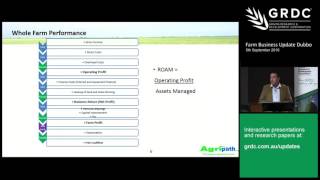
Sam Newsome uses benchmarking data to show what Australian farm businesses actually look like. A typical farm has roughly $1.4M income and a $10-12M asset base but only $40k cash surplus. The top 20% of farms earn double the profit and five times the cash surplus of the average farm, yet most struggle because they lack written plans and disciplined measurement.
Chapters
For this morning, my presentation, as Andrew said, the topic is what is a typical farm? It's sort of about setting the scene for the other speakers for today and I guess, and also how they're traveling. Now, the thing I'd like to put you first up is if you can get something out of this first session that you can take through the day in terms of your own business or those of you that are service providers, the issues facing your clients, that's what you'll find. I'd like to challenge you on a few things because at the end of the day, you've given your day up and we want to see you get a lot out of the session. So just quickly on who we are. I always think when you're listening to someone present, you're thinking, well, who is this guy and where's he from? Agripath. We're a consulting business, so we do a lot of benchmarking of farm performance. So we're trying to marry up what's happening physically in the field or in that business with what's happening financially. So we measure farms in groups of, like, businesses, basically from Central Queensland to Tasmania sort of thing. So I spend most of my time working with the businesses to try and improve their performance once we've got it measured or we're trying to help people buy a farm or consolidate or whatever that strategy is once we've got it defined. So that's who we are. As about 10 of us in the team, many of you will know Simon Fritsch, he's presenting later in the. In the sessions, during the day. And Scotty Wallace is here. Scotty, if you could put your hand up. I did see him walk in. Yeah, thanks. And Chris McCormack spent a lot of time at Tranghi, so you probably struck one of us at some point. So just in terms of that question of what does a typical farm business look like, I was thinking about it on the drive out. I actually started my career in Dubbo in 95, so I had 95 and 96 here and I was thinking about the differences in the Central west in that time. So scary. Time flies when you're having fun. But that's in terms of that period back then, we had a situation where we'd had 91 to 95, probably four out of five years of drought. Interest rates were pretty favourable. They were only 15%, having been 18 or 20 a few years earlier than that. And there'd been a wool crash in 90 and that sort of thing. And so I just left University and the only thing crazier than being involved in agriculture full stop, was to go into banking. In agriculture, we had a team of us that were looking after the viable clients and there was a team of people up the other end of the office who were looking after the ones that were considered problem loans or concerned about their viability. And that team was bigger than our team. So I guess, I guess that backdrop, we all seem to survive, not too many casualties out of that period, which is the upside of it. But that's agriculture, isn't it? We go through different cycles and as Matt's presentation showed, there's massive variations in interest rates. If you think about the farm debt at that time, I think it was about 20 billion. That's probably 70 billion, you know, 20 years later. And then if you think through all those commodity prices, seasonal conditions, all those big variables on your business, it is the nature of what we're involved in. But a lot of those things are beyond your control. So what I want to draw attention to is what is a typical farm business, how are they traveling and what is within their control as at a strategic level. So the typical farm. Now we went through our data for the Central west and Liverpool Plains and the Northwest, which are the areas of this northern GRDC sort of district, and even into the Darling Downs. And you sort of get thinking about what is a typical farm. Well, I'm not sure that there is a typical farm, but we can pull all the data out for the large corporates because they're distorting it. Or you think about people like my farm business, people that are working full time, part time, doing a bit of contracting. There are a lot of different business models, certainly a lot of foreign investment. My time in New Zealand, there were a hell of a lot of equity partnerships because they don't have a big off farm investment sort of sector. There's no superannuation there. So the off farm investment was quite often an investment in another farm. So what is a typical farm these days? Is a good question. What I've tried to do here is just represent perhaps a common farm from our data and just have a look at some of the economics of that business. So what I've done here is just you're all from different areas around Dubbo, so land values will vary greatly. If you just think about that business, it's probably managing, you know, could be managing total assets of around 10, $12 million, which sounds like a lot of money. But at the end of the day these days that's not an overly Big farm, there's certainly plenty of businesses in that range. It'll have a bit in equipment finance, it'll have an overdraft and a bit of term debt. So it might owe three in in liabilities. And so it'll have equity of around $9 million as a discussion sort of farm. So equity is fairly solid really in this day and age at 75. And so that's just the backdrop that you'll hear some of the speakers throughout today refer to this typical type farm and apply what their concept is to that example. So I don't know, if you think back to 96 and the couple of years I had here in the Central West, I think we were still grappling with do we expand, how do I manage my retirement, how do I manage my succession? Not a lot of difference to the issues we face today. I guess what probably come full circle on some of those things because at the end of the day, the next thing I'd like to have a look at is the viability of that farm. And it's the variation in farm performance that's the big issue, I think, because you can spend a lot of time on succession, how do I retire? Those sort of things. But really if you can get the engine, you know, being that business performing, it'll sort out most of those issues. And the reason being is I just duck forward to this sort of result that could be any of our groups in any year. The variation. So what it is on the left axis is the return on the assets managed. So the income less the direct cost less the overheads. So ignoring whether you've got debt or you've got four kids at boarding school or whatever, just the underlying performance of your business divided by the assets managed. So you can see about two thirds making money and a quarter or a third of those businesses here are losing money before they service debt or educate the kids or try and invest off farm. And at the other end there's some really high performing farms. So that could be sugarcane on the north coast. It could be dairy farmers I worked with in New Zealand. It could be thoroughbred studs in the Hutter, it could be you guys here in the Central west in grain production. And it's. And people don't, every time we do it we think, gee, there's a lot of variation. But it's the same every year in every group. So I guess what I'm saying is those farms face the same commodity prices, they face the same seasonal conditions largely and, and so on. So a lot of their cost Structures and their strategies, though, were up to their own control. So if we just stuck back and think about how this farm is performing and that, you may not be able to read that, but it's just basically saying the gross income less the direct costs less the overheads gives us this, what we call operating profit. And it's that that I'm comparing farms from one to the other in like businesses in the same area. So they've then got finance costs, leasing, etc. You know, they may have personal drawings or capital expenditure to do. They've got different tax rates, they pay, giving, I guess, a profit. You have depreciation to deal with and then hopefully a bit of cash dropping out the bottom. So if you think about this farm business that we're talking about, this is our typical farm here. Call him Farm B. Now, Farm B is the average farm. So if you think about his key numbers, their key numbers is 1.4 million coming in in income. They've got direct costs at 783, you know, a gross margin therefore of 688 overheads to pay, et cetera. It's average profit at 245k on that sort of $12 million asset base. You think, well, that's a pretty respectable number. But you've got a hell of a lot of assets tied up in that business. So this is where the typical farm's operating. It's then going to pay a bit of tax, potentially. If it keeps operating at those levels, it might reinvest 100,000 into its own improvement in the business. It might have some kids to educate and so on. So what's interesting is that, yeah, it's a profitable business, but there's only 40 after turning over 1.4 million, there's only 40,000 left at the end of the day, which is what you can use to repay debt, I guess, or to invest off farm, et cetera. So not a bleak story, but certainly you think about some of the debt levels involved. Like I was saying, most of you here in the room are those that when I came here in 96, have either had a crack and bought out the neighbors and we've seen a lot of the family farms absorb. So the fam. The farm size is increasing, the number of farms decreasing, all those things you've heard plenty of. But the thing I really wanted you to get from today is the difference in performance for that 44,000. That drops out the bottom of the average farm at that level of 4%. That's a 4% return on assets for Those who want to relate it back to that earlier graph. So it's not losing money, but it's certainly not performing at the level the top 20% are. And if you have a look at this farm, A, that's the top 20%. So if you think about yourselves and you've got a neighbour on each boundary, so you've got four neighbors, therefore five. Sample size of five. And you said, well, someone's in the top 20, someone's in the bottom 20, someone's the average. In that terms, you may all like to think you're in the top 20, we all might think we're all going broke. But if you just think of that little sample, say, well, what does that top farm look like compared to the other four of us in the valley or down that road? And the numbers are really dramatic. So the top 20% farm, and this is the same in all of our groups, has double the profit. So let's see, the 245 versus the 511, if you think of that, when they've got similar debt servicing and that sort of thing, to me, education's the same, the capital expenditure is similar. The actual cash surplus is about five times, five times that of the average. In terms of. If we get back to that discussion around succession and expansion and retirement and all that sort of thing, all those things, that's where, like when I say I've come full circle, most of our work with businesses is actually about getting the thing performing to its potential, because that will solve most of your headaches, won't it? So if you think about this bottom 20% of the farm, say of the five of you down that road or in that valley, the bottom 20% farm, given the same seasonal conditions and, and commodity prices that Matt's outlined and interest rates and so on, this is off a standing start. So if you think about post Second World War, when they carved up the road and had the soldier settlements or closer settlement scheme happening, this is why after two generations, probably two of the farmers own the valley and we've all seen those examples. And I'm not talking about people having adversity or whatever, but just purely economics. This farm here is only turning over 1.2 million. It's only netting 36,000. So this is our bottom 20% farm trying to still reinvest to improve its performance. So they're all reinvesting 100. It's probably still got someone to educate or pay out or whatever. The 40k is discretionary type expenditure, so it's actually going backwards. By 112k, you know, it may not have the tax burden and that sort of thing and we won't get into different tax rates and who used FMDs and they didn't and all those things. The bottom line is unless it arrests that cash deficit of 100, it's really just got to fund that. It's got to go back to the bank and ask for another 100k to get through the next year. So they're the key numbers I really want you to understand is that 245k surplus of the top 20% farm, same patch, same seasonal conditions, commodity prices, interest rates for the year. And the other extreme, this farm at this end that's needing to go back to the bank next year to have another roll of dice. So I'm not trying to be pessimistic, I'm trying to be optimistic. It's the 245 that I'm interested in. Now I'm sure if you're from further north you might say, well this is what our numbers look like. These are real numbers. From Walgut where there's a crop in 2012, a lot of people say, well you know, it's just luck or these people lucky or were unlucky. But this is Walgett. So you can imagine a lot of red ink there for the last three years because regardless if they did the right thing up in that patch and didn't sell a crop, you've got an overhead probably of 300k and debt servicing or something similar. And so you're probably going backwards around that 600k in that environment. Driest 36 months ever since I started recording rainfall consec like rolling. I think it was May to May or August to August or something whenever I did that chart and these were two anticipated sort of bounce backs years, but still massive variation between those. There's a sample of about 10 farms in that and this is hopefully the bounce back we're seeing in those businesses. But there'll be a massive variation from one out of the 10 farms in that bounce back performance. I can tell you now because we've been out there looking at who got the crops in on time and how well they're set up, perhaps for harvest and that sort of thing. So that's what these businesses look like. And you think, well that's very big variation in that, Sam. I just want to know how they're going. But the bottom line is, and it's always been the same, is that the variation in performance is huge. So what we want to see and a lot of the other speakers will build on it is if you can get some good take home messages from today around what is our strategy, how are we going to affect change in our business and and so on. So I'll just move on and just talk a little bit about that just perhaps to get you thinking on some of those topics. When you think about any farm business it's really four key things and that is it's land. It's got the people that work in it being the labor, it's got capital being your plant or infrastructure or your working capital being the cash. And it's got management which is you guys and, or probably the people that support your business being your service providers. So there's people in the room here that are bankers and agros and I can see all those people supporting your business, grain marketers, people like Agripath or you know, all those people that surround you and help you with your entrepreneurial input into the success of that business. So the bankers in the room will probably have heard this one but really the viability comes down to four Cs and they're pretty easy to remember. It's just the cash flow which is that number I was talking about before. What's dropping out the bottom of the business, that's what's left to repay debt. The average farm, I think if you look, if you divided its debt by its cash surplus, it's going to probably take 40 years to repay that debt which not too bad at what was it Matt, the lowest interest rates in 5,000 years. But I think we'd all like to see debt retired if we chose to do that, we may well choose to expand the business or, or invest off farm or grow the assets in other words. But cash flow and it's an old adage, but it is king and that's the thing that's helping you expand or buy out siblings or educate the kids or all those other headaches. So the character C is really about you in the driver's seat and the people that are supporting your business. And people often say that what's a fair level of equity? And I say well who's in the driver's seat? You know, we've all had clients that might have 90% equity going steadily broke over 20 years or seen that neighbour gradually whittle away their equity and hopefully capital gains propping them up. But at the end of the day it's a big influence on that cash. So the collateral is the security and the contingency is Your plan B, what if this doesn't work out? What off farm assets have we got? Can we consolidate? Got five farms or five parcels, or is it all in one? And just understanding that if we're taking on debt, which I'm assuming, you know, a lot of you, because you're still in the game, will have it, then what is our plan if this doesn't work out? So how do we actually influence the farm performance, you think, well, we've been pretty much farming the same way here for a long time or even generations. And yeah, we've got zero till and all those things. Precision farming and different tools coming in. From a technical point of view, what I wanted to touch on is just at a bigger picture level, probably asked you the question from a planning point of view, actually, do you have a written plan? You know, is it, is it really just a bit of a chat over the Sunday roast type is about the extent of our communication and planning? Because this is what's setting those top farms aside. They've got clear goals, they're written, they're measured. Have you heard that smart goals type? It's a good way to remember it, but it's specific and they're measurable, they're achievable, are they relevant and are they time bound? And if you haven't got that, you've probably got to question yourself. Would you run BHP that way or, or the Commonwealth bank or Telstra, you know, I'm sure the local fire brigade or the local, you know, staff and the teachers can probably tell you, you know, what their mission is or what they're about and what they're trying to achieve. But in farming, I don't know that a lot of clients, when we find them, can probably tell you that stuff. It might be. Or if you ask the five people in the family, you might get five different, different answers. So that I think is where people have got to start, really. Just trying to add a level of professionalism. When you stand back and think, well, we're going to be in a farm business together, you know, fairly crazy thing to go into business with family, full stop. But if we're going to go into it, people are completely unrelated, let's go and buy a paper shop or a pub together. You'd be going, oh gee, you sure you want to do that with your family? But we'll do it in agriculture every day of the week. Without a really clear and written plan, we don't really have a, often have much of a formal communication. You know, are we having Monday Morning meetings. Something that adds a bit of professionalism and takes the family time, you know, makes it separate to how we operate as a business and make decisions, decisions and who's surrounding your business. You know, you've got to have the A team and those top guys have all got very good service providers, they've got good bankers and good agros, good accountants, et cetera, all the way through their business. Because it's hard enough with the A team around you, let alone having people bringing their B game. So the reporting and measurement, everyone's got to do their best and they've got to do the bank review and so on. Sort of the tax man and compliance, basically motivations, everyone does that fairly well. What's setting aside these top farms, I think is that they're getting the numbers to land in the right boxes so that they actually understand which part of the business is feeding them and which is bleeding them. And for a little bit of effort you can get that really spot on. If you've got. If you're in partnership with three or four family members that might be in your head and because you're here at the farm business updates, you're probably that person that's interested in the finances. But the other guys can be quite stressed about it because they don't get the numbers. So you've got to be able to communicate that sort of stuff with the rest of your team. So without a lot of effort, you can get what you're already doing compliance wise to land in enterprises, understand overheads and get the scoreboard basically telling you how you're going. So they're just a few little things I think that everyone can go away and start with. Bottom line is it isn't luck that's setting aside that business. There's a lot up for grabs. That farm generating the 245 compared to the average farm at 40 or 50k dropping at the bottom. It's a little bit like that insurance. Not the insurance, the superannuation ad at the moment, you know, the two people sitting on the park bench and they've both got the same career and they're talking about the industry super fund and it's just compound interest. What's it going to be worth at the end of your retirement? The thing I would put to all of you is if you can get your business performing at the top 25% and sort out that will pay for your succession, it will pay for your retirement, it will pay for people buying out siblings. It's actually a big opportunity cost. So you Know, you really don't have a lot of choice because the average farm there is going to take, I think 40 years minimum to repay its debt if it chose to do that. So getting back to some of those targets for your farm and understanding, well, what should my gross income be per hectare and what are the direct costs and overheads that I need to meet to get some targets set, and being able to communicate that well with your agro and understand your crop sequence and how you resource things like plant and equipment and how much labor should we have in the business. They're all things you really need to know. And I think again, even the local fire brigade would know how many people they should have in the team and how many hoses or fire engines or whatever it is they're resourcing the business with. They would have some metrics around that, so they'd have a strategy about what they insource and what they outsource and why they do that. Not saying farmers don't do it, but I'm saying the top farmers do it a lot better. That's where I'm coming from. This is just a little example farm. This is a farm we've worked with over a long period of time. So we had a lot of data and we pulled it together back a couple of years ago and had a look at it. They've actually done another couple of solid years on top of this. So the first year is over here and the more recent year is the one on the left if you have a look at this top. So this is 2001. The first few years they were dealing with agripath, highly variable. They were still banking good, good results. So the left hand axis is. Sorry, I just need to be able to see that myself. But basically the point of this chart is that they've gone from, yes, we were good farmers, but fairly highly variable in their performance until they got the disciplines, crop sequences, matched up their resources, their farm, from a labor and plant point of view, you know, to some really highly consistent levels of performance. And there's good and bad years and seasonal conditions and prices and all that sort of stuff happening there. But I guess if you think about the equity growth that has come off the back of those solid performances, you know, the confidence from their banker, the confidence in their own decision, there wasn't a lot of happening here. But once they got the systems in place and the performance really consistent, the rest is flowed in terms of the bottom line, which is the wealth creation that's coming out of that business. Look you don't have to race out the door now and get busy. There's some good speakers that I think will expand on some of these concepts through the day. I just want you to understand the viability is really going to solve most of the challenges you're facing and understand that opportunity cost. So if you can pull your business into shape and have it performing in a two or three year period rather than taking 10 years for it to reach its potential, that's the two ladies sitting on the park bench in the superannuation ad. You need to get cracking on it. So look, I hope that gives you a bit of an insight into perhaps what a typical farm looks like and how they're traveling. And again, I'd just like to say thanks to the GRDC and to ORM for their efforts. Thanks, Sam.
More from Gerri







GRDC National Variety Trials (NVT) Case Study: Helping Oat growers make informed variety decisions



Managing rhizoctonia in wheat and barley: Impact in low and medium rainfall zones 🌾🌾
