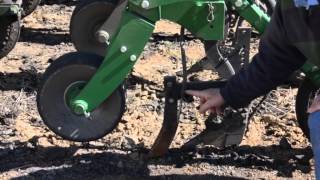
Phil Bardsley at Tulloona farm trialed anhydrous ammonia, which boosted wheat yield by 0.68 tonnes/ha and returned $110/ha after costs. He pairs it with liquid phosphorus and zinc, and credits zero-till and controlled-traffic farming with improving soil biology and earthworm numbers.
Questions this video answers
About 0.68 tonnes per hectare.
About $110 per hectare.
Approximately 82% nitrogen.
Phosphorus and zinc.
At Tulloona, north of Moree.
Chapters
The adoption of gas and liquid fertilisers has boosted wheat yields by more than half a tonne per hectare for Teluna farmer Phil Bardsley. After conducting anhydrous ammonia trials on his property north of moree last year, Mr. Barsley saw large increases in wheat yield, which he attributes to injecting the gas fertiliser into his soil during sowing trials.
I did there last year with the anhydrous ammonia, because it's just 82% nitrogen, that's the most limiting nutrient here besides rainfall, but had a yield increase of about 0.68 tonnes per hectare, and the net increase was about $110 a hectare after you paid for the gas. So you know it was well worth doing the liquid fertilizer, which is phosphorous and zinc, it's just a replacement strategy. Like to maintain long term fertility on.
His zero till control traffic system, Mr. Bardsley uses anhydrous ammonia knives placed closely to his sowing row. He's careful the gas doesn't interfere with the seed, as that can limit crop growth and prosperity. Increased grain quality is another benefit he's seen since adopting the new fertiliser strategy. But he says growers shouldn't rely on ammonia to gain protein.
With the zero tool, you're improving your soil. One of the things you notice when you're planning is the huge number of earthworms this country's got. So it's gone back to its sort of natural state as far as soil biology is concerned. That's just from not disturbing it from cultivation and maintaining all the stubble.
As a sole operator, Mr. Bardsley is always on the lookout for efficient farm management strategies, right down to strategically placing sheds, silos and equipment in a central location on his property.
It's all centralised, so all the silos and everything and the shed are here in the middle of the farm. So when I'm spraying, I just come back to this point. I've got the chemical shed set up with the pumps and the chemical and all that. And then for sowing all the gears here, the grouper and the anhydrous gas trailer, your fuel trail and all that just saves me a lot of time. Instead of having to move equipment and that, you just, yeah, 10 minute drive back to the silos and fill up.
Having previously worked as a Grains Research and Development Corporation Northern Panellist, Mr. Barsley still keeps in contact with the GRDC to stay up to date with the latest research and technology.
Getting the information to growers like Ground Cover magazine is really good. They've got a good website. You can get information off that. But the biggest thing for growers and advisors has been the updates. Goundiwindi has the advisor update, which is really good. And they have grower updates through different parts of the region, which are excellent.